Land of Milk and Honey is a haunting novel, the kind that consumes you long after you think you’re done with it. Certainly, it reverses the usual process: where a reader typically consumes, by the end, I felt consumed.
That said, for this reader, my initial attempt to read it caused a slow and uncomfortable indigestion, and I was tempted to abandon the book several times. I found Zhang’s prose felt overwritten, pretentious, too academically literary as if it had been pummeled, shaped, and reshaped in an MFA workshop where Zhang had been too eager to please an implacable professor. The food too, its descriptions and imagery, was overly reminiscent of the kind of unsatisfying fare one might find at Alinea or on Top Chef Season 2,349,349, pretty without satiety. But, in retrospect, having reached the end of the novel: that was the point.
I am glad I did not DNF the novel, and followed it through to the last “course.” It was well worth the patience.
Land of Milk and Honey is a speculative, near-future earth-bound science fiction. Written during the 2020-2023 Covid pandemic when the world had shut down and shut in, Zhang built an insular microcosm of our contemporary world. It is the same, yet different: more intensely bleak, more virulently violent, more callous. Readers, myself included, will easily recognize our pandemic selves in the characters of the novel.
The events of the novel take place in a bleak “what if” landscape, a world which is ravaged by climate change and late-stage capitalism, having never progressed further in its decolonization than our present. Food as we know it is scarce, GMO crops abound out of necessity. Nationalist and populist fears of scarcity have made political borders impermeable, except where power and money create porosity. A young Asian American professional cook trapped in immigrant, stateless limbo in Europe finds herself posing as a chef and working for a strange and shady corporation, one whose mission is evolutionary revolution. This is eugenics gone awry (as it historically has, no surprise here).
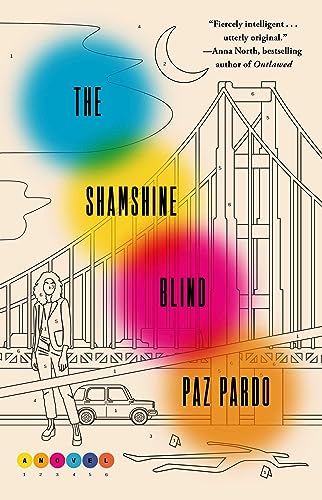
I absolutely love love LOVE this novel. That said, it took me four attempts to actually become immersed in it. My first attempt told me that this was a gorgeously written novel; I could tell immediately that the prose is sharp, precise as a scalpel, so on point that one could cut diamonds with these words. But my mind wasn’t in the right place; I couldn’t focus on the investigation, my mind wandered. It happened again on the second and third attempts.
And yet, I refused to give up on this novel. I shelved it, but I kept picking it up. I knew something good was in it, but my head wasn’t in the right space. Could there be some truth behind Pardo’s emotion counts? Do feelings linger in the atmosphere?
My fourth plunge into this novel was as deep as I could get. I finished it in two and half days, prolonged because work interrupted my reading.
This novel is everything a reader could possibly want. The Shamshine Blind is amazingly original in its concept and delivery, even while it builds on the roman noir, hard-boiled detective trope. Its guts make it a mystery and thriller, but the prose that flows is literary liquid.
Its landscape is foreign and familiar, its world is one of speculative fiction; the setting is 2009 in an alternate reality where the Argentines won the war against the United Kingdom for the Falkland Islands — the Malvinas — and then went on to decimate the rest of the world. The Argentines’ weapon of mass destruction was a work of chemical genius: capturing emotion and concentrating it into a deadly debilitating bullet. The science didn’t stop there and in this reality society must now grapple with mind-altering drugs, psychopigments, which alter our emotions, our reactions and responses, our behavior. “Your Emotions Are Not Your Own” is a warning repeated in the novel.
Kay Curtida is the detective put on a psychopigment case, a homicide — which, when its layers are peeled away, reveals something much larger and far more corrupting than simple murder is at foot.
This was, by far, the most imaginative novel I have read this year. This is speculative fiction at its very best. Perilous Times will keep you hooked from start to end.
The novel opens with a strange awakening. Kay, an Arthurian knight emerges from the earth, no longer a corpse, but alive and tasked with a mission to save Britain – only he has no clue what this means or what he has to do. Immediately, he becomes entangled with a young woman, Mariam, who is on her own mission: to rid the world of corrupt corporate leaders who are poisoning the world and leading its few remaining inhabitants closer to environmental ruin.
The novel is set in the near future, when our climate has been so altered that most of Britain is now underwater and our environment is a grey wreck. Small bands of people live in squatter-like conditions and even smaller bands of rebels have formed to bring order to the world.
Fracking and profit-greedy corporations run public operations. A magical cadre operates on the highest level of corruption and government, and they have a secret weapon: King Arthur and the immortal knights of his roundtable.
But… this all it seems? This is a world stripped of romance and chivalry, and the knights of this mythic time are no less human than those they are tasked to save.
I will leave my description there. If this has not intrigued you yet, well… Hmph.
The ending will also put you in a spiral.
Lee also delivers the story with tremendous skill, the right dollop of humor, and the perfect dry drip of British snark. This novel is a joy to read on multiple levels.
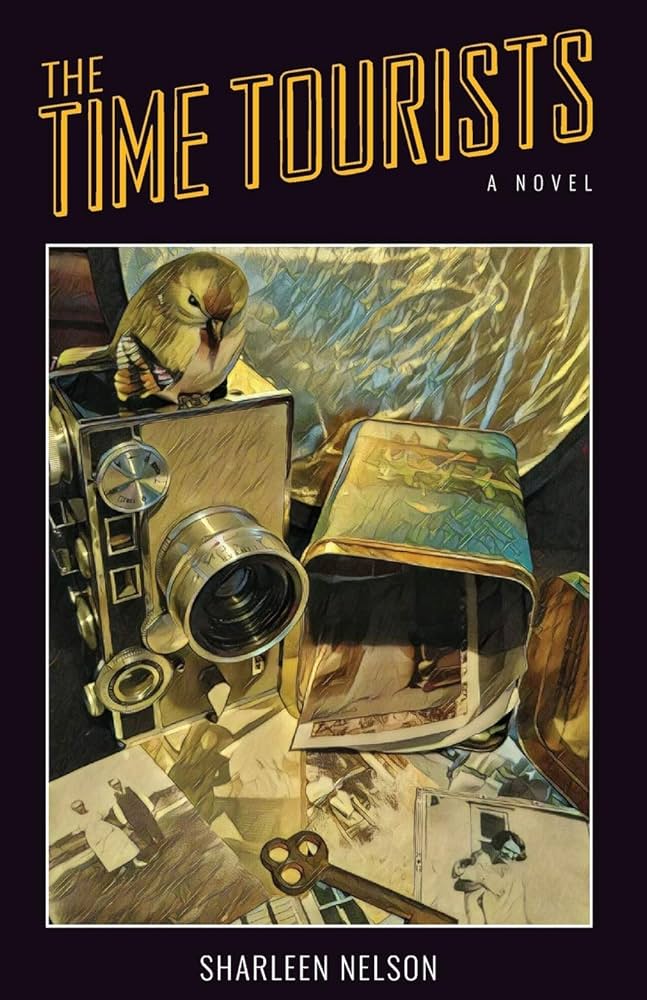
I am thrilled to be reading and reviewing a novel written and published by a local PNW author and independent press. This is a backlist book from GladEye Press, having come out in 2018, but The Time Tourists deserves another round in the limelight.
Readers of speculative historical fiction in the vein of Dr Who, and especially those who delight in time travel, with all its peculiar possibilities, will enjoy this novel. The Time Tourists centers on the concept of time travel through photographs, revolving around a particular set of individuals who have discovered how to both profit from this and use the skill to provide closure for descendants living in the present. Specifics about the process of time travel are murky; this is not purely science fiction, the novel leans toward historical fiction and mystery over the former genre. At the core of the novel is a young woman, Imogen Oliver, who discovers she possesses this rare ability. Through her adventures into the past, she assists people in finding out about their ancestors, retrieves items lost to them and their families — and, perhaps most importantly, learns that her parents’ disappearance is not all it seemed to be. Indeed, the novel ends on a cliffhanger, encouraging the reader to seek out Nelson’s second book, The Yesterday Girl.
Readers should allow the novel time to unwind; it does lead to a very exciting mystery. But, perhaps because The Time Tourists is the first novel in the series, readers may find the first eight chapters, fifty-odd pages, a little more heavy on exposition and slow-paced than expected. In these chapters, Nelson provides a thorough, but sometimes plodding, outline of Imogen’s personal history and life. I found this section of the novel somewhat confusing: Is this a Young Adult novel? A Coming of Age bildungsroman? When do we get to the time travel part? As a lover of historical fiction, the contemporary focus lost me periodically. Indeed, it was not until page 92, the beginning of Chapter 14 that I began to find the novel intriguing. And, to be honest, it wasn’t until the last line on Page 147: “Leeroy Jenkins, my ass,” that it gripped me. The novel comes off as episodic; it reads as two separate novels rolled into one, which a significant chunk of the beginning serving as prologue.
The reader will be quickly introduced to Imogen’s friends and family, parents Niles and Francis, her Grammy, friends Fletcher and Jade, but also others within her orbit who have less kindly motives and personalities. Theodore Diamond and his mother, Mimi Pinky, are neighbors who have lived nearby for several years. As the novel progresses, readers will become abundantly aware this is not a juvenile novel; it borders on the cusp between Young Adult and Adult. Similarly, readers should be aware the novel also raises and explores toxic masculinity, incel “male-rights”, sexual abuse, child abuse, mental health, and death. Should these be your triggers, this novel may not be for you. That said, Nelson weaves these dark ideas into the narrative arc of the story exceedingly well, and they are central to understanding the characters, their motives, and behavior.
On that note, Nelson’s characters are well-crafted and possess depth, though in several parts of the novel, expository details run long and sometimes derail its flow and pace. As a consequence, the novel sags in some parts, requiring the reader to push on to pick back up the story’s arc. (Non-American readers may find the pop culture references do not add to the characters’ development in ways that American readers might.) Historical references, on the other hand, do provide the novice historical reader with plenty of context. Nelson’s handling of the disparities in cultural differences and historicity are especially appreciated by this reader, though as noted previously, historical exposition slows the progress of the story. Just as readers should not expect a heavy dose of science in this fiction, readers should not expect scholarly content, though it is clear Nelson has done a significant amount of historical research.
The final third of the novel is where the real excitement begins, and Nelson maximizes the mystery that has brewed in the first two-thirds. All the threads that have begun earlier come to an explosive, emotional ending, one which — I think — will satisfy most readers and leave them wanting more.
Readers who would like to purchase this novel may do so on Amazon here, or find it on GladEye Press’s website here. At present this 387-page novel sells on Amazon for $11.09 for the paperback and $5.99 for the Kindle ebook, and on the press website for $14.95 (paperback), where buyers also have the option of having it custom signed by the author for an additional $3.
Anne Frank on Tour & Other Stories by George Thomas Clark
This independently published short story and flash fiction collection was a hoot! I laughed through most of it, and moreover, if I may be frank, it was an overdue belly of snortish laughs I emitted. This collection is the sort that encourages the emission of belly laughs. For readers who enjoy a bit of snark, a bit of cheek, and a good dose of make-believe, Anne Frank on Tour & Other Stories will deliver on its eponymous promise of a “What if… ” world.
The collection opens with a section dedicated to “What Ifs”, titled “History” and a delightful tale of vengeance, “Sally and Thomas.” The title characters are Sally Hemings and Thomas Jefferson. Readers, I will leave you to discover the thrill of this tale yourselves, but know that it remits a great deal of satisfaction. Other sections are themed, “Love”, “Need”, “Excess”, and “Final Acts”, the last of which offers a fictionalized glimpse into the lives of certain long-dead celebrities. Some stories are lengthy, though not exceeding more than a reasonable ten or twelve pages; some are flash fiction, punchy bites of a few paragraphs (or less!) Most depict landscapes and characters amply familiar to ourselves: “Speed dating”, “Must Sell”, and “Online Doctor” for example. We know the people in these pages (perhaps they are ourselves, or perhaps we hope they are not) and all their flaws and funny quirks. Most of these stories are hilarious photo-realistic caricatures.
Some tales are surprisingly sobering, offering readers a respite from their giggles; but these tales might hit closer to home than one expects. This may be Clark’s special skill as an author; the subject matter of some stories is dark and perhaps triggering for some readers (sexual assault and gaslighting), but Clark delivers these messages with both humor and a powerful, succinct punch. The result is that the reader is disarmed by their own humor and left with a fading whisper of a giggle to assuage them in the aftermath of the trauma they’ve just witnessed the characters experience. In other words, the reader may find themselves smiling, recognizing the landscape of the story — and then, BAM, Clark delivers a coup d’etat, and the reader may then feel a little guilty for having laughed only a moment before. It is a rare skill to cause a reader to twist internally and Clark does it well several times in this collection. This is not a collection of tales for the sensitive or morally righteous reader. Be prepared to say, “Oh. I didn’t think this was headed that way.”
Clark’s voice is that of a matured storyteller, and it is unique. Fans of Neil Gaiman may recognize the confidence and the trace of dry humor. Fans of Margaret Atwood will appreciate Clark’s wit. Fans of speculative fiction in the vein of Ted Chiang will notice Clark’s imaginative approaches to things that never happened.
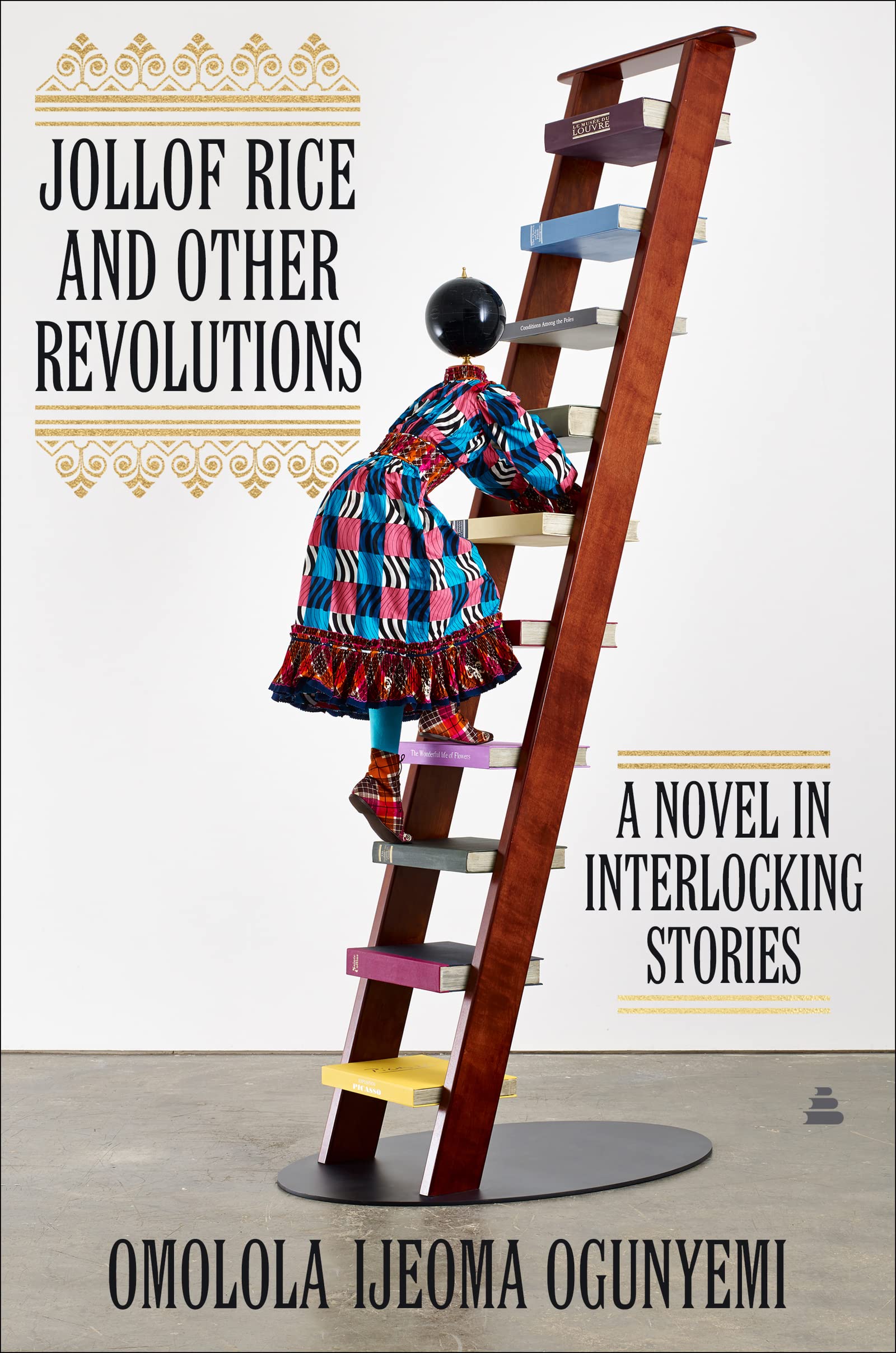
Jollof Rice and Other Revolutions: A Novel in Interlocking Stories by Omolola Ijeoma Ogunyemi
Jollof rice is the stuff my dreams are made of. The whiff of tomato, chili, white-, and black pepper, piquant and nose-tickling, the aroma of ginger and garlic and onion. Jollof is West African, but the recipe and desire for it is universal. In my case my dreaming mind classifies jollof rice as nasigoreng, Malaysian style with Maggi’s cili sos, a sweet and spicy ketchup. Chunks of browned chicken thighs, that crust of flesh and crispy skin, dotted with red grains of rice.
Coming from a rice-eating culture I like to think of myself as a specialist in the business of rice-eating and rice dishes. As a historian and reader of postcolonial literature and archival text, I like to think myself an expert in those domains too. But, I remain amazed by what I do not know; there is always a new rice dish, a new recipe, a new flavor to make my tongue and memories alight. There is always a new perspective, a newly discovered history, another layer of human experience to see, enjoy, and revel in.
Ogunyemi’s Jollof Rice and Other Revolutions is that new rice dish, that new revelation. You see, the stories in Ogunyemi’s novel are like jollof rice, grains tossed together, held together in harmony by a dry sauce. Sweet and salty and spicy, a mouthful of emotions that are sometimes in conflict, sometimes piquant, but always in balance.
The novel is familiar and comforting in its focus on men and women of color, their lives indelibly part of the muss and tumble of Nigerian marketplaces, cities, and villages, so similar to those in Southeast Asia, where chickens are still sold live, butchered and feathered at the time of purchase. A place where fish and seafood lie on slabs of ice that are slowly sweating like the people haggling with each other over their prices. There is the aroma of overly sweet fruit in the air: jack fruit (in Southeast Asia anyway), bananas, some kind of incense. There is smoke and pungent exhaust from a motorbike put-put-putting away. A glot of languages rumbles in the background, ever-present as there is no reprieve for the ears in places like these: dialects, pidgins, mix-n-matches of accents and lilts. On occasion there is a puncture of British English (always British it seems), and a few heads turn to see the foreigner. (It is usually me.) Like a Nigerian market place, Jollof Rice and Other Revolutions is dominated by women and their stories; men are present, they form part of the fabric of the novel, but it is the women and their experiences who thread the pattern and the connections between motifs in its cloth.
Jollof Rice and Other Revolutions is a collection of Nigerian and transnational Nigerian, historical and contemporary experiences, spanning from a time under the British and under British influence (for Britishness and Western-centrism continued even after decolonization) to the present — and here is where it gets really interesting — the future. Ogunyemi’s novel recalls to mind another like it, Yaa Gyasi’s Home Going (2016), but it differs on this particular point: Ogunyemi reaches into the future and lets the reader dwell on our current states through poignant examinations of the present.
Jollof Rice ranges across multiple generations, includes the lives of members of different and intertwined families. The reader is given a glimpse into the past when precolonial gender relations were more fluid. The reader accompanies characters in their education under the British, travels with them as they become transnational cosmopolitans, and will find themselves in the uncomfortably familiar place of racialized, racist America. The reader will find themselves in a near future moment, built on the present and past as we know it.
Sometimes, alongside the odor of modernity and vehicle exhaust, there is a faint scent of history and the supernatural, that which exists beyond the usual plane of our understanding. This is like biting down on a pepper seed in your rice, getting that jolt of zing on the tongue. You can’t be sure if it was a seed or a pepper or a tiny grit of sand. You hope it was the former and not the latter, but then the moment is gone, the thing is swallowed and you continue on with your meal, with your life. The next story is waiting on your spoon. I deeply appreciated how Ogunyemi wove these elements into the novel; what the West deems supernatural is not so in many parts of the “formerly” colonized world. Spirits, ghosts, and memory were part of our cultures before and remain so.
Ogunyemi’s characters and their experiences are what give the novel its unique quality. The characters connect to each other through their shared experiences in schools, in migration, in marriage and love, in childhood and navigating adulthood, in how they reconcile their colonial pasts with their “post”colonial presents and futures. Ogunyemi brings the Nigeria of the past into the present and future through their transnational and transcultural journeys. The characters are related by bonds which are sometimes considered casual; in Jollof Rice unbreakable relationships are broken, death is a cause for life, and disappointment is a gateway to revival. In this way, Ogunyemi delivers to the reader the nuances of human love and its endurance across time and space, makes a case for their eternal universality.
Jollof Rice and Other Revolutions makes me want to grab a friend and say, “You must try this! It’s new!” And how special must it be, that it has taken the old topic of history and identity and made an original spin on it!



 Dr JoAnn LoSavio