It is so rare to find novels and creative fiction that is not only set in Southeast Asia, but written by Southeast Asian authors (rare, not impossible!) that when I saw this coming out in 2023 I JUMPED on it! And I am so glad I did. This is a book that makes my heart sing!
Nardone’s Welcome Me to the Kingdom is a novel woven in stories, revolving around the lives of Thais who live in Thailand or beyond in the diaspora, transnational and transcultural Thais. This is a book about people, individuals as they navigate the multiethnic and multicultural world of Thailand, and what it means to be Thai for them. The characters, as diverse as they are in terms of ethnicity, class, and gender, are connected together in this novel; they and their lives serve as a microcosmic diorama of Thai realities where muslims of the south grapple with discrimination, poverty stricken girls from the village migrate to the city, mixed race Thai/White kids straddle two worlds and belong not quite fully into either one.
The stories span across several decades and generations, allowing the reader a view, not only into modern Thainess, but also how the concept has changed over time and the ways in which being Thai is differently defined for individuals of different religions, classes, genders, etc. Language is a significant element in these stories, not surprisingly since Thailand (like so many other parts of Southeast Asia) has and remains affected by colonialism and its invasive culture (though it was never politically colonized). Welcome Me to the Kingdom is about the rubbing together of cultures, the tension and chafing as multiple perspectives collide. This is a historical novel offering readers a textured, multi-faceted sense of contemporary Thailand, a place in which tradition and modernity coexist, sometimes contentiously, sometimes not.
My favorite characters were Nam and Lara, their story, interwoven with Pea’s and Rick’s, was my favorite, though I probably identified most with Ping. I think readers will find a little bit of themselves in these pages, whether they are Thai or not, as the emotion driving these stories is universal. Nardome’s stories are about desire, ambition, longing, and fear — that inevitable friction between parents and children, within families, the old(er) and new(er) attempting to find common ground.
For readers who enjoy anthropology, history, and postcolonial literature, Welcome Me to the Kingdom will be an especially enjoyable read.
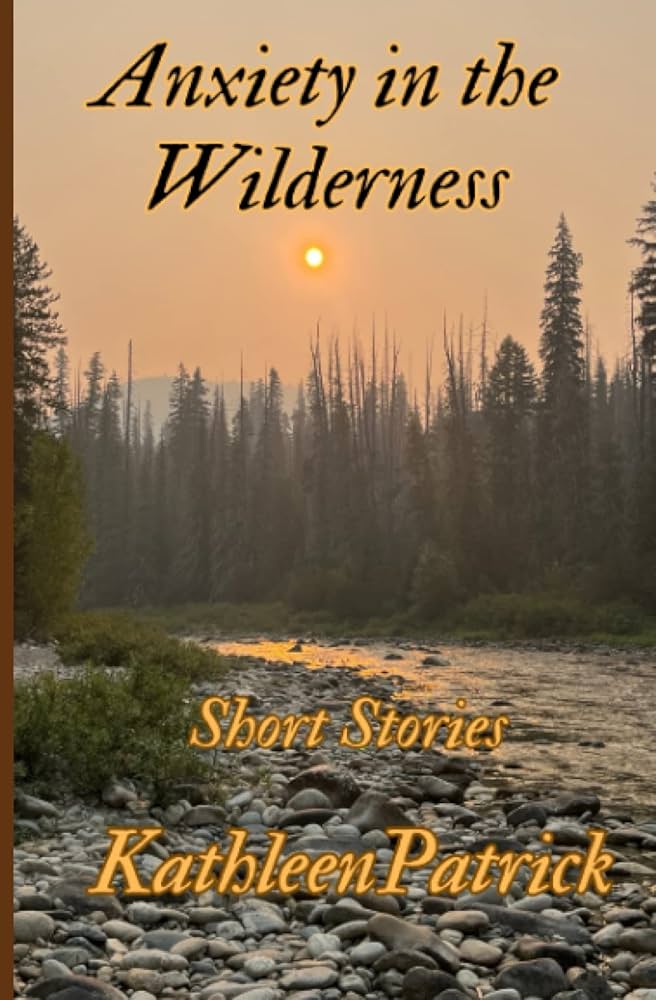
Anxiety in the Wilderness: Short Stories by Kathleen Patrick
I’ll start with context, not about the book, but about how I came to review it. I don’t typically read independently published novels and books for a variety of reasons. But I decided to join a Facebook group, one which has an active review program organized by the administrators. On a whim and by chance, I joined in.
The process began with contacting the organizing administrator. Every reviewer wrote a short biography of themselves as readers.
Hello! My name is JoAnn. I'm located in the USA. I'm an academic in the humanities and a huge reader (it's part of the work I love to do!) I actively review books and galleys, both professionally and for my own pleasure. I review Non-Fiction and Fiction. I prefer physical print copies. For NF I read history and historical archaeology. In fiction, my preferred genres are: Historical Literary Fiction, Literary Fiction, Multicultural/OwnVoices, multigenerational fiction. I especially enjoy Asian-American, Immigration, BIPOC stories/themes. I do not gravitate toward romance, thrillers, horror, or contemporary fiction as much, but on occasional will read slipstream and mysteries."
Then I waited…
Each participating author scrolled through the post to find a reader they thought would match their novel or manuscript and commented below their name. [While some reviewers had several interested authors, I did not. In fact, Patrick had not selected me as a reader for her collection, but I saw her book offered to another reviewer and I asked the organizer if I could review it.] Reviewers could then choose three authors or books they wanted to review. The organizing administrator then connected the authors to the reviewers via direct messaging.
Anxiety in the Wilderness: Short Stories was one of the books I had the privilege to review. I am glad I got the chance to do so; Patrick’s collection of stories is well-worth the read and the price (at present USD $9.99 for the paperback, $0.99 for Kindle ebook, $15.99 for the hardback edition). [Indeed, Patrick’s collection of tales causes me to consider reading more independently published fiction.] The collection, at a total of 161 pages, comprises of seventeen stories and two poems, a few of which have been published in journals elsewhere.
The stories collected in this volume cohere under the theme suggested in its title. These are vignettes clipped from a variation of lives. Each story captures a personal moment of anxiety, ranging from the life-changing to the merely inconvenient. In these tales individuals lose some part of themselves or worry about the possibility of doing so: In Fire, a woman assesses what part of her life is measured in the material goods she owns; in Anxiety in the Wilderness what it means to watch someone lose their life forces a woman to review her value to her spouse. In other stories mothers look upon their children and weigh their love for them against their love for their husbands, wives question the strength of their husband’s love, children face the loss of a parent. Patrick’s stories reflect the small and large gravities in our lives like a mirror.
Like a reflection in a mirror, Patrick’s prose possesses clarity and crispness; in its simple lines there is an element of accuracy in her portrayals of human worry. This lends a literary quality to the collection as a whole. Patrick’s words are deliberately sparse, and in this, she allows the reader a rare privilege: To imagine themselves in the precarious positions the characters are in. It is this small inflection permitted to the reader which I find most appealing about Patrick’s work; she holds back from telling the reader what to feel and so the reader’s own fears organically merge with those of the characters in her tales. The effect is a profound empathy on the part of the reader for the individuals in these tales. Some of the stories left me with an intense poignancy, which I do not regret; this depth of feeling is a testament to the stories and Patrick’s skill as an author. The reader is left feeling “seen” and the result is one of both discomfort (from the anxiety around which the story revolves) and assurance that we are not alone in our worries. Like many of the tales here, there is a bittersweet end for the reader.
Patrick states these stories were written over many years; perhaps drawing from different periods and experiences in her own life. There is a breadth of experience in these stories, expressed in both the varied ages and genders of the characters Patrick produces, and in the range of events and concerns around which the stories revolve. Some stories focus on youthful worries: love, romance, ambition, belonging. Others hone in on more mature causes of unease: death, aging, marriage, adultery, loneliness. I appreciate this variation deeply; I think most readers will find at least a few stories that move them. This is a collection for adult readers across the age spectrum.
On a more personal level, I enjoyed “Letters Home”, “The Dancer”, and “Storm” most, though all of the stories had each their own attractions. There was not one story which I wanted to skip, nor one I disliked, none I found out of place, or which evoked less than a thoughtful pause at its end.
If you’re interested in purchasing Anxiety in the Wilderness, you can do so from Amazon. You’ll find it here.
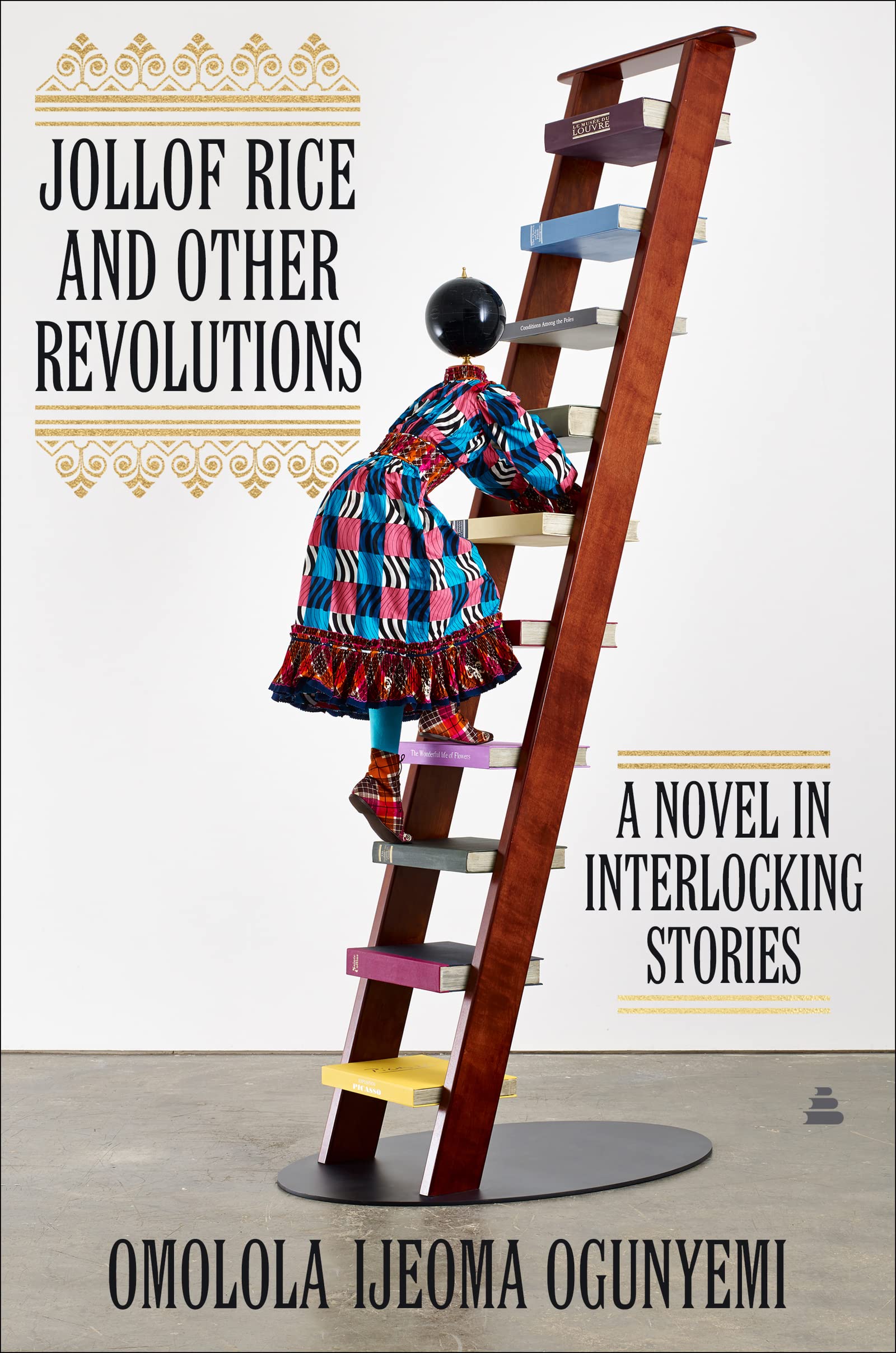
Jollof Rice and Other Revolutions: A Novel in Interlocking Stories by Omolola Ijeoma Ogunyemi
Jollof rice is the stuff my dreams are made of. The whiff of tomato, chili, white-, and black pepper, piquant and nose-tickling, the aroma of ginger and garlic and onion. Jollof is West African, but the recipe and desire for it is universal. In my case my dreaming mind classifies jollof rice as nasigoreng, Malaysian style with Maggi’s cili sos, a sweet and spicy ketchup. Chunks of browned chicken thighs, that crust of flesh and crispy skin, dotted with red grains of rice.
Coming from a rice-eating culture I like to think of myself as a specialist in the business of rice-eating and rice dishes. As a historian and reader of postcolonial literature and archival text, I like to think myself an expert in those domains too. But, I remain amazed by what I do not know; there is always a new rice dish, a new recipe, a new flavor to make my tongue and memories alight. There is always a new perspective, a newly discovered history, another layer of human experience to see, enjoy, and revel in.
Ogunyemi’s Jollof Rice and Other Revolutions is that new rice dish, that new revelation. You see, the stories in Ogunyemi’s novel are like jollof rice, grains tossed together, held together in harmony by a dry sauce. Sweet and salty and spicy, a mouthful of emotions that are sometimes in conflict, sometimes piquant, but always in balance.
The novel is familiar and comforting in its focus on men and women of color, their lives indelibly part of the muss and tumble of Nigerian marketplaces, cities, and villages, so similar to those in Southeast Asia, where chickens are still sold live, butchered and feathered at the time of purchase. A place where fish and seafood lie on slabs of ice that are slowly sweating like the people haggling with each other over their prices. There is the aroma of overly sweet fruit in the air: jack fruit (in Southeast Asia anyway), bananas, some kind of incense. There is smoke and pungent exhaust from a motorbike put-put-putting away. A glot of languages rumbles in the background, ever-present as there is no reprieve for the ears in places like these: dialects, pidgins, mix-n-matches of accents and lilts. On occasion there is a puncture of British English (always British it seems), and a few heads turn to see the foreigner. (It is usually me.) Like a Nigerian market place, Jollof Rice and Other Revolutions is dominated by women and their stories; men are present, they form part of the fabric of the novel, but it is the women and their experiences who thread the pattern and the connections between motifs in its cloth.
Jollof Rice and Other Revolutions is a collection of Nigerian and transnational Nigerian, historical and contemporary experiences, spanning from a time under the British and under British influence (for Britishness and Western-centrism continued even after decolonization) to the present — and here is where it gets really interesting — the future. Ogunyemi’s novel recalls to mind another like it, Yaa Gyasi’s Home Going (2016), but it differs on this particular point: Ogunyemi reaches into the future and lets the reader dwell on our current states through poignant examinations of the present.
Jollof Rice ranges across multiple generations, includes the lives of members of different and intertwined families. The reader is given a glimpse into the past when precolonial gender relations were more fluid. The reader accompanies characters in their education under the British, travels with them as they become transnational cosmopolitans, and will find themselves in the uncomfortably familiar place of racialized, racist America. The reader will find themselves in a near future moment, built on the present and past as we know it.
Sometimes, alongside the odor of modernity and vehicle exhaust, there is a faint scent of history and the supernatural, that which exists beyond the usual plane of our understanding. This is like biting down on a pepper seed in your rice, getting that jolt of zing on the tongue. You can’t be sure if it was a seed or a pepper or a tiny grit of sand. You hope it was the former and not the latter, but then the moment is gone, the thing is swallowed and you continue on with your meal, with your life. The next story is waiting on your spoon. I deeply appreciated how Ogunyemi wove these elements into the novel; what the West deems supernatural is not so in many parts of the “formerly” colonized world. Spirits, ghosts, and memory were part of our cultures before and remain so.
Ogunyemi’s characters and their experiences are what give the novel its unique quality. The characters connect to each other through their shared experiences in schools, in migration, in marriage and love, in childhood and navigating adulthood, in how they reconcile their colonial pasts with their “post”colonial presents and futures. Ogunyemi brings the Nigeria of the past into the present and future through their transnational and transcultural journeys. The characters are related by bonds which are sometimes considered casual; in Jollof Rice unbreakable relationships are broken, death is a cause for life, and disappointment is a gateway to revival. In this way, Ogunyemi delivers to the reader the nuances of human love and its endurance across time and space, makes a case for their eternal universality.
Jollof Rice and Other Revolutions makes me want to grab a friend and say, “You must try this! It’s new!” And how special must it be, that it has taken the old topic of history and identity and made an original spin on it!


 Dr JoAnn LoSavio