Snowbound: A Novel of Suspense by A.J. Questenberg

Snowbound: A Novel of Suspense by A.J. Questenberg

Snowbound is the slow exposure of a long-buried small town mystery. The arrival of a newcomer causes suspicions to rise, old questions are rehashed, and as truths become visible, the lives and community begin to unravel. The story begins with Sam Egar as she moves into a new home and begins to learn its quirks — and the quirks of her new neighbors, some of whom welcome her and others who… well, are a little shady. Soon Sam discovers the shade is far darker than she imagined.

Readers of slow, gothic-style horror will find Snowbound a deeply immersive tale, one which mimics the slow pace of rural life. The novel includes a large cast of characters, the various members of the community past and present, those who vanished and those left behind to sort through the mysteries of the others’ disappearances. (At times this reader found it hard to recall who was who and their place in this tale.)

The novel, compelling as the story is, was less to my personal taste than I had hoped. There were minor issues, which on their own are easily overlooked, however, collectively these errors made the reading less enjoyable for me. There was the occasional — forgivable — typographical or spelling error (“stock” instead of “stalk”, for example), which was jarring, but did not detract from the overall meaning intended (I think). Some parts of the exposition provided unnecessary details and therefore distracted me from the arc of the moment. The most dissonance (for this reader) was caused by structural gaps in characters’ knowledge, which undermined these characters’ development: these were things characters couldn’t know about one another (because they were, after all new to the community), turns of phrase which implied a foreknowledge that wasn’t explained. This is not a literary analysis; and readers, you may find these issues less invasive in your experience of the novel than I.

All this said, on the whole, the prose was well-crafted, if plodding and redundant in parts. The story itself is deeply intriguing, and well-paced to draw out the tension of the mystery. Snowbound is a fitting and fantastic read for those grey wintry months, when one isn’t quite sure what happens behind the closed doors of one’s neighbors…

A History of Hangings: A Novel by A. M. Rau

A History of Hangings: A Novel
by A. M. Rau

A History of Hangings is an indigenous horror thriller. It is the kind of novel that hooks you in from the start. It’s creepy and mysterious, but what really delivers the chills is its depth of history, so ever-present in the novel even though it is never fully explained. It is, in a sense, that shrouded, veiled element of indigenous history, emphasized by the erasure of indigenous rights and history that is so compelling, so horrific; I think that underlying premise makes the book palpably terrifying.

Indeed, the novel and its horror can’t be understood without an acknowledgement of what has happened to indigenous communities in North America. As a reader and historian I greatly appreciate Rau’s attention to indigenous experiences, and the way in which Rau weaves in those awful legacies of settler colonialism.

The novel runs on two timelines: Toby, Faye, and Braxton in one thread of time, Edna Bland in the other, bound together by the captives of the Kesseene people of Oklahoma (a fictitious indigenous tribal community and tribe) in a small, rural Oklahoma town that has disintegrated into poverty and isolation. The Kesseene People’s vengeance has become embodied in something — or someone — and this is the terror Toby, Faye, Braxton, and Edna encounter. I’ll leave it at that; the novel is well-worth the read to discover what happens to them and to the Kesseene people. I finished A History of Hangings in less than a day; I had to know what was going on, who was creeping around, why Toby and Faye were so unwelcome — and what would happen to them.

Rau’s story, compelling as it is, is also very well-crafted and this is a major attraction of the book. Rau’s prose is descriptive, and evocative, with a few well-chosen words; Toby, Faye, Edna, Gil, Tim Jim, and the Sheriff — and even the minor characters they encounter — are fully tangible to the reader. The mood is perfectly captured and sustained throughout the book. Rau’s pace is swift too, delivering the reader to the end where all is explained; it is a satisfying and perplexing ending, perfect for a novel of this genre.

Yolk: A Novel by Mary HK Choi

Yolk: A Novel by Mary HK Choi

Yolk made me feel things, not all of which was pleasant. Nonetheless, I was drawn to finish it, indeed, compelled to finish it.

The novel revolves around two twenty-something Korean American sisters, June (the elder) and Jayne (the younger) living in New York City. June has graduated from college and begun what appears to be a flourishing, successful career, while Jayne is struggling through college. Both are new adults, learning how to navigate relationships and new responsibilities. Both fail the task. But find themselves needing and relying on the other to come to terms with their limitations, desires, their shared history of being yellow and first generation immigrant kids. The reader is treated to a front view of the wreckage of their attempts, watching the sisters bungle every decision as they try to find their way in the world and figure out who they are.

There were parts of this novel I loved, and parts I utterly despised.

I liked the focus on family, and the ways in which being a child of immigrants and the immigrant experience unfolded here, not in a pedantic way that highlights only the awful or only the positive, but all of it. I liked that. But I loved how Choi turned this multifaceted way of looking at the immigrant experience — already great — into a journey that reveals belonging as both a positive and negative transformative factor. I love that Choi acknowledges there is no reconciliation here, no transcending “final” outcome that makes it all perfect in the end.

I liked Jayne and June’s closeness, the assumption of sisterhood. I enjoyed being a voyeur to their dysfunctional relationship.

I hated their privilege, and their obliviousness to it. To be blunt, I hated Jayne. Jayne reeked of “I am the main character” vibes and I couldn’t stand her immaturity. June wasn’t a favorite either. But that said, I appreciated Choi’s ability to make such a horrible characters so readable. Much as I hated the sisters, I had to know what happened to them, how it all resolved in the end.

I don’t think I’d ever want to read Yolk again, but I’m glad I did read it once.

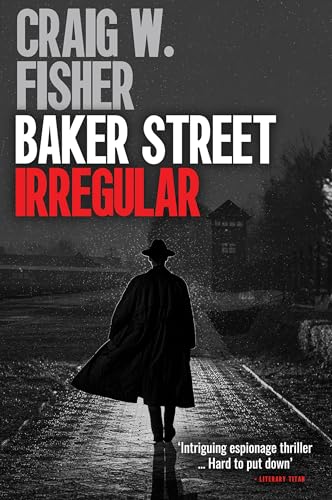
Baker Street Irregular: A Novel by Craig W. Fisher

Baker Street Irregular: A Novel
by Craig W. Fisher

Readers who love a good spy novel, immersive writing with fleshy details, and large casts of characters will find a gem in Baker Street Irregular.

The novel follows a WWII British spy, Bill Hoffman, as he navigates Nazi occupied Europe, attending to the missions he has been tasked with. His primary task is to track a Nazi official in Vichy France, but events lead him to a deeper mystery.

I have mixed thoughts about Baker Street Irregular. On the positive side, Fisher is adept at storytelling, weaving the historical fabric of WWII through an intricate interaction of historical details and dark, noir-ish mood-setting scenes. The story is compelling. And Fisher is a good writer, possessing a unique voice and style. Fisher’s characters too are clearly visible. The novel reads like literary fiction: deeply reflective and full of wartime shadows.

But, some of these same aspects of the novel lost me as a reader. The pace of the novel is slow; long and numerous pages flow without progressing the arc of the story, even as they contribute to making the grey landscape of war tangible for the reader. Pages and pages would pass without a clear direction of where things are headed. At 328 pages — not including Historical Notes and a Glossary of terms at the end — the meanderings within the novel induced torpor, rather than interest. There are also numerous characters; Fisher’s attention to detail suggests each one is one to remember, leading this reader to forget many of them for lack of memory to track them all.

All in all, Baker Street Irregular delivers on its promise. Readers who enjoy historical fiction set in WWII or languid, noir novels are very likely to find it gripping and satisfying.

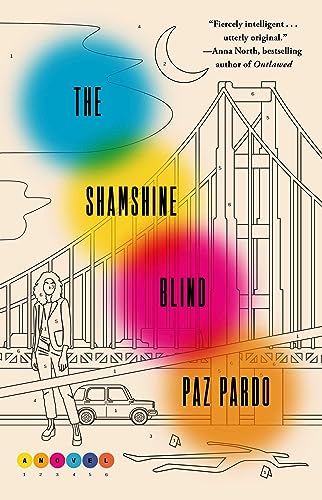
The Shamshine Blind: A Novel by Paz Pardo

The Shamshine Blind: A Novel
by Paz Pardo

I absolutely love love LOVE this novel. That said, it took me four attempts to actually become immersed in it. My first attempt told me that this was a gorgeously written novel; I could tell immediately that the prose is sharp, precise as a scalpel, so on point that one could cut diamonds with these words. But my mind wasn’t in the right place; I couldn’t focus on the investigation, my mind wandered. It happened again on the second and third attempts.

And yet, I refused to give up on this novel. I shelved it, but I kept picking it up. I knew something good was in it, but my head wasn’t in the right space. Could there be some truth behind Pardo’s emotion counts? Do feelings linger in the atmosphere?

My fourth plunge into this novel was as deep as I could get. I finished it in two and half days, prolonged because work interrupted my reading.

This novel is everything a reader could possibly want. The Shamshine Blind is amazingly original in its concept and delivery, even while it builds on the roman noir, hard-boiled detective trope. Its guts make it a mystery and thriller, but the prose that flows is literary liquid.

Its landscape is foreign and familiar, its world is one of speculative fiction; the setting is 2009 in an alternate reality where the Argentines won the war against the United Kingdom for the Falkland Islands — the Malvinas — and then went on to decimate the rest of the world. The Argentines’ weapon of mass destruction was a work of chemical genius: capturing emotion and concentrating it into a deadly debilitating bullet. The science didn’t stop there and in this reality society must now grapple with mind-altering drugs, psychopigments, which alter our emotions, our reactions and responses, our behavior. “Your Emotions Are Not Your Own” is a warning repeated in the novel.

Kay Curtida is the detective put on a psychopigment case, a homicide — which, when its layers are peeled away, reveals something much larger and far more corrupting than simple murder is at foot.

And I’ll leave you hanging there. Go read it.

The Foreboding: A Novel by M.J. Foley

The Foreboding: A Novel by M.J. Foley

As with several other indie novels I’ve reviewed, I found this one through a FB group I am in.

The synopsis of the The Foreboding intrigued me. Here is the description from its Amazon webpage:

Destination drawn unceremoniously from a hat, quiet, bookish Shiloh leaves her cliché life and all the expectations that went with it without any intention of looking back. Upon arrival in her new city, a dark past lurks in her musty apartment and invades her subconscious. She is quickly enveloped into an unbelievable plot that turns her assumptions about the world upside down. When personal tragedy and evil unmask a long-standing plot for power and dominance, Shiloh is forced to confront the unharnessed potential of the human mind and the interconnectedness of the world she worked so hard to learn about in school. Through the painful introspection of early adulthood and eye-opening discovery of scientific truths beyond her wildest dreams, Shiloh must learn to trust her own instincts and an unlikely group of comrades to fight the power of obsession and control threatening to obliterate all she holds most dear.

The novel has a strong start. I was especially impressed with the quality of writing in the Author’s Note — and the novel premise of its story. However, and sadly for this reader, while the novel did deliver a story that bends and challenges our conceptions of physics and nature, the novel failed to engage me emotionally and create a landscape of possibility beyond the microcosmic world of its characters.

My personal preference is for character-based literary fiction, stories in which the human connection is the fulcrum around which the rest revolves. The Foreboding lacked the character development I wanted. Shiloh came through as a distinct, fleshy voice, a strong presence as the novel’s lead protagonist, but Margaret and the others felt flattened, making it difficult to understand their motivations and purpose in the novel, especially in their interactions with Shiloh. In some parts, the dialogue — even Shiloh’s — felt contrived; likely as a result of a lack of character development, their words sounded hollow, conveying the author’s voice and intent more than their own.

For this reader, the story required smoother introductions into its concepts and more nuanced context to both bring the landscape around its events to life, and highlight its events as a singular. The world Foley suggests is an unique and intriguing one, but this quality is obscured by a too-casual framing of those events.

All this said, The Foreboding delivers on other points. First, it is technically well-written. There are few, if any, typographical errors. Its syntax, grammar, structure, and organization are largely correct, and were clearly considered with care. Second, the author has an interesting, original, and creative premise. There is a story here worth the telling, even if this reader found its delivery lacking.

As such, my overall review is mixed. Readers should read The Foreboding themselves, as they may find their experience of it to differ from my own. The novel can be purchased on Amazon here. The paperback is $16.83, the hardback $27.43, and the ebook is available on Kindle Unlimited and for purchase for $3.99.

Believe Me: A Novel by Molly Garcia

Believe Me: A Novel by Molly Garcia

Believe Me is the kind of novel that defines its genre. It is the perfect psychological thriller, with all the twists and turns and impossible possibilities that make readers clench their teeth while reading.

The novel begins with an explosive arrest; Carrie is carted off while doing her weekly shopping. She is accused and then convicted of murdering three young children in the woods. But did she really do it? The novel revolves around the psychiatric report ordered for her parole hearing several years later, and the investigation Dr Quinn, her appointed psychiatrist, discovers he must conduct to properly write his assessment of her.

Did she do it? Why? Where are their little bodies buried? These are the questions that haunt the compassionate doctor — and the reader.

For readers who enjoy psychological thrillers in the vein of Tana French or Sue Grafton, Believe Me will deliver abundant satisfaction. I found myself comparing Garcia’s novel to Margaret Atwood’s Alias Grace, though this novel is set in the contemporary moment, and a far shorter read. Believe Me is a compact 184 pages, and very well-written. I found myself especially drawn to Garcia’s dialogue. The characters come alive through their conversations; their voices are clear and distinct. Garcia’s prose was smooth and evocative. This reader could feel the tension between Dr Quinn and his patient, between the doctor and the staff at the prison where Carrie is an inmate. The mood Garcia creates is a veil obscuring the truth, one the doctor and the reader will claw at.

Believe Me kept me tilting on the edge throughout its 184 pages — and the ending! What a twist!

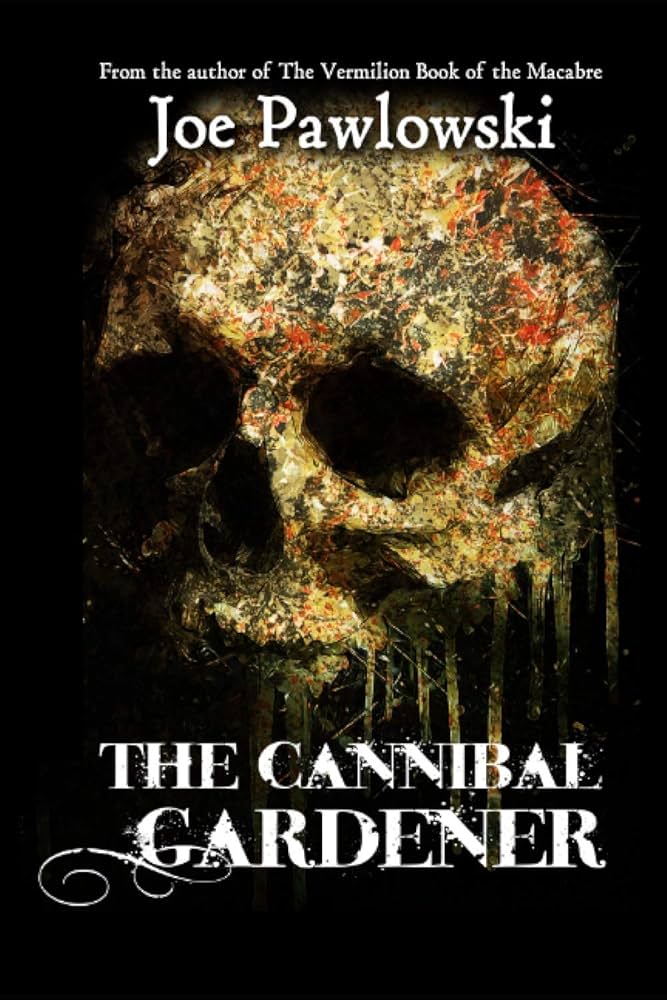
The Cannibal Gardener: A Novel by Joe Pawlowski

The Cannibal Gardener: A Novel by Joe Pawlowski

I am kicking myself for letting The Cannibal Gardener sit on my (ridiculously, 4-digit long) TBR List (To Be Read) for as long as I did. This novel delivered on all the horror and squeamish discomfort it promised. For readers who enjoy paranormal and historical elements, delight in having their own sense of security in the Righteous Ways of the World shaken, and well-delivered gore, this exploration into cannibalism and flesh-lust is a must-read.

That said, readers should be aware that gore here is not for the faint of heart. The subject matter, cannibalism, is already one which pings our most primal fears. The idea of consuming human flesh twigs an evolutionary nerve in our psyche the wrong way; we are social beings, needing the survival of others to secure our own. Even in a case of hyper-evolution of the competitive drive as individuals seek to enhance evolutionary fitness, human culture has developed an universal anathema to indulge in killing and eating a member of our own species. An odd quirk of humanity, as one character in the novel, Denise, notes.

This nauseating subject is also what makes this novel such a good horror read. And it is indeed, all about cannibalism. The novel is an entanglement of its characters’ diverse stories, each one eventually weaving together with another until all come together at the end. Their disparate lives are connected by this ugly, bloody practice in some way. Edmund, Denise, Milo, and George are the primary protagonists of the novel. Each of them engages in the profane act in some sense and this draws them into an ancient goddess’ cruel net.

Aside from the lurid story itself, Pawlowski’s fast-paced prose, adeptness at storytelling, and nuanced character development is an major appeal. The novel flows at a pace which fuels the urgency of events and, yet also linger on the characters’ voices and inner dialogue. The resultant surge and lull allows the reader to feel the thrill of a mystery and immerse themselves in the interior world of the characters. This is in part achieved by allotting each chapter to a different narrator.

The prose is mature, as is Pawlowski’s authorial voice. It is consistent, succinct, expressive. It is also clear Pawlowski’s journalistic experience enhances his craft. Not only have his observations of human behavior led him to create fleshy characters (forgive the pun!), his decisions of what to reveal and when reflect a deep understanding of his audience. I also much appreciated his vocabulary; the novel’s language borders on the intellectual. I mean this as a compliment. Its precision delivers a sharp image of events to the reader, leaving well-placed gaps that each one may organically fill in with their own imagination.

I look forward to Pawlowski’s other horror fiction…

The Blackout of Markus Moore: A Psychological Thriller (Novel) by Dan Grylles

The Blackout of Markus Moore: A Novel by Dan Grylles

As I expand my literary horizons out to self-published and independently published novels, I find myself also drawn to genres I wouldn’t normally choose for myself, in this case, thrillers. I’ve only ever occasionally read mysteries and thrillers, though in retrospect, after reading them I find I’ve deeply enjoyed the suspense.

Suspense is one of the appeals of The Blackout of Markus Moore and it has it in abundance. Indeed its mystery is spun out to the very end. For readers who enjoy domestic thrillers, reflective and tortured unreliable narrators, and edge-of-your-seat urgency, this is the novel for you.

The novel opens — and reads — like a blockbuster film, with a bang (literally) and the blackout of the its eponymous protagonist. Markus is blind to his past, to his present, and finds himself chasing who he is just as much as he finds himself being chased relentlessly by others. This is a man born under an unlucky sign, but there is the possibility that he has designed this complicated constellation himself — and is now the victim of his own making. Readers may find themselves both rooting for and against Markus; even he himself isn’t entirely sure of his role in all this mess. I will leave it to the reader to discover the outcomes themselves.

But they should know there is little time to catch their breath; the novel accelerates, rather than slows down. There is no lull in this thriller. Moreoever, it culminates in an unpredictable, surprise ending. At 256 pages, the novel delivers its payload quickly, which, for some readers who dread heart palpitations, this will be a relief. Though, I imagine, most readers who favor thrillers will love the breath-catching factor of this novel.

Grylles’ prose sets the quick pace of the novel; it is straightforward and succinct, even while it permits the reader — and the novel’s characters — time to ruminate and reflect on events. This is a plot driven novel which proceeds much as a film of its genre would, with one thing leading catastrophically to another. That said, its characters — Markus, Maria, Clark, and even Jackie — are fully fleshed out individuals, visible to the reader both in terms of their physical representations and as players in the fatal cat and mouse game that runs Markus into a frenzy.

Overall, The Blackout of Markus Moore is well-crafted, both in its delivery and conceptualization, a true seat-gripper of a thriller. Readers who would like to purchase it may find it on Amazon here in paperback for $11.99 or read it as an ebook via Kindle Unlimited (subscription required).

The Unforgiven Dead: A Novel by Fulton Ross

The Unforgiven Dead: A Novel by Fulton Ross

This Tartan Horror/Mystery had me creeped out in the middle of the night! And yet, I couldn’t put it down, spine shivers be damned!

The novel revolves around a murder of a young girl and the mystery of her gruesome death, as seen through the eyes of the local constable who is investigating it, Angus. But this policeman is extraordinarily gifted with paranormal (in)sight, a legacy of his own haunted past. What results is a deeply engrossing whodunit woven through with Gaelic history and culture. For readers who enjoy hints of the demonic, pagan, and ancient evils, The Unforgiven Dead will have you prancing a ritual dance. For readers who love a twisted murder mystery, one in which the murderer is hidden in plain sight alá Agatha Christie, The Unforgiven Dead will absolutely make you squeal once the culprit is exposed.

But the story alone is not the novel’s only draw. The characters of this novel are deftly crafted, their dialogue mimics life, their motivations are raw and human and utterly flawed. For readers of literary fiction, the trials of Angus, Nadia, Gills, and Ashleigh will rent your heart. Their lives mimic reality and their hurts are ones we are likely to relate to, if we don’t know them well already.

The Unforgiven Dead leaves me pining for a moody, grey Scotland more than I could have imagined.