
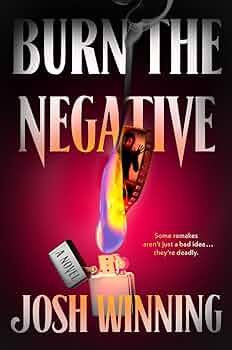
Burn The Negative: A Novel by Josh Winning

Burn The Negative: A Novel by Josh Winning

It’s such a cliché to say “I couldn’t put it down!” but with Burn The Negative it was so true! Thrillers set in contemporary digs are rarely my chosen genre, but every once in awhile a little thrill appeals to me and relieves me from the setting and character-driven interiority of historical or literary fiction. Burn The Negative had everything I wanted in a thriller: compelling characters with flawed, awful motives; a fast-paced plot that left me thinking “Oh no, what the WHAT?” as things go from horrendous to abysmal; mysterious hints that led me to announce “Aha!” far too early; and, the cherry on top: a twisted ending.

The novel opens with a fabulous line, immediately a portent of fuckery on a grand scale. A young women is headed somewhere she’d rather not be. It’s for work, but it isn’t really, and she’s having a bit of a nervous breakdown over it. The woman is the novel’s protagonist, Laura, who is a former child actor, now tasked with rehashing her Hollywood trauma as a journalist writing an article about the remake of the horror film that killed her career and ended her normal psychological development as a teenager. This is a novel that revolves around the drama of Hollywood on multiple levels, leaving the reader feeling very much like they are watching a Netflix Original horror film unfold in text.

As the remake of the film progresses, things go unbelievably wrong. But is this marketing? Is this the curse of the original horror film? Is it Laura herself? Both the remake and Laura’s memories of her Hollywood nightmare disintegrate into a surreal soup, leaving the reader wondering if there is something paranormal at foot or not.

The story alone is not the only draw of the novel. Winning’s prose is witty and the book includes fun elements — flashbacks, articles, ephemera, movie lore — which flesh out the story arc, provide context, and make the novel feel deliciously kitschy. This book is fun.

Fans of horror films, horror film lore, haunted media, and fast-paced mysteries can fully expect to enjoy Burn The Negative.
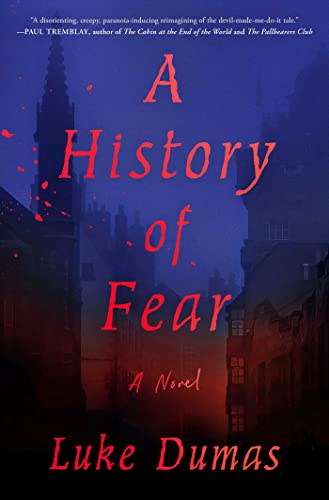
A History of Fear: A Novel by Luke Dumas

A History of Fear: A Novel
by Luke Dumas

By page three, I was hooked. The ending comes to a perfect, organic conclusion — but I readily admit that if Dumas writes a sequel, I’m all in.

A History of Fear unfolds like Stoker’s Dracula, adopting an epistolary approach, delivering the story via journal entries, letters, official reports from doctors, prison officials, and newspaper articles. The novel dives deep into the most disturbing parts of human psychosis reminiscent of Dostoevsky’s Crime and Punishment. It delivers gothic horror too, in the manner of Shelley’s Frankenstein. In the end, the reader can’t be entirely sure of who is the monster, if demons are real, if evil is more human than we comfortable with. A History of Fear is a horror fan’s feast: gore and psychological terror stride side-by-side, the paranormal and the divine and the mundane intertwine to create a world the reader is never entirely sure is real. Illusion may very well be reality… or worse.

But the story is not fantasy; there is a real history embedded in this novel — and a commentary on a history of monstrous bodies, sexuality, religion, and intergenerational trauma. There is a reality underlying the one Dumas weaves for us. This is what makes the novel so appealing; there is a real horror here, one that we can recognize. This history is one that might be so common as to be truly terrifying because it might actually exist within ourselves. Or someone we know.

A History of Fear follows the main character’s slow descent into madness — or his ascent into clarity, depending on your interpretation. There is a true mystery here and this drives the story forward. The reader needs to discover what the main character also seeks: some sense of closure and parental acceptance. The main character is driven by a need to know themselves and their past. This is a genealogy of a family and the homophobic culture of the West. Dumas focuses on the psychological damage inflicted on those who deviated from the dominant norm and those who dared to question their place in it. The novel travels between the past and the present, each part of the jigsaw puzzle adds to the image of the whole of time, allowing the reader to witness the unraveling of the man’s mind and the suffering caused by intergenerational trauma.

The novel opens with the main character’s eventual, inevitable fate; this is the mystery. We know what happens to him. The mystery is why and how. The horror is the long arm of intergenerational trauma.

A wonderful book to have read in October, the Halloween month, but really, a fantastic gothic horror for any time of the year.

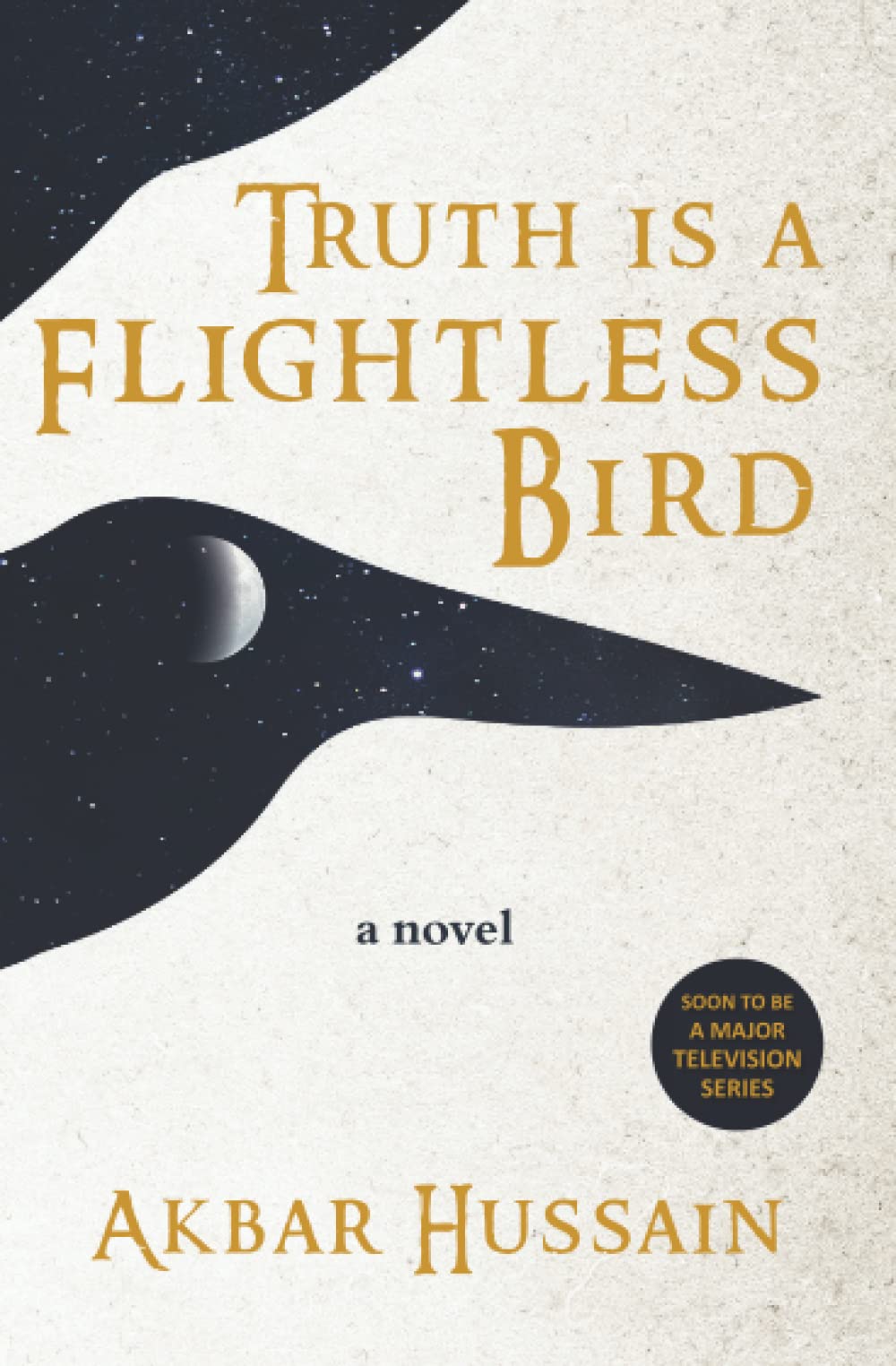
Truth is a Flightless Bird: A Novel by Akbar Hussain

Truth is a Flightless Bird: A Novel by Akbar Hussain

Thrillers are not usually my jam, but after reading Truth is a Flightless Bird I wonder if they should be! This novel was a breathless rush from beginning to end. I can see how this would make a fantastic television series and I am looking forward to seeing the unravelling around Duncan, Ciru, and Nice on the screen. I even want to see Toogood — which is a commendation to Hussain’s skill at writing terrific flawed villains.

The novel is explosive from the get-go. Nice is a drug mule flying from Mogadishu (Somalia) to Nairobi (Kenya) and Duncan, her friend and a pastor, is unwittingly dragged into the mess that she has made of this illicit mission. The story revolves around Duncan’s nightmare as drug dealers, corrupt officials, petty thieves, and others attempt to take advantage of Nice and the dangerous situation which naturally results from ingesting and walking around with drugs in your body. Ciru is one of those individuals who attempts to use Nice and the drugs to further her own agenda. She is a witch doctor, a con-woman, a mother who has lost her wayward child due to the machinations of others further up in the drug-smuggling world. Toogood is a Somalian gangster, also trapped in this convoluted drug-criminal world trying to make amends for a past he had little control over. Then there is Edmund, a young man deported from the United States, and Hinga, a corrupt police officer, and a crew of other characters who each come into the tale with their own ambitions.

As a thriller, there isn’t much interiority to these characters, but the reader will discover that no one is who they seem to be on the surface. The truth matters very little in this underbelly world; what matters is using what you have to get what you need or what you want. I don’t usually try to read too much into thrillers; but, it is here — in this discussion of the utility of truth — that Hussain’s title has to give the reader pause to reflect. There is something being said here about the futility of struggling against tides that are out of our control. Truth is one of those obstacles, or at least, the idea that there is a single Truth, capital T. All the characters of this novel, Duncan, Nice, Ciru, and Toogood, have found themselves in situations less than ideal, despite their best efforts. The truth, their truth, does not matter to the forces and people who hold the reins of their lives. It should not even matter to themselves; to survive Nairobi they’ve got to let go of the idea that there is only one truth, one version of events, one version of a person. They have to let go of an idea of themselves that either doesn’t really exist or will drag them down. In a way, their blind pursuit of truth stifles them, prevents them from taking flight — being free.

The novel also makes a subtle comment on the corruptibility of the human soul — and the possibility of redemption. As events unfold, it becomes clear that the characters are more than what they appear. They are flawed, corrupted, but that doesn’t mean they are wholly bad people. The bad decisions they’ve made in their lives should not define them, but inevitably do. The novel is about their attempts to right their wrongs. Some of them succeed, some of them fail — and spectacularly. Entwined in a drug-smuggling mess the characters find that one error leads to another one, deeper and darker and more dangerous than the last.

Plot and characters aside, Truth is a Flightless Bird is a fantastic novel of place. It gives the reader a view into a world most of us will never get to see or experience in person: the seedy underworld of Nairobi and Mogadishu. I don’t doubt these worlds really exist. Every city in the world has its unsavory parts, its criminal societies, and there are good people everywhere who are drowned in it. People like Nice and Duncan and Ciru. Even Hinga and Toogood. The interactions of the characters, the crimes committed, and Hussain’s prose take the reader there, immerse them in it for a brief moment.