What more could I say about this classic work of the Shoah? I’ll start with when and how I obtained my copy. I won it as part of a Goodreads giveaway in 2022, when Maus was hitting its school/library book ban (to date) and the book was featured in all sorts of news media, for better or worse, and copies of it were whizzing off online and physical booksellers’ shelves (a good thing!)
I was thrilled to get a copy as I had never read it, though of course, I know and teach the Holocaust in my classroom.
Reading it humbled me, as all novels and non-fiction of the Holocaust does and should, but the visual aspect of the graphic novel did it in ways I had not expected. As one can guess from its iconic and unforgettable cover, Maus is populated with mice, cats, and dogs rather than humans. The dehumanization of the Jewish people by the Nazi regime was no less poignant for this swap. Perhaps it is even more powerful; animals are an obvious metaphor: the hunters and the hunted, the obedient and the illicit.
Aside from the personal, intimate view into the Holocaust experience, I deeply appreciated Spiegelman’s portrayal of adjustment to emigration, and the struggle of the following generation to understand the depth and pain of those who had suffered through it. What happens afterward is equally worthy of attention as the event(s) of the Holocaust itself; really, these are not discrete events. These scenes made it clear the Holocaust is not a finished incident, but a deep intergenerational open wound spanning decades.
Facing the Mountain: An Inspiring Story of Japanese American Patriots in World War II by Daniel James Brown
I joined my local public library Adult Book Club and this was the first book I read with the group.
As an Asian and Asian American, I was immediately drawn the subject matter in Brown’s book. Given the rabid anti-Asian hate that has been on the rise in this country since Covid-19, non-fiction like this serves to do more than illuminate obscured histories; they emphasize the significance of diversity in American identity and entrench the idea that Asian American citizens — long held as “perpetual strangers/aliens” — belong in American society.
Facing The Mountain did not disappoint. While the book is a non-fiction history written for a popular press and a general adult audience, its methodology and archival research would more than satisfy any academic reviewer. Brown drew, not only from archives, but from oral histories and interviews to produce a historical monograph of significant breadth.
The book begins with the Japanese and Japanese American community in Hawai’i, but also explores the larger Japanese diaspora in the United States, on the mainland. Indeed, one of the highlights of the book is its attention to the diversity of voices within the Japanese American community: Mainlanders and Islanders came from very different cultures, sometimes held opposing views, and certainly cannot be assumed to be a monolithic society with a single voice. Its chapters explore the nuances of these different ideas within the community and how Japanese people across the United States, diverse in their social and economic class, gender, and generation, reacted to and handled the Presidential executive orders which sent them to internment camps and cast them out of American society as “enemy aliens.” Chapters document Japanese citizens’ resistance, compliance, sorrow, and joy, allowing the reader to witness the experience of WWII in many ways.
Facing The Mountain focuses heavily on the military experience as well, both domestically and abroad, which made the reading of this book novel for me. I do not typically gravitate toward military histories, finding many of them dry and clunky. But Brown turned this into a social history of the US military and the 442nd Regiment, making it a lively and very enjoyable read.
This was the very appealing part of Facing The Mountain for me; Brown made this political and military history feel intimate. It is, in fact, a prosopography. Facing the Mountain follows a cast of specific individuals and families who occupy different roles, careers, and places in the United States and American society. Through their experiences the readers views the entire landscape of the Japanese American perspective of WWII.
Fatherland: A Memoir of War, Conscience, and Family Secrets by Burkhard Bilger
Fatherland: A Memoir is a must-read for readers who gravitate to histories of the European theater of WWII. The book is a case study, illuminating aspects of the human side of these histories which are often left in the dark: here, what happened to those millions of Germans who were caught up in the Nazi machine, willingly or otherwise? Significant numbers of the German citizenry did not support the Nazi party, but as the regime gained power Germans were pressured into adopting or participating in its politics in both minor and significant ways. Thousands were caught between survival and their beliefs, others benefited from the regime’s policies, witnessing no ill-effects as so many millions of others did.
War and ideological divides produce so much more intimate conflicts and consequences than politics would suggest. Fatherland makes this complexity abundantly clear, and more importantly, without being apologetic or sympathetic to Nazism. Indeed, it highlights the different between Nazi party members, Germans, and the Nazi state, forcing the reader to see beyond the inaccurate and unjustified conflation of these constituents with one another.
Bilger dives into their own family history to produce a prosopography, one which explores the complicated consequences of surviving the Nazi regime before, during, and after the war, especially for those who were forced or otherwise minor participants in state operations. Their family derives from a region of Europe straddling the often fluctuating boundary between France and Germany, Alsace and the region around the Black Forest. This geography has — and continues — to produce a culturally and politically fluid community. Bilger also looks beyond their own family, including the personal war-time histories of other German and French citizens in their proximity: for example, mayors of the myriad of French-German towns who were caught in the Nazi and French crossfire, and women who were forced to interact (in platonic and other ways) with German soldiers or Nazi officials.
During the interwar and WWII years, citizens found themselves dispossessed of either their French or German identities, subject to changes in language, dress, and culture as politics blew one way or the other. After the war Germans and French alike found themselves needed to pick up the pieces of their lives, and grapple with former enemies living in their midst. Questions of culpability rent communities and families apart in the aftermath of WWII as war crimes were being prosecuted; to what degree was Life and the Need to Survive responsible for the choices that people made? To what degree was circumvention of Nazi policies a resistance against Nazism? Did local officials and citizens pander to Nazis out of genuine belief in the regime or were their actions made under duress? Did neutrality absolve people from being responsible for war crimes that occurred?
Indeed, the years following the end of war were some of the hardest, perhaps even harder than during the war for some Germans and French. This aspect of Fatherland is, to this reader, its most poignant and significant contribution; war does not begin with a declaration, nor does it end with a surrender and a treaty. War begins so much earlier, the combat and physical destruction being only its peak, and it lingers on for years, even decades, afterward. Bilger reveals that in the case of Germans, the effects of WWII remain today; it is a scar stretched across multiple generations.
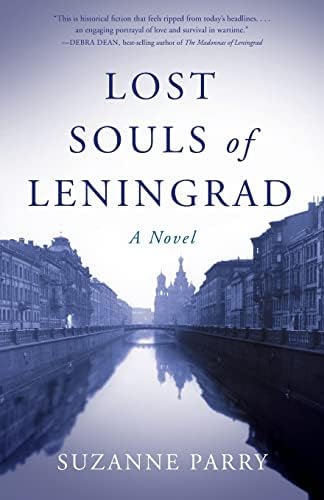
Lost Souls of Leningrad is a rare novel about the Russian civilian experience of World War II. Even rarer, its primary protagonist — and the character through whose eyes this experience is filtered — is a late-middle aged woman, a widow. (I am not a fan of romantic WWII novels that involve beautiful young women who all wear red lipstick, have perfectly coiffed hair, and fabulous clothes in the middle of wartime. Hello? Rations? I mean, COME ON.)
Parry’s novel possesses a more realistic portrayal of wartime. Its setting is Russia, a nation besieged by Nazis. There is a tightrope tension, drawn even tauter by dwindling supplies of food and medicine. Lost Souls of Leningrad does not romanticize war; events and experiences that other novels paint in sepia tone, Parry swathes in a more authentic grey. The sense of loss, a grieving for the world that was, is palpable in Lost Souls of Leningrad in a way that makes it refreshing as a novel of WWII.
The story revolves around an aging, widowed violinist and her teenaged granddaughter. But the novel is not about them alone. Lost Souls of Leningrad is a landscape of a European city at war. Parry reveals to the reader the swift and terrible death and decay of an urban place and its people when the trappings of civilization are ripped off by war. Food and the lack of it, water and the lack of it, the stench and the unavoidable abundance of it. Fear from all the dark corners, lives cast into darkness in the absence of street lights, electricity, law and order. The other characters are Russian soldiers, mothers, wives, and orphaned children. All of them are the lost souls of the title, each of them has lost something, whether a loved one or a parent, or simply their sense of security in ordered society that they once had, even if imperfect. Loss and grief, not only as a result of war, but through political upheaval, are themes that imbue the book. The novel draws a line between the time before and the time after, the time of war, and afterwards, even when war is over, there remains a division of before and after.
While the novel does not romanticize war, there are romantic threads in its storylines. There is love in this novel in various forms: nurturing and mothering love, parental love, innocent and childish love, romantic love, the kind of love that is weathered by life. While a defeating hopelessness pervades the novel (it is war, after all), there is also an uplift via its characters’ resilience. This strength manifests in many forms but most prominently through love and kindness.
As a historical fiction, it portrays a more social version of history than a military or political one. Readers should not expect dates or events, but an overall texture of life in wartime Russia. This is not a historical fiction that relies heavily on the facts of history, though the timeline of events does follow authentically in line with actual history; this is a novel about the human experience of war, lived and sensed through the skin, the eyes, the nose, the tongue.
This a beautifully written novel about surviving loss of different kinds and the love we need to do so.
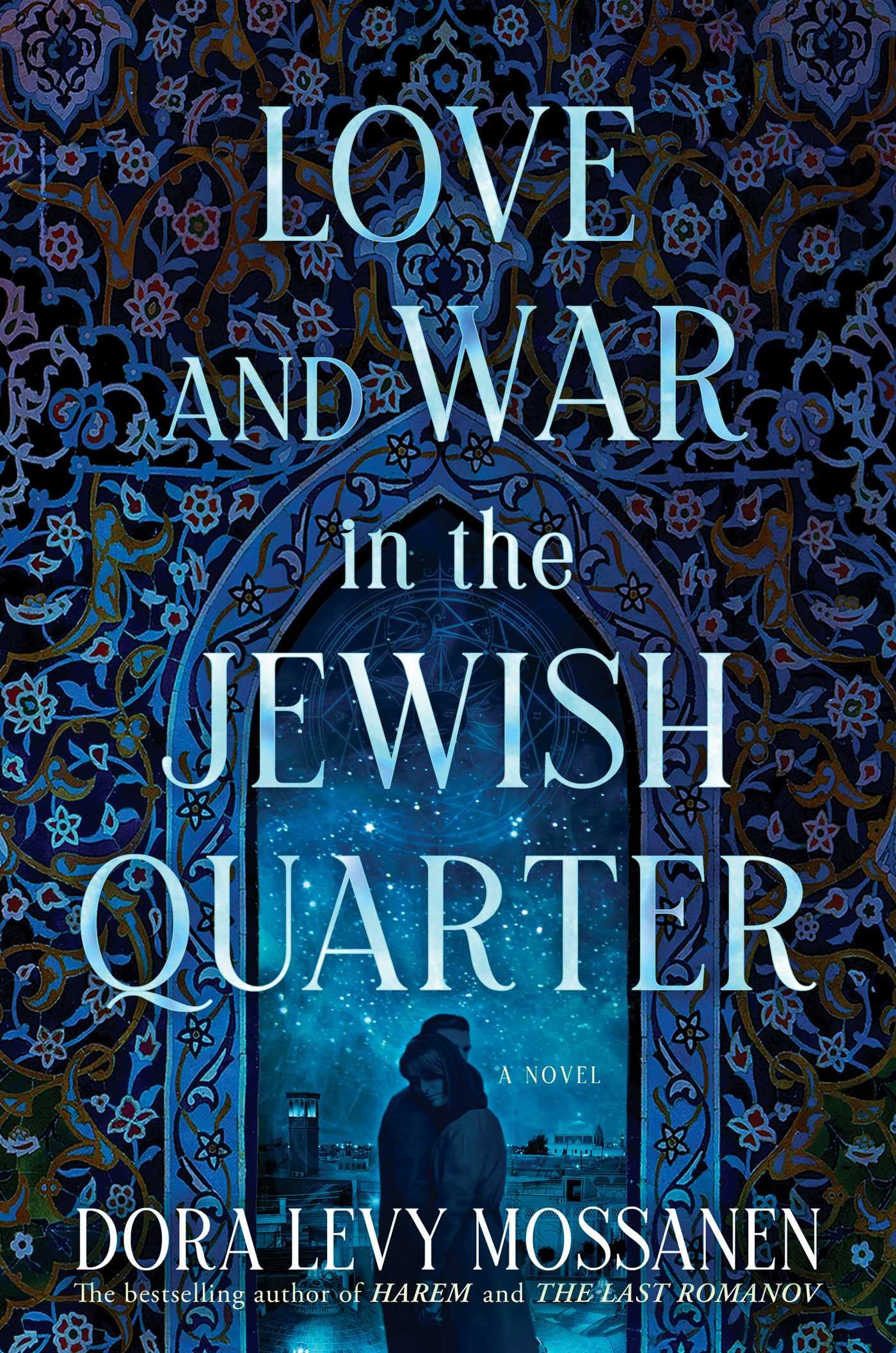
Love and War in the Jewish Quarter: A Novel by Dora Levy Mossanen
Set in Iran in the 1940s, Love and War in the Jewish Quarter captures Jewish life and culture as it existed in tense contest and precarious harmony with and within the majority, ruling Islamic community. On the fringes of World War II, but dangerously within the political reach of the Nazi regime and Soviet pressures, Iranian Jews must balance their interactions with Muslims even more carefully than they always had. The Allies are a distant factor; they are not a guarantee of safety as news of Hitler’s internment of Jews creeps ever closer.
It is in this tension that Jewish dentist, Dr Soleiman Yaran, finds himself. He is trapped in the conflicting intersection between his Jewish community and roots, the powerful Iranian royal family and governors of the land, his family, and his personal desires. The novel revolves around his attempt to unravel and reconcile his responsibilities and his personal happiness. Embedded in these tensions are deeper, more global undercurrents: as a medical professional schooled in Paris, Yaran also finds himself — as an agent of a Westernized modernity — at odds with ethnic, religious traditions, Jewish and Muslim alike. The war is not the only conflict highlighted in this novel; friction also exists in culture between the traditional past and the modern present. There is a shedding of superstition and tradition in favor of new technologies and practices, beliefs about the roles of men and women in their communities. Gendered expectations, visible through the performances of wife, husband, child, lover, parent, elder, and filial piety, duty to one’s community, and duty to one’s self are strong themes throughout.
Mossanen delivers this internal and historical drama through a romantic storyline, but readers will be disappointed if they expect a historical romance, for a romance it is not. This is a love story about love in the real and brutal world, where individuals are buffeted by cultural and community expectations and traditions. Its realistic setting and story are the novel’s appeal; the unpredictability of life will keep you, Reader, on your toes throughout.
The characters too, are fascinating — multi-faceted and tangible — because they are reflections of real internal conflicts. They are flawed and spurred on to their actions by subjective logics, some which make little sense, except when viewed within the larger landscape of this history and cultural context. The villains in this novel are human in their cruelties. The heroes and heroines are human, unable to manifest impossible archetypes.
A worthy read for all fans of historical fiction of the 20th century.



 Dr JoAnn LoSavio