Playing Doctor: Part 3, Chief Resident Tumbling Towards Medical Practice by John Lawrence

Playing Doctor: Part 3, Chief Resident Tumbling Towards Medical Practice by John Lawrence

Lawrence gives us a hilarious memoir, one that rips the bandaid off the mystery of the medical profession (am I punny, or what?) Playing the Doctor Part 3 highlights how human our medical professionals are. Their trials and insecurities are no more tragic or exotic than our own (non-medical professional here). Lawrence’s prose and smooth sense of phrase is a large part of its success; brevity and levity are promised and delivered.

I won this book on Goodreads giveaways, which is why I don’t have Part 1 and 2; but, I did consider buying Parts 1 and 2 before reading this one. I didn’t, but Lawrence’s humor and wit made me think about it. As a reader of only one part of this series, I can say that readers will find it possible to dip into it without needing the previous parts; Part three stood on its own. That said, there are references to events from Parts 1 and 2, which may have added to the joy of reading this memoir.

The ability of Part 3 to function well as a standalone is, unfortunately, also one of the books detractions. There is no overarching single narrative or story arc, but rather a series of chapters which could be discrete works on their own (except for the references to past events). The result is that Playing Doctor reads more like the Diary of a Doctor, rather than as a novel. Readers might find they could put down the book and not return to it, as there’s no inherent incentive to “know what happens next.” This is, sadly, what happened with my reading of it; I think I finally completed it reading it on the third attempt, with several months lapse in between.

Overall, however, it is an entertaining read, one which is likely to make you smile and grimace simultaneously.
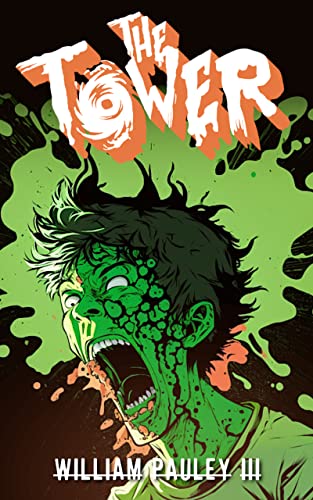

The Tower & White Fuzz: Bedlam Bible #1 and #2 by William Pauley III

Bizarre is the only word to describe these stories. The Bedlam Bible series, of which The Tower and White Fuzz are the first two novellas, revolve around a residential building in which the residents are trapped. Strange, monstrous things happen to them. They are often themselves the monsters. There is a sense of gothic madness in these tales.

In The Tower, we are introduced to the building, the Eighth Block Tower, where these events occur. The Tower consists of three stories: “Hypanogogia,” “The Invalids”, and “Under Green Brain”, while White Fuzz is its own standalone story.

I hesitate to tell you any more, because it really would ruin the surprise and shock of reading them yourself. Readers who enjoy speculative fiction, horror, or science fiction are likely to enjoy the otherworldliness of these stories. Collectively, they ride the border of horror and science fiction. Readers will find them reminiscent of Kafka and Kavan in that there is an internal insanity at play here. Or, if television is your thing, one might liken them to American Horror Story or particular grotesque version of Black Mirror.

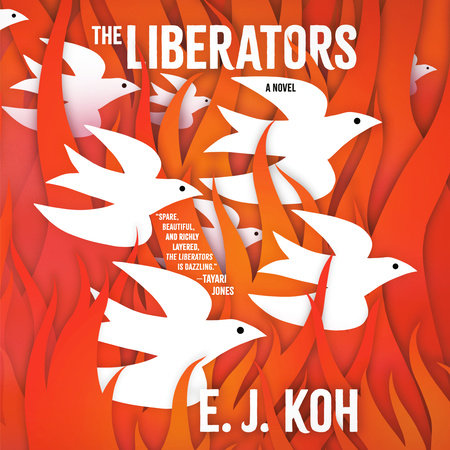
The Liberators: A Novel by E.J. Koh

The Liberators: A Novel by E.J. Koh

The Liberators is a powerful punch of a novel packed into a mere 240 pages. With an economy of words, almost bordering on stinginess, Koh delivers full fleshed characters and a tragedy of relationships and history. This is a masterful work of historical fiction.

The novel revolves around two intertwined narratives, one historical and the other intimate. The division between North and South Korea is the constant thread of grief and loss that plays against a more personal tragedy in the form of a young couple’s romance, marriage, and slow death thereof as the husband and wife are separated through migration and tradition. Nation here becomes an actor itself; the North and the South, like siblings or lovers torn apart by foreign forces, growing in ever divergent directions. This parting is mimicked by the husband and wife, until at last reconciliation seems impossible.

Here is a complex interweaving of expectations and desires that become thwarted by forces of history and culture in ways that are beyond any individual’s control.

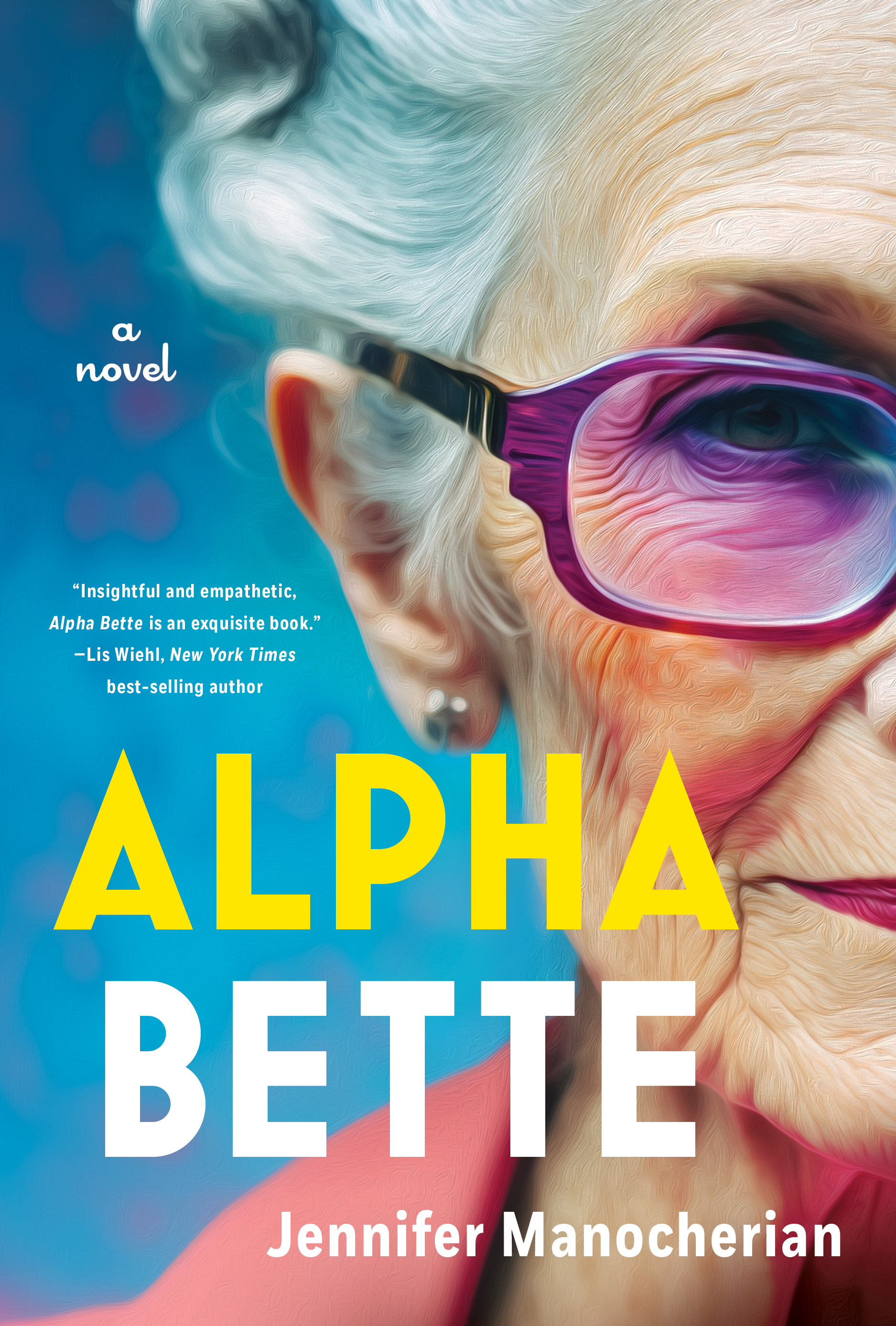
Alpha Bette: A Novel by Jennifer Robbins Manocherian

Alpha Bette: A Novel by Jennifer Robbins Manocherian

I’m still not quite sure what to make of Bette, the eponymous protagonist of this novel, and I think that might have been the point. She’s definitely a character that sticks with you, someone you don’t really expect. Indeed, the quirky cast of characters is the primary draw of this novel; they’re ordinary, but uniquely so, and thereby, strangely unforgettable.

Alpha Bette revolves around Bette, the ancient matriarch of an urbane New York family, who, recently widowed, has been left to sputter out the rest of her life in an upscale apartment with her night nurse and daytime housekeeper. Her children, grandchildren, and great grand child are grown, living lives of their own without her. Bette wakes up one morning and decides she’s going to throw a dinner party. Over the course of the frantic day during which Bette and her housekeeper attempt to make all the necessary arrangements, Bette’s neighbors and others on the periphery of her life, present and past, are woven into the story and the dinner party plans.

The novel is about those encounters, the myriad of ways in which we connect — or don’t — with those closest around us, whether they are family, friends, employers, employees, neighbors, enemies, etc. The novel dregs up those age-old existential questions posing them in charming ways: What’s the point of this all? What really matters in the end?

Indeed, “charming” is the perfect descriptor for this piece of contemporary fiction. The characters — even the crotchety ones — are charming in their own ways. The story itself, charming. The life Bette lives and has lived, charming and charmed. All in all, this is an enjoyable, entertaining read with tangible, fleshy characters, some of whom you’ll like and some you’ll enjoy hating.

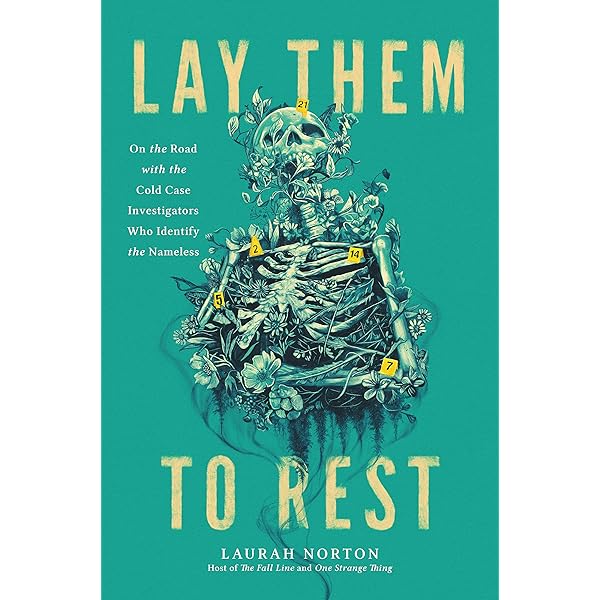
Lay Them to Rest: On the Road with the Cold Case Investigators Who Identify the Nameless by Laurah Norton

Lay Them to Rest: On the Road with the Cold Case Investigators Who Identify the Nameless by Laurah Norton

I thoroughly enjoy my true crime reads, gruesome and terrifying as they are. I especially enjoy the intricacies of police work and investigation, probably that’s a side of the analysis that I can both relate to and have no idea about. I love learning about the ways in which investigations of this nature are conducted, the nuances of analysis and the low and high technology that comes into play.

Lay Them to Rest delivered… and yet, also didn’t quite hit the high notes for me.

The bad part first. I didn’t enjoy the degree of personal involvement and commentary Norton provided. While it is common for writers to relay their personal trajectories and use it to form the narrative arc of their non-fiction books, I found the way in which Norton did this to be distracting. The injection of her personal thoughts felt like intrusive minutiae. This is, of course, a subjective opinion; other readers may very much enjoy Norton’s personal journey. For this reader, not only did this detract from the primary story of the victims and their cold cases, but Norton’s self-deprecating approach undermined her credibility and authority, coming off as fumbling. I believe the intention was to code Norton’s “character” as endearing, but its delivery did not persuade me of this view of her.

But now, the good. Norton’s partnership with a biological anthropologist produced an academic perspective which I greatly appreciated. It is clear a great deal of research had been conducted, both by Norton and Amy Michael, as well as the many others Norton shadowed, interviewed, and worked with. The book provides a great deal of information, and Norton’s delivery of that — along with the abundant necessary context — was accomplished with both straightforward utility and finesse. Norton’s prose was smooth, its language accessible while still necessarily full of the argot of the subject matter. Norton distills an enormously complex subject into easily digestible and palatable parts.

Lay Them to Rest is built through the cold cases of several victims, Jane Does, found dead and abandoned. Norton uses these cases to relay to the reader a nuanced view of the layered landscape of police work, forensic analysis, and dysfunctional systems of databases for DNA tracking used for investigating and solving crime. The focus here is not on the victims, or their families, or even on the police or investigators who strive to solve their crimes; Lay Them to Rest focuses on the structural elements of criminal investigation, the organizations and systems which organize and sift through the millions of bits of data and information that can be gathered about victims and the crimes against them. This angle into the world of criminal investigation was a novel one for me; most of the true crime I have read have not delved into this specific aspect of investigation. I found this perspective refreshing and intriguing.

Readers of true crime will find Lay Them to Rest a worthy addition to their libraries. Or, at the very least, well worth the time and effort of reading it.

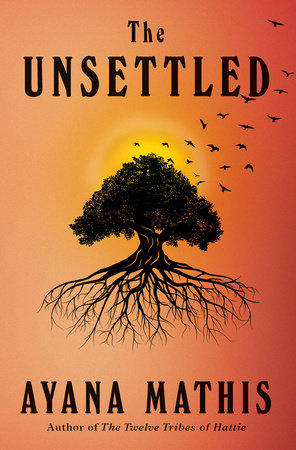
The Unsettled: A Novel by Ayana Mathis

The Unsettled: A Novel
by Ayana Mathis

This novel gut-punched me in ways that only good novels can. I could feel tears sting along those nerves behind my eyes. Sometimes I felt my skin get sweat-clammy. The Unsettled unsettles, just like Mathis wants it to.

Right from the start, The Unsettled knocks you down and it doesn’t let up. Its breathless, relentless struggle, the way it forces the reader to keep grasping for relief mimics the feeling that its protagonists feel, trapped in a transient limbo of poverty and abuse and disappointment. This is a novel about what it is to be black and working class in urban America.

The novel revolves around a young boy and his mother, forced to live in temporary housing because of an abusive stepfather and husband, because of racist, classist inequities, because life has dealt them a harsh hand. The novel documents their life before and during their stay in this housing, the people they encounter there, at school, in their former and current neighborhoods. Interwoven between these grim chapters is the story of the mother’s past, her mother and a different world of an all-black enclave in the deep south. In this place too, there is the struggle for blackness to simply exist. The two stories are linked by several threads, the most salient of which is the structural oppression of blackness in America; both stories eventually merge into one, culminating in an explosive end.

Mathis writes with a machete, its edge as sharp as a scalpel. The prose in The Unsettled is blunt, straightforward, and will absolutely cut you down. But the pace of this beating does not exhaust; I was compelled to return to the book again and again until it was done with me (and not I done with it). Its characters were there with me, around me, so fleshy and tangible. I read mostly in bed, where I feel warm and safe, and there were more than a few times when I put down the book and nearly cried, wishing they did not have to live in such an unsafe, cold, grey place.

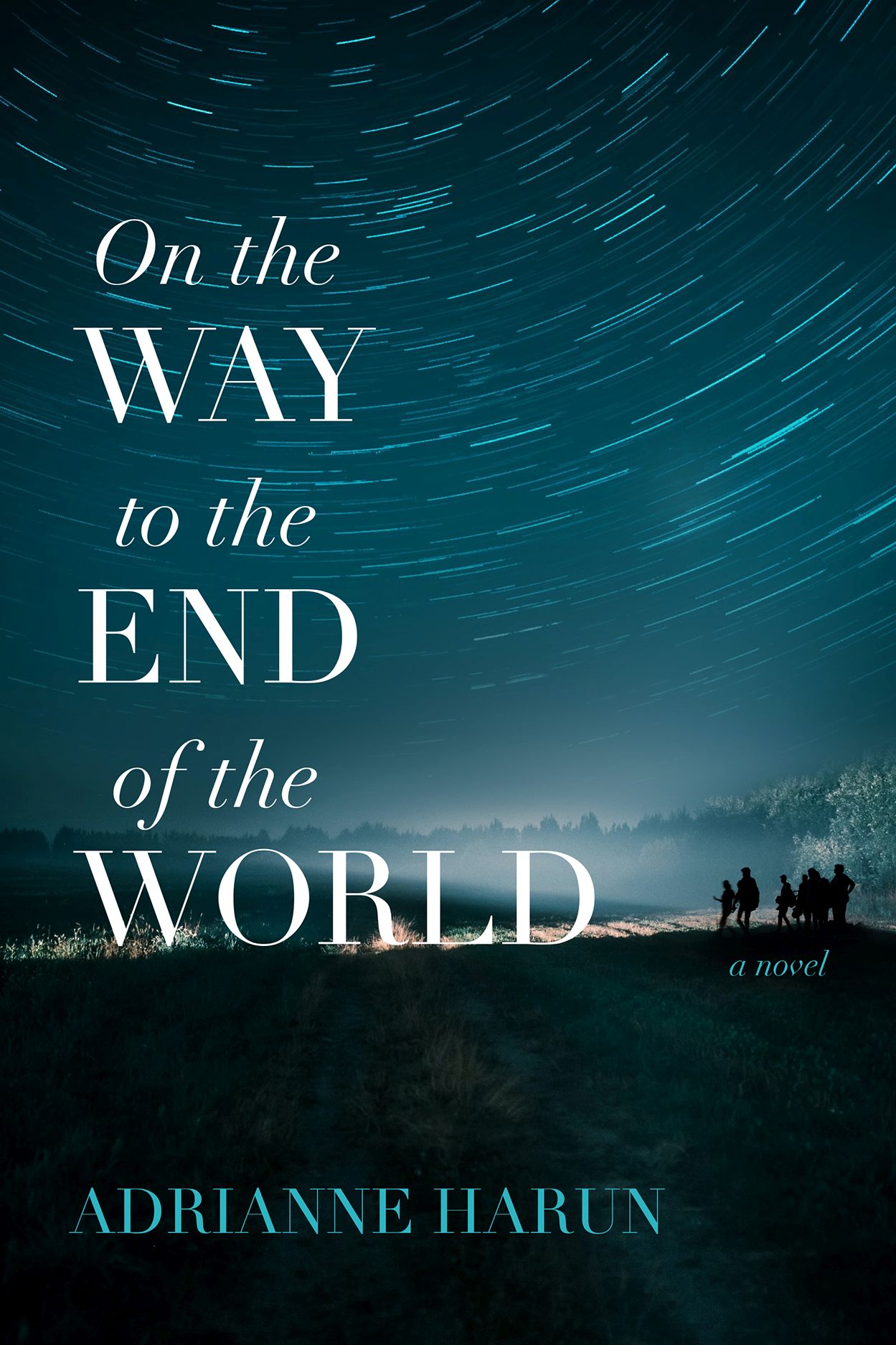
On the Way to the End of the World: A Novel by Adrianne Harun

On the Way to the End of the World: A Novel by Adrianne Harun

I wanted to like this novel more than I actually did. Some parts of it utterly exhilarated, drove me on to the next page. Other parts dragged. Ultimately and sadly, many of the endings in the novel unravelled the tight twists of its mysteries into mere frayed ends.

But, that said, Harun’s prose and character building was phenomenal; I could almost feel their breath in the air as I read. For readers who enjoy the gossip and politics of living in a small town, this is the novel for you. The tensions were real and tight and very appealing.

The premise of the story, while it falls flat, is an intriguing one. The novel centers on a strange community building exercise instigated by President John F. Kennedy in 1962, exhorting citizens to walk fifty miles within twenty hours. This brainchild, the Kennedy March, is the event which brings together an odd collection of a Pacific Northwest’s townsfolk: boy scouts, middle and high school students, a widow, the town’s telephone operator, and a mish-mash of others. It is an informal, poorly organized march, mapped out for the participants and then nothing — they are left to navigate the route on their own.

What occurs during those twenty hours is what draws them together, asks them confront and perhaps reconcile the restlessness of their personal trajectories, forces them to look upon one another with suspicion. The rag-tag group encounter secrets along their march and in doing so must sort out who they think they really are.

Embedded in their adventure are the misadventures of others in their town. It is here that I was disappointed. There are mysterious lures… there is the promise — actually several — of scandal and thrill, but the story never fully resolves those mysteries, abandons them. I read on hoping that the novel would return to those threads, but it didn’t. At least not to my satisfaction.

Nonetheless, an intriguing and character-centric read, one that will please fans of literary fiction.

The Skin and Its Girl: A Novel by Sarah Cypher

The Skin and Its Girl: A Novel by Sarah Cypher

The Skin and Its Girl is a creative feat, a unique novel even within its genre, literary fiction, a genre well known for its diversity and breadth. Perhaps for that reason, this is a novel for a selective reader, one who does not possess fixed expectations or a very firm hold on the physics of reality.

This is a book of metaphors. It is literary fluid.

The novel revolves around the existence of a girl who should not exist, a girl with blue skin. It is an epistolary novel, written by the girl to her aunt, a woman who has functioned as her mother, guardian, defender. The blue-skinned baby is born into a world, her personal individual world is marked by the disintegrating relationship of a man and woman, her father and mother. Much of the novel revolves around their sheltering of their child and the tensions produced by varying relatives’ opinions about the girl’s interaction with the world.

Being written from a child’s perspective, though in retrospect, the novel’s prose possesses a kind of surreal, dream-like quality. Conversations are sliced into snippets, images are partial and incomplete, events are smudged down to the primal feelings they invoked, much as things might be in memories. But — and this is where a mature, independent reader will find the novel intriguing — this incompleteness allows and challenges the reader to sift through these bits and pieces to find the connections that bind the protagonist to her aunt, to her mother, to the world at large “out there” that she is prevented from seeing.

I will leave it to the reader to see what becomes of this strange blue-skinned girl.

Overall, my review is a mixed one; its creativity is singular, but its delivery is difficult. Much of the story unfolds slowly and without a predetermined destination, yet, this mimics the life it documents — a life that is not meant to exist, has no purpose but to simply be and by being is an affront to others’ sense of being.

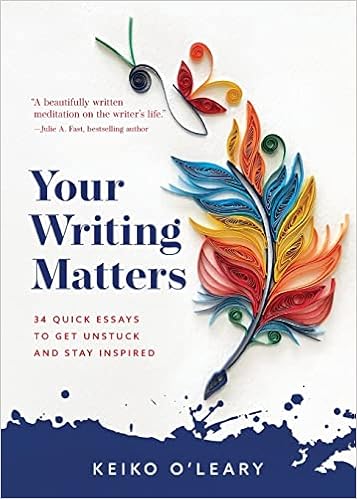
Your Writing Matters: 34 Quick Essays to Get Unstuck and Stay Inspired by Keiko O’Leary

Your Writing Matters: 34 Quick Essays to Get Unstuck and Stay Inspired
by Keiko O’Leary

I’m not one for “self-help” or instructional types of books, at least not in my pleasure reading. Sometimes I read non-fiction to learn new pedagogical strategies or theories, classroom psychology or activities, that sort of thing. But rarely do I read a book on how to write. I don’t generally need help writing (I mean, I’m here blogging for fun in my free time.) And my writing is decent. It’s not perfect, but it suffices. I know the more I do it, the better it gets — sometimes. Something I just don’t give a shhhuffft and will vomit-write.

But, back to Your Writing Matters.

O’Leary has some very solid advice here. The core message of this manual is to just write, all of it, until you’re done. So why read this? Because sometimes writers just need to hear it (or see it, in this case), to remember that they should keep writing. These are fantastic bite-sized pick-me-ups, short bursts of “hey, you can do it!” that a writer can inject into their day when they feel their productivity, their writing flagging.

Some of the essays include exercises for the reader to do while they are reading, while they are feeling self-conscious of their writing, when they are on the cusp of giving up. Other essays intend to remind the reader of their value as a writer, that their ideas — no matter how awfully expressed, no matter how chunkily written — are worthy artifacts to keep and to hone. A few intend to make light of the gravity of writing. They aim to make us smile, laugh even.

This is a book for a writer to keep at the ready, on the desk where the said task is done, next to the delete button to prevent the writer from second-guessing their work, next to the thesaurus.

I’m going to go now and write something.