Moth by Melody Razak

Moth by Melody Razak

This novel devastated me. And in the most profound and satisfying way. I could not put this book down; despite being a hefty read at 368 pages I devoured it in a weekend. This novel is a serious contender for my Book of The Year.

Razak’s Moth is set in Partition era India and Pakistan, the former mostly. Its events unfold in the year leading up to India’s independence in 1947 and the year directly after it, a violent and terrible time when Muslim Indians and Hindu Indians violated each other’s homes, families, bodies, and holy places of worship. Moth does not shy away from the terror or the brutality of this history; its story is premised on gendered violence, sexual violence, the kind wrought on women and girls before and since Partition.

This is not a novel for the faint of heart. Readers should prepare to feel chilled to their marrows at the cruelty Razak lays bare.

At the same time, Moth is an empowering read. This is a feminist novel. Not only is it told from the perspective of a young girl desperate to become a woman, Alma, it revolves around the actions of the women in her life and in her community. Alma comes from a high caste Brahmin family, a pair of progressive-minded parents who are highly-educated and who view their India as a place of ethnic, class, and caste equality. But Alma is a victim of her own immaturity and her Brahmin, Hindu grandmother’s ambitions and traditionalism. The history of India at this junction of conflict between colonial rule and independence, Hindu and Muslim segregation or peace, traditionalism or modernity plays out in Alma’s family’s words and deeds. The story opens and hinges upon Alma’s wedding to a Brahmin man, much older than herself.

Here is the first of the gendered debates the reader will encounter in this novel. Marriage, in its traditional and modern forms, the domains of power which men and women occupy — according to their familial rank, their class, their caste, they religion — is one of the fascinating, golden threads of this novel. Alma’s mother is unique in her historical time and place: She is a lecturer at a university, she works. Her marriage to Alma’s father is a foil to to the other marriages in the novel where wives are beaten, raped, abused in other myriad ways.

Moth is also compelling for its frank discussions of caste and class. Ethnicity, religion, race, nativism and xenophobia also serve as the fabric on which the patterns of its stories are told. While Moth is a historical fiction, these threads are visible in India today; this is not merely a fiction of the past, but also a commentary on Indian politics and society right now. Moth is truly an intersectional novel, one which weaves history into the present, one whose characters are shaped by their age, their experiences, religion, gender, ethnicity, and caste.

The characters are complex and developed. Even Razak’s villains are soft and vulnerable. In this novel no one is who they seem, even to themselves. The primary cast consists of Alma’s immediate and servile family: Her father whom we meet mostly as Bappu, simply, “father” and her Ma, named Tanisi; her sister, fondly nicknamed, Roop; her paternal grandmother, a matriarch in their home and her dead husband, the ghost of her Alma’s grandfather, a silent but present and poignant character in the events of the novel; their servants, Dilchain, a Hindu woman and Fatima Begum, a Muslim woman.

Religion and culture shape these characters, give them their reasons for compliance and rebellion, motivate them in their actions. Community expectations and subjective desires come into conflict within these characters, in some cases these poles are reconciled or exist in uneasy harmony. Razak places the reader in the midst of palpable, relatable characters who walk us through their lives as if we were there in the room with them. In Razak’s prose we can taste India, envision the hot sun and the colors of its markets and streets, feel the moisture of sweat and floral fragrance on our skin. Razak brings the reader so close to the characters we might detect their bodily scent or feel their eyes on our skin. In the characters’ actions and thoughts we, the readers, can recognize universal needs and motivations: teenage longing, maternal affection, filial piety, desire for belonging and approval — even while we are treated to a view into a world that is not our own, one that is past and gone, an India of long-ago and far-away.

That said, Moth is brilliant in its nuanced portrayal of India and Indian life and culture. It rejects the exoticism that so often plagues Indian literature, colonial and postcolonial alike. Instead its honest portrayal of Indian people and their experiences connect them to others; we may not know anything of the first hand experience of war, but through Moth we get a real feel for what that might look like, feel like, smell like. Razak’s India is a terrible, beautiful place. Its people are inhuman and yet, all the more human for their cruelty. In these pages the reader will encounter suffering, but, also inspiration. I was awed by the strength of the women and men in Moth. I felt hope, even while I cried as a witness to their pain. They were transformed by their experiences, in good and bad ways.

Moth highlights the catalytic effect of history in the most bitter-sweet way. This is a book you will regret and never regret reading.
Tabemasho! Let’s Eat! A Tasty History of Japanese Food in America by Gil Asakawa

Tabemasho! Let’s Eat!
A Tasty History of Japanese Food in America by Gil Asakawa

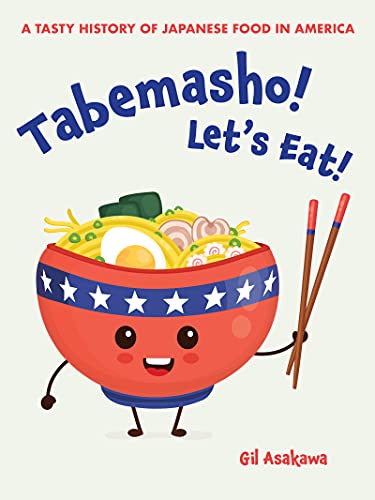
Tabemasho! Let’s Eat! reminds me of one of the very first times I went out to eat in America. I’d been in the country for a few days, maybe a week, and I was taken out to dinner at a local Chinese American restaurant. I was thrilled, having never had Chinese American food before. At the end of the meal my hosts asked me, “What kind of fortune cookies do y’all have over there?” I was stunned. “We don’t have them in Asia.” Then they were shocked, having always assumed that fortune cookies were authentic desserts from the exotic East. The culture shock on both sides of that encounter and the histories behind the assumptions made around food are what Asakawa’s Tabemasho! Let’s Eat! brings to the forefront.

Though there is a serious side to Asakawa’s Tabemasho! Let’s Eat!, the book is a fun, fun read. Asakawa’s prose is super-casczz, chummy, and hilarious. Reading him is like having a beer with a friend who’s found a great place to eat and can’t wait to take you there. Asakawa was quick at the elbow with a witty comment. He was there to give me the low-down tale behind a (his)story.

I appreciated was the book’s serious side too. I enjoyed how unafraid Asakawa was to speak his mind on the tougher topics of cultural appropriation and America’s racist history of Asian exclusion. Indeed, much of Asakawa’s point is that Japanese American cuisine and culture is borne out of that dark period.

The book is split into thematic chapters, each one taking on a different dish like Noodles or Bowls of Rice (don), or Sushi. Asakawa also devotes a chapter to Japanese American history and the ways in which transcultural cuisine develops through migration, separation, and racism. The sushi and noodle chapters are especially extensive, providing the reader with tips on where to go and what to expect, types of dishes, the differences between Japanese and American interpretations of various dishes, as well as histories of these dishes from both sides of the Pacific Ocean.

There are also chapters on lesser known delectables such as Japanese soft drinks. I was so happy to read about Pocari Sweat — one of my childhood favorites, sold in Southeast Asia by the case! — which is (I think), the inspiration for one of my favorite fizzy drinks, 100 Plus. I can’t describe how they taste; they’re a cross of salty and sweetness, their appeal much like chocolate-covered pretzels. I grew up in South Korea for a time as well; it was there I became familiar with Yakult, Calpico and the whole plethora of yogurt-based drinks that are so popular in East Asian culture. Reading these chapters was like sipping at a memory of my childhood.

The chapter on baked desserts and pastries made my mouth water. Stopping at a Chinese, Korean, or Japanese bakery is one my favorite weekend excursions. The soft, sweet, white bread that melts in your mouth is a paradise. The red bean pastes, creams, and the custards are unique interpretations of Chinese, French, and European treats.

Asakawa also provides the reader with an extensive (though non-academic) bibliography and reference list so the reader can let themselves wander further on this culinary path.

Atlas of Vanishing Places: The Lost Worlds as They Were and as They Are Today by Travis Elborough

Atlas of Vanishing Places: The Lost Worlds as They Were and as They Are Today
by Travis Elborough

I reviewed this book with an eye towards its utility in the 1st year undergraduate history classroom. I teach 1st year and transfer students primarily, a 100-level World History course that has dual aims: first, introducing the basics of historical and empirical research skills (academic literacy, source/data collection, analysis, library use, written communication, among others) and second, emphasizing the connection between the present and the past through showing students the historical origins and contributing factors of some of the worlds environmental, economic, social, and political problems. We cover the history of racism, gendered disparities, queer histories, war, genocide, etc. In short, this is a decolonizing curriculum.

As many of my colleagues teaching similar courses can attest, professors in my position have a perennial problem finding suitable materials to use in our courses. Our materials need to be accessible in terms of language and cost; they need to be a certain length or have a certain depth to them that satisfies the intellectual integrity of the course, but is not overly theoretical or requires a prerequisite store of knowledge. Our courses have fixed learning outcomes that need to be met. Our students come from varied academic backgrounds, enter the classroom with varied levels of writing, reading, and analytical skills, which we have to accommodate.

A book like Atlas of Vanishing Places: The Lost Worlds as They Were and as They Are Today is a boon.

Here are the reasons why: first, the book is premised on the idea that artifacts as massive as cities and geological features are not eternal, immune to change or — more significantly — to human savaging. Elborough cites the Aral Sea and its incredibly rapid dissolution, within one person’s lifetime, from a thriving marine ecology to an arid nothingness, as the inspiration for this collection of places that once thrived as the Aral Sea did and are now as dry and lifeless as it has become. This book forces the reader to acknowledge the power of time and the inevitability of change. I can’t think of better evidence to emphasize the importance of history.

Second, the book is divided into short, digestible chapters which can be discretely cut out from the book and assigned, according to their fit into the course curriculum. Each chapter is about four to six pages long.

Third, the places and times explored in this collection cover the breadth and width of the world, every era of human history; it would be easy for an educator to focus in on the geographic region or time period of their choice. The book covers so much from ancient cities to contemporary and very recognizable landmarks: Timbuktoo to River Fleet in London.

Last, Elborough also provides the reader with sources and a bibliography. Some sources are better than others, but these are a gift to any student at the entry-point of a research project. Atlas of Vanishing Places: The Lost Worlds as They Were and as They Are Today serves as an excellent tertiary historical source, something to pique students’ interests, something to give them a kick start on a research project.

I could easily see the use of this book in survey level archaeology courses, in introductory cultural anthropology course, in ancient or modern world history classes. In my particular case, it works very well in the Humans and Environment module of my class, where we cover the relationship between human behavior and environmental outcomes.

The Six-Minute Memoir: Fifty-Five Short Essays on Life by Mary Helen Stefaniak

The Six-Minute Memoir:
Fifty-Five Short Essays on Life
by Mary Helen Stefaniak

I am probably dating myself here, but do you, Reader, remember that Seinfeld episode when Jerry and George are selling their idea for a sitcom to NBC, and one of them says the show they’re proposing is about Nothing. And the television executives’ jaws kind of drop and they go, “Nothing?”

But the joke — and it’s somewhat dark and certainly very serious — was that it wasn’t really about nothing, it was about all the nothings that make up the something, they anything of life. Oh wait, should that be Life with a capital “L” or life with a lowercase “l”? I’m not sure. Some things in life are Life events, demanding the respect of an uppercase “L” and other things are… the stuff that Stefaniak writes about in The Six-Minute Memoir: Fifty-Five Short Essays on Life. That is, the life stuff (little “l”) are still, despite the derision and the banality of it, the stuff of life.

Stefaniak, in this witty, honest, sometimes painfully raw and sometimes hilarious collection of memory snippets, reminds us to take solace and joy from the mundane, because in the end, it’s all we have in this life. And because of that, by dint of simply being the stuff of life it warrants writing down, it warrants a place in our legacy. Stefaniak’s prose and the stories of her life she’s chosen to share with us, ranging from parenting to grand-parenting, from making friends to losing them, makes that point loud and clear.

The essays are indeed six-minute blurps, taking that long (or sometimes less time) to read and enjoy them. Each one is not necessarily connected to the last, except that they revolve around Stefaniak’s life. They are not chronologically arranged, but thematically so. A reader could drop into any one of these blips on any given day; indeed, this book makes for a lovely New Year’s Day gift, something with a note that says, “Read One A Day for 55 Days, then repeat the ones you loved or made you cry.”

For that same reason, The Six-Minute Memoir is a book a reader could revisit over and over, as the pace of their life changes, as age encroaches with its accompanying set of new revelations and experiences. Stefaniak belongs to a different generation than mine; they’ve experienced grandparenthood, the loss of friends to age and illness, they’ve survived their children’s teenage years. I, on the other hand, am a few events behind, but in Stefaniak’s essays I can see a glimpse into my possible future. The stuff of life is specific to the individual, that’s true, but these events are also common ones across communities, cultures, class, race, and even historical context to a degree. Surely my grandparents and my great-grant parents would relate to the moment they realized their children were no longer children, or the day their own age became more than a known, intellectual fact and more a felt, lived, notched-into-the-bone-marrow sensation.

The Six-Minute Memoir reminds me of the very complicated word, “quotidian.” I’ve always loved this word, because it is such an intricate word for what is meant to be so meaningless. What I’ve come to realize — and this is what Stefaniak’s book is all about — is that the quotidian is as complex as this multi-syllabic word, this word that is spelt with the enigmatic “Q”.

So many of us will never see the alps, will never ride a horse through the hills of Outer Mongolia — but isn’t my life worth a record of its own? Yes, it is!

At the end of the The Six-Minute Memoir Stefaniak provides the reader with a chance to add our own stories to the archive. This is one of the best parts of the book, one of the elements which makes it worth purchasing and hanging onto for future use. Stefaniak gives the reader a selection of Writing Prompts, subtitled, “Write Your Own Six-Minute Memoirs”.

I can think of no better ode to this collection than to follow that directive. So, here goes. My very own 6-minute memoir…

The prompt: “Describe… a photo you wish you had taken — or one that you have lost.”

1997

Melaka is a small city in Malaysia just a couple of hours drive south of the capital, Kuala Lumpur by highway. It sits on the east coast of the country, looking out towards the Indonesian island of Java and over a narrow sliver of calm sea that kingdoms, empires, and nations have desired and fought over for over a thousand years, the Strait(s) of Malacca. The strait was the pathway to China, where traders since the 8th century acquired lacquer, paints, dyes, porcelain, and silk (among other things including weapons, horse saddles, cabinetry, animal skins, you-name-it-they-got-it.) The strait was the entry point to the riches of Southeast Asia too, a place that uniquely produced fragrant spices and herbs like pepper, galangal, ginger, nutmeg, and cinnamon, and woods like sandalwood and teak. For centuries Roman, Greek, African, Islamic and Hindu traders came from all over the world — from North Africa to South Asia — to network with local tribes and chiefs to obtain these goods and access to the larger markets in China. Then in the 14th century, the Portuguese arrived, paving the way for the English, the Dutch, and later the French.

The city that housed the port controlling this coveted bit of sea is Melaka (previously, Malacca). It became the epicenter of these mercantile endeavors and in the 15th century it became the target of these nations jealousies, a symbol and method of economic and political control over the region. Melaka was lost to the Malays who had ruled it for hundreds of years, coming under the governance of various European nations until 1957 when the thirteen Malay states re-asserted its independence. In 1963 the states combined themselves into the nation we know today as Malaysia.

Melaka, with its history, became a UNESCO Heritage site in 2008. But even before then its significance was famous. Jonker Street was (and remains) a huge tourist attraction, for its quaint architecture, its Nyonya restaurants, its hodgepodge of old and new, precolonial, colonial, postcolonial elements, its pop-music blaring rickshaws and tee-shirt/tie-dye sarong shopping, its utter Malaysianness.

I’d always been interested in history. I don’t remember a time when I wasn’t. Melaka was a favorite weekend getaway for me and I often asked my parents to go there. One year I had gotten myself a fancy, SLR camera. It wasn’t a digital one, like the ones you get today. It was a manual Pentax, one of the newer ones made in China. Nonetheless, it was expensive and I had had to save up many, many months of allowances to get it. I bought it in a shop near Bukit Bintang, near where Sungei Wang and the Metrojaya shopping complex used to be. It was one of those shophouses where the aircon was always blowing out into the walkway. I really wanted a fish eye lens and some other fancy stuff, but could only afford the camera and some film. My mother and I went and I spent about $800 ringgit on it. A fortune when you are fifteen years old and have $50 ringgit a month for fun stuff and school lunches. (God, I miss my kanteen food.)

I bought black and white film and color film. My father agreed to drive the three of us down to Melaka for a weekend trip. I saw the excursion as an opportunity for a photoshoot. We wandered around Jonker Street, walked up the hill to the ruins of St Paul’s cathedral, roamed through the ghastly Portuguese, Dutch, and British graves, toured the Stadthuys, the former Dutch administrative building turned into a museum. We ate chicken rice and Melaka Nyonya kuih desserts. I don’t remember much actually.

But I remember my father asking me in an exasperated tone, “Why are you taking pictures of the buildings? Where are the people in your pictures?”

He was right. I avoided taking photos of people in my photographs. I narrowed in on small architectural details like crumbling cornices, focused on the dark green moss growing on a white washed wall, the facade of a shop house.

He said, “It’s the people who are important.”

I disagreed in typical teenage form, through silence and with a surreptitious eye roll. I felt that he did not understand my aesthetic. I was trying to capture a past, an embodied past. Ironically, I saw this past in the concrete objects of buildings and things, but not in people. I did not understand then, as I do now, that history and DNA are entangled, that memory and fact are two sides of the same coin, and that the treasured object (history) is not a static artifact.

I realize now he was right and I was foolish. It took me a few decades after that weekend trip to realize this. Had I taken photographs of people, I might have noticed that

I do not remember those photos I took. I have no idea where they are. It is likely because no one I know is in them.

What matters in my memories are the people who were there. I remember nothing else but the sense of their presence, their smell, their voice, their laughter, their sadness or their anger.

I wish I’d known that and taken pictures of them, my parents and myself with them.

Thank you, Mary Helen Stefaniak for a very profound collection of essays. And for getting me to write my own six-minute memoir.

Jollof Rice and Other Revolutions: A Novel in Interlocking Stories by Omolola Ijeoma Ogunyemi

Jollof Rice and Other Revolutions:
A Novel in Interlocking Stories
by Omolola Ijeoma Ogunyemi

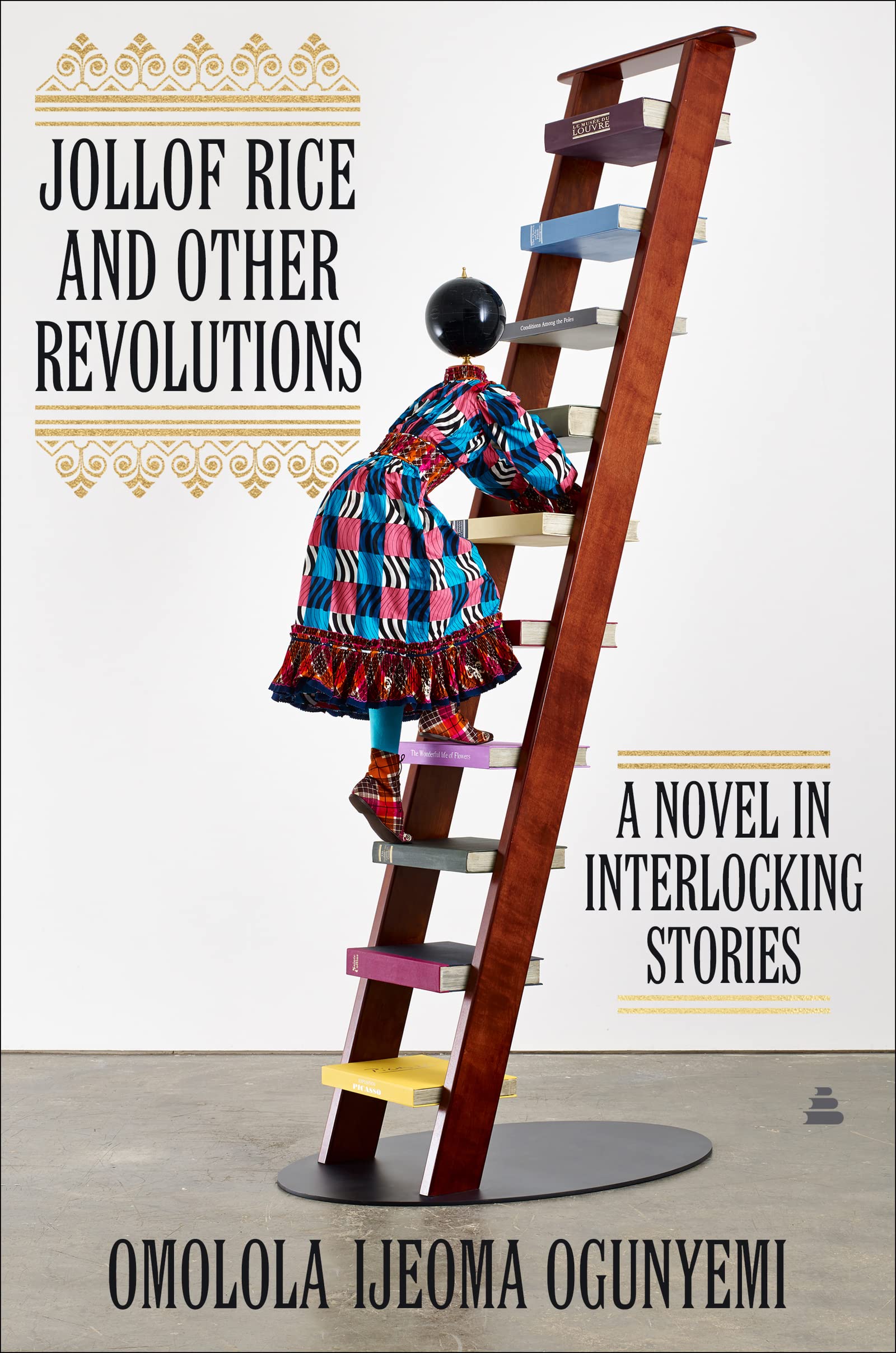
Jollof rice is the stuff my dreams are made of. The whiff of tomato, chili, white-, and black pepper, piquant and nose-tickling, the aroma of ginger and garlic and onion. Jollof is West African, but the recipe and desire for it is universal. In my case my dreaming mind classifies jollof rice as nasi goreng, Malaysian style with Maggi’s cili sos, a sweet and spicy ketchup. Chunks of browned chicken thighs, that crust of flesh and crispy skin, dotted with red grains of rice.

Coming from a rice-eating culture I like to think of myself as a specialist in the business of rice-eating and rice dishes. As a historian and reader of postcolonial literature and archival text, I like to think myself an expert in those domains too. But, I remain amazed by what I do not know; there is always a new rice dish, a new recipe, a new flavor to make my tongue and memories alight. There is always a new perspective, a newly discovered history, another layer of human experience to see, enjoy, and revel in.

Ogunyemi’s Jollof Rice and Other Revolutions is that new rice dish, that new revelation. You see, the stories in Ogunyemi’s novel are like jollof rice, grains tossed together, held together in harmony by a dry sauce. Sweet and salty and spicy, a mouthful of emotions that are sometimes in conflict, sometimes piquant, but always in balance.

The novel is familiar and comforting in its focus on men and women of color, their lives indelibly part of the muss and tumble of Nigerian marketplaces, cities, and villages, so similar to those in Southeast Asia, where chickens are still sold live, butchered and feathered at the time of purchase. A place where fish and seafood lie on slabs of ice that are slowly sweating like the people haggling with each other over their prices. There is the aroma of overly sweet fruit in the air: jack fruit (in Southeast Asia anyway), bananas, some kind of incense. There is smoke and pungent exhaust from a motorbike put-put-putting away. A glot of languages rumbles in the background, ever-present as there is no reprieve for the ears in places like these: dialects, pidgins, mix-n-matches of accents and lilts. On occasion there is a puncture of British English (always British it seems), and a few heads turn to see the foreigner. (It is usually me.) Like a Nigerian market place, Jollof Rice and Other Revolutions is dominated by women and their stories; men are present, they form part of the fabric of the novel, but it is the women and their experiences who thread the pattern and the connections between motifs in its cloth.

Jollof Rice and Other Revolutions is a collection of Nigerian and transnational Nigerian, historical and contemporary experiences, spanning from a time under the British and under British influence (for Britishness and Western-centrism continued even after decolonization) to the present — and here is where it gets really interesting — the future. Ogunyemi’s novel recalls to mind another like it, Yaa Gyasi’s Home Going (2016), but it differs on this particular point: Ogunyemi reaches into the future and lets the reader dwell on our current states through poignant examinations of the present.

Jollof Rice ranges across multiple generations, includes the lives of members of different and intertwined families. The reader is given a glimpse into the past when precolonial gender relations were more fluid. The reader accompanies characters in their education under the British, travels with them as they become transnational cosmopolitans, and will find themselves in the uncomfortably familiar place of racialized, racist America. The reader will find themselves in a near future moment, built on the present and past as we know it.

Sometimes, alongside the odor of modernity and vehicle exhaust, there is a faint scent of history and the supernatural, that which exists beyond the usual plane of our understanding. This is like biting down on a pepper seed in your rice, getting that jolt of zing on the tongue. You can’t be sure if it was a seed or a pepper or a tiny grit of sand. You hope it was the former and not the latter, but then the moment is gone, the thing is swallowed and you continue on with your meal, with your life. The next story is waiting on your spoon. I deeply appreciated how Ogunyemi wove these elements into the novel; what the West deems supernatural is not so in many parts of the “formerly” colonized world. Spirits, ghosts, and memory were part of our cultures before and remain so.

Ogunyemi’s characters and their experiences are what give the novel its unique quality. The characters connect to each other through their shared experiences in schools, in migration, in marriage and love, in childhood and navigating adulthood, in how they reconcile their colonial pasts with their “post”colonial presents and futures. Ogunyemi brings the Nigeria of the past into the present and future through their transnational and transcultural journeys. The characters are related by bonds which are sometimes considered casual; in Jollof Rice unbreakable relationships are broken, death is a cause for life, and disappointment is a gateway to revival. In this way, Ogunyemi delivers to the reader the nuances of human love and its endurance across time and space, makes a case for their eternal universality.

Jollof Rice and Other Revolutions makes me want to grab a friend and say, “You must try this! It’s new!” And how special must it be, that it has taken the old topic of history and identity and made an original spin on it!

A Map for the Missing: A Novel by Belinda Huijuan Tang

A Map for the Missing: A Novel by Belinda Huijuan Tang

This novel is about loss, many different kinds of loss through death or ill luck, through forces of politics and history beyond our own or anyone’s individual control. It is about loss as a natural outcome of growth and change. It is about loss and its inscrutable, unshakeable companion, grief. It is also about the successors to loss: acceptance, perspective, renewal.

The story begins with a mystery and an immediate confrontation with loss. Yitian, a middle aged Chinese professor of mathematics who lives and works in the United States, finds himself on the calm end of a frantic phone call with his mother who announces that his father has gone missing. The remainder of the novel revolves around this event. This is the first loss, an obvious one.

But as the story unfolds and Yitian returns to China to solve this mystery, help his mother, and locate his father, it becomes clear this is only the last of many that have come before. The novel moves fluidly from the present into the deep past, into Yitian’s childhood, teenage years, and early adulthood.

We encounter the loss of worlds that no longer exist: China pre-1949, before Mao and the Cultural Revolution stripped Chinese culture down to a party line; China in the throes of the Cultural Revolution when young men and women were “sent down” youths, cast out of towns and cities and abandoned in the countryside, their personal desires and ambitions beaten out of them; China of the 1980s in its easing up of strict communist restrictions on lifestyle and living.

As Tang Yitian re-engages with China and the people of his past, the reader experiences with him the loss of his past. In that past is death of different kinds. There is literal death, but also metaphorical death — of love, romance, family cohesion. We encounter loss and grief as disappointment. So often disappointment is overlooked as a form of loss, but Tang’s A Map for the Missing makes a profound case for it here. The repeated disappointments that life deals us are obstacles in our path, they are barriers that prevent us from manifesting into reality the image of ourselves we see in our heads. Yitian’s wife experiences this. So does Hanwen. So too do the elder Tang men.

We also see the tale unravel from the point of view of those in Yitian’s past, specifically Hanwen, a young woman, one of the “sent down” youths. In some ways, A Map for the Missing is a tale of these two characters and how their encounter, brief and powerful, shaped their lives.

This is a novel of how loss shapes our lives. And because of that, the novel is less bleak than it might seem at the outset. There is a hopefulness embedded in it. Perhaps this is hinted at in the promise of its title. A map leads to a destination, doesn’t it? It rescues the lost. It is simply a matter of reading the map, learning the topography and the legend and its scale. Yitian’s journey lasts only a few weeks in real time, but it is really a deep delve into his past of several decades; it is on this journey into the past that he learns how to read the map.

A Map for the Missing takes us with Yitian and the other characters on their trips through memory. Belinda Huijuan Tang’s prose is a delicate vehicle for the reader’s ride. The reader will barely feel the movement as they are shuttled through the novel from one moment to another, from one story to another, the past, the present, back again. Her prose flows. The chapters flow. Tang’s description of place, perhaps foreign to some readers, fits the mood of the novel; it is sparse in parts, but succinct, delivering an image for the reader’s mind in a sweep of few words. The characters too are real, even if their histories and cultures might differ from the average English-reading audience; they are easily recognizable across cultures. The men and women of Tang’s novel are grounded in a specifically Chinese history and culture, but they are also relatable as mothers, fathers, sons, daughters, teenagers, young adults, wives, and husbands.

The reader will travel with these characters, witnessing Chinese history and their lives silently. At the end of this book, the reader cannot help but feel like they’ve gone somewhere familiar and alien. All of us know this story, we know this journey; it may be one we’ve taken before or one that we know we should take ourselves — or one we might be forced to undertake, like some of the characters here. You, Reader, will feel exhausted, but you’ll also feel… hopeful.

A Map for the Missing is a wandering worth the taking. for both the destination and the experiences along the way.

Homebound: An Uprooted Daughter’s Reflections on Belonging by Vanessa A. Bee

Homebound: An Uprooted Daughter’s Reflections on Belonging
by Vanessa A. Bee

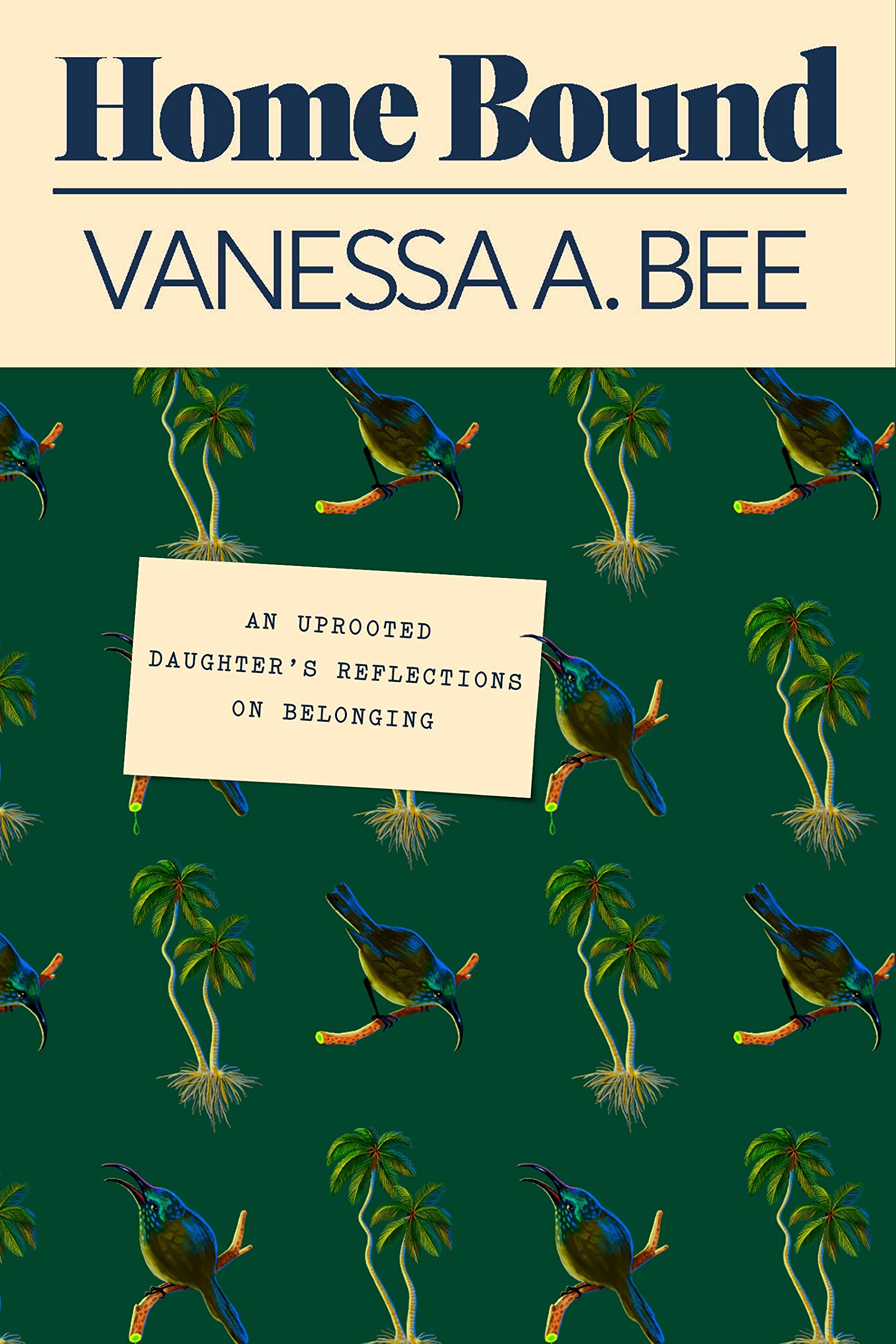
It’s been a few days since I finished reading Home Bound and I’m still mulling it over in my head, turning the things Vanessa — can I call her that? Is it too familiar? — has told me. On the one hand, it feels like she and I have much in common: the Spice Girls and Hey, Arnold! are part of the memorabilia of my own 90s teenage years. Vanessa’s memoir strikes a familiar note in many ways. Home Bound is a memoir of movement and migration, transcultural and transnational switching and code switching, and the conflict of culture between places and communities and within a place and a single community. I know that. I’ve experienced that before and now, still.

Home Bound traces Vanessa’s life from her childhood through to the present, across time as well as space. Her life begins in Cameroon, a place she is ever drawn back to (is she as uprooted as the title suggests), but she grows up in France, in a number of places, in a number of homes and neighborhoods. Vanessa disabuses us of any romantic notions of France and how the French live. But then, she makes the point in her memoir that she is only partially French. Her memoir takes us to London where she was more French than English, a mix of Cameroonian and French depending on the location. Then to America, where she becomes domiciled in one of the most American of American states, Texas.

But, of course, Home Bound is more than just a travel log.

The book takes us into deep discussions about gender and what it means to be a woman, what it means to be a sexual being, a sexualized being or object, and how to object to that objectification. It explores mothering and growing up, coming-of-age and what that means when it is done across multiple cultures. The book is also about faith, the religious kind and the internal, subjective kind (“believing in yourself”). Vanessa boldly brings up being of mixed race heritage, discusses adoption and parentage. Lineage is a major thread that winds through the book, guides the reader. Ideas are intergenerational, travel through blood as well as through proximity, from a caregiver to their charge. Education is not merely academic, formal, institutionalized. Home Bound makes it clear that it is more complex than that, it is pervasive within and out of the classroom.

The classroom is a large part of Vanessa’s memoir. I should say, education is a large part of her memoir. The classroom is the locale of her education, the formal kind and the ideological kind. It is here, in the discussion of education and upbringing that Vanessa’s story departs from my own and I feel like I am watching a film of someone else. Someone who feels familiar but is not me.

There is familiarity in the the demise of her American dream. Its death is similar in some ways to what happened to my own. She says in one part how she had thought of herself in some ways as white, having been raised and lived among white people for so long. It’s not an uncommon experience. Fanon was onto something universal when he warned us of masks and disguises that fool no one but ourselves. Vanessa and I both woke up. Then our American dream died, unable to sustain in the reality of 21st century capitalism and American privatization, without a trust fund to help keep it breathing. The classroom had a lot to do with the deaths of our dreams.

I realize now, as I write this, why I call her Vanessa. It seems like Bee isn’t her name. Shouldn’t it is be Billé? And why “A.” and not “Assae”? I suspect this has something to do with the subtitle, Uprooted. For me, the subtitle, An Uprooted Daughter’s Reflections on Belonging, strikes me differently, perhaps because of my academic background in history. The subtitle calls to mind Oscar Handlin’s The Uprooted, that magnum opus of migration history that centered the migrant, their “peasant” origins, and their struggles to find their feet — plant new roots — in American soil. Did Vanessa mean to infer a kind of transition from peasantry into… educated bourgeoisie? I don’t know. I don’t think so. I can’t see it. But uprooted means something. Perhaps it is the violence of being separated from one’s comfortable ideas, coming to terms with the deflation of an illusion; in Vanessa’s case, of her fathers, her faith, her marriage, her trust in men, her color and all that “color” means as it is used to define us in others’ eyes and as we use it to define ourselves.

This is a complex memoir, as complicated as Vanessa’s personal history. It sprawls, but its many parts and tangents cohere to a single theme: Home Bound is about figuring out who your people are and realizing that we will not find a perfect fit in any community. We will belong in some ways, be alienated in others. Some times it is a matter of chronology; we belonged in the past, we cannot belong in the present. Sometimes we belong with strangers, sometimes those closest to us are not those who should have our trust. If I sound bleak, I do not mean to; Home Bound makes it clear that the journey — perhaps for all of us — is complicated — and sometimes it really helps to see how someone else navigated it.

Home Bound is a profound, nuanced memoir well-worth the reading.

Bronze Drum: A Novel of Sisters and War by Phong Nguyen

Bronze Drum: A Novel of Sisters and War
by Phong Nguyen

Phong Nguyen beats out a strong, feminist song in Bronze Drum, one that makes my Southeast Asian woman’s heart swell and weep and soar all at the same time. It is a rare moment when a book makes me feel seen. As a historian of Southeast Asian history, I am deeply grateful for this rare and unique novel that so brilliantly and beautifully captures an often overlooked era and people.

Southeast Asia’s ancient history is little known outside of academic circles. Even within that small enclave, many scholars of the region focus on contemporary Southeast Asia or modern Southeast Asia from 1300 onward. Many students, especially American students, see Southeast Asia through the American-centric lens of the Vietnam War (Note that the Vietnamese call it The American War). I, myself, as a scholar focus on the region’s post-colonial period, the peak of the Cold War between 1950 and 1970. Bronze Drum, by highlighting a much earlier colonization of the region by China, both appeals to my decolonizing spirit and makes visible my own historical blindspots.

The world turned its attention to Southeast Asia when its spices and trade with China made it an easy backdoor into that empire’s markets, around the 1300s. But, of course, Southeast Asia existed before then, had a history before then. But excavating that history has always been problematic. For one, in the post colonial world, history has become a contested domain. Its function as a tool of nation building and national identity, coupled with the need to appease various ethnic and national factions for the sake of collective peace has obscured some histories, elevated others. The demonization of the Han Chinese in Bronze Drums would not have gone over well in another time and place, and even today, the influence of China on the region’s economic and political stability cannot be easily dismissed. Southeast Asia has ever been and remains, whether we like it or not, in some condition of thrall to China.

But back to history. Another reason for overlooking ancient history is that nature has not been kind to historians of the region. Much of the region’s ancient histories have been difficult to document. The moist and hot climate of the region does not lend itself to the preservation of wooden or plant-based artifacts, only that which was hewn into stone has survived. Archaeology informs us there were many vibrant ancient civilizations here: the Dong Son, whose drums are those featured in Bronze Drums, the Majapahit in what is now Indonesia, the Sri Vijaya in what is Malaysia, Singapore, and Indonesia. There were Muslim sultanates in the Philippines and the Tai Kings in Thailand, and the ancient origins of the Court of Ava in Burma (today, Myanmar). Stele and monumental building like that at Angkor or Borobodur remind the world of these past eras and peoples.

The sisters in Bronze Drum are the Trung Sisters of Vietnamese mythology and ancient history, Trung Trac and Trung Nhi, who dared to subvert the Chinese Han invaders. Bronze Drum is a real history, though it is also Nguyen’s fictionalized retelling of it in the form and in the style of a mythic epic. The novel unfolds the fabric of the Dong Son/Lạc Việt world as it weaves through the Trung sisters’ fight for their kingdom and culture’s independence. The strength of Bronze Drum is that it reads as an epic should: it begins with the heroines just before they realize their fates, it recounts their moral turnaround, the moment they knew they had to be the leaders they became. The novel then impresses the reader with their triumphs. The novel then turns to their downfall. (I am giving nothing away here, it is well known the Viet fall to the Han and later, the French. History is the spoiler.) There is a sense of Joseph Campbell’s classic hero/epic narrative structure in Nguyen’s retelling, something that is sure to feel familiar to readers of Greek and Norse mythology.

But Nguyen provides the reader with more than just a myth here. Nguyen gives us insight into the interiority of the Lạc Việt actors, including the sisters who become female kings and warriors atop elephant backs, their courtiers and allies. The highlanders, Degars — also known as người Thượng — are featured too in Bronze Drum and the peasant community is not ignored or invisible as they are in so many heroic epics. They are as much the heroines as the Trung sisters in this novel.

If there was one flaw, I wished for more discourse on the larger political context and history of the Lạc Việt. The neighboring princes and chiefs and villages made appearances in the book, but I wanted more of that political intrigue, real politik dialogue, and sparring between characters. (I will not lie, for all their orientalist bungle, I enjoy James Clavell’s Shogun and Taipan and Gai Jin, for that kind of in depth political maneuvering.)

Nonetheless, Bronze Drum is epic. And this is not its only strength.

Its characters were mostly strong women and I deeply, deeply appreciated Nguyen’s feminism, bringing matriarchal lineage and culture to the forefront. The women of Bronze Drum are not frail, delicate flowers. They are not sexualized pussy cats like Richard Mason’s Suzy Wong and the nameless sex worker of Full Metal Jacket fame. The women of Bronze Drum are real Asian women, made of fire and water and air and metal all at once. They are sexy and sexual beings, they have inner strength and outward muscle, they think and speak for themselves. Even as they are mothers, wives, daughters, sisters, and nieces, they are denizens and creators of their own worlds and desires.

Phong Nguyen’s prose brings these heroines, these mythological warrior women to the center of the Lạc Việt world with ease. The novel flows, riverlike towards rapids, smooth and fast. The reader will want to surrender themselves to the story and let it carry them to the end.

The Ghosts That Haunt Me: Memories of a Homicide Detective by Steve Ryan

The Ghosts That Haunt Me: Memories of a Homicide Detective
by Steve Ryan

These memories have haunted Steve Ryan, and now they haunt me too. Ryan warns the reader that the contents of this book will be dark, warns us to close it and move on if we value our peace of mind. He’s right. This book will cleave to my bones like scars from bites. The murderers in Ryan’s cases are depraved animals, creatures looking like humans but lacking humanity. The crimes recounted to us are sweat-inducing-chills-on-the-soles-of-my-feet terrifying. The thing is, they were committed for such trivial, banal, forgivable reasons, sometimes for no reason at all except for the purpose of inflicting pain.

Ryan weaves into his account the effect of these crimes on his psyche, giving us — those who have not worked in policing work or its related domains — insight into the damage being witness can cause. We don’t just see the effect on Ryan, but on the entire community of those who do this work. It becomes quickly clear that this work is as emotional and psychological as it is mired in materiality: these people study the severing of a life from its body, but in this memoir we see how deeply entwined the soul is to the the gory material left behind. In a sense, the homicide detective is required to lend the dead their own soul, a poor but necessary substitute in the effort to ameliorate the injustice of the victim’s murder.

The reader will weep for Ryan and for all homicide detectives as much as they weep for the victims and their families. And, let us also not forget, the families of the murderers — in some cases, the extended family of the murdered and the murderer are one and the same, a double slice, the cut twice as deep.

Ryan takes us through six of his most memorable, most awful cases, the ones which made him value his humanity. They are baffling in different ways: How could this have happened? In some cases the murder was sudden, a crime of impulse and opportunity. In others, it was planned with meticulous attention to detail. Some murders were the inevitable outcomes of years of abuse, the eventual killing a culmination of many crimes perpetrated. The scars were not always only the fatal ones.

These cases occurred in Canada, Ryan being a detective in Toronto and serving the GTA (Greater Toronto Area), but these will be familiar to any urban resident. The cases here involved immigrants, travelers, transnational cultures and expectations, mothers, wives, husbands, lovers, children, fathers, brothers. There is the odd stranger as well, a crime committed via a random encounter by someone the victim does not know — to be fair, the discovery of a murderer in the family can invoke a feeling of utter strangeness and dissonance, it is so unfathomable that someone we hold close and love could be capable of these kinds of crimes — but Ryan proves to us that intimacy is not a prerequisite for really knowing the interior mind of anyone. We can never really know the person we sleep next to at night. That’s the horror here. Trust is malleable in the mind and hands of murderers.

I’m glad to have read this book, chilling as its contents are. I sleep worse for it. But I a little less so because of people like Steve Ryan. I am grateful people willing and able to sacrifice a little of their soul to deliver justice to victims of crimes like these.

We Are Not Okay: Elegy for a Broken America, Memoir-in-essays by Christian Livermore

We Are Not Okay: Elegy for a Broken America, Memoir-in-essays by Christian Livermore

The title alone is enough to catch anyone’s attention. “We are not okay” are words that resonate across the world, with anyone who’s been alive for the past ten years — or the last three, for that matter. I’m not the first to tell you, Reader, that we are still struggling through a pandemic, an era of shrinking wages and increasing inflation, inadequate housing, dismal health care, sweltering/deluging/freezing climate change, and the list goes on and on and on… And has been accruing for… well, since human society began. And that’s part of Livermore’s point: We have not been okay for awhile and this is an intergenerational problem, an unescapable inheritance that will just keep paying it forward over and over — though, hopefully, with less interest for each successive cohort.

The teetering house on the stark cover of Livermore’s book is home for many of us. If I had a house, it might have been my own. This is We Are Not Okay‘s appeal: it is a book that sends a familiar vibration in all of us (except the wealthy 5%), “us” meaning the lower, working, striving-to-be-middle-class end gamers. I think Livermore (and I) are accurate in our assumption that there are more of us in this category, more of “us” than we want to admit to. It’s taken me decades to shrug off my mother’s middle class aspirations and acknowledge that we’ve balanced on that razor edge for generations, a paycheck, a job, a single recession, a whiff of luck and one good friend away from being not okay.

Here is where Livermore shows their metal: it’s not where we are now, but where we’ve come from that marks us. Poverty is that malingering virus that begets a comorbidity of chronic dysfunctions so banal as to be classified as “life” or “age.” (Health is one of the key points Livermore brings up, health and unhealth those of the lower and lower-working classes just assume to be a part of living.)

I am writing this on my Mac Air, which I bought new (with a justified educator discount) and I have a great job — and like Livermore, I have a degree that I thought made me… well, to be frank, classy. Now, in some ways — and Livermore doesn’t raise this point much — my degree has elevated my status. I can command a kind of respect in some circles, not so much in others. (My brother asked me in my last year of graduate school, “What’re you going to do with that degree? You must really like school, you keep going back.” What he didn’t say was, “For the love of biscuits, WHY?” I replied, “Yeah, I’m not going to make much money, but it’s important to me.” And it is. It really is. But, I digress.)

Livermore’s point is: Poverty is not a number, it is not something you can grow out of or improve, except in that small incremental way, like a credit score — but not really within one’s lifetime, but through generations. Three points up in one generation. Twelve points down the next. Because someone lost a job, had a mental breakdown, fell into alcoholism… Three points up in a month. Twelve points down in this lifetime. Because I paid off my car. Poverty is not something Livermore, I, or anyone can erase with a piece of paper that confers on the bearer the title “Doctor” — and a student loan. But we can learn the appropriate disguises, find the a mask that hides our origins enough. I can pump up my credit score enough to get that car loan, I can.

This is a form of code switching.

But here is where Livermore and I part ways a little. Code switching for me and for many other Americans is embedded in a racial history. Livermore is white, their experiences are also white. This is not to say Livermore is raceless; no one is without race. But there were elements of Livermore’s story I couldn’t fully reconcile. It is here that Livermore schools me (though it’s a lesson I’ve learnt before, it is one worth repeating): White code switching is class-passing. Race and class are inextricably intertwined, it’s true. Racial code switching for whites pulls from the intangible domain of “class.”

Class is a tricky category, meaning so many things, some tangible like income and the size and type of your house, others intangible like the way you hold your fork. I see it in my students (of all colors and races and ethnicities) who don’t ask for help in class or anywhere because they’re used to not getting any, used to being beaten down, used to being denied. Class is about getting access to things and services and attention. Whiteness is about the same, but not all whites have class. And the way in which Livermore presents that is brilliant.

Livermore’s prose is authentic, the highest praise I can imagine for a memoir. It is brutal in parts and funny and sad and emotional. It is detached in other parts. It is cold and harsh. It performs the emotions and conflicts Livermore is bringing to the forefront. This swiveling, this code switching is a key characteristic of poor people. It is self hate, it is selfishness as self care. It is as convoluted as humanity because poverty is a wholly human construction built on the development of hierarchical society, that is: civilization.

Livermore’s We Are Not Okay follows in the vein of Tara Westover’s Educated: A Memoir in that it explores the embodied cultural legacies of poverty. However, Livermore’s book differs from Westover’s in that it is more relatable. First, Westover’s book is grounded in a specific religious community, society, and history. Livermore’s background is more ordinary and bland, therein, more relatable. Livermore might be anyone’s neighbor, anyone’s school mate, anyone’s professor. I wonder now how much or how little do I know about my colleagues, my former professors. Do I see their whiteness and assume a privilege that isn’t really there? Livermore’s We Are Not Okay is one to linger with any reader. I will think of it when the Fall semester begins again, as I look into my sea of students, throw back summer stories with my faculty peers. Second, and perhaps more poignantly, Livermore’s We Are Not Okay does not come to a natural closure as Educated: A Memoir does. I will not spoil the ending; you’ll have to read it. Let’s just say Livermore’s memoir is… realistic. It is not that Westover’s is not, but if you’ve read Educated: A Memoir it does come to an organic closure. Livermore leaves us in that teetering house, pondering our own fate… This is part of the lingering of this book, a sensation that makes this worth reading.

Livermore delivers. This is a book that will stick with you. It may even dig into your bones where poverty may have been leaching away at your marrow for longer than you know.