Almost Brown: A Mixed Race Memoir by Charlotte Gill

Almost Brown: A Mixed Race Memoir by Charlotte Gill

As a historian I deeply appreciate Gill’s memoir, and for multiple reasons. Gill’s childhood experiences and those of her parents, captured from her memories and filtered through an adult lens retrospectively, highlights mid-twentieth century tensions of empire and our global journey towards decolonization. Moreover, Gill does it with a sensitivity to the internal, subjective conflict “colonials” often face as they grapple with their identities. The frustration of Self that Gill reveals to the reader, through her parents and her own struggles, is not an artifact of the past, singular to the decades of peak decolonization in the mid-twentieth century; these are still liminal spaces individuals occupy and traverse today.

In that respect, Gill’s memoir not only captures a particular zeitgeist of the 1950s-1980s — decades which saw a mass migration of colonials across the world, decolonization and independence movements coming to fruition, and a general cultural revolution across the world in terms of race, racism, and anti-paternalism — it also makes the reader aware of the continuity of this historical spirit and its legacy as it is lived today.

The success of this memoir is in large part due to Gill’s self awareness and willingness to see her parents (and herself) for the people they are; Gill examines them with an academic eye, as historical subjects, but also as emotional, affective beings whose desires and needs are universal across time and cultures. The result is a very relatable, human memoir, one which draws the reader into the nucleus of Gill’s family as well as the age in which they lived.

Some of Almost Brown‘s success must also be attributed to the fanciful and (for their time) outrageous characters her parents are, for the daring ways they each challenged the norms of their age in terms of race/racism, gender, and transnationality. This is where Gill’s memoir appeals to more than the smallish subset of readers whose interest is in post-colonial subjectivities; for while the memoir hinges on post-coloniality as its primary locus, it is also about the oppressions we inflict upon each other, the intersectionality of our daily lives, and the myriad of ways in which power flows or not even within a family. Gill’s mixed-race family serves as the perfect case study in which brown people and white people — that is, race — can be upended by gendered expectations, or vice versa. Gill’s white mother was submerged under her brown husband, even while he was marginalized by a society that saw him as inferior by dint of his skin color. She, in turn, was snubbed by both her husband and society for daring to be that which society deemed heroic: an independent-minded mother.

In short, Almost Brown is a memoir well worth the reading.

Playing Doctor: Part 3, Chief Resident Tumbling Towards Medical Practice by John Lawrence

Playing Doctor: Part 3, Chief Resident Tumbling Towards Medical Practice by John Lawrence

Lawrence gives us a hilarious memoir, one that rips the bandaid off the mystery of the medical profession (am I punny, or what?) Playing the Doctor Part 3 highlights how human our medical professionals are. Their trials and insecurities are no more tragic or exotic than our own (non-medical professional here). Lawrence’s prose and smooth sense of phrase is a large part of its success; brevity and levity are promised and delivered.

I won this book on Goodreads giveaways, which is why I don’t have Part 1 and 2; but, I did consider buying Parts 1 and 2 before reading this one. I didn’t, but Lawrence’s humor and wit made me think about it. As a reader of only one part of this series, I can say that readers will find it possible to dip into it without needing the previous parts; Part three stood on its own. That said, there are references to events from Parts 1 and 2, which may have added to the joy of reading this memoir.

The ability of Part 3 to function well as a standalone is, unfortunately, also one of the books detractions. There is no overarching single narrative or story arc, but rather a series of chapters which could be discrete works on their own (except for the references to past events). The result is that Playing Doctor reads more like the Diary of a Doctor, rather than as a novel. Readers might find they could put down the book and not return to it, as there’s no inherent incentive to “know what happens next.” This is, sadly, what happened with my reading of it; I think I finally completed it reading it on the third attempt, with several months lapse in between.

Overall, however, it is an entertaining read, one which is likely to make you smile and grimace simultaneously.

Cities of Women: A Novel by Kathleen Jones

Cities of Women: A Novel by Kathleen Jones

This is a historian’s historical novel, in every sense of the word. Not surprisingly, is is written by a former academic; Kathleen Jones began her writing career as a political scientist and professor, before turning to literary fiction. Cities of Women is a seamless blend of these two domains of their experience, reflecting a deep respect for the scholarly pursuit of history while offering readers a deeply textured and emotional perspective of the past.

The novel toggles between the modern present and the medieval past, beginning with a tenure track historian’s search for her place in the academia. Verity Frazier then encounters, by chance, that rare glimpse of an undiscovered history. This is the sort of thing historians dream of when they enter archives; Jones portrayal Verity’s hope and desire is palpable — or perhaps that is just my historian’s heart set aflutter. Buried, like so many women of his age, is the presence of a female illuminator, Anastasia.

The unfolding of Verity’s archival adventure draws the reader into a world that is both exotic and familiar. Verity and Anastasia (like us all) live in a patriarchal world, one which fails to take women seriously, which gaslights us, and forces us to make undesirable choices. This is a feminist novel, bringing to the fore these age-old prejudices and the battles women must fight to be heard, seen, remembered.

Then novel also contains more than one beautiful and flawed sapphic romance, highlighting the containment and self-sustaining world of womanhood. This is the beauty of Cities of Women; it is an illumination of women, an honest portrait of women’s struggles and successes, a tale of oppression and empowerment as the two sides of our collective experience. Readers should know this realist capturing of the female experience may trigger; who among us cannot point to some evidence of trauma in our lives?

Indeed, Jones’ characters are as made of flesh as ourselves, so well does her characterization reflect the depth of her historical research and her skill as an author. We can feel Verity’s pain, the elasticity of Anastasia’s tenacity, Christine’s boldness and pride. We can also recognize the women around them, the friends who succumbed to the status quo, the colleagues who share in the frustration of being a woman in a man’s world, the lovers who boost us and tear us down.

The novel revolves around these women and their lives, and as such, being character-driven, moves at a languid pace, stretching the length of lives for some characters and capturing mere months of others. Time, in fact, is fluid in this novel, a kind of ephemeral backdrop; the lives Jones tells us about cut across time, flatten it. Women have then, as now, experienced much the same things.

Dialogue between the characters is seamless, perhaps too much so sometimes; I was left wondering if people really talk like this? But then, the world is wide and there are many in it, so perhaps they do. Or perhaps Jones is referencing the physic unity between women, so One-Of-Mind are we that our words may zipper so flawlessly together. Overall, however, Jones’ prose is splendid, mature, and expressive; it is smooth, flowing, and sensuous in many parts. Readers will find themselves cradled in gorgeous text throughout.

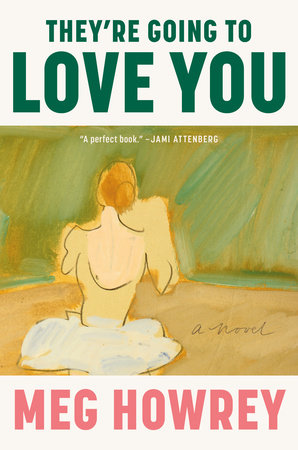
They’re Going to Love You: A Novel by Meg Howrey

They’re Going to Love You: A Novel by Meg Howrey

This one is a quiet burn, the kind of novel that leads to a swell of deep and intense emotion at the end. You’re left, Reader, with a sense of loss at the end, a feeling that you’ve experienced something very intimate, that maybe you shouldn’t have, but you had to — and you did — and now you’re left to think about the memory of the novel. They’re Going to Love You sticks in your mind like taffy to the roof of your mouth, a lingering taste of sweet and salty. Maybe a little sour.

They’re Going to Love You is a story about parenting, being a child, being a child to parents who are human and flawed. It is also a story about the fragility of relationships and the unpredictable strength of them. It’s a story about the trials of family, the values that are assumed in a family unit, assumed because of blood and marriage and birth. It is also a story of betrayal and grief, of not having what we assume we should have or of losing what we felt we should never have been able to lose.

The novel revolves around and is narrated through the eyes of a young girl who becomes a young woman and then a middle aged woman. She is a dancer and the daughter of dancers, ballet dancers in the heady and chaotic New York city scene of the mid-twentieth century. The father is a gay man, openly so, and there is a step-father. Then there is her mother, a former ballerina. The parents expect a lot from the girl. This is a story about expectations and hopes and dreams that are ours and also, not our own.

As the girl grows up there are things she learns about her privileged life and the expectations of her privileged life and the ways in which people look at her from outside her life. She learns about love from her parents and from their divorce and from their forced interactions on her account. She learns about love from her father’s gay friends. She learns about betrayal from her parents and what it means to forgive.

The novel is also about death and the finiteness of this life and of love. It is about realities underlying the fantasy of a ballet-infused, performed life.

Howrey’s prose is stark and cutting. It is dark and yet also childish, implying childhood is in fact a darker space and time than we are often led to believe. The characters are children and adults and you are not sure who is the adult and who is the child sometimes. The dialogue is authentic, sometimes painfully so, too reminiscent of our own familial traumas.

There is an element of this book that prickled me, for as much as I praise it: the characters are insufferably privileged. They are white, wealthy, part of the exclusive milieu of pretentious NYC. The main character is a nepo baby, whether she thinks so or not. So is her father. Intergenerational privilege abounds in this novel. This is a world that exists for a fraction of a fraction of a fraction of the world’s population. It’s not my world, for sure.

But, that is what novels are for (in part): entries into worlds unknown.