This novel knocked the breath out of me. It’s a punchy, unabashed novel that does not hold back for the delicate senses of the reader. And that’s really its purpose: to strike, to aggressively announce blackness and the terrible history of being black in America.
The Nickel Boys are children and teens who have been sentenced to a juvenile detention center of the same name, a place that announces its purpose is rehabilitation and calls itself a school in name only. This is where the state of Florida shuts away its poor, young white and black boys. The novel follows a young man who, after seventeen years of successfully avoiding the racism roaming the streets in the form of cops, finds himself arrested and carted off to Nickel for his sentence. Here, he and reader have their eyes opened to the brutalities of being a black boy in a white man’s world.
Like Whitehead’s other novels, The Nickel Boys is written with an urban lyricism unique to him. The way Whitehead’s prose and story weaves in on itself, producing by the novel’s end, a symmetrical structure is deeply satisfying and alluring to this reader. Throughout the novel there are little hints at its ending, as if its ending was never — should never — be a surprise (though it is, and purposefully so). Whitehead is a master at unravelling just enough thread to keep the reader dangling, tying off all the knots at the end to zip it all up.
Perfume River is a New Adult bildungsroman, revolving around a young woman named Sam as she navigates her life around competing stakeholders: lovers, friends, herself. She is also wrestling with her past, specifically, her dysfunctional childhood and relationship with her parents. She encounters a young black boy, also suffering through his own life and problems. Together, they attempt to make sense of the world around them and the demands made upon them, to be adults, to grow up, to take on the consequences of others’ decisions.
My review of the novel is mixed. On the one hand, the novel is well-written, in a technical sense; Patrick’s prose is smooth, even, and consistent. As with her other work, her use of words is sparse and succinct, leaving the reader to indulge in their own imaginings of the space and events. The pauses and silences are evocative.
On the other hand, unlike Patrick’s other works, Mercy and Anxiety in the Wilderness, Perfume River lacks emotional depth. Overall, this novel does not deliver on its emotional promise, the one made in its synopsis.
There are absences which flattened Sam and Rexel as individuals. The muteness of Rexel’s family and the superficial context of his life beyond his encounters and engagement with Sam were a detraction for this reader. The reader is treated to one facet of Rexel’s emotive life: his wariness, his diffidence, his armor. Sam doesn’t seem to really break through Rexel’s armor in a meaningful way so that the friendship benefits him. A deeper view into Rexel’s life beyond Sam, perhaps his own chapters, would flesh him out further as a primary actor in this story. (Or, perhaps, the story isn’t or shouldn’t be about him. Is this really Sam’s story and not his?)
Ultimately, for this reader, what is lacking in the story is change. Sam’s metamorphosis is too subtle, delivered too late in the novel. Much of the novel feels like it isn’t “going anywhere” as the events which are meant to serve as catalysts are given too brief of a treatment. This reader found it difficult to connect with the other characters in order to feel the tension between them and Sam. Much of the tension that exists is situational, but the internal psychological turmoil they cause is left unsaid; this absence hindered this reader’s ability to connect with Sam and these other characters.
For this reader, the Prologue was the most compelling element of the novel; it was intriguing and suggests a story about dysfunctional families. However, the distance between Sam’s childhood and adulthood is not bridged by the remainder of the novel.
Overall, for this reader, the novel did not deliver on its synopsis’ promise; it feels unfinished, like it hasn’t had time to fully develop. Its characters feel under-developed, as if the author hasn’t had time to get to know them fully yet, and as a result, this story of their lives only skims their surfaces.
All this said, I am a fan of Kathleen Patrick’s work and look forward to her next novel.
Not my usual cup of tea, but this Young Adult bildungsroman/fantasy/horror did keep me on the edge of my reading chair! Beyond the Trees is novel about a pair of brothers, the younger is our protagonist and narrator, around whom the novel revolves.
The novel opens with Caden and Ansel Murphy, young men surviving high school and all the angst that time and space engenders. Caden struggles to belong; Ansel does not. Living in a small town rife with prejudices of all kinds, but especially against queerness, the younger brother wrestles with identity as a gay man. Renna successfully weaves in social commentary and lessons about inclusion into the story; what is means to be a man, what manhood looks like, “should” or “could” look like, expectations and realities. Ansel embodies the idealized version of manhood, finding it easier to settle into this cultural environment. But the events of the novel reverse the brothers’ roles, and in doing so, challenge the norms of manhood.
One night, Ansel goes missing. The cause is unclear. There are rumors of paranormal phenomena. In the course of recovering Ansel, Caden finds himself in a strange place, one that seems like it could not exist, a fantasy land. As grounded in reality as the novel is, much of it takes place in this fantasy location, the narrative arc of this part of the story mimicking the classic Hero’s Journey. This is the land beyond the trees.
The story is simple, but the undercurrent of social and cultural commentary complicates it in a very appealing way. Additionally, Renna’s smooth prose, swift propulsion of the story, and fleshed-out characters renders a well-crafted novel.
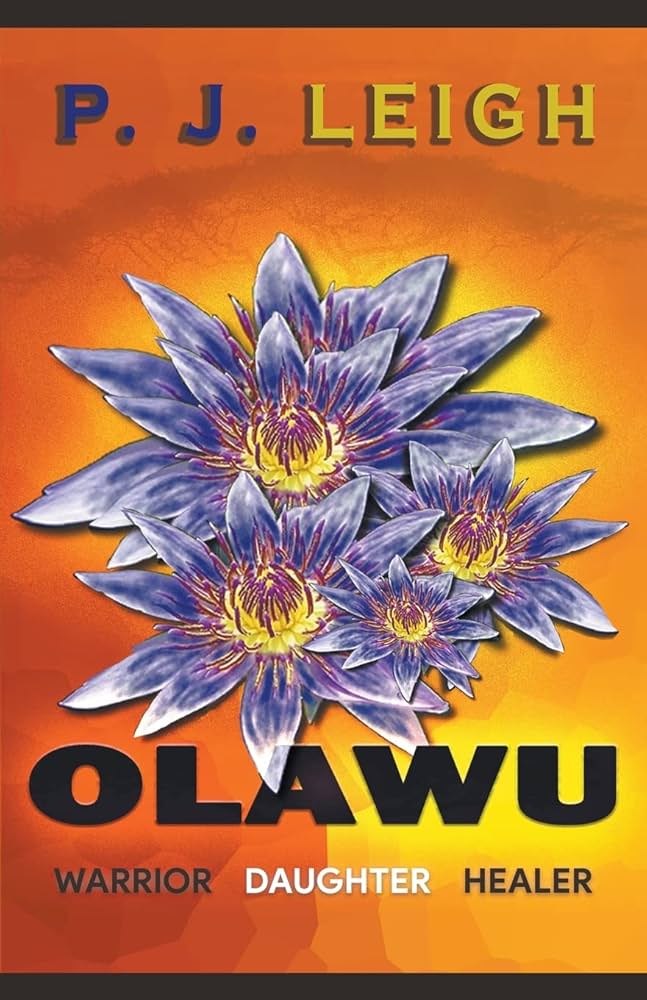
Olawu appealed to my longing for a postcolonial canon. It delivered — and then some. The novel is reminiscent of the work by Yaa Gyasi, Chinua Achebe, and Ngũgĩ wa Thiong’o; the language and the prose — sparse but evocative — is striking, the characters live and breathe, the story is inspiring. A whopping ⭐️⭐️⭐️⭐️⭐️ for this young adult historical romance/fiction.
This novel disrupts modern colonial culture (in which we all live) on multiple levels:
As an independently published novel by an author of color, Olawu is a challenge to the institution of traditional publishing and gatekeeping that that system engenders.
As a novel set in a pre-colonial East African world, Olawu highlights the existence of East Africa, its diverse peoples, kingdoms, and communities as independent from European history. We do not need to mark African time according to European histories and events.
The eponymous protagonist is a strong woman and the novel draws attention to the role of women in pre-colonial East African society. In doing so, Olawu challenges euro-centric notions of gender, especially those imposed on women and womanhood.
The incorporation of Xhosa, KiSwahili, and Zulu words, phrases, and culture into the text is an act of postcolonial defiance. Given the Colonial weaponization of language, this act of text is a rejection of the primacy of English.
The novel is an East African bildungsroman, it follows its eponymous protagonist, Olawu as she comes of age, becomes a young woman, and finds her place in the world as an adult. It unfolds in what might be seen as three parts. The first focuses on her childhood and ambitions — and how the community into which she is born and raised deems her inferior on the basis of her gender. The second exposes Olawu and the reader to other possibilities, how women might be valued and how womanhood might be performed elsewhere. This is also the part of the novel where she struggles to understand herself, her desires, and the inevitable tension between conformity and personal fulfillment, especially when the latter flies in the face of cultural norms. The last part is when Olawu decides who she will be and how she negotiates with that tension to achieve her objectives. Romance (not sex) is woven into this story about a young woman shaping herself and the world around her, serving as the scales which Olawu must balance and ultimately tip one way or another.
A number of themes thread through the novel from start to end: Olawu’s ambitions, the institutions and individuals who stand in her way, and her resilience and resistance against them. A major contributor to Olawu’s success in finding herself and her place in the world is her family, both biological and found. The proverb, “Umntu ngumtu ngabantu” (A person is a person because of other people) is an important element of the novel; Olawu does not accomplish what she does on her own, but through the kindness, love, and sacrifice of others.
Olawu‘s success as a novel is also due to Leigh’s incisive and evocative prose, and well-crafted characters. Leigh’s prose reminds me of Things Fall Apart; the writing is succinct and sharp, absent of flowery and unnecessary description. Leigh focuses on the characters, letting the reader organically create an image. The characters are distinctive and recognizable; their flaws — even Olawu’s — mirror our own, making the reader sympathize with all of them, even when they are at odds with one another.
The result is a highly character-driven, powerful coming of age story.
Leigh’s depth of research must also be commended. While the novel does not draw from specific East African pre-colonial history, it is evident Leigh has researched the region’s precolonial political systems, structures, and gender history. I especially appreciated the inclusion of glossary terms and pronunciations at the beginning of the book.
This is a fantastic read for all young people, but especially young women of color who need to see themselves represented decolonizing/post colonial literature like this.
I encountered Olawu through a Facebook group I’m in, where I serve as a reviewer of (mostly) independently published books. Organized by the admins of this group, the review event takes place bimonthly, and involves reviewers submitting a short biography to the organizer. Authors who are looking for reviews of their work reply to the organizer, selecting the reviewer of their choice. Reviewers then select which authors and books they’d agree to review based on the descriptions of the books.
If you would like to read Olawu yourself, you can find it here on Amazon. It is 318 pages and the paperback is currently priced at $14.99 and the Kindle ebook at $8.99.
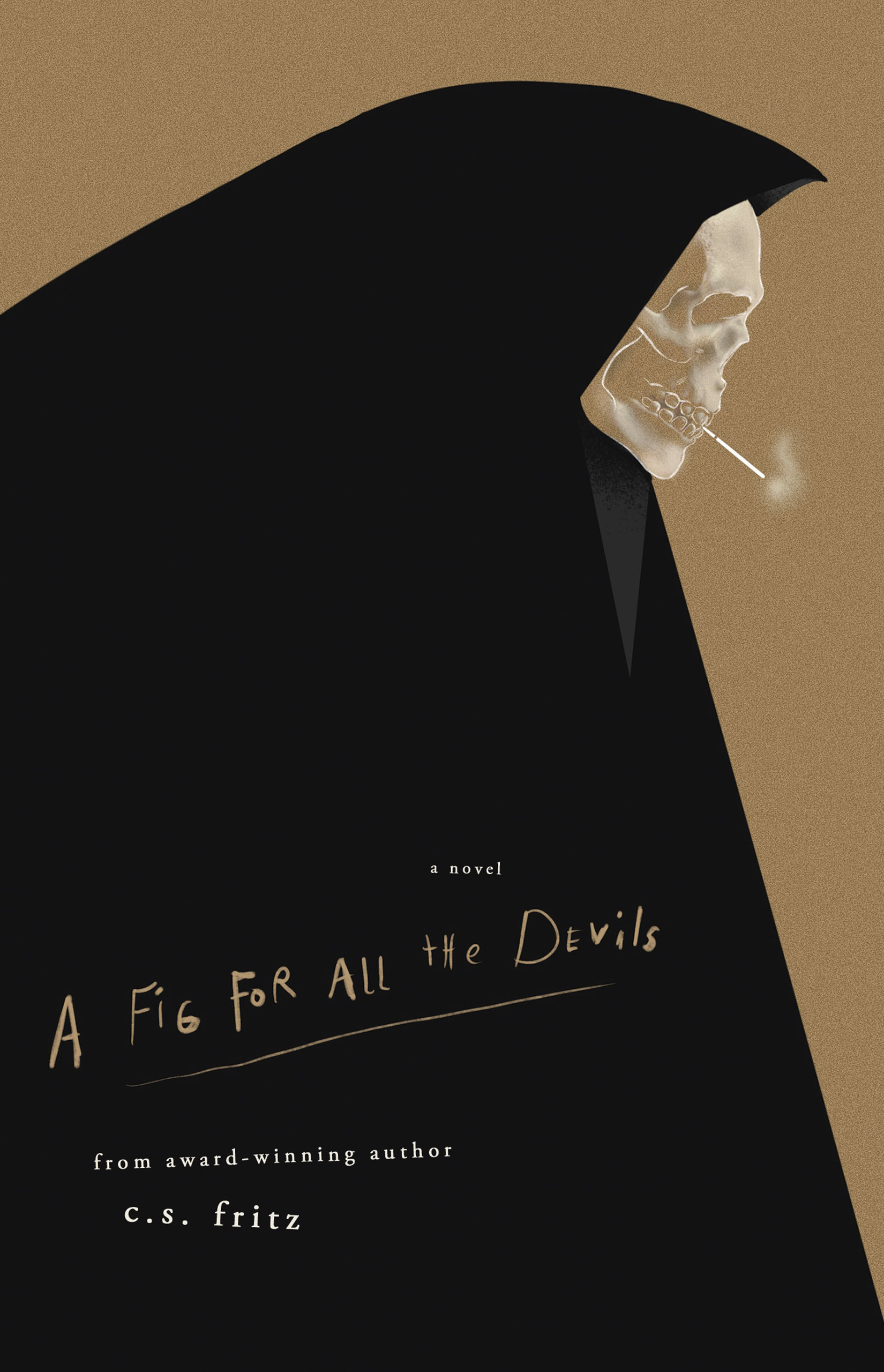
The cover got me, I admit it. The Grim Reaper is one alluring fellow, I couldn’t help it. I buy my wine the same way too: the more morbid the label — reds, black, and intricate patterns of monstrous or predatory creatures — the more likely I’ll buy it. And if it’s under $10, so much the better, NGL.
A Fig For All The Devils delivers too. Like a robust cheap wine, it was dark — almost bloody — with scents of dark foggy Oregon pine (the novel is set in Tillamook), oaky smokiness (well, more like cigarette smokiness, but go along with me in this metaphor play), and a generous injection of alcohol (cigarettes aren’t the only narcotic drug in this novel). And, just like when you bring a cheap oversized bottle of wine to the party, A Fig For All The Devils is fun in a package.
The novel is spun around a teenaged boy, Sonny, who is unfortunately saddled with a less than stellar family life. His father is gone. His mother is… not present (to say the least). Sonny is left to his own devices, grappling with grief of loss of one (but really both) of his parents. The Grim Reaper finds his cue here. In need of an apprentice, the Grim Reaper makes himself and his proposition known to Sonny. The novel is premised on this encounter.
A Fig For All The Devils reads as Young Adult fiction, a dark bildungsroman. Sonny’s problems are appropriate for an adult world, but to be fair, the kinds of dilemmas Sonny encounters are probably commonplace for teenagers today (anthropomorphized, embodied Death excepted). The prose fits a YA reader as well, easily accessible and authentic in its teenaged voice. The story flows at a fast pace, yet slows at key points for the reader to engage with the interiority of the protagonist, Sonny. On that point, while Sonny is the main character and it is through his eyes that we witness this novel, the other characters are vivid. They are all tangible, visible to the reader in their flaws and virtues. Death even, a mythical being, comes to life (pun!) in this novel in a very human manifestation.
More horror to follow (for example, Gallows Hill by Darcy Coates and Valley of Shadows by Rudy Ruiz — both coming out in September, 2022 — and more!) Follow me to get updates!)



 Dr JoAnn LoSavio