Before Your Memory Fades: A Novel by Toshikazu Kawaguchi

Before the Coffee Gets Cold #3
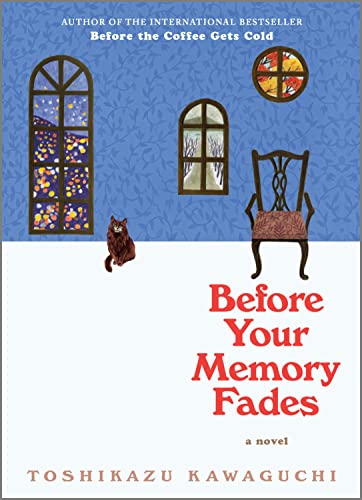
Before Your Memory Fades: A Novel
by Toshikazu Kawaguchi

Before Your Memory Fades is the third installment of the Before The Coffee Gets Cold series. It picks up directly where the second novel, Tales From The Café leaves off. I thoroughly enjoyed the first novel and loved how the second one tied up loose ends; this third novel follows with the same pace, cadence, and story. For those who love the way the past and present and future intertwines and the mythology of the series, Before Your Memory Fades will feel like a warm welcome in an old and familiar place (the Cafe Funiculi Funicula, of course!)

For me, personally, Before Your Memory Fades made less of an impression on me than I expected. I think I had tired of the story; indeed, there was nothing necessarily new in this novel that the previous two had not delivered. The emotional payoff for me was spent, but this does not lessen the potential payoff of the novel for a fan of the series: There is a ghost, albeit a new one, in The Seat in the café and there are new eager patrons who come to use the time traveling device to correct some wrong they have committed in the past or have yet to commit in the future. Then there is the same terrible lesson they learn: that love and obligation are on the same sides of the coin and that they cannot change the events fated to them, but the knowledge they learn in the past or future can change their hearts and souls in their present.

We are reintroduced to familiar, new, and newish characters, Nagare and Kei’s now teenaged daughter, Miki, and a new employee, Reiji, who works at another café in the “family”, Café Donna Donna, which also has its own time-bending seat, its own ghost, and its own crew of café regulars, Nanako and Dr Saki Muraoka, There are familiar characters: Nagare and Kazu. There is also Kazu’s daughter, Sachi, who is the newest Tokita woman to wield the power of the coffee and time travel. There are new patrons who arrive at the Café Donna Donna to rewrite their pasts: a daughter who seeks out her parents and a way to manifest her vengeance, a comedic celebrity who needs to tell his wife something important, and others.

All in all, Before Your Memory Fades delivers on its promise. It is a fantastic addition to the existing two novels. It continues the tradition of the Café Funiculi Funicula, giving the reader more of what they fell in love with in the first novel.
A History of Fear: A Novel by Luke Dumas

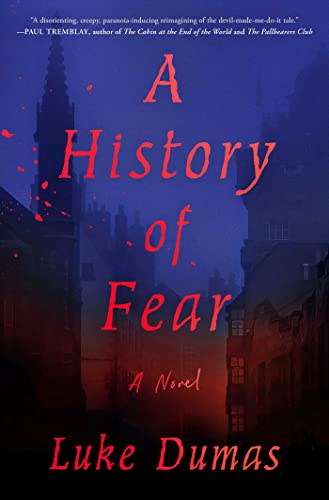
A History of Fear: A Novel
by Luke Dumas

By page three, I was hooked. The ending comes to a perfect, organic conclusion — but I readily admit that if Dumas writes a sequel, I’m all in.

A History of Fear unfolds like Stoker’s Dracula, adopting an epistolary approach, delivering the story via journal entries, letters, official reports from doctors, prison officials, and newspaper articles. The novel dives deep into the most disturbing parts of human psychosis reminiscent of Dostoevsky’s Crime and Punishment. It delivers gothic horror too, in the manner of Shelley’s Frankenstein. In the end, the reader can’t be entirely sure of who is the monster, if demons are real, if evil is more human than we comfortable with. A History of Fear is a horror fan’s feast: gore and psychological terror stride side-by-side, the paranormal and the divine and the mundane intertwine to create a world the reader is never entirely sure is real. Illusion may very well be reality… or worse.

But the story is not fantasy; there is a real history embedded in this novel — and a commentary on a history of monstrous bodies, sexuality, religion, and intergenerational trauma. There is a reality underlying the one Dumas weaves for us. This is what makes the novel so appealing; there is a real horror here, one that we can recognize. This history is one that might be so common as to be truly terrifying because it might actually exist within ourselves. Or someone we know.

A History of Fear follows the main character’s slow descent into madness — or his ascent into clarity, depending on your interpretation. There is a true mystery here and this drives the story forward. The reader needs to discover what the main character also seeks: some sense of closure and parental acceptance. The main character is driven by a need to know themselves and their past. This is a genealogy of a family and the homophobic culture of the West. Dumas focuses on the psychological damage inflicted on those who deviated from the dominant norm and those who dared to question their place in it. The novel travels between the past and the present, each part of the jigsaw puzzle adds to the image of the whole of time, allowing the reader to witness the unraveling of the man’s mind and the suffering caused by intergenerational trauma.

The novel opens with the main character’s eventual, inevitable fate; this is the mystery. We know what happens to him. The mystery is why and how. The horror is the long arm of intergenerational trauma.

A wonderful book to have read in October, the Halloween month, but really, a fantastic gothic horror for any time of the year.

Seeking Western Men: Email-Order Brides under China’s Global Rise by Monica Liu

Seeking Western Men: Email-Order Brides under China’s Global Rise by Monica Liu

It’s been a minute since I’ve read an ethnography — and enjoyed it in the way I enjoy fiction. Liu does an amazing job making her subjects tangible for her reader and weaving story into the reality of her research. The result is brilliant academic anthropology; a portrait of women’s lives in modern China that transports the Western/Western-based reader into that world. This is a work suitable for all adult readers, those interested in the minute theoretical discussions of academia as well as a more general audience, those interested in simply knowing and witnessing a way of life foreign to their own.

Liu’s ethnography takes us to modern China and into the micro-world of online dating. The reader is specifically given entree into the kind of dating world that has been typically derided as disempowering for women, fostering unequal relationships between Western men and Asian women (or really women of color or those from less wealthy economies): (E)mail Order Brides. The popular narrative depicts the men as wielding both physical, material, and financial power over the women. The men “call the shots” and the women come a-running, lacking agency to refuse or to determine the parameters of the relationship.

Liu’s major point, and the one that makes this ethnography so appealing, is that this is absolutely not an accurate understanding of the power dynamics in China’s e-mail order bride and online dating world. I won’t give away Liu’s evidence or the ways in which Liu reveals this to the reader; that would spoil the fun of reading this! But suffice it say, Liu shows us how much more nuanced reality is.

Chinese women — and those of a particular age, class, and circumstance — possess far more agency and power in these relationships than we are trained to believe. As an Asian woman with East Asian descent, I was particularly intrigued by Liu’s work. In my own American world, women of my race and ethnicity remain stereotyped as submissive wives/girlfriends/spouses, as heteronormative sexual objects, or as “dragon ladies” or worse… simply invisible. Liu’s work was eye-opening and refreshing.

Liu’s work suggests a new world order in terms of Chinese gender and gender identity is coming, although, we should not expect revolutionary ideas necessarily. There are aspects of Liu’s findings that suggest the patriarchy is still strong in China, that the new world order is merely a reworking of it to fit into modern context. I don”t mean to be teleological, but “we have a long way to go” is still a valid comment.

The book is divided into short, easily digestible chapters, each one taking on a different perspective of the women studied. Liu discusses their class, their age, their personal goals in systematic form, allowing the reader to grasp the diversity of Chinese women in this world, from those who own the dating business to those who work for them, and of course, the women who are its customers and consumers. The men too, Western and Chinese, are included in this study, though their perspectives and voices are often filtered through the women. Geographically, Liu takes us into the heart of urban China, but also brings us along to America so we are able to follow along the full migration pathway of some of the women. Liu’s book possesses breadth in multiple ways.

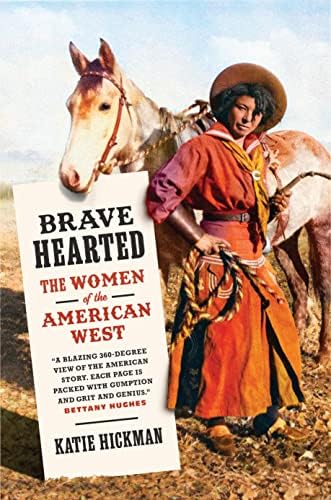
Bravehearted: The Dramatic Story of Women of the American West by Katie Hickman

Bravehearted: The Dramatic Story of Women of the American West
by Katie Hickman

“Gripping,” “Exhilarating!”, “Captivating!” These are descriptors I often flutter my eyes at, chalking these up to marketing histrionics that serve solely to assuage publisher’s fears about book sales and authors’ egos. But in Hickman’s case, I was hard pressed to find more authentic adjectives for Bravehearted: The Dramatic Story of Women of the American West.

I was expecting no less, to be honest. I’ve read Hickman’s work before (Courtesans: Money, Sex and Fame in the Nineteenth Century (2003) and Daughters of Britannia: The Lives and Times of Diplomatic Wives (1999) specifically) and enjoyed her scholarship for many reasons. Bravehearted, however, was the first time I’ve read Hickman’s scholarship since I began and finished graduate school, becoming in my own right, a historian. I can now say I appreciate Hickman even more than I did previously.

Bravehearted (like Hickman’s other works) is, from the perspective of a general reader, incredibly easy and smooth to read. The facts (that is, the history) are woven so artfully into her prose that the reader never feels like there’s a history lesson embedded in it. (There is, of course. More on that below.) Instead, the women, men, and children — indigenous, white settler, and immigrant alike — feel like full-fleshed characters in a story set in an epic, sweeping landscape. I could not help but feel the tragedy and simultaneous hopefulness of their journeys across the United States. At times, the harshness of the wind, the damp of the rain, the aridity of the desert air seemed to tragic, and simultaneously hopeful whip my hair, slick my skin, burn my nose. Hickman achieves what all historians — storytellers that we are — aspire to do: transport the past into the dimension of the present.

Each chapter of the book focused on a different region, a different woman, a different route settlers took toward the Western coast. The Pacific Northwest, the Californian region, and the Southwest were all covered in succession in Bravehearted. Embedded within these pages were not only those perspectives of white settlers, but indigenous voices too; though, the focus of this book was primarily on the European, East Coast, Midwest, and White settlers who encroached, entitled and arrogantly, into Indigenous lands. There are mentions of other people of color, Chinese immigrants and Black women, but again, these feature less prominently than white women and men. It is worth noting that there are few Mexican/indigenous women in Bravehearted; indeed, as I attempt to recall the book from memory, I find myself unable to remember one. Of course, it’s possible I am just forgetting, but that in itself is telling: There weren’t enough of them mentioned to mark a place in my memory. (The index is absent in the ARC so I could not look up where I might have read about them in it.) This is a well-researched, brilliantly written work of historical scholarship for any audience, but, it is not a work of decolonization; its intent is not specifically aimed at disrupting dominant narratives of white settler colonization or to bring to the forefront the voices of women of color.

This is — and this is not a detraction so much as it is a neutral statement — a history for those who are interested in women and the gendered component of history of the American West. The lesson is a simple one, but one which still requires learning: white women were as much part of the making of the West into the White American West as white cowboys, sharp shooting lawmen, and male miners (there were female miners too!) In other words, white women (and women of color in lesser numbers) were there too and they shaped White America in equal measure to their masculine counterparts.

The content of Bravehearted is not entirely divorced from race or ethnicity, but certainly the focus here is gender more so than race or ethnicity. Hickman’s inclusion of men and women of color and the indigenous perspective is not minor or token in any way; it is well done, but academic readers who may be expecting a stronger connection between or a deeper discussion of gender and race might struggle to locate it within this particular work. This is — and again, this is not a detraction — a work for a general audience. What Bravehearted offers the reader is breadth, indeed, a wide lens of the landscape of the American West in terms of the gendered experience of traversing it in the 19th century.

If, by now, my final verdict is unclear, let me end with it: This is a fantastic telling of American history worth any and every reader’s time.

The Wounded Age and Eastern Tales by Ferit Edgü

Translated by Aron Aji

The Wounded Age and Eastern Tales by Ferit Edgü

Sparse writing delivers more feeling sometimes, more than a hill of words. The Wounded Age defends that “less is more” adage more than adequately. Edgü is master of the cut, clipped prose; it is this brevity of language that paints a dark history of Turkish war and tragedy. The sense of nothingness is poignant here, deliberate, necessary to understand the effect of war on its subjects.

This collection of stories is marked by an unusual delivery via poetry. The stories unfold in lyric format; this does not mask the pain of ethnic refugees and the suffering of war that is its subject, but in fact highlights it and makes it more powerful. It is as if the Edgü or the reader would only be able to handle such pain if it were framed in poetry; the reality of war and of those mowed down in its path needs to be formatted in this way in order for the reader to see the war for its intimate effects.

The stories and poems themselves evoke a sense of fracture in Turkish life; there is a disjointedness that is purposeful, performative. These are not historical fictions; these are emotive accounts of the Turkish past.

Overall, a beautiful and dark landscape of Edgü’s world.

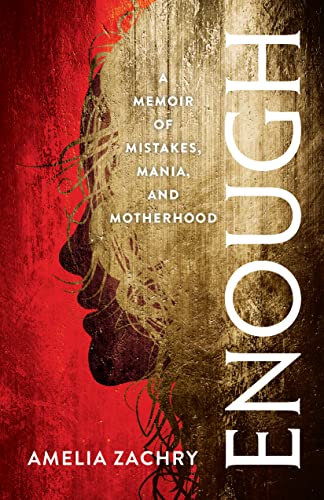
Enough: A Memoir of Mistakes, Mania, and Motherhood by Amelia Zachry

Enough: A Memoir of Mistakes, Mania, and Motherhood
by Amelia Zachry

This was an incredibly difficult memoir to read, but I am grateful that I did. Part of the hand-to-my-throat factor for me was how close Zachry’s experiences were to my own. Like her I am a Malaysian woman, one who entered the slipstream of migration and has become a transcultural, transnational creature with feet and hands in multiple worlds.

I also recognized the gaslighting and the gendered physical and psychological violence embedded in Malaysian culture. I recognized the gaslighting and gendered violence she experienced embedded in human society everywhere.

This was hard, so hard, to read at so many points. I had to put this book down multiple times. But the discomfort it caused was also what forced me to return to it. The kind of emotional disturbance Zachry’s memoir inflicts is that which can only be excised by pushing through all the way to the end.

I am glad I returned to it, acknowledged her pain my own (caused by reading it) and kept going in spite of all that. There is more than suffering in this memoir. Zachry illuminates a healing path too.

Zachry’s memoir is not a Malaysian one, although this is a cultural aspect of her experience that cannot be brushed aside. In this I recognized Zachry’s heritage as akin to my own; women told to swallow their pride, their pain, their voices. It is a world in which women remain — and are expected to remain — invisible. And this is true across Malaysia’s many cultures, ethnicities, and religious communities. For all the lovely tropical lushness of Malaysia, it is not a paradise for everyone; feminism is throttled by legal manipulations, feminists ostracized as social pariahs (even when Western-style feminism is eschewed in favor of local versions of feminism.)

But, I digress; Enough is not a memoir of a culture. Zachry’s experience is one that is all too familiar and common across cultures and in all societies. It is an extraordinary story of a crime that is horrendously ordinary. Hers was a life lived by many people; that’s what makes Enough so memorable, so relatable, so important to read.

Zachry’s memoir begins at her beginning, with childhood, then takes the reader into her teenage and early adult years. It is then that Zachry’s life is altered by an event that haunts her (even now after she has found ways to manage it). The bulk of this memoir is devoted to Zachry’s struggle with the trauma of this event, her path to a recovery, and it ends with a substantial section on her present life which shifts the focus to the traumas of migration and the development of her transcultural identity. Zachry’s journey to a happy place is not one filled with woo-woo cures or unattainable magic pills. Zachry documents how hard work, emotional work punctuated by slips and backslides is the tried and true path; one accessible to all of us, at least in theory.

This is a memoir for all women because this is a story we all know, first-hand, second-hand, or otherwise.

1794: The City Between the Bridges (A Novel) by Niklas Natt Och Dag

1794: The City Between the Bridges (A Novel) by Niklas Natt Och Dag

1794 is a deliciously dark journey through the underbelly of 18th century Stockholm. It’s the second novel in Natt och Dag’s Cardell series; but, the novel stands on its own. I didn’t read 1793: The Wolf and the Watchman where the characters, Jean Mickel Cardell and Anna Stina Knapp first appear, but that did not preclude my enjoyment of 1794.

The novel begins with Eric Three Roses, the second and less-loved son of a minor nobleman. Eric’s journey to Sweden’s only tropical colony, Saint Barthélemy and the mysterious, scuzzy individuals he meets there are the mystery that seeds the rest of the novel. What happens to Eric is tragic. Cardell is called upon to discover the crime and the criminal — and bring them to justice. He seeks out Cecil Winge, encounters Anna Knapp again, and slithers through the shadowy and crime-infested underworld of Stockholm, sorting through those who are struggling to survive and those who prey on others to survive.

This is a crime novel, one which reveals a seedy and complex weaving of lives, fortunes, and terrible fates that not only delivers the tension of a mystery but also, and perhaps more appealing to me personally, the texture of 18th century European urban society. Classes collide, fates are intertwined, and motives are never simple. Relationships function on transaction, but the currency people must pay can run the range from gold to love, from silver to power. Murderers murder for the sake of a love of violence. Fathers overlook the transgressions of their daughters for the sake of a peaceful existence. Brothers blind themselves to the follies of their siblings. Sanity and madness are two sides of the same coin.

1794 is not a story with happy endings, neat narratives wrapped up by the end; this is a reflection of life under a harsh light. The mystery lies in how we survive it.

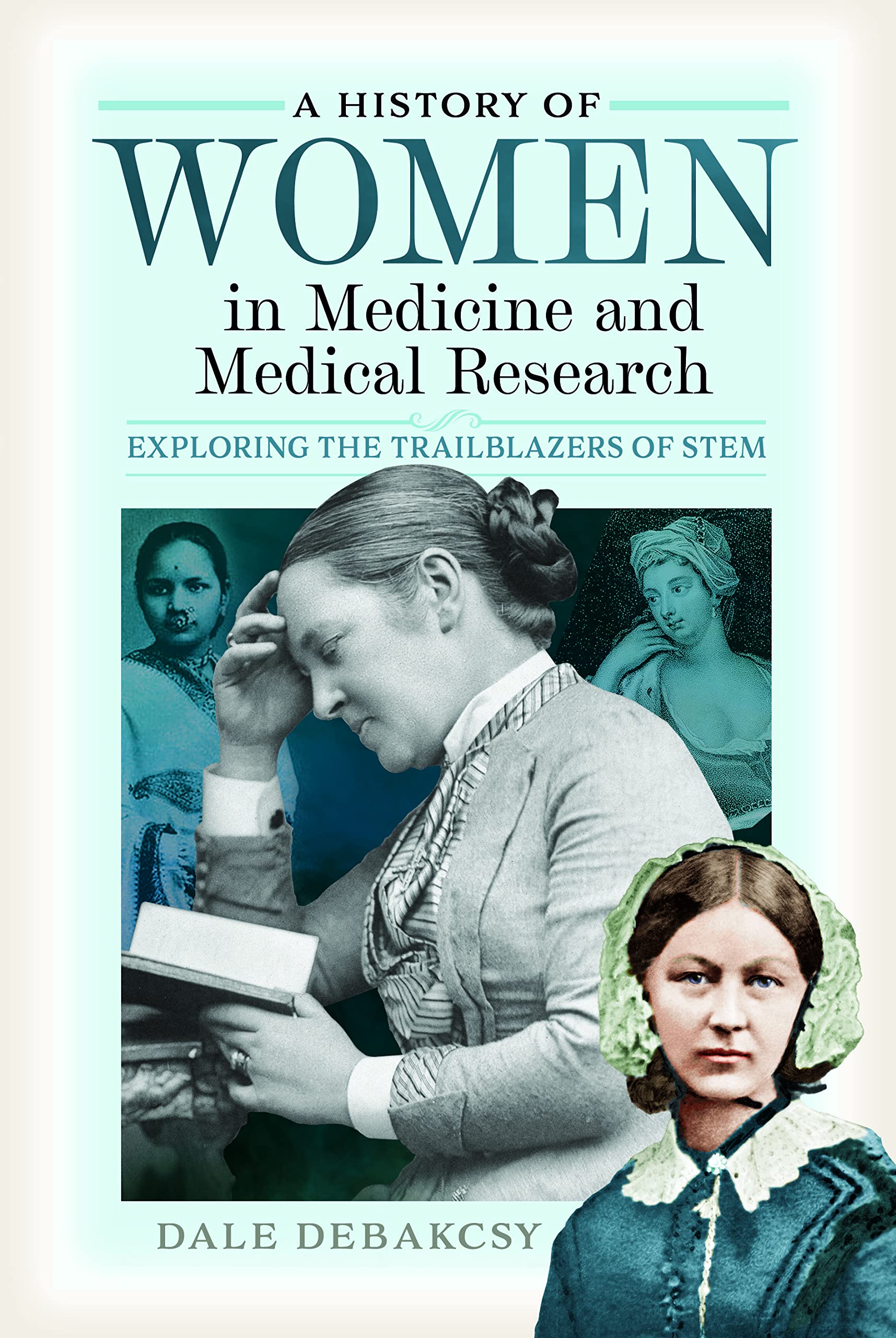
A History of Women in Medicine and Medical Research: Exploring the Trailblazers of Stem by Dale Debakcsy

A History of Women in Medicine and Medical Research: Exploring the Trailblazers of Stem
by Dale Debakcsy

I loved reading this ARC (Advanced Reader’s Copy) so much I pre-ordered it! Eye-opening, superbly written, and well-researched. I cannot think of higher praise for a non-peer-reviewed non-fiction written for a general audience. I can’t wait for my copy to arrive so I can re-read it!

A History of Women in Medicine and Medical Research: Exploring the Trailblazers of Stem is broken down into several chapters, each one focusing on a specific woman, her personal background or life story, and her professional career in the sciences. The book progresses chronologically from the 16th century up to the near present, ending in the 1970s.

Each chapter ends with a section devoted to further reading and sources. While the book lacks citations and formal references, these inclusions are especially valuable. This kind of historiography is difficult to discover without a significant investment of time and effort making Debakcsy’s book all the more useful and appealing. I do not mind admitting this is a key reason why I have chosen to purchase my own copy.

These are not long or exhaustive studies of each individual; these historiographical sections allow the reader to explore further. That said, the brevity of each chapter is not a detraction. These are easily digestible chapters, perfect for classroom use or as readings for an undergraduate course. The chapters capture all they need to, leaving the reader satisfied but curious for more.

The women themselves are fascinating subjects, not only for their contributions to STEM, but also for their perseverance and resilience in the face of class, gender, and racial prejudices. Many of the women derive from the upper classes, but a significant number of them are working- or middle-class. Some were immigrants or enslaved (or lived just outside that category). Many had to break with their families to pursue their dreams. In many cases these women knew or knew of one another, interacted closely or within similar professional circles. A cohort of pioneering women in these fields is visible in the 19th century, particularly in the fields of medicine.

While the majority of women examined and brought to light in DeBakcsy’s book are white, European or American, there are also significant chapters focusing on women of color in the Western world. These are mostly (but not exclusively) black women who broke academic and professional ceilings.

This is a fantastic book for the classroom and any library (academic and home, alike). I cannot wait for my copy to arrive!

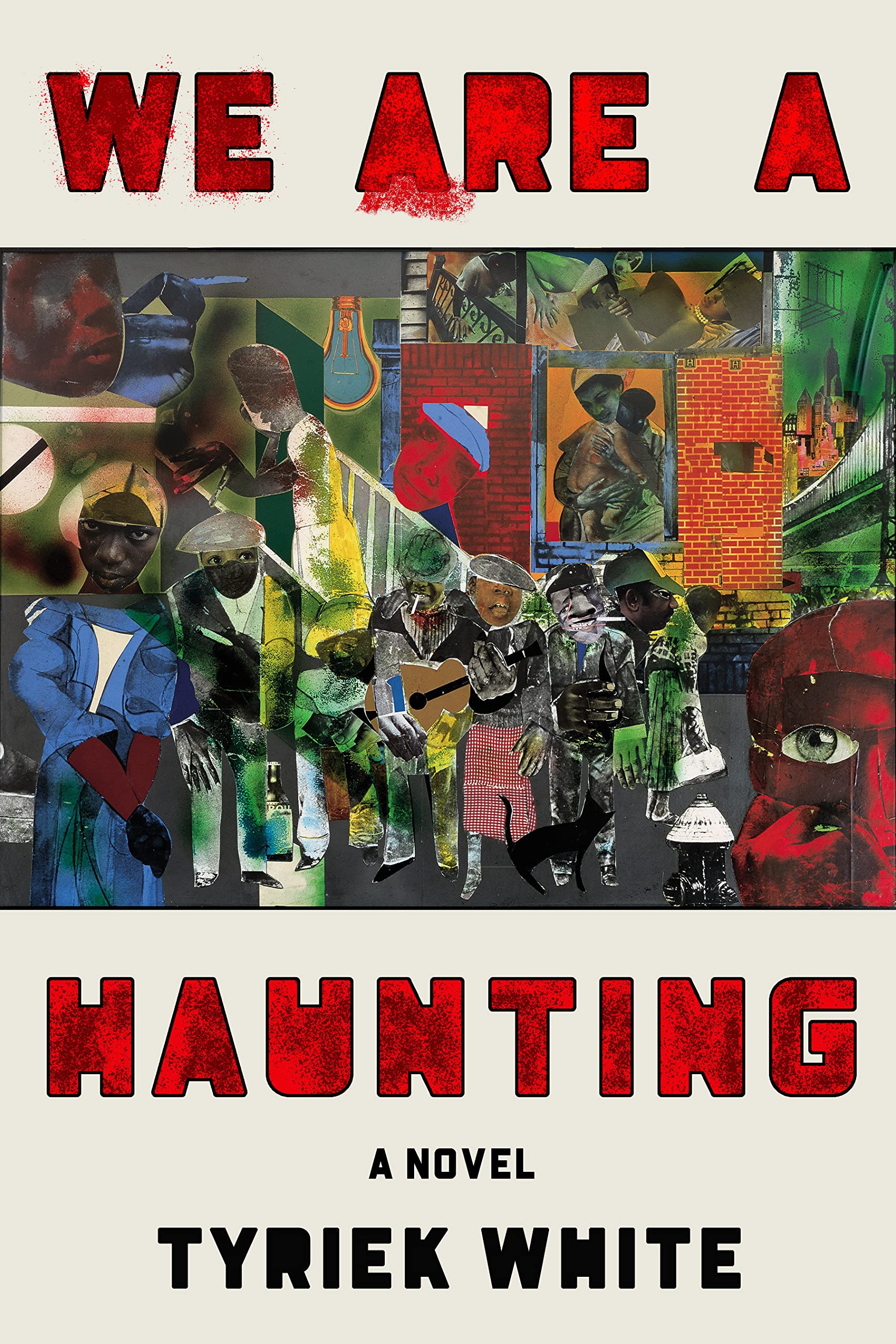
We Are A Haunting: A Novel by Tyriek White

We Are A Haunting: A Novel by Tyriek White

We Are A Haunting is a poetic song, like a siren that lured me into its world. Through the eyes of three generations of a black family living in New York City: Colly, Key, and Audrey, and the unraveling of their lives in a world rife with systemic racism, poverty, violence, grief, loss, readers are treated to a story that flows seamlessly between decades and generations.

White’s novel toggles forward and back in time. Characters float — as ghosts — between the past and the present. As the space between these three generations contracts and expands, the reader’s construction of time and history is reshaped, no longer a linear thing but a fluid matrix in which they live, all together, simultaneously at once. As a historian, We Are A Haunting reminds me that the past is never past, the present is merely a locus in history’s path.

The language which binds all these moments and spirits together is history, emotion, and experience: suffering and longing, obligations and promises kept or broken, strength and compromise, the ability to survive and a sense of defeat under the unwavering boot of poverty and racism. This is a complicated world in which awful events — such as getting fired and losing one’s income — is a nonevent warranting no reaction because of how useless it is to express emotion over it. This is just how life is. But, at the same time, such events are also gateways, paths that lead elsewhere, to better futures.

The interactions of the main characters with others in their lives: friends, fathers, husbands, children, and the dead or dying create the bonds which constitute the community and are the paths along which history travels. Each generation seeks to identify for themselves who they are and what they want, but they are also inevitably bound to the previous generation. Just as the living and the dead move seamlessly between their worlds in this novel, birth and death are a window that lets light in and keeps out the wind. Key, in her community, serves as a kind of gateway for life, possessing the ability to see things others cannot and in the capacity of a doula.

We Are A Haunting is not just about the black community itself, as an insular, discrete object in a vacuum. Then novel situates these black histories and experiences within the context of American material culture and history. Colly, Key, and Audrey and those around them are embedded in a world that has and continues to be assaulted by colonial institutions and racist systems. The deaths — those both metaphorical and physical — in We Are A Haunting are caused by this abuse and indifference. Casual micro-aggressions are tiny cuts and death is caused by a thousand of them.

This is a complex novel. For all its historical meaning, this is not a historical fiction in an informative sense; the time-bending, paranormal elements and the focus on characters’ and their emotional lives make this a more literary work than a historical narrative. This is not a novel that brings all its narrative arcs to happy, organic closures; un-repaired relationships, unfulfilled desires, and falsehoods are part of its characters’ lives. Morose, resentful endings are, after all, part of the colonial experience (at least from the perspective of the colonized.) In no way is this a detraction; this honest harshness is an authentic portrayal of racialized America.

The prose is literary. It is singularly focused on its characters more than its plot, though the unfolding of events lead to the characters’ interactions that shape their experiences. The characters are tangible, flawed, and powerfully written in each their own voices. Readers will have access to their interiority, but this is not an easy read in that the characters are — as real people are — guarded, afraid, unwilling to be vulnerable. Readers should not expect to be told what to think; this reader had to work to understand the motives and meanings of their conversation, their actions. The work, however, is worth it.

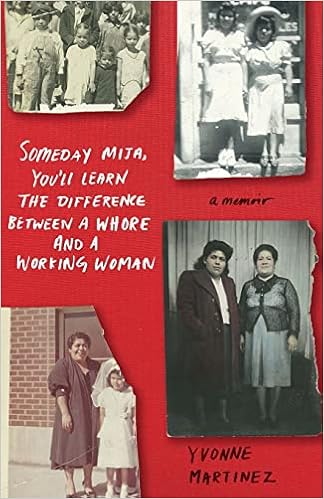
Someday Mija, You’ll Learn the Difference Between a Whore and a Working Woman: A Memoir by Yvonne Martinez

Someday Mija, You’ll Learn the Difference Between a Whore and a Working Woman: A Memoir
by Yvonne Martinez

This is an intensely powerful memoir; Martinez’s life is a scar tissue of intergenerational wounds. Someday Mija, You’ll Learn the Difference Between a Whore and a Working Woman is a serious treatment of what the traumas of racial violence, poverty, and sexual exploitation can do to a child and a family, and how Yvonne was able to weave these histories — her own, her mother’s, her grandmother’s, her family’s and her community’s — into a lifetime of “doing better.” This is not a memoir to be undertaken lightly.

Celebrate Hispanic Heritage, September 15th to October 15th — but also, whenever and always!

Someday Mija, You’ll Learn the Difference Between a Whore and a Working Woman is divided into two halves, the first reads like a novel and documents Martinez’s experiences as a child and growing up in a dysfunctional family. The second half addresses Yvonne’s life afterward, as an adult and specifically as an activist in the service of her community, as an organizer, and educator.

The two halves are intertwined: it is Martinez’s experiences growing up in an abusive and violent home that shapes her ability to understand the traumas that envelop her community. This shared experience is one not easily addressed by public health programs or the simple piling on of more and more education. Oppressive systems stemming from cultures steeped in patriarchy, sexual violence, and colonization cannot be wiped away, even replaced that easily. These cultures exist within even larger systems of oppression.

In Martinez’s case, however, these experiences also spurred them to take on systemic racism, sexism, violence, and poverty as institutions to be dismantled. This is a case of an individual working from within, for one’s own community (and for all communities). Change must be internal as well as external for it to sustain; Martinez’s life is proof of that.

A profound and consuming memoir that is in equal parts disturbing, sad, and inspiring.