
One Last Waltz: A Novel by Peter Scholes

One Last Waltz: A Novel by Peter Scholes

This novel moved me to tears, which is a rare occurrence — and more than once. One Last Waltz takes the reader on a journey of several lifetimes. This novel is a rich emotional experience for the reader.

One Last Waltz is set in a retirement community/home for the elderly, The Acorns, and the stories of its residents are told through the eyes of one of its employees, a caregiver, Angie Tomlinson (Ang, to her clients and friends.) These are the days of their lives, as their lives arrive at their terminal point. The novel highlights their small moments and casual conversations, but this is not a quotidian experience for them or the reader; it is in these small, personal interactions that the most intimate exchanges are made. This is a novel about the depth that exists in the ordinary and mundane.

Over the course of three years, the novel takes us and the residents of the Acorns, to various locations. A field day for them is as much a field day for the reader. There is indeed, a final waltz, and it is a beautiful, inspiring thing to witness as a reader.

One Last Waltz is also gorgeously written. With few words — Scholes applies an economical approach to writing — he creates an emotive landscape and breathing characters. Readers should not expect verbose visual descriptions, rather, a starkness here allows the reader to fill the visual gaps with emotion; it is their joy and pain, regret and worry, contentment and satisfaction, that is the reward of this novel. Scholes handles chronological leaps easily, taking the reader back in time to witness the events of the elderly residents lives and the meaning these have had for them. Of course, their journeys are really for our benefit as readers, as we traverse the course of our own lives, parallels to theirs.

For readers at any stage of life, Our Last Waltz is an uplifting (yet deeply solemn) and profound novel well-worth the tears it will bring to the eyes.
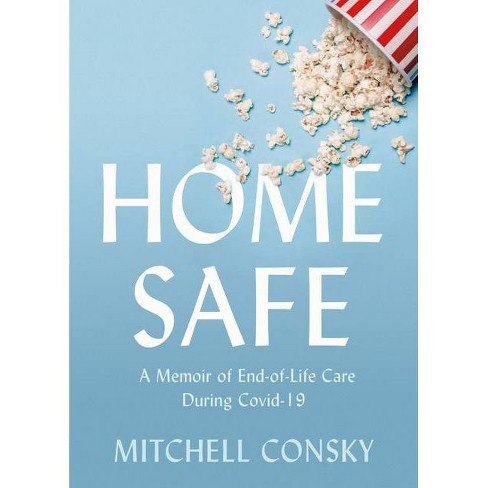
Home Safe: A Memoir of End-Of-Life Care During Covid-19 by Mitchell Consky

Home Safe: A Memoir of End-Of-Life Care
During Covid-19
by Mitchell Consky

This memoir was a bit out of character for me; but, I’ve been reading quite a few memoirs this year and this one caused me to pause. Is it too soon to read about Covid-19? We’re not quite past it yet, are we? Given that Covid-19 remains looming in so many places and may very well make a comeback, I figured it might help my own healing to read about someone else’s pandemic experience. Admittedly, mine was mild, privileged, and uneventful in comparison to so many millions of others on this planet. What did others feel? How did others live through this? We talked amongst each other, but too often we said a lot of nothing to avoid the anxiety that a deeper, more nuanced conversation could too easily trigger.

From a historian’s perspective, memoirs like this — indeed, the millions of posts, tweets, blog posts, articles, stuff — that we produced in the past few years say something poignant about this strange and traumatic moment in our individual and collective lives. What was this moment in our history? Memoirs give us entrée into others’ internal lives, see how others experienced this.

Consky’s account of the past couple of years, encompassing the dying and death of his father and others, delivered on both points. What was living and dying in the pandemic like?

But readers should not expect a litany of statistics or a step-by-step replay of WHO’s or the American CDC’s decisions and policies. This is a memoir, a deeply personal and individualized account of a global experience. Death is always subjective, always individual, always very personal. Readers should not expect this book to discuss everyone’s experience of Covid-19. The deaths in this book are not coronavirus related deaths necessarily; this book is about the non-pandemic deaths that occurred during the past two years. Ordinary life and ordinary death did not pause for the pandemic. Pandemic deaths eclipsed the distress of other kinds of deaths, but only insofar as their appearance in the news, social media, public forums. The trauma of those passings remained, but was invisible in contrast.

That said, this book is about life too. It is about resilience and the ways in which we communicate those important things in life that need to be said and done before death makes it impossible to do so. This memoir is about memory, not only Consky’s but those of his father’s and the surviving friends and family of those who lost loved ones — during the pandemic and at other times too. Life and death during the pandemic of 2020-2022 was unique in our lifetimes, but also… not. Life and death was also familiar… too familiar? Scarily familiar. Comfortingly familiar. I cannot decide. Neither can Consky, I think.

This book is also about memorializing and the ways in which we do this, for ourselves and for the dead. One act struck me in particular: when a group of friends gathered their memories of another among them who had passed away and gave the resultant artifact to the deceased’s family. This book is about how we can commune over death, that common event, that inevitable process that erases (or should) differences and animosities among us.

The end of life care Consky refers to? I think he means us, the surviving family members and friends of the ones who have passed away. For that reason, the book transcends the pandemic. The pandemic is (was?) a great thing, a momentous thing, but life and death will go on with or without it.