Cadaverous: A Novel by Jay Bower

Cadaverous: A Novel by Jay Bower

I came across this novel in a Facebook group I’m in, and — I’ll be honest — the cover caught my eye. I know, I know, we aren’t supposed to judge a book by its cover, but dang, it is appealing. The book itself did not disappoint either! For readers looking for some Halloween horror (it is that season again), Cadaverous will deliver.

For readers who enjoy the tongue in cheek style of Grady Hendrix (and their novel, We Sold Our Souls), paranormal and demonic elements, or novels about heavy metal, rock, or music in general, Cadaverous will appeal. Music is a central theme. Bower’s novel is also, like Hendrix’s, an intellectual horror, the sort premised on what is said and unsaid, leaving the reader to organically grasp the creepiness of the story. It is horror of the outlandish and yet-could-be-totally-believable type, with a decent dose of gore and paranormal spookiness.

The novel begins in epistolary style, as the remnants of a research project gone awry. The novel is delivered mostly in this format, as a blog belonging to its main character, Gaige Penrod, a musician in a band. The story revolves around Gaige and his desire to achieve fame, fortune, and prestige through his music, and his interactions with a groupie named Lisa. The reader is never quite sure what happens to Gaige, or how trustworthy Lisa is — until we reach the end. Cadaverous is a mystery as well, up to the very end, and it leaves the reader with a tantalizing and creepy “what if….”

The novel’s characters are young; this is a young adult fiction, best suited for and written with the young person in mind. It’s an appropriate horror for a young audience, though there are mentions and references to sex, romance, and similar themes. The characters are well developed, though readers should know this is not a character-centric novel; plot propels the story.

Bower’s prose fits a YA audience and the story is straightforward and simple, though with a good share of twists befitting a horror/mystery. The language is accessible, easy to follow; and overall, the novel is well-written with a flowing pace.

All in all, a very satisfying horror read.
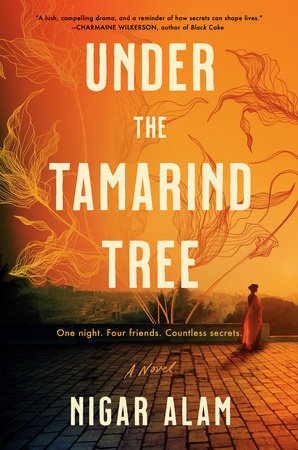
Under the Tamarind Tree: A Novel by Nigar Alam

Under the Tamarind Tree: A Novel by Nigar Alam

The novel revolves around an Indo-Pakistani family in the 1960s, a decade or so after the Partition from India. They have settled in Karachi and its members are navigating through the 60s in various ways, some questioning their belonging in Pakistan and others questioning the future they’ve been told they should have. As the next generation, the younger generation Rozeena and her friends seek to break the norms of tradition, but their parents and society also hold them to the past, one in which young women get married, have children, remain in the domestic inner world. There is an allusion to a traumatic event in 1964, but it is shrouded in some mystery for most of the novel; it is the catalyst which changes the course of Rozeena and her friend’s lives. The novel toggles forward to 2019 and back to the 1960s, unraveling the story of Rozeena and her friends. as it does. In 2019, the same resistance to social conformity duplicates itself in Zara, a young woman under Rozeena’s care.

The Brightest Star: A Novel by Gail Tsukiyama

The Brightest Star: A Novel
by Gail Tsukiyama

I read this novel along side a non-fiction biography/prosopography of Anna May Wong’s life and times, and honestly, I don’t know if that boded well for my review of this novel! In short, I found Tsukiyama’s fictive treatment of Wong’s life bland and depthless. I wanted interiority, a deep dive into Wong’s subjectivity. I wanted a view of Wong as a woman, as a human being, as a daughter, as a sister, anything, but not as a star.

Sadly, Wong’s characterization in the novel was one-sided, though to Tsukiyama’s credit the facet chosen was one that warrants highlighting: Wong here is portrayed as underfoot the racist boot of Hollywood, the racist weight of America and the White, Colonized world bearing down on her ambitions. I appreciate Tsukiyama’s attention to this racial and racist history; Wong was indeed a woman of her era, a victim of yellowface and orientalism. But I wanted more.

Perhaps I am not the target demographic for this novel; I know this history as a professional, I live its legacy as a Chinese-American woman in a state founded on White Supremacy. I am more than a target of racial hatred, more than a colonized human being, more than an Asian Woman, and so I wanted Anna May of The Brightest Star to also be more, to allow me entry into her mind, her heart, her existence as a lover, as a sister, as a friend. I wanted to know the facets of her that moved beyond the armor she had to wear to protect herself from the world.

I recognize that I already know the racist history Tsukiyama highlights, the weaponized language, the sneer against color, the snide remarks, and that this colors my view of the novel. I recognize that many other readers likely do not know this history. For those whose decolonizing journeys are just beginning, The Brightest Star will deliver a poignant and profound glimpse into Wong’s life as an Asian woman objectified and consumed as Other. Tsukiyama does a fantastic job peeling back the layers of glamour to reveal the ugly side of Wong’s stardom.

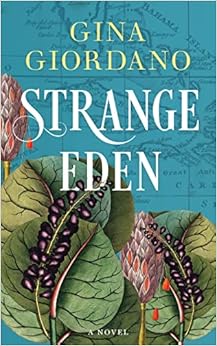
Strange Eden: A Novel by Gina Giordano

Strange Eden: A Novel
by Gina Giordano

Strange Eden is a novel of many things. Foremost, it is a historical fiction set in the Bahamas in 1791, as the British Empire consolidates its colonies in the Caribbean and mourns the loss of its American ones. The story revolves around Eliza Sharpe née Hastings, a young English girl of the gentry class and her life as the bride of Lord Charles Sharpe, the scion of an old Colonial family and a Lieutenant Colonel in the British Army at Nassau. Their union is a relationship rife with hostility and repulsion; it is a core pillar of the novel, as is Eliza’s and Charles’ relationship with one of this old friends, Jean Charles de Longchamp.

Romance aside, the novel also possesses paranormal elements, political intrigue, and feminist assertions. Eliza is a young woman with many gifts, some which are less desirable in the highly hierarchical and patriarchal world of the Colonial 18th century: a fierce independence, a boldness of spirit and tongue, a sharp intelligence in matters spiritual and political, and an ability to see that which is beyond the visible. In her adventures on the island, Eliza encounters those who expand her view of the world and those who would seek to limit it. It is a diverse cast of characters: Lord Dunmore, the governor of the island, Charlotte and a host of aristocratic society women, Cleo, an enslaved obeah woman, pirates and smugglers, and a mysterious shadow man. Each one paints this Strange Eden in garish and sober colors. It is a paradoxical place for those who are free may also live in chains, though made of silk and gold, and only those who are enslaved know the notion of freedom is an illusion. The novel’s title is apt: what is a paradise for some is very often not a paradise for a great of many others.

This dissonance is what makes Strange Eden shine as a work of historical fiction. For this reader, the appeal of the novel is its attention to historical notions of gender, race, and class. Giordano includes a bibliography at the end, and it is clear that she has done a great deal of research. I hesitate to consider the novel appropriate for the classroom; it is not. The research is good, though not at a professional level. But it was not meant to be; Strange Eden is not a textbook. The historical research Giordano has done remains a positive attribute of the novel nonetheless.

Giordano highlights the expectations put upon women of Eliza’s aristocratic class, and the overarching misogyny women experienced in this era. This is a theme which threads throughout the novel. The expectations of white upperclass women are contrasted against those imposed on enslaved women, like her young maids, Celia and Lucy, and contrasted against the rights and privileges of powerful men like Charles, her husband, Jean de Longchamp, and Lord Dunmore.

Giordano also pays close attention to the slave trade in the Atlantic, racial hierarchies risen out of Europe’s Enlightenment, and the paternalistic racism of the so-called “Civilizing Mission” as it was inflicted on the indigenous and persons of color in the colonies. Britain’s slave trade was abolished in 1807 and the practice itself in 1833, several decades after the moment of the novel; the novel is bold in its recognition of the tension between abolitionists and slave-holders at this time.

Strange Eden delivers a powerful lesson about the gendered and racial notions of the British Colonial world.

The mode of its delivery unfolds at a languid pace. The novel’s prose is thick with description, rich like the molasses that were produced in the Caribbean islands the novel is set in. In some parts the prose, to stick with the analogy to molasses, is unrefined for this reader; on occasion its phrasing conveys cliché over clarity or is redundant, perhaps benefiting from further editing. These do not degrade the novel on the whole. Giordano delivers a cohesive narrative, tangible characters and dialogue, and — most importantly for this reader — weaves a textured fabric of the period. Readers will find the prose is performative of the heat, vibrancy, and slow pace of life inherent in the British colonies of the 18th century. The result is an immersive read.

Readers should also know Strange Eden is the first of a series. The novel ends on a cliffhanger, “to be continued“; however this should not dissuade readers for two reasons. First, the novel ends at 517 pages allowing one to meander through it at their leisure until the next in the series is available and second, the novel has the strength and narrative arc to stand alone without its sequel. The ending satisfies.

To purchase a copy of Strange Eden click here. At present, you can purchase it on Amazon for $19.99 (paperback) or $4.99 (Kindle ebook).

House on Fire: A Novel by D. Liebhart

House on Fire: A Novel by D. Liebhart

House on Fire utterly gutted me; I very nearly cried — and I am not easily moved. As a historian I am immersed in our collective debris, the ugliness of humanity constantly. But this novel’s humanity, the harsh, honest, and all too familiar trauma of the human experience it brings to the fore struck me hard, so much so the reader in me dreaded and welcomed its final pages. Several times I had to set down this novel, take in a breath, take a break.

House on Fire belongs to that category of novel which epitomizes literature’s ideal. Like Ian McEwan’s moral-bending work or Nadifa Mohamed’s The Fortune Men, House on Fire forces the reader to reflect deeply, demands the reader challenge their own existence, choices, life. Its tagline is apt: How far would you go to keep a promise? This novel forced me to consider my own ethics, my own values, the relationships of my own life.

I will not forget this book.

The opening line alone will arrest you. It delivers the novel’s premise, one which confronts the reader and its protagonist immediately: Bernadette, an ICU nurse is asked to euthanize a man by his wife, but this is beyond a professional request: the man is her father, the wife her mother. The reader becomes witness to a far more complicated situation that one of abstract ethics, should she or shouldn’t she? It becomes personal in much deeper ways. The reader is immersed in the life of a family, chapters retreating back in time provide a full view of Bernadette; her sister Colleen and brother Adam; her mother and father. Bernadette’s life is, like our own, far more entangled than it would seem; there is also her “ex”, Shayne and her son, Jax, her best friend and colleague, Kara, Kara’s husband, Eliot, Colleen’s husband, Liam and their nine children. Their relationships and struggles, as portrayed in House on Fire identify and challenge the obligations and bonds between parents and children, children to their parents, between siblings, between spouses. What do we owe? What are we owed in return? Is “owe” even the right word here? Maybe, maybe not.

The novel unfolds over the course of a few weeks, but transports us to other times and places as well; in that short and interminable length of the time, a number of events occur, both traumatic and mundane, devastating and reconciliatory. A House on Fire is a portrait of real life.

The beginning conundrum is one which threads through the entire book: Will Bernadette help euthanize her father? Will fate force her decision? Is her decision even hers to make? The ending will leave the reader — as it did this one — in tears or close to it. This reader found these to be tears of relief and sadness, tears of grief for the loss of the past and tears of gratitude for what has been gained in return.

House of Fire was published March, 2023 and can be purchased from Amazon here for $12.99 for the paperback, $2.99 for the Kindle, or free with Kindle Unlimited. The novel is 274 pages.

Beyond the Trees: A Novel by Christopher Renna

Beyond the Trees: A Novel
by Christopher Renna

Not my usual cup of tea, but this Young Adult bildungsroman/fantasy/horror did keep me on the edge of my reading chair! Beyond the Trees is novel about a pair of brothers, the younger is our protagonist and narrator, around whom the novel revolves.

The novel opens with Caden and Ansel Murphy, young men surviving high school and all the angst that time and space engenders. Caden struggles to belong; Ansel does not. Living in a small town rife with prejudices of all kinds, but especially against queerness, the younger brother wrestles with identity as a gay man. Renna successfully weaves in social commentary and lessons about inclusion into the story; what is means to be a man, what manhood looks like, “should” or “could” look like, expectations and realities. Ansel embodies the idealized version of manhood, finding it easier to settle into this cultural environment. But the events of the novel reverse the brothers’ roles, and in doing so, challenge the norms of manhood.

One night, Ansel goes missing. The cause is unclear. There are rumors of paranormal phenomena. In the course of recovering Ansel, Caden finds himself in a strange place, one that seems like it could not exist, a fantasy land. As grounded in reality as the novel is, much of it takes place in this fantasy location, the narrative arc of this part of the story mimicking the classic Hero’s Journey. This is the land beyond the trees.

The story is simple, but the undercurrent of social and cultural commentary complicates it in a very appealing way. Additionally, Renna’s smooth prose, swift propulsion of the story, and fleshed-out characters renders a well-crafted novel.

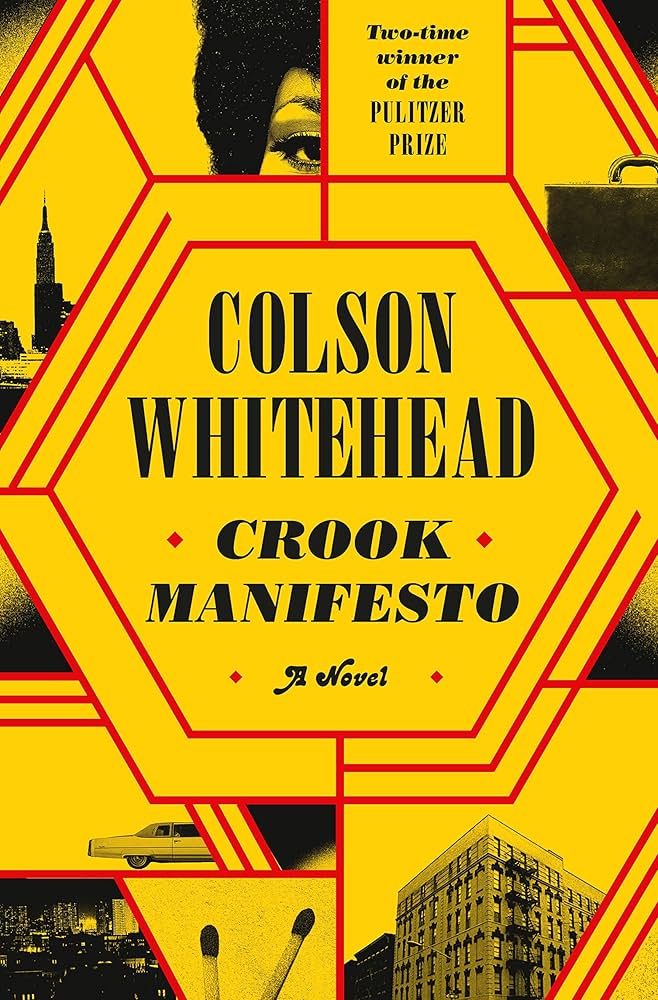
Harlem Shuffle & Crook Manifesto: Novels by Colson Whitehead

Having read Harlem Shuffle and Crook Manifesto, I cannot wait for the third novel in this series. Whitehead has me hooked on Ray Carney and Pepper, men you hate and yet can’t help but respect and care about. These novels had me reading through the night, damn whatever work I had the next day!

Harlem Shuffle is the first of the series, set in the late 1950s and early 1960s. It introduces the reader to the primary protagonist, Ray Carney, a black man who grew up and lives in Harlem, NYC. Carney is a successful business owner selling furniture, both new and gently used. His product is both legitimately sourced and… well, less so. The novel revolves around his world and the choices he has to make as a black man living in a white world, in a community where the lines between the licit and illicit are and have always been fluid. His wife, Elizabeth, for example, works in a travel agency who designs agendas for black folks in need of safe passage through white territory governed by Jim Crow legislation and prejudice. This is an era in which lynchings are common. A world before the American Civil Rights movements began.

The novel revolves around Carney and his immediate circle of friends, employees, and family, including his shiftless cousin, Freddie and his overbearing, “politics of respectability” in-laws. Split into three parts, each segment taking place three years apart, the novel is a collection of events that define Carney’s legitimate and less-legitimate career. Each segment revolves around a specific heist or… shall we say, project Carney gets involved in, willingly or otherwise.

Crook Manifesto follows the same format, except that it picks up where Harlem Shuffle leaves off but three years later in 1971. It is a new era in Harlem now. New York City is a different world than what it had been, but little has changed in Harlem. It is still a white man’s world, still a world in which the boundaries between the legal and illegal are fuzzy. Carney finds himself still doing the Harlem shuffle. Carney’s “projects” are criminal and noble, focused on vengeance and utterly righteous. He is a man of many talents and flaws, the kind of man everyone knows because that’s who we are: good and bad and everything in between.

The main attraction of the novel and the series as a whole is not the characters and their stories, or even the world of Harlem in the mid-20th century — though any one of these draws is enough for me — but Whitehead’s delicious prose and witty turn of phrase. Whitehead can evoke an image with just a handful of words, delivered with the kind of finesse only a slick Harlem player possesses; the prose is as smooth as the cons and crimes carried off in the novels. Whitehead’s words pack a punch, sharp and powerful like the ones Pepper throws. The words flow like music, like funk, and you, Reader, you will find yourself dancing to Whitehead’s beat long into the night.

The characters, and Whitehead’s smart crafting of their stories, does warrant mention. Carney, Pepper, Freddie, Marie, Munson, Zippo, Elizabeth, and Big Mike are each their own literary masterpieces. These are real people, visible and tangible. There is an enormous cast, but as the novels build, the reader will find that they make up the urban village that is Harlem, this closed and vulnerable world, an enclave of blackness in white New York. In Harlem Shuffle we fall in love with these characters, understand them and their desires. In Crook Manifesto Whitehead reprises them and we get a deeper view into their vulnerabilities, their powers, their strengths.

Whitehead’s attention to history and the culture of the past is also commendable. Events of the past are woven into the fabric of the story, as it was in reality, a necessary foundation for the way things end up shaking out. No world, even Black Harlem, exists in a vacuum; the events of New York politics as much as Civil Rights events happening in other parts of the country reverberate in Harlem, in the Carney’s living room, in Carney’s furniture showroom.

I. Cannot. Wait. For the next installment in this series.

After the Funeral and Other Stories by Tessa Hadley

After the Funeral and Other Stories
by Tessa Hadley

What an amazing collection of short stories! I couldn’t find one that I did not enjoy or that did not make me wonder about my own life, those around me, and just the state of humanity as a whole. Readers who enjoy the creativity and perspective of Margaret Atwood or the incisiveness of Meg Wolitzer are likely to find Hadley’s After the Funeral and Other Stories equally as well-written, equally as insightful into the human experience. And like Atwood and Wolitzer, there is an undercurrent of the uncomfortable in this collection of Hadley’s work, something that makes one wonder about the moral state of our species.

The stories range wide in terms of their narrators and protagonists. In some stories the narrator is a child, in others adult women, adult men. These are stories that clip a slice of a group of someones lives: some pinpoint a long moment of grief or the sharp cut of a sudden loss. There is death and all the attendant fears of delivering the news of death, of getting on after the loss, of not feeling much of anything and what that means about oneself. There are stories here of indifference, a death of a different kind amongst our very social species. There are stories of disloyalty and infidelity, yet again, another kind of death. Indeed, the title of the collection, while signaling the title of one of its stories, is also telling of the content of the collection. After the Funeral and Other Stories is about what happens after there has been a resignation of some kind, a real or metaphorical death and the putting to bed of that corpse. In some of these tales, there is proof of an afterlife.

The characters in these stories do unexpected things, sometimes things that shouldn’t be done but are done anyway, with and without shame. Readers will find themselves wondering at the end of a story, “Oh, that’s just not right…. is it?” Or, is it? That is the draw of this collection of Hadley’s work.

Story aside, Hadley’s prose should also be an attraction for readers. This is delicious literary fiction; Hadley’s turns of phrase are crisp and succinct; the description of the squelch of plimsoll shoes in the rain is enough to invoke a multitude of elements necessary to the reader’s experience: a sense of activity, the image of the character, the mind of the narrator — and more profound, the poignancy of the moment.

I would normally list my favorite stories, but honestly, I enjoyed each and every one of these.

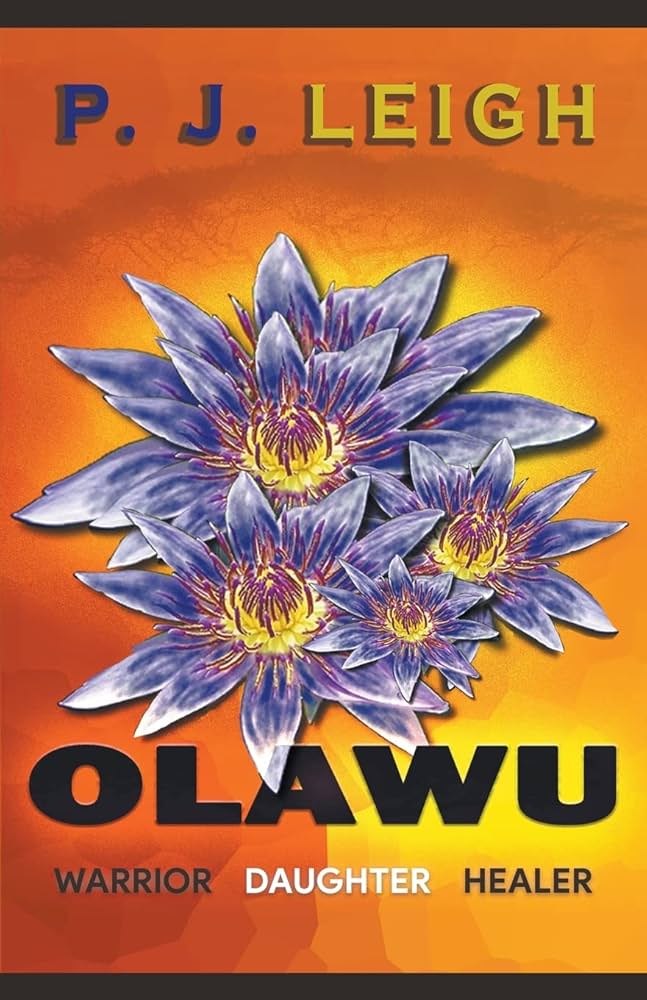
Olawu: A Novel by PJ Leigh

Olawu: A Novel by PJ Leigh

Olawu appealed to my longing for a postcolonial canon. It delivered — and then some. The novel is reminiscent of the work by Yaa Gyasi, Chinua Achebe, and Ngũgĩ wa Thiong’o; the language and the prose — sparse but evocative — is striking, the characters live and breathe, the story is inspiring. A whopping ⭐️⭐️⭐️⭐️⭐️ for this young adult historical romance/fiction.

This novel disrupts modern colonial culture (in which we all live) on multiple levels:

  • As an independently published novel by an author of color, Olawu is a challenge to the institution of traditional publishing and gatekeeping that that system engenders.
  • As a novel set in a pre-colonial East African world, Olawu highlights the existence of East Africa, its diverse peoples, kingdoms, and communities as independent from European history. We do not need to mark African time according to European histories and events.
  • The eponymous protagonist is a strong woman and the novel draws attention to the role of women in pre-colonial East African society. In doing so, Olawu challenges euro-centric notions of gender, especially those imposed on women and womanhood.
  • The incorporation of Xhosa, KiSwahili, and Zulu words, phrases, and culture into the text is an act of postcolonial defiance. Given the Colonial weaponization of language, this act of text is a rejection of the primacy of English.

The novel is an East African bildungsroman, it follows its eponymous protagonist, Olawu as she comes of age, becomes a young woman, and finds her place in the world as an adult. It unfolds in what might be seen as three parts. The first focuses on her childhood and ambitions — and how the community into which she is born and raised deems her inferior on the basis of her gender. The second exposes Olawu and the reader to other possibilities, how women might be valued and how womanhood might be performed elsewhere. This is also the part of the novel where she struggles to understand herself, her desires, and the inevitable tension between conformity and personal fulfillment, especially when the latter flies in the face of cultural norms. The last part is when Olawu decides who she will be and how she negotiates with that tension to achieve her objectives. Romance (not sex) is woven into this story about a young woman shaping herself and the world around her, serving as the scales which Olawu must balance and ultimately tip one way or another.

A number of themes thread through the novel from start to end: Olawu’s ambitions, the institutions and individuals who stand in her way, and her resilience and resistance against them. A major contributor to Olawu’s success in finding herself and her place in the world is her family, both biological and found. The proverb, “Umntu ngumtu ngabantu” (A person is a person because of other people) is an important element of the novel; Olawu does not accomplish what she does on her own, but through the kindness, love, and sacrifice of others.

Olawu‘s success as a novel is also due to Leigh’s incisive and evocative prose, and well-crafted characters. Leigh’s prose reminds me of Things Fall Apart; the writing is succinct and sharp, absent of flowery and unnecessary description. Leigh focuses on the characters, letting the reader organically create an image. The characters are distinctive and recognizable; their flaws — even Olawu’s — mirror our own, making the reader sympathize with all of them, even when they are at odds with one another.

The result is a highly character-driven, powerful coming of age story.

Leigh’s depth of research must also be commended. While the novel does not draw from specific East African pre-colonial history, it is evident Leigh has researched the region’s precolonial political systems, structures, and gender history. I especially appreciated the inclusion of glossary terms and pronunciations at the beginning of the book.

This is a fantastic read for all young people, but especially young women of color who need to see themselves represented decolonizing/post colonial literature like this.

I encountered Olawu through a Facebook group I’m in, where I serve as a reviewer of (mostly) independently published books. Organized by the admins of this group, the review event takes place bimonthly, and involves reviewers submitting a short biography to the organizer. Authors who are looking for reviews of their work reply to the organizer, selecting the reviewer of their choice. Reviewers then select which authors and books they’d agree to review based on the descriptions of the books.

If you would like to read Olawu yourself, you can find it here on Amazon. It is 318 pages and the paperback is currently priced at $14.99 and the Kindle ebook at $8.99.

The Unforgiven Dead: A Novel by Fulton Ross

The Unforgiven Dead: A Novel by Fulton Ross

This Tartan Horror/Mystery had me creeped out in the middle of the night! And yet, I couldn’t put it down, spine shivers be damned!

The novel revolves around a murder of a young girl and the mystery of her gruesome death, as seen through the eyes of the local constable who is investigating it, Angus. But this policeman is extraordinarily gifted with paranormal (in)sight, a legacy of his own haunted past. What results is a deeply engrossing whodunit woven through with Gaelic history and culture. For readers who enjoy hints of the demonic, pagan, and ancient evils, The Unforgiven Dead will have you prancing a ritual dance. For readers who love a twisted murder mystery, one in which the murderer is hidden in plain sight alá Agatha Christie, The Unforgiven Dead will absolutely make you squeal once the culprit is exposed.

But the story alone is not the novel’s only draw. The characters of this novel are deftly crafted, their dialogue mimics life, their motivations are raw and human and utterly flawed. For readers of literary fiction, the trials of Angus, Nadia, Gills, and Ashleigh will rent your heart. Their lives mimic reality and their hurts are ones we are likely to relate to, if we don’t know them well already.

The Unforgiven Dead leaves me pining for a moody, grey Scotland more than I could have imagined.