Almost Brown: A Mixed Race Memoir by Charlotte Gill

Almost Brown: A Mixed Race Memoir by Charlotte Gill

As a historian I deeply appreciate Gill’s memoir, and for multiple reasons. Gill’s childhood experiences and those of her parents, captured from her memories and filtered through an adult lens retrospectively, highlights mid-twentieth century tensions of empire and our global journey towards decolonization. Moreover, Gill does it with a sensitivity to the internal, subjective conflict “colonials” often face as they grapple with their identities. The frustration of Self that Gill reveals to the reader, through her parents and her own struggles, is not an artifact of the past, singular to the decades of peak decolonization in the mid-twentieth century; these are still liminal spaces individuals occupy and traverse today.

In that respect, Gill’s memoir not only captures a particular zeitgeist of the 1950s-1980s — decades which saw a mass migration of colonials across the world, decolonization and independence movements coming to fruition, and a general cultural revolution across the world in terms of race, racism, and anti-paternalism — it also makes the reader aware of the continuity of this historical spirit and its legacy as it is lived today.

The success of this memoir is in large part due to Gill’s self awareness and willingness to see her parents (and herself) for the people they are; Gill examines them with an academic eye, as historical subjects, but also as emotional, affective beings whose desires and needs are universal across time and cultures. The result is a very relatable, human memoir, one which draws the reader into the nucleus of Gill’s family as well as the age in which they lived.

Some of Almost Brown‘s success must also be attributed to the fanciful and (for their time) outrageous characters her parents are, for the daring ways they each challenged the norms of their age in terms of race/racism, gender, and transnationality. This is where Gill’s memoir appeals to more than the smallish subset of readers whose interest is in post-colonial subjectivities; for while the memoir hinges on post-coloniality as its primary locus, it is also about the oppressions we inflict upon each other, the intersectionality of our daily lives, and the myriad of ways in which power flows or not even within a family. Gill’s mixed-race family serves as the perfect case study in which brown people and white people — that is, race — can be upended by gendered expectations, or vice versa. Gill’s white mother was submerged under her brown husband, even while he was marginalized by a society that saw him as inferior by dint of his skin color. She, in turn, was snubbed by both her husband and society for daring to be that which society deemed heroic: an independent-minded mother.

In short, Almost Brown is a memoir well worth the reading.

Wondrous Transformations: A Maverick Physician, the Science of Hormones, and the Birth of the Transgender Revolution by Alison Li

Wondrous Transformations: A Maverick Physician, the Science of Hormones, and the Birth of the Transgender Revolution by Alison Li

I was thrilled to read this. There remain far fewer transgender historical monographs in the field, compared to the number published in other sub-disciplines. This biography of Harry Benjamin, an endocrinologist whose research and promotion of the effect of hormones on the human body, gender, and perceptions of health, fills a gap in our understanding of the formation of gender and transgender in the 20th century.

Li’s monograph is well-researched, pulling from a variety of sources to build a fleshy portrait of the man, but not only him; as with all good histories, Li produces a landscape of the era for the reader to understand the context of the individual. Benjamin, however, was a man beyond his time, thinking of gender in ways more similar to our own period than his — but that is the point: Benjamin is one of the forerunners of the way we think about gender today, as a spectrum. It is the contrast between him and his contemporaries which helps the reader visualize this landscape.

The chapters are chronological (rather than strictly thematic), offering the reader a clear trajectory of how concepts of gender and transgender — and here, especially — how the use of hormones became mainstream and effected changes in how medicine and healthcare as a whole.

I hesitate to write a full academic review as the digital review copy I had expired! Readers, this is a worthy book to read to grasp an often un-addressed aspect of transgender history!

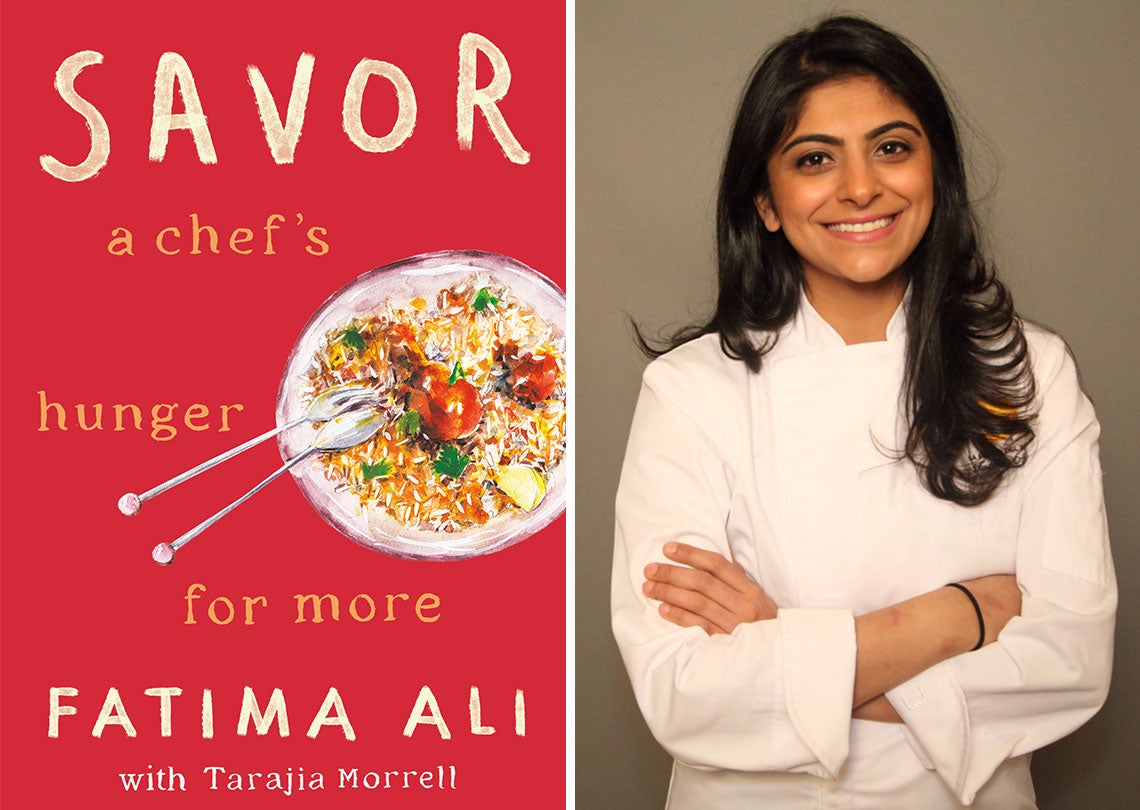
Savor: A Chef’s Hunger for More: A Memoir by Fatima Ali with Tarajia Morrell

Savor: A Chef’s Hunger for More: A Memoir by Fatima Ali with Tarajia Morrell

It’s extremely difficult to write a review for this memoir. Aside from the tragedy of its author and subject dying from cancer, the content itself is emotionally fraught. But perhaps, for these same reasons, a review should be written as this would be an acknowledgement of Ali’s legacy.

For those who are not familiar with the author and subject, Fatima Ali was a chef and a celebrity one, competing on Top Chef. She sadly and tragically passed away in 2019, before the age of 30. This is her memoir, written with Taraji Morrell who completed it after Ali’s death. The memoir covers the breadth of Ali’s life, from childhood to the very end, with a substantial focus on her career as a chef. The memoir also incorporates Ali’s mother’s perspective, each chapter bounces between Ali and her mother, offering the reader a view into more than Ali’s life alone.

The inclusion of Farezeh Durrani, Ali’s mother and the complex and emotional story of mother and daughter, as Pakistani Muslim women, makes this memoir especially poignant and moving. Through Durrani’s eyes we experience not only the loss of a child and the grief of that event, but also the power and strength of being a woman and a woman of color in a deeply patriarchal and racist world. The intergenerational threads make this memoir, more than a memoir, more than the story of a single person. Savor captures modern experiences of divorce, immigration, transcultural identity, race and racism, gendered expectations and sexism, career and ambition. Ali leaves a legacy with her life and this memoir.

For readers who seek inspiration, emotional connections with their books, Savor will exceed your expectations.

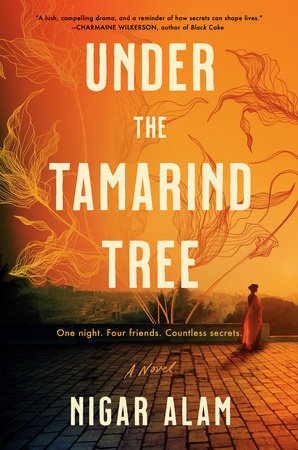
Under the Tamarind Tree: A Novel by Nigar Alam

Under the Tamarind Tree: A Novel by Nigar Alam

The novel revolves around an Indo-Pakistani family in the 1960s, a decade or so after the Partition from India. They have settled in Karachi and its members are navigating through the 60s in various ways, some questioning their belonging in Pakistan and others questioning the future they’ve been told they should have. As the next generation, the younger generation Rozeena and her friends seek to break the norms of tradition, but their parents and society also hold them to the past, one in which young women get married, have children, remain in the domestic inner world. There is an allusion to a traumatic event in 1964, but it is shrouded in some mystery for most of the novel; it is the catalyst which changes the course of Rozeena and her friend’s lives. The novel toggles forward to 2019 and back to the 1960s, unraveling the story of Rozeena and her friends. as it does. In 2019, the same resistance to social conformity duplicates itself in Zara, a young woman under Rozeena’s care.

Seeking Western Men: Email-Order Brides under China’s Global Rise by Monica Liu

Seeking Western Men: Email-Order Brides under China’s Global Rise by Monica Liu

It’s been a minute since I’ve read an ethnography — and enjoyed it in the way I enjoy fiction. Liu does an amazing job making her subjects tangible for her reader and weaving story into the reality of her research. The result is brilliant academic anthropology; a portrait of women’s lives in modern China that transports the Western/Western-based reader into that world. This is a work suitable for all adult readers, those interested in the minute theoretical discussions of academia as well as a more general audience, those interested in simply knowing and witnessing a way of life foreign to their own.

Liu’s ethnography takes us to modern China and into the micro-world of online dating. The reader is specifically given entree into the kind of dating world that has been typically derided as disempowering for women, fostering unequal relationships between Western men and Asian women (or really women of color or those from less wealthy economies): (E)mail Order Brides. The popular narrative depicts the men as wielding both physical, material, and financial power over the women. The men “call the shots” and the women come a-running, lacking agency to refuse or to determine the parameters of the relationship.

Liu’s major point, and the one that makes this ethnography so appealing, is that this is absolutely not an accurate understanding of the power dynamics in China’s e-mail order bride and online dating world. I won’t give away Liu’s evidence or the ways in which Liu reveals this to the reader; that would spoil the fun of reading this! But suffice it say, Liu shows us how much more nuanced reality is.

Chinese women — and those of a particular age, class, and circumstance — possess far more agency and power in these relationships than we are trained to believe. As an Asian woman with East Asian descent, I was particularly intrigued by Liu’s work. In my own American world, women of my race and ethnicity remain stereotyped as submissive wives/girlfriends/spouses, as heteronormative sexual objects, or as “dragon ladies” or worse… simply invisible. Liu’s work was eye-opening and refreshing.

Liu’s work suggests a new world order in terms of Chinese gender and gender identity is coming, although, we should not expect revolutionary ideas necessarily. There are aspects of Liu’s findings that suggest the patriarchy is still strong in China, that the new world order is merely a reworking of it to fit into modern context. I don”t mean to be teleological, but “we have a long way to go” is still a valid comment.

The book is divided into short, easily digestible chapters, each one taking on a different perspective of the women studied. Liu discusses their class, their age, their personal goals in systematic form, allowing the reader to grasp the diversity of Chinese women in this world, from those who own the dating business to those who work for them, and of course, the women who are its customers and consumers. The men too, Western and Chinese, are included in this study, though their perspectives and voices are often filtered through the women. Geographically, Liu takes us into the heart of urban China, but also brings us along to America so we are able to follow along the full migration pathway of some of the women. Liu’s book possesses breadth in multiple ways.

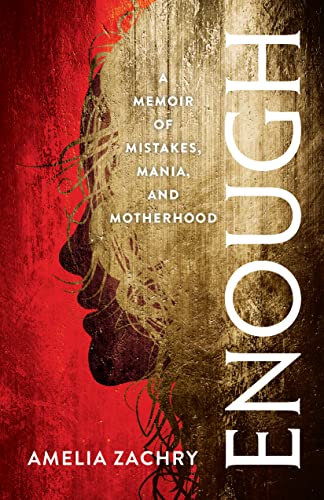
Enough: A Memoir of Mistakes, Mania, and Motherhood by Amelia Zachry

Enough: A Memoir of Mistakes, Mania, and Motherhood
by Amelia Zachry

This was an incredibly difficult memoir to read, but I am grateful that I did. Part of the hand-to-my-throat factor for me was how close Zachry’s experiences were to my own. Like her I am a Malaysian woman, one who entered the slipstream of migration and has become a transcultural, transnational creature with feet and hands in multiple worlds.

I also recognized the gaslighting and the gendered physical and psychological violence embedded in Malaysian culture. I recognized the gaslighting and gendered violence she experienced embedded in human society everywhere.

This was hard, so hard, to read at so many points. I had to put this book down multiple times. But the discomfort it caused was also what forced me to return to it. The kind of emotional disturbance Zachry’s memoir inflicts is that which can only be excised by pushing through all the way to the end.

I am glad I returned to it, acknowledged her pain my own (caused by reading it) and kept going in spite of all that. There is more than suffering in this memoir. Zachry illuminates a healing path too.

Zachry’s memoir is not a Malaysian one, although this is a cultural aspect of her experience that cannot be brushed aside. In this I recognized Zachry’s heritage as akin to my own; women told to swallow their pride, their pain, their voices. It is a world in which women remain — and are expected to remain — invisible. And this is true across Malaysia’s many cultures, ethnicities, and religious communities. For all the lovely tropical lushness of Malaysia, it is not a paradise for everyone; feminism is throttled by legal manipulations, feminists ostracized as social pariahs (even when Western-style feminism is eschewed in favor of local versions of feminism.)

But, I digress; Enough is not a memoir of a culture. Zachry’s experience is one that is all too familiar and common across cultures and in all societies. It is an extraordinary story of a crime that is horrendously ordinary. Hers was a life lived by many people; that’s what makes Enough so memorable, so relatable, so important to read.

Zachry’s memoir begins at her beginning, with childhood, then takes the reader into her teenage and early adult years. It is then that Zachry’s life is altered by an event that haunts her (even now after she has found ways to manage it). The bulk of this memoir is devoted to Zachry’s struggle with the trauma of this event, her path to a recovery, and it ends with a substantial section on her present life which shifts the focus to the traumas of migration and the development of her transcultural identity. Zachry’s journey to a happy place is not one filled with woo-woo cures or unattainable magic pills. Zachry documents how hard work, emotional work punctuated by slips and backslides is the tried and true path; one accessible to all of us, at least in theory.

This is a memoir for all women because this is a story we all know, first-hand, second-hand, or otherwise.

The Easter Parade by Richard Yates

The Easter Parade by Richard Yates

Originally published in 1976, The Easter Parade, justifies its classic status. The story, revolving around gendered concerns, the complications of family and love, imparting a sense of futility and time passing, remains wholly contemporary. Yates’ novel is one that entered on a timelessness human experience: life and living.

That said, for all its timelessness, the novel is grounded in its historical moment. It carries the reader through several decades, letting them be witness to shifts in American culture, especially as it pertains to gendered expectations and the function of love and sex in the lives of educated white women in mid-twentieth century America.

The plot follows the life of two sisters, though it is centrally focused on the younger, Emily Grimes. As children Sarah and Emily Grimes were part of a generation whose parents were divorced; their mother is a single mother, their father is an absent, yet present factor in their lives. The tale follows them through adolescence and then young adulthood, where their paths diverge. Sarah takes the more conventional path of marriage, child-bearing and raising, while Emily pursues academic life, single womanhood, love affairs — marriage too, but also divorce — and a career. The Easter Parade is built on their divergent, yet intertwined lives; Part three and four of the novel take the reader into the interiority of their familial and sibling bond. Despite their differences, the sisters remain, well, sisters.

In a sense, this is a novel about nothing and everything, the intangibility of our lives and the worth of living those lives. I have just finished reading it, feeling like I have traversed the twentieth century, like I have witnessed humanity being played out among other people, been given a privileged view into someone’s life.