I read it all in one night. I couldn’t stop until I learnt what happened to Ah’SaWei. NePa’WeXo, and their children MaNa’AnGwa and O’Sai WaBus. I had to know, I couldn’t sleep without knowing.
Afterwards, I found I could not sleep, now knowing.
1666 was a hard book to read, even for me, a historian of decolonization. I teach students about the Doctrine of Discovery every semester. I highlight resistance to systems of oppression, especially colonization. Still, for all that I know, 1666 eviscerated me. I continued to read it because it is a work of resistance, because the women of the Patawomeck/PaTow’O’Mek tribe deserve to be read and seen and remembered. Awful as it is for me to read it, that in no way compares to the pain they lived and the pain that continues in indigenous communities today.
The story begins and ends with the PaTow’O’Mek women and it is told entirely from their perspective; it is the narrative of the massacre of their people, their enslavement, and their resistance against the British who destroyed them. Readers who were moved by Beast of No Nation by Uzodinma Iweala, Elie Wiesel’s Night, The Bird Tattoo by Dunya Mikhail — or more topically pertinent — Texaco by Patrick Chamoiseau will find 1666 an equally powerful read.
As an educator, I consider 1666 a valuable college level read. It is ideal, lengthwise, for an undergraduate course (at just over 200 pages, and with glossary and explanations of terms). Harrowing as the subject matter is, it is highly relevant and provides a number of points for discussion, historical examination, and resistance in the classroom. Chilton’s writing is also highly accessible, her prose smooth and flowing, her characters full of depth and humanity.
I have never read anything by Isabel Allende before this novel. I know she’s a well-known, well-respected author, critically acclaimed and with a string of best-sellers. I just hadn’t come across her books before — and so, when I got the chance to read this, I was thrilled to!
The novel is a historical and contemporary work of literary fiction; weaving together multiple, seemingly disparate threads, across time and distance. This is a story of multigenerational, intergenerational trauma and the power of found family, the connections we build through shared experience and history. The novel begins with a young boy, left bereft by World War II and the holocaust, then segues into the latter end of the 20th century, refocusing on a young woman whose own life was torn apart by political and real warfare in El Salvador. The paths of these two individuals merge together in 2017 when the United States begins its policy of deporting refugees and refusing asylum to those at the Mexican-US border.
This is a harrowing story, one designed to evoke an emotional response, to serve as an act of resistance and resilience, a political statement and work of activism. It delivers on all these points.
To meet the novel’s objectives, Allende writes simply. The language is straightforward and direct, with little metaphor or room for interpretation; it is accessible in order to reach diverse readers. The prose possesses a determined clarity, one which all readers will appreciate. But readers should not confuse simplicity for lack of depth; Allende’s writing is emotionally charged, it reveals a deep awareness of human frailty and response to trauma.
It is this reader’s opinion that few readers will able to walk away from this novel unmoved by its content and message.
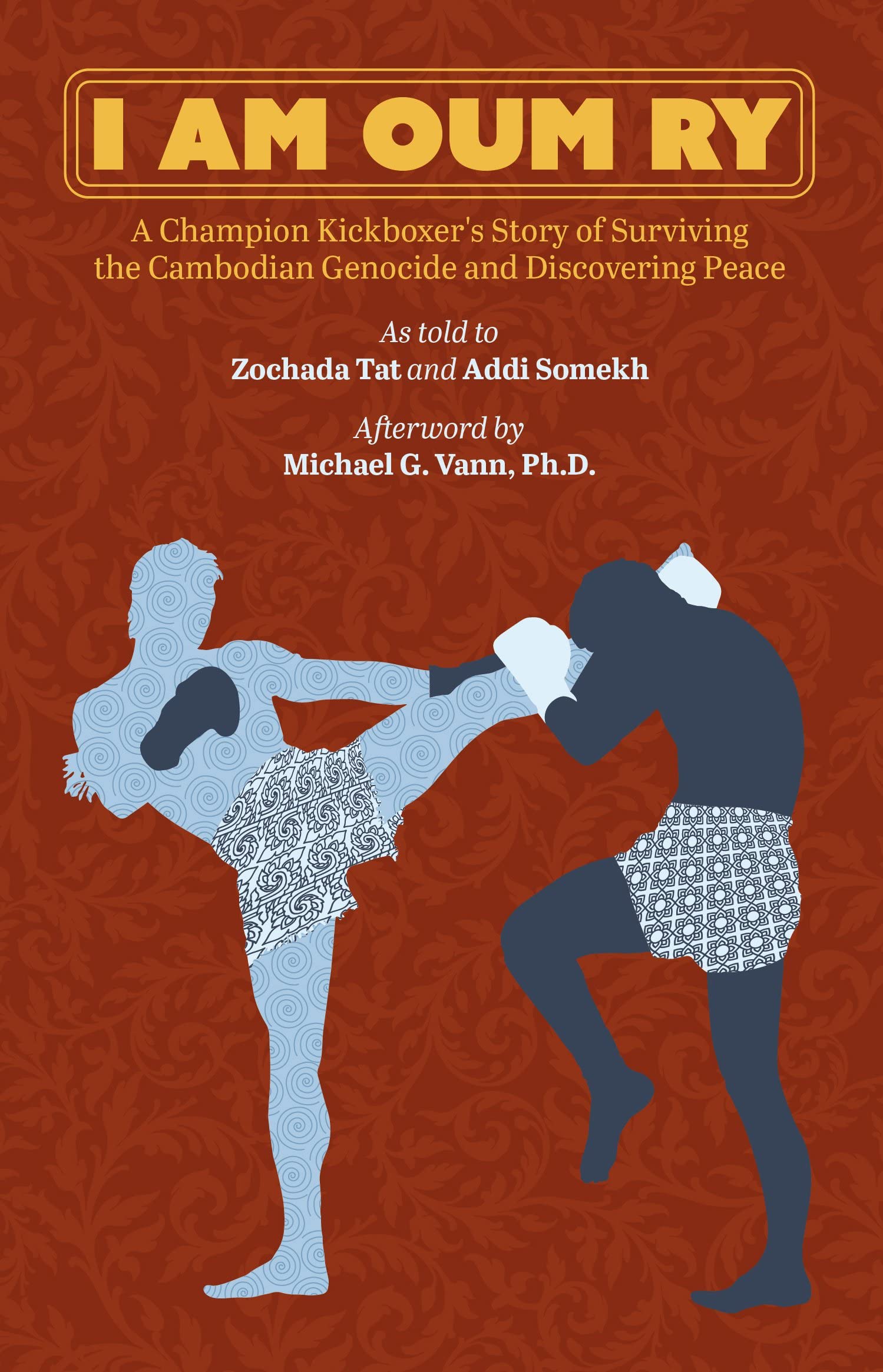
I Am Oum Ry: A Champion Kickboxer’s Story of Surviving the Cambodian Genocide and Discovering Peace by Oum Ry
This memoir strikes hard on multiple levels. It is a reflection of contemporary America and the transnational, transcultural, immigrant experience that many Americans live, whether themselves or vicariously (as Zochada Tat did), as the children of immigrants. Migration is a traumatic event, (sometimes positive, sometimes not, but always) one that reaches across several generations. Oum Ry’s memoir toggles forward and back in time, threading a connection in time between father (Oum Ry) and daughter (Zochada Tat). From this perspective, I Am Oum Ry is an emotional read, a subjective vacuum in which the characters are the primary focus, separate from the context of their world in a way. Tat and Somekh portray Oum Ry, his many lovers, his wife, his children, and the myriad of people who came, left, or stayed in his orbit, in all their flawed perfection; the logics behind his and their behavior as consequences of individualized trauma: parental abandonment, grief of loved ones lost or killed, sexual desire and exploitation.
But people do not exist in vacuum. The individuals in these pages are not ahistorical; they are deeply embedded in histories of patriarchy, Colonialism, the Cold War, the Khmer Rouge genocide, the American/Vietnam War, Cambodian traditions, and collective desires for modernity, belonging, and security.
The memoir takes the reader to Cambodia in the mid-twentieth century, beginning just after WWII. The French stubbornly cling to Indochina. Then ahead to the American War in Vietnam a decade later. It lingers on the five golden years of the 20th century when Cambodia perched on the edge of modernity, part of a larger Southeast Asian moment of revivalism and decolonization and prosperity in the early 1970s. After that the reader follows Oum Ry into the dark age of the Khmer Rouge genocide, and the suffering that followed as Oum Ry, like so many thousands of other Cambodians fled to Thailand to seek asylum elsewhere, anywhere. Oum Ry, like many other fortunate refugees makes his way to the United States where he finds both happiness and deep disappointment. The life of a migrant is bittersweet, filled with hope and longing.
The histories I Am Oum Ry excavates are powerful, a fisted punch to the gut. Oum Ry holds nothing back. The currents of forced migration, war, genocide, and racism that underpin Oum Ry’s words and experiences will knock the wind out of readers. This is an important memoir, not because it is unique — it isn’t, there are many Cambodian-American/Cambodian memoirs written by survivors of the Khmer Rouge — but because it neither indicts or glorifies the past or the present. The Khmer Rouge are not the sole villains of the genocide, though they are largely responsible for the horrors Oum Ry and other Cambodians experience; the Vietnamese and ordinary, fellow Cambodians are part of the horrific milieu of that moment too. America is not hailed as the land of milk and honey; it too is a dark land of racism, crime, poverty, and disappointment. But it isn’t all bad either; Oum Ry and his family find a place in California and become new Americans.
It is also significant in that it highlights pradal serey/muay thai, and centers around this sport. It is unique in this aspect. Oum Ry occupies a unique cultural position as a fighter, a sports icon in Cambodian history and 20th century Cambodian culture; his memoir gives us a rare glimpse into a world of sport and celebrity that was exclusive before the war and certainly much more so afterwards as a result of the loss of so many Cambodian stars.
For me, as a Southeast Asian scholar and a historian of Southeast Asian sport, I Am Oum Ry possesses academic significance. Sport is an often overlooked aspect of history and culture, seen as purely recreational. I Am Oum Ry proves how wrong this assumption is; pradal serey deserves attention as a historical artifact of a lost moment and in the present as a vital element of Cambodian-American identity and Cambodian cultural revival.
For almost every reader, I Am Oum Ry will evoke a multitude of emotions ranging from sad to inspired. Oum Ry’s life has been a rollercoaster in and out of the fighter’s ring. It has been dramatic in positive and negative ways. His is a life worth the reading.
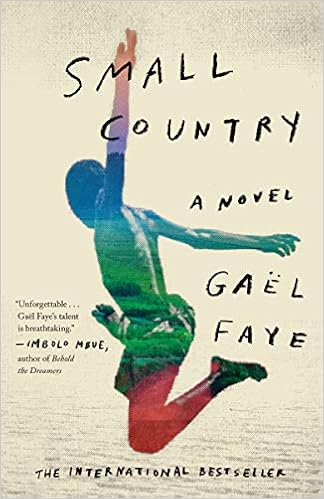
I have been keen to read this book for some time. Small Country was published in 2016 in France and in French, and translated into English by Sarah Ardizzone in 2018. I saw it on the Book of the Month website and it immediately caught my eye. It’s not often that African literature — especially a novel focused on something as horrific as the Rwandan Genocide and the Burundian Civil War, both connected in their origins of ethnic conflict between the Hutu and Tutsi — finds a way into mainstream, popular book culture.
It was worth the wait. Small Country delivers a powerful, immersive, historical experience. I felt as if I were there, transported back to the early 1990s, growing up with Gaby, a silent witness to the terror and happiness of his childhood. We are not so far apart in age that his childhood feels foreign to me, and there is a common experience in living in former colonies, French or British, that pervades the postcolonial world. Faye’s prose helped a lot; I could smell the fruity air of tropical Burundi, sense the light dusting of brownish-red earth on my skin as Gaby and his crew ran down the roads of their neighbourhood, the scorching heat of the sun, a trickle of sweat run down my neck.
But of course, Gaby’s path and my own diverge wildly on the occasion of war. Faye’s portrayal of that period of time and conflict was palpable. By that point in the novel, the characters felt like friends: ordinary and familiar like those who populate our own worlds. They were likeable and hateful, annoying and lovable, flawed and perfectly so — and then they were thrown, involuntarily, into an unimaginable violence. Much like Gaby and his family and friends, the war approached slowly, then arrived suddenly. The effect is jarring — purposefully — on the reader. The events of the novel force the reader to wonder, “What if this were me? What would I do?”
The story follows the chronological path of Gaby’s life, a mixed-race boy of French and Rwandan parentage, growing up in Burundi. It spans his early life from about age four or five to the time of the Genocide, when he is a teenager and evacuated to France. The novel is one that revolves around the nuances of race and interracial relationships, the push and pull that is inherent in transcultural lives, and the desire for a sense of place when one is trapped in a Venn diagram of multiple belongings. Gaby’s mother is one of these out-of-place women, French by marriage and in part by design, but also Rwandan and not-Rwandan, Burundian by default and yet rejected by Burundians on account of her Rwandan origins. Gaby’s father also straddles multiple worlds, first as a colonial settler in a time when such settlements can no longer exist as they were; he is out-of-time, rather than out-of-place. Second, in the matter of class, Gaby’s father possesses status, but only on the African continent, not in France. Gaby, the protagonist of the novel, is also caught between worlds on account of his mixed-race, his socio-economic class as the son of a middle-lower-upper-class businessman, and because of his nationality being a French passport-holding Burundian. The characters exist in a kind of suspension. This uncertainty is, on the one hand, brought on by the war, but it existed before as well, as people in this community reconcile their ethnic history or their settler status with the new postcolonial order of things.
Small Country is about the loss of one place of belonging when another one exists. It is about loss of the things (including people and practices and languages) that bind us to one another and to ourselves. It is about how we individually must grapple with that loss, how we deal with it or how it deals with us. Every character in this novel loses something or someone (a spouse, a child, a family member, or themselves), gains something (freedom, independence, clarity of self, madness, grief), and plods onwards in life because there is no option to do otherwise. The reader cannot help but recognize their suffering and their experience.
Small Country is about refugees, both the kind we see in the news and the kind we do not see, those who occupy our own worlds and are, in a sense, “hidden in plain sight.” Faye presents to the reader a reflection of themselves, turning the refugee of the news into an all-too-familiar face, our own. Perhaps as we encounter refugees in our lives, those of the news-kind as well as others, we might find common ground with them on the basis of this shared humanity.



 Dr JoAnn LoSavio