Translated by Pao-fang Hsu, Ian Maxwell, and Tung-jung Chen.
Puppet Flower: A Novel of 1867 Formosa by Yao-Chang Chen.
A historian’s historical novel! Puppet Flower is a narrative novel based on real events, a watershed moment in Taiwanese (Formosan) history when the United States and Western colonizing powers begin to encroach on Taiwan in earnest. The novel begins with an unfortunate event, wherein an American ship encounter one of Formosa’s indigenous tribes after surviving a storm at sea. The surviving crew — including a woman — are murdered by the Formosans, triggering a series of investigations and the arrival of more Western ships and military.
What makes Chen’s novel special in this genre of historical fiction is that Western perspectives are well-balanced with indigenous ones. It is rare to encounter fiction focused on Taiwan’s indigenous community, historical or otherwise; in highlighting their unique experience here Chen offers readers and the world at large a rare and unique literary opportunity. The result is a fantastic novel that — in my opinion — would do well in the classroom for a number of reasons aside from its historical focus:
The story arc is peppered with references and information about Formosan culture, providing a context for the historical events themselves. Unlike many historical novels, which rarely explain the cultural references they point to, Chen writes for the non-expert.
Puppet Flower offers multiple perspectives rather than focusing on a single protagonist. In this case, the novel allows us to see the event from an indigenous and Western point of view.
The prose is straightforward and not superciliously literary, making this an ideal undergraduate book; it does not require a great deal of knowledge about literary tropes, metaphors, and other devices typically used in novels. This is, truly, a history novel.
Overall, a novel of great historical value, not only in terms of its content, but in its production. This is decolonization at work, a piece of scholarship that highlights the indigenous perspective, a view of the imperial encounter from those who were colonized.
It is so rare to find novels and creative fiction that is not only set in Southeast Asia, but written by Southeast Asian authors (rare, not impossible!) that when I saw this coming out in 2023 I JUMPED on it! And I am so glad I did. This is a book that makes my heart sing!
Nardone’s Welcome Me to the Kingdom is a novel woven in stories, revolving around the lives of Thais who live in Thailand or beyond in the diaspora, transnational and transcultural Thais. This is a book about people, individuals as they navigate the multiethnic and multicultural world of Thailand, and what it means to be Thai for them. The characters, as diverse as they are in terms of ethnicity, class, and gender, are connected together in this novel; they and their lives serve as a microcosmic diorama of Thai realities where muslims of the south grapple with discrimination, poverty stricken girls from the village migrate to the city, mixed race Thai/White kids straddle two worlds and belong not quite fully into either one.
The stories span across several decades and generations, allowing the reader a view, not only into modern Thainess, but also how the concept has changed over time and the ways in which being Thai is differently defined for individuals of different religions, classes, genders, etc. Language is a significant element in these stories, not surprisingly since Thailand (like so many other parts of Southeast Asia) has and remains affected by colonialism and its invasive culture (though it was never politically colonized). Welcome Me to the Kingdom is about the rubbing together of cultures, the tension and chafing as multiple perspectives collide. This is a historical novel offering readers a textured, multi-faceted sense of contemporary Thailand, a place in which tradition and modernity coexist, sometimes contentiously, sometimes not.
My favorite characters were Nam and Lara, their story, interwoven with Pea’s and Rick’s, was my favorite, though I probably identified most with Ping. I think readers will find a little bit of themselves in these pages, whether they are Thai or not, as the emotion driving these stories is universal. Nardome’s stories are about desire, ambition, longing, and fear — that inevitable friction between parents and children, within families, the old(er) and new(er) attempting to find common ground.
For readers who enjoy anthropology, history, and postcolonial literature, Welcome Me to the Kingdom will be an especially enjoyable read.
The Last Heir to Blackwood Library: A Novel by Hester Fox
If you enjoy books about books, especially of the quasi-historical/paranormal/mystery/romance variety, then The Last Heir to Blackwood Library will check all your boxes. The story revolves around Ivy Radcliffe, a young woman left devastated and alone by WWI in England. She finds herself leaving the loneliness of London for Blackwood Abbey in Yorkshire — and a seat among the gentry as Lady Hayworth.
Not only must she learn to navigate her inheritance, which includes the abbey and the eponymous library, but also her new servants, the village, neighbors, and…. herself. Ivy undergoes strange changes to herself that she cannot account for, though she is amply aware of them. The oddness and feeling of foreboding is amplified by the history of the abbey and the library.
The library becomes the focal point of all the madness and Ivy realizes she must make hard choices about what she wants from her new life and what part of herself she is willing to lose to obtain that.
The appeal of this novel is not only in the mystery of Ivy’s inheritance, built into the story arc, but Fox’s ability to inject a modern feminism into Ivy’s motivations and the old-fashioned world of the English gentry in the late Edwardian/Interwar period of the mid 1920s. The result, though somewhat anachronistic, is a very contemporary and appealing leading character and an inter-generational, inter-cultural kind of tension, the kind that pits traditionalism against modern sensibilities.
A profoundly moving novel, with a story so powerful as to cause me to pause every few pages to wipe away tears. Mercy packs an emotional punch along the lines of Tinker by Paul Harding or Annie Proulx’s Brokeback Mountain. This is an impressive debut novel, one well-worth the grief and tears it is sure to evoke.
The novel revolves around Sadie, a twelve-year old girl abandoned by her parents and her subsequent landing on her Uncle Charlie’s farm in South Dakota. Mercy is both what she finds and what she delivers to those in her life, whether they are deserving of forgiveness or not. This is literary fiction at its best: raw and rich characters; humanity at its flawed worst and inspiring best.
Patrick is an excellent writer; her prose is evocative and succinct, creating an affect that strikes the reader deep in the gut with very few words. In the space of 154 pages, Patrick immerses the reader in Sadie’s juvenile, but deeply adult and complicated world. The reader follows Sadie’s journey as she navigates the traumatic events of her abandonment, her memories of the past, her fears for her future. Patrick very successfully channels the emotions of a 12-year old, whilst balancing the very mature context of her circumstances; this is not a novel for a teenaged audience necessarily, its themes cross age-oriented literary boundaries.
The novel could use a professional editing, as there are some inaccuracies in turns of phrase; “Martha could have cared less” on page 23 for example. Indeed, it appears that Martha could not possibly have cared any less. [Some of the lack of professional editing may be due to the novel being independently published.] Still, despite the occasional typographic error, Mercy remains irresistible. I read it in an afternoon, I could not put it down.
I encountered this book via a Facebook Group, in which I serve as a reviewer for ARCs and independently published novels. I have previously read and reviewed another of Patrick’s books here, Anxiety in the Wilderness: Stories. If you are interested in Patrick’s work, please see her Amazon author page here. You may purchase Mercy there, currently priced at $9.99 for a paperback, $15.99 for a hardback, and $2.99 for the Kindle ebook format.
Unlike my usual reviews, this is an older book, published in 1998. I found it on sale from the University of Hawai’i Press and since I enjoyed Pak’s other novel, Children of a Fireland by Gary Pak I had to read it. Like Pak’s other works, A Rice Paper Airplane is set in Hawai’i and revolves around one of its communities. In this case, the story centers of Koreans who migrated to the islands to seek better employment or escape from Japanese persecution during the period of the latter’s occupation of the former’s country.
The novel unfolds like origami, turning backwards and forward in time according to the scattered memories of an old man, Uncle, as he recounts his life for his nephew. Threaded through his memories are histories of Hawai’i and its many residents, Korean, Japanese, White, Indigenous. The novel also folds across geography, taking place in both Hawai’i and Korea. This is a novel about conflict, both cultural and political; desires, both of the individual kind and the ambitions of states; resistance and fighting spirit, in body and mind, through success and failure.
This is an emotional novel. Readers should expect to feel grief and sorrow. But also the hope and resilience of Korean migrants in cultures, circumstances, and places not of their own making and wholly according to history and fate.
For these reasons alone, this is a very worthwhile read. It is little known, but ought to rank with the best sellers of today in the vein of intergenerational, multi-generational historical fiction: Yaa Gyasi’s Homegoing for example.
But that is not the only reason to read A Ricepaper Airplane: Pak’s prose is also an appeal. The novel’s dialogue is written in Hawai’ian pidgin, a creole language that is unique to the islands, lending authentic voice and substance to the characters and the story itself. The exposition is unfussy, straightforward, yet also flowing. Pak leaves the reader with poetic silences that fill with organic emotion.
This is an incredible novel, one which deserves greater recognition.
Having read Tinkers, I began my reading of This Other Eden with high expectations and hopes. I wasn’t disappointed. On the surface it appears a pastoral novel. But this is false. To the reader the landscape is hidden — at first. Then as the novel unravels, it is clear there is a dark narrative thread running through the whole thing, a cohesion of some kind that is based on something less rosy than than a scenic, island reverie and altogether discomfiting: history, racism, resistance. This is a historical fiction, spanning the 18th through the 20th centuries, a significant time in the development of race and racism in America. Harding delivers this highly charged story carefully, in an ecological, atmospheric wrapper, one that makes the geography of the island on which the story takes place — its isolation, its raw, loam scent, its shaded trees — an important metaphorical actor. The island serves as a shroud and a setting for the demise of a way of life: a black way of life as it is subsumed by whiteness. Readers should expect to feel uncomfortable, perhaps a sense of claustrophobia from an inability to escape the island. This is to mimic the kind of slow isolation felt by its inhabitants.
This Other Eden is a novel about an island and its black inhabitants, the mainland and its white population, the slow — then rapid — shift of race and the infliction of racism on the former, the closing in on a way of life. The island is inhabited in 1792 by an interracial couple, not an uncommon pairing in this moment in time necessarily; Benjamin Honey and Patience, an Irish woman (the Irish having been ostracized as some Other race in the hierarchy of Western Europe). Their descendants occupy the island, but are increasingly subjected to America’s abhorrence and obsession with eradicating miscegenation. As the decades and centuries roll on, the islanders become targeted by eugenicists — much like the rest of the nation. So-called “good” intentions to bring progress and education to the island are misguided attempts, achieving none of their intended outcomes and instead excelling at cultural and racial erasure.
This Other Eden is told through the eyes of the islanders. Even while it addresses larger issues such as eugenics and racism, it is focused on the experiences of the islanders. It is a novel about people and the lives they must live, even while it is a commentary on America’s racist history.
Dear Chrysanthemums: A Novel in Stories by Fiona Sze-Lorrain
A literary dream, that’s what this novel segmented into stories, felt like. Dear Chrysanthemums floats. There is something reminiscent in this novel of Cloud Atlas by David Mitchell or Virginia Woolf’s Orlando, a kind of immortal quality that flows one life into another, connects what appear to be disparate loci — combined with a historicity that reminds me of Jung Chang’s seminal, biographical, non fiction work, Wild Swans: Three Daughters of China about Chang’s mother and grandmother, women who lived and survived China’s imperial demise, revolution, Japanese occupation, and Communist Cultural Revolution.
The stories in this novel, seemingly unconnected at first, reveal an intimate connection in the end: the women who feature in them are ordinary women, servants, daughters, mothers. They are separated by time and space, but their desires and ambitions, fueled by the need to become individuals in their own right, fuse them together. There is tension between the women of each story, but there is also connection.
The novel crosses continents, spanning the globe from China to France, and across time. Each generation of woman encounters a different kind of struggle, but a struggle all the same, and the story of each them reveals a common desire to realize who they are and what they want from life and from the circumstances of their lives.
History plays a role here, shaping where the women begin and where they end, the trajectories of their journeys. Colonialism, conflict, and war shape their migrations, that is, their physical and metaphysical, subjective journeys towards themselves. The women in these stories are bound by history inasmuch as they are bound to each other and to their own individual desires.
For those who love historical fiction, literary layers to excavate, and strong and flawed female characters, this is the novel for you.
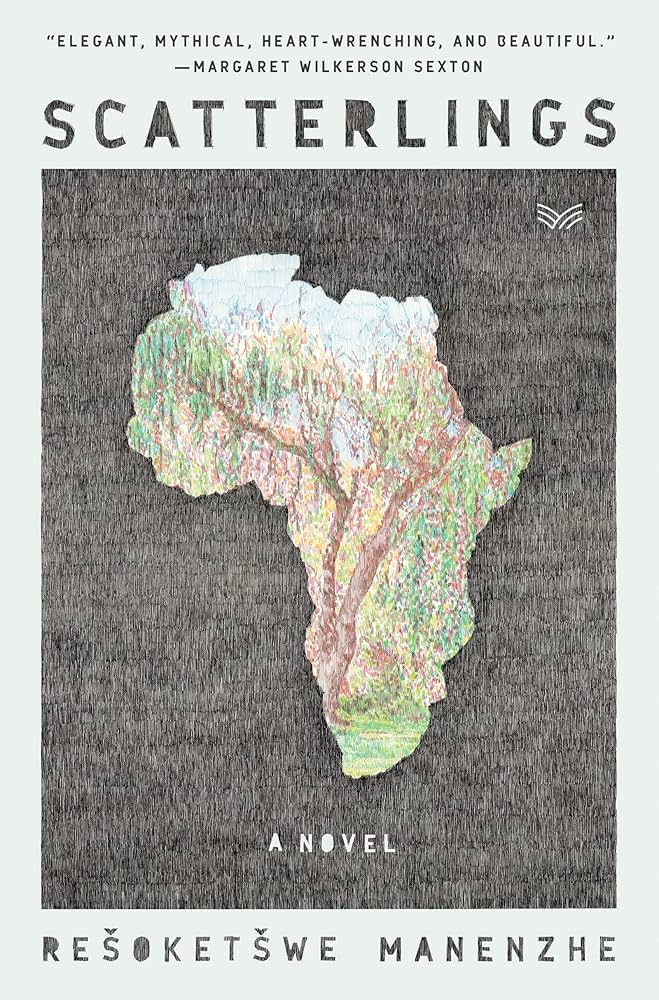
Scatterlings: A Novel by Resoketswe Martha Manenzhe
One of the primary reasons I love reading — and I’m not the first to say this — is the deep empathy reading about others’ experiences develops in ourselves. Scatterlings is such a novel that opens us up to new ways of understanding the past and the present, others and ourselves. This is a novel that will move you in many ways: to sadness, to fear, to loathing, to empowerment, to depression.
This is a novel in the vein of Beast of No Nation by Uzodinma Iweala or The Bird Tattoo: A Novel by Dunya Mikhail. It is fiction of the very real, very tangible suffering in our world, albeit in a time now past (though, not gone, forgotten, or fully healed).
The novel is a historical fiction, taking place in South Africa as its racist, anti-black Apartheid policies began to ramp up. It revolves around the enforcement of the Prohibition of Mixed Marriages Act, Act No. 55 of 1949, and the very real fall out in people’s lives.
The scattered are the wives, husbands, and children of these mixed-race marriages, suddenly made illegal in the eyes of the law. The novel traces the actions of a family and what they each individually must do to survive this.
The outcomes are tragic, but the reader who chooses this subject matter is one who understands that to witness is a step towards reparation.
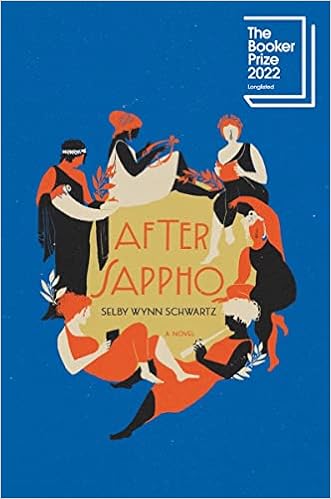
This is a deeply intellectual tale, one woven out of ancient and Italian history, imagination, and philosophies of Womanhood and queerness. The fiction in these pages reads as a reimagined history of real women, whose lives were lost to us because of the threat they posed (just by being) to European and Italian patriarchy. The tale unfolds as a kind of immortal telling of several lives, connected to a single soul. It is multigenerational and historical. There are several “Sapphos”.
As a historian, I deeply appreciated the embedded histories here: legal, social, cultural. There is a historiographical element to the book, an unfolding of a trajectory of thought as the book follows “Sappho” in her various guises and incarnations through time.
This is not an easy read. There is a required pre-existing understanding of Italian and European literature necessary to grasp its nuances. But, that said, the undercurrent of desire, rage, and feminist ambition is hard to miss. For that reason, After Sappho is worth both an initial and several re-reads.
Some context as to how I came across this book. As I have mentioned before in another review, I do not usually gravitate toward independently published novels. But as with that previous review, I happened across the opportunity to do so via a FB group I am in which pairs up authors with reviewers. See here for the details of the May 2023 Book Review.
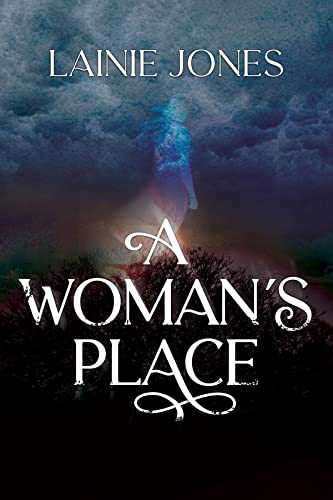
I am not one to pay attention to those one-word reviews you see plastered all over the covers of mass market books: “Captivating”, “Spell-binding”, “Unputdownable!” What is one woman’s tea is another’s poison (isn’t that the saying?) and so I am hesitant to repeat any of those vague, yet complimentary, descriptions here. But the thing is, A Woman’s Place is truly captivating. The paperback is a substantial read at 317 pages; I found myself lost in several chapters at a sitting, finishing the book in two days. It is, indeed, hard to put down. This historical paranormal mystery is riveting to its last page.
Jones does more than weave a gripping story; her prose is well-crafted and the dialogue is vivid, resulting in the creation of tangible, flawed, and very human characters. Jones holds a PhD in creative writing and possesses an academic and literary portfolio which clearly contributes to the historical and literary robustness of A Woman’s Place. This novel is clearly not a “standalone” work in the sense that it is built upon a foundation of years of research, thought, and analysis. What we read in A Woman’s Place is merely the tip of a very large iceberg.
A Woman’s Place is a novel running along the lines of Yaa Gyasi’s Homegoing or Melissa Fu’s Peach Blossom Spring as it is a multigenerational tale. It might be appropriate to liken A Woman’s Place to a fictional European settler version of My Place by Sally Morgan, though, of course the latter is biographical and A Woman’s Place is fiction.
The setting of Jones’ novel is rural Australia, in sheep farming country. It revolves around the events at a remote homestead named Barragunyah, a desolate place known by the name given it by its original inhabitants, indigenous aborigines. The novel spans the end of the 19th century through into the late 20th century, capturing the experiences of five generations of women of the family who came to farm the land. There is also another woman who resides on the land, a mysterious presence called only Mary. The novel unfolds the mystery of Mary and the magnetic pull of Barragunyah, as well as revealing how Australia’s and the world’s history comes to affect ordinary Australians, native and settler alike. British imperial history, the tragedy of the World Wars humanity faced in the twentieth century, and changes in women’s rights emerge as central hinges in the novel. There is also a prosopographical aspect to the novel in that the reader is treated to how these large world events actually affect the daily, lived lives of the Barragunyah women.
In many ways, this is a fantastic historical fiction written for a historian. Or perhaps I feel that way because I am one, and because Australian colonial and post-colonial history, being adjacent to Southeast Asian history of the same period, is something I have an interest in on both a professional and personal level. I think American audiences will find both novel elements and familiarity in these pages. The bond between mothers and daughters, humans and the land we inhabit and shape (and which shapes us), and our selves and our place in the movement of time and history are universal experiences, but American readers will also find themselves introduced to Australian history and experiences.
The novel also has an intriguing mystery embedded in it. As each generation faces the turbulent events of their age, Barragunyah and Mary are there, watching and waiting — though it is unclear what for. This is where the paranormal element emerges. In this way, A Woman’s Place reminds of me of Simone St James’s supernaturally tinged novels, The Haunting of Maddy Clare or The Sun Down Motel. Like many paranormal mysteries, Jones’ A Woman’s Place revolves around an unspoken crime, one grounded and inescapable in Australian history. Jones does a fantastic job of revealing the root of this crime without giving it away, tantalizingly allowing the reader’s own imagination to make sense of the darkness where Mary resides. On that point, I wish Jones had delved more deeply into the aboriginal perspectives on Barragunyah; I am left wanting a sequel or a prequel or the “other side” of the story, as it were. Barragunyah is haunting; as a reader I feel just as deeply connected to this place as the Larson women.
That is a good thing, to be left wanting more.
If you are interested in purchasing a copy of this independently published novel, you can find it on Amazon here. At present, it is priced at $7.49 for the ebook Kindle version and $18.99 for the paperback print.



 Dr JoAnn LoSavio