Daughter of the Dragon: Anna May Wong’s Rendezvous with American History by Yunte Huang

Daughter of the Dragon: Anna May Wong’s Rendezvous with American History by Yunte Huang

It’s only August, but I know Daughter of the Dragon is one of the best histories I have read this year. It ranks pretty near Number 1 right now. Huang delivers more than a life in this biography; Daughter of the Dragon is a portrait of Asian American history in all its glory and ugliness, it is a history of a community, an ethnic group, a skin color as it played out and was embodied by Anna May Wong.

Anna May Wong’s life is a microcosm of Asian American history, of American history.

Huang’s research is impeccable; each chapter is fully fleshed out with evidence from previous scholarship and archival sources. Letters to and from friends and family, press interviews, and a myriad of other Hollywood ephemera serve as Huang’s fodder. But Anna May’s own voice is rarely invoked; it would appear that few records in her own words exist, though Huang uses what artifacts she did leave behind. Putting the patchwork together as any good historian does, Huang captures and interprets her voice for us in his own; Anna May comes through the pages as if she were seated on the edge of desk, cigarette in hand.

The book follows a typical biographical chronology, from birth to death and everything in-between; however, Huang leans heavily toward Wong’s filmography as the measurement of her state of mind as well as a platform for a deeper discussion of legislation against Asian American citizenship and social standing in the American popular imagination. This is more than a biography, and while Daughter of the Dragon reads like a filmography: it is a vivid cultural history of Asian American film and representation in Hollywood. Indeed, Anna May Wong was a by-word for Asian American film for much of the twentieth century and her career. There can be no discussion of Asian representation in the media without her.

The result is a very satisfying history.

Eisenhower Babies: Growing Up On Moonshots, Comic Books, and Black-and-White TV by Ronnie Blair

Eisenhower Babies: Growing Up On Moonshots, Comic Books, and Black-and-White TV by Ronnie Blair

This memoir set in the immediate decades after WWII is a portrait of white, working-to-middle-class America from a cultural and social perspective. While Blair touches on some of the political history of this moment, they stop short of delivering an analysis or deep commentary on the upheavals of the 1940s, 50s, and 60s. These decades saw the beginnings and rise of social movements that challenged gender norms, race and racism, notions of equity and so on, but this memoir confines itself to a more modest objective: the texture of growing up and coming of age in rural, white America.

Blair’s memoir begins with himself and his community, a small rural town in Kentucky, but expands to cover the whole of white, working class American life across the upper South and Midwest. Chapters take on the subject of roadtrips and church-going, Halloween, the thrill of television, Little League baseball, high school, and living in a small town, among many other things. Interspersed with larger historical moments are Blair’s singular experiences: having an alligator live next door, or a church named after the family, for example. Each chapter is a capsule of the moment and Blair’s own family history and life; their experience serves as the prosopographical platform on which they comment on the cultural past. This is a so-called “boomer” memoir, highlighting a shiny, seemingly golden moment in American history.

This memoir records one aspect of American Identity with well-crafted prose. The tone is humorous in some chapters, yet possesses gravity in others. Like the ebbs and flows of life, some episodes warrant a light approach, others require seriousness. Blair segues from one to another with ease. The result is a smooth and immersive read.

Blair succeeds in delivering a landscape of their experience of the American Past. Its pop culture references and highlighting of (some) common American experiences in public schooling, Judeo-Christian holidays and celebrations, and working-class struggles offer a fleshy sense of how people experienced life in these decades.

Puppet Flower: A Novel of 1867 Formosa by Yao-Chang Chen.

Translated by Pao-fang Hsu, Ian Maxwell, and Tung-jung Chen.

Puppet Flower: A Novel of 1867 Formosa by Yao-Chang Chen.

A historian’s historical novel! Puppet Flower is a narrative novel based on real events, a watershed moment in Taiwanese (Formosan) history when the United States and Western colonizing powers begin to encroach on Taiwan in earnest. The novel begins with an unfortunate event, wherein an American ship encounter one of Formosa’s indigenous tribes after surviving a storm at sea. The surviving crew — including a woman — are murdered by the Formosans, triggering a series of investigations and the arrival of more Western ships and military.

What makes Chen’s novel special in this genre of historical fiction is that Western perspectives are well-balanced with indigenous ones. It is rare to encounter fiction focused on Taiwan’s indigenous community, historical or otherwise; in highlighting their unique experience here Chen offers readers and the world at large a rare and unique literary opportunity. The result is a fantastic novel that — in my opinion — would do well in the classroom for a number of reasons aside from its historical focus:

  • The story arc is peppered with references and information about Formosan culture, providing a context for the historical events themselves. Unlike many historical novels, which rarely explain the cultural references they point to, Chen writes for the non-expert.
  • Puppet Flower offers multiple perspectives rather than focusing on a single protagonist. In this case, the novel allows us to see the event from an indigenous and Western point of view.
  • The prose is straightforward and not superciliously literary, making this an ideal undergraduate book; it does not require a great deal of knowledge about literary tropes, metaphors, and other devices typically used in novels. This is, truly, a history novel.

Overall, a novel of great historical value, not only in terms of its content, but in its production. This is decolonization at work, a piece of scholarship that highlights the indigenous perspective, a view of the imperial encounter from those who were colonized.

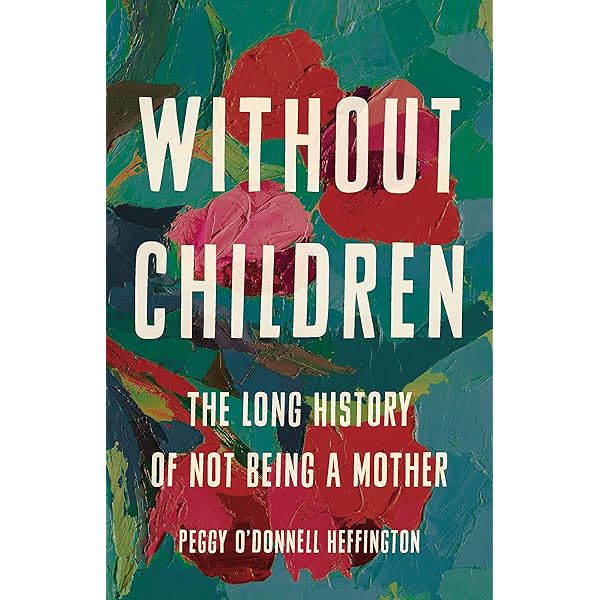
Without Children: The Long History of Not Being a Mother by Peggy O’Donnell Heffington

Without Children: The Long History of Not Being a Mother
by Peggy O’Donnell Heffington

I read this over Mother’s Day, so it was particularly poignant for me as I reflected on the fluidity of my own womanhood and ideas concerning mothering. It’s a profound read; readers should be prepared to question their notions of womanhood and mothering.

As a mother, I found this history of mothering, motherhood, and childlessness to be an amazing read, and on multiple levels. First, in terms of its content, O’Donnell Heffington lays out a compelling history, arguing for a revision in the way mothering is perceived, valued, and recognized. This is a history for anyone and everyone, regardless of their position on child-bearing, motherhood, or womanhood at large. Each chapter addresses a form of mothering or motherhood, expectations around these roles as they have changed through time, and historical factors which have influenced our collective image of Mother today. Throughout Without Children there are stories of mothers — of diverse kinds — embedded, evidence of O’Donnell Heffington’s arguments and research. The result is an intimate narrative history, one which toggles seamlessly between micro-history, prosopography, and discussions of the larger contexts of religion, politics, and gender.

Second, Without Children impresses in terms of its prose and language; it flows at a comfortable, easy pace, delivering what is a deeply contentious issue in straightforward terms. O’Donnell Heffington clearly has an agenda; what writer and what non-fiction does not? — but the book, to its credit, lacks superciliousness, pedantry, and jargon. Given the controversial topic and the heated debates among many women and mothers regarding having children or not, Without Children performs a miracle of balance.

At the root of the debate and ultimately at the root of this book, is the question and discussion of the constituency of womanhood as it is understood in most Euro-American Western societies. What makes a woman? (Some would have us believe it is motherhood.) What constitutes a mother then? (Some challenge the notion of birth and biology.) In a moment of gender fluidity and revolution of gender identity, Without Children asks us to suspend our ingrained understandings of gender to consider other definitions of motherhood and womanhood.

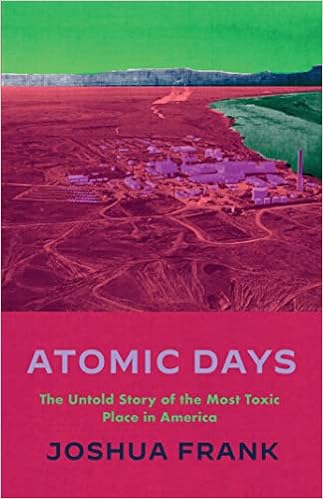
Atomic Days: The Untold Story of the Most Toxic Place in America by Joshua Frank

Atomic Days: The Untold Story of the Most Toxic Place in America by Joshua Frank

My local community library hosts reading events and they gave copies of this book, Atomic Days away as part of one of them. The program includes an event with the author and other experts on the subject. One of my colleagues was part of this. I had hoped to participate in the events, but couldn’t on the day of. I did, however, read the book.

For a resident of the PNW Atomic Days is a disturbing read, its eponymous locale is a mere few hours drive from where I live and work. My usual landscape is serene: mountains, verdant pines, blue-grey skies, the sound of fresh water pelting down from the sky or rushing in the creeks and rivers everywhere around here. Atomic Days is a harsh concrete disruption, a whiplash to reality. This work of investigative journalism exposes a danger in our plain sight: the Hanford nuclear power plant near the TriCities in Washington state.

Riding on the same wave of documentaries like “Meltdown: Three Mile Island”, Atomic Days highlights serious nuclear accidents and the potential for future serious public health concerns arising from the United States government’s Cold War policies and decisions. Frank’s research unfolds the history of these decisions, their outcomes, and their potential for future disaster through oral histories, archival research, and interviews with stakeholders on all levels. The chapters focused on individuals’ experiences, those who have been intimately involved in the plant and its operations, its workers and residents of the immediate vicinity are especially riveting and profound.

Justifiably, there is a warning tone in Frank’s account. It is not one we should ignore as difficult as it is to read about such threats to our mortality and way of life. But Frank’s prose is not pedantic; the language is accessible and written for a general audience — for everyone, as with a doubt, what Frank highlights is very much everyone’s concern.

Control: The Dark History and Troubling Present of Eugenics by Adam Rutherford

Control: The Dark History and Troubling Present of Eugenics
by Adam Rutherford

I read Control: The Dark History and Troubling Present of Eugenics last year when I was in search of a text that would A. layout a basic and linguistically accessible history of eugenics suitable for a first- and second-year undergraduate audience and B. be cheap enough to assign as a required text. Rutherford’s Control fit my requirements across the board (but, I opted not to assign it as a required purchase).

Control is a very well-written popular press style non-fiction; Rutherford superbly breaks down what might be confusing historical and academic jargon into easy language and approaches this complicated subject with an eye towards a neophyte reader, a reader who has an interest but not preexisting knowledge of eugenics at all. The book therefore unfolds in chronological order, permitting the reader to develop and understanding of the historical and popular narrative of eugenics as it was understood in various moments of time.

The beginning of the book outlines the birth and rise of eugenics as a popular real and pseudo- science, starting with Francis Galton, and ending with the present, the tinkering of Dolly the sheep’s DNA and duplication as well as other unethical uses of reproductive science. As a historian I found the first half of the book very useful; it was this half which enticed me to use it in my history courses.

The second half of the book diverges into more contemporary concerns and reads as distinctly editorial; there is no hiding Rutherford’s intentions here — nor should there be. I wholehearted agree with Rutherford’s concerns about the future uses of eugenics and what this means for human rights and humanity as a whole. But Rutherford was preaching to the choir here; leaving me well aware that I am not the target audience for this work. Nevertheless, I would encourage everyone to read Control since it doesn’t harm anyone to revisit the horrors of eugenics.

Overall, a very readable and thought-provoking book. References are sparse (for a work of scholarship), but fully adequate for a popular press non-fiction and useful for the interested reader to delve deeper into the topic.

Butts: A Backstory by Heather Radke

Butts: A Backstory by Heather Radke

This was an incredibly fun non-fiction to read, the perfect book to carry around in your bag. It’s a conversation starter, a laugh-out-loud-on-the-train commute/waiting room/airplane/sit-by-the-pool-and-watch-butts-walk-by kind of read. I thoroughly enjoyed it on multiple levels.

First, on content: Radke’s research is well done. This is not an academic, peer reviewed piece of scholarship, but it is a well-researched, chronological and multi-disciplinary perspective on that part of our body we might often despise/regret/wish hidden/love/extoll/exhibit. Butts begins with an evolutionary explanation, a physiological treatise in what, why, and how we have butts at all and what they do for us. It then moves on into history proper, working to the present, and ending with a significant number of chapters focused on butts in the contemporary moment (Kim Kardashian and others) and in popular Western culture. [Radke is up front with the Western-centric focus of her study; this is a commentary on butts as understood in Western culture and history and is not a global study.]

Second, prose: Radke’s delivery is on point for a non-academic, general audience non-fiction. The prose is smooth, hilarious in so many parts, and remains lighthearted throughout, even when the content gets heavy and educational.

Whatever you feelings and thoughts about butts, backsides, or bottoms, Butts is a great read.

Keeping Family Secrets: Shame and Silence in Memoirs from the 1950s By Margaret K. Nelson

Keeping Family Secrets: Shame and Silence in Memoirs from the 1950s
By Margaret K. Nelson

I was very excited to read this book by sociologist, Margaret Nelson. As a historian of mid-twentieth century culture and politics, the title alone was titillating enough. Keeping Family Secrets did not disappoint.

The book is divided into sections, each one addressing a particularly scandalous (for the time) family secret: homosexuality among boys (in particular), having a “red”, Communist-leaning parent (or one accused of being a “Commie”), the institutionalization of a sibling or a child, having Jewish ancestry, and others. To our contemporary minds, such facts of life are hardly worth mentioning in some communities; no one would bat an eye at a child of unwed parentage, for example, in most communities today. But that is where Nelson’s historical scholarship shines. Keeping Family Secrets transports the reader to an era in which such things did matter and mattered a lot. The book focuses not only on the scandal itself, but more so on the consequences of those scandals on the other family members and the long-term trauma and emotional damage they experience long after society has moved on from the shock of such events. The bulk of Nelson’s sources were published memoirs of siblings, survivors, and family members. Indeed, there are fantastic references for further reader for readers interested in specific histories and stories.

Embedded in the historical and archival analysis are the voices of the family members who suffered innocently, either as children or as siblings, as a result of their families’ secrets. What Nelson reveals is the collective, societal, and intergenerational trauma that forced conformity and cultural norms can inflict across decades.

Keeping Family Secrets is highly accessible, not only in terms of content, but in its prose and language. It delivers a very readable piece of non-fiction. I hesitate to suggest it would be good for an undergraduate college audience, but parts of it would be enjoyable and easily accessible for use in the classroom or in a course in general.

The Education of Augie Merasty: A Residential School Memoir by Joseph Auguste Merasty and David Carpenter

The Education of Augie Merasty: A Residential School Memoir
by Joseph Auguste Merasty and David Carpenter

Every memoir is significant, on the basis that it documents a part of the human experience — and in the end, what do have if not an experience of life? In the context of the universe, this is what makes our existence unique — but there are some memoirs, some human experiences that possess a weightiness absent in others. That is, they reveal a humanity that transcends individual experience. The Education of Augie Merasty is one of these memoirs.

The cruel history of colonial settlement isn’t newly discovered — but it was hidden, deliberately and systematically for centuries. In the past fifty years and much more recently, excavations of memories, land, and archives have revealed the depth to which this erasure was taken. Merasty’s memoir is one of these excavations. [My Name is Seepeetza by Shirley Sterling (30th Anniversary Edition) is another memoir of residential schools and colonialism in Canada I’ve read this year, if you’re interested.]

I have an especial interest in these kinds of historical documents, not only as a historian of decolonization, but as an educator; the utility of the historical documents in the classroom are invaluable to convey the real effects of racism, colonialism, the power of the state in shaping our lives. Students often see the government as some kind of abstracted, remote thing, a hovering object over their lives that merely casts a shadow every once in awhile. Memoirs of this nature reveal how wrong that assumption is; the state is neither above nor below, it is embedded in every part of our lives and beings — even our DNA and the genomes that make up ourselves and our ancestry have been shaped by states and power. The Education of Augie Merasty is proof of the depth of the state in shaping human experience.

What makes The Education of Augie Merasty poignant is not only the memories he shares with the reader, but the whole of the story of this memoir’s making. The convoluted path and necessary involvement of the writer, David Carpenter — who serves as historian here — is a testament to the damage and legacy of settler colonialism in North America. The incompleteness of the stories, the silences and gaps in time and memory, as well as Augie’s language, preserved here by Carpenter, are evidence of the zigzag pathway that history is recorded, preserved, interpreted and ultimately used. As a tool to teach historical methodology, The Education of Augie Merasty is a fantastic case study.

The chronology of the memoir too, in the way it links the past to the present, is invaluable. Too often students see history as a static, buried thing of the past. That myth is a hard one to kill. But kill it we must, because history is not only the root of the present, it is also a reflection of our present selves and world. That is a key characteristic of history: Carpenter’s presence in these pages and the unresolved ending (unlike many memoirs, this is not posthumously produced) help to deliver this lesson.

Other aspects of the memoir make it even more perfect for classroom and course use: its length is short, its language is accessible, its story is compelling and shocking. The absence of larger historical events occurring in Canada and the world are also bonuses here too, allowing the instructor to compliment the text as appropriate to the course level.

Merasty’s memoir is one I will be considering for use in my courses.

The Ruin of All Witches: Life and Death in the New World by Malcolm Gaskill

The Ruin of All Witches: Life and Death in the New World
by Malcolm Gaskill

Gaskill’s The Ruin of All Witches straddles the worlds of scholarship and fiction, the latter built on the solid foundations of the former. In doing so, this book takes the best of both literary domains to produce a richly detailed landscape of Puritan culture and society in England’s Old and New World. It centers on a Puritan couple, John and Mary, accused and tried for witchcraft in Thomas Pynchon’s New England. It starts long before their relationship begins and carries the reader through to its agonizing disintegration. Along the way, readers are engaged in the lives of a full cast of village denizens; this is a wonderfully immersive read.

Not merely backdrop to the main events, but integral for the reader’s understanding of the whys, whens, and hows of the witch hunts that followed, are the economic and political developments of Pynchon’s New England in the New World and the maneuverings of Royalists and Cromwellian supporters (rebels) in the Old. Gaskill delivers all the necessary context for the reader, leaving them with an almost palpable texture of English life in the 17th century (really, one can’t call this “American” in any sense of the word, though the New World does eventually become that.)

Readers should be prepared for a long read; detail like this does not come short, but the delivery is concise and succinct, leaving off unnecessary descriptions and fictions that do not add to the narrative. The descriptions that remain convey an authenticity, evidence of Gaskill’s skill of drawing out richness from (what is often, dry,) archival text. We can not only envision John and Mary, young and hopeful at the beginning, withered and waning at the end, but the humanity of their shortcomings are recognizable so as to make them and their community as near to us as our own flesh.

History, that remote and abstract object, comes alive in The Ruin of All Witches.