The Beckoning World: A Novel by Douglas Bauer

The Beckoning World: A Novel by Douglas Bauer

The Beckoning World is a complex novel: intelligent and sentimental in equal measure, carefully restrained and yet brimming with emotion, grounded in reality but fanciful in its fantasy of baseball celebrity. This is a tale of ordinary desire, ambition, failure, and the sacrifices of love that we can recognize in others and in the society at large, and yet there is enough fiction here to allow us to deny the existence of this tragedy in our own lives.

If you love Stoner by John Williams or Pnin by Vladimir Nabokov, Reader, you’ll appreciate the agony of life Bauer portrays here, the quotidian kind, the slow descent into ordinariness that we all must confront, whether we accept it or not. The Beckoning World is as much a tale of the world beyond our borders as it is the world within our constraints that we cannot escape. The call is not always one to adventure, but a tether.

That is not to say this novel lacks adventure for it does not, it has adventure in buckets. The Beckoning World is also a coming-of-age journey, tracing that phenomenon’s mental and physical challenges and explorations. There is a real adventure here — and the kind of fantasy that some of us only dream of. Reader, you’ll live vicariously through Henry’s eyes, live through the fantasy of childhood — his and perhaps your own.

It is hard to pinpoint what The Beckoning World is about for to outline its plot captures only a small part of its appeal. Its characters are the real attraction here: Earl, Emily, Henry, Babe, Gehrig, Walsh, Lottie, Rooster. They are manifestations of persons in our lives; flawed and perfect. Bauer develops them with succinct, incisive prose that, in silences, invites the reader’s imagination to participate. Bauer captures our investment quickly, and Reader, you’ll be rewarded quickly; the story moves at a steady pace even as it lingers in some moments longer than others. Like Williams and Nabokov, novels of that mid-20th century period, Bauer’s prose is the sort I enjoy: narrative, descriptive (but not overly so), structured.

The novel is set in Midwest America in the early 20th century. There is a pastoral quality to it, one that is generic, recognizable, comforting. This element of the novel is cast in a sepia light, historical and still otherworldly: this is a time and place lost to us and only visible through a veil of nostalgia. It begins with Earl, a young man from the Midwest who — like many of us — is faced with the choices of adulthood and responsibility. Emily, a young woman from the same rural background must make the same decisions, balance desire with practicality. The result is Henry, who becomes the central focus of the novel and who is the focus of the great baseball adventure that ensues.

Through a fantastical encounter with baseball, Babe Ruth, and Lou Gehrig and a journey across the country Earl and Henry come to terms with their loss, life, and future. This is a bildungsroman of the American kind.

A highly enjoyable, thoughtful read. The Beckoning World is a wonderful addition to the genre of the classic American novel.

Valley of Shadows: A Novel by Rudy Ruiz

Valley of Shadows: A Novel by Rudy Ruiz

Valley of Shadows was WOW, a great slow burn paranormal mystery. The ghostly element really kept me on my toes, you never could tell which way something was going to go. I was hooked from the first page!

There are so many reasons I love this novel. First, the historical landscape had nuance and depth; the perspective decolonized the past, highlighted the transnational experience of the American-Mexican borderlands through the eyes of the Mexicans and the indigenous peoples who lived there. Ruiz did not shy away from the racial tensions, the ethnic conflicts, and the histories of colonization that were part of the fabric of life on the borderlands in the 19th century — and I deeply appreciated that. Indeed, much of the plot revolves around those very transcultural tensions. This grounded this paranormal western/mystery/horror in a historical reality that made the events all the more horrific; they were real. The violence of this time was real, not a fiction of Ruiz’s imagination.

Second, Ruiz’s use of linguistic and ethnic markers is significant. Yes, this is a novel, but it is also a work of decolonization. Ruiz disrupts the whiteness of the Western genre with Valley of Shadows. The primary protagonist is Solitario Cisneros, a Mexican man who used to be sheriff — and could still be. Onawa is a young half Mexican, half Apache woman who assists Solitario in his investigation of a series of murders. The living and the dead show up in various parts of the story, some from Solitario’s past which is never far behind him. History in this novel is very much a dynamic, fluid factor in this novel; it is almost as alive as the characters.

There is a mix of white, Mexican, mixed-race, and indigenous characters in this novel, mimicking the historical and contemporary reality of North American borderland communities; nothing is ever cut-and-dry, black or white in such places, then or now. This diversity of identities makes the characters more recognizable; their ethnic and historical diversity mimics our own multiple identities and ways of being. Race, ethnicity, class, and history shaped these characters, making them palpable, their decisions and actions authentic and borne out of subjective needs and ambitions as much as they were shaped by social and historical factors.

Third, Ruiz unfolded the story with skill. Tension and mystery were embedded in the plot, compelling me to read on, but it was the way in which Ruiz slowly unravelled the plot. At the end the reader will see that all the threads of the mystery were there, almost from the very start, waiting for us to weave them into fabric. The story revolves around a series of gruesome, brutal murders. There is very real, physical horror here; the idea that these could be done by a human being on another is scary enough — but there’s the possibility this could be something more supernatural. Which is more sinister?

Valley of Shadows is Solitario and Onawa’s adventures in this realm and the next as they speed against time to save the other potential victims, apprehend the murderer(s), and deliver justice to the victims and their surviving families.

This was a fantastic Halloween Horror read, perfect for any time of year, really. If you’d like to see my others, check out: A Fig For All The Devils: A Novel by C.S. Fritz, The Ghosts That Haunt Me: Memories of a Homicide Detective by Steve Ryan, Gallows Hill: A Novel by Darcy Coates, A Fig For All The Devils: A Novel by C.S. Fritz, Anybody Home? A Novel by Michael J. Seidlinger, and Ghost Eaters: A Novel by Clay Mcleod Chapman

Hester: A Novel by Laurie Lico Albanese

Hester: A Novel by Laurie Lico Albanese

To fans of feminist stories, witchy tales of realistic romance, and Nathaniel Hawthorne’s The Scarlet Letter, this is the novel for you! As the eponymous name implies, Hester is about the woman behind Hawthorne’s famous heroine. Albanese begins with the premise that she was a real woman, that the Hester Prynne of Hawthorne’s fame was based on a person from his own past, fantasized into the character of The Scarlet Letter.

In this backstory, Hester Prynne is a young Scottish woman, Isobel Gamble, who arrives in the New World for the express purpose of leaving behind the old one. It is an adventure tale, interspersed with romance, lust, avarice, and desire for belonging. The novel follows Isobel through her first few years in the northern colony, around a hundred years after the terrible witch trials at Salem, in the early 1800s.

But the magnetic charm of Hester doesn’t hinge on this legendary and vile history, even though the witch trials still bestow both a lurid glamour and an ugly stain on those whose ancestors took part in it. The community as a whole has a long memory and a store of dark secrets: the witch trials and the African slave trade (though illegal, the formerly enslaved and the enslaved still feel the manacles of bondage in all kinds of social, cultural, and institutionalized ways).

Simultaneously, the novel does not stand on the appeal of the fictionalized Hester or the “real” Isobel, though the characters in Hester are well-crafted as complex, nuanced individuals filled with flaws and virtues. No, the real pull of this story is its vivid portrayal of Puritan life as a gendered, stratified, prestige-hungry society. Hester spreads out for the reader a vast and complicated landscape of social politics. The world Albanese crafts is a real one. The reader gets a look into the world of Puritan men and women that lies beyond the stereotypical discussions of marriage and sexlessness and religion; Albanese’s Isobel is a working woman — a seamstress — and we see through the eye of her needle into the labor women do, both socially as the pillars around which society is upheld and economically as employers, employees, merchants, and consumers. We also see the emotional labor women are tasked with, according to society and their men — husbands, brothers, fathers, and so on.

The women of Hester are not powerless as a result of their labor. They do, in fact, wield immense influence and can — in some circumstances — exercise a great deal of agency. They work within the patriarchal framework of Puritan society to defy it, uphold it, mold it to their needs and ambitions. Isobel Gamble is only one of the women in Hester around whom the novel revolves. There is also Isobel Gowdie who is Isobel Gamble’s ancestress; Mercy, a woman of African descent, formerly enslaved; Felicity, a shrewd merchant in Salem; Nell, a fellow immigrant; and the Silas women, members of Salem’s old guard elite. Hester is about all these women and the world they lived in and shaped like clay through their ambitions and circumstances.

The story takes all the way to Pearl, the narrator in Hawthorne’s novel, but it is not the Pearl that he created for us; she is Isobel’s Pearl. Any fan of The Scarlet Letter will find continuity and novelty in Hester.

This is a gorgeous novel; its prose is simple, succinct, and sharp, much like the crisp starkness of Puritan collars and its story is ornate, a twist of knots and tiny stitches like the floral embroidery of Salem’s women.

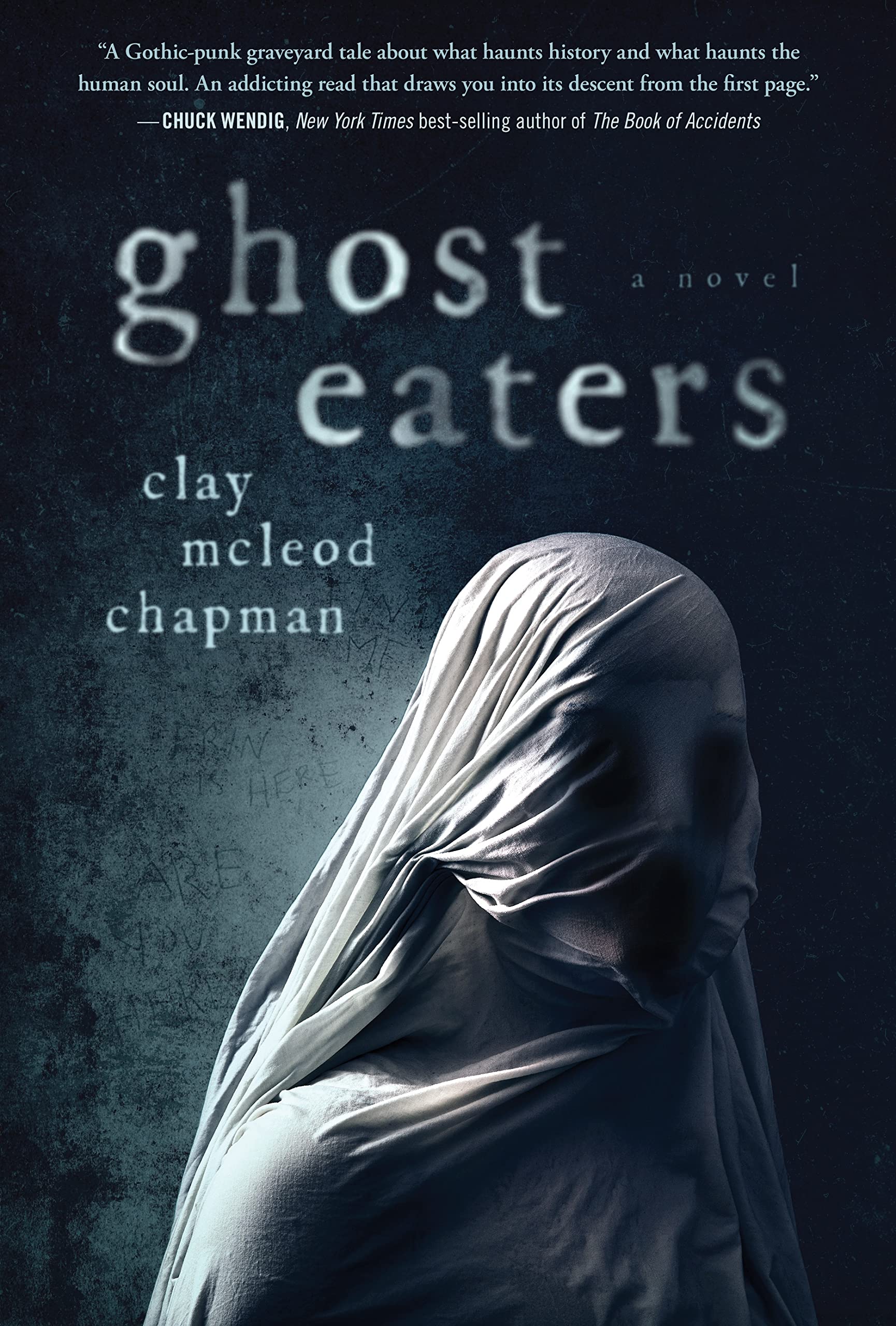
Ghost Eaters: A Novel by Clay Mcleod Chapman

Ghost Eaters: A Novel by Clay Mcleod Chapman

I was fully expecting a traditional ghost story. Maybe a haunted house. Something that is tried-and-true in the ghost story genre. And I don’t mean that as shade; I like ghost stories that follow a formula. They are still scary as F if they are written well. The creepy ethereality of gothic horror is my jam. And that’s what I thought Ghost Eaters was going to deliver.

Was I wrong in the most deliciously skin-crawling way! Ghost Eaters reads like a mature Young Adult novel that merges the horror of fresh-out-of-college, emergence-from-the-chrysalis loss with the ghostly supernatural. Chapman’s prose fits the YA genre; this novel borders on YA and contemporary adult horror. It feels like YA to me because, well, I’m not in my early twenties like the characters are. But the events and themes in the novel are better suited for an adult (if young adult) audience. There are mature themes here of death, grief, the loss of friends, parents, and loved ones. There is the threat of loss of the self: perception is a two-way mirror in this novel, and you’re never quite sure which side of the glass you’re on.

The story follows a young woman and is told from her perspective. Erin is a privileged, educated woman. She has family, family money, family connections, but despite this, she flounders in life. That’s the first horror, one that is banal and familiar to many. Erin is part of a group of friends; their leader has floundered in worse ways than Erin. Silas seems to be drowning in a drug-induced depression. When their social circle falls apart as the result of an untimely death, each one of them seeks to find meaning and reconnection in different ways.

Some of them take the task literally.

And that’s the second horror of this novel. The dark mental and physical adventure that ensues as Erin, Amaya, and Toby play dangerously with the line between living and dying, the present and the afterlife. I won’t ruin this for the reader. Just know that “ghost” in this novel has multiple meanings, and the loss that one associates with death is more than never seeing someone again.

A worthy Halloween horror read that haunts in multiple ways!

See my other early Halloween Horror reviews here: The Ghosts That Haunt Me: Memories of a Homicide Detective by Steve Ryan, Gallows Hill: A Novel by Darcy Coates, A Fig For All The Devils: A Novel by C.S. Fritz, and Anybody Home? A Novel by Michael J. Seidlinger

Berliners: A Novel by Vesper Stamper

Berliners: A Novel by Vesper Stamper

In 2019, before the madness of the Covid-19 pandemic, I got the chance to visit Berlin for a conference. I wasn’t there for long, but it was magical. I got to walk the bridges, stand under the Brandenburg gate, see some castles, and eat currywurst (all kinds of wursts!)

So when I saw this novel, I was immediately intrigued. The contents did not disappoint. But, first, a caveat: This is a Young Adult novel. The primary characters around which the story revolves, the brothers, Rudi and Peter, are in their early-mid teens and the story does not progress far into their adulthood. The prose, language, structure and so on are clearly written for a YA reader, but the historical and emotional content is potent and will suit a more mature reader.

The story is told from the two brothers’ perspectives; it is the tale of their parents and their lives after WWII has ended and German society — Berlin society — has settled into a kind of uncomfortable holding pattern, caught between the two ideologies and cultures of the American West and the Russian-controlled East. Vesper focuses on the interior perplexity in the boys’ minds: in a period of their lives when they are already grappling with puberty and teenage crises of identity, they are forced to also wrangle with the localized manifestations of external pressures of international politics, Cold War propaganda, and collective post-WWII German angst. They struggle with what anti-semitism means in this age, what Nazism had been and is now (Vesper makes this point clear: the end of the Second World War was now the end of Nazism or the hate that that regime promulgated. It lives on and remains as insidious as was), what socialism is and truly is, what the Russian and American regimes represent.

One brother awakens to an understanding that the Russians are selling them a false promise. The other brother believes the Americans are doing the same. One brother seeks the freedom of the West, the other seeks the stability and order of the East.

In the mean time, they are struggling against one another as well; competing as siblings for the attentions of their parents, for a kind of childish glory, for a sense of belonging within their own world.

They wrangle with the more mundane things of teenage life as well: understanding love in all its conflicting forms. Their parents are products of the war as much as they are; their relationship is fraught with tension, not unlike the kind of tension between the East and West: irreconcilable, ideological, built on a history that was not of their own making and borne out of the War. The brothers are also young men, their minds and bodies are tangled in novel feelings of love and sexuality. They are on the edge of adulthood and are testing out how they might victorious in this new domain; they experience losses, betrayals, and grief as the story unfolds — and failure, that first, very painful sting of rejection that is inevitably accompanied by new experience.

The novel follows Rudi and Peter as they navigate their parents’ and the city’s divergence. They eventually find themselves on opposite sides of the Berlin Wall, erected one night in secret.

This is a powerful YA novel that is also fulfilling for an older, more experienced reader. The moral and ethical dilemmas embedded in the politics and social interactions in this novel are ones that might be introduced to us at the YW stage of life, but they remain tangled in later adulthood too, so much of the conflict will be recognizable and moving for a maturer reader.

Enduring Love by Ian McEwan

Enduring Love by Ian McEwan

Despite Ian McEwan’s apparent success in the literary and film worlds, I’ve never read any of their novels. I do veer towards literary fiction, but McEwan was never on my radar. Until “Matt”, a staff member at my nearest public library branch chose it for one of their Staff Picks last month. I typically review newer, about-to-be-published books here, but every once in awhile a backlist is worth a review. This is one of them.

So that’s how I came across this slim, unassuming novel. The title suggests romance. It’s not. (Well… not a traditional romance anyway.) The cover, an image of a hot air balloon in a clear sky, suggests flights of fancy, a pleasant day out in nature. It’s not. (So easily do we forget that nature is not the sanguine overlord as we anthropomorphize it to be. If it were a being it would be a vicious beast, not a nurturing mother.) But, something encouraged me to slide it off the shelf and turn it over for the synopsis.

Before reading further, you must know I enjoy perusing the library, literally just meandering the stacks and sliding interesting books into my arms. Going to the library is better than midnight shopping on Amazon, better than a trip to my local bookstore even — because it’s FREE! I can load up my bag and literally be the richer for it.

The words “hot air balloon accident” and “obsession” caught my eye. Hints of a moral and mental disintegration. Hmm. Intrigued. “Matt’s” pick did not disappoint. I was hooked from the first three pages and I could not rest until Joe’s dilemma had been resolved somehow.

I prepared myself for a hideous ending. I got it.

Reader, if you enjoy unreliable narrators, epistemological head twists, and stories of encounters with the utter strangeness of life, Enduring Love has it. From the start the story is a deluge, an unstoppable interior pouring of thoughts expressed in sharp, authentic prose. Joe is the narrator, a witness and involuntary participant in the hot air balloon incident. A survivor, you might say. But it is what happens afterward that is truly disturbing. Reader, you might be tempted to exclaim, “How many odd things can happen to one person?” But, there is where McEwan’s skill lies, the oddness of it all is entirely believable. Things like this do happen, all the time. Just watch the news. And what happens after with Jed Parry? That too is as mundane as the Monday evening edition. (I won’t recount the plot details since this is an older novel. Find it here.)

The thing that draws us into this novel is this: We might surmise that our actions in the face of such tragedy and dissonance might be different, but Joe’s authenticity as a human being (some brilliant character development on McEwan’s part) forces us to consider that we might feel the same, even if we might react the same way. (There is so much to unpack in this novel, this review is just one possible view of the thing.) Who is mad and who is sane here becomes confused. What constitutes madness and sanity are questions left unanswered. Reader, you’ll wonder where the line between the two exists — if it exists.

At the end of this you might find yourself shying away from social interaction, feeling a bit of anxiety about what someone at the grocery store might want of you if they smile at you. You might stop smiling back for awhile. Most of us have a tinge of social anxiety; this novel reminds me why that can be a good thing. It also made me a tad more paranoid than I usually am about whether I should leave my blinds open or not.

I’ll leave it at that. Read this novel. Gorgeous prose and a compelling plot propel this novel forward inexorably (much like the wind behind a hot air balloon…) Recognizable characters leave the sensation of voyeuristic experience; Reader, you’ll have a front seat view of a journey to madness.

The White Hare: A Novel by Jane Johnson

The White Hare: A Novel by Jane Johnson

It would be hard not to fall in love with this magic-tinged historical fiction. I loved this book so much I stayed up several nights to read it, refusing to bookmark it until I absolutely could not hold my eyes open any longer. The loss of sleep was worth it!

The White Hare is set in post-WWII England. The narrator, Mila, her daughter Janeska (Janey), and her mother Magdalena have left London and bought a large house in Cornwall, which Magda and Mila hope to refurbish and turn into a hotel. Mila also hopes the change of location will allow her to move on from a toxic relationship. Magda too has lost her husband of many years to the War and is seeking to rebuild a life for herself in a new place. The two women are Polish evacuees/refugees of the war; England is their home now.

As the story unfolds it becomes clear that it will not be so easy to shed the past for the three of them; it comes back to haunt them in real and imagined ways. The house and land too that they see as their revival brings its own hauntings and histories into the present. This magic interacts with Mila, Janey, and Magda in positive and less-pleasant ways; it becomes clear there is something afoot at the house at White Cove.

The White Hare is not only a tale of magic and myth; what drew me back to its pages night after night was the deep, terrible past between Mila and Magda, the angry relationship between Janey and her grandmother, and the wedge and glue that comes into their lives, causing friction and connection all at the same time, in the form of another character, Jack. In many ways, this is a novel of intergenerational histories; the ways in which understandings of the self and our place in the world are inherited. That said, Johnson does not suggest that the past dictates the characters’ present or future; there is hope for change.

And there is plenty of change in this story. (The plot revolves around the revival of a place and its new denizens after all.) The novel is not a vehicle to retell history; it is much more subjective than that. This is a novel about how a group of people who have individually suffered ordinary and terrible events struggle to reconcile their pasts with their futures. Every one of the characters’ actions and choices are imbued with a history, sometimes a good one, often a tragic one. As the novel progresses, the reader witnesses how the characters’ histories and their knowledge of another’s helps them shed those ghostly pasts and create a new future for themselves and each other.

The White Hare immerses the reader in a poignant lesson of how the past and present are ever intertwined. Lingering in the latent, vibrating background is the White Hare herself, a spirit that inhabits the land and the haunted history that comes alive in her presence. The novel suggests that there is a world beyond our own mundane one, in which we are embedded. In The White Hare this is the magical, historical world, a state of being in which the past and present are not constrained by the physics of time.

What was also very satisfying for me was the way in which the novel resolves. Not only do the characters come to their own organic conclusions, but history also is validated and finds a place of belonging in the present in a very real, tangible way. It emphasizes Johnson’s narrative: that the past is never as far away as it might seem, it is really buried — sometimes literally — in our contemporary moment. For readers who love long, nuanced resolutions and endings, The White Hare delivers in abundance; nothing is left hanging.

This is a novel that takes the reader on a rollercoaster of emotions, from sadness to anger to pity to redemptive hope. It is inspiring. It is queasy in some parts. Reader, be warned, there are mentions of abuse, gendered and sexual violence, violence and murder. Ultimately, for me, this was an inspiring tale of vindication and hope.

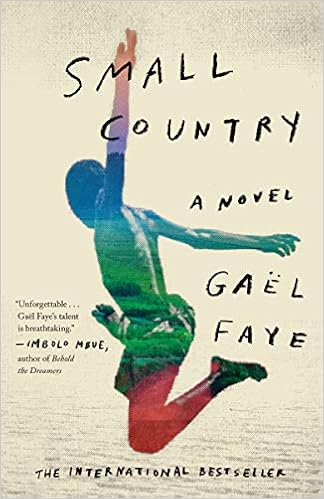
Small Country: A Novel by Gaël Faye

Small Country: A Novel by Gaël Faye

I have been keen to read this book for some time. Small Country was published in 2016 in France and in French, and translated into English by Sarah Ardizzone in 2018. I saw it on the Book of the Month website and it immediately caught my eye. It’s not often that African literature — especially a novel focused on something as horrific as the Rwandan Genocide and the Burundian Civil War, both connected in their origins of ethnic conflict between the Hutu and Tutsi — finds a way into mainstream, popular book culture.

It was worth the wait. Small Country delivers a powerful, immersive, historical experience. I felt as if I were there, transported back to the early 1990s, growing up with Gaby, a silent witness to the terror and happiness of his childhood. We are not so far apart in age that his childhood feels foreign to me, and there is a common experience in living in former colonies, French or British, that pervades the postcolonial world. Faye’s prose helped a lot; I could smell the fruity air of tropical Burundi, sense the light dusting of brownish-red earth on my skin as Gaby and his crew ran down the roads of their neighbourhood, the scorching heat of the sun, a trickle of sweat run down my neck.

But of course, Gaby’s path and my own diverge wildly on the occasion of war. Faye’s portrayal of that period of time and conflict was palpable. By that point in the novel, the characters felt like friends: ordinary and familiar like those who populate our own worlds. They were likeable and hateful, annoying and lovable, flawed and perfectly so — and then they were thrown, involuntarily, into an unimaginable violence. Much like Gaby and his family and friends, the war approached slowly, then arrived suddenly. The effect is jarring — purposefully — on the reader. The events of the novel force the reader to wonder, “What if this were me? What would I do?”

The story follows the chronological path of Gaby’s life, a mixed-race boy of French and Rwandan parentage, growing up in Burundi. It spans his early life from about age four or five to the time of the Genocide, when he is a teenager and evacuated to France. The novel is one that revolves around the nuances of race and interracial relationships, the push and pull that is inherent in transcultural lives, and the desire for a sense of place when one is trapped in a Venn diagram of multiple belongings. Gaby’s mother is one of these out-of-place women, French by marriage and in part by design, but also Rwandan and not-Rwandan, Burundian by default and yet rejected by Burundians on account of her Rwandan origins. Gaby’s father also straddles multiple worlds, first as a colonial settler in a time when such settlements can no longer exist as they were; he is out-of-time, rather than out-of-place. Second, in the matter of class, Gaby’s father possesses status, but only on the African continent, not in France. Gaby, the protagonist of the novel, is also caught between worlds on account of his mixed-race, his socio-economic class as the son of a middle-lower-upper-class businessman, and because of his nationality being a French passport-holding Burundian. The characters exist in a kind of suspension. This uncertainty is, on the one hand, brought on by the war, but it existed before as well, as people in this community reconcile their ethnic history or their settler status with the new postcolonial order of things.

Small Country is about the loss of one place of belonging when another one exists. It is about loss of the things (including people and practices and languages) that bind us to one another and to ourselves. It is about how we individually must grapple with that loss, how we deal with it or how it deals with us. Every character in this novel loses something or someone (a spouse, a child, a family member, or themselves), gains something (freedom, independence, clarity of self, madness, grief), and plods onwards in life because there is no option to do otherwise. The reader cannot help but recognize their suffering and their experience.

Small Country is about refugees, both the kind we see in the news and the kind we do not see, those who occupy our own worlds and are, in a sense, “hidden in plain sight.” Faye presents to the reader a reflection of themselves, turning the refugee of the news into an all-too-familiar face, our own. Perhaps as we encounter refugees in our lives, those of the news-kind as well as others, we might find common ground with them on the basis of this shared humanity.

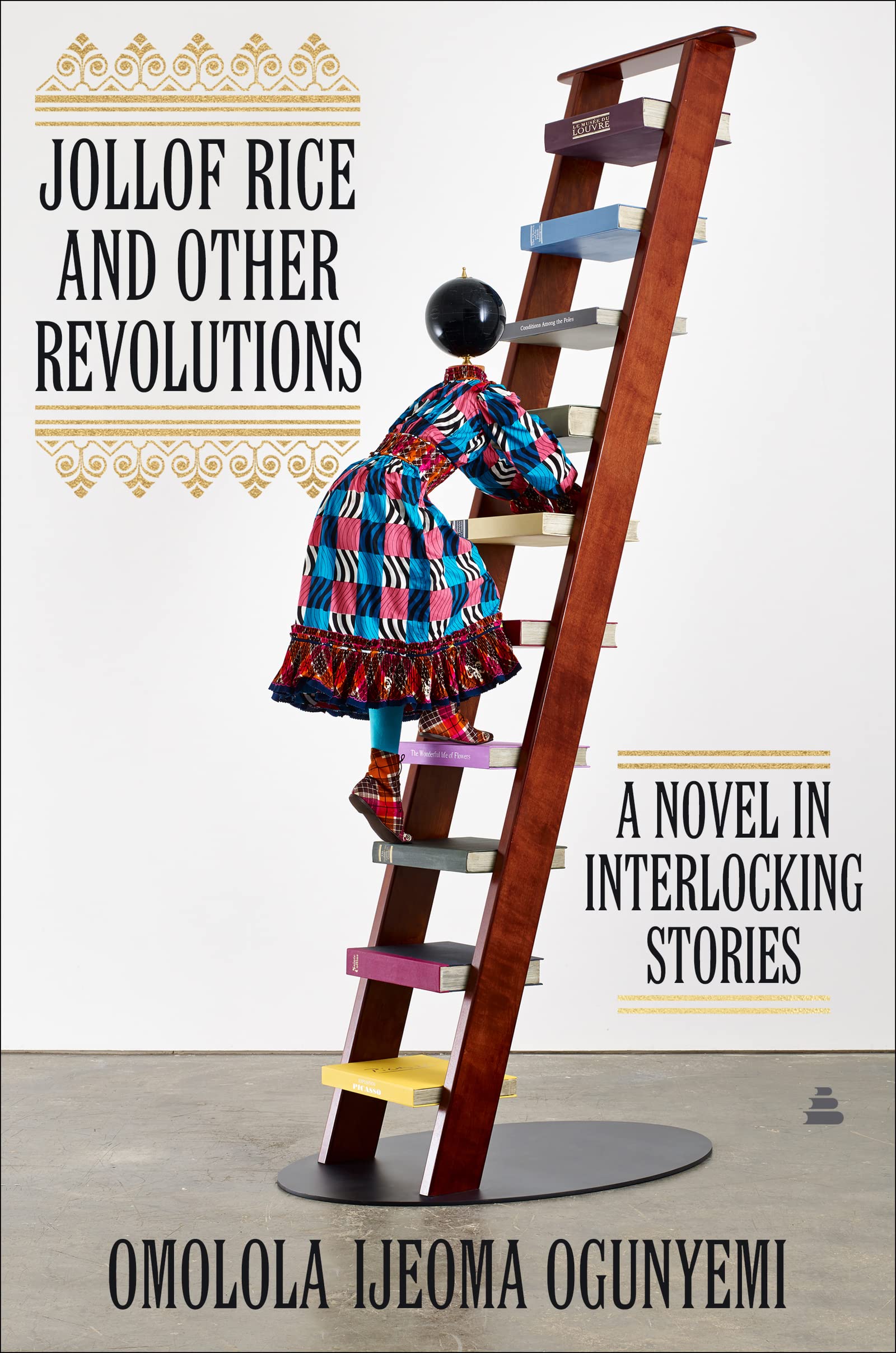
Jollof Rice and Other Revolutions: A Novel in Interlocking Stories by Omolola Ijeoma Ogunyemi

Jollof Rice and Other Revolutions:
A Novel in Interlocking Stories
by Omolola Ijeoma Ogunyemi

Jollof rice is the stuff my dreams are made of. The whiff of tomato, chili, white-, and black pepper, piquant and nose-tickling, the aroma of ginger and garlic and onion. Jollof is West African, but the recipe and desire for it is universal. In my case my dreaming mind classifies jollof rice as nasi goreng, Malaysian style with Maggi’s cili sos, a sweet and spicy ketchup. Chunks of browned chicken thighs, that crust of flesh and crispy skin, dotted with red grains of rice.

Coming from a rice-eating culture I like to think of myself as a specialist in the business of rice-eating and rice dishes. As a historian and reader of postcolonial literature and archival text, I like to think myself an expert in those domains too. But, I remain amazed by what I do not know; there is always a new rice dish, a new recipe, a new flavor to make my tongue and memories alight. There is always a new perspective, a newly discovered history, another layer of human experience to see, enjoy, and revel in.

Ogunyemi’s Jollof Rice and Other Revolutions is that new rice dish, that new revelation. You see, the stories in Ogunyemi’s novel are like jollof rice, grains tossed together, held together in harmony by a dry sauce. Sweet and salty and spicy, a mouthful of emotions that are sometimes in conflict, sometimes piquant, but always in balance.

The novel is familiar and comforting in its focus on men and women of color, their lives indelibly part of the muss and tumble of Nigerian marketplaces, cities, and villages, so similar to those in Southeast Asia, where chickens are still sold live, butchered and feathered at the time of purchase. A place where fish and seafood lie on slabs of ice that are slowly sweating like the people haggling with each other over their prices. There is the aroma of overly sweet fruit in the air: jack fruit (in Southeast Asia anyway), bananas, some kind of incense. There is smoke and pungent exhaust from a motorbike put-put-putting away. A glot of languages rumbles in the background, ever-present as there is no reprieve for the ears in places like these: dialects, pidgins, mix-n-matches of accents and lilts. On occasion there is a puncture of British English (always British it seems), and a few heads turn to see the foreigner. (It is usually me.) Like a Nigerian market place, Jollof Rice and Other Revolutions is dominated by women and their stories; men are present, they form part of the fabric of the novel, but it is the women and their experiences who thread the pattern and the connections between motifs in its cloth.

Jollof Rice and Other Revolutions is a collection of Nigerian and transnational Nigerian, historical and contemporary experiences, spanning from a time under the British and under British influence (for Britishness and Western-centrism continued even after decolonization) to the present — and here is where it gets really interesting — the future. Ogunyemi’s novel recalls to mind another like it, Yaa Gyasi’s Home Going (2016), but it differs on this particular point: Ogunyemi reaches into the future and lets the reader dwell on our current states through poignant examinations of the present.

Jollof Rice ranges across multiple generations, includes the lives of members of different and intertwined families. The reader is given a glimpse into the past when precolonial gender relations were more fluid. The reader accompanies characters in their education under the British, travels with them as they become transnational cosmopolitans, and will find themselves in the uncomfortably familiar place of racialized, racist America. The reader will find themselves in a near future moment, built on the present and past as we know it.

Sometimes, alongside the odor of modernity and vehicle exhaust, there is a faint scent of history and the supernatural, that which exists beyond the usual plane of our understanding. This is like biting down on a pepper seed in your rice, getting that jolt of zing on the tongue. You can’t be sure if it was a seed or a pepper or a tiny grit of sand. You hope it was the former and not the latter, but then the moment is gone, the thing is swallowed and you continue on with your meal, with your life. The next story is waiting on your spoon. I deeply appreciated how Ogunyemi wove these elements into the novel; what the West deems supernatural is not so in many parts of the “formerly” colonized world. Spirits, ghosts, and memory were part of our cultures before and remain so.

Ogunyemi’s characters and their experiences are what give the novel its unique quality. The characters connect to each other through their shared experiences in schools, in migration, in marriage and love, in childhood and navigating adulthood, in how they reconcile their colonial pasts with their “post”colonial presents and futures. Ogunyemi brings the Nigeria of the past into the present and future through their transnational and transcultural journeys. The characters are related by bonds which are sometimes considered casual; in Jollof Rice unbreakable relationships are broken, death is a cause for life, and disappointment is a gateway to revival. In this way, Ogunyemi delivers to the reader the nuances of human love and its endurance across time and space, makes a case for their eternal universality.

Jollof Rice and Other Revolutions makes me want to grab a friend and say, “You must try this! It’s new!” And how special must it be, that it has taken the old topic of history and identity and made an original spin on it!

A Map for the Missing: A Novel by Belinda Huijuan Tang

A Map for the Missing: A Novel by Belinda Huijuan Tang

This novel is about loss, many different kinds of loss through death or ill luck, through forces of politics and history beyond our own or anyone’s individual control. It is about loss as a natural outcome of growth and change. It is about loss and its inscrutable, unshakeable companion, grief. It is also about the successors to loss: acceptance, perspective, renewal.

The story begins with a mystery and an immediate confrontation with loss. Yitian, a middle aged Chinese professor of mathematics who lives and works in the United States, finds himself on the calm end of a frantic phone call with his mother who announces that his father has gone missing. The remainder of the novel revolves around this event. This is the first loss, an obvious one.

But as the story unfolds and Yitian returns to China to solve this mystery, help his mother, and locate his father, it becomes clear this is only the last of many that have come before. The novel moves fluidly from the present into the deep past, into Yitian’s childhood, teenage years, and early adulthood.

We encounter the loss of worlds that no longer exist: China pre-1949, before Mao and the Cultural Revolution stripped Chinese culture down to a party line; China in the throes of the Cultural Revolution when young men and women were “sent down” youths, cast out of towns and cities and abandoned in the countryside, their personal desires and ambitions beaten out of them; China of the 1980s in its easing up of strict communist restrictions on lifestyle and living.

As Tang Yitian re-engages with China and the people of his past, the reader experiences with him the loss of his past. In that past is death of different kinds. There is literal death, but also metaphorical death — of love, romance, family cohesion. We encounter loss and grief as disappointment. So often disappointment is overlooked as a form of loss, but Tang’s A Map for the Missing makes a profound case for it here. The repeated disappointments that life deals us are obstacles in our path, they are barriers that prevent us from manifesting into reality the image of ourselves we see in our heads. Yitian’s wife experiences this. So does Hanwen. So too do the elder Tang men.

We also see the tale unravel from the point of view of those in Yitian’s past, specifically Hanwen, a young woman, one of the “sent down” youths. In some ways, A Map for the Missing is a tale of these two characters and how their encounter, brief and powerful, shaped their lives.

This is a novel of how loss shapes our lives. And because of that, the novel is less bleak than it might seem at the outset. There is a hopefulness embedded in it. Perhaps this is hinted at in the promise of its title. A map leads to a destination, doesn’t it? It rescues the lost. It is simply a matter of reading the map, learning the topography and the legend and its scale. Yitian’s journey lasts only a few weeks in real time, but it is really a deep delve into his past of several decades; it is on this journey into the past that he learns how to read the map.

A Map for the Missing takes us with Yitian and the other characters on their trips through memory. Belinda Huijuan Tang’s prose is a delicate vehicle for the reader’s ride. The reader will barely feel the movement as they are shuttled through the novel from one moment to another, from one story to another, the past, the present, back again. Her prose flows. The chapters flow. Tang’s description of place, perhaps foreign to some readers, fits the mood of the novel; it is sparse in parts, but succinct, delivering an image for the reader’s mind in a sweep of few words. The characters too are real, even if their histories and cultures might differ from the average English-reading audience; they are easily recognizable across cultures. The men and women of Tang’s novel are grounded in a specifically Chinese history and culture, but they are also relatable as mothers, fathers, sons, daughters, teenagers, young adults, wives, and husbands.

The reader will travel with these characters, witnessing Chinese history and their lives silently. At the end of this book, the reader cannot help but feel like they’ve gone somewhere familiar and alien. All of us know this story, we know this journey; it may be one we’ve taken before or one that we know we should take ourselves — or one we might be forced to undertake, like some of the characters here. You, Reader, will feel exhausted, but you’ll also feel… hopeful.

A Map for the Missing is a wandering worth the taking. for both the destination and the experiences along the way.