Bronze Drum: A Novel of Sisters and War by Phong Nguyen

Bronze Drum: A Novel of Sisters and War
by Phong Nguyen

Phong Nguyen beats out a strong, feminist song in Bronze Drum, one that makes my Southeast Asian woman’s heart swell and weep and soar all at the same time. It is a rare moment when a book makes me feel seen. As a historian of Southeast Asian history, I am deeply grateful for this rare and unique novel that so brilliantly and beautifully captures an often overlooked era and people.

Southeast Asia’s ancient history is little known outside of academic circles. Even within that small enclave, many scholars of the region focus on contemporary Southeast Asia or modern Southeast Asia from 1300 onward. Many students, especially American students, see Southeast Asia through the American-centric lens of the Vietnam War (Note that the Vietnamese call it The American War). I, myself, as a scholar focus on the region’s post-colonial period, the peak of the Cold War between 1950 and 1970. Bronze Drum, by highlighting a much earlier colonization of the region by China, both appeals to my decolonizing spirit and makes visible my own historical blindspots.

The world turned its attention to Southeast Asia when its spices and trade with China made it an easy backdoor into that empire’s markets, around the 1300s. But, of course, Southeast Asia existed before then, had a history before then. But excavating that history has always been problematic. For one, in the post colonial world, history has become a contested domain. Its function as a tool of nation building and national identity, coupled with the need to appease various ethnic and national factions for the sake of collective peace has obscured some histories, elevated others. The demonization of the Han Chinese in Bronze Drums would not have gone over well in another time and place, and even today, the influence of China on the region’s economic and political stability cannot be easily dismissed. Southeast Asia has ever been and remains, whether we like it or not, in some condition of thrall to China.

But back to history. Another reason for overlooking ancient history is that nature has not been kind to historians of the region. Much of the region’s ancient histories have been difficult to document. The moist and hot climate of the region does not lend itself to the preservation of wooden or plant-based artifacts, only that which was hewn into stone has survived. Archaeology informs us there were many vibrant ancient civilizations here: the Dong Son, whose drums are those featured in Bronze Drums, the Majapahit in what is now Indonesia, the Sri Vijaya in what is Malaysia, Singapore, and Indonesia. There were Muslim sultanates in the Philippines and the Tai Kings in Thailand, and the ancient origins of the Court of Ava in Burma (today, Myanmar). Stele and monumental building like that at Angkor or Borobodur remind the world of these past eras and peoples.

The sisters in Bronze Drum are the Trung Sisters of Vietnamese mythology and ancient history, Trung Trac and Trung Nhi, who dared to subvert the Chinese Han invaders. Bronze Drum is a real history, though it is also Nguyen’s fictionalized retelling of it in the form and in the style of a mythic epic. The novel unfolds the fabric of the Dong Son/Lạc Việt world as it weaves through the Trung sisters’ fight for their kingdom and culture’s independence. The strength of Bronze Drum is that it reads as an epic should: it begins with the heroines just before they realize their fates, it recounts their moral turnaround, the moment they knew they had to be the leaders they became. The novel then impresses the reader with their triumphs. The novel then turns to their downfall. (I am giving nothing away here, it is well known the Viet fall to the Han and later, the French. History is the spoiler.) There is a sense of Joseph Campbell’s classic hero/epic narrative structure in Nguyen’s retelling, something that is sure to feel familiar to readers of Greek and Norse mythology.

But Nguyen provides the reader with more than just a myth here. Nguyen gives us insight into the interiority of the Lạc Việt actors, including the sisters who become female kings and warriors atop elephant backs, their courtiers and allies. The highlanders, Degars — also known as người Thượng — are featured too in Bronze Drum and the peasant community is not ignored or invisible as they are in so many heroic epics. They are as much the heroines as the Trung sisters in this novel.

If there was one flaw, I wished for more discourse on the larger political context and history of the Lạc Việt. The neighboring princes and chiefs and villages made appearances in the book, but I wanted more of that political intrigue, real politik dialogue, and sparring between characters. (I will not lie, for all their orientalist bungle, I enjoy James Clavell’s Shogun and Taipan and Gai Jin, for that kind of in depth political maneuvering.)

Nonetheless, Bronze Drum is epic. And this is not its only strength.

Its characters were mostly strong women and I deeply, deeply appreciated Nguyen’s feminism, bringing matriarchal lineage and culture to the forefront. The women of Bronze Drum are not frail, delicate flowers. They are not sexualized pussy cats like Richard Mason’s Suzy Wong and the nameless sex worker of Full Metal Jacket fame. The women of Bronze Drum are real Asian women, made of fire and water and air and metal all at once. They are sexy and sexual beings, they have inner strength and outward muscle, they think and speak for themselves. Even as they are mothers, wives, daughters, sisters, and nieces, they are denizens and creators of their own worlds and desires.

Phong Nguyen’s prose brings these heroines, these mythological warrior women to the center of the Lạc Việt world with ease. The novel flows, riverlike towards rapids, smooth and fast. The reader will want to surrender themselves to the story and let it carry them to the end.

We Are Not Okay: Elegy for a Broken America, Memoir-in-essays by Christian Livermore

We Are Not Okay: Elegy for a Broken America, Memoir-in-essays by Christian Livermore

The title alone is enough to catch anyone’s attention. “We are not okay” are words that resonate across the world, with anyone who’s been alive for the past ten years — or the last three, for that matter. I’m not the first to tell you, Reader, that we are still struggling through a pandemic, an era of shrinking wages and increasing inflation, inadequate housing, dismal health care, sweltering/deluging/freezing climate change, and the list goes on and on and on… And has been accruing for… well, since human society began. And that’s part of Livermore’s point: We have not been okay for awhile and this is an intergenerational problem, an unescapable inheritance that will just keep paying it forward over and over — though, hopefully, with less interest for each successive cohort.

The teetering house on the stark cover of Livermore’s book is home for many of us. If I had a house, it might have been my own. This is We Are Not Okay‘s appeal: it is a book that sends a familiar vibration in all of us (except the wealthy 5%), “us” meaning the lower, working, striving-to-be-middle-class end gamers. I think Livermore (and I) are accurate in our assumption that there are more of us in this category, more of “us” than we want to admit to. It’s taken me decades to shrug off my mother’s middle class aspirations and acknowledge that we’ve balanced on that razor edge for generations, a paycheck, a job, a single recession, a whiff of luck and one good friend away from being not okay.

Here is where Livermore shows their metal: it’s not where we are now, but where we’ve come from that marks us. Poverty is that malingering virus that begets a comorbidity of chronic dysfunctions so banal as to be classified as “life” or “age.” (Health is one of the key points Livermore brings up, health and unhealth those of the lower and lower-working classes just assume to be a part of living.)

I am writing this on my Mac Air, which I bought new (with a justified educator discount) and I have a great job — and like Livermore, I have a degree that I thought made me… well, to be frank, classy. Now, in some ways — and Livermore doesn’t raise this point much — my degree has elevated my status. I can command a kind of respect in some circles, not so much in others. (My brother asked me in my last year of graduate school, “What’re you going to do with that degree? You must really like school, you keep going back.” What he didn’t say was, “For the love of biscuits, WHY?” I replied, “Yeah, I’m not going to make much money, but it’s important to me.” And it is. It really is. But, I digress.)

Livermore’s point is: Poverty is not a number, it is not something you can grow out of or improve, except in that small incremental way, like a credit score — but not really within one’s lifetime, but through generations. Three points up in one generation. Twelve points down the next. Because someone lost a job, had a mental breakdown, fell into alcoholism… Three points up in a month. Twelve points down in this lifetime. Because I paid off my car. Poverty is not something Livermore, I, or anyone can erase with a piece of paper that confers on the bearer the title “Doctor” — and a student loan. But we can learn the appropriate disguises, find the a mask that hides our origins enough. I can pump up my credit score enough to get that car loan, I can.

This is a form of code switching.

But here is where Livermore and I part ways a little. Code switching for me and for many other Americans is embedded in a racial history. Livermore is white, their experiences are also white. This is not to say Livermore is raceless; no one is without race. But there were elements of Livermore’s story I couldn’t fully reconcile. It is here that Livermore schools me (though it’s a lesson I’ve learnt before, it is one worth repeating): White code switching is class-passing. Race and class are inextricably intertwined, it’s true. Racial code switching for whites pulls from the intangible domain of “class.”

Class is a tricky category, meaning so many things, some tangible like income and the size and type of your house, others intangible like the way you hold your fork. I see it in my students (of all colors and races and ethnicities) who don’t ask for help in class or anywhere because they’re used to not getting any, used to being beaten down, used to being denied. Class is about getting access to things and services and attention. Whiteness is about the same, but not all whites have class. And the way in which Livermore presents that is brilliant.

Livermore’s prose is authentic, the highest praise I can imagine for a memoir. It is brutal in parts and funny and sad and emotional. It is detached in other parts. It is cold and harsh. It performs the emotions and conflicts Livermore is bringing to the forefront. This swiveling, this code switching is a key characteristic of poor people. It is self hate, it is selfishness as self care. It is as convoluted as humanity because poverty is a wholly human construction built on the development of hierarchical society, that is: civilization.

Livermore’s We Are Not Okay follows in the vein of Tara Westover’s Educated: A Memoir in that it explores the embodied cultural legacies of poverty. However, Livermore’s book differs from Westover’s in that it is more relatable. First, Westover’s book is grounded in a specific religious community, society, and history. Livermore’s background is more ordinary and bland, therein, more relatable. Livermore might be anyone’s neighbor, anyone’s school mate, anyone’s professor. I wonder now how much or how little do I know about my colleagues, my former professors. Do I see their whiteness and assume a privilege that isn’t really there? Livermore’s We Are Not Okay is one to linger with any reader. I will think of it when the Fall semester begins again, as I look into my sea of students, throw back summer stories with my faculty peers. Second, and perhaps more poignantly, Livermore’s We Are Not Okay does not come to a natural closure as Educated: A Memoir does. I will not spoil the ending; you’ll have to read it. Let’s just say Livermore’s memoir is… realistic. It is not that Westover’s is not, but if you’ve read Educated: A Memoir it does come to an organic closure. Livermore leaves us in that teetering house, pondering our own fate… This is part of the lingering of this book, a sensation that makes this worth reading.

Livermore delivers. This is a book that will stick with you. It may even dig into your bones where poverty may have been leaching away at your marrow for longer than you know.

The Tamarind Tree by Sundara Ramaswamy

The Tamarind Tree
by Sundara Ramaswamy

Ramaswamy weaves a complex story, one as wild, unpredictable, funny, sad, and as convoluted as the people who populate it. The characters might live in an era long past and in a place we have never been to, but they are as recognizable to us as ourselves. On more than one occasion I smiled and giggled to myself, seeing my father, mother, a cousin, or myself in the characters.

This is a novel of a place and time. The novel takes place in the vicinity — the junction — of the tamarind tree and revolves around events the tamarind tree witnessed, became party to, and became a victim of. But, more than that, the novel is set in and depicts India in the 1950s; not colonial, europeanized India, brimming with exoticism and romanticism, and not fiery, violent India of the Partition and Decolonization, not political India, not anthropological Indian, but India in the lull after the violence, the lived India of Indians, when ordinary people, Muslim and Hindu alike, merchants, beggars, men, women, and children are settling into the age-old necessary rhythms of life: marriage, work, the bearing and raising of children, paying taxes, earning wages. The social politics of the moment underpin the interactions of the people who live and work at the junction of the tamarind tree. It is in these banal frictions between merchants, husband and wife, apprentice and master, that Ramaswamy invokes the shadows of India’s larger social conflicts: religious tension between Muslims and Hindus, the oppression of women and the traditionalism of domesticity, the capitalist desire for individualism and individual profit at odds with a kind of social collectivism necessary to survival and tribalism.

The story is told from an unnamed narrator’s perspective, partly. In other parts an omniscient narrator takes into the interior movements and minds of the characters. The story is fluid, flowing from one character to another, from one drama to another, one scandal to another — not in a superficial way, but to perform how close contact is between the characters, to show the reader how intertwined these lives are.

This is a beautiful novel that imparts the scent and colors of India through a vivid portrait of its people and their everyday needs, their lives, and interactions with one another.

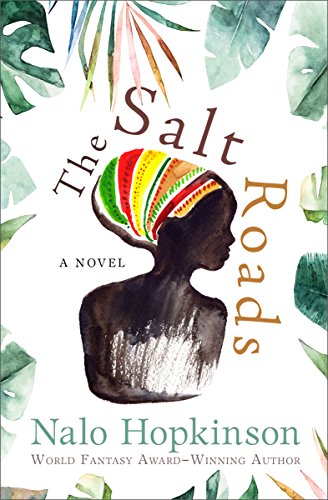
The Salt Roads: A Novel by Nalo Hopkinson

The Salt Roads: A Novel by Nalo Hopkinson

The Salt Roads is a bold statement about black womanhood across historical space and time past. The novel unfolds in magical chronology; it is a fantasy/magical realist novel that is grounded in history, but woven together through the movements of a spirit-being, Ezili and the Ginen goddess, Lasirén. The spiritual relationship is never fully explained — adding to the magical aspect — between Ezili, Lasirén and the human women whose bodies these spirits inhabit at various moments in time. The salt roads of the title is the trail of tears black women have cried, the salt of those tears having dried and laid a path for all those who came after. It is a well-trod path. Ezili and Lasirén live and relive, walk and walk again on that same path, possessing different bodies.

The plot revolves around three disparate stories, loosely connected by a shared history of racism, gendered suffering, and life-affirming black sexuality. The first lifetime that the novel opens with is that of Mer, an old Ginen woman, a respected elder and healer in the enslaved community in an unnamed French colony in the West Indies. Through her eyes and hands, Mer/Ezili helps the Ginen on the plantation survive their white master’s rages, their unpredictable cruelties. In this lifetime we also encounter Makandal, the male counterpart to Mer/Ezili, another magical being who also seeks to help the Ginen survive, but in different ways. Mer is the female, the feminine, the woman who knows what other women in this oppressed world need to survive. Makandal is the male, the masculine, the combative counterpart.

The second body Ezili occupies belongs to a mixed-race woman in France in 1842, Jeanne Duval (aka Lemer and Prosper). Jeanne is a dancer, an actress, a courtesan, the mistress of a white man. She embodies black sensuality and sexuality in all its forms. Here I think is Hopkinson’s great contribution: the boldness of her sexual prose disrupts the negative images history has painted of black women’s sex. Historical depictions of black women as sexual beings pose Her as savage, deviant, an object to possess. Hopkinson wipes that away. Jeanne Duval is a powerful sexual woman, human and frail and vibrant in her sexuality. She is a temptress, but sex is her weapon, one she has full control over.

The third manifestation of Ezili/Lasirén is called Thais, Meritet, Mary, and Pretty Pearl. Her time is in ancient Egypt. As in Mer’s lifetime, Thais’ experiences are deeply gendered; her body is a sexual, reproductive source and her life is shaped by oppression under forces larger than herself.

Hopkinson’s prose is beautiful, song-like in parts, especially in the sections where Ezili and Lasirén’s voice(s) narrate events. Their spirit presence is attached to, but not fully part of their human manifestation’s consciousness. They are experiencing humanity through the bodies they possess as much as they are imparting their power and strength to these women.

The novel is not a historical fiction in the traditional sense; it is not factually informative, but it conveys the affect and emotional experience of enslaved, black, women’s history. It conveys the psychological tensions of this history. It also shows the reader a different way to view the historical enslaved black woman, a woman who has become an archetype. Hopkinson revises Her, suffuses Her with a humanity through raw sexuality and the materiality of her womb.

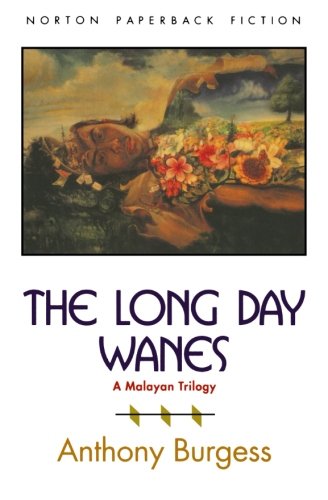
The Long Day Wanes: A Malayan Trilogy by Anthony Burgess

The Long Day Wanes: A Malayan Trilogy by Anthony Burgess

As I closed this book for the last time, I could not help but wonder how and why I had made it to my fourth decade as a Malaysian without having read this. I wondered why the existence of books about Malaya and Malaysia were not a part of my IGSCE or GCSE exams, part of my primary and secondary school education. We could have read this in English class, in History class, in Religion class, instead of Shakespeare’s Much Ado About Nothing and William Golding’s Lord of the Flies. It would have made more sense, it would have been interesting, it would have given us a sense of who were were! No, we learnt about WWI and WWII, but never about the Malayan Emergency, never about Communism — except as a Soviet or Chinese or Cuban-Missile Crisis thing.

Such a misnomer, the “post colonial” world. There is nothing postcolonial about it. Burgess’s three intertwined novels prove that. Published in 1964 and reading them nearly six decades later, it’s clear nothing much has changed except the language: the racism remains, the ethnic conflict, the Malay calling the Indian lazy, the Chinese reviled for their share of the economy, the Malay condemned for their bumiputra entitlements. The primacy White Men still hold over those of darker fleshtones. Nothing is different except Chinese folks don’t say yam seng as much any more (Kam pai I think is the more popular term now. Not that I drink enough to know) and diluting whiskey with water and ice has become passé with the ubiquitous use of aircon. I recognized the sounds and smells and sweaty stickiness in Burgess’ Malaya, especially when I read the books while having a cup of steaming Horlicks. I laughed out when luncheon meat was mentioned, then counted how many tins I have in my pantry.

The novels are nothing spectacular plotwise; it’s the point that nothing happens. In the first book, Victor Crabbe and Fenella Crabbe drink and drink and drink, complain, complain, complain. Victor even complains that Fenella complains; for, in his view, he has purpose. Burgess does not name it but it is the White Savior Complex; Victor has it in buckets.

It is the characters which save the novels and make the trilogy worth reading. This is one of the few times I have read a book from this era that brought “native” characters to the forefront. Even Orwell’s Veraswami was a supporting character. Of course, we should not be too hasty; Victor Crabbe remains the central focus of the trilogy. But Rosemary, an Indian woman who has swallowed the White Mask — perhaps the whole bottle of white makeup — is prominent in the last novel, Beds in the East. Alladad Khan, a Muslim man is also given pride of place in the first one, Time for a Tiger. The second book, Enemy in the Blanket focuses more closely on the Crabbe’s marriage. I appreciated Fenella’s prominence here, even as a white character; she is a woman and it was pleasant to read a woman’s story, even if told by and from a man’s perspective. I enjoyed Anne Talbot a lot. Her spunk was refreshing.

But ugh, the racism threaded all the way through. I read it, recognized it, hated it, enjoyed it for its honest — if ugly — portrayal of Emergency era Malaya.

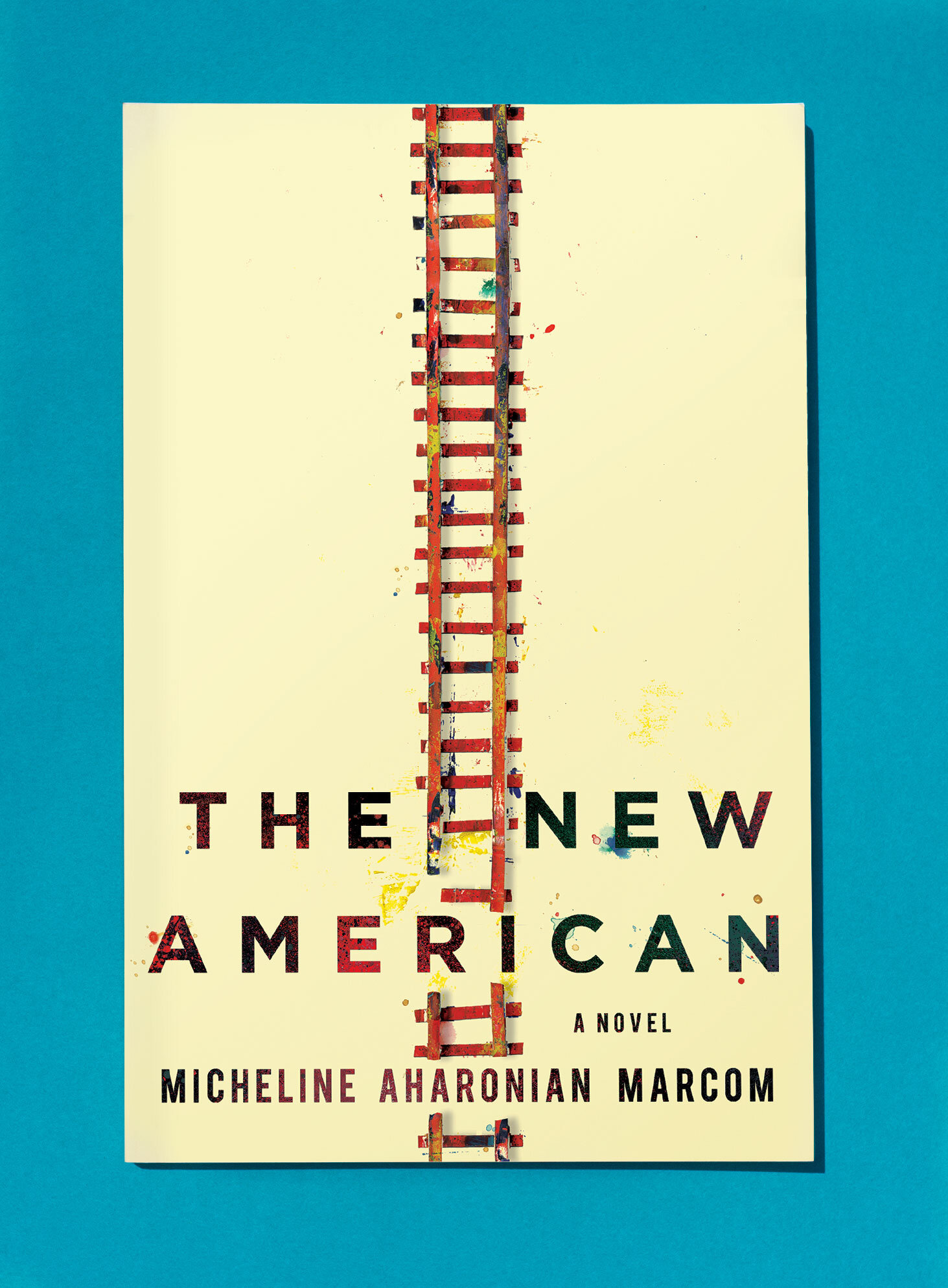
The New American by Micheline Aharonian Marcom

The New American by Micheline Aharonian Marcom

I found this novel by chance, sifting through the remainder books stacked on a Dollar Tree shelf. (Now a dollar TWENTY-FIVE tree due to Covid-19 caused inflation. Still, a steal.) I was searching for scavenger hunt rewards for my Summer class. The title caught my eye and as I picked it up I wondered if I would regret it. In these increasingly divisive days, the word “American” conjures a dark and paranoid shadow, a hidden figure that vaguely appears to be toting a gun. It is a hateful individual with movements that jerk unpredictably, violently. I could not help but take a pause to wonder at my assumptions: Who is the New American? I am one, but I don’t recognize the person in my vision. Who would Aharonian Marcom’s American be? Hopefully they are not merely a rehashed version of the old American. Never buy a book without reading the front and back flaps. My hope was vindicated. “Dreamer”, “Migrant”, the synopsis told me. I bought two copies. One for myself, one for a scavenger-hunt-winning student.

Aharonian Marcom’s The New American did not disappoint. It seized me and would not let go until I finished it. I wanted to finish it. I had to. The New American is a novel of our moment, the turn of the 21st century. It is unashamed and bold in its title; the novel captures the determination of the human spirit and the suffering of being an American. The latter is inextricable from the former. As an immigrant myself, I saw parts of my own experience in the novel, though my own journey was far less deadly, far less bloody.

The plot is straightforward, a clever ruse for a very complicated discussion of identity, belonging, desire, and survival. The story begins and ends with Emilio, a DREAMER who grew up in California, became a student at UC Berkeley, and then was deported when authorities outside the university sanctuary city boundaries discovered he was undocumented. Emilio is deported to Guatemala, stuck in a legal limbo he cannot see a way out of. He decides — with the typical brashness and fearlessness and naïveté of a college kid — to find a way back to the United States and his former life. His journey takes him through Mexico and the Sonoran Desert. On the way he meets and befriends other migrants: Matilde, Pedro, Jonatan and others. The story follows their feet as they walk miles upon miles upon miles to the deadly trains that carry them across Mexico, follows their feet as they suffer through the heat and aridity of the Sonoran Desert.

The characters seem simple at first, but they are facsimiles of real individuals and as such, the reader will find them complex, confusing, irrational. They are not guided solely by emotion or by avarice or by ambition or by necessity. They are driven by a combination of those things and more. Aharonian Marcom’s prose is succinct but powerful; Milo and Mati are visible to the reader, the pain in their hearts is within reach of their fingers. You could almost detect the odor of their sweat as you read, but then you realize it’s your own because you’re so tense and concerned about what will happen to these young migrants. You know this is a not a love story, that there is no happy ending guaranteed.

The New American‘s back flap told me about Aharonian Marcom and helped seal my desire to read this. They are a professor of Creative Writing at the University of Virginia, a founder and Creative Director of The New American Story Project [NASP], which hosts the website, New American Story. Aharonian Marcom’s research and professional engagements inform the content of the novel, fiction as it is.

I could not help but be reminded of a book I’d read a long time ago, which had changed me: Rubén Martinez’s Crossing Over: A Mexican Family on the Migrant Trail (2013). This was in my own undergraduate days, when I had just begun questioning for myself what it meant to be an American. Aharonian Marcom’s novel reads as the updated version: more YA-oriented, more college freshmen friendly, with a deeper interiority than Martinez’s. Both are wonderful; Martinez’s book still echoes. Almost a decade after it came out, it remains relevant. While there are so many books in the same vein out there now than there were before, it and The New American still have much work to do to bring stories of our humanity — in its glory and deadliness — to new readers. All of them are worth reading, including The New American.

The Disappearance of Josef Mengele: A Novel by Olivier Guez

The Disappearance of Josef Mengele: A Novel by Olivier Guez

Like many people I have a deep personal fascination with World War II (much influenced by my professional interests in this time period), but I was unsure if I wanted to read a book — fiction or otherwise — centered on so evil a person, a human being capable of having inflicted so much suffering on others. Indeed, the first third of the novel made me rather queasy: Should I be more detached from this historical material? Should I be reading this with a massive grain of salt? Should I be enjoying this read?

And that’s the thing: The Disappearance of Josef Mengele: A Novel is a captivating, enjoyable read. Guez’s prose is irrepressibly smooth, the plot is compelling and thrusts the reader forward, his characterization of Mengele is fascinating, successful, human. I did not want to like him — and here I think is Guez’s brilliance — I did not end up liking this horrendous human being, in fact, my distaste for him was confirmed, but Guez prevailed on me to acknowledge Mengele as a member of my own species. By the end of the book, I could not deny that Mengele and I shared a common sense of existence, a common biology, that he and I were human. And I therefore must confront the real horror of Nazi eugnenics and racism: humanity is cruelest to its own and any study of our inherent nature must accept our own cruelty.

Josef Mengele — in all his aliases (Pedro, Peter, Helmut, Wolfgang, so many others) — was not the only character in Guez’s meticulously researched historical novel who brought me to this uncomfortable realization. Mengele’s first wife, Irene; his second wife and ex-sister-in-law, Martha; his unwanted lover, Gitta; his father, Karl; and his mother, Walburga are those who inflict cruelties — justified or not, minor or abusive — on Mengele. This does not excuse Mengele, but in terms of a fictionalized view, Guez gives us a window into his psyche,

This novel is not about Mengele per se, it is a layered dissection of the interaction of individuals, their subjective desires, and their collective obligations as these factors intersect with history and its unavoidable tides. Guez writes without pretending any unique insight into Mengele’s interiority. That which Guez assumes and invents is well within the parameters of fiction; his characterization of Mengele is plausible, the world Guez constructs is recognizable as our own. I want to note that Guez’s deep research into the topic is visible, appreciated, exemplary. If only most writers of historical fiction did this. For historians, professional, hobby, and emergent, Guez’s brief but detailed note on sources is a fantastic bonus. But, I digress, the book isn’t about Mengele; it is about all that made the disappearance possible.

Therefore, added to the above cast is the vast network of enablers that made Mengele’s escape and assimilation possible. These friends, politicians, extended family members, and indeed all the clerks, secretaries, and supporting unnamed persons make the horror even more palpable — as tangible as the sense of the person sitting in the office next to me, the odor of my fellow-commuters on public transports, the sound of a door closing elsewhere in my apartment building. These people are not the cowardly or indifferent Germans who made the Third Reich and its genocide of Jews, Roma, and so many others possible, no, what Guez forces the reader to recognize is that there are people who are willingly complicit in promoting and preserving the genocidal, racist ideologies of the Nazis — and others like it. Juan and Evita Perón and their institutionalized obsession with Nazism and Fascism, Alfredo Stroessner in Paraguay, officials in Germany from the highest levels of the state down to the municipality of Günzberg, where the Mengele family was headquartered and ran their multinational corporation from, and so many others were thrilled to be part of the Nazi machine, during and after WWII. Some were motivated by their own ambitions, others by a sense of loyalty, others by fanatical belief in Mengele’s work and Nazism. Guez brings this massive conspiracy to life, peoples it with individuals we recognize in our own lives.

There are also those individuals who were completely hoodwinked by Mengele, and therein lies the other side of this story. I hesitate to say this is the “redeeming” aspect of Guez’s novel; no, it is better described as a more recognizable payoff. Their stories are those which we expect to see in a novel like this; these are the characters whose snubs and betrayals serve as rewards for sitting through the horrors I have described above. When Mengele’s son, Rolf; his dog, Heinrich Lyons; his landlords, Geza and Gitta; and later, Elsa abandon Mengele, the reader is bound to exclaim, “Yes! Finally!” and feel a rush of tingly righteousness.

Still, mingled with this happier sensation is a sadness: it is not enough that Rolf Mengele refused his name, freezes out his father, it is bittersweet that Heinrich Lyons dies (no spoiler here, what dog outlives a man who lives into his late 60s?). I will not spoil what happens with Elsa, Geza, or Gitta. The reader cannot forget that an exhausted and geopolitically influenced Mossad had to redirect its efforts away from Mengele’s capture and lose the opportunity to deliver some closure and justice to the millions affected by the Shoah. The fact that Mengele’s story rolls on to the novels end is an unhappy reminder that the cruelties Mengele experienced were in no way comparable to that which he inflicted on others.

For all the nuance and complications woven into the characters interactions, the plot is straightforward: it is an account of how this sadistic individual got away with it and how he did not fully escape the consequences and punishment of a kind. There is a sense of satisfying comeuppance, though the degree to which any reader will feel vindicated will vary. I was glad that Mengele could not live in peace, but the measure of his penalties was small in comparison to the magnitude of his crimes. That too is Guez’s point: fate is not bound by any moral scale. There is no equilibrium in justice.

A note on audience: Because of the multiple meanings this novel could convey its merits could be misconstrued, its story could be twisted to serve neo-Nazi tendencies if read without some guidance or instruction for some readers. For that reason, I would not recommend this as a book for novice historians, undergraduate students, or for use in a classroom — except, perhaps, a graduate seminar. The Disappearance of Josef Mengele: A Novel requires dissection with historical guidance for readers who have less experience working with or knowledge of the histories this novel is built on.

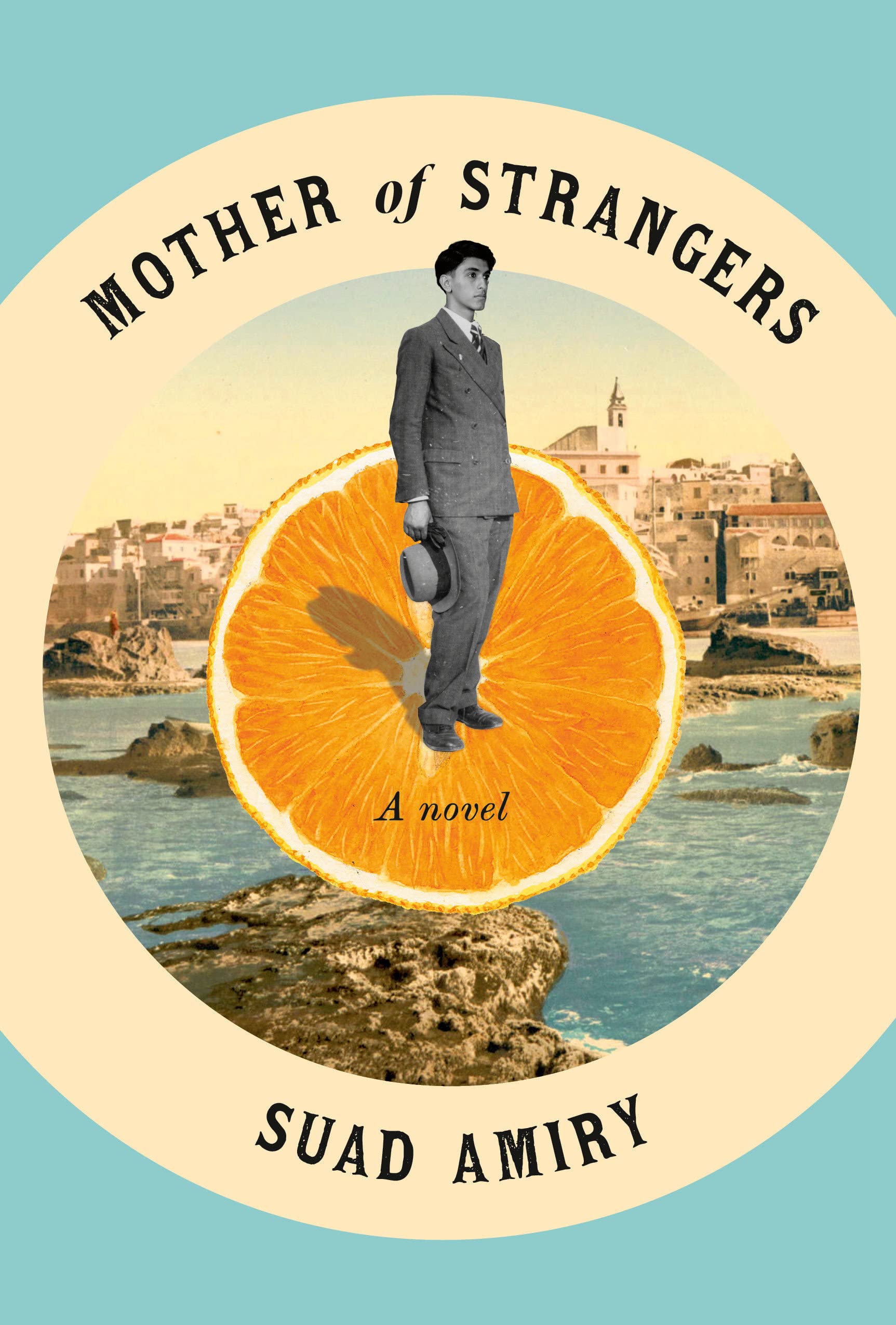
Mother of Strangers by Suad Amiry

Mother of Strangers by Suad Amiry

Amiry’s choice for the title of her novel, Mother of Strangers, is an homage to the city of Jaffa, the city in which most of the story is set. Indeed, while this is a coming-of-age tale revolving around two young muslims, a 13 year old girl named Shams and a 15 year old boy named Subhi, Mother of Strangers is more accurately a memoir of a lost place and people: Jaffa in the 1940s, before the end of the British Mandate and the beginning of the Arab-Israeli war. This novel is a literary memorial to the Palestine and the ethnically-, religiously-mixed community that lived there. (It should be noted that Amiry based the story on real events. There was a real Shams and a real Subhi.)

Through Subhi’s and Sham’s young eyes, the reader is treated to a view of Palestine before it became haunted by politics of religion, zionism, and war, what it it is today. Both of them were on the edge of a modern moment; in some ways eager to tear away from the traditionalism of life as it was lived by their forebears and in other ways, seeking approval and belonging in that world — only to find themselves wrenched away from it violently by invasion and war. This is a serious, heart breaking novel, not to be undertaken lightly. Grief and loss thread through it from its start, beginning with children wanting to assert to their own identities and desires, the shedding of childhood and ending with the actual, fatal loss of children, mothers, family, belongings, and legacies. This is a serious, important novel because it highlights this often-hidden aspect of Palestinian trauma. This novel humanizes a history and experience that is often sterilized in the news.

I couldn’t possibly give this novel any more stars. It is well worth the read and the tears.

The Black Cell by Wendy Shaia

The Black Cell by Wendy Shaia

This is the dystopian novel of our time. Set in the near future, 2024, in Baltimore, MD, The Black Cell is a novel about blackness, racism, and revolution. The novel centers on the development of a Black Resistance Movement in Baltimore and revolves around the experiences of four Black protagonists, who become involved in some way in this movement. Tasia is a young black single mother, a university student, a young woman trying to understand how to live her life and raise her daughter. Lisa is a young married woman, a wife and mother to two black children, a woman who has internalized the racism of the world, turned that knife inward. She comes to terms with how whitewashed her life has become. Donovan is her male/masculine counterpart, a young, professionally successful black man who has a penchant for white women and who is ashamed of his black culture and heritage. He too comes to a confrontation with himself. Corey is a young black teenager, Tasia’s counterpart, trying to figure out his place in the world and what he can do to make it better.

This novel is ideal for young adult readers, university and high school students, anyone who is at the beginning of their journey towards decolonization, regardless of their own personal heritage and background.

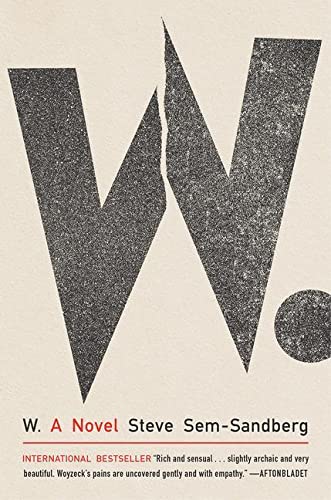
W. by Steve Sem-Sandberg

W. by Steve Sem-Sandberg

It should first be noted that W. is based on a play written by Georg Büchner in 1836, and that drama was itself based on real events: Johann Christian Woyzeck, a soldier from Leipzig, murdered Christiane Woost in 1821. Steve Sem-Sandberg’s novel W. is the fictionalized backstory to the play and the real events.

W. is a challenging novel well worth the time and effort. If you enjoy Dostoevsky’s Crime and Punishment, you’ll love W. They both possess the same lurid darkness, the same interiority of character, the same palpable sense of hopelessness in an insane world. That said, I find W. a much more compelling and enjoyable reading than C&P.

The plots are similar in that Woyzeck, the main character in W. is a young man who murders a young woman, the Widow Woost. In this novel, Woyzeck is apprehended immediately and is imprisoned while being assessed for his ability to stand trial. While in detention he is asked to reveal the story of his life, his experiences, his family life, etc. This is the bulk of the novel; interspersed between Woyzeck’s accounts are the prison officials’ (priest, lawyer, guards, warden) perspectives on the murder and Woyzeck himself. This is where W. differs and shines: Woyzeck’s life is ordinary, he is an apprentice for a wigmaker, runs through a number of servile jobs, then finds himself recruited into the Swedish army, fighting against Napoleon. His experience is singular, yet also mundane; he is one of millions who were displaced and ruined by war. His madness derives from this horrendous and common experience of war and life, the struggle to come to terms with the disappointments and betrayals, both large and small, in money and love. There is something horrifically relatable about Woyzeck’s slow derangement — it is recognizable in ourselves, even though we live centuries in his future. At the end of this long, cruel spiral Woyzeck kills the Widow Woost. And there the story begins and ends.

W. outshines Crime and Punishment in a number of ways. While Woyzeck meanders in telling the tales of his life, there is a continuity and structure. This leaves the reader in a tantalizing quandary: Is Woyzeck actually mad? If he is, then so too might we also be considered mad? And given what Woyzeck has experienced and witnessed in war it would be a wonder that he did not become mad! The reader inevitable develops a comradeship with Woyzeck; he is too too much of a reflection of ourselves to dismiss him. Second, Woyzeck lives in a kind of mental vacuum, but he is a subject of history like the rest of us, so historical events, societal norms, and the actions of those around him are very much part of his story; that is, his insanity may be wholly his, but his path leading into it was walked with many others. They are vivid characters in this novel and they bring Woyzeck’s tale into fuller relief. W. is not just a novel about one man, it is about an entire world and a way of living. The novel captures a society succumbing to a kind of primal existence brought about by war and violence.