The Newlywed’s Window: The 2022 Mukana Press Anthology of African Writing
A very lively, beautifully written collection of twelve short stories by new African writers. These were fresh ideas written with confidence. My favorites were “Gasping for Air”. by Ogechukwu Emmanuel Samuel, “The Newly Wed’s Window” by Husnah Mad-by, “Mareba’s Tavern” by Gladwell Palmba, “A Letter from Ireland” by Victor Ehikhamenor, and “Our Girl Bimpe” by Olakunle Ologunro.
What I loved about these stories was their bold announcement of Africanness and modernity, too often still separated in the non-African view. These were stories celebrating the conflation of both in one, the coexistence of Africanness and global identity in one. Some of these stories revolved unabashedly around modern African womanhood and sexuality, celebrating sexuality with pride.
I appreciated that these were not stories of postcolonial angst or stories posing tradition against modernity. Perhaps I read too much postcolonial literature; these were refreshing to me because of the absence of those existential themes. They addressed existential themes we are all familiar with (how to live in a technology-driven world, how to be a modern woman, how to be a modern parent, transition from childhood into adulthood, among others), but from an African perspective, an African experience.
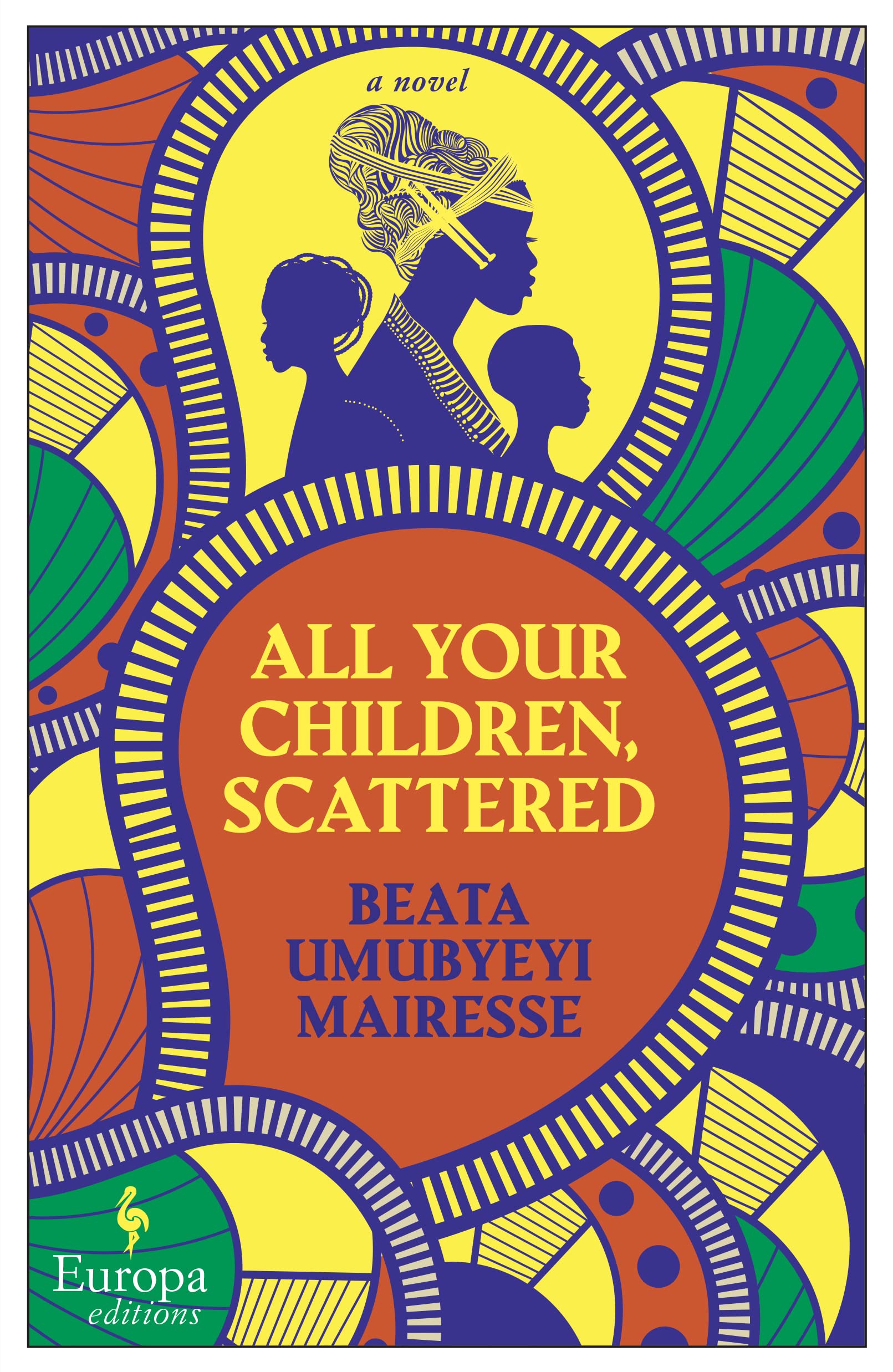
All My Children, Scattered by Beata Umubyeyi Mairesse
A new release coming soon! (August 2022) I got to read an advanced reader copy from the publisher and I cannot wait for this book to come out!
All My Children, Scattered traces the movements of three generations of a Franco-Rwandan family, as they each, in their own painful ways, unravel the complex emotions and tensions inflicted on them by Rwanda’s colonial history and, more recently, the Rwandan Genocide. Immaculata, the mother, struggles to find a place for herself and her children in a world still ruled by colonial culture. She finds herself equally trapped and freed by her own internalized ideas about race and color. She passes on these questions of identity to her daughter, Blanche, a mixed race, half white, half black woman, who finds herself also struggling with what it means to be Rwandan within and outside of Rwanda, in Europe. Blanche is a survivor of the genocide and turmoil of the 1990s; she wrangles with her luck, her fate, her role in it as a Rwandan expatriate. Stokely is Blanche’s son, another generation removed from the colonial encounter and one generation removed from the Genocide, but he is no less subject to this history.
There are other characters woven into their story: Bosco, Immaculata’s other child, her son, who also survives the genocide by fighting through it. He was a soldier, a human being caught up in the gritty reality of the genocide. Then there is Blanche’s husband, a West Indian man, facing similar questions of postcolonial identity. He understands and yet, also, cannot understand Blanche’s Rwandan identity.
What I love most about All My Children, Scattered is its historicity and the native point of view it privileges, centers, revolves around. Mairesse immerses the reader in the Rwandan experience of history. While colonial history is a foundational premise of the novel, it does not fall into that trap of making this about white men and white experience; this is not a novel of the colonizer, this is about Rwandans, the people and their experience.
I deeply appreciated that Mairesse did not delve into the details of colonial events, what happened in what year; the machinations of state politics was a buzz (a loud one at times) in the background. What was most visible was the effect of politics on the ordinary citizen, the family, individuals. This is not a historical fiction that reads like a history lesson – thankfully! — no, this is a novel that focuses on the emotional trauma, the unseen generation damage.
Mairesse’s prose delivers. The language is beautiful and evocative. The voice of each character is clear, unmistakable. Each chapter is narrated by a different character so Mairesse treats the reader to a view of Rwandan history from multiple points. The reader feels the connections across time, the intangible tensions from one generation to the next.
Originally published in 1976, The Easter Parade, justifies its classic status. The story, revolving around gendered concerns, the complications of family and love, imparting a sense of futility and time passing, remains wholly contemporary. Yates’ novel is one that entered on a timelessness human experience: life and living.
That said, for all its timelessness, the novel is grounded in its historical moment. It carries the reader through several decades, letting them be witness to shifts in American culture, especially as it pertains to gendered expectations and the function of love and sex in the lives of educated white women in mid-twentieth century America.
The plot follows the life of two sisters, though it is centrally focused on the younger, Emily Grimes. As children Sarah and Emily Grimes were part of a generation whose parents were divorced; their mother is a single mother, their father is an absent, yet present factor in their lives. The tale follows them through adolescence and then young adulthood, where their paths diverge. Sarah takes the more conventional path of marriage, child-bearing and raising, while Emily pursues academic life, single womanhood, love affairs — marriage too, but also divorce — and a career. The Easter Parade is built on their divergent, yet intertwined lives; Part three and four of the novel take the reader into the interiority of their familial and sibling bond. Despite their differences, the sisters remain, well, sisters.
In a sense, this is a novel about nothing and everything, the intangibility of our lives and the worth of living those lives. I have just finished reading it, feeling like I have traversed the twentieth century, like I have witnessed humanity being played out among other people, been given a privileged view into someone’s life.
A beautiful, character-driven tale of mothering and daughtering; that is, the ways in which we mother our children and the ways in which daughters express and manifest themselves as the offspring their mothers. This is a quiet, assuming novel about the ways in which we express parental and filial love, the unspoken reasons why we come to expect love in particular ways.
The plot follows a touristic vacation for the narrator and her mother in Tokyo, Japan. It begins and ends with this short episode in their lives, but the novel reveals their lifetimes of emotional involvement with one another and draws other family members into these reflections. The reader is given a privileged view of this family’s most private interior relationships.
Au’s choice of a touristic holiday is perfect for the discussion of belonging and not, of generational divide and continuity that fills the narrator’s thoughts. A history of immigration, transnational, and transcultural trauma and identity-building is threaded into the fabric of the novel; the events of the mother-daughter duo’s traipses around the Japanese city and its sights are the perfect backdrop to this commentary.
This is book no one could possibly regret reading. If regret is invoked, it is because one missed its slim presence on a shelf.



 Dr JoAnn LoSavio