Free: Two Years, Six Lives, and the Long Journey Home by Lauren Kessler

Free: Two Years, Six Lives, and the Long Journey Home by Lauren Kessler

I didn’t know what this book was, until I was in it. And then I couldn’t stop reading. By the end, I was heartbroken and frustrated, not only for the individuals who shared their stories of incarceration and attempts at reintegration afterwards, but also for us, the rest of American society, for our lack of understanding, compassion, and knowledge about this very real, tangible human tragedy.

Free is about the failure of the American judicial and prison systems to manifest actual reintegration of paroled and released persons after they’ve served their sentences, and the impotence these individuals must confront as they try to forget their pasts, forge new pathways, and defeat recidivism. Kessler delivers the gravity and causes of recidivism to the reader through the lived experience of a handful of individuals, six men and women of different races and backgrounds. Free is deeply human-focused; Kessler highlights and allows the voices of those who live this trauma and oppression to speak for themselves, making this a very emotionally charged and profound read.

It’s not a comfortable read. Free made me reflect on my own prejudices and biases, enlightened me to facts and processes I was unaware of. I’m grateful for this.

Kessler’s subtext is not subtle. The responsibility of recidivism lies with us, the members of society who have never been incarcerated — those of us who have the power to vote, demand fairer forms of justice, manifest real compassion for those who have been imprisoned (rightly or wrongly). The issue is this: society as a whole continues to punish those who have been incarcerated and released, as if the serving of their sentences were the beginning of the penalty, and not the end of it.

The call to action is this: The sentence once served should be the only punishment. We as a society need more compassionate, more inclusive and supportive systems of reintegration for these formerly incarcerated individuals if we want to reduce rates of recidivism. It is us who need to change, not the convicted. The systems which govern incarceration and reintegration need adjustment at the very least, a complete reform in some areas. And we, voters and citizens who must live alongside the incarcerated and the paroled and the released must speak up and demand these changes.

Free is a powerful book with a powerful and empowering message.

Free was introduced to me through my local library system. It was one of the “Revolutionary Reads” the Fort Vancouver library system hosts annually. The chosen book is usually one that is local in some way to the Pacific Northwest (Free is grounded geographically in my local region). Copies are given away to the public and there is attendant programming in the form of Zoom and in-person events along the lines of interviews with the author and/or subjects, experts on the topic, film screenings, and so on. I absolutely love this program and am so glad it introduced me to this book, to this issue, and helped me gain a deeper and more nuanced understanding of recidivism.

Almost Brown: A Mixed Race Memoir by Charlotte Gill

Almost Brown: A Mixed Race Memoir by Charlotte Gill

As a historian I deeply appreciate Gill’s memoir, and for multiple reasons. Gill’s childhood experiences and those of her parents, captured from her memories and filtered through an adult lens retrospectively, highlights mid-twentieth century tensions of empire and our global journey towards decolonization. Moreover, Gill does it with a sensitivity to the internal, subjective conflict “colonials” often face as they grapple with their identities. The frustration of Self that Gill reveals to the reader, through her parents and her own struggles, is not an artifact of the past, singular to the decades of peak decolonization in the mid-twentieth century; these are still liminal spaces individuals occupy and traverse today.

In that respect, Gill’s memoir not only captures a particular zeitgeist of the 1950s-1980s — decades which saw a mass migration of colonials across the world, decolonization and independence movements coming to fruition, and a general cultural revolution across the world in terms of race, racism, and anti-paternalism — it also makes the reader aware of the continuity of this historical spirit and its legacy as it is lived today.

The success of this memoir is in large part due to Gill’s self awareness and willingness to see her parents (and herself) for the people they are; Gill examines them with an academic eye, as historical subjects, but also as emotional, affective beings whose desires and needs are universal across time and cultures. The result is a very relatable, human memoir, one which draws the reader into the nucleus of Gill’s family as well as the age in which they lived.

Some of Almost Brown‘s success must also be attributed to the fanciful and (for their time) outrageous characters her parents are, for the daring ways they each challenged the norms of their age in terms of race/racism, gender, and transnationality. This is where Gill’s memoir appeals to more than the smallish subset of readers whose interest is in post-colonial subjectivities; for while the memoir hinges on post-coloniality as its primary locus, it is also about the oppressions we inflict upon each other, the intersectionality of our daily lives, and the myriad of ways in which power flows or not even within a family. Gill’s mixed-race family serves as the perfect case study in which brown people and white people — that is, race — can be upended by gendered expectations, or vice versa. Gill’s white mother was submerged under her brown husband, even while he was marginalized by a society that saw him as inferior by dint of his skin color. She, in turn, was snubbed by both her husband and society for daring to be that which society deemed heroic: an independent-minded mother.

In short, Almost Brown is a memoir well worth the reading.

Playing Doctor: Part 3, Chief Resident Tumbling Towards Medical Practice by John Lawrence

Playing Doctor: Part 3, Chief Resident Tumbling Towards Medical Practice by John Lawrence

Lawrence gives us a hilarious memoir, one that rips the bandaid off the mystery of the medical profession (am I punny, or what?) Playing the Doctor Part 3 highlights how human our medical professionals are. Their trials and insecurities are no more tragic or exotic than our own (non-medical professional here). Lawrence’s prose and smooth sense of phrase is a large part of its success; brevity and levity are promised and delivered.

I won this book on Goodreads giveaways, which is why I don’t have Part 1 and 2; but, I did consider buying Parts 1 and 2 before reading this one. I didn’t, but Lawrence’s humor and wit made me think about it. As a reader of only one part of this series, I can say that readers will find it possible to dip into it without needing the previous parts; Part three stood on its own. That said, there are references to events from Parts 1 and 2, which may have added to the joy of reading this memoir.

The ability of Part 3 to function well as a standalone is, unfortunately, also one of the books detractions. There is no overarching single narrative or story arc, but rather a series of chapters which could be discrete works on their own (except for the references to past events). The result is that Playing Doctor reads more like the Diary of a Doctor, rather than as a novel. Readers might find they could put down the book and not return to it, as there’s no inherent incentive to “know what happens next.” This is, sadly, what happened with my reading of it; I think I finally completed it reading it on the third attempt, with several months lapse in between.

Overall, however, it is an entertaining read, one which is likely to make you smile and grimace simultaneously.

The Complete Maus (Maus I and II) by Art Spiegelman

The Complete Maus by Art Spiegelman

What more could I say about this classic work of the Shoah? I’ll start with when and how I obtained my copy. I won it as part of a Goodreads giveaway in 2022, when Maus was hitting its school/library book ban (to date) and the book was featured in all sorts of news media, for better or worse, and copies of it were whizzing off online and physical booksellers’ shelves (a good thing!)

I was thrilled to get a copy as I had never read it, though of course, I know and teach the Holocaust in my classroom.

Reading it humbled me, as all novels and non-fiction of the Holocaust does and should, but the visual aspect of the graphic novel did it in ways I had not expected. As one can guess from its iconic and unforgettable cover, Maus is populated with mice, cats, and dogs rather than humans. The dehumanization of the Jewish people by the Nazi regime was no less poignant for this swap. Perhaps it is even more powerful; animals are an obvious metaphor: the hunters and the hunted, the obedient and the illicit.

Aside from the personal, intimate view into the Holocaust experience, I deeply appreciated Spiegelman’s portrayal of adjustment to emigration, and the struggle of the following generation to understand the depth and pain of those who had suffered through it. What happens afterward is equally worthy of attention as the event(s) of the Holocaust itself; really, these are not discrete events. These scenes made it clear the Holocaust is not a finished incident, but a deep intergenerational open wound spanning decades.

Heartland: A Memoir of Working Hard and Being Broke in the Richest Country on Earth by Sarah Smarsh

Heartland: A Memoir of Working Hard and Being Broke in the Richest Country on Earth by Sarah Smarsh

Heartland is a memoir at the intersection of Educated by Tara Westover and Nickel and Dimed by Barbara Ehrenreich. For readers who actively seek out trying on someone else’s shoes, Smarsh’s memoir will amply deliver.

Heartland explores the experiences of four generations of women and men in a working-class class family in rural Kansas, delving into their experiences of love, marriage, work, and education. The book is sectioned into thematic chapters, rather than being strictly chronological, covering her family’s peripatetic travels across the state for work, romance, love — and all too often, sanctuary and safety. Readers should know the book discusses abuse and neglect in a multitude of ways; violence is woven in the fabric of these women’s lives, both a symptom and cause of their poverty.

The book includes a massive cast of individuals from both sides of Smarsh’s family. [A family tree map would have been a helpful addition, but this is a minor detraction.] Through this account and interpretation of her family’s history, Smarsh makes an argument for greater attention to the social, cultural, and gendered reasons for poverty in America. She challenges the popular and misguided myth of meritocracy, especially highlighting the multiple ways spousal and domestic violence play an enormous role in this societal problem.

Smarsh’s delivery of this message lacks — thankfully — pedantism or blame, focusing instead on the interconnected web of cultural expectations and histories which have resulted in these outcomes. Her writing also is smooth, journalistic, and easily accessible; in fact, evoking an emotional response from this reader on more than one occasion.

Heartland is a fantastic non-fiction read on poverty, especially among the white working class, in middle America.

Trail of the Lost: The Relentless Search to Bring Home the Missing Hikers of the Pacific Crest Trail by Andrea Langford

Trail of the Lost:
The Relentless Search to Bring Home the Missing Hikers of the Pacific Crest Trail by Andrea Langford

This work of true crime utterly possessed me; I am torn between wanting my hiking friends to read it, because I don’t want any of these awful things to happen to them, or not wanting them to read it, because it will terrify them into never venturing into the wilds again. (I am probably going to buy a few copies of this book this Christmas as gifts for those same friends!) Anyone who knows someone who hikes or camps or goes “off trail” for any reason should have an eye out for this book.

The depth of Lankford’s research, the number of interviews and observations, and the countless hours and days and weeks spent in Search and Rescue to make this book happen is staggering; that alone is a draw for anyone interested in this kind of crime non-fiction. Lankford themself is well-positioned to write on the subject. As a former ranger involved in several S&R investigations, Lankford is more than a hiker. Here, Lankford takes on the role of investigative journalist, detective, social worker, and friend.

The book focuses on the disappearances of three men (primarily) from the Pacific Crest Trail, which runs along the West Coast, from California up to and through Washington State. Kris Fowler, David O’Sullivan, and Chris Sylvia vanished from the trail in mysterious circumstances and have yet to be found, alive or otherwise.

But, of course, the book is about more than them and their individual cases; Trail of the Lost is also about their families and loved ones, the grief and pain of their loss, the process and protocols of police and other investigations into vanishings, and — perhaps this is where the book truly shines and connects with readers on a wholly different level — the culture of the trail and of extreme hiking. By giving readers a view into the the lure of these activities and the perils they entail, Trail illuminates certain flaws in our societal ideals and in the normative flows of life around work-family-friendship-community. Lankford highlights what might be missing in our urban/suburban spaces that trails like this offer. Chapters that seemingly veer off onto tangential subjects, like the Yellow Deli Group, or suspicious and creepy “trail trolls” in fact, draw attention to deeply inclusive, welcoming, altruistic, and connected the culture of the PCT and hiking is (or can be).

The irony is, of course, that individuals take on these hikes individually; they seek isolation — and yet, the culture of the trail highlights the deep dependence we, as humans, have on each other, and our need for social contact, a sense of belonging with others, a sense of community.

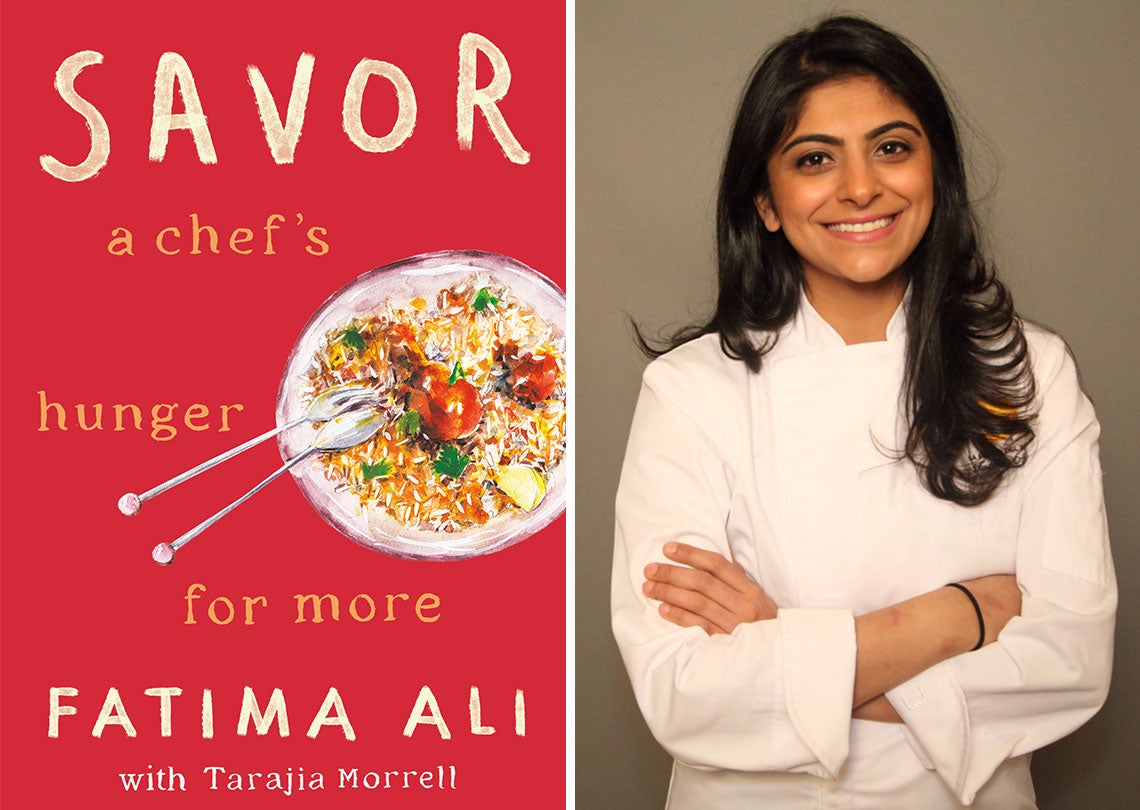
Savor: A Chef’s Hunger for More: A Memoir by Fatima Ali with Tarajia Morrell

Savor: A Chef’s Hunger for More: A Memoir by Fatima Ali with Tarajia Morrell

It’s extremely difficult to write a review for this memoir. Aside from the tragedy of its author and subject dying from cancer, the content itself is emotionally fraught. But perhaps, for these same reasons, a review should be written as this would be an acknowledgement of Ali’s legacy.

For those who are not familiar with the author and subject, Fatima Ali was a chef and a celebrity one, competing on Top Chef. She sadly and tragically passed away in 2019, before the age of 30. This is her memoir, written with Taraji Morrell who completed it after Ali’s death. The memoir covers the breadth of Ali’s life, from childhood to the very end, with a substantial focus on her career as a chef. The memoir also incorporates Ali’s mother’s perspective, each chapter bounces between Ali and her mother, offering the reader a view into more than Ali’s life alone.

The inclusion of Farezeh Durrani, Ali’s mother and the complex and emotional story of mother and daughter, as Pakistani Muslim women, makes this memoir especially poignant and moving. Through Durrani’s eyes we experience not only the loss of a child and the grief of that event, but also the power and strength of being a woman and a woman of color in a deeply patriarchal and racist world. The intergenerational threads make this memoir, more than a memoir, more than the story of a single person. Savor captures modern experiences of divorce, immigration, transcultural identity, race and racism, gendered expectations and sexism, career and ambition. Ali leaves a legacy with her life and this memoir.

For readers who seek inspiration, emotional connections with their books, Savor will exceed your expectations.

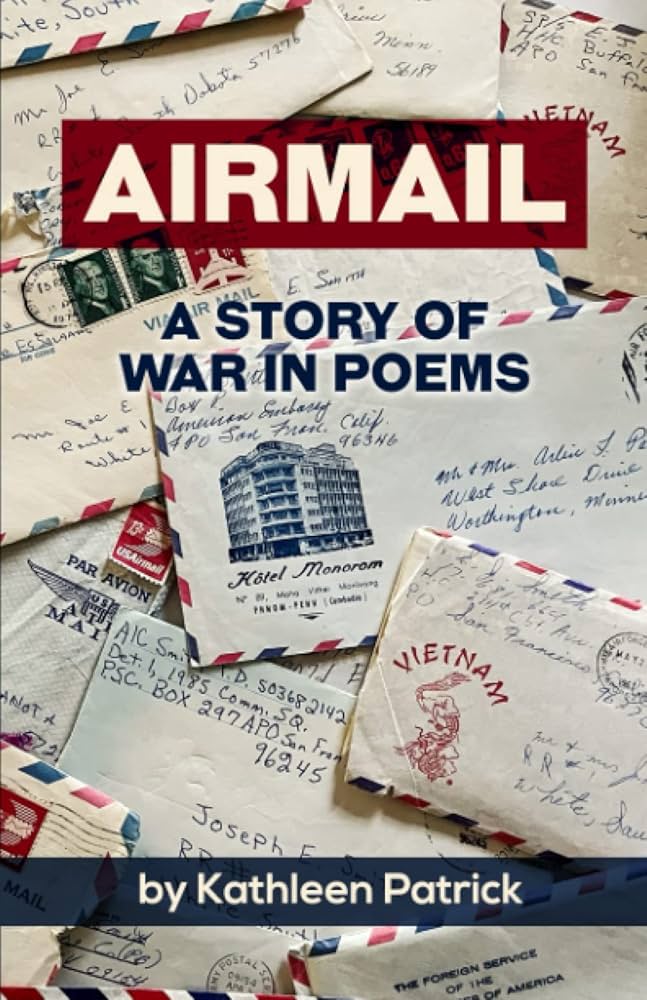
Airmail: A Story of War in Poems by Kathleen Patrick

Airmail: A Story of War in Poems by Kathleen Patrick

This is a collection of poems about the experience of American soldiers off to war in Vietnam. It is about the family that they left behind in the United States. It is about the loss and gains of war, patriotism, the inevitable criss-crossing of cultures and people across oceans.

It has been a long time since I have read poetry, and especially since I have reviewed any. Poetry is harder, so much harder to assess. Or rather, its assessment — if that is the right word — is so much more subjective (in one sense) or so much more technical (in another sense).

I’ll start with this: The subject matter of this collection of poems makes an impression on me in ways particular to my personal heritage and profession. I am from Southeast Asia, though not from Vietnam or Cambodia or Laos, the places where the Vietnam War (or the American War, as it is also called in Southeast Asia) took place. I am also a historian of the twentieth century, of Southeast Asian history, of decolonization, and transnational connections between Southeast Asia, the United Kingdom, and the United States. The way I have read these poems — and the way in which I review them — is inevitably filtered through these twin lenses.

These poems are powerful, both as evidence of historical perspectives and subjectively, as pathways of emotion. These poems open up avenues for understanding and seeing the experience of war, beyond the political, beyond the combat, beyond the filter of news.

I especially enjoyed “Voices, A Collage” which spans years and tells us a soldier’s letters home. This is poem about regrets, but it is also about how a family remains connected in spite of the distance, in spite of the pain of war.

“Telegram”, a much shorter poem, was especially poignant; its truncated form permits the reader to come to their own organic feelings and expectations. There is an implication of regret or guilt; an odd thing to say, but I really enjoyed that about “Telegram.”

“Robert M. in the Doorway” struck me as being about the PTSD of war, and for that reason, it was also a favorite. Again, a short poem, but powerful and thought-provoking. “Picking Rock” and “Don’t Forget the Women” brought to light the consequences of war that are often left unsaid; the soldier’s experience is not the only one. These poems made that clear, and sadly so.

What can I say about these poems? They made me feel, and that is — to me — the only thing a poem should aspire to.

Fatherland: A Memoir of War, Conscience, and Family Secrets by Burkhard Bilger

Fatherland: A Memoir of War, Conscience, and Family Secrets
by Burkhard Bilger

Fatherland: A Memoir is a must-read for readers who gravitate to histories of the European theater of WWII. The book is a case study, illuminating aspects of the human side of these histories which are often left in the dark: here, what happened to those millions of Germans who were caught up in the Nazi machine, willingly or otherwise? Significant numbers of the German citizenry did not support the Nazi party, but as the regime gained power Germans were pressured into adopting or participating in its politics in both minor and significant ways. Thousands were caught between survival and their beliefs, others benefited from the regime’s policies, witnessing no ill-effects as so many millions of others did.

War and ideological divides produce so much more intimate conflicts and consequences than politics would suggest. Fatherland makes this complexity abundantly clear, and more importantly, without being apologetic or sympathetic to Nazism. Indeed, it highlights the different between Nazi party members, Germans, and the Nazi state, forcing the reader to see beyond the inaccurate and unjustified conflation of these constituents with one another.

Bilger dives into their own family history to produce a prosopography, one which explores the complicated consequences of surviving the Nazi regime before, during, and after the war, especially for those who were forced or otherwise minor participants in state operations. Their family derives from a region of Europe straddling the often fluctuating boundary between France and Germany, Alsace and the region around the Black Forest. This geography has — and continues — to produce a culturally and politically fluid community. Bilger also looks beyond their own family, including the personal war-time histories of other German and French citizens in their proximity: for example, mayors of the myriad of French-German towns who were caught in the Nazi and French crossfire, and women who were forced to interact (in platonic and other ways) with German soldiers or Nazi officials.

During the interwar and WWII years, citizens found themselves dispossessed of either their French or German identities, subject to changes in language, dress, and culture as politics blew one way or the other. After the war Germans and French alike found themselves needed to pick up the pieces of their lives, and grapple with former enemies living in their midst. Questions of culpability rent communities and families apart in the aftermath of WWII as war crimes were being prosecuted; to what degree was Life and the Need to Survive responsible for the choices that people made? To what degree was circumvention of Nazi policies a resistance against Nazism? Did local officials and citizens pander to Nazis out of genuine belief in the regime or were their actions made under duress? Did neutrality absolve people from being responsible for war crimes that occurred?

Indeed, the years following the end of war were some of the hardest, perhaps even harder than during the war for some Germans and French. This aspect of Fatherland is, to this reader, its most poignant and significant contribution; war does not begin with a declaration, nor does it end with a surrender and a treaty. War begins so much earlier, the combat and physical destruction being only its peak, and it lingers on for years, even decades, afterward. Bilger reveals that in the case of Germans, the effects of WWII remain today; it is a scar stretched across multiple generations.

Unearthing: A Story of Tangled Love and Family Secrets by Kyo Maclear

Unearthing: A Story of Tangled Love and Family Secrets by Kyo Maclear

This is a literary memoir grafted upon botanical themes of growth, seeding, seasons of harvest. Kyo begins with a desire to understand her complicated parents’ history and her mixed race identity. (Kyo is part Japanese, part white, and wholly British.) Kyo struggles with a reticent parent and the death of another.

As a result of a DNA test and through a careful pruning away of her parents’ past and the debris of their romance, Kyo uncovers an even more complicated undergrowth of family and connections. Their memoir throws into question the meanings of belonging, the bonds of love and how far those far are biological.

In some chapters Kyo refers to a woman whom her mother was friends with — perhaps Yoko Ono, though Kyo does not state this outright — and with whom they shared the connection of a child. The focal point here is not celebrity, but the degree to which an individual is a mother or a child to another.

The memoir also addresses the question of normativity and the ways in which women — especially Asian women — are captured and categorized in a Euro-White-centric society.

Maclear writes like a poet. The memoir reads like a poem, a long and winding one. It is lyrical in its delivery as well as in its perspective; the vines of connection are sinuous and undulating and tangled.