The White Hare: A Novel by Jane Johnson

The White Hare: A Novel by Jane Johnson

It would be hard not to fall in love with this magic-tinged historical fiction. I loved this book so much I stayed up several nights to read it, refusing to bookmark it until I absolutely could not hold my eyes open any longer. The loss of sleep was worth it!

The White Hare is set in post-WWII England. The narrator, Mila, her daughter Janeska (Janey), and her mother Magdalena have left London and bought a large house in Cornwall, which Magda and Mila hope to refurbish and turn into a hotel. Mila also hopes the change of location will allow her to move on from a toxic relationship. Magda too has lost her husband of many years to the War and is seeking to rebuild a life for herself in a new place. The two women are Polish evacuees/refugees of the war; England is their home now.

As the story unfolds it becomes clear that it will not be so easy to shed the past for the three of them; it comes back to haunt them in real and imagined ways. The house and land too that they see as their revival brings its own hauntings and histories into the present. This magic interacts with Mila, Janey, and Magda in positive and less-pleasant ways; it becomes clear there is something afoot at the house at White Cove.

The White Hare is not only a tale of magic and myth; what drew me back to its pages night after night was the deep, terrible past between Mila and Magda, the angry relationship between Janey and her grandmother, and the wedge and glue that comes into their lives, causing friction and connection all at the same time, in the form of another character, Jack. In many ways, this is a novel of intergenerational histories; the ways in which understandings of the self and our place in the world are inherited. That said, Johnson does not suggest that the past dictates the characters’ present or future; there is hope for change.

And there is plenty of change in this story. (The plot revolves around the revival of a place and its new denizens after all.) The novel is not a vehicle to retell history; it is much more subjective than that. This is a novel about how a group of people who have individually suffered ordinary and terrible events struggle to reconcile their pasts with their futures. Every one of the characters’ actions and choices are imbued with a history, sometimes a good one, often a tragic one. As the novel progresses, the reader witnesses how the characters’ histories and their knowledge of another’s helps them shed those ghostly pasts and create a new future for themselves and each other.

The White Hare immerses the reader in a poignant lesson of how the past and present are ever intertwined. Lingering in the latent, vibrating background is the White Hare herself, a spirit that inhabits the land and the haunted history that comes alive in her presence. The novel suggests that there is a world beyond our own mundane one, in which we are embedded. In The White Hare this is the magical, historical world, a state of being in which the past and present are not constrained by the physics of time.

What was also very satisfying for me was the way in which the novel resolves. Not only do the characters come to their own organic conclusions, but history also is validated and finds a place of belonging in the present in a very real, tangible way. It emphasizes Johnson’s narrative: that the past is never as far away as it might seem, it is really buried — sometimes literally — in our contemporary moment. For readers who love long, nuanced resolutions and endings, The White Hare delivers in abundance; nothing is left hanging.

This is a novel that takes the reader on a rollercoaster of emotions, from sadness to anger to pity to redemptive hope. It is inspiring. It is queasy in some parts. Reader, be warned, there are mentions of abuse, gendered and sexual violence, violence and murder. Ultimately, for me, this was an inspiring tale of vindication and hope.
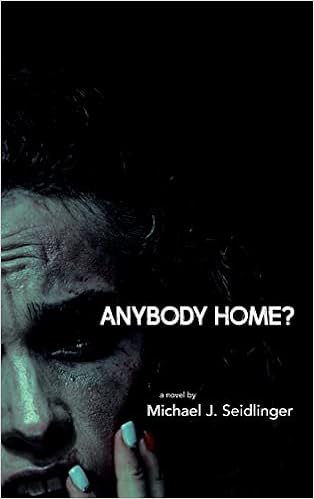
Anybody Home? A Novel by Michael J. Seidlinger

Anybody Home? A Novel
by Michael J. Seidlinger

This novel is creepy AF. I really hope none of the home invaders in this story exist, but that’s the thing that makes this so terrifying: they probably do. Seidlinger’s Anybody Home? has no named narrator, no named characters at all, no named locale, and no loci in time; the events in this slim, punchy novel could happen anywhere and to anyone. That’s what makes it a successful horror story. Seidlinger lets the reader’s imagination do the work — some of the work — for him.

Some. The heavy lifting is done by Seidlinger. The prose is sparse, but accurate like a puncture to the jugular. A hanging question, a sentence left unfinished — the words in this novel function like a silent slice of a knife through air; they draw a spurt or an arc of blood, as desired. Seidlinger delivers enough to elicit pain, but not enough to kill; reader, you’ll live to read on. You’ll be compelled to read on to deliver yourself from the suspense.

Anybody Home? is about a home invasion, a carefully planned crime and its implementation. The story is told from the interior perspective of the mastermind of this crime.

Despite the facelessness of the narrator, the protagonist in this tale is not a mystery to the reader. This is, I think, part of Seidlinger’s brilliance. The reader is treated to the full landscape of insanity in the narrator’s head; what you’re not sure of is who they are talking to and what the relationship is between the narrator and the others of their kind. This unreliable narrator adds to the sensation of dis-ease; the further the reader gets into the book and into the narrator’s head, the more infectious the madness becomes. Things start to make sense. You can’t help but respect the madness a bit. In fact, it does not feel quite so mad. There’s a logic — even a sense of justice or nobility — to the plan the narrator has in mind. Almost.

Reader, you might begin to wonder if the madman is the hero here. But that feels squeamish; you can’t quite reconcile the deontological unfairness of this cruel act with some kind of enlightenment. You can’t quite call the ending “happy”, but you might be tempted to ponder on it. You might creep yourself out a bit when you realize your own moral compass may not point true north… Maybe.

I am adding this to my Halloween Horror reads for 2022. It warrants a place of pride on my list. For those of you following my reviews, I’m starting my Halloween Horror reading early this year (because why not?).

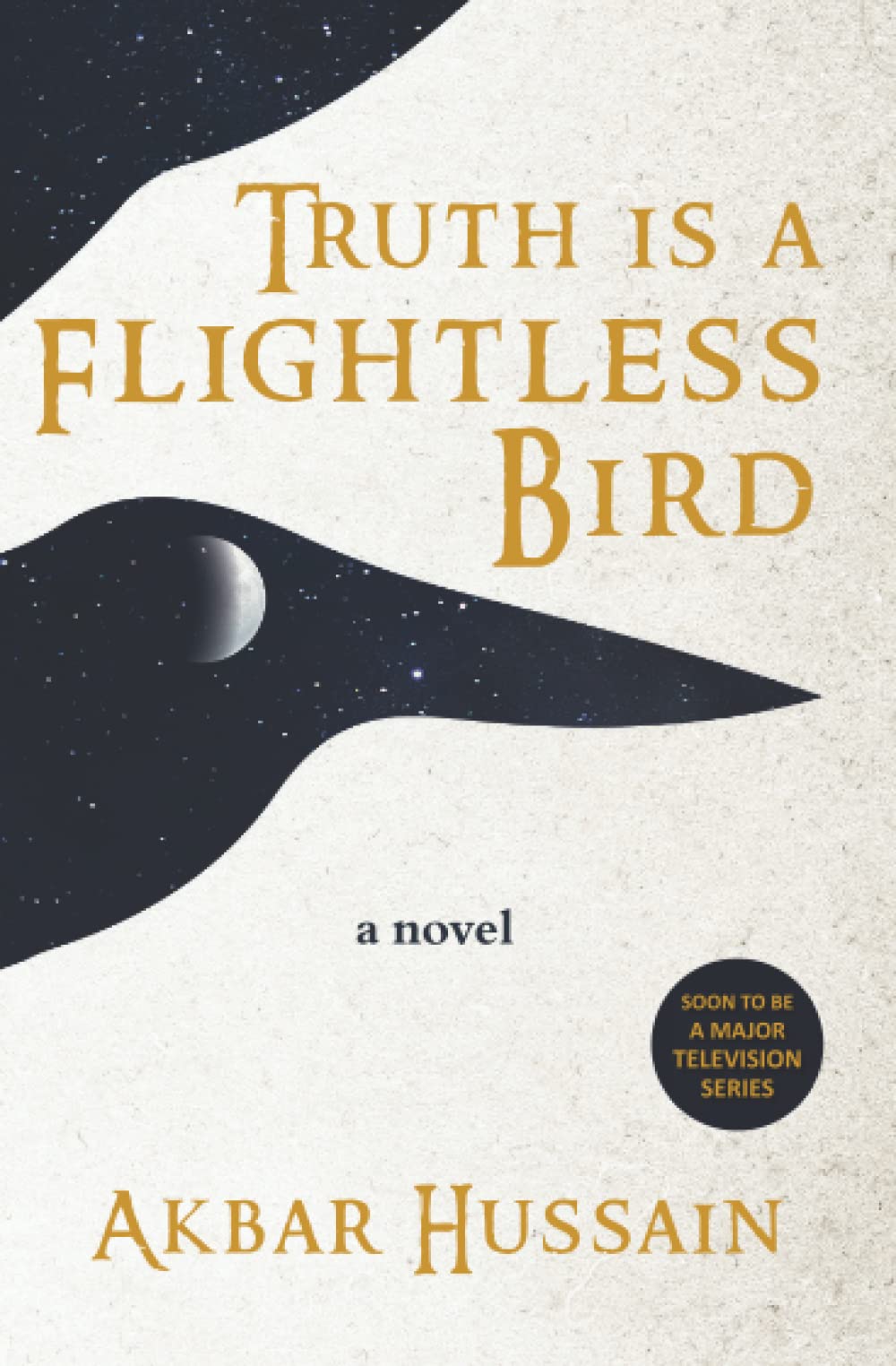
Truth is a Flightless Bird: A Novel by Akbar Hussain

Truth is a Flightless Bird: A Novel by Akbar Hussain

Thrillers are not usually my jam, but after reading Truth is a Flightless Bird I wonder if they should be! This novel was a breathless rush from beginning to end. I can see how this would make a fantastic television series and I am looking forward to seeing the unravelling around Duncan, Ciru, and Nice on the screen. I even want to see Toogood — which is a commendation to Hussain’s skill at writing terrific flawed villains.

The novel is explosive from the get-go. Nice is a drug mule flying from Mogadishu (Somalia) to Nairobi (Kenya) and Duncan, her friend and a pastor, is unwittingly dragged into the mess that she has made of this illicit mission. The story revolves around Duncan’s nightmare as drug dealers, corrupt officials, petty thieves, and others attempt to take advantage of Nice and the dangerous situation which naturally results from ingesting and walking around with drugs in your body. Ciru is one of those individuals who attempts to use Nice and the drugs to further her own agenda. She is a witch doctor, a con-woman, a mother who has lost her wayward child due to the machinations of others further up in the drug-smuggling world. Toogood is a Somalian gangster, also trapped in this convoluted drug-criminal world trying to make amends for a past he had little control over. Then there is Edmund, a young man deported from the United States, and Hinga, a corrupt police officer, and a crew of other characters who each come into the tale with their own ambitions.

As a thriller, there isn’t much interiority to these characters, but the reader will discover that no one is who they seem to be on the surface. The truth matters very little in this underbelly world; what matters is using what you have to get what you need or what you want. I don’t usually try to read too much into thrillers; but, it is here — in this discussion of the utility of truth — that Hussain’s title has to give the reader pause to reflect. There is something being said here about the futility of struggling against tides that are out of our control. Truth is one of those obstacles, or at least, the idea that there is a single Truth, capital T. All the characters of this novel, Duncan, Nice, Ciru, and Toogood, have found themselves in situations less than ideal, despite their best efforts. The truth, their truth, does not matter to the forces and people who hold the reins of their lives. It should not even matter to themselves; to survive Nairobi they’ve got to let go of the idea that there is only one truth, one version of events, one version of a person. They have to let go of an idea of themselves that either doesn’t really exist or will drag them down. In a way, their blind pursuit of truth stifles them, prevents them from taking flight — being free.

The novel also makes a subtle comment on the corruptibility of the human soul — and the possibility of redemption. As events unfold, it becomes clear that the characters are more than what they appear. They are flawed, corrupted, but that doesn’t mean they are wholly bad people. The bad decisions they’ve made in their lives should not define them, but inevitably do. The novel is about their attempts to right their wrongs. Some of them succeed, some of them fail — and spectacularly. Entwined in a drug-smuggling mess the characters find that one error leads to another one, deeper and darker and more dangerous than the last.

Plot and characters aside, Truth is a Flightless Bird is a fantastic novel of place. It gives the reader a view into a world most of us will never get to see or experience in person: the seedy underworld of Nairobi and Mogadishu. I don’t doubt these worlds really exist. Every city in the world has its unsavory parts, its criminal societies, and there are good people everywhere who are drowned in it. People like Nice and Duncan and Ciru. Even Hinga and Toogood. The interactions of the characters, the crimes committed, and Hussain’s prose take the reader there, immerse them in it for a brief moment.

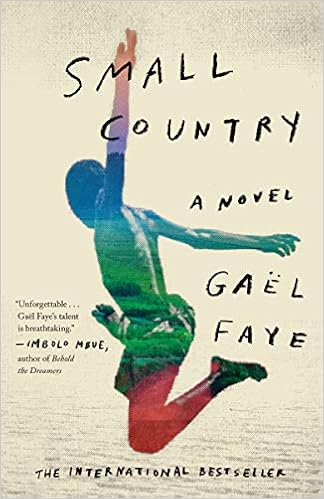
Small Country: A Novel by Gaël Faye

Small Country: A Novel by Gaël Faye

I have been keen to read this book for some time. Small Country was published in 2016 in France and in French, and translated into English by Sarah Ardizzone in 2018. I saw it on the Book of the Month website and it immediately caught my eye. It’s not often that African literature — especially a novel focused on something as horrific as the Rwandan Genocide and the Burundian Civil War, both connected in their origins of ethnic conflict between the Hutu and Tutsi — finds a way into mainstream, popular book culture.

It was worth the wait. Small Country delivers a powerful, immersive, historical experience. I felt as if I were there, transported back to the early 1990s, growing up with Gaby, a silent witness to the terror and happiness of his childhood. We are not so far apart in age that his childhood feels foreign to me, and there is a common experience in living in former colonies, French or British, that pervades the postcolonial world. Faye’s prose helped a lot; I could smell the fruity air of tropical Burundi, sense the light dusting of brownish-red earth on my skin as Gaby and his crew ran down the roads of their neighbourhood, the scorching heat of the sun, a trickle of sweat run down my neck.

But of course, Gaby’s path and my own diverge wildly on the occasion of war. Faye’s portrayal of that period of time and conflict was palpable. By that point in the novel, the characters felt like friends: ordinary and familiar like those who populate our own worlds. They were likeable and hateful, annoying and lovable, flawed and perfectly so — and then they were thrown, involuntarily, into an unimaginable violence. Much like Gaby and his family and friends, the war approached slowly, then arrived suddenly. The effect is jarring — purposefully — on the reader. The events of the novel force the reader to wonder, “What if this were me? What would I do?”

The story follows the chronological path of Gaby’s life, a mixed-race boy of French and Rwandan parentage, growing up in Burundi. It spans his early life from about age four or five to the time of the Genocide, when he is a teenager and evacuated to France. The novel is one that revolves around the nuances of race and interracial relationships, the push and pull that is inherent in transcultural lives, and the desire for a sense of place when one is trapped in a Venn diagram of multiple belongings. Gaby’s mother is one of these out-of-place women, French by marriage and in part by design, but also Rwandan and not-Rwandan, Burundian by default and yet rejected by Burundians on account of her Rwandan origins. Gaby’s father also straddles multiple worlds, first as a colonial settler in a time when such settlements can no longer exist as they were; he is out-of-time, rather than out-of-place. Second, in the matter of class, Gaby’s father possesses status, but only on the African continent, not in France. Gaby, the protagonist of the novel, is also caught between worlds on account of his mixed-race, his socio-economic class as the son of a middle-lower-upper-class businessman, and because of his nationality being a French passport-holding Burundian. The characters exist in a kind of suspension. This uncertainty is, on the one hand, brought on by the war, but it existed before as well, as people in this community reconcile their ethnic history or their settler status with the new postcolonial order of things.

Small Country is about the loss of one place of belonging when another one exists. It is about loss of the things (including people and practices and languages) that bind us to one another and to ourselves. It is about how we individually must grapple with that loss, how we deal with it or how it deals with us. Every character in this novel loses something or someone (a spouse, a child, a family member, or themselves), gains something (freedom, independence, clarity of self, madness, grief), and plods onwards in life because there is no option to do otherwise. The reader cannot help but recognize their suffering and their experience.

Small Country is about refugees, both the kind we see in the news and the kind we do not see, those who occupy our own worlds and are, in a sense, “hidden in plain sight.” Faye presents to the reader a reflection of themselves, turning the refugee of the news into an all-too-familiar face, our own. Perhaps as we encounter refugees in our lives, those of the news-kind as well as others, we might find common ground with them on the basis of this shared humanity.

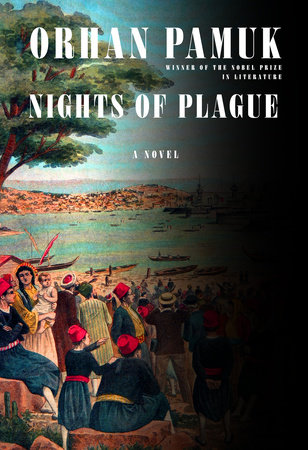
Nights of Plague by Orhan Pamuk

Nights of Plague by Orhan Pamuk

Pamuk’s latest translation from Turkish into English, Nights of Plague (coming out October 4th, 2022) is an epic both historical and contemporary. I need not remind anyone reading this that we are still, as a global community, navigating the Covid-19 pandemic (and monkey pox is making rounds again as well!) The timing must be viewed as deliberate; Pamuk’s commentary embedded within this novel can only be seen as prescient or proof of an uncanny insight into the human psyche as it relates to existential threat.

In short, Nights of Plague is epic.

The stories that unfolds within its pages are reminiscent of epic prose as well. Pamuk’s novel is spun around a royal Ottoman princess, Pakize and her husband, Prince Consort and medical doctor, Nuri; however, the tale is more accurately about the unravelling of a community and its denizens as they face possible annihilation and suffering from a breakout of plague. The locale of this event is a fictitious island, Mingheria, an outpost of the Ottoman empire that reflects the empire as a whole: multicultural in its constitution with ancient and new settlers of Greek, Muslim, Eastern European, African, Christian, and Colonial European descent; in precarious harmony with the multiple discordant voices, needs, and ambitions of politicians, medical professionals, ordinary citizens, foreign heads of state and their ambassadors, Ottoman royals, and immigrants; and gorgeous and complex in its rich history. Mingheria is a plague-beset limb of an empire popularly described as “the sick man.”

Pamuk’s tale of Mingheria does not confine itself to the accounts of elite royals, though it is ostensibly based on recently unearthed archival records and it is told as a historical monograph, through the eyes and pen of one of Princess Pakize’s descendants. Pamuk regales the reader with stories of its other denizens too: its merchants and common folk. There is the security guard of the local prison and the tale of him and his family as they struggle to survive and live their lives in the wake of plague and death. There are the doctors who work to eradicate the plague, demand quarantines. There is the governor too, all too human in his own ambition and fear.

Nights of Plague is about Mingheria and its people, how their present fears and dilemma(s) are shaped by their history of ethnic division and unity, religious and ideological differences, their universal humanity. They react based on their subjective desires, but are also creatures of their communities, their actions are shaped by the expectations of those around them, their enemies, their allies.

Our unknown narrator writes as a historian might do, providing context where necessary, but imbues the academic narrative with a novelist’s attention to texture, aroma, and the sensation of place. Mingheria is as real as the Ottoman Empire can be to a modern reader: the spicy, heady fragrance of a time and place that no longer exists is palpable.

Nights of Plague is a more gorgeous, more exotic — and historical — reflection of our own contemporary experience with Covid-19. The arguments between medical professionals, politicians, and the citizenry in this novel are all too familiar to anyone who has been watching the news for the past three years. The heated debates, the refusals to quarantine, the seeming indifference of the populace to the threat of death and suffering might make a reader feel queasy. The Lacanian recognition is jarring. But perhaps, for all of us, this is a necessary cognitive event in order to reconcile the past with the present and future. Pamuk delivers that lesson with poetic grace in Nights of Plague.

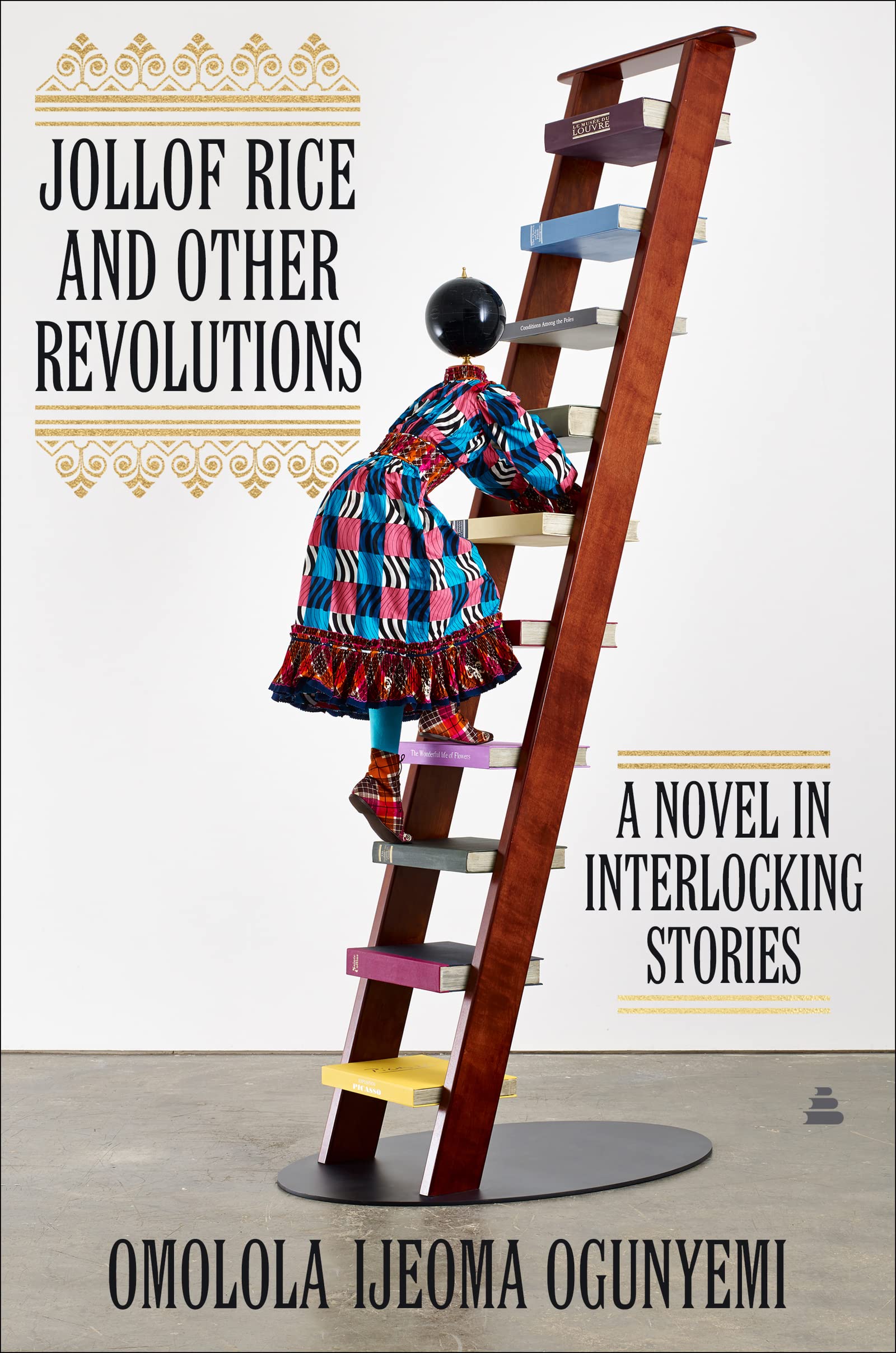
Jollof Rice and Other Revolutions: A Novel in Interlocking Stories by Omolola Ijeoma Ogunyemi

Jollof Rice and Other Revolutions:
A Novel in Interlocking Stories
by Omolola Ijeoma Ogunyemi

Jollof rice is the stuff my dreams are made of. The whiff of tomato, chili, white-, and black pepper, piquant and nose-tickling, the aroma of ginger and garlic and onion. Jollof is West African, but the recipe and desire for it is universal. In my case my dreaming mind classifies jollof rice as nasi goreng, Malaysian style with Maggi’s cili sos, a sweet and spicy ketchup. Chunks of browned chicken thighs, that crust of flesh and crispy skin, dotted with red grains of rice.

Coming from a rice-eating culture I like to think of myself as a specialist in the business of rice-eating and rice dishes. As a historian and reader of postcolonial literature and archival text, I like to think myself an expert in those domains too. But, I remain amazed by what I do not know; there is always a new rice dish, a new recipe, a new flavor to make my tongue and memories alight. There is always a new perspective, a newly discovered history, another layer of human experience to see, enjoy, and revel in.

Ogunyemi’s Jollof Rice and Other Revolutions is that new rice dish, that new revelation. You see, the stories in Ogunyemi’s novel are like jollof rice, grains tossed together, held together in harmony by a dry sauce. Sweet and salty and spicy, a mouthful of emotions that are sometimes in conflict, sometimes piquant, but always in balance.

The novel is familiar and comforting in its focus on men and women of color, their lives indelibly part of the muss and tumble of Nigerian marketplaces, cities, and villages, so similar to those in Southeast Asia, where chickens are still sold live, butchered and feathered at the time of purchase. A place where fish and seafood lie on slabs of ice that are slowly sweating like the people haggling with each other over their prices. There is the aroma of overly sweet fruit in the air: jack fruit (in Southeast Asia anyway), bananas, some kind of incense. There is smoke and pungent exhaust from a motorbike put-put-putting away. A glot of languages rumbles in the background, ever-present as there is no reprieve for the ears in places like these: dialects, pidgins, mix-n-matches of accents and lilts. On occasion there is a puncture of British English (always British it seems), and a few heads turn to see the foreigner. (It is usually me.) Like a Nigerian market place, Jollof Rice and Other Revolutions is dominated by women and their stories; men are present, they form part of the fabric of the novel, but it is the women and their experiences who thread the pattern and the connections between motifs in its cloth.

Jollof Rice and Other Revolutions is a collection of Nigerian and transnational Nigerian, historical and contemporary experiences, spanning from a time under the British and under British influence (for Britishness and Western-centrism continued even after decolonization) to the present — and here is where it gets really interesting — the future. Ogunyemi’s novel recalls to mind another like it, Yaa Gyasi’s Home Going (2016), but it differs on this particular point: Ogunyemi reaches into the future and lets the reader dwell on our current states through poignant examinations of the present.

Jollof Rice ranges across multiple generations, includes the lives of members of different and intertwined families. The reader is given a glimpse into the past when precolonial gender relations were more fluid. The reader accompanies characters in their education under the British, travels with them as they become transnational cosmopolitans, and will find themselves in the uncomfortably familiar place of racialized, racist America. The reader will find themselves in a near future moment, built on the present and past as we know it.

Sometimes, alongside the odor of modernity and vehicle exhaust, there is a faint scent of history and the supernatural, that which exists beyond the usual plane of our understanding. This is like biting down on a pepper seed in your rice, getting that jolt of zing on the tongue. You can’t be sure if it was a seed or a pepper or a tiny grit of sand. You hope it was the former and not the latter, but then the moment is gone, the thing is swallowed and you continue on with your meal, with your life. The next story is waiting on your spoon. I deeply appreciated how Ogunyemi wove these elements into the novel; what the West deems supernatural is not so in many parts of the “formerly” colonized world. Spirits, ghosts, and memory were part of our cultures before and remain so.

Ogunyemi’s characters and their experiences are what give the novel its unique quality. The characters connect to each other through their shared experiences in schools, in migration, in marriage and love, in childhood and navigating adulthood, in how they reconcile their colonial pasts with their “post”colonial presents and futures. Ogunyemi brings the Nigeria of the past into the present and future through their transnational and transcultural journeys. The characters are related by bonds which are sometimes considered casual; in Jollof Rice unbreakable relationships are broken, death is a cause for life, and disappointment is a gateway to revival. In this way, Ogunyemi delivers to the reader the nuances of human love and its endurance across time and space, makes a case for their eternal universality.

Jollof Rice and Other Revolutions makes me want to grab a friend and say, “You must try this! It’s new!” And how special must it be, that it has taken the old topic of history and identity and made an original spin on it!

A Map for the Missing: A Novel by Belinda Huijuan Tang

A Map for the Missing: A Novel by Belinda Huijuan Tang

This novel is about loss, many different kinds of loss through death or ill luck, through forces of politics and history beyond our own or anyone’s individual control. It is about loss as a natural outcome of growth and change. It is about loss and its inscrutable, unshakeable companion, grief. It is also about the successors to loss: acceptance, perspective, renewal.

The story begins with a mystery and an immediate confrontation with loss. Yitian, a middle aged Chinese professor of mathematics who lives and works in the United States, finds himself on the calm end of a frantic phone call with his mother who announces that his father has gone missing. The remainder of the novel revolves around this event. This is the first loss, an obvious one.

But as the story unfolds and Yitian returns to China to solve this mystery, help his mother, and locate his father, it becomes clear this is only the last of many that have come before. The novel moves fluidly from the present into the deep past, into Yitian’s childhood, teenage years, and early adulthood.

We encounter the loss of worlds that no longer exist: China pre-1949, before Mao and the Cultural Revolution stripped Chinese culture down to a party line; China in the throes of the Cultural Revolution when young men and women were “sent down” youths, cast out of towns and cities and abandoned in the countryside, their personal desires and ambitions beaten out of them; China of the 1980s in its easing up of strict communist restrictions on lifestyle and living.

As Tang Yitian re-engages with China and the people of his past, the reader experiences with him the loss of his past. In that past is death of different kinds. There is literal death, but also metaphorical death — of love, romance, family cohesion. We encounter loss and grief as disappointment. So often disappointment is overlooked as a form of loss, but Tang’s A Map for the Missing makes a profound case for it here. The repeated disappointments that life deals us are obstacles in our path, they are barriers that prevent us from manifesting into reality the image of ourselves we see in our heads. Yitian’s wife experiences this. So does Hanwen. So too do the elder Tang men.

We also see the tale unravel from the point of view of those in Yitian’s past, specifically Hanwen, a young woman, one of the “sent down” youths. In some ways, A Map for the Missing is a tale of these two characters and how their encounter, brief and powerful, shaped their lives.

This is a novel of how loss shapes our lives. And because of that, the novel is less bleak than it might seem at the outset. There is a hopefulness embedded in it. Perhaps this is hinted at in the promise of its title. A map leads to a destination, doesn’t it? It rescues the lost. It is simply a matter of reading the map, learning the topography and the legend and its scale. Yitian’s journey lasts only a few weeks in real time, but it is really a deep delve into his past of several decades; it is on this journey into the past that he learns how to read the map.

A Map for the Missing takes us with Yitian and the other characters on their trips through memory. Belinda Huijuan Tang’s prose is a delicate vehicle for the reader’s ride. The reader will barely feel the movement as they are shuttled through the novel from one moment to another, from one story to another, the past, the present, back again. Her prose flows. The chapters flow. Tang’s description of place, perhaps foreign to some readers, fits the mood of the novel; it is sparse in parts, but succinct, delivering an image for the reader’s mind in a sweep of few words. The characters too are real, even if their histories and cultures might differ from the average English-reading audience; they are easily recognizable across cultures. The men and women of Tang’s novel are grounded in a specifically Chinese history and culture, but they are also relatable as mothers, fathers, sons, daughters, teenagers, young adults, wives, and husbands.

The reader will travel with these characters, witnessing Chinese history and their lives silently. At the end of this book, the reader cannot help but feel like they’ve gone somewhere familiar and alien. All of us know this story, we know this journey; it may be one we’ve taken before or one that we know we should take ourselves — or one we might be forced to undertake, like some of the characters here. You, Reader, will feel exhausted, but you’ll also feel… hopeful.

A Map for the Missing is a wandering worth the taking. for both the destination and the experiences along the way.

Bronze Drum: A Novel of Sisters and War by Phong Nguyen

Bronze Drum: A Novel of Sisters and War
by Phong Nguyen

Phong Nguyen beats out a strong, feminist song in Bronze Drum, one that makes my Southeast Asian woman’s heart swell and weep and soar all at the same time. It is a rare moment when a book makes me feel seen. As a historian of Southeast Asian history, I am deeply grateful for this rare and unique novel that so brilliantly and beautifully captures an often overlooked era and people.

Southeast Asia’s ancient history is little known outside of academic circles. Even within that small enclave, many scholars of the region focus on contemporary Southeast Asia or modern Southeast Asia from 1300 onward. Many students, especially American students, see Southeast Asia through the American-centric lens of the Vietnam War (Note that the Vietnamese call it The American War). I, myself, as a scholar focus on the region’s post-colonial period, the peak of the Cold War between 1950 and 1970. Bronze Drum, by highlighting a much earlier colonization of the region by China, both appeals to my decolonizing spirit and makes visible my own historical blindspots.

The world turned its attention to Southeast Asia when its spices and trade with China made it an easy backdoor into that empire’s markets, around the 1300s. But, of course, Southeast Asia existed before then, had a history before then. But excavating that history has always been problematic. For one, in the post colonial world, history has become a contested domain. Its function as a tool of nation building and national identity, coupled with the need to appease various ethnic and national factions for the sake of collective peace has obscured some histories, elevated others. The demonization of the Han Chinese in Bronze Drums would not have gone over well in another time and place, and even today, the influence of China on the region’s economic and political stability cannot be easily dismissed. Southeast Asia has ever been and remains, whether we like it or not, in some condition of thrall to China.

But back to history. Another reason for overlooking ancient history is that nature has not been kind to historians of the region. Much of the region’s ancient histories have been difficult to document. The moist and hot climate of the region does not lend itself to the preservation of wooden or plant-based artifacts, only that which was hewn into stone has survived. Archaeology informs us there were many vibrant ancient civilizations here: the Dong Son, whose drums are those featured in Bronze Drums, the Majapahit in what is now Indonesia, the Sri Vijaya in what is Malaysia, Singapore, and Indonesia. There were Muslim sultanates in the Philippines and the Tai Kings in Thailand, and the ancient origins of the Court of Ava in Burma (today, Myanmar). Stele and monumental building like that at Angkor or Borobodur remind the world of these past eras and peoples.

The sisters in Bronze Drum are the Trung Sisters of Vietnamese mythology and ancient history, Trung Trac and Trung Nhi, who dared to subvert the Chinese Han invaders. Bronze Drum is a real history, though it is also Nguyen’s fictionalized retelling of it in the form and in the style of a mythic epic. The novel unfolds the fabric of the Dong Son/Lạc Việt world as it weaves through the Trung sisters’ fight for their kingdom and culture’s independence. The strength of Bronze Drum is that it reads as an epic should: it begins with the heroines just before they realize their fates, it recounts their moral turnaround, the moment they knew they had to be the leaders they became. The novel then impresses the reader with their triumphs. The novel then turns to their downfall. (I am giving nothing away here, it is well known the Viet fall to the Han and later, the French. History is the spoiler.) There is a sense of Joseph Campbell’s classic hero/epic narrative structure in Nguyen’s retelling, something that is sure to feel familiar to readers of Greek and Norse mythology.

But Nguyen provides the reader with more than just a myth here. Nguyen gives us insight into the interiority of the Lạc Việt actors, including the sisters who become female kings and warriors atop elephant backs, their courtiers and allies. The highlanders, Degars — also known as người Thượng — are featured too in Bronze Drum and the peasant community is not ignored or invisible as they are in so many heroic epics. They are as much the heroines as the Trung sisters in this novel.

If there was one flaw, I wished for more discourse on the larger political context and history of the Lạc Việt. The neighboring princes and chiefs and villages made appearances in the book, but I wanted more of that political intrigue, real politik dialogue, and sparring between characters. (I will not lie, for all their orientalist bungle, I enjoy James Clavell’s Shogun and Taipan and Gai Jin, for that kind of in depth political maneuvering.)

Nonetheless, Bronze Drum is epic. And this is not its only strength.

Its characters were mostly strong women and I deeply, deeply appreciated Nguyen’s feminism, bringing matriarchal lineage and culture to the forefront. The women of Bronze Drum are not frail, delicate flowers. They are not sexualized pussy cats like Richard Mason’s Suzy Wong and the nameless sex worker of Full Metal Jacket fame. The women of Bronze Drum are real Asian women, made of fire and water and air and metal all at once. They are sexy and sexual beings, they have inner strength and outward muscle, they think and speak for themselves. Even as they are mothers, wives, daughters, sisters, and nieces, they are denizens and creators of their own worlds and desires.

Phong Nguyen’s prose brings these heroines, these mythological warrior women to the center of the Lạc Việt world with ease. The novel flows, riverlike towards rapids, smooth and fast. The reader will want to surrender themselves to the story and let it carry them to the end.

The Tamarind Tree by Sundara Ramaswamy

The Tamarind Tree
by Sundara Ramaswamy

Ramaswamy weaves a complex story, one as wild, unpredictable, funny, sad, and as convoluted as the people who populate it. The characters might live in an era long past and in a place we have never been to, but they are as recognizable to us as ourselves. On more than one occasion I smiled and giggled to myself, seeing my father, mother, a cousin, or myself in the characters.

This is a novel of a place and time. The novel takes place in the vicinity — the junction — of the tamarind tree and revolves around events the tamarind tree witnessed, became party to, and became a victim of. But, more than that, the novel is set in and depicts India in the 1950s; not colonial, europeanized India, brimming with exoticism and romanticism, and not fiery, violent India of the Partition and Decolonization, not political India, not anthropological Indian, but India in the lull after the violence, the lived India of Indians, when ordinary people, Muslim and Hindu alike, merchants, beggars, men, women, and children are settling into the age-old necessary rhythms of life: marriage, work, the bearing and raising of children, paying taxes, earning wages. The social politics of the moment underpin the interactions of the people who live and work at the junction of the tamarind tree. It is in these banal frictions between merchants, husband and wife, apprentice and master, that Ramaswamy invokes the shadows of India’s larger social conflicts: religious tension between Muslims and Hindus, the oppression of women and the traditionalism of domesticity, the capitalist desire for individualism and individual profit at odds with a kind of social collectivism necessary to survival and tribalism.

The story is told from an unnamed narrator’s perspective, partly. In other parts an omniscient narrator takes into the interior movements and minds of the characters. The story is fluid, flowing from one character to another, from one drama to another, one scandal to another — not in a superficial way, but to perform how close contact is between the characters, to show the reader how intertwined these lives are.

This is a beautiful novel that imparts the scent and colors of India through a vivid portrait of its people and their everyday needs, their lives, and interactions with one another.

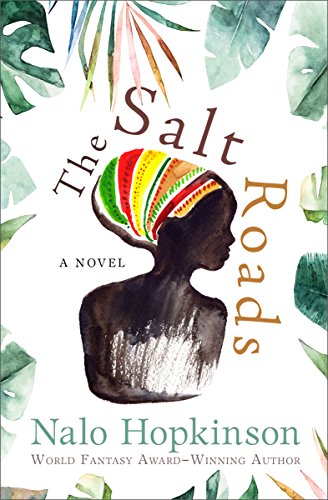
The Salt Roads: A Novel by Nalo Hopkinson

The Salt Roads: A Novel by Nalo Hopkinson

The Salt Roads is a bold statement about black womanhood across historical space and time past. The novel unfolds in magical chronology; it is a fantasy/magical realist novel that is grounded in history, but woven together through the movements of a spirit-being, Ezili and the Ginen goddess, Lasirén. The spiritual relationship is never fully explained — adding to the magical aspect — between Ezili, Lasirén and the human women whose bodies these spirits inhabit at various moments in time. The salt roads of the title is the trail of tears black women have cried, the salt of those tears having dried and laid a path for all those who came after. It is a well-trod path. Ezili and Lasirén live and relive, walk and walk again on that same path, possessing different bodies.

The plot revolves around three disparate stories, loosely connected by a shared history of racism, gendered suffering, and life-affirming black sexuality. The first lifetime that the novel opens with is that of Mer, an old Ginen woman, a respected elder and healer in the enslaved community in an unnamed French colony in the West Indies. Through her eyes and hands, Mer/Ezili helps the Ginen on the plantation survive their white master’s rages, their unpredictable cruelties. In this lifetime we also encounter Makandal, the male counterpart to Mer/Ezili, another magical being who also seeks to help the Ginen survive, but in different ways. Mer is the female, the feminine, the woman who knows what other women in this oppressed world need to survive. Makandal is the male, the masculine, the combative counterpart.

The second body Ezili occupies belongs to a mixed-race woman in France in 1842, Jeanne Duval (aka Lemer and Prosper). Jeanne is a dancer, an actress, a courtesan, the mistress of a white man. She embodies black sensuality and sexuality in all its forms. Here I think is Hopkinson’s great contribution: the boldness of her sexual prose disrupts the negative images history has painted of black women’s sex. Historical depictions of black women as sexual beings pose Her as savage, deviant, an object to possess. Hopkinson wipes that away. Jeanne Duval is a powerful sexual woman, human and frail and vibrant in her sexuality. She is a temptress, but sex is her weapon, one she has full control over.

The third manifestation of Ezili/Lasirén is called Thais, Meritet, Mary, and Pretty Pearl. Her time is in ancient Egypt. As in Mer’s lifetime, Thais’ experiences are deeply gendered; her body is a sexual, reproductive source and her life is shaped by oppression under forces larger than herself.

Hopkinson’s prose is beautiful, song-like in parts, especially in the sections where Ezili and Lasirén’s voice(s) narrate events. Their spirit presence is attached to, but not fully part of their human manifestation’s consciousness. They are experiencing humanity through the bodies they possess as much as they are imparting their power and strength to these women.

The novel is not a historical fiction in the traditional sense; it is not factually informative, but it conveys the affect and emotional experience of enslaved, black, women’s history. It conveys the psychological tensions of this history. It also shows the reader a different way to view the historical enslaved black woman, a woman who has become an archetype. Hopkinson revises Her, suffuses Her with a humanity through raw sexuality and the materiality of her womb.