Almost Brown: A Mixed Race Memoir by Charlotte Gill

Almost Brown: A Mixed Race Memoir by Charlotte Gill

As a historian I deeply appreciate Gill’s memoir, and for multiple reasons. Gill’s childhood experiences and those of her parents, captured from her memories and filtered through an adult lens retrospectively, highlights mid-twentieth century tensions of empire and our global journey towards decolonization. Moreover, Gill does it with a sensitivity to the internal, subjective conflict “colonials” often face as they grapple with their identities. The frustration of Self that Gill reveals to the reader, through her parents and her own struggles, is not an artifact of the past, singular to the decades of peak decolonization in the mid-twentieth century; these are still liminal spaces individuals occupy and traverse today.

In that respect, Gill’s memoir not only captures a particular zeitgeist of the 1950s-1980s — decades which saw a mass migration of colonials across the world, decolonization and independence movements coming to fruition, and a general cultural revolution across the world in terms of race, racism, and anti-paternalism — it also makes the reader aware of the continuity of this historical spirit and its legacy as it is lived today.

The success of this memoir is in large part due to Gill’s self awareness and willingness to see her parents (and herself) for the people they are; Gill examines them with an academic eye, as historical subjects, but also as emotional, affective beings whose desires and needs are universal across time and cultures. The result is a very relatable, human memoir, one which draws the reader into the nucleus of Gill’s family as well as the age in which they lived.

Some of Almost Brown‘s success must also be attributed to the fanciful and (for their time) outrageous characters her parents are, for the daring ways they each challenged the norms of their age in terms of race/racism, gender, and transnationality. This is where Gill’s memoir appeals to more than the smallish subset of readers whose interest is in post-colonial subjectivities; for while the memoir hinges on post-coloniality as its primary locus, it is also about the oppressions we inflict upon each other, the intersectionality of our daily lives, and the myriad of ways in which power flows or not even within a family. Gill’s mixed-race family serves as the perfect case study in which brown people and white people — that is, race — can be upended by gendered expectations, or vice versa. Gill’s white mother was submerged under her brown husband, even while he was marginalized by a society that saw him as inferior by dint of his skin color. She, in turn, was snubbed by both her husband and society for daring to be that which society deemed heroic: an independent-minded mother.

In short, Almost Brown is a memoir well worth the reading.
Under the Skin: The Hidden Toll of Racism on American Lives and on the Health of Our Nation by Linda Villarosa

Under the Skin: The Hidden Toll of Racism on American Lives and on the Health of Our Nation by Linda Villarosa

Under the Skin is the kind of book you dread to read, but once you start, you’re compelled to see it through — not because you like its contents, but because it would be immoral to look away. Indeed, it would be more than a little awkward to say that I liked the things I learned in Villarosa’s documentary of healthcare in America today. It is more accurate to say these were things I needed to know to in order to live in America today.

I read this for a book club at work; I work at a university so some of the messaging of Under The Skin felt like preaching to the choir, but it was, nonetheless, a lesson worth learning again. What lesson is that? Racism is not “over” and it hasn’t “ended” in any kind of definitive way. Anti-blackness especially is a legacy that remains and it’s tentacles are long and far reaching.

Indeed, its toll is not as hidden as it appears. Its toll is a scar and a fresh wound in living flesh.

This is a book worth reading at least once, and I would say, especially for women of color, for whom the tax of racism is higher, more exacting, even sometimes fatal.

In the Upper Country: A Novel by Kai Thomas

In the Upper Country: A Novel
by Kai Thomas

I was very excited to read this, and it did not disappoint. In The Upper Country offers readers a new perspective, one of many histories, of the Underground Railroad, and the people who traversed it, were borne out of it. This is a story about ancestry and descending, the diverse and convergent ways in which histories flow, often beyond our control and understanding.

Several stories, seemingly disparate, come together here to bring a fleshiness to a spectral kind of history.

The story is set in Dunmore, a town in Canada were black people who have escaped slavery can be free — and yet, of course, not, living as they are within a white world. An event shakes the town, the criminal refuses to be cowed and the result is a tense struggle between generations to grapple with North American chattel slavery and the concept of freedom. The result is a portrayal of the tragically disjointed and yet deeply connected lives of black slaves and free blacks. Lensinda was born free. But she must still live with the past. The past must learn how to reconcile itself.

This is the kind of story that must be read and re-read, the reader accepting that with each re-reading a different understanding of the characters and their ideas of freedom and bondage will become visible.

The Nickel Boys: A Novel by Colson Whitehead

The Nickel Boys: A Novel by Colson Whitehead

This novel knocked the breath out of me. It’s a punchy, unabashed novel that does not hold back for the delicate senses of the reader. And that’s really its purpose: to strike, to aggressively announce blackness and the terrible history of being black in America.

The Nickel Boys are children and teens who have been sentenced to a juvenile detention center of the same name, a place that announces its purpose is rehabilitation and calls itself a school in name only. This is where the state of Florida shuts away its poor, young white and black boys. The novel follows a young man who, after seventeen years of successfully avoiding the racism roaming the streets in the form of cops, finds himself arrested and carted off to Nickel for his sentence. Here, he and reader have their eyes opened to the brutalities of being a black boy in a white man’s world.

Like Whitehead’s other novels, The Nickel Boys is written with an urban lyricism unique to him. The way Whitehead’s prose and story weaves in on itself, producing by the novel’s end, a symmetrical structure is deeply satisfying and alluring to this reader. Throughout the novel there are little hints at its ending, as if its ending was never — should never — be a surprise (though it is, and purposefully so). Whitehead is a master at unravelling just enough thread to keep the reader dangling, tying off all the knots at the end to zip it all up.

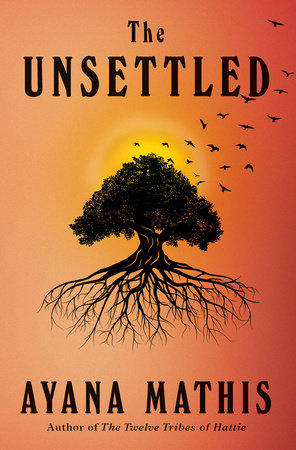
The Unsettled: A Novel by Ayana Mathis

The Unsettled: A Novel
by Ayana Mathis

This novel gut-punched me in ways that only good novels can. I could feel tears sting along those nerves behind my eyes. Sometimes I felt my skin get sweat-clammy. The Unsettled unsettles, just like Mathis wants it to.

Right from the start, The Unsettled knocks you down and it doesn’t let up. Its breathless, relentless struggle, the way it forces the reader to keep grasping for relief mimics the feeling that its protagonists feel, trapped in a transient limbo of poverty and abuse and disappointment. This is a novel about what it is to be black and working class in urban America.

The novel revolves around a young boy and his mother, forced to live in temporary housing because of an abusive stepfather and husband, because of racist, classist inequities, because life has dealt them a harsh hand. The novel documents their life before and during their stay in this housing, the people they encounter there, at school, in their former and current neighborhoods. Interwoven between these grim chapters is the story of the mother’s past, her mother and a different world of an all-black enclave in the deep south. In this place too, there is the struggle for blackness to simply exist. The two stories are linked by several threads, the most salient of which is the structural oppression of blackness in America; both stories eventually merge into one, culminating in an explosive end.

Mathis writes with a machete, its edge as sharp as a scalpel. The prose in The Unsettled is blunt, straightforward, and will absolutely cut you down. But the pace of this beating does not exhaust; I was compelled to return to the book again and again until it was done with me (and not I done with it). Its characters were there with me, around me, so fleshy and tangible. I read mostly in bed, where I feel warm and safe, and there were more than a few times when I put down the book and nearly cried, wishing they did not have to live in such an unsafe, cold, grey place.

Yellowface: A Novel by R.F. Kuang

Yellowface: A Novel by R.F. Kuang

Easily the best novel I have read this year. Or, at least, the most engaging and ire-provoking one. If you haven’t yet read Yellowface, you must. The novel is one of those you just can’t put down because you are dying to know what next wreck is going to happen.

The main character is a woman you’ll hate. The victim is also pretty unlovable. And the psychological twists lead to an unpredictable and yet oh-so-predictable ending. I know I’m being coy. Just read the book. You won’t regret it.

The novel revolves around two authors, one who plagiarizes another in the most god-awful way possible. And then more or less gets away with it. Sort of. That’s it. That’s the book.

But oh, the way Kuang tells it is so deliciously witty. The snark and sharp edginess of resentment and guilt and hate is palpable in Kuang’s prose. It’s the kind of writing that stirs up hot and fiery anger in the reader. I loved it.

Read it.

Get on that ridiculously long library hold list and wait for this book. So worth it.

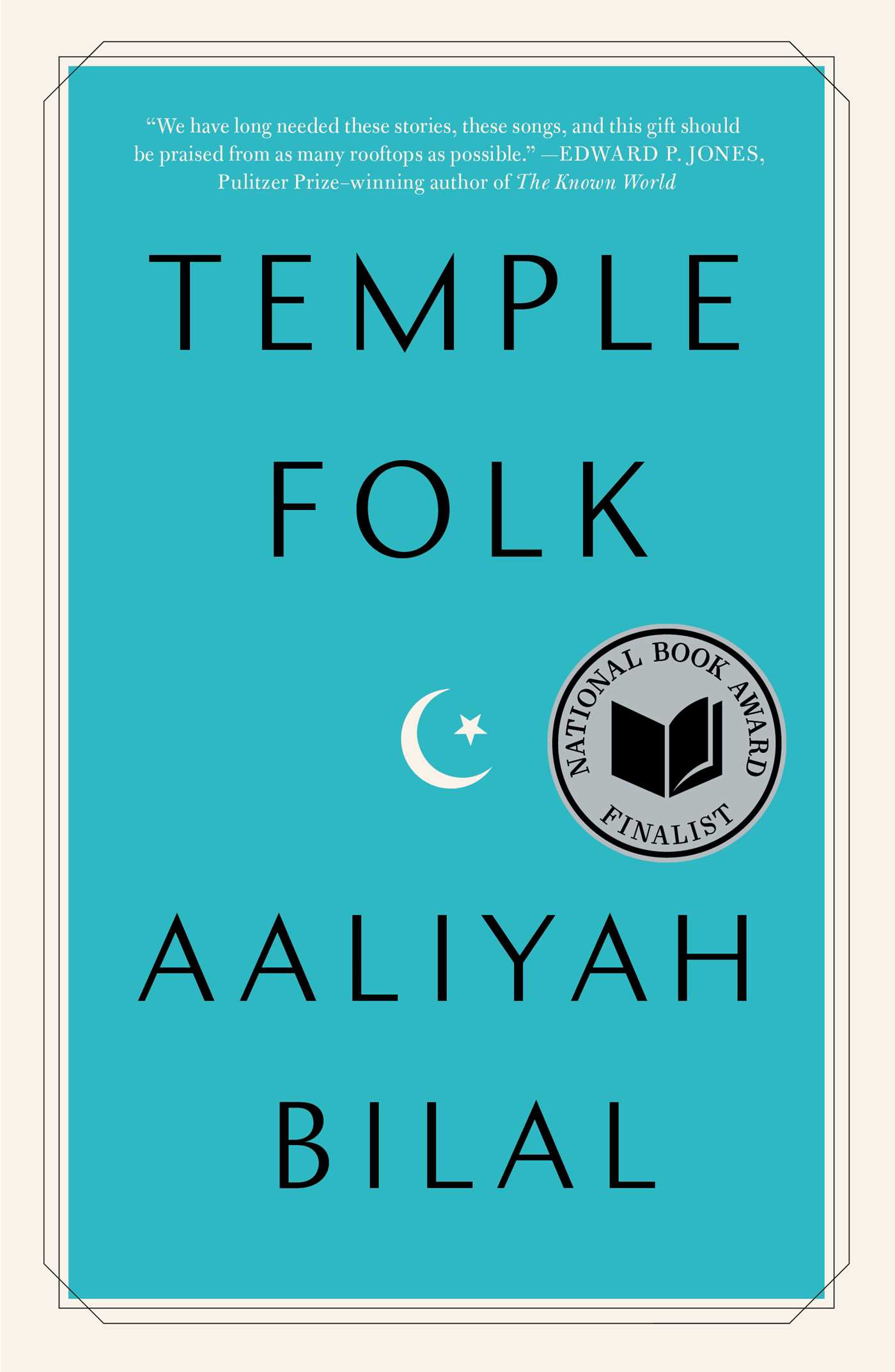
Temple Folk: Stories by Aaliyah Bilal

Temple Folk: Stories by Aaliyah Bilal

Marketing being often exaggerations, I rarely pay attention to the endorsement blurbs on covers; but, in this case, the quote is right and right on target. We — society as a whole, and especially readers of color — have long needed stories like these in Bilal’s collection, stories which reflect a way of thinking and life beyond the literal pale (read: whiteness) that has so long been taken as the norm in literature.

Literary canons still rarely feature writers and stories of diverse backgrounds, genders, and identities, and the term still conjures an Eurocentric image. Bilal’s collection is a balm, not a bandaid; a healing wound, not a scar; a mark of beauty, not a blemish. It highlights this paucity in modern literature and offers a concrete solution towards developing a greater oeuvre of our human experience.

The opening tale in Temple Folk orients the landscape of the collection as a whole: it centers on an interstate bus ride. The bus is filled with faithful black and white Muslim-American women, chartered to bring them from their small hometown, across a rural and white-dominated expanse, to Chicago where a Muslim conference will be held. This is a community unto itself, though it exists — consciously — as a part of white, Christianized America. Readers are given a privileged view into this world within a world.

The other tales highlight the daily, lived experiences of the citizens of the Nation of Islam. As a whole, these stories bring to the fore the intersection where NOI citizens, black denizens within their world, and the non-NOI, non-Muslim white world meet. Bilal presents the reader with scenarios where the whiteness of a child confronts the blackness of a woman, and what this might mean within the context of a religion that is often positioned adjacent and not central to the black/white politics of our era. Bilal pokes at the humor and seriousness of dating in the muslim world, knowing the gendered expectations of muslim women and men the reader is likely to filter her tales through. Bilal encourages a shift away from that pockmarked lens, offering a clearer view if the reader is willing to remove the glass from their eyes.

Indeed, most of my favorite stories were premised on a collision of modern, American ideas of empowerment and feminine identity, with Orientalist stereotypes of Islam and Muslims. But, the unique feature Bilal brings is a side-sweep which softens the collision and creates instead, a merger. Modern Muslim identity is not at odds with Islamic traditions and cultures (though it can be), nor do modern muslims (men, women, children, and all alike) need to make choices between their Blackness, modernity, and Islamic identities. In performing this clever maneuver, Bilal introduces the reader to a much more nuanced world of Black Islam, likely one that they have not seen before. Certainly, for this reader, this was the case.

The Brightest Star: A Novel by Gail Tsukiyama

The Brightest Star: A Novel
by Gail Tsukiyama

I read this novel along side a non-fiction biography/prosopography of Anna May Wong’s life and times, and honestly, I don’t know if that boded well for my review of this novel! In short, I found Tsukiyama’s fictive treatment of Wong’s life bland and depthless. I wanted interiority, a deep dive into Wong’s subjectivity. I wanted a view of Wong as a woman, as a human being, as a daughter, as a sister, anything, but not as a star.

Sadly, Wong’s characterization in the novel was one-sided, though to Tsukiyama’s credit the facet chosen was one that warrants highlighting: Wong here is portrayed as underfoot the racist boot of Hollywood, the racist weight of America and the White, Colonized world bearing down on her ambitions. I appreciate Tsukiyama’s attention to this racial and racist history; Wong was indeed a woman of her era, a victim of yellowface and orientalism. But I wanted more.

Perhaps I am not the target demographic for this novel; I know this history as a professional, I live its legacy as a Chinese-American woman in a state founded on White Supremacy. I am more than a target of racial hatred, more than a colonized human being, more than an Asian Woman, and so I wanted Anna May of The Brightest Star to also be more, to allow me entry into her mind, her heart, her existence as a lover, as a sister, as a friend. I wanted to know the facets of her that moved beyond the armor she had to wear to protect herself from the world.

I recognize that I already know the racist history Tsukiyama highlights, the weaponized language, the sneer against color, the snide remarks, and that this colors my view of the novel. I recognize that many other readers likely do not know this history. For those whose decolonizing journeys are just beginning, The Brightest Star will deliver a poignant and profound glimpse into Wong’s life as an Asian woman objectified and consumed as Other. Tsukiyama does a fantastic job peeling back the layers of glamour to reveal the ugly side of Wong’s stardom.

Daughter of the Dragon: Anna May Wong’s Rendezvous with American History by Yunte Huang

Daughter of the Dragon: Anna May Wong’s Rendezvous with American History by Yunte Huang

It’s only August, but I know Daughter of the Dragon is one of the best histories I have read this year. It ranks pretty near Number 1 right now. Huang delivers more than a life in this biography; Daughter of the Dragon is a portrait of Asian American history in all its glory and ugliness, it is a history of a community, an ethnic group, a skin color as it played out and was embodied by Anna May Wong.

Anna May Wong’s life is a microcosm of Asian American history, of American history.

Huang’s research is impeccable; each chapter is fully fleshed out with evidence from previous scholarship and archival sources. Letters to and from friends and family, press interviews, and a myriad of other Hollywood ephemera serve as Huang’s fodder. But Anna May’s own voice is rarely invoked; it would appear that few records in her own words exist, though Huang uses what artifacts she did leave behind. Putting the patchwork together as any good historian does, Huang captures and interprets her voice for us in his own; Anna May comes through the pages as if she were seated on the edge of desk, cigarette in hand.

The book follows a typical biographical chronology, from birth to death and everything in-between; however, Huang leans heavily toward Wong’s filmography as the measurement of her state of mind as well as a platform for a deeper discussion of legislation against Asian American citizenship and social standing in the American popular imagination. This is more than a biography, and while Daughter of the Dragon reads like a filmography: it is a vivid cultural history of Asian American film and representation in Hollywood. Indeed, Anna May Wong was a by-word for Asian American film for much of the twentieth century and her career. There can be no discussion of Asian representation in the media without her.

The result is a very satisfying history.

This Other Eden: A Novel by Paul Harding

This Other Eden: A Novel by Paul Harding

Having read Tinkers, I began my reading of This Other Eden with high expectations and hopes. I wasn’t disappointed. On the surface it appears a pastoral novel. But this is false. To the reader the landscape is hidden — at first. Then as the novel unravels, it is clear there is a dark narrative thread running through the whole thing, a cohesion of some kind that is based on something less rosy than than a scenic, island reverie and altogether discomfiting: history, racism, resistance. This is a historical fiction, spanning the 18th through the 20th centuries, a significant time in the development of race and racism in America. Harding delivers this highly charged story carefully, in an ecological, atmospheric wrapper, one that makes the geography of the island on which the story takes place — its isolation, its raw, loam scent, its shaded trees — an important metaphorical actor. The island serves as a shroud and a setting for the demise of a way of life: a black way of life as it is subsumed by whiteness. Readers should expect to feel uncomfortable, perhaps a sense of claustrophobia from an inability to escape the island. This is to mimic the kind of slow isolation felt by its inhabitants.

This Other Eden is a novel about an island and its black inhabitants, the mainland and its white population, the slow — then rapid — shift of race and the infliction of racism on the former, the closing in on a way of life. The island is inhabited in 1792 by an interracial couple, not an uncommon pairing in this moment in time necessarily; Benjamin Honey and Patience, an Irish woman (the Irish having been ostracized as some Other race in the hierarchy of Western Europe). Their descendants occupy the island, but are increasingly subjected to America’s abhorrence and obsession with eradicating miscegenation. As the decades and centuries roll on, the islanders become targeted by eugenicists — much like the rest of the nation. So-called “good” intentions to bring progress and education to the island are misguided attempts, achieving none of their intended outcomes and instead excelling at cultural and racial erasure.

This Other Eden is told through the eyes of the islanders. Even while it addresses larger issues such as eugenics and racism, it is focused on the experiences of the islanders. It is a novel about people and the lives they must live, even while it is a commentary on America’s racist history.