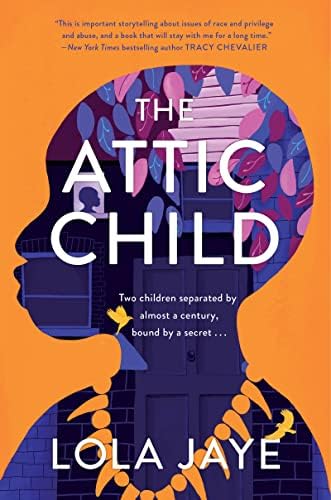
The Attic Child: A Novel by Lola Jaye

The Attic Child: A Novel by Lola Jaye

Something draws me to themes of tragedy and darkness in my choice of reading. The Attic Child might very well be one of the darker — if not darkest — novels I’ve read this year. This is a novel about strength, resilience shaped by necessity of survival and trauma; but it is not only the characters who must cultivate and wield this kind of strength, the novel requires the reader to be brave and hardy too. The reader must be to bear the suffering of reading about the suffering of others.

The pain is intentional. Jaye’s novel addresses, with unflinching realness, the lived trauma of colonialism by highlighting the literal theft of human beings European colonizers forced People of Color and colonial subjects to endure. The novel forces the reader to see how this history is very much present in our contemporary moment, that it is has caused intergenerational harm beyond measure.

As a historian of decolonization I am grateful for a novel like this — and happy to see that it was distributed on a platform as wide and well known as The Book of The Month Club (which is where I obtained it). We — those who come from parts of Europe’s former empires and those whose ancestors benefited from those empires, that is, everyone — need books like this, stories like this, voices like Jaye’s to declare that the grief and loss and wounds of colonialism are still not healed, closed, “over.”

The novel spans many generations and decades, beginning at the start of the twentieth century with a young boy who lives with his family on the African continent. He becomes the Attic Child, the first of many — children shut away, abused, neglected. He is robbed of his identity and his heritage. The story of a young woman who lives in a time closer to our present intertwines with his. The reader is aware there is a connection between the two, something hidden in the attic and the house in which both of these characters grow up, both of them “attic children.” The mystery the reader will find themselves embroiled in is how they are connected and why.

As the mystery unfolds it also deepens, its roots are long and twisted and dangerous. The mystery exposes the characters to pain and the possibility of new emotional wounds. The threat of scarring is real. But they are both hurtling through history and time and must live their lives. If there is a history lesson here, it is that we cannot escape history or making history, as we do so simply by living.

The novel does not pretend to heal the pain of this history. Reader should not expect to be bandaged or coddled in any way. But the novel does end as a historian might expect, with the lesson that history does not end, it goes on and on and therefore, that is itself a kind of closure. Perhaps, the ending is something more of a suture than a healing.

This is a tough and exacting book to read, but one which will not fail to provoke emotion. This is a significant novel.
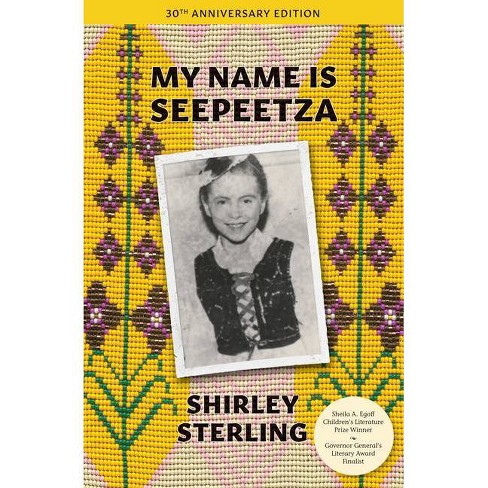
My Name is Seepeetza by Shirley Sterling (30th Anniversary Edition)

A student recently asked me in class, “Why are there reprints of books? Why do they get reprinted?” Among the reasons I gave them was this one: “Sometimes new information emerges and something important needs to be added. Or, sometimes, the content of the book becomes relevant again, given certain events or things that are happening right now.” I added, “Remember, history is less about the past, than it is a reflection of our present moment or our desire for what we want our future to look like.”

Sterling’s My Name is Seepeetza, the 30th anniversary edition epitomizes this reason. The recent discovery of several hundred bodies of indigenous children buried and hidden at several residential schools across Canada — Fort Pelly, St Phillip, St John, just to name three — is a heavy reminder that the state sanctioned annihilation of Canada’s indigenous culture and peoples over the past four centuries is not a remnant of the past, but a living monster that still lives and looms over the lives of the 150,000 children and their countless descendants.

This is a living trauma, its horror and long reach remain unknown.

For this reason alone, I am considering using this book in my next iteration of a 100-level history course I teach to undergraduates for this reason.

Sterling’s accessible, authentic prose in the voice of a young girl only gives me more reason to assign it as a course reading. The length is perfect for a semester and the format in epistolary style as a diary allows me to use this in class, for small group work within the time constraints of a class session or for short individual activities.

The content though is the main appeal here. Sterling’s own experiences makes My Name is Seepeetza all the more powerful, opens an avenue for an educator to discuss this in more depth as a primary source, as a part of historical record, opens the door for historical discussions and framing it within a larger landscape of indigenous history, gendered and racial violence. My Name is Seepeetza hits on the major nerves: language weaponized, education as violence, eugenics, parenting as cultural intervention, skin color and its tormented relationship with race and ethnic autochthony. History.

A reprint is not merely a revival, it is a reflection and delivery of knowledge we need right now.

The Fortune Men by Nadifa Mohamed

The Fortune Men
by Nadifa Mohamed

A colleague recommended this book to me and oh my, do I owe them BIG now! The Fortune Men is devastating in every way. The story, without question, is a profound lesson in the paradoxes and insidiousness of racism, the tragedy of putting faith in a prejudiced judicial system, how thin the line is between life and death, past and future, the awfulness of history.

The novel revolves around a young Somali man who has found his way to Britain and built a life for himself there, complete with a wife and children. He is an ordinary man, a flawed man, but not a bad man; his morals are imperfect but not malicious. In his Welsh town, there is a sundry shop, owned and run by a Jewish woman. She is murdered. He is arrested. The novel spins from that point around his trial and his incarceration.

The details of the crime and his arrest are revealed, it becomes clear that things are not so black and white, literally and figuratively, according to the shade of his skin. In this Welsh neighborhood, there has been the recent in flux of many immigrants: those from the Caribbean — coming off the HMS Windrush — as well others like him, from Somalia, parts of West Africa, Nigeria, South Asians from India, Pakistan. There are Jews, Muslims, Christians. And then there are the White Welsh and English. The only thing they seem to have in common is their denizenship in a working class milieu: they are each trying to survive in their own ways, struggling with the constraints put upon them by their race, the color of their skin, their gender.

Mohamed’s prose weaves together the multiple layers of this crime, both the murder and the crime of injustice via complex characters who each come to this place armed with their own ambitions and hampered by their past experiences; they are as flawed as the main protagonist — and like him, we can see that they are not truly “bad” people, but merely making decisions based on the ethnic, racial, and class based expectations put on them. Reader, you will weep for all the characters in The Fortune Men, for they are as trapped as the prisoner in his cell.

It is hard to write a review of this book without giving away its ending, because its ending is really the beginning of the question that led to its creation. It is based on a true story, which is what makes this even more tragic and heart-rending.

All I can say is: You must read this. You must weep for the man, the woman, his wife, his children, the families torn apart by the events that took place in 1952-1953 in this small Welsh town. And you must be angry.

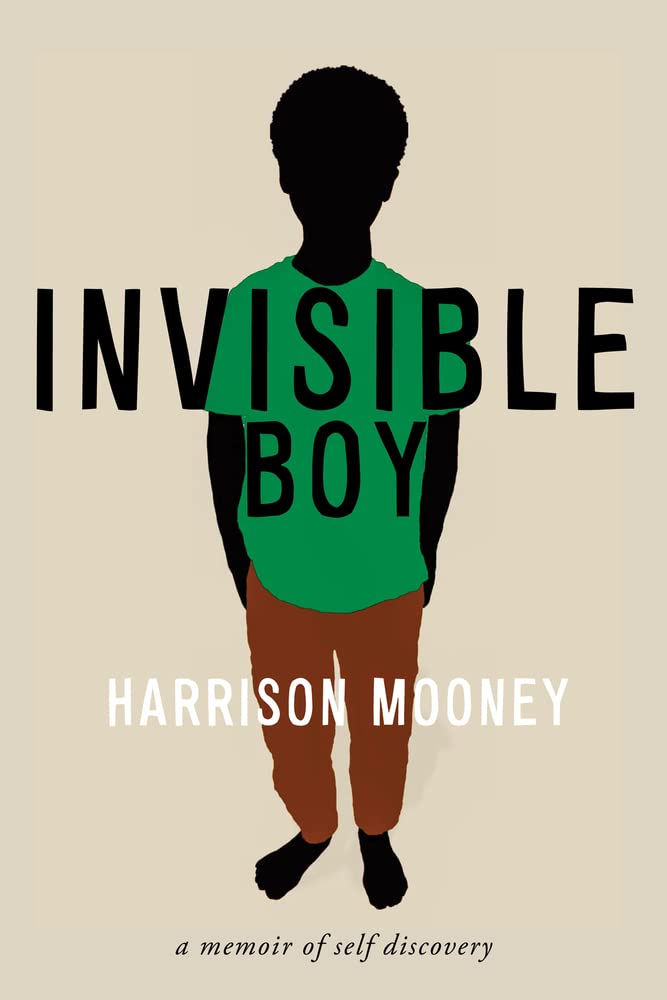
Invisible Boy: A Memoir of Self Discovery by Harrison Mooney

Invisible Boy: A Memoir of Self Discovery
by Harrison Mooney

Holy not-so-micro-aggressions. Holy GASLIGHTING. Invisible Boy was incredibly difficult to read without weeping. Every time Harry’s mother or other family members gaslighted him I wanted to scoop him out of the pages of his past and take him far, far away to people who would love him as he is, for who he is, for what he is.

I cry for all the children, teenagers, people who are where he was right now.

For all its pain, I do not regret reading Invisible Boy… because the pain embedded in Harrison Mooney’s past is insidious, latently seething, and all too common still. Decolonization is an eternal task, its end is nowhere in sight. Memoirs and works like Invisible Boy remain relevant and necessary in our collective, societal process towards decolonization. Like Fanon’s Black Skin, White Masks, Mooney’s Invisible Boy is a call to action. It is a reminder that we still need a rebellion of the mind and soul.

Invisible Boy relates the path of Mooney’s awakening to his race and the ways in which racism hides behind a myth of colorlessness. It begins with his childhood and ends in his early adulthood. His memoir exposes to the reader how racism seethes in the most intimate places, in the places it should not exist — in this case, within a family. Families are supposed to be safe. They are supposed to be supportive, loving, nurturing. Invisible Boy tells a sad tale of how racism is the silent reaper within, turning the sanctuary of the family into an emotional, mental prison.

What makes Mooney’s Invisible Boy unique from other works like it (Sam Selvon’s Lonely Londoners, George Lamming’s novels, Franz Fanon’s memoirs and works, James Baldwin’s calls to action, among others) is Mooney’s attention to a community that is little attended to: adoptees of color with white adopted families. As in Mixed-Race Superman, Will Harris’ essay on the transcultural ways of being mixed race, Invisible Boy highlights a different kind of process of decolonization that confronts adoptees of color in white families and white communities that hold onto racist beliefs.

I do not know if I can re-read Invisible Boy for the sake of my own peace as a person of color who has grappled with my own decolonization; but, I am glad I read it at least once and I am privileged to have the ability to choose to only read it once. I am privileged to have been given a rare glimpse into another’s experience of racial awakening. I am privileged that my own decolonization was less traumatic. In truth, Invisible Boy is a book that demands re-reading and reading again. One day I will summon enough courage to read it again.