The Librarianist: A Novel by Patrick deWitt

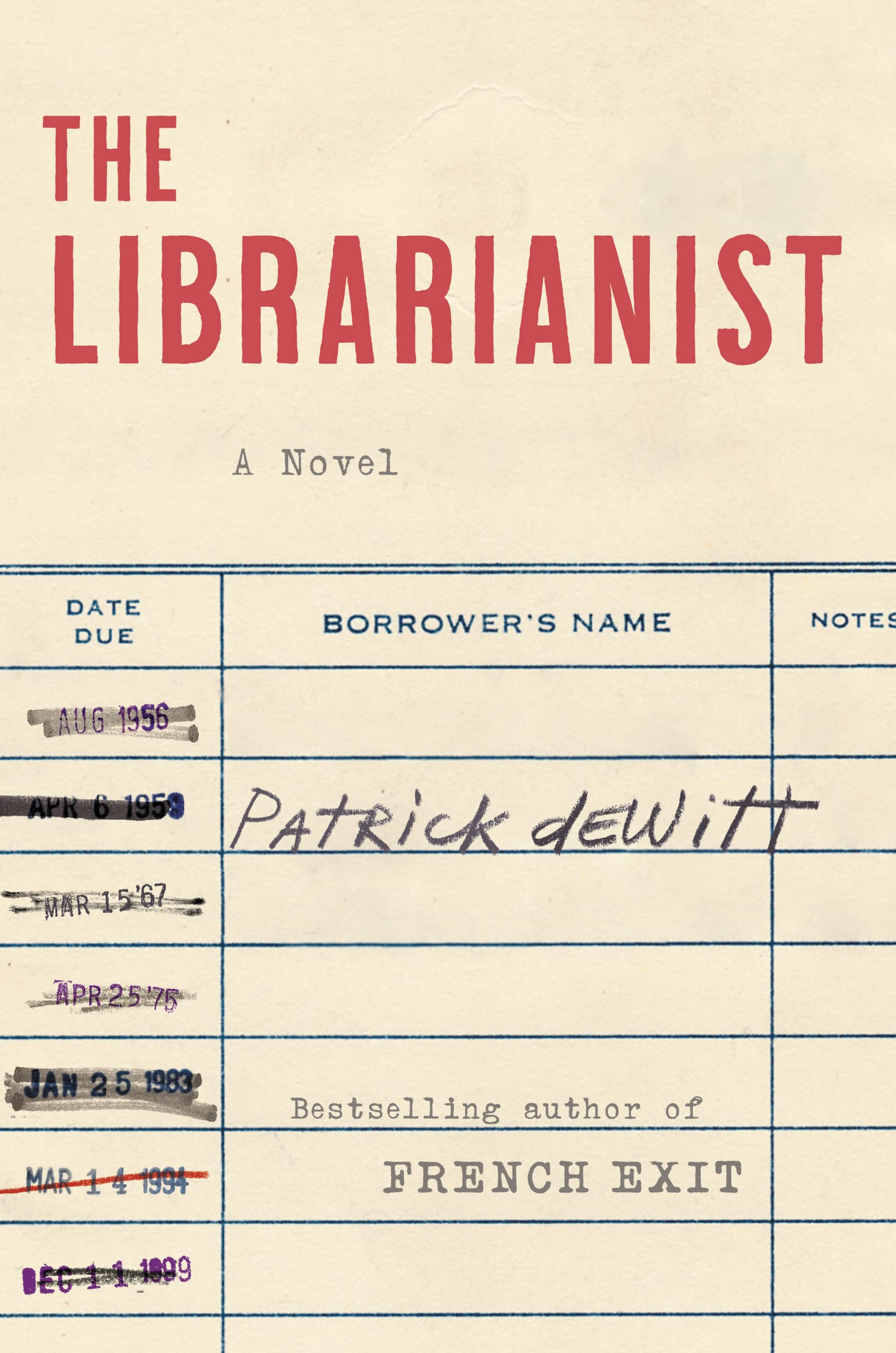
The Librarianist: A Novel by Patrick deWitt

The setting of the novel and its title intrigued me; it’s set in Portland, OR, near where I live and I love books and libraries. Is this a book about books? About loving reading? About libraries?

No, it isn’t. It isn’t about any of that, not at all.

If there is any relation to books at all, it is that the novel is about the chapters that make up the narratives of our lives. Well, Bob Comet’s life, to be specific. Bob is a quiet man, a retired and retiring kind of man, who becomes entangled in the drama and lives of the residents of a kind of retirement home near his own. While there, his interactions with the attendants and residents force him to reconsider the trajectory and decisions of his own life.

In the course of his discoveries about himself, he finds he must witness a direction his life did not take, a love lost and unrecovered.

The Librarianist is a melancholy glimpse into life and its traumas, large and small. This novel makes me think of rain in the Pacific Northwest: ever-present and daily probable, quietly dripping dripping dripping, a small cluster of molecules that is incredibly important to life. Like rain, the quotidian in The Librarianist is vital. The life that unfolds in this novel reminds me of the verdant luxury of green in moss, pine, conifer that emerges after the flush of rain.

Readers who love Stoner by John Williams or Pnin by Vladimir Nabokov will appreciate the life deWitt writes for us.

In the Upper Country: A Novel by Kai Thomas

In the Upper Country: A Novel
by Kai Thomas

I was very excited to read this, and it did not disappoint. In The Upper Country offers readers a new perspective, one of many histories, of the Underground Railroad, and the people who traversed it, were borne out of it. This is a story about ancestry and descending, the diverse and convergent ways in which histories flow, often beyond our control and understanding.

Several stories, seemingly disparate, come together here to bring a fleshiness to a spectral kind of history.

The story is set in Dunmore, a town in Canada were black people who have escaped slavery can be free — and yet, of course, not, living as they are within a white world. An event shakes the town, the criminal refuses to be cowed and the result is a tense struggle between generations to grapple with North American chattel slavery and the concept of freedom. The result is a portrayal of the tragically disjointed and yet deeply connected lives of black slaves and free blacks. Lensinda was born free. But she must still live with the past. The past must learn how to reconcile itself.

This is the kind of story that must be read and re-read, the reader accepting that with each re-reading a different understanding of the characters and their ideas of freedom and bondage will become visible.

Caught In A Still Place: A Novel by Jonathan Lerner

Caught In A Still Place:
A Novel by Jonathan Lerner

I enjoyed this short novel so much I bought a copy for my cousin for Christmas! For readers interested in environmental fiction, literary fiction, and poignant, reflection, Caught In A Still Place delivers on all points. This novel deserves a come-back.

The story revolves around a small community, reeling from some kind of environmental and social fall out. The world has come to an end. Not the end, for people continue to live, though not as they used to. For this small enclave of neighbors in Florida, they are learning to manage. This is the tale of how they begin to navigate the same needs and desires in new circumstances, new contexts; humanity has changed, humanity remains the same. This is a story about how everything and nothing changes.

As a reader, I am left wanting more — but I do not think this is a detraction. Rather, this left me feeling immersed in the lives of its characters. I felt like the characters must feel at the end of each day: a little hopeful, mostly uncertain, but inevitably alive.

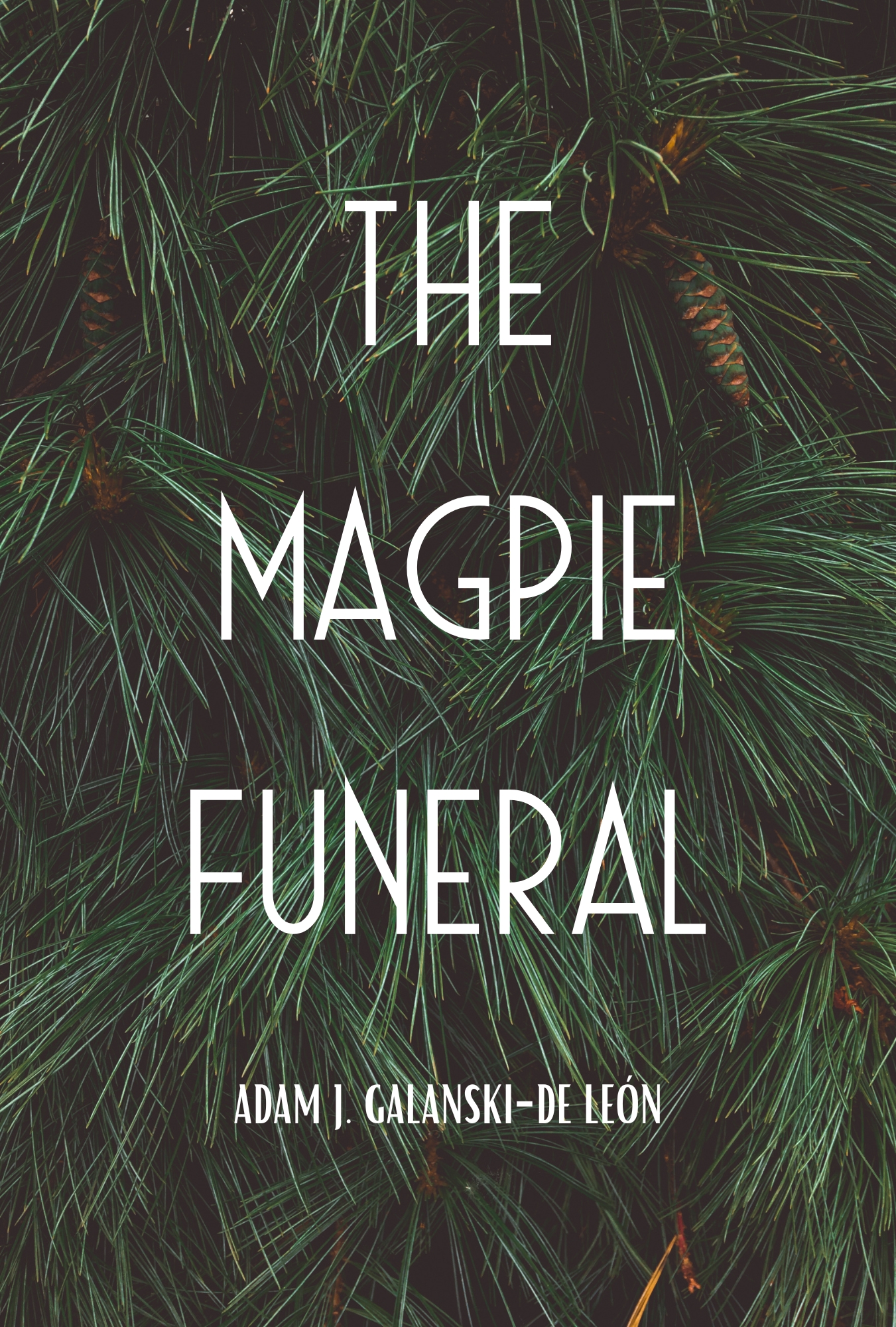
The Magpie Funeral: A Novella by Adam Galanski-De León

The Magpie Funeral: A Novella by Adam Galanski-De León

A short, but poignant and profoundly moving story about family and the spaces between us that we must navigate, the narratives we tell ourselves and others, the ways in we lose our connections to one another. There are many ways to read The Magpie Funeral, many ways to interpret the events and the silences the characters leave behind.

This is one of the strengths of the novella; its ability to mean different things to different readers.

On its surface, this is a story about a man trying to connect to his heritage, his roots, by seeking out a grandfather who abandoned his family. The man is searching for an answer to some missing piece of his life. This is the story of what he finds and the people he encounters along that path.

This is a very literary novel, one that mimics life and its harsh realities. Readers who seek coziness and comfort should expect to have their hopes dashed. Reader who enjoy realism and the unpredictability of reality will be intrigued by the novella’s turns. Readers who enjoy reflection will encounter a myriad of emotions as the characters — lifelike as they are — are not the perfectly self-aware beings we might wish them to be. Readers will experience some form of loss in reading this book, a performative element of the story itself.

Antiques and Drinks: A Novel by KC Bellinger

Antiques and Drinks: A Novel
by KC Bellinger

It’s cute. And cozy. And there is a mystery lurking in this suburban-y, bougie town. Antiques and Drinks delivers on its promise. For readers who enjoy light mystery with a bit of cheeky humor, this novel will be a delight.

The novel revolves around a middle-aged woman, alone and without family, who runs an antique shop in a tourist town. A set of plates is brought on to be put on consignment, but the owner of the plates rescinds the deal. The plates are not as they seem. They are enchanted and the results are fatal. This is how the mystery — and the fantasy — begins.

I did not enjoy it as much as I hoped to. However, I think this is more about myself as a reader, than the merits or demerits of the novel itself.

On that note, a few things which lessened my enjoyment of it. First, I could not get a full sense of place or person through the dialogue or exposition; the novel failed to flesh out the physical environment of the town, the store itself, and the atmosphere of the place. Similarly, the characters did not come to life for me; they were unique, but did not become tangible in a way that would bring me into their world. Second, there were elements of the story that felt like reaching, or seemed to me to be so outrageous as to feel like farce.

On a more positive note: the novel is amusing and the twists of its mystery are unexpected and — perhaps because of their absurdity — compel the reader to keep going, if only to see what on earth could happen next. Another factor in its favor: Bellinger writes well. The expectation here is not for literary prose, but the prose is clear and thoughtful. It is perfect for a cozy mystery.

The Last Colony: A Tale of Race, Exile, and Justice from Chagos to the Hague by Philippe Sands

The Last Colony: A Tale of Race, Exile, and Justice from Chagos to the Hague
by Philippe Sands

A brilliant legal historical monograph. I am tempted to use these in my classroom, except the course it would be relevant for is a lower division course and the depth and nuance of the book is too dense — and therefore unsuitable — for my typical first year cohort. Nonetheless, this is a book I would love to re-read and reconsider for a future course.

The core of this legal history focuses on Chagos, an island formerly French, then sold out from under its inhabitants to serve as a military outpost. These inhabitants, its natives, were forcibly removed and prevented from returning. Sands exposes the reader not only to the specific events of this case, but the larger political context around it: the slow and unwilling demise of European empires and their hold over their colonies, the heat of the Cold War, a long history of legal maneuvers played with cards held only by those with power.

Sands’ monograph is well written; its delivery is succinct, direct, and accessible, though I think it is better suited to an academically inclined reader than the general adult reader. It packs a punch in few pages; a fast-flowing torrent of information that propels and compels the reader to keep apace.

The Shoe Box Waltz: A Novel by Kathleen Patrick

The Shoe Box Waltz: A Novel by Kathleen Patrick

The Shoe Box Waltz is the story of lives intertwined, each one shaped by the others it touches. Each of these lives is in turn shaped by single defining moments, a moment that we never expect to possess such impact. This is a novel of the power of such encounters, seemingly so fleeting and unimportant at the time, as they become amplified. While its author, Kathleen Patrick, labels this a psychological novel, I am inclined to class it as a literary fiction: character-centric and deeply reflective, rather than psychological in the academic or manipulative sense.

The novel revolves around a young woman, Cora, and takes us through three interlocking periods of her life: her youth, her childhood, and her adult life after a traumatic event. As she moves through these periods of her life, she encounters people whose decisions shape the course of her own experience: Nancy, Caitlyn, Maureen, and later, Ian and Ray. There is also an unnamed external narrator, perhaps a sentient persona in Cora’s subconscious. This reader found the novel to focus heavily on the experience of being a woman and the trials of womanhood; a topic I enjoy and appreciate as a woman. A note: Readers should be aware they may find elements of the novel triggering; but, as women generally know, a woman’s life in this patriarchal world is inherently fraught with trauma.

Divided in two parts, bifurcated as Cora’s life becomes, the reader is given a view into the inner perspectives of each of these individuals in Cora’s life, as well as a her own. Each chapter is narrated by a different individual, some also switch position from 1st to 2nd to 3rd, offering the reader a wholly different voice and understanding of Cora’s story. In some cases, the switch of perspective is jarring, but overall, the mechanism works to deliver an unusual reading experience.

Patrick’s prose is literary; thoughtful and evocative, stealthily drawing emotion from the reader. That said, some descriptions and phrases read poorly, dated, and somewhat cliché: “shapely legs” for instance, provides no real fleshy image for this reader. Despite this, I was compelled to read on, finishing the novel in the space of three days. Cora’s story — and Nancy’s intervention in it — was magnetic.

Readers who enjoy historical literary fiction, with a feminist tint, will be sure to find The Shoe Box Waltz a moving and emotional experience, well-worth the effort of reading it.

The Lover: A Short Story by Silvia Moreno-Garcia

The Lover: A Short Story
by Silvia Moreno-Garcia

The Lover is the perfect short story for the winter season (which is not Christmas related). Readers who enjoy feminist retellings of fairy-tales or spins on classics will find The Lover deeply satisfying and empowering.

I read this as an audiobook, which is something new for me. I’m not good with audio. books; they tend to put me to sleep. but I gave this a go and found it an interesting experiences. Half way through this short story, I opted to return to physical reading. I think I enjoy the narration in my own voice rather than. someone else’s.

The tale is a fantasy combining Cinderella with Beauty and the Beast, Red Riding Hood, and something about Woodsmen that I am sure exists in some Grimm or folk literature. It revolves around two sisters and a young man who simultaneously comes between them and brings them together — albeit awkwardly. Like most traditional fairytales its ending deliver a moral message.

Moreno Garcia is well suited to this genre, her mastery of the gothic form and its creeping horror elevates this simple fairytale to the level of a modern horror, gore, sex, crime and all.

If you’re looking for some light entertainment with a wicked twist, The Lover if for you.

Silver Nitrate: A Novel by Silvia Moreno Garcia

Silver Nitrate: A Novel by Silvia Moreno Garcia

Moreno-Garcia not only understood the assignment, she did the extra credit! Silver Nitrate delivered all that a modern gothic horror should: slow, building ripples of doubt and uncertainty (the kind that make your eyebrows knit and you second-guess yourself), a female lead whose existence is threatened, a feminist focus in which oppression of the social kind is the baseline terror, actual monsters and gory scenes.

Silver Nitrate as the title suggests, reads like a film noir played out in intimate, literary detail. It is a must-read for film fanatics and bookish folks, alike.

The story revolves around a young woman and her best-friend, a man she grew up with and who also ended up in the film industry, and the tension between them. Both become friends with an elderly man, a former director of Mexican horror and their connection with him develops into an interesting — but ultimately deadly — project. The result of their collaboration opens up histories best left buried and occult forces beyond their control. Madness and death ensues.

Like true gothic horror, the novel and the madness unravels slowly, and the focus of the novel is character-driven. The reader is given a first row view into the woman’s mind, her desires, her fears, her past and present, as she slides into a dark world that was hiding all along within the one we all know and live in. It is, as with most good novels, a story about us and what lurks within. Moreno-Garcia is a pithy mistress of the genre.

The Nickel Boys: A Novel by Colson Whitehead

The Nickel Boys: A Novel by Colson Whitehead

This novel knocked the breath out of me. It’s a punchy, unabashed novel that does not hold back for the delicate senses of the reader. And that’s really its purpose: to strike, to aggressively announce blackness and the terrible history of being black in America.

The Nickel Boys are children and teens who have been sentenced to a juvenile detention center of the same name, a place that announces its purpose is rehabilitation and calls itself a school in name only. This is where the state of Florida shuts away its poor, young white and black boys. The novel follows a young man who, after seventeen years of successfully avoiding the racism roaming the streets in the form of cops, finds himself arrested and carted off to Nickel for his sentence. Here, he and reader have their eyes opened to the brutalities of being a black boy in a white man’s world.

Like Whitehead’s other novels, The Nickel Boys is written with an urban lyricism unique to him. The way Whitehead’s prose and story weaves in on itself, producing by the novel’s end, a symmetrical structure is deeply satisfying and alluring to this reader. Throughout the novel there are little hints at its ending, as if its ending was never — should never — be a surprise (though it is, and purposefully so). Whitehead is a master at unravelling just enough thread to keep the reader dangling, tying off all the knots at the end to zip it all up.