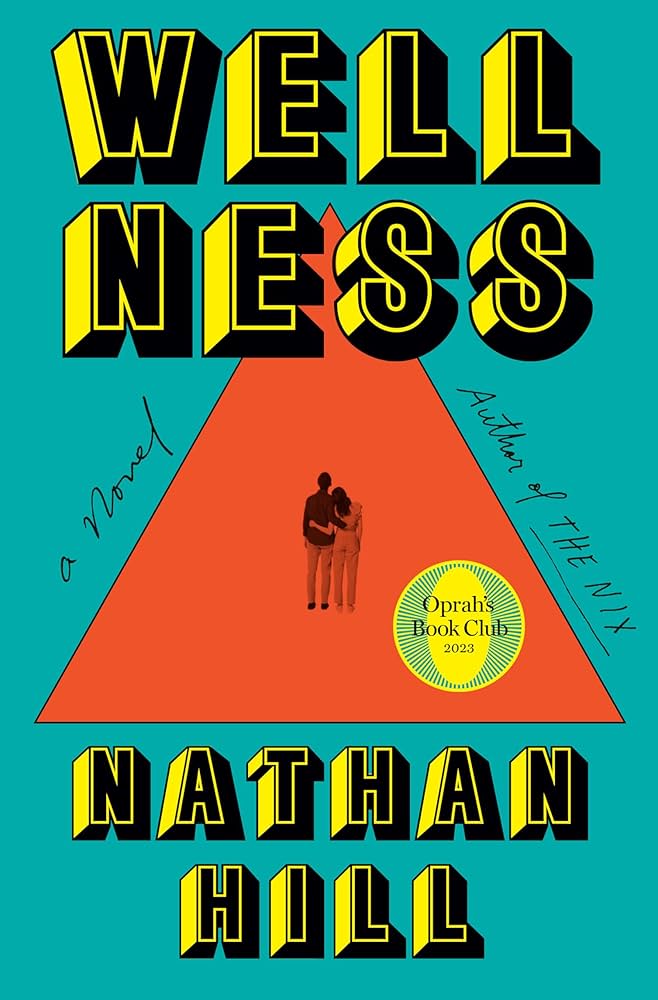
The best – BEST – book I have read in awhile. This novel deserves all the awards, and I’m not only saying that because I lived in Chicago-land, where the novel is set, but because the story and the story-telling is so amazingly delivered. To borrow a phrase from Spinal Tap‘s Nigel Tufnel, “this one goes to 11.”
Wellness revolves around the romance, marriage, demise of said-romance, and self-discovery of a couple, Jack and Elizabeth. Their 9-year old son, neighbors, old friends, and parents also play — as to be expected — significant roles in this account of their mid-life crisis. It’s a mundane and perhaps all-too-familiar tale of life lived and regretted, of the parts of ourselves we lose along the way. This is the draw of the book; it is immensely relatable — at least for those of us of a certain age. There are bits of Jack and Elizabeth in us all, and for those of us who parents, the novel highlights the agony of parenting, especially as mother.
It’s the story of what you do when life doesn’t seem to have delivered what you promised yourself, and — as the novel progresses — it’s the story of why that happened.
At 600+ pages, this is a doorstopper of a novel, but Hill’s prose is so smooth, the story so compelling, the characters so intriguing, that I finished the book in about a week, roughly a hundred a pages a night. A feat given that I read this book during and just after Finals Week of the semester when I had to knuckle down and grade.
And Hill is hilarious. Several parts and dialogue made me laugh out loud; not only could I see myself at the Metro (been there, yes) and some of the other places where Jack and Elizabeth lived out their romance, but Hill allowed me to laugh at myself and my past a little bit. Readers of my generation are likely to find some humor in the pretentiousness of our younger selves in this. I did, and loved the confrontational reflection I had with myself afterwards.
The book will date you and itself, but I think it’s destined to be a classic of our moment.
You Make It Feel Like Christmas: A Novel by Toni Shiloh
I’m not a reader of romances. It’s not that I completely eschew a romantic twist in the tale; it’s fine if it’s interconnected to the tale, forwards the motives of the characters, adds some tension to he dialogue. But generally, I don’t seek out romance novels, the kind in which love or lust are the primary objectives of the story.
So I took a chance on You Make It Feel Like Christmas. It’s — as the title makes obvious — a Christmas romance, to boot. These things usually follow a formula (as I understand it), so I expected something similar to what I’ve watched on Netflix around Christmastime; y’know, the Reese Witherspoon-look alike kind of rom-com movies that are all about feeling good after feeling bad about family, love, marriage, some kind of expectation or the failure to deliver it. You know the type.
I was not disappointed. Readers of contemporary holiday romance will likely find You Make It Feel Like Christmas a perfect reflection of the genre. They will walk away from reading it with a sense of wholesomeness, like things are the way they should be. It’s a feel-good read that delivers.
Starr Lewis and family friend, Waylon Emmerson are the fated lovers, but there is also Starr’s whole immediate family, a cast of characters who are equal parts infuriating and endearing. This is family goodness, right here.
Because of the wholesomeness of this romance, readers should not expect high octane, reality-tv-show drama (though there are moments when a particular sister might drive the reader to throw something); but, there is tension and the romance does not flow in a smooth linear fashion from point A to point B. Moreover, there are not only tensions between the lovers, but also within the Lewis family as its members navigate the stress of the holiday and other momentous events.
What is smooth and linear is Shiloh’s prose. The story is delivered in a straightforward manner, though with finesse and her own style, making the novel a pleasant read. It’s perfect for de-stressing during the holiday season, as the reader might need to navigate their own family dramas.
I can’t stop thinking about this love affair. It’s been months since I finished reading the book, but Allison and Eyal (and Timor, Aisha, Talia, and so many others) continue to occupy my thoughts, not least because the war in Gaza and the horrors that plague Palestine and Palestinians, Israeli and Israelis, remains on-going.
The Lover is a timely novel, as one which revolves around that very political and cultural conflict. But the novel offers a social perspective on how politics hits the ground, how real lives are shaped by the tragedy. The short of it, as I think most people understand, is that the situation is messy. Israelis and Palestinians, Jewish, Arab, each and every one, is woven into a fabric that cannot be unpicked, their threads too tightly interlaced for any one to be extracted without fraying, snapping, leaving a scar in the cloth. The Lover highlights that messiness, the ethical messiness, the material messiness, the psychological and emotional turmoil of Palestine and Israel.
The Lover is a love story, a romance between Allison, a half-Jewish American graduate student who has come to Israel for a semester abroad, and Eyal, a soldier in the Israeli army. To fulfill his military duty, Eyal must conduct missions in Gaza, while Allison frets and waits for his return. But there is another romance here: Allison’s as she becomes enraptured with Israel and the tensions between Jews and Arabs. This is a novel about the ethics of love, what authentic compatibility means, and the difference between passion and compassion between lovers.
What makes The Lover so compelling is that the intertwined romances here force us to confront our own biases in this or other situations. This is a story we cannot turn away from, because even as outsiders watching the news, looking in on the events in Gaza, its messiness forces us to consider what we each might do, might have to do in a similar situation.
The story, as darkly riveting as it is, is not the novels only attraction. The Lover is superbly written. This is literary fiction at its most devastating. Sacks has also clearly done an incredible amount of research, and what might be understood as ethnographic observation; the novel’s environs are so real as to transport the reader to that place, to Israel, to Gaza. The tension Sacks develops through combining research with literature results in a palpable immersion for the reader.
Moreover, Sacks’ characters are fleshy, flawed, and real. Allison is its main protagonist; it is through her voice, her thoughts, that the story is narrated (though she is not its only narrator). Readers cannot help but feel her anxiety, her excitement; as Allison falls deeper in love with Israel, readers may find they are uncomfortably immersed in Allison’s mind. This is a testament to Sacks skill with words.
The Lover is a novel I will likely return to again, perhaps more than once.
I was very excited to read The House of Doors, being Malaysian (though now living the diaspora). Tan did not disappoint in any way. I was profoundly moved; the setting of the novel, in high colonial era Penang, evoked a sense of lost history for me, being so far from Malaysia, and culturally divorced from all that home invokes, but I also suffered for the characters and felt the grief of their romantic losses.
This novel is a romantic anti-romance, the kind of romantic novel that mimics tragic, realistic romance in life, with all the attendant unhappy endings and disappoints, guilt and regret, nostalgia and memory that romance actually delivers.
There are two intertwined stories here, that of Lesley Hamlyn, a middle aged British woman living in Penang with her lawyer husband, and “Willie” Somerset Maugham, the novelist who comes to stay with them for a short holiday (which turns into a research and writing expedition). They are products of their British Colonial culture; this is the 1920s, the peak of British rule in Malaya, and they represent the elite class that enjoys all Asia has to offer.
Lesley and Willie form an unusual friendship, and in doing so, the stories of their respective romances is unveiled and threatens both of them and their place in society. Love brings both of them pain and escape; traps them and offers them a way out.
Tan tackles tough subjects: queerness, interracial romance, sexuality and sex, gendered expectations — all things the British were (are?) notorious for suppressing at home and abroad. Tan does this with great skill; the writing is gorgeous. A particular ocean scene utterly devastated me; I was as submerged as the characters in it.
This is a book I will need for my personal library.
Contracted Together, a young adult romance novel, is a step (or two!) out of my usual range of reading; I encountered the novel via a Facebook group that runs regular reviews of independently published or self-published writing.
The novel revolves around a pair of ill-fated marriage partners. The term “lover” would be a stretch here, since Zavian and Mona’s union is premised on a legal arrangement, a contract lasting for a year, during which Mona agrees to play Zavian’s wife in public, with none of the private affection, sexual expectations, or even, friendship. This is a spin on the classic Hate to Love trope. Indeed, Zavian finds his bride — in his words — “annoying” even as he betrays a softness for those same characteristics. The pair’s relationship — strained though it already is — is beset by a strange set of circumstances: estranged parents, exes, their own proclivities towards workaholism or romanticism, expectations of the other. I will leave it to the reader to discover the end results and what happens to Zavian and Mona.
Out of a total possible 5 stars, my overall rating is ⭐️⭐️⭐️
My review of Contracted Together is mixed; on one hand, given Dhanota’s biography and stated intentions of the novel and their writing (as a whole), there is much I was left wanting. Yet, on the other hand, the novel has great promise and delivers on a number of other points.
The novel has been well-edited and is grammatically sound. Dhanota’s writing is technically very good, and the language and vocabulary chosen is suitable for its stated audience. The novel’s premise is also attractive. It opens with an immediate hook, framing Zavian’s life and relationship to his family in an unusual light; the premise of a contract marriage is also a successful lure.
The novel possesses a great deal of promise. However, the substance of the novel does not deliver. The novel’s detractions, in spite of the above positives, dulled the experience of reading it for me.
The novel, even as a Young Adult work of fiction, runs towards the superficial. Its main characters need deeper development. For example, Mona’s requirements of Zavian are shallow, and her motivations behind agreeing to a contract are unclear, leaving the reader incapable of understanding what Mona hopes to gain from this connection. Moreover, the absence of her own family and their opinions on her decision to agree to this contract is a noticeable gap in the story’s logic.
Some of this superficiality is conveyed to the reader through the characters’ dialogues, which lack individuality. Zavian’s narrative voice is too similar to Mona’s. Their conversations also, lacked depth, sounding more like teenagers’ casual conversation than that between two young adults (one being a CEO and the other a Kindergarten teacher). Zavian and Mona are petty in their arguments, their concerns betray a fundamental immaturity that readers may expect young adults to possess, or at least, be in the process of developing. The character’s narratives lacked interiority, and a sense of the character’s awareness of self. Ultimately, this surface-level characterization of Mona and Zavian failed to convey what was really happening in their hearts and minds, and dampened the romantic tension that would have made the hate-to-love trope here more successful.
Dhanota’s intent (as stated in their biography at the end of the novel) is to bring Indian culture to the fore, to examine and challenge Indian practices and societal norms; however, the novel itself does not provide context or direct allusions to those norms and societal expectations. The novel would have benefited from an inclusion of these ideas and Indian culture, not as a separate section, but woven into the fabric of the novel itself. Such descriptions would also have added more texture and individuality to the novel as a whole, as a uniquely Indian romance.
Readers who would like to read the novel for themselves, and draw their own conclusions, can find it on Amazon here where it is currently priced at $16.99 for the paperback and $4.55 for the Kindle ebook. It is also available via Kindle Unlimited.
I absolutely loved reading this book! The story and the characters, wanting to see what happens next, what happens to them, and how the family members reconcile their differences, drove me to finish this novel in two days — only because I could not forestall sleep!
Late Bloomers is a novel about an Indian-American family: Mom, Dad, Son, and Daughter. Mom and Dad are immigrants from India, and after 36 years of marriage, they divorced. Son and Daughter are still trying to wrap their heads around that event, and accept that both parents are now exploring the world of Single Dating. Dad, in fact, is exploring the world of online dating, while Mum has gotten a job for the first time and is making new friends who may or may not have more romantic interests in her. Meanwhile, their eldest, Daughter Priya, is unhappily single-ish and caught in a tangled romantic loophole — and (horrors!) remains unmarried. Their son, a super successful lawyer in NYC, is married, partnered to an incredible woman, and the father of a bubbling infant. But, maybe that’s just the surface.
Indeed, surfaces and the depths they disguise is a major theme in this deliciously contemporary family drama. It revolves around traditional Indian motifs and cultural norms, but really, anyone can relate to the sentiments, concerns, emotional upheavals Late Bloomers brings to the fore. I loved that this focused on Indian-Americans, and the trials of living with a foot in two worlds. Indian culture was infused into the book, but in such a way as to tap into the universal experiences of people all over the world. Readers of all ethnic backgrounds will be able to relate to this novel and easily.
Varadarajan’s prose is smooth and natural, the characters live and breathe as if just inches away from us. We can feel their irritation, recognize it as an emotion we often feel – and often about those closest to us. Likewise, Varadarajan makes their love for one another palpable. These are people stumbling, bumbling, grasping at themselves and each other in the most lovable ways, trying to make sense of change in their lives.
For readers who love a bit of family drama, hilarious nonsense, and good endings, Late Bloomers is a fantastic read.
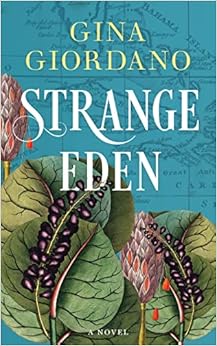
Strange Eden is a novel of many things. Foremost, it is a historical fiction set in the Bahamas in 1791, as the British Empire consolidates its colonies in the Caribbean and mourns the loss of its American ones. The story revolves around Eliza Sharpe née Hastings, a young English girl of the gentry class and her life as the bride of Lord Charles Sharpe, the scion of an old Colonial family and a Lieutenant Colonel in the British Army at Nassau. Their union is a relationship rife with hostility and repulsion; it is a core pillar of the novel, as is Eliza’s and Charles’ relationship with one of this old friends, Jean Charles de Longchamp.
Romance aside, the novel also possesses paranormal elements, political intrigue, and feminist assertions. Eliza is a young woman with many gifts, some which are less desirable in the highly hierarchical and patriarchal world of the Colonial 18th century: a fierce independence, a boldness of spirit and tongue, a sharp intelligence in matters spiritual and political, and an ability to see that which is beyond the visible. In her adventures on the island, Eliza encounters those who expand her view of the world and those who would seek to limit it. It is a diverse cast of characters: Lord Dunmore, the governor of the island, Charlotte and a host of aristocratic society women, Cleo, an enslaved obeah woman, pirates and smugglers, and a mysterious shadow man. Each one paints this Strange Eden in garish and sober colors. It is a paradoxical place for those who are free may also live in chains, though made of silk and gold, and only those who are enslaved know the notion of freedom is an illusion. The novel’s title is apt: what is a paradise for some is very often not a paradise for a great of many others.
This dissonance is what makes Strange Eden shine as a work of historical fiction. For this reader, the appeal of the novel is its attention to historical notions of gender, race, and class. Giordano includes a bibliography at the end, and it is clear that she has done a great deal of research. I hesitate to consider the novel appropriate for the classroom; it is not. The research is good, though not at a professional level. But it was not meant to be; Strange Eden is not a textbook. The historical research Giordano has done remains a positive attribute of the novel nonetheless.
Giordano highlights the expectations put upon women of Eliza’s aristocratic class, and the overarching misogyny women experienced in this era. This is a theme which threads throughout the novel. The expectations of white upperclass women are contrasted against those imposed on enslaved women, like her young maids, Celia and Lucy, and contrasted against the rights and privileges of powerful men like Charles, her husband, Jean de Longchamp, and Lord Dunmore.
Giordano also pays close attention to the slave trade in the Atlantic, racial hierarchies risen out of Europe’s Enlightenment, and the paternalistic racism of the so-called “Civilizing Mission” as it was inflicted on the indigenous and persons of color in the colonies. Britain’s slave trade was abolished in 1807 and the practice itself in 1833, several decades after the moment of the novel; the novel is bold in its recognition of the tension between abolitionists and slave-holders at this time.
Strange Eden delivers a powerful lesson about the gendered and racial notions of the British Colonial world.
The mode of its delivery unfolds at a languid pace. The novel’s prose is thick with description, rich like the molasses that were produced in the Caribbean islands the novel is set in. In some parts the prose, to stick with the analogy to molasses, is unrefined for this reader; on occasion its phrasing conveys cliché over clarity or is redundant, perhaps benefiting from further editing. These do not degrade the novel on the whole. Giordano delivers a cohesive narrative, tangible characters and dialogue, and — most importantly for this reader — weaves a textured fabric of the period. Readers will find the prose is performative of the heat, vibrancy, and slow pace of life inherent in the British colonies of the 18th century. The result is an immersive read.
Readers should also know Strange Eden is the first of a series. The novel ends on a cliffhanger, “to be continued“; however this should not dissuade readers for two reasons. First, the novel ends at 517 pages allowing one to meander through it at their leisure until the next in the series is available and second, the novel has the strength and narrative arc to stand alone without its sequel. The ending satisfies.
To purchase a copy of Strange Eden click here. At present, you can purchase it on Amazon for $19.99 (paperback) or $4.99 (Kindle ebook).
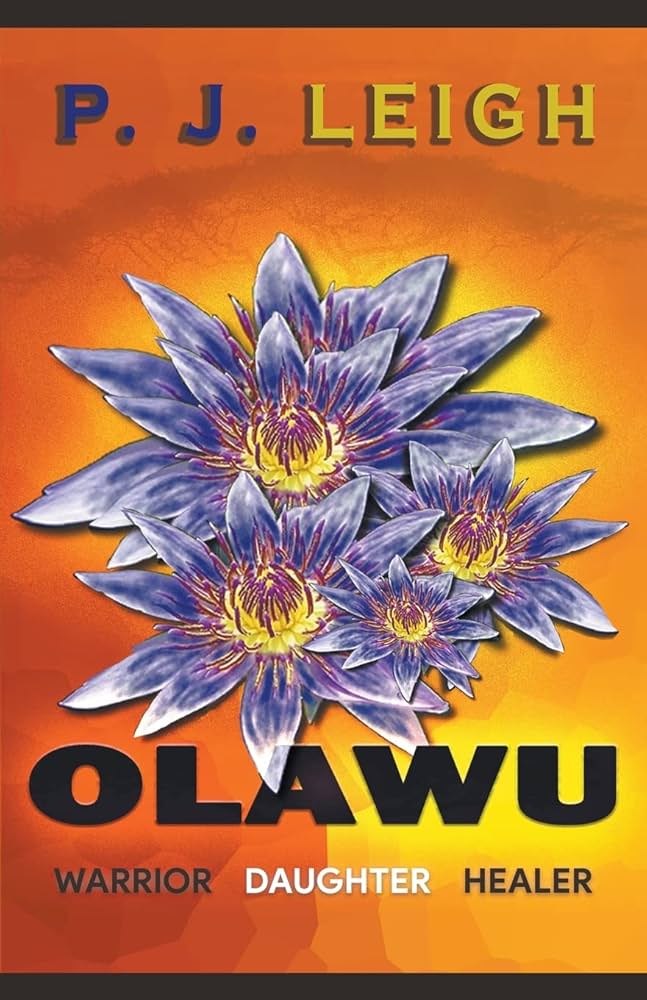
Olawu appealed to my longing for a postcolonial canon. It delivered — and then some. The novel is reminiscent of the work by Yaa Gyasi, Chinua Achebe, and Ngũgĩ wa Thiong’o; the language and the prose — sparse but evocative — is striking, the characters live and breathe, the story is inspiring. A whopping ⭐️⭐️⭐️⭐️⭐️ for this young adult historical romance/fiction.
This novel disrupts modern colonial culture (in which we all live) on multiple levels:
As an independently published novel by an author of color, Olawu is a challenge to the institution of traditional publishing and gatekeeping that that system engenders.
As a novel set in a pre-colonial East African world, Olawu highlights the existence of East Africa, its diverse peoples, kingdoms, and communities as independent from European history. We do not need to mark African time according to European histories and events.
The eponymous protagonist is a strong woman and the novel draws attention to the role of women in pre-colonial East African society. In doing so, Olawu challenges euro-centric notions of gender, especially those imposed on women and womanhood.
The incorporation of Xhosa, KiSwahili, and Zulu words, phrases, and culture into the text is an act of postcolonial defiance. Given the Colonial weaponization of language, this act of text is a rejection of the primacy of English.
The novel is an East African bildungsroman, it follows its eponymous protagonist, Olawu as she comes of age, becomes a young woman, and finds her place in the world as an adult. It unfolds in what might be seen as three parts. The first focuses on her childhood and ambitions — and how the community into which she is born and raised deems her inferior on the basis of her gender. The second exposes Olawu and the reader to other possibilities, how women might be valued and how womanhood might be performed elsewhere. This is also the part of the novel where she struggles to understand herself, her desires, and the inevitable tension between conformity and personal fulfillment, especially when the latter flies in the face of cultural norms. The last part is when Olawu decides who she will be and how she negotiates with that tension to achieve her objectives. Romance (not sex) is woven into this story about a young woman shaping herself and the world around her, serving as the scales which Olawu must balance and ultimately tip one way or another.
A number of themes thread through the novel from start to end: Olawu’s ambitions, the institutions and individuals who stand in her way, and her resilience and resistance against them. A major contributor to Olawu’s success in finding herself and her place in the world is her family, both biological and found. The proverb, “Umntu ngumtu ngabantu” (A person is a person because of other people) is an important element of the novel; Olawu does not accomplish what she does on her own, but through the kindness, love, and sacrifice of others.
Olawu‘s success as a novel is also due to Leigh’s incisive and evocative prose, and well-crafted characters. Leigh’s prose reminds me of Things Fall Apart; the writing is succinct and sharp, absent of flowery and unnecessary description. Leigh focuses on the characters, letting the reader organically create an image. The characters are distinctive and recognizable; their flaws — even Olawu’s — mirror our own, making the reader sympathize with all of them, even when they are at odds with one another.
The result is a highly character-driven, powerful coming of age story.
Leigh’s depth of research must also be commended. While the novel does not draw from specific East African pre-colonial history, it is evident Leigh has researched the region’s precolonial political systems, structures, and gender history. I especially appreciated the inclusion of glossary terms and pronunciations at the beginning of the book.
This is a fantastic read for all young people, but especially young women of color who need to see themselves represented decolonizing/post colonial literature like this.
I encountered Olawu through a Facebook group I’m in, where I serve as a reviewer of (mostly) independently published books. Organized by the admins of this group, the review event takes place bimonthly, and involves reviewers submitting a short biography to the organizer. Authors who are looking for reviews of their work reply to the organizer, selecting the reviewer of their choice. Reviewers then select which authors and books they’d agree to review based on the descriptions of the books.
If you would like to read Olawu yourself, you can find it here on Amazon. It is 318 pages and the paperback is currently priced at $14.99 and the Kindle ebook at $8.99.
The Last Heir to Blackwood Library: A Novel by Hester Fox
If you enjoy books about books, especially of the quasi-historical/paranormal/mystery/romance variety, then The Last Heir to Blackwood Library will check all your boxes. The story revolves around Ivy Radcliffe, a young woman left devastated and alone by WWI in England. She finds herself leaving the loneliness of London for Blackwood Abbey in Yorkshire — and a seat among the gentry as Lady Hayworth.
Not only must she learn to navigate her inheritance, which includes the abbey and the eponymous library, but also her new servants, the village, neighbors, and…. herself. Ivy undergoes strange changes to herself that she cannot account for, though she is amply aware of them. The oddness and feeling of foreboding is amplified by the history of the abbey and the library.
The library becomes the focal point of all the madness and Ivy realizes she must make hard choices about what she wants from her new life and what part of herself she is willing to lose to obtain that.
The appeal of this novel is not only in the mystery of Ivy’s inheritance, built into the story arc, but Fox’s ability to inject a modern feminism into Ivy’s motivations and the old-fashioned world of the English gentry in the late Edwardian/Interwar period of the mid 1920s. The result, though somewhat anachronistic, is a very contemporary and appealing leading character and an inter-generational, inter-cultural kind of tension, the kind that pits traditionalism against modern sensibilities.
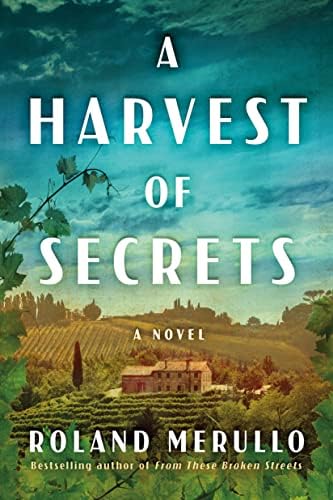
A Harvest of Secrets is a slow burner, then halfway it ignites like gunpowder and the end is an emotional and deeply satisfying explosion, uniting all the storylines of the novel together in a kind of literary bonfire.
The novel is set in WWII, fascist Italy when much of the country has fallen under the control of the Nazi regime. The story unfolds primarily in a rural northern village where an old, aristocratic family grows grapes and produces wine. The San Antonio family and their estate have been lords over the land and the people for generations. There are tensions between the family who own the winery and its workers, age old class-based tensions that threaten to erupt under the additional strain of wartime food shortages and unpredictable Nazi raids. The war has also brought about new factions and exacerbated pre-existing enmities: resistance fighters and saboteurs against Hitler’s Nazis and Mussolini’s Blackshirts, deserters from the Italian and German armies, Il Duce’s spies, and Nazi collaborators. Caught in the cross hairs between these conflicting factions are two young lovers: Vittoria, the daughter of the proud noble family and Carlo, the orphaned peasant boy she grew up playing with. There are also others who find themselves trapped on one side or the other of the war: Old Paolo, the foreman at the winery, Umberto San Antonio, the noble man who owns the land, Enrico San Antonio, his son and Vittoria’s brother, Eleonora, the Jewish woman in their midst. They each have their obligations to family, country, and to those who have sheltered, raised, and loved them. These obligations tear the lovers and their community apart — and bring everyone together in other ways.
Merullo’s novel is not only about the lovers; it also about the many individuals whose lives intertwine with theirs. Indeed, the novel is more of a broad panoramic view of Italian society in this fraught period of the twentieth century. Some of the people Carlo meets are sympathetic to Mussolini, others seek freedom from the politics that engulfs them all, others are victims of Il Duce’s ill-conceived plans and ambitions. Vittoria is likewise surrounded by those who would do her harm and protect her from it. There are resistance fighters, Nazi soldiers and officers, Nazi collaborators, and Mussolini’s spies lurking and active all over the countryside, waiting to strike or entrap her and other innocent Italians who simply want to do what is right for themselves and their families, and by their conscience. As a woman of this period, Vittoria’s options are limited. Italian patriarchy places shackles on her that are made for women alone. She is meant to be a good daughter, a good woman, a quiet woman — but in the chaos of the war Vittoria cannot remain silent.
Woven into this larger cultural, social, and political vista of Italian wartime life is a domestic drama and mystery. Vittoria’s dilemma is at the center of this. She must bargain her silence for her freedom, sacrifice her morals to be a good daughter. But she is also a product of a longer history of women like herself.
Secrets held for decades, the kind begotten by forbidden love, are as much a part of the estate and the fabric of life in the vineyards as the vines themselves. These unraveling mysteries push and pull Vittoria, Paolo, Umberto, and Carlo in all directions. The emotional and real famine of war force these long buried secrets to emerge on the surface. As the Americans and Allies bomb Italy in order to free it, Vittoria, Carlo, Paolo, Umberto San Antonio, and others scramble for safety and try, hard as they can, to keep these secrets under cover.
Overall, a good read, especially for readers who enjoy themes of class conflict, gender histories, and ensemble casts of characters, and domestic mysteries.




 Dr JoAnn LoSavio