Fire Exit: A Novel by Morgan Talty

Fire Exit: A Novel by Morgan Talty

Fire Exit is a punch in the heart, the kind of novel that really does leave you heart-sore for a long time afterward.

The novel revolves around and is narrated through a man who is white and, in adulthood, was removed from his residency on an Indian reservation. His eviction and his whiteness separates him from his daughter, and from the life and culture he grew up with on the reservation. Fire Exit is the story of this man grappling with his identity as an outsider, and a story of those on the inside — Indians — who are themselves still in the process of sorting through the legacy of settler colonialism and the co-called Civilizing Mission against them. Fire Exit highlights the fluidity of identity, but also the rigid barriers which define it within ourselves and by others imposed on us. The novel exposes the messiness of relationships, especially in indigenous communities which have been so ravaged by racism and colonial ideologies.

I am reminded again how singular it is that indigenous people of North America are some of the few peoples on earth who must continually prove who they are. I recently read a piece in the New Yorker on Pretendians (typically white people who claim indigenous heritage or identity) and am struck by both the necessity of proof and how exhausting it must be as a human being. It saddens and inspires simultaneously.

The ever-present trauma of colonialism is a burden we cannot put down, any of us; and the pursuit of decolonization can never end. For that reason I am loving this wave of indigenous literature; though not “new,” it feels like indigenous writers and stories are getting more mainstream attention, reaching new audiences (like myself) who find solace and inspiration in them.

But, back to Fire Exit.

Though I cannot know what this is for indigenous people, I can say that as this is also a story about family, what it is to be a family, what is it to act out and perform family, I felt connected to a kind of universal understanding of “family” in my reading of it.

Talty is such a fantastic writer. The words just come together, like lyrics that feel familiar and yet woven together, produce a song I haven’t heard before. The mothers and fathers, daughters and sons in this novel are people we can connect with, and yet, as those living in reservations or on the edges of them, they have a unique life experience, one that I do not know (cannot know, really). I feel that Talty has made it possible for me to feel a little bit of their experience.

It is a sad novel, and a beautiful one.
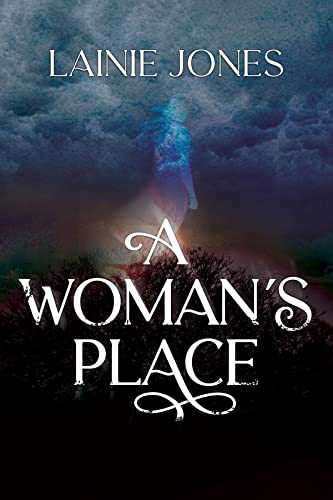
A Woman’s Place: A Novel by Lainie Jones

A Woman’s Place: A Novel
by Lainie Jones

Some context as to how I came across this book. As I have mentioned before in another review, I do not usually gravitate toward independently published novels. But as with that previous review, I happened across the opportunity to do so via a FB group I am in which pairs up authors with reviewers. See here for the details of the May 2023 Book Review.

I am not one to pay attention to those one-word reviews you see plastered all over the covers of mass market books: “Captivating”, “Spell-binding”, “Unputdownable!” What is one woman’s tea is another’s poison (isn’t that the saying?) and so I am hesitant to repeat any of those vague, yet complimentary, descriptions here. But the thing is, A Woman’s Place is truly captivating. The paperback is a substantial read at 317 pages; I found myself lost in several chapters at a sitting, finishing the book in two days. It is, indeed, hard to put down. This historical paranormal mystery is riveting to its last page.

Jones does more than weave a gripping story; her prose is well-crafted and the dialogue is vivid, resulting in the creation of tangible, flawed, and very human characters. Jones holds a PhD in creative writing and possesses an academic and literary portfolio which clearly contributes to the historical and literary robustness of A Woman’s Place. This novel is clearly not a “standalone” work in the sense that it is built upon a foundation of years of research, thought, and analysis. What we read in A Woman’s Place is merely the tip of a very large iceberg.

A Woman’s Place is a novel running along the lines of Yaa Gyasi’s Homegoing or Melissa Fu’s Peach Blossom Spring as it is a multigenerational tale. It might be appropriate to liken A Woman’s Place to a fictional European settler version of My Place by Sally Morgan, though, of course the latter is biographical and A Woman’s Place is fiction.

The setting of Jones’ novel is rural Australia, in sheep farming country. It revolves around the events at a remote homestead named Barragunyah, a desolate place known by the name given it by its original inhabitants, indigenous aborigines. The novel spans the end of the 19th century through into the late 20th century, capturing the experiences of five generations of women of the family who came to farm the land. There is also another woman who resides on the land, a mysterious presence called only Mary. The novel unfolds the mystery of Mary and the magnetic pull of Barragunyah, as well as revealing how Australia’s and the world’s history comes to affect ordinary Australians, native and settler alike. British imperial history, the tragedy of the World Wars humanity faced in the twentieth century, and changes in women’s rights emerge as central hinges in the novel. There is also a prosopographical aspect to the novel in that the reader is treated to how these large world events actually affect the daily, lived lives of the Barragunyah women.

In many ways, this is a fantastic historical fiction written for a historian. Or perhaps I feel that way because I am one, and because Australian colonial and post-colonial history, being adjacent to Southeast Asian history of the same period, is something I have an interest in on both a professional and personal level. I think American audiences will find both novel elements and familiarity in these pages. The bond between mothers and daughters, humans and the land we inhabit and shape (and which shapes us), and our selves and our place in the movement of time and history are universal experiences, but American readers will also find themselves introduced to Australian history and experiences.

The novel also has an intriguing mystery embedded in it. As each generation faces the turbulent events of their age, Barragunyah and Mary are there, watching and waiting — though it is unclear what for. This is where the paranormal element emerges. In this way, A Woman’s Place reminds of me of Simone St James’s supernaturally tinged novels, The Haunting of Maddy Clare or The Sun Down Motel. Like many paranormal mysteries, Jones’ A Woman’s Place revolves around an unspoken crime, one grounded and inescapable in Australian history. Jones does a fantastic job of revealing the root of this crime without giving it away, tantalizingly allowing the reader’s own imagination to make sense of the darkness where Mary resides. On that point, I wish Jones had delved more deeply into the aboriginal perspectives on Barragunyah; I am left wanting a sequel or a prequel or the “other side” of the story, as it were. Barragunyah is haunting; as a reader I feel just as deeply connected to this place as the Larson women.

That is a good thing, to be left wanting more.

If you are interested in purchasing a copy of this independently published novel, you can find it on Amazon here. At present, it is priced at $7.49 for the ebook Kindle version and $18.99 for the paperback print.

The Education of Augie Merasty: A Residential School Memoir by Joseph Auguste Merasty and David Carpenter

The Education of Augie Merasty: A Residential School Memoir
by Joseph Auguste Merasty and David Carpenter

Every memoir is significant, on the basis that it documents a part of the human experience — and in the end, what do have if not an experience of life? In the context of the universe, this is what makes our existence unique — but there are some memoirs, some human experiences that possess a weightiness absent in others. That is, they reveal a humanity that transcends individual experience. The Education of Augie Merasty is one of these memoirs.

The cruel history of colonial settlement isn’t newly discovered — but it was hidden, deliberately and systematically for centuries. In the past fifty years and much more recently, excavations of memories, land, and archives have revealed the depth to which this erasure was taken. Merasty’s memoir is one of these excavations. [My Name is Seepeetza by Shirley Sterling (30th Anniversary Edition) is another memoir of residential schools and colonialism in Canada I’ve read this year, if you’re interested.]

I have an especial interest in these kinds of historical documents, not only as a historian of decolonization, but as an educator; the utility of the historical documents in the classroom are invaluable to convey the real effects of racism, colonialism, the power of the state in shaping our lives. Students often see the government as some kind of abstracted, remote thing, a hovering object over their lives that merely casts a shadow every once in awhile. Memoirs of this nature reveal how wrong that assumption is; the state is neither above nor below, it is embedded in every part of our lives and beings — even our DNA and the genomes that make up ourselves and our ancestry have been shaped by states and power. The Education of Augie Merasty is proof of the depth of the state in shaping human experience.

What makes The Education of Augie Merasty poignant is not only the memories he shares with the reader, but the whole of the story of this memoir’s making. The convoluted path and necessary involvement of the writer, David Carpenter — who serves as historian here — is a testament to the damage and legacy of settler colonialism in North America. The incompleteness of the stories, the silences and gaps in time and memory, as well as Augie’s language, preserved here by Carpenter, are evidence of the zigzag pathway that history is recorded, preserved, interpreted and ultimately used. As a tool to teach historical methodology, The Education of Augie Merasty is a fantastic case study.

The chronology of the memoir too, in the way it links the past to the present, is invaluable. Too often students see history as a static, buried thing of the past. That myth is a hard one to kill. But kill it we must, because history is not only the root of the present, it is also a reflection of our present selves and world. That is a key characteristic of history: Carpenter’s presence in these pages and the unresolved ending (unlike many memoirs, this is not posthumously produced) help to deliver this lesson.

Other aspects of the memoir make it even more perfect for classroom and course use: its length is short, its language is accessible, its story is compelling and shocking. The absence of larger historical events occurring in Canada and the world are also bonuses here too, allowing the instructor to compliment the text as appropriate to the course level.

Merasty’s memoir is one I will be considering for use in my courses.

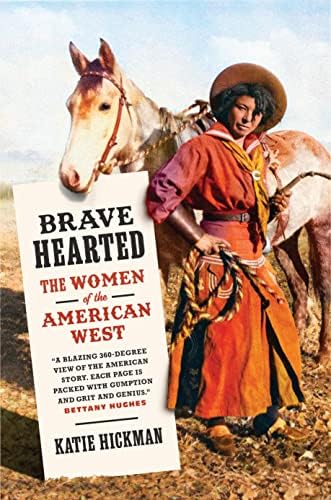
Bravehearted: The Dramatic Story of Women of the American West by Katie Hickman

Bravehearted: The Dramatic Story of Women of the American West
by Katie Hickman

“Gripping,” “Exhilarating!”, “Captivating!” These are descriptors I often flutter my eyes at, chalking these up to marketing histrionics that serve solely to assuage publisher’s fears about book sales and authors’ egos. But in Hickman’s case, I was hard pressed to find more authentic adjectives for Bravehearted: The Dramatic Story of Women of the American West.

I was expecting no less, to be honest. I’ve read Hickman’s work before (Courtesans: Money, Sex and Fame in the Nineteenth Century (2003) and Daughters of Britannia: The Lives and Times of Diplomatic Wives (1999) specifically) and enjoyed her scholarship for many reasons. Bravehearted, however, was the first time I’ve read Hickman’s scholarship since I began and finished graduate school, becoming in my own right, a historian. I can now say I appreciate Hickman even more than I did previously.

Bravehearted (like Hickman’s other works) is, from the perspective of a general reader, incredibly easy and smooth to read. The facts (that is, the history) are woven so artfully into her prose that the reader never feels like there’s a history lesson embedded in it. (There is, of course. More on that below.) Instead, the women, men, and children — indigenous, white settler, and immigrant alike — feel like full-fleshed characters in a story set in an epic, sweeping landscape. I could not help but feel the tragedy and simultaneous hopefulness of their journeys across the United States. At times, the harshness of the wind, the damp of the rain, the aridity of the desert air seemed to tragic, and simultaneously hopeful whip my hair, slick my skin, burn my nose. Hickman achieves what all historians — storytellers that we are — aspire to do: transport the past into the dimension of the present.

Each chapter of the book focused on a different region, a different woman, a different route settlers took toward the Western coast. The Pacific Northwest, the Californian region, and the Southwest were all covered in succession in Bravehearted. Embedded within these pages were not only those perspectives of white settlers, but indigenous voices too; though, the focus of this book was primarily on the European, East Coast, Midwest, and White settlers who encroached, entitled and arrogantly, into Indigenous lands. There are mentions of other people of color, Chinese immigrants and Black women, but again, these feature less prominently than white women and men. It is worth noting that there are few Mexican/indigenous women in Bravehearted; indeed, as I attempt to recall the book from memory, I find myself unable to remember one. Of course, it’s possible I am just forgetting, but that in itself is telling: There weren’t enough of them mentioned to mark a place in my memory. (The index is absent in the ARC so I could not look up where I might have read about them in it.) This is a well-researched, brilliantly written work of historical scholarship for any audience, but, it is not a work of decolonization; its intent is not specifically aimed at disrupting dominant narratives of white settler colonization or to bring to the forefront the voices of women of color.

This is — and this is not a detraction so much as it is a neutral statement — a history for those who are interested in women and the gendered component of history of the American West. The lesson is a simple one, but one which still requires learning: white women were as much part of the making of the West into the White American West as white cowboys, sharp shooting lawmen, and male miners (there were female miners too!) In other words, white women (and women of color in lesser numbers) were there too and they shaped White America in equal measure to their masculine counterparts.

The content of Bravehearted is not entirely divorced from race or ethnicity, but certainly the focus here is gender more so than race or ethnicity. Hickman’s inclusion of men and women of color and the indigenous perspective is not minor or token in any way; it is well done, but academic readers who may be expecting a stronger connection between or a deeper discussion of gender and race might struggle to locate it within this particular work. This is — and again, this is not a detraction — a work for a general audience. What Bravehearted offers the reader is breadth, indeed, a wide lens of the landscape of the American West in terms of the gendered experience of traversing it in the 19th century.

If, by now, my final verdict is unclear, let me end with it: This is a fantastic telling of American history worth any and every reader’s time.