
Puppet Flower: A Novel of 1867 Formosa by Yao-Chang Chen.

Translated by Pao-fang Hsu, Ian Maxwell, and Tung-jung Chen.

Puppet Flower: A Novel of 1867 Formosa by Yao-Chang Chen.

A historian’s historical novel! Puppet Flower is a narrative novel based on real events, a watershed moment in Taiwanese (Formosan) history when the United States and Western colonizing powers begin to encroach on Taiwan in earnest. The novel begins with an unfortunate event, wherein an American ship encounter one of Formosa’s indigenous tribes after surviving a storm at sea. The surviving crew — including a woman — are murdered by the Formosans, triggering a series of investigations and the arrival of more Western ships and military.

What makes Chen’s novel special in this genre of historical fiction is that Western perspectives are well-balanced with indigenous ones. It is rare to encounter fiction focused on Taiwan’s indigenous community, historical or otherwise; in highlighting their unique experience here Chen offers readers and the world at large a rare and unique literary opportunity. The result is a fantastic novel that — in my opinion — would do well in the classroom for a number of reasons aside from its historical focus:

  • The story arc is peppered with references and information about Formosan culture, providing a context for the historical events themselves. Unlike many historical novels, which rarely explain the cultural references they point to, Chen writes for the non-expert.
  • Puppet Flower offers multiple perspectives rather than focusing on a single protagonist. In this case, the novel allows us to see the event from an indigenous and Western point of view.
  • The prose is straightforward and not superciliously literary, making this an ideal undergraduate book; it does not require a great deal of knowledge about literary tropes, metaphors, and other devices typically used in novels. This is, truly, a history novel.

Overall, a novel of great historical value, not only in terms of its content, but in its production. This is decolonization at work, a piece of scholarship that highlights the indigenous perspective, a view of the imperial encounter from those who were colonized.
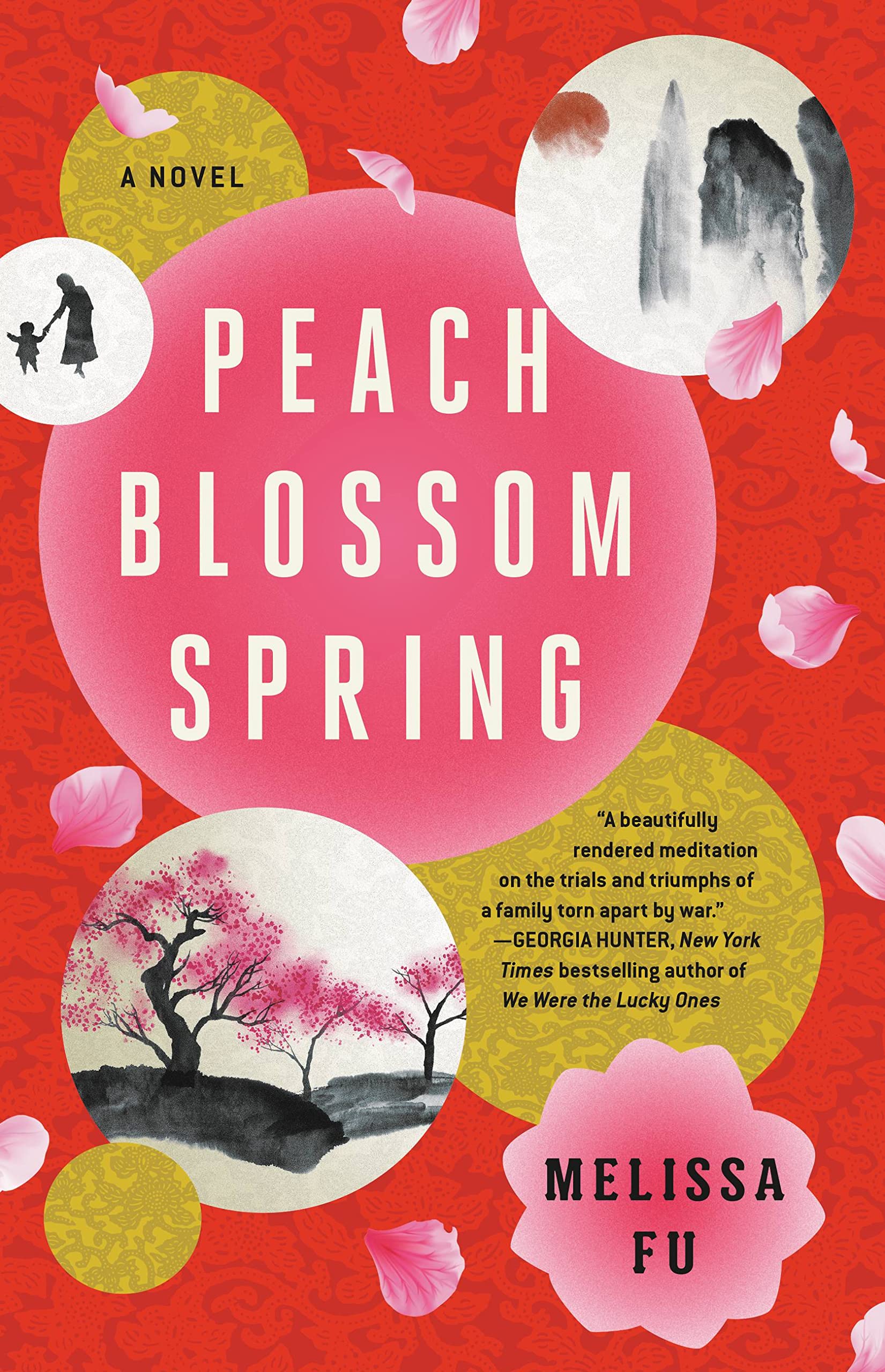
Peach Blossom Spring: A Novel by Melissa Fu

Peach Blossom Spring: A Novel by Melissa Fu

I’ll be honest; the first 60 pages of this novel did not impress me. There was nothing wrong specifically, it’s just that nothing stood out to me in terms of character development or plot. But persistence paid off and by the end of the book I was in tears, ugly crying over the lifetime of grief, loss, and intergenerational trauma that history forced on the characters. This is a book I will never part with; I want my children and grand children to read this book.

The novel begins in the 1930s when China has been ravaged by European encroachments on its sovereignty; internal fractures between peasants, warlords, and the rising middle class; and the Japanese, who are gaining ground and support for their own imperializing campaigns. The Dao family are much like many others of their class: they own an antiques business, they are merchants living prosperous urban lives. Then the Japanese arrive and they are forced to flee. Meilin and her young, suddenly fatherless son, Renshu escape with her brother-in-law, her husband’s brother, Dao Longwei and his wife, Wenling and their two daughters. But the war continues and despite Longwei’s protection, Meilin and Renshu are separated from the other Dao family members.

The war with the Japanese slides into World War II and then into China’s Civil War. The seams between these conflicts are invisible to those like Meilin and Renshu who survive in the semi-peaceful interstices and spaces between them. The novel traces their journey across space and time, from China to the United States, and is marked by the people and things they lose along the way. This sense of loss — particularly of the loss of family, identity, and belonging — is the fulcrum around which the novel revolves.

Meilin, Renshu, and eventually Renshu’s daughter, Lily narrate their own and the Dao family story across several decades, three generations who experience the their subjective transnational, migration history and the larger, tragic events of Chinese history very differently. The reader is given a glimpse into living wounds of war, the kind that fester long after the battle has been lost, a world in which those who bear the brunt of war are not the combatants but the bystanders, even the truly innocent, those as yet unborn at the time of war. Like Yaa Gyasi’s Homegoing (which I read, but did not review here), Mother of Strangers by Suad Amiry, and Moth by Melody Razak this is a story of the effects of war and politics on those who had little to do with battle.

Loss and the grief of never being able to “go back” to be again what you once were, to have what you once had, and the especially painful suffering of being a transnational person, an immigrant belonging to two places at once and never fully to any one of them is a key theme in the novel. This is embedded in the title of the novel, which is premised on a scroll that Meilin inherits from her husband and a story she draws from it and tells to her son. In each their own ways, Meilin, Renshu, and Lily can never truly be whole in the way they want. History imposes on them, forces them to be split, to grieve for something or some part of them they cannot have, cannot be.

In comparison to Moth and Mother of Strangers, Peach Blossom Spring is less literary in prose and style, but no less powerful or profound. Fu’s style and language is more accessible to the casual reader of historical fiction; it is succinct, but deeply emotionally evocative. Indeed, the emotional build up is slow and steady. I didn’t realize how attached I’d become to the characters until the end, when events forced me to confront the idea of losing them. Fu is a shrewd and talented writer, and the emotional cuts her words make leave tender scars.

Although those first 60 pages did leave me wondering where exactly events were heading… I now wonder if that lull was deliberate. Perhaps the explosion of my interest performative of the dramatic effect of war on the characters. The lull before the storm…