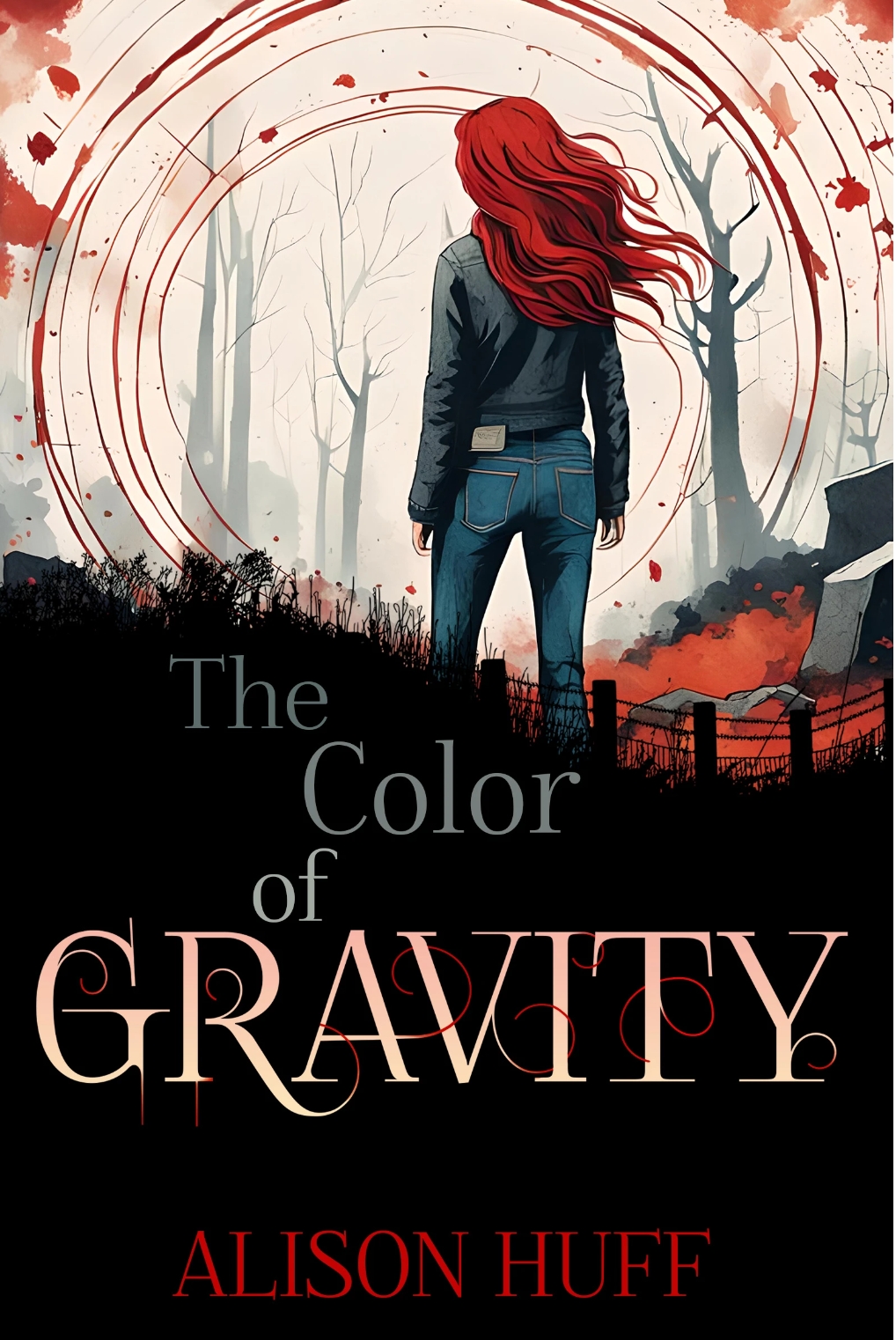
Fans of Young Adult fantasy who love the genre, with its emphasis on the discovery of self and coming-of-age stories, but who prefer a more mature protagonist will find The Color of Gravity a perfect read!
Seralynn and Bellamy are adult sisters, torn apart by the latter’s sudden and mysterious disappearance. Seralynn tries to come to terms with the loss of her sibling and her grief, but is finding it hard to let go. Then she encounters a rift in the world, one which offers her the possibility of finding Bellamy. Though torn between her grief and yearning for her sibling and fear of the unknown, Seralynn finds herself in a strange and magical world, one that is both wondrous and dark.
At the heart of this novel are the two sisters, connected together and yet, at odds, with one another as each woman seeks her own path, sometimes at the other’s expense…
Huff takes the reader into a fantasy realm; there is significant attention to world-building here — and at times the story is buried — but readers are likely to appreciate the depth Huff creates. And ultimately, the story of Seralynn and Bellamy re-emerges. Woven into their story are others Seralynn encounters on her journey: Fadrial, Asmodeus, and Tobian, among others. The novel creates a sense of community among these strange bedfellows: demons, humans, monsters, and magical creatures.
Huff’s novel is the first book in a series. I am not usually a fan of books series, simply because I do not have the attention span for it. That said, the sisters’ adventures — together or apart — will likely yield a fascinating sequel.
Perfume River is a New Adult bildungsroman, revolving around a young woman named Sam as she navigates her life around competing stakeholders: lovers, friends, herself. She is also wrestling with her past, specifically, her dysfunctional childhood and relationship with her parents. She encounters a young black boy, also suffering through his own life and problems. Together, they attempt to make sense of the world around them and the demands made upon them, to be adults, to grow up, to take on the consequences of others’ decisions.
My review of the novel is mixed. On the one hand, the novel is well-written, in a technical sense; Patrick’s prose is smooth, even, and consistent. As with her other work, her use of words is sparse and succinct, leaving the reader to indulge in their own imaginings of the space and events. The pauses and silences are evocative.
On the other hand, unlike Patrick’s other works, Mercy and Anxiety in the Wilderness, Perfume River lacks emotional depth. Overall, this novel does not deliver on its emotional promise, the one made in its synopsis.
There are absences which flattened Sam and Rexel as individuals. The muteness of Rexel’s family and the superficial context of his life beyond his encounters and engagement with Sam were a detraction for this reader. The reader is treated to one facet of Rexel’s emotive life: his wariness, his diffidence, his armor. Sam doesn’t seem to really break through Rexel’s armor in a meaningful way so that the friendship benefits him. A deeper view into Rexel’s life beyond Sam, perhaps his own chapters, would flesh him out further as a primary actor in this story. (Or, perhaps, the story isn’t or shouldn’t be about him. Is this really Sam’s story and not his?)
Ultimately, for this reader, what is lacking in the story is change. Sam’s metamorphosis is too subtle, delivered too late in the novel. Much of the novel feels like it isn’t “going anywhere” as the events which are meant to serve as catalysts are given too brief of a treatment. This reader found it difficult to connect with the other characters in order to feel the tension between them and Sam. Much of the tension that exists is situational, but the internal psychological turmoil they cause is left unsaid; this absence hindered this reader’s ability to connect with Sam and these other characters.
For this reader, the Prologue was the most compelling element of the novel; it was intriguing and suggests a story about dysfunctional families. However, the distance between Sam’s childhood and adulthood is not bridged by the remainder of the novel.
Overall, for this reader, the novel did not deliver on its synopsis’ promise; it feels unfinished, like it hasn’t had time to fully develop. Its characters feel under-developed, as if the author hasn’t had time to get to know them fully yet, and as a result, this story of their lives only skims their surfaces.
All this said, I am a fan of Kathleen Patrick’s work and look forward to her next novel.
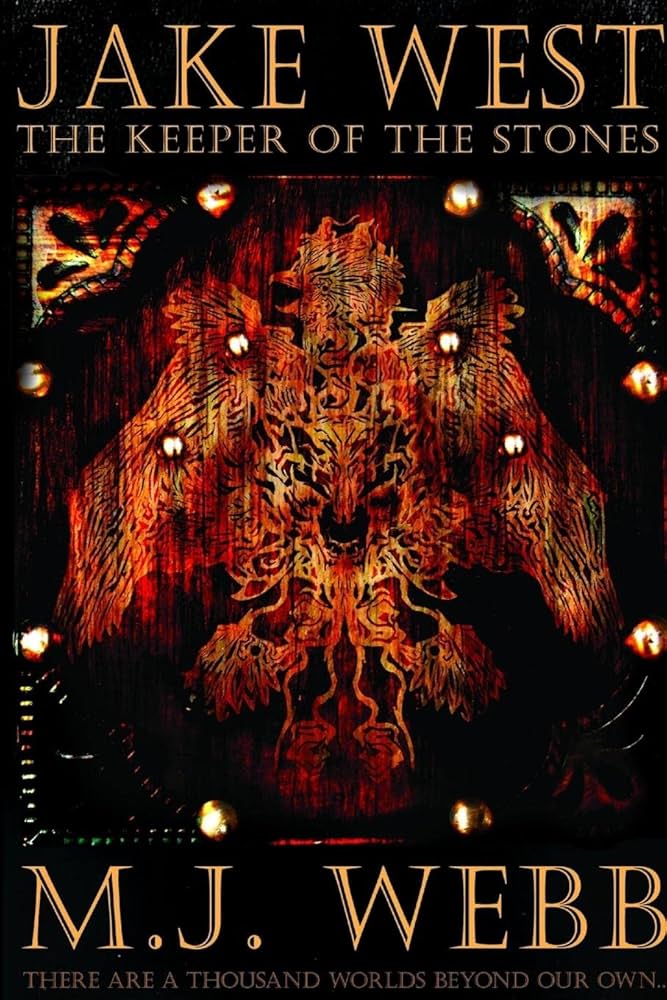
As I delve into self-published and independently published novels, I am also exploring outside my usual genres. I won a giveaway of this trilogy from a FB Group and was thrilled to have a chance to read a fantasy, Young Adult series.
The Keeper of the Stones introduces readers to the world of Rhuaddan, another world that exists in parallel to our own. It is a world torn to shreds by war, and Jake West belongs to a rare clan of humans who have been blessed — or cursed — with the ability to travel between this world and our own. Jake and his friend Ben discover this rare talent while rummaging through Jake’s grandfather’s attic. The results are catastrophic — and adventurous! The novel leads the reader into a world of high fantasy, a quest-driven journey of these two human boys through a non-human world as they seek to protect stones which could lead to the destruction of worlds. I will leave the reader to discover the consequences and ending themselves (hint: there are two more books in the series!)
This Jake West novel would appeal to those who enjoyed the classic, The Lion, The Witch, and The Wardrobe by C.S. Lewis and the rest of the Narnia novels, as well as those who appreciate the classic fantasy realms in J.R.R. Tolkien’s Lord of the Rings novels. The Jake West trilogy draws from both of these classic series, producing a narrative along similar lines; though, of course, the world of Rhuaddan is unique.
The story aside, Webb’s prose is smooth and error-free. Some parts feel plodding, offering — in this reader’s view — a little too much exposition that does not add to the characters’ development or the development of the story. Its pacing was slower than this reader would have liked; in several chapters I wished for less exposition and world-building, and a more rapid unfolding of Jake and Ben’s story. But, this is likely because world-building is not a particular favorite subject; fantasy is not my cup of tea in general. That said, Webb provides ample world-building and a fully fleshed out landscape for the fantasy reader; as a historian I deeply appreciated the attention to Rhuaddan’s past to understand its present. Overall, Webb’s writing is sound and its language is well-suited to its audience of young adults.
Contracted Together, a young adult romance novel, is a step (or two!) out of my usual range of reading; I encountered the novel via a Facebook group that runs regular reviews of independently published or self-published writing.
The novel revolves around a pair of ill-fated marriage partners. The term “lover” would be a stretch here, since Zavian and Mona’s union is premised on a legal arrangement, a contract lasting for a year, during which Mona agrees to play Zavian’s wife in public, with none of the private affection, sexual expectations, or even, friendship. This is a spin on the classic Hate to Love trope. Indeed, Zavian finds his bride — in his words — “annoying” even as he betrays a softness for those same characteristics. The pair’s relationship — strained though it already is — is beset by a strange set of circumstances: estranged parents, exes, their own proclivities towards workaholism or romanticism, expectations of the other. I will leave it to the reader to discover the end results and what happens to Zavian and Mona.
Out of a total possible 5 stars, my overall rating is ⭐️⭐️⭐️
My review of Contracted Together is mixed; on one hand, given Dhanota’s biography and stated intentions of the novel and their writing (as a whole), there is much I was left wanting. Yet, on the other hand, the novel has great promise and delivers on a number of other points.
The novel has been well-edited and is grammatically sound. Dhanota’s writing is technically very good, and the language and vocabulary chosen is suitable for its stated audience. The novel’s premise is also attractive. It opens with an immediate hook, framing Zavian’s life and relationship to his family in an unusual light; the premise of a contract marriage is also a successful lure.
The novel possesses a great deal of promise. However, the substance of the novel does not deliver. The novel’s detractions, in spite of the above positives, dulled the experience of reading it for me.
The novel, even as a Young Adult work of fiction, runs towards the superficial. Its main characters need deeper development. For example, Mona’s requirements of Zavian are shallow, and her motivations behind agreeing to a contract are unclear, leaving the reader incapable of understanding what Mona hopes to gain from this connection. Moreover, the absence of her own family and their opinions on her decision to agree to this contract is a noticeable gap in the story’s logic.
Some of this superficiality is conveyed to the reader through the characters’ dialogues, which lack individuality. Zavian’s narrative voice is too similar to Mona’s. Their conversations also, lacked depth, sounding more like teenagers’ casual conversation than that between two young adults (one being a CEO and the other a Kindergarten teacher). Zavian and Mona are petty in their arguments, their concerns betray a fundamental immaturity that readers may expect young adults to possess, or at least, be in the process of developing. The character’s narratives lacked interiority, and a sense of the character’s awareness of self. Ultimately, this surface-level characterization of Mona and Zavian failed to convey what was really happening in their hearts and minds, and dampened the romantic tension that would have made the hate-to-love trope here more successful.
Dhanota’s intent (as stated in their biography at the end of the novel) is to bring Indian culture to the fore, to examine and challenge Indian practices and societal norms; however, the novel itself does not provide context or direct allusions to those norms and societal expectations. The novel would have benefited from an inclusion of these ideas and Indian culture, not as a separate section, but woven into the fabric of the novel itself. Such descriptions would also have added more texture and individuality to the novel as a whole, as a uniquely Indian romance.
Readers who would like to read the novel for themselves, and draw their own conclusions, can find it on Amazon here where it is currently priced at $16.99 for the paperback and $4.55 for the Kindle ebook. It is also available via Kindle Unlimited.
Not my usual cup of tea, but this Young Adult bildungsroman/fantasy/horror did keep me on the edge of my reading chair! Beyond the Trees is novel about a pair of brothers, the younger is our protagonist and narrator, around whom the novel revolves.
The novel opens with Caden and Ansel Murphy, young men surviving high school and all the angst that time and space engenders. Caden struggles to belong; Ansel does not. Living in a small town rife with prejudices of all kinds, but especially against queerness, the younger brother wrestles with identity as a gay man. Renna successfully weaves in social commentary and lessons about inclusion into the story; what is means to be a man, what manhood looks like, “should” or “could” look like, expectations and realities. Ansel embodies the idealized version of manhood, finding it easier to settle into this cultural environment. But the events of the novel reverse the brothers’ roles, and in doing so, challenge the norms of manhood.
One night, Ansel goes missing. The cause is unclear. There are rumors of paranormal phenomena. In the course of recovering Ansel, Caden finds himself in a strange place, one that seems like it could not exist, a fantasy land. As grounded in reality as the novel is, much of it takes place in this fantasy location, the narrative arc of this part of the story mimicking the classic Hero’s Journey. This is the land beyond the trees.
The story is simple, but the undercurrent of social and cultural commentary complicates it in a very appealing way. Additionally, Renna’s smooth prose, swift propulsion of the story, and fleshed-out characters renders a well-crafted novel.
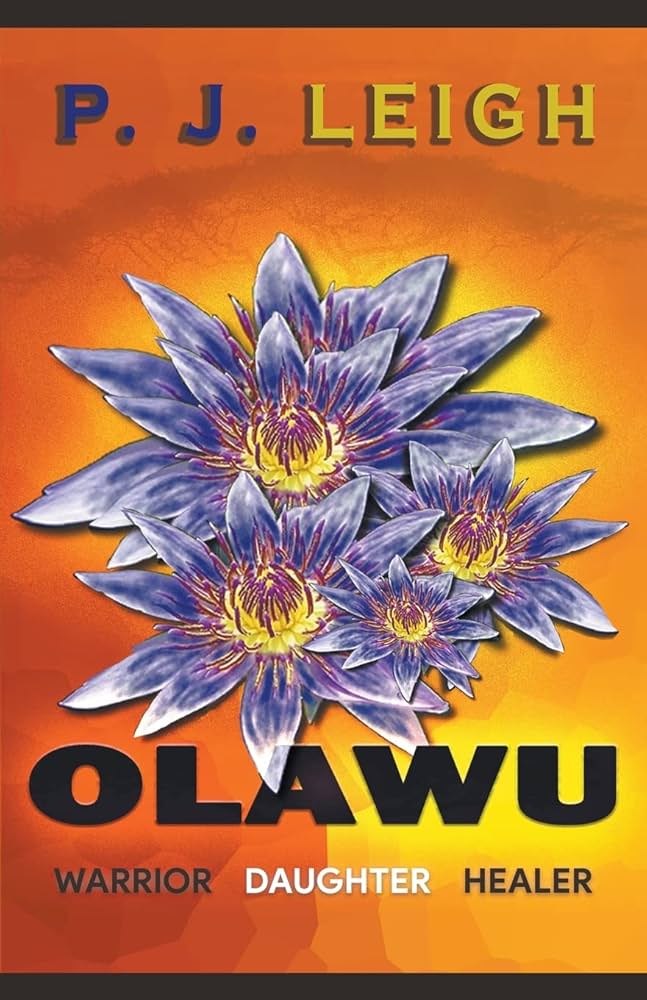
Olawu appealed to my longing for a postcolonial canon. It delivered — and then some. The novel is reminiscent of the work by Yaa Gyasi, Chinua Achebe, and Ngũgĩ wa Thiong’o; the language and the prose — sparse but evocative — is striking, the characters live and breathe, the story is inspiring. A whopping ⭐️⭐️⭐️⭐️⭐️ for this young adult historical romance/fiction.
This novel disrupts modern colonial culture (in which we all live) on multiple levels:
As an independently published novel by an author of color, Olawu is a challenge to the institution of traditional publishing and gatekeeping that that system engenders.
As a novel set in a pre-colonial East African world, Olawu highlights the existence of East Africa, its diverse peoples, kingdoms, and communities as independent from European history. We do not need to mark African time according to European histories and events.
The eponymous protagonist is a strong woman and the novel draws attention to the role of women in pre-colonial East African society. In doing so, Olawu challenges euro-centric notions of gender, especially those imposed on women and womanhood.
The incorporation of Xhosa, KiSwahili, and Zulu words, phrases, and culture into the text is an act of postcolonial defiance. Given the Colonial weaponization of language, this act of text is a rejection of the primacy of English.
The novel is an East African bildungsroman, it follows its eponymous protagonist, Olawu as she comes of age, becomes a young woman, and finds her place in the world as an adult. It unfolds in what might be seen as three parts. The first focuses on her childhood and ambitions — and how the community into which she is born and raised deems her inferior on the basis of her gender. The second exposes Olawu and the reader to other possibilities, how women might be valued and how womanhood might be performed elsewhere. This is also the part of the novel where she struggles to understand herself, her desires, and the inevitable tension between conformity and personal fulfillment, especially when the latter flies in the face of cultural norms. The last part is when Olawu decides who she will be and how she negotiates with that tension to achieve her objectives. Romance (not sex) is woven into this story about a young woman shaping herself and the world around her, serving as the scales which Olawu must balance and ultimately tip one way or another.
A number of themes thread through the novel from start to end: Olawu’s ambitions, the institutions and individuals who stand in her way, and her resilience and resistance against them. A major contributor to Olawu’s success in finding herself and her place in the world is her family, both biological and found. The proverb, “Umntu ngumtu ngabantu” (A person is a person because of other people) is an important element of the novel; Olawu does not accomplish what she does on her own, but through the kindness, love, and sacrifice of others.
Olawu‘s success as a novel is also due to Leigh’s incisive and evocative prose, and well-crafted characters. Leigh’s prose reminds me of Things Fall Apart; the writing is succinct and sharp, absent of flowery and unnecessary description. Leigh focuses on the characters, letting the reader organically create an image. The characters are distinctive and recognizable; their flaws — even Olawu’s — mirror our own, making the reader sympathize with all of them, even when they are at odds with one another.
The result is a highly character-driven, powerful coming of age story.
Leigh’s depth of research must also be commended. While the novel does not draw from specific East African pre-colonial history, it is evident Leigh has researched the region’s precolonial political systems, structures, and gender history. I especially appreciated the inclusion of glossary terms and pronunciations at the beginning of the book.
This is a fantastic read for all young people, but especially young women of color who need to see themselves represented decolonizing/post colonial literature like this.
I encountered Olawu through a Facebook group I’m in, where I serve as a reviewer of (mostly) independently published books. Organized by the admins of this group, the review event takes place bimonthly, and involves reviewers submitting a short biography to the organizer. Authors who are looking for reviews of their work reply to the organizer, selecting the reviewer of their choice. Reviewers then select which authors and books they’d agree to review based on the descriptions of the books.
If you would like to read Olawu yourself, you can find it here on Amazon. It is 318 pages and the paperback is currently priced at $14.99 and the Kindle ebook at $8.99.
A Cigarette Lit Backwards: A Novel by Tea Hacic-Vlahovic
A Cigarette Lit Backwards captures all the chaos and misguided pursuits of contemporary teenage-hood. The novel is a parable of the ethics — the requirement of authenticity and the breaking of this law — of being teenage “cool.”
The plot itself is straightforward: Kat is a high-schooler in the early-middle 2000s. She suffers from occupying that middle rung of teenage society: cool enough to be unnoticed, not cool enough to be noticed by those who deign to judge others. She is every American child in that era: two parents who are successful in their respective careers — whatever they might be — a typical two-income family, part of a new immigrant class whose trajectories lack the tragedy of previous immigrant generations. Kat is white and middle-class. Her life is typical of the concerns of teenage girls of her class, her background, her community; her primary motivating desire is acceptance in the world of Cool. Casual sex, casual drug use, skipping classes, and going to concerts and underground shows are the means by which to achieve her dreams. (All hail, Ticketmaster, bestower of golden dreams and backstage passes. All Access and “Free” parking if you can afford it.)
Kat gets what she wants and predictable consequences ensue. But perhaps they are only predictable because I am the age Kat will be in 2022. The lessons of sex, lies, and the fallacy of music, drugs, and friendships have faded for me in a way that will likely fade for Kat as she matures as well. But in the turn-of-the-century world of A Cigarette Lit Backwards Kat has yet to discover how little all that matters: how sex, real or imagined, means nothing, how friendships forged in a fire fueled by drugs, infatuation, and the superficial markers of clothes, piercings, edgy haircuts, and tattoos — even forged in the trauma of drug overdoses — will fall away meaninglessly after college, after your 20s, after the hangover has cured.
Kat has not yet discovered how much she will owe in student loans. Everyone in Kat’s world has yet to encounter our morbid collective climate-change driven fate. They are just on the cusp of seeing gun violence and regular shootings in their school hallways. Have metal detectors been installed in her school yet? There is no mention of lockdown drills in the novel… A Cigarette Lit Backwards is a novel of the sunnier days of this era, before what lingered in the real darkness began to rise from a simmer to a roiling boil. This is the pre-politicized world of the 2000s, before BLM, before the election of 2016, before DACA and Dreamers, before shtuff got “real” (as if it wasn’t “real” before…)
Kat’s world is decidedly white. Appropriate for North Carolina — even in its progressive, liberal islands — where it is set.
As a historical fiction (if we can view the early 2000s as history already) the novel reflects the light-hearted, whiteness of the era. This was a moment of Britney Spears, N’Sync, and dance beats more than it was a moment of punk. Avril Lavigne — Canadian and cat-eyed — was the punkiest most 2000-era teenagers would ever get. Kat’s world in A Cigarette Lit Backwards is just ever-so-slightly darker than Lavigne’s. It is the world of wannabe punky Ashlee Simpson, just as she was caught lip syncing on SNL and tried to cover it up with a preppy little jig. Here is the punk of short, plaid skirts (held together with oversized diaper pins), rhinestone studded lip rings, and middle/upper middle class white-American, mall-lingering, Hot Topic goths.
I am too jaded, too 2022 for this novel. But it was light, funny-in-an-“ohmygod,wasIlikethat?Please,no” nostalgic sort of way; a pleasant read that was a reprieve from the typical stuff I usually read. For readers interested in taking a light-hearted trip back to the shinier world of the early 2000s, to your youth (or something like it), A Cigarette Lit Backwards will do it.





 Dr JoAnn LoSavio