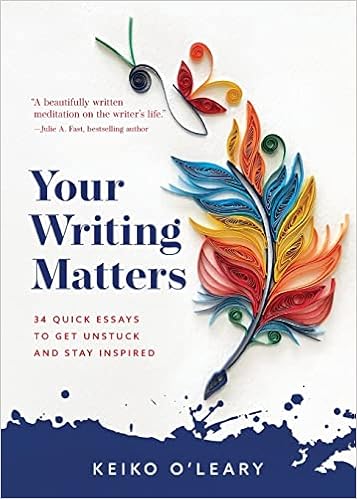
Your Writing Matters: 34 Quick Essays to Get Unstuck and Stay Inspired by Keiko O’Leary

Your Writing Matters: 34 Quick Essays to Get Unstuck and Stay Inspired
by Keiko O’Leary

I’m not one for “self-help” or instructional types of books, at least not in my pleasure reading. Sometimes I read non-fiction to learn new pedagogical strategies or theories, classroom psychology or activities, that sort of thing. But rarely do I read a book on how to write. I don’t generally need help writing (I mean, I’m here blogging for fun in my free time.) And my writing is decent. It’s not perfect, but it suffices. I know the more I do it, the better it gets — sometimes. Something I just don’t give a shhhuffft and will vomit-write.

But, back to Your Writing Matters.

O’Leary has some very solid advice here. The core message of this manual is to just write, all of it, until you’re done. So why read this? Because sometimes writers just need to hear it (or see it, in this case), to remember that they should keep writing. These are fantastic bite-sized pick-me-ups, short bursts of “hey, you can do it!” that a writer can inject into their day when they feel their productivity, their writing flagging.

Some of the essays include exercises for the reader to do while they are reading, while they are feeling self-conscious of their writing, when they are on the cusp of giving up. Other essays intend to remind the reader of their value as a writer, that their ideas — no matter how awfully expressed, no matter how chunkily written — are worthy artifacts to keep and to hone. A few intend to make light of the gravity of writing. They aim to make us smile, laugh even.

This is a book for a writer to keep at the ready, on the desk where the said task is done, next to the delete button to prevent the writer from second-guessing their work, next to the thesaurus.

I’m going to go now and write something.

A Cigarette Lit Backwards: A Novel by Tea Hacic-Vlahovic

A Cigarette Lit Backwards: A Novel
by Tea Hacic-Vlahovic

A Cigarette Lit Backwards captures all the chaos and misguided pursuits of contemporary teenage-hood. The novel is a parable of the ethics — the requirement of authenticity and the breaking of this law — of being teenage “cool.”

The plot itself is straightforward: Kat is a high-schooler in the early-middle 2000s. She suffers from occupying that middle rung of teenage society: cool enough to be unnoticed, not cool enough to be noticed by those who deign to judge others. She is every American child in that era: two parents who are successful in their respective careers — whatever they might be — a typical two-income family, part of a new immigrant class whose trajectories lack the tragedy of previous immigrant generations. Kat is white and middle-class. Her life is typical of the concerns of teenage girls of her class, her background, her community; her primary motivating desire is acceptance in the world of Cool. Casual sex, casual drug use, skipping classes, and going to concerts and underground shows are the means by which to achieve her dreams. (All hail, Ticketmaster, bestower of golden dreams and backstage passes. All Access and “Free” parking if you can afford it.)

Kat gets what she wants and predictable consequences ensue. But perhaps they are only predictable because I am the age Kat will be in 2022. The lessons of sex, lies, and the fallacy of music, drugs, and friendships have faded for me in a way that will likely fade for Kat as she matures as well. But in the turn-of-the-century world of A Cigarette Lit Backwards Kat has yet to discover how little all that matters: how sex, real or imagined, means nothing, how friendships forged in a fire fueled by drugs, infatuation, and the superficial markers of clothes, piercings, edgy haircuts, and tattoos — even forged in the trauma of drug overdoses — will fall away meaninglessly after college, after your 20s, after the hangover has cured.

Kat has not yet discovered how much she will owe in student loans. Everyone in Kat’s world has yet to encounter our morbid collective climate-change driven fate. They are just on the cusp of seeing gun violence and regular shootings in their school hallways. Have metal detectors been installed in her school yet? There is no mention of lockdown drills in the novel… A Cigarette Lit Backwards is a novel of the sunnier days of this era, before what lingered in the real darkness began to rise from a simmer to a roiling boil. This is the pre-politicized world of the 2000s, before BLM, before the election of 2016, before DACA and Dreamers, before shtuff got “real” (as if it wasn’t “real” before…)

Kat’s world is decidedly white. Appropriate for North Carolina — even in its progressive, liberal islands — where it is set.

As a historical fiction (if we can view the early 2000s as history already) the novel reflects the light-hearted, whiteness of the era. This was a moment of Britney Spears, N’Sync, and dance beats more than it was a moment of punk. Avril Lavigne — Canadian and cat-eyed — was the punkiest most 2000-era teenagers would ever get. Kat’s world in A Cigarette Lit Backwards is just ever-so-slightly darker than Lavigne’s. It is the world of wannabe punky Ashlee Simpson, just as she was caught lip syncing on SNL and tried to cover it up with a preppy little jig. Here is the punk of short, plaid skirts (held together with oversized diaper pins), rhinestone studded lip rings, and middle/upper middle class white-American, mall-lingering, Hot Topic goths.

I am too jaded, too 2022 for this novel. But it was light, funny-in-an-“ohmygod,wasIlikethat?Please,no” nostalgic sort of way; a pleasant read that was a reprieve from the typical stuff I usually read. For readers interested in taking a light-hearted trip back to the shinier world of the early 2000s, to your youth (or something like it), A Cigarette Lit Backwards will do it.

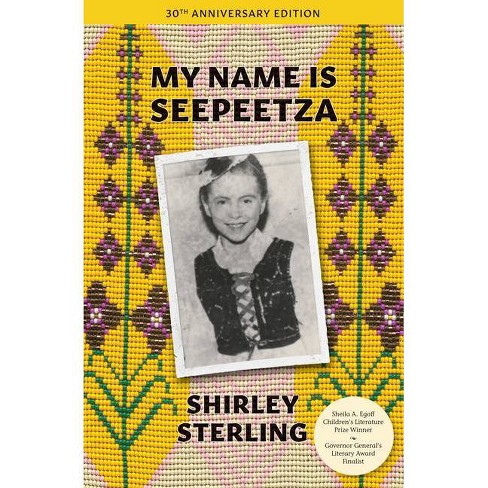
My Name is Seepeetza by Shirley Sterling (30th Anniversary Edition)

A student recently asked me in class, “Why are there reprints of books? Why do they get reprinted?” Among the reasons I gave them was this one: “Sometimes new information emerges and something important needs to be added. Or, sometimes, the content of the book becomes relevant again, given certain events or things that are happening right now.” I added, “Remember, history is less about the past, than it is a reflection of our present moment or our desire for what we want our future to look like.”

Sterling’s My Name is Seepeetza, the 30th anniversary edition epitomizes this reason. The recent discovery of several hundred bodies of indigenous children buried and hidden at several residential schools across Canada — Fort Pelly, St Phillip, St John, just to name three — is a heavy reminder that the state sanctioned annihilation of Canada’s indigenous culture and peoples over the past four centuries is not a remnant of the past, but a living monster that still lives and looms over the lives of the 150,000 children and their countless descendants.

This is a living trauma, its horror and long reach remain unknown.

For this reason alone, I am considering using this book in my next iteration of a 100-level history course I teach to undergraduates for this reason.

Sterling’s accessible, authentic prose in the voice of a young girl only gives me more reason to assign it as a course reading. The length is perfect for a semester and the format in epistolary style as a diary allows me to use this in class, for small group work within the time constraints of a class session or for short individual activities.

The content though is the main appeal here. Sterling’s own experiences makes My Name is Seepeetza all the more powerful, opens an avenue for an educator to discuss this in more depth as a primary source, as a part of historical record, opens the door for historical discussions and framing it within a larger landscape of indigenous history, gendered and racial violence. My Name is Seepeetza hits on the major nerves: language weaponized, education as violence, eugenics, parenting as cultural intervention, skin color and its tormented relationship with race and ethnic autochthony. History.

A reprint is not merely a revival, it is a reflection and delivery of knowledge we need right now.

The Fortune Men by Nadifa Mohamed

The Fortune Men
by Nadifa Mohamed

A colleague recommended this book to me and oh my, do I owe them BIG now! The Fortune Men is devastating in every way. The story, without question, is a profound lesson in the paradoxes and insidiousness of racism, the tragedy of putting faith in a prejudiced judicial system, how thin the line is between life and death, past and future, the awfulness of history.

The novel revolves around a young Somali man who has found his way to Britain and built a life for himself there, complete with a wife and children. He is an ordinary man, a flawed man, but not a bad man; his morals are imperfect but not malicious. In his Welsh town, there is a sundry shop, owned and run by a Jewish woman. She is murdered. He is arrested. The novel spins from that point around his trial and his incarceration.

The details of the crime and his arrest are revealed, it becomes clear that things are not so black and white, literally and figuratively, according to the shade of his skin. In this Welsh neighborhood, there has been the recent in flux of many immigrants: those from the Caribbean — coming off the HMS Windrush — as well others like him, from Somalia, parts of West Africa, Nigeria, South Asians from India, Pakistan. There are Jews, Muslims, Christians. And then there are the White Welsh and English. The only thing they seem to have in common is their denizenship in a working class milieu: they are each trying to survive in their own ways, struggling with the constraints put upon them by their race, the color of their skin, their gender.

Mohamed’s prose weaves together the multiple layers of this crime, both the murder and the crime of injustice via complex characters who each come to this place armed with their own ambitions and hampered by their past experiences; they are as flawed as the main protagonist — and like him, we can see that they are not truly “bad” people, but merely making decisions based on the ethnic, racial, and class based expectations put on them. Reader, you will weep for all the characters in The Fortune Men, for they are as trapped as the prisoner in his cell.

It is hard to write a review of this book without giving away its ending, because its ending is really the beginning of the question that led to its creation. It is based on a true story, which is what makes this even more tragic and heart-rending.

All I can say is: You must read this. You must weep for the man, the woman, his wife, his children, the families torn apart by the events that took place in 1952-1953 in this small Welsh town. And you must be angry.

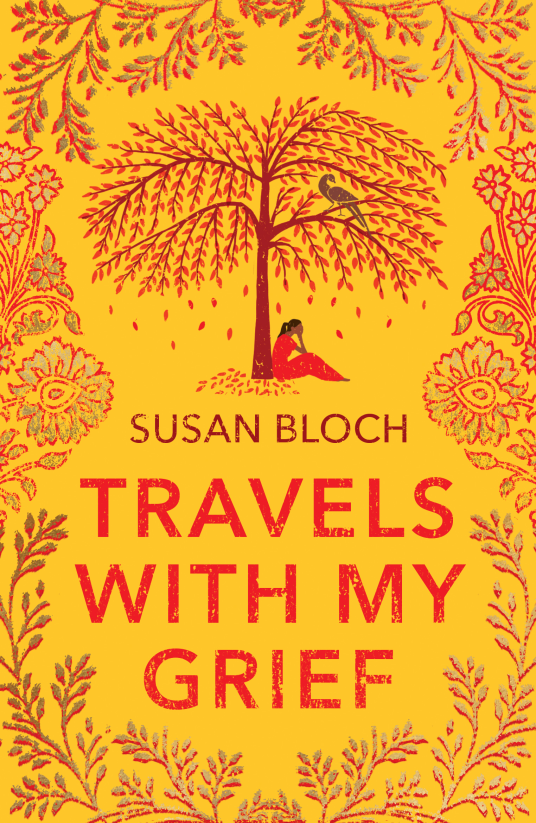
Travels With My Grief by Susan Bloch

Travels With My Grief by Susan Bloch

I chose Travels With My Grief because I have yet to encounter grief in this capacity. People read memoirs for so many varied reasons. Indeed, I imagine that each of us reads for a variety of reasons. I read memoirs to immerse in a perspective that is not my own, to understand — if only briefly, incompletely, and inadequately — what an experience of life might be. I am a humanist.

Memoirs, therefore, inherently take me to places of great discomfort, places of dark unfamiliarity. My objective is dissonance, the book and my reading of it, a form of liminal initiation by proxy.

Travels With My Grief threw me into an ice-cold alien landscape, one which was terrifying because of its banality: This is an ordinary grief, the loss of a spouse, a friend, a companion, a lover. The wall between my comfortable life and Bloch’s grief-stricken one was a thin one, translucent enough for me to see myself in her stead. One day — my odds are 3 to 1, based on my own fallible knowledge of male and female longevity — I will be in that place, in her place. A widow.

And what then? The journey of grief Bloch takes the reader on is both ethereal, surreal, unreal and all to plausible simultaneously, because no one imagines the death of one so close to themselves and yet, we all must experience it in some fashion — or at very least, contemplate the possibility.

For those same reasons, Travels With My Grief was comforting. Bloch survived, survives, so too will I, could I, must I.

But Travels With My Grief does not convey a simple message of “You Will Survive”, it is more. It is surviving without forgetting, without discarding the grief. Grief becomes a passenger in the life thereafter, where, in the beginning, it might have once been the driving force. Another comforting message.

This memoir is also about the concept of grief, the power — emancipating and debilitating — of the idea of widowhood. There are cross-cultural clashes, competing notions of what it means to grieve, how to do it, what it can or should be in a person’s life. This memoir is about how to live with those shifts in one’s identity, not only internally from our own subjective experience, but also how those who grieve might be treated by others. What does it mean to be labelled, “widow”? How does one live with such an identifier when one hasn’t been that before?

I am glad to have read this. But Travels With My Grief is a memoir that cannot make sense fully to me, not until I am in the throes of this kind of grief. I imagine that when that moment comes, passages from the book may return to my mind or I will be inclined to reread it.

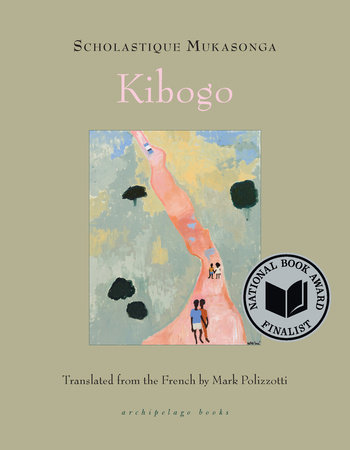
Kibogo by Scholastique Mukasonga

Kibogo by Scholastique Mukasonga

Kibogo reads like a gateway to a historical, colonial/postcolonial dreamscape. It reads like a fantastic reimagining of Chinua Achebe’s Things Fall Apart, but on a mythical, quasi-spiritual platform in Rwanda. It is inspiring as a work of decolonization, heart-wrenching as a historical fiction, a lyrical maze as a work of literature.

Like Things Fall Apart, Mukasonga’s Kibogo hinges on the binary opposition between the colonizer and the colonized, the imposition of Christianity on native peoples, and the annihilation of indigenous beliefs. But while similar to this famous predecessor, it is also unique in its own right. Kibogo is a nuanced novel. The Colonizer is not necessarily European and this point is pronounced. Sometimes — perhaps more than we would have wanted — the colonizer is our native neighbor, one of our own. Fanon was an astute observer of colonial culture; too often the enemy is a more intimate partner, the one who resides within. Mukasonga also draws a perforated line between Christian and Indigenous Belief; the characters and their stories reveal a more accurate historical account of colonization by highlighting how a syncretization of beliefs and practices is likely to have taken place.

This syncretization of cultures, beliefs, practices, and ideas is the heart of Kibogo. The novel is about the gradual development of a colonial culture, not through outright conquest, but through insidious means. Magic is a key component, a driving force that propels the stories to their ends. Ritual is the means by which the magic is released, and this is not only native Rwandan magic, but also European Christian magic, the kind imbued in holy water and Christian prayer. This lends Kibogo a mystical quality. The novel unfolds as would a myth; it is a fable about the meeting of Christian and Animist in Rwandan history. The characters are heroes, heroines, archetypes, and the plot moves forward through human and divine interventions. Each of Kibogo‘s four parts focuses on a particular character, as each of their stories builds upon the last to produce at the end a full view of Rwanda’s religious, spiritual, and colonial landscape.

This is not to say the characters are hollow; no, on the contrary, they are recognizable across colonial histories. For that reason Kibogo is larger than its central focus on colonization in Rwanda. This is a story that is recognizable in other African, Asian, Caribbean, South American, Australian, Pacific Island, and colonial contexts. Kibogo is centered and set in Rwanda, but it is a work of post-colonial literature for the rest of the “formerly” colonized world as well.

In short, a very thought-provoking work wrapped in beautiful, literary prose that unwinds like a yarn told late at night to children gathered around their grandmother’s hearth.

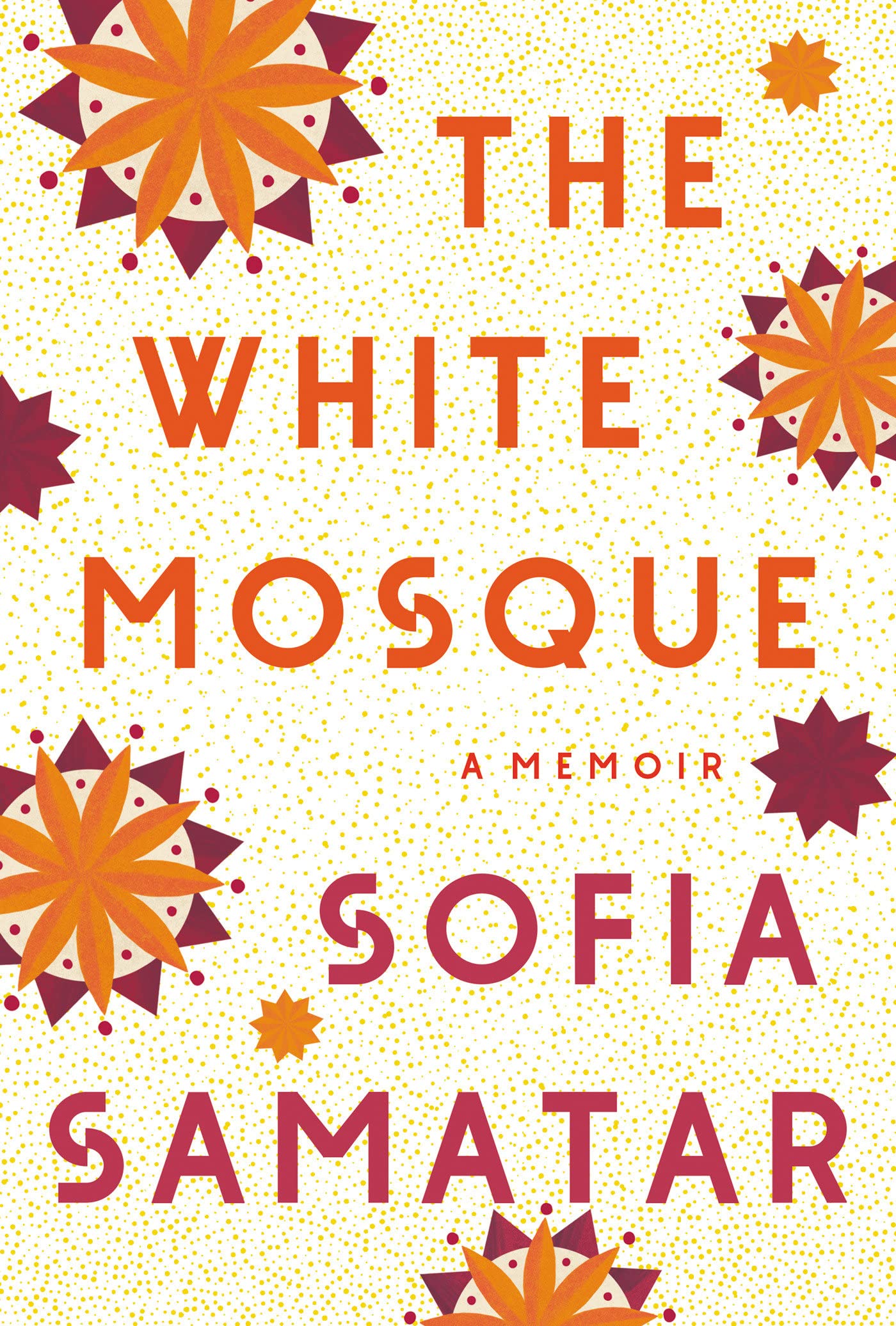
The White Mosque: A Memoir by Sofia Samatar

The White Mosque: A Memoir
by Sofia Samatar

Mennonites? In Uzbekistan? The premise of this book caught me instantly, and I was rewarded for my curiosity. Samatar’s white mosque in The White Mosque is a Mennonite church located in the heart of a Muslim community in Central Asia. Perhaps this reveals a biased tendency on my part; the juxtaposition of the Mennonites in Central Asia suggests an irresistible, exotic historical account.

That — in part — is what Samatar delivers, but the memoir is more than that. The White Mosque is also about the embodiment of a Christian/Muslim, Foreign/Autochthon juxtaposition within Samatar via their experience of living as a Somali-German American Mennonite, a second-generation immigrant in a largely White American community. In one sense, Samatar is a “white mosque” in her academic and personal worlds, as unique and unusual as a pilgrimage of German-speaking Mennonites trekking into Uzbekistan.

The White Mosque begins and ends with Samatar’s touristic, scholarly pilgrimage to Uzbekistan in search of these European Mennonites who traversed that path over a century ago. It is a guided tour. Mennonites, non-Mennonites, tourists, and heritage-seekers accompany Samatar; their observations contribute to this memoir and help shape Samatar’s embodied experience of being a Mennonite of color. The White Mosque also treks back in time, not only through this unique tangent of 19th century Mennonite history, but into Samatar’s past as a child of a Somali father and a German-American mother and as a graduate student. The memoir flickers to the present too: Samatar as an accomplished researcher in pursuit of scholarship.

Indeed, what The White Mosque delivers to the reader is less a historical account, and more a commentary on the present moment, a moment in which cultural-ethnic-religious-racial juxtapositions are worth examination because of the violent divisions in our world along those same lines. This memoir suggests that a closer, more nuanced examination of such transcultural connections, persons, histories, and experiences is worthwhile because they are not as anomalous as they might initially seem.

Midway through reading it, The White Mosque forced me to reconsider why I was attracted to the premise of this book: Were the Mennonites so unusual in their pilgrimage? Is the idea of a European Christian sect in Central Asia such an exotic thing? Haven’t such transcultural phenomena occurred all throughout history? …. Mmm. Well-played, well-played. As a historian, a humanist, and an anthropologist, I know that no human phenomenon should be surprising; we have been criss-crossing, mixing, transgressive and transcultured throughout our history. But The White Mosque makes that point poignant, brings it to the forefront cleverly and gently through personal memory, subjective experience, and beautiful prose.

For that reason alone The White Mosque is worth reading.

Cocoon: A Novel by Zhang Yueran

Cocoon: A Novel by Zhang Yueran

Yueran’s prose in Cocoon is to die for. I cannot express how effortless it was to read this book; opening it and laying eyes on the page was all I had to do and Yueran did the rest. It was like being carried on a gentle wave down a winding river.

That said, it was a very long, slow-moving river at times and often I found it hard to track with the direction Cocoon was taking me. I grasped that there was a mystery, but the typical sense of urgency a thriller engenders was missing here, lost in the literary focus on the characters and their interior narratives. It was, for me, both a deeply satisfying for that reason and also frustrating in that it wove around the plot circuitously. I still cannot decide how much I enjoyed the novel or the degree to which I was disappointed by it.

The novel spans three generations of two families, their histories twisted together by the events of China’s Cultural Revolution and communist regime. The characters have fallen into the chasms created by the divisive policies of the Cultural Revolution and it is their reconciliation with that fact which the reader witnesses. There are mundane tragedies: a father and son estranged by the shifting values, a marriage begun out of spite, a wife abused, a child abandoned. Then there is the mutual tragedy — a crime — which threatens both families’ futures, an act that arose out of the political climate of the Cultural Revolution. This is the great mystery of the novel. What was that horrific crime? Why and how could it traverse down through generations?

The two narrators are the 3rd, latest generation of these two families, the grandchildren of the Chinese Old Guard and the children of the “sent down” youths of the revolution. They are childhood friends and enemies simultaneously, caught in the mess of their families’ tragedy. The fallout of China’s cultural and political upheaval is told through their eyes. Through their perspective we see the actions and feel the torments of their parents and grandparents and the effect of these massive cultural shifts on familial cohesion.

They are the generation that grew out of and yet distant to China’s traumatic history. Theirs is a moment of a different upheaval: China’s return to a capitalist society, the abandonment of the austerity of the 1960s and 1970s. The novel dwells on their generation’s angst as well: the shifting ideas of sex, love, and success.

This is an epic multigenerational tale, filled with characters that are so perfectly flawed as to be real. The meandering path through their traumas, their lives, and their losses is well worth the long walk.

Lost in the Long March: A Novel by Michael X. Wang

Lost in the Long March: A Novel by Michael X. Wang

If you love multigenerational historical novels, the kind that invoke profound and simultaneous sensations of sadness, regret, and compassion or which bring to light uncomfortable truths about ourselves, our objects of love, our innermost desires, then Lost in the Long March is for you.

At first pass, Lost in the Long March did not grip me; the first few chapters were interesting, but did not give a clue to the deeper nuances that would come later. I am glad I persevered and read on; I was rewarded. By the last page I was very nearly in tears. There is deep heart-wrenching pain in this novel, the kind that is brought on by very common, mundane processes, in this case, the heartbreak of being a parent, the heart ache for the love of one’s child.

Wang’s novel is about the banal horrors of war; not the violence of combat, but the long arm of suffering that extends beyond the battlefield, long after the skirmish is over, when the victor is fooled by the passing of time into believing that they have won. They have not. Lost in the Long March revolves around the conflicts of the Chinese Civil War between the Kuomintang and the Communists (the Long March occurred in 1934-1935) and the Second Sino-Japanese War (1937-1945); but this is really a novel about compassion and humanity and the ways in which wars and political movements can destroy them or create situations for their manifestation. Friendship, love, connection, loyalty — the interconnections between people — this is the core of this novel.

It is Wang’s unwavering focus on this universal core of the human experience which makes the novel so powerful, so moving, so profound. Wang’s prose delivers the message with perfect pacing and with ease; the prose is succinct, but the words and the silences Wang leaves between them could cut open a vein with deadly accuracy. On occasion, it took this reader a moment or two to feel the new wound, so sharply and subtly were the words and their meaning delivered. By the time I reached the end of the novel, as Wang came to the story’s inevitable end, I was unsure if I could survive it. I will not give the ending away, but I will say that it did leave this reader in a state of metaphorical exsanguination.

Lost in the Long March is well-worth the grief. As with many good books, it is the heavy sense of loss they inflict which is the reader’s gain.

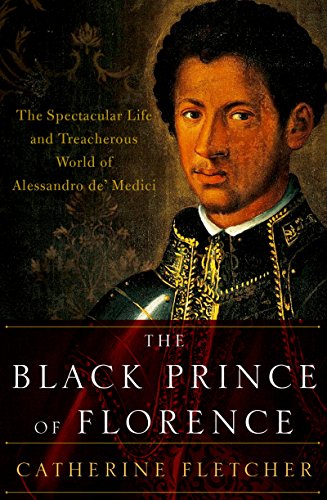
The Black Prince of Florence: The Spectacular Life and Treacherous World of Alessandro de’ Medici by Catherine Fletcher

Let me preface this review by saying that I believe academic scholarship should always be written with a priority for accessibility: the language should be evocative and immersive, perhaps even bordering on fiction, without sacrificing nuance and academic details. Histories in particular are tasked with chronological transport; it is my belief that they should do this without requiring a maximal effort on the part of the reader.

Fletcher’s The Black Prince does all this, and with an ease that belies the hard work of writing. The Black Prince sends the reader back in time so effortlessly; the reader can feel the tension of the Florentine court, the potential for danger at every meal (poison) and around every corner (gangs of rich young men armed with daggers and arrogant tempers).

The Black Prince is academic writing for a general audience done right.

The Black Prince ostensibly revolves around Alessandro de’ Medici, the half African, half Florentine illegitimate son of a Medici scion (though which one is a matter of debate in this work); however, it also about much more than that. This history offers the reader a velvet texture of Renaissance Europe through vivid accounts of the intricate Habsburg, Vatican, French, and Florentine connections via marriage, money, and ambition.

That said, race is less of a category of analysis here than is class, religion, or aristocratic birth. This is no shade on Fletcher’s work; The Black Prince makes the profound point that race — as we understand it — was not an analogous factor in this period of time, in this Renaissance world. Indeed, it was class, religion, aristocratic birth, wealth, and connections which were the more influential factors in matrices of power. “Race” did exist, but functioned and featured in aristocratic society very differently than it would a hundred, two hundred, three hundred years later.

Fletcher does take us through the span of Alessandro’s life; the book is bookended by his birth and death and includes all the major events of his life and that of his domain, Florence, in his lifetime; but this is a work about the Renaissance and the politics of the Apennine peninsula in this period.

In short, a very worthy read.