This is the dystopian novel of our time. Set in the near future, 2024, in Baltimore, MD, The Black Cell is a novel about blackness, racism, and revolution. The novel centers on the development of a Black Resistance Movement in Baltimore and revolves around the experiences of four Black protagonists, who become involved in some way in this movement. Tasia is a young black single mother, a university student, a young woman trying to understand how to live her life and raise her daughter. Lisa is a young married woman, a wife and mother to two black children, a woman who has internalized the racism of the world, turned that knife inward. She comes to terms with how whitewashed her life has become. Donovan is her male/masculine counterpart, a young, professionally successful black man who has a penchant for white women and who is ashamed of his black culture and heritage. He too comes to a confrontation with himself. Corey is a young black teenager, Tasia’s counterpart, trying to figure out his place in the world and what he can do to make it better.
This novel is ideal for young adult readers, university and high school students, anyone who is at the beginning of their journey towards decolonization, regardless of their own personal heritage and background.
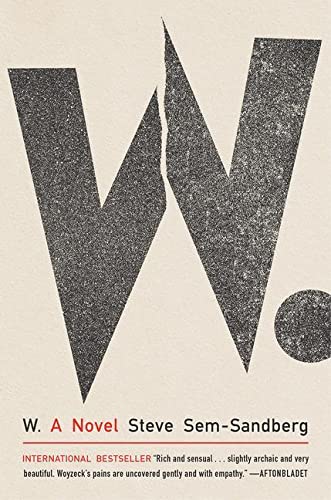
It should first be noted that W. is based on a play written by Georg Büchner in 1836, and that drama was itself based on real events: Johann Christian Woyzeck, a soldier from Leipzig, murdered Christiane Woost in 1821. Steve Sem-Sandberg’s novel W. is the fictionalized backstory to the play and the real events.
W. is a challenging novel well worth the time and effort. If you enjoy Dostoevsky’s Crime and Punishment, you’ll love W. They both possess the same lurid darkness, the same interiority of character, the same palpable sense of hopelessness in an insane world. That said, I find W. a much more compelling and enjoyable reading than C&P.
The plots are similar in that Woyzeck, the main character in W. is a young man who murders a young woman, the Widow Woost. In this novel, Woyzeck is apprehended immediately and is imprisoned while being assessed for his ability to stand trial. While in detention he is asked to reveal the story of his life, his experiences, his family life, etc. This is the bulk of the novel; interspersed between Woyzeck’s accounts are the prison officials’ (priest, lawyer, guards, warden) perspectives on the murder and Woyzeck himself. This is where W. differs and shines: Woyzeck’s life is ordinary, he is an apprentice for a wigmaker, runs through a number of servile jobs, then finds himself recruited into the Swedish army, fighting against Napoleon. His experience is singular, yet also mundane; he is one of millions who were displaced and ruined by war. His madness derives from this horrendous and common experience of war and life, the struggle to come to terms with the disappointments and betrayals, both large and small, in money and love. There is something horrifically relatable about Woyzeck’s slow derangement — it is recognizable in ourselves, even though we live centuries in his future. At the end of this long, cruel spiral Woyzeck kills the Widow Woost. And there the story begins and ends.
W. outshines Crime and Punishment in a number of ways. While Woyzeck meanders in telling the tales of his life, there is a continuity and structure. This leaves the reader in a tantalizing quandary: Is Woyzeck actually mad? If he is, then so too might we also be considered mad? And given what Woyzeck has experienced and witnessed in war it would be a wonder that he did not become mad! The reader inevitable develops a comradeship with Woyzeck; he is too too much of a reflection of ourselves to dismiss him. Second, Woyzeck lives in a kind of mental vacuum, but he is a subject of history like the rest of us, so historical events, societal norms, and the actions of those around him are very much part of his story; that is, his insanity may be wholly his, but his path leading into it was walked with many others. They are vivid characters in this novel and they bring Woyzeck’s tale into fuller relief. W. is not just a novel about one man, it is about an entire world and a way of living. The novel captures a society succumbing to a kind of primal existence brought about by war and violence.
The Newlywed’s Window: The 2022 Mukana Press Anthology of African Writing
A very lively, beautifully written collection of twelve short stories by new African writers. These were fresh ideas written with confidence. My favorites were “Gasping for Air”. by Ogechukwu Emmanuel Samuel, “The Newly Wed’s Window” by Husnah Mad-by, “Mareba’s Tavern” by Gladwell Palmba, “A Letter from Ireland” by Victor Ehikhamenor, and “Our Girl Bimpe” by Olakunle Ologunro.
What I loved about these stories was their bold announcement of Africanness and modernity, too often still separated in the non-African view. These were stories celebrating the conflation of both in one, the coexistence of Africanness and global identity in one. Some of these stories revolved unabashedly around modern African womanhood and sexuality, celebrating sexuality with pride.
I appreciated that these were not stories of postcolonial angst or stories posing tradition against modernity. Perhaps I read too much postcolonial literature; these were refreshing to me because of the absence of those existential themes. They addressed existential themes we are all familiar with (how to live in a technology-driven world, how to be a modern woman, how to be a modern parent, transition from childhood into adulthood, among others), but from an African perspective, an African experience.
All My Children, Scattered by Beata Umubyeyi Mairesse
A new release coming soon! (August 2022) I got to read an advanced reader copy from the publisher and I cannot wait for this book to come out!
All My Children, Scattered traces the movements of three generations of a Franco-Rwandan family, as they each, in their own painful ways, unravel the complex emotions and tensions inflicted on them by Rwanda’s colonial history and, more recently, the Rwandan Genocide. Immaculata, the mother, struggles to find a place for herself and her children in a world still ruled by colonial culture. She finds herself equally trapped and freed by her own internalized ideas about race and color. She passes on these questions of identity to her daughter, Blanche, a mixed race, half white, half black woman, who finds herself also struggling with what it means to be Rwandan within and outside of Rwanda, in Europe. Blanche is a survivor of the genocide and turmoil of the 1990s; she wrangles with her luck, her fate, her role in it as a Rwandan expatriate. Stokely is Blanche’s son, another generation removed from the colonial encounter and one generation removed from the Genocide, but he is no less subject to this history.
There are other characters woven into their story: Bosco, Immaculata’s other child, her son, who also survives the genocide by fighting through it. He was a soldier, a human being caught up in the gritty reality of the genocide. Then there is Blanche’s husband, a West Indian man, facing similar questions of postcolonial identity. He understands and yet, also, cannot understand Blanche’s Rwandan identity.
What I love most about All My Children, Scattered is its historicity and the native point of view it privileges, centers, revolves around. Mairesse immerses the reader in the Rwandan experience of history. While colonial history is a foundational premise of the novel, it does not fall into that trap of making this about white men and white experience; this is not a novel of the colonizer, this is about Rwandans, the people and their experience.
I deeply appreciated that Mairesse did not delve into the details of colonial events, what happened in what year; the machinations of state politics was a buzz (a loud one at times) in the background. What was most visible was the effect of politics on the ordinary citizen, the family, individuals. This is not a historical fiction that reads like a history lesson – thankfully! — no, this is a novel that focuses on the emotional trauma, the unseen generation damage.
Mairesse’s prose delivers. The language is beautiful and evocative. The voice of each character is clear, unmistakable. Each chapter is narrated by a different character so Mairesse treats the reader to a view of Rwandan history from multiple points. The reader feels the connections across time, the intangible tensions from one generation to the next.
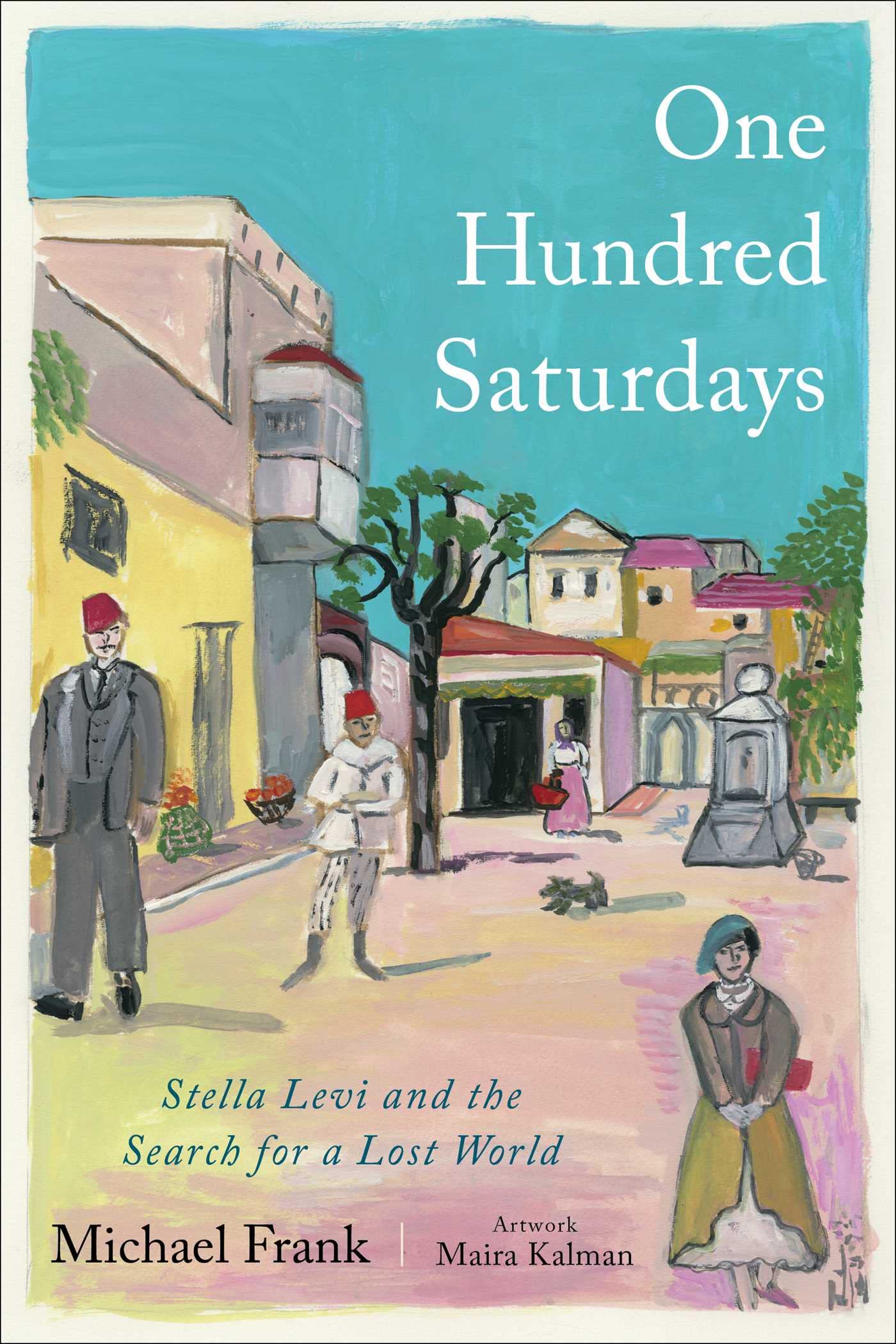
One Hundred Saturdays: Stella Levi and a Search for a Lost World by Michael Frank
This non-fiction memoir deserves no less than 5 stars, or whatever maximum is possible in your systems of rating books. I read this as an educator, a professor of modern history who teaches a course focusing on tracing the origins of the world’s conflicts and oppressions.
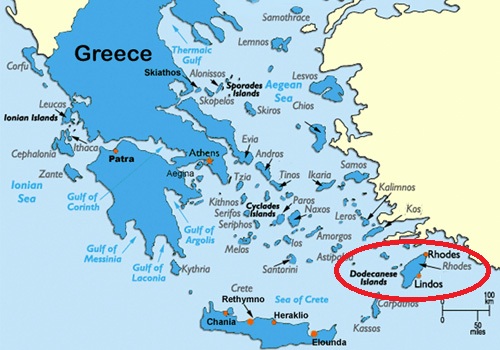
The plot traces Stella’s life, from her earliest memories, growing up in the 1930s in the Juderia, a Jewish community on a tiny island in the Mediterranean, Rhodes. Each chapter is a few pages, capturing a vignette of her memory of a particular moment, woven with enough historical context to understand the relationship of this memory with world history at large.
A good third of Frank’s book focuses on Stella’s life in Rhodes during the 1930s and the early 1940s, before 1,650 Jews were rounded up, taken from the island, and sent to the concentration camps in Europe. At least 90% of them would not survive their internment.
This chronological focus is Stella’s explicit choice; the story of her life is not grounded in the Holocaust. The book seeks to excavate and exhibit the world of Rhodes that was destroyed by the Holocaust; it is not a novel of the Holocaust, though that is an ineluctable element in this conversation of Rhodes’ history. That said, the second half of the book is a raw account of Stella’s experience of the journey to and inside several camps, including Auschwitz. The final sections of the book focus on Stella’s — and others — lives afterwards: the struggle to come to terms with the loss of Rhodes, their physical and cultural home, the effects of the Holocaust on themselves and their families and children.
The book makes an ideal choice for an undergraduate history course: First, it is short as a whole, according to Good Reads, 240 pages (I read the galley e-version from NetGalley which did not have accurate page numbering). Second, being published for a non-academic audience, One Hundred Saturdays uses very accessible language. The tone, style, and format are conversational. Sometimes, the dialogue between Michael and Stella is transparent; sometimes it is Michael’s voice overlaid over Stella’s, providing the reader with necessary context; at other times, Stella’s voice is unmistakable. Third, the memories and chapters are neatly and discretely separated into digestible — assignable — chunks, making it easy for any instructor to parcel out readings and sections to fit their curriculum. (I have assigned holocaust readings, usually Elie Wiesel’s Night, but I may consider assigning One Hundred Saturdays instead, easily.)
The fourth reason is that Stella’s perspective as a woman gives us a way to understand the gendered experience more fully. This is not to say there is a dearth of female Holocaust survivors or stories by female survivors; but this one pays especial attention to women’s concerns and experiences. The final reason this is appropriate for use in the college level history classroom is the book’s focus on how the holocaust, anti-semitism, and racial laws unfolded outside of Europe proper. Students are rarely given a view of the Holocaust outside of Germany and Western Europe in general. But One Hundred Saturdays gives the reader a more holistic view of this history through its examination of Italy’s involvement and discussing the Turkish presence in the Mediterranean. I would say this is one of the most significant contributions of Levi’s story and Frank’s book.
This is a book worth reading, over and over. Like many books written of the Shoah, this book will remind you of your humanity.
Love and Summer is not a typical romance, indeed there is very little that is romantic in these pages. As I read to the novel’s climax I could not help but think: this is the most unromantic retelling of a love story I have ever read. And that is the very soul animating this slim and powerful novel. This is a novel about love and desire. It is a story that illuminates all of the imperfections and nuances of those emotions. Love and Summer is a tale of true love, real love, the kind of banal, ever-present love that exists in reality. This is a novel about wanting and needing and what it means to be the giver and taker in love and life. The love story portrayed here is one that millions of people, past, present, and likely, of those even yet to be born would recognize in a second. As I read it, I could not help but also think: I’ve seen this love. I’ve felt this. How, William Trevor, and when did you peek into my life?
The tale takes place in a small, rural Irish village, in a time that is rarely mentioned except for hints dropped here and there, which tell the reader that this happens in a moment passed, but not so long ago as to be beyond our imagined lifetimes. There is a suspension of chronology embedded in Trevor’s prose that adds positively to its emotional delivery. It makes the love story relatable to anyone in any era of history.
The place: a sleepy, conservative Irish village is a key component — indeed a character itself — of the novel. The residents and the pervasive Catholicism of this locale are the skeletal supports conveying to the reader what life in Ireland, for the ordinary person, is like. Through precise dialogue, the banal and expansive decisions and actions of its characters, and — perhaps more significantly — what is left unsaid the reader is treated to a palpable element of romance: the reader cannot help but acknowledge how social environment is as much a partner in romance as the lovers themselves.
Trevor is brilliant in never mentioning religion or even the Church outright. This is a wonderful authorial trick; those words, those things never need mentioning for they are so entrenched in the social fabric of Ireland that its presence and influence is seamless. This is Trevor’s brilliance: the sentence hung in mid air, a conversation unfinished but clearly ended, the just barely perceptible motion of an eyelid or a twitch in the wrist conveys more than an entire page of text could. The place and the people surrounding the lovers are critical to the love story.
The first one hundred pages of this just-over-two-hundred paged novel are devoted to these seemingly peripheral — but oh-so-crucial characters. The novel opens, in fact, in the middle of an event unrelated to the love story itself. But by the time you get to page 100, it starts to make sense: these disparate events and conversations, this focus on place and people and society, are important.
The second half of the novel and the unfolding of the lovers’ tale itself is made all the more poignant and heart-rending by the first one hundred pages. Trevor plans the reader’s descent into love and the final plunge into heartbreak with finesse; you can’t tell you’ve fallen in love — with the novel or the lovers — until it’s too late to extricate yourself. The effect is devastating, and it mimics the romantic fall of the lovers themselves. I must stop here, or I risk spoiling the novel for the reader.
I will end with this: Love and Summer is a love affair not to be entered into lightly. This novel is the lover that will haunt all your future romances. It is a novel that will remind you over and over again how lacking other love stories are. But you’ll be thankful that you had the chance to read such a love story, that you were privileged enough to have had such a novel in your life.
Originally published in 1976, The Easter Parade, justifies its classic status. The story, revolving around gendered concerns, the complications of family and love, imparting a sense of futility and time passing, remains wholly contemporary. Yates’ novel is one that entered on a timelessness human experience: life and living.
That said, for all its timelessness, the novel is grounded in its historical moment. It carries the reader through several decades, letting them be witness to shifts in American culture, especially as it pertains to gendered expectations and the function of love and sex in the lives of educated white women in mid-twentieth century America.
The plot follows the life of two sisters, though it is centrally focused on the younger, Emily Grimes. As children Sarah and Emily Grimes were part of a generation whose parents were divorced; their mother is a single mother, their father is an absent, yet present factor in their lives. The tale follows them through adolescence and then young adulthood, where their paths diverge. Sarah takes the more conventional path of marriage, child-bearing and raising, while Emily pursues academic life, single womanhood, love affairs — marriage too, but also divorce — and a career. The Easter Parade is built on their divergent, yet intertwined lives; Part three and four of the novel take the reader into the interiority of their familial and sibling bond. Despite their differences, the sisters remain, well, sisters.
In a sense, this is a novel about nothing and everything, the intangibility of our lives and the worth of living those lives. I have just finished reading it, feeling like I have traversed the twentieth century, like I have witnessed humanity being played out among other people, been given a privileged view into someone’s life.
A beautiful, character-driven tale of mothering and daughtering; that is, the ways in which we mother our children and the ways in which daughters express and manifest themselves as the offspring their mothers. This is a quiet, assuming novel about the ways in which we express parental and filial love, the unspoken reasons why we come to expect love in particular ways.
The plot follows a touristic vacation for the narrator and her mother in Tokyo, Japan. It begins and ends with this short episode in their lives, but the novel reveals their lifetimes of emotional involvement with one another and draws other family members into these reflections. The reader is given a privileged view of this family’s most private interior relationships.
Au’s choice of a touristic holiday is perfect for the discussion of belonging and not, of generational divide and continuity that fills the narrator’s thoughts. A history of immigration, transnational, and transcultural trauma and identity-building is threaded into the fabric of the novel; the events of the mother-daughter duo’s traipses around the Japanese city and its sights are the perfect backdrop to this commentary.
This is book no one could possibly regret reading. If regret is invoked, it is because one missed its slim presence on a shelf.
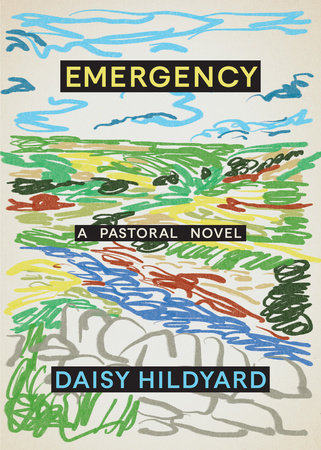
Emergency is a complex novel, not merely in its subject matter, but in its structure (or lack thereof) and atmospheric effect. For me, the novel has its merits and its detractions; however, its detractions often overwhelm its merits. But let’s praise it first for what it does accomplish.
The good: Emergency delivers on its promise of conveying a sense of interconnectivity between what are typically viewed as a discrete domains: nature and human behavior. Through a stream-of-consciousness deluge of the young unnamed narrator’s observations, the reader is treated to a fast-paced snapshot of what the world looks like from a youthful, innocent perspective. That is, the tragedy of our climate change and its impact on our world is accepted as natural, normal. The implication is that the tragedy of climate change is now somewhat unavoidable. There is a fatalistic quality to Emergency that is equal parts sad, calm, exciting, and banal. It is like feeling elation at the presence of anxiety, if only because it is a feeling that reminds us of our humanity. Don’t blame me, the novel is the barer of this bad news. Ha. I did mean “barer” and not “bearer.” A pun if I ever wrote one.
Now, the not so good: It is clear Emergency is written for a mature literary reader. Its plotless structure and its subtle connection between environment and human behavior demands a lot of work from its reader. These two criticisms are related; the novel has no discernible plot. Nothing happens. Except, that is, a lot of thinking. There is very minimal exterior eventfulness in the novel; it takes place almost wholly in the narrator’s interior. For readers of literary fiction this is a familiar characteristic; however, the narrator remains an elusive character. I had significant difficulty imagining the narrator from Hildyard’s description (which is sparse), though the unfolding of their mind was delivered in abundance.
What is problematic about the absent narrator is how this alienates the reader. This may be purposeful on Hildyard’s part, a performative palpability intended to convey the awful insularity in our future. Dwindling resources and a ruthless competition to survive have historically had the effect of solidifying boundaries, separating and causing the demise of many millions.
Perhaps this is Hildyard’s method of conveying a sense of our collective mortality. If so, bravo. But nonetheless, as a literary work, this gloomy sense of quarantine and the inability to connect with the narrator causes the novel to drag a little. It is hard to maintain interest in a narrator we do fully feel in our presence.
Perhaps, on another level, the absent narrator is an unconscious authorial decision. Emergency, in its chilly narration, reminds me of the terrible isolation and reflectivity the Covid-19 pandemic forced on the world. Hildyard wrote this in lockdown and so we must assume that some element of their experience has seeped into the novel; but, simply put, I have had enough of feeling this way. At a future point in our history, Hildyard’s novel may brilliantly (whether it is its author’s intention or not) convey the mood of our moment; but, it is too soon, too soon for me to appreciate this.
In sum, Emergency is a novel to be undertaken with seriousness. If you have the mental energy to meet Hildyard — and the narrator — more than halfway, I think you will be rewarded well.
With such a well-known historical figure as the eponymous character, a reader has to wonder, “What is Chen going to bring to the story that we don’t already know? What’s going to be unique about this version?” In other words, why read this when Joan of Arc’s biography can be so easily accessed elsewhere. The answer is apparent almost immediately, but — in all honesty — didn’t fully hook me until Part Two.
Chen’s Joan unfolds in four parts, the longest are the first two, which are focused on Joan’s childhood and early life. Here, a word of warning on the content is warranted: I won’t spoil it for you, just know that there are prolonged episodes of abuse and gendered violence. However, these are critical parts of both Joan’s story and Chen’s commentary on medieval gender; it is in these initial sections of the novel that the thread of feminist commentary on late Medieval injustice against the female sex and gender begin — and is continually woven throughout the remainder. Parts three and four are shorter, though no less powerful or impactful. These sections cover the part of the Historical Joan’s life that we know: her military victories and defeats, her incredible and rapid rise in the French court and royal favor, and her violent, tragic death.
Given that she was aged nineteen when she was executed, Chen’s emphasis on the early and historically unknown years of Joan’s life immediately signals Chen’s intention. This is not a novel of SAINT Joan of Arc, not a novel about the Maid of Orleans, but — as the title should amply hint — is a novel about the girl, the woman, the person, Joan.
There are other ways Chen immediately announces this is a fictional take on the non-Historical Joan: the novel is written in 3rd person, present tense, which suggests to the reader that none of the events unfolding should be taken as a foregone conclusion; they are happening right now, the reader is a witness. Since historical scholarship is always written in the past tense (as a rule), Chen is clear that this should not be read as a piece of creative non-fiction.
Speaking of history, it is worth noting that Chen’s novel is also not about Joan at all. While Joan is a fictional protagonist, Chen’s novel is grounded in solid history. And I do not mean merely the dates and outcomes of the battles or the names of the characters who inhabit this world. Chen has clearly immersed themselves in the medieval French world and successfully does the same for the reader through their prose. Descriptions of characters and scenes convey not only the image of the person or the place, but reveal the rigid class hierarchies, influence of religion, gendered expectations, and cultural milieu of this period. Chen not only gives us a biography of Joan, but also texturizes her world for the reader so that the reader walks away with an almost tactile, palpable sense of this world. For example, in describing one character, Chen writes of how Joan notices their hands are smooth and absent of callouses, a clear signal of their status and lifestyle. “Joan”, the novel, is a vivid landscape of medieval France and its culture. This is arguably Chen’s strongest answer the question I posed above, the special “thing” Chen brings to an already famous, somewhat overdone historical narrative.
A final and related note to this praise: Chen does not romanticize medieval European history and the effect of injecting medieval elements into her prose is (thankfully) not pedantic. It is informative and necessary, serving to achieve that cultural immersion I spoke of above. For example, religion is a major element of this period of history and in Chen’s novel, but Chen does not pose secular, material concerns and ambitions in opposition to religion or divine will; Chen understands history and its nuances, framing the events of Joan’s transformation in much more human and earthly terms. The effect is refreshing. Too much historical fiction assumes a presentist perspective; the characters are contemporary people, holding contemporary worldviews and values plonked down in some other era in time. Chen successfully avoids this annoying anachronism.
All in all, Chen’s Joan is a fantastic novel: I personally dislike present tense narratives and Joan of Arc is not a historical figure that appeals, so my rating of four stars is not indicative of the merits of the novel itself. It’s worth reading. Read it if you love medieval history, women’s history, or Joan of Arc!







 Dr JoAnn LoSavio