
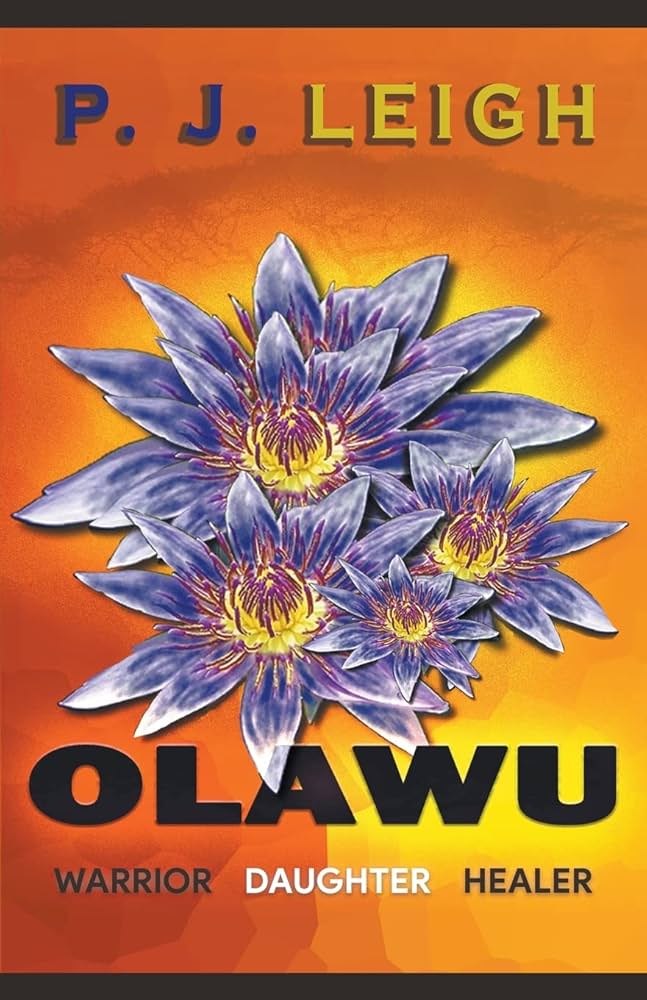
Olawu: A Novel by PJ Leigh

Olawu: A Novel by PJ Leigh

Olawu appealed to my longing for a postcolonial canon. It delivered — and then some. The novel is reminiscent of the work by Yaa Gyasi, Chinua Achebe, and Ngũgĩ wa Thiong’o; the language and the prose — sparse but evocative — is striking, the characters live and breathe, the story is inspiring. A whopping ⭐️⭐️⭐️⭐️⭐️ for this young adult historical romance/fiction.

This novel disrupts modern colonial culture (in which we all live) on multiple levels:

  • As an independently published novel by an author of color, Olawu is a challenge to the institution of traditional publishing and gatekeeping that that system engenders.
  • As a novel set in a pre-colonial East African world, Olawu highlights the existence of East Africa, its diverse peoples, kingdoms, and communities as independent from European history. We do not need to mark African time according to European histories and events.
  • The eponymous protagonist is a strong woman and the novel draws attention to the role of women in pre-colonial East African society. In doing so, Olawu challenges euro-centric notions of gender, especially those imposed on women and womanhood.
  • The incorporation of Xhosa, KiSwahili, and Zulu words, phrases, and culture into the text is an act of postcolonial defiance. Given the Colonial weaponization of language, this act of text is a rejection of the primacy of English.

The novel is an East African bildungsroman, it follows its eponymous protagonist, Olawu as she comes of age, becomes a young woman, and finds her place in the world as an adult. It unfolds in what might be seen as three parts. The first focuses on her childhood and ambitions — and how the community into which she is born and raised deems her inferior on the basis of her gender. The second exposes Olawu and the reader to other possibilities, how women might be valued and how womanhood might be performed elsewhere. This is also the part of the novel where she struggles to understand herself, her desires, and the inevitable tension between conformity and personal fulfillment, especially when the latter flies in the face of cultural norms. The last part is when Olawu decides who she will be and how she negotiates with that tension to achieve her objectives. Romance (not sex) is woven into this story about a young woman shaping herself and the world around her, serving as the scales which Olawu must balance and ultimately tip one way or another.

A number of themes thread through the novel from start to end: Olawu’s ambitions, the institutions and individuals who stand in her way, and her resilience and resistance against them. A major contributor to Olawu’s success in finding herself and her place in the world is her family, both biological and found. The proverb, “Umntu ngumtu ngabantu” (A person is a person because of other people) is an important element of the novel; Olawu does not accomplish what she does on her own, but through the kindness, love, and sacrifice of others.

Olawu‘s success as a novel is also due to Leigh’s incisive and evocative prose, and well-crafted characters. Leigh’s prose reminds me of Things Fall Apart; the writing is succinct and sharp, absent of flowery and unnecessary description. Leigh focuses on the characters, letting the reader organically create an image. The characters are distinctive and recognizable; their flaws — even Olawu’s — mirror our own, making the reader sympathize with all of them, even when they are at odds with one another.

The result is a highly character-driven, powerful coming of age story.

Leigh’s depth of research must also be commended. While the novel does not draw from specific East African pre-colonial history, it is evident Leigh has researched the region’s precolonial political systems, structures, and gender history. I especially appreciated the inclusion of glossary terms and pronunciations at the beginning of the book.

This is a fantastic read for all young people, but especially young women of color who need to see themselves represented decolonizing/post colonial literature like this.

I encountered Olawu through a Facebook group I’m in, where I serve as a reviewer of (mostly) independently published books. Organized by the admins of this group, the review event takes place bimonthly, and involves reviewers submitting a short biography to the organizer. Authors who are looking for reviews of their work reply to the organizer, selecting the reviewer of their choice. Reviewers then select which authors and books they’d agree to review based on the descriptions of the books.

If you would like to read Olawu yourself, you can find it here on Amazon. It is 318 pages and the paperback is currently priced at $14.99 and the Kindle ebook at $8.99.
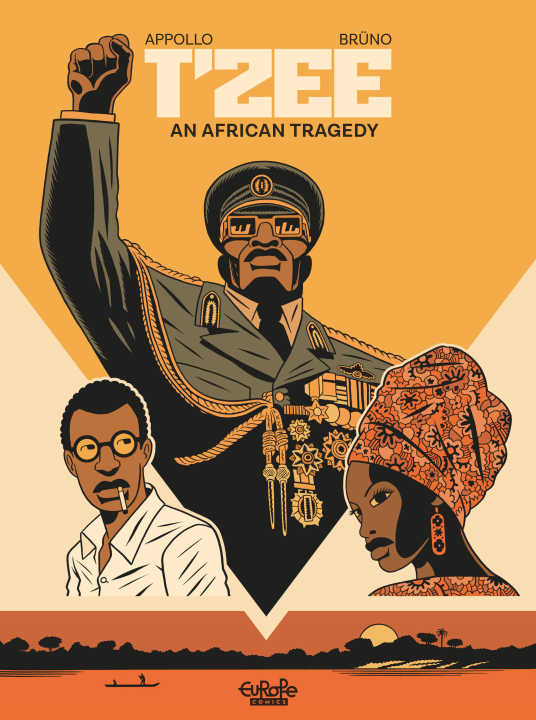
T’zee: An African Tragedy (A Graphic Novel) by Appollo (script) and Brüno (art)

T’zee: An African Tragedy (A Graphic Novel)
by Appollo (script) and Brüno (art)

T’zee is an action-packed, noir blockbuster in a graphic novel. It has all the makings of a Hollywood or Nollywood film: Post-colonial angst, corruption, family drama, illicit romance, sabotage, political violence. T’zee lacks actual history – it is all fiction — but its premise is grounded in real events of the twentieth century.

The story starts and ends with T’zee, the amoral dictator of an unnamed African nation struggling through its traumatic post-colonial afterbirth, but revolves around his young wife and youngest son, who each are coming to terms living with their larger-than-life husband and father and the roles they are supposed to play in this political drama. The former is a member of the new elite — but the limitations of gender and patriarchy force her into positions she might later regret. The latter is also a member of the new elite, the intellectual elite. During the typical educational sojourn young men of his class make in this era, T’zee’s son finds himself torn between his family and his morals. Politics, power, and ambition rule over both of them, force the wife and the son into decisions that are less of their own making than orders carried out under duress.

In three acts the reader witnesses the ebbs and flows of T’zee’s power, how his family fares in the pressure house of his politics, and the swiftness by which all their fates can change course.

This is an entertaining read. However, elements of its narrative promote a colonial logic which need to be addressed. T’zee is portrayed as a cruel and inept leader, one focused solely on his own aggrandizement and accumulation of wealth, at the expense of his people. His wife too is a woman focused solely on her own selfish advancement and fulfillment. The son is feckless and weak. Scenes of the city and the rural areas of this nation are memes of poverty and crime too often associated with the so-called “developing” or “under-developed” world, what has been classed so disparagingly as the “third world.”

I balk at depictions of African nations as cesspits of corruption, poverty, and crime. The implication that African peoples cannot rule themselves is one grounded so obviously in the so-called Civilizing Mission, that lynchpin of colonial logic; this is wholly inaccurate and stereotyping. I wish that elements of the story had addressed T’zee and his regime with more nuance; I wanted more decolonization in these pages. I cannot help but read as a historian, especially on a subject so close to my heart.

Still, this was a fun read and one I would suggest for casual consumption.

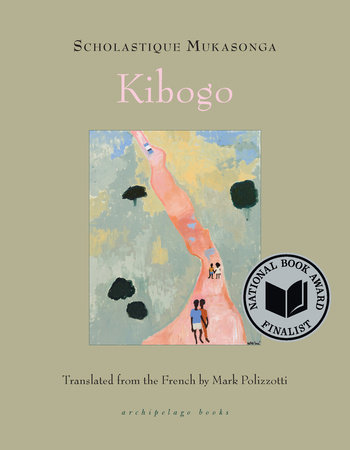
Kibogo by Scholastique Mukasonga

Kibogo by Scholastique Mukasonga

Kibogo reads like a gateway to a historical, colonial/postcolonial dreamscape. It reads like a fantastic reimagining of Chinua Achebe’s Things Fall Apart, but on a mythical, quasi-spiritual platform in Rwanda. It is inspiring as a work of decolonization, heart-wrenching as a historical fiction, a lyrical maze as a work of literature.

Like Things Fall Apart, Mukasonga’s Kibogo hinges on the binary opposition between the colonizer and the colonized, the imposition of Christianity on native peoples, and the annihilation of indigenous beliefs. But while similar to this famous predecessor, it is also unique in its own right. Kibogo is a nuanced novel. The Colonizer is not necessarily European and this point is pronounced. Sometimes — perhaps more than we would have wanted — the colonizer is our native neighbor, one of our own. Fanon was an astute observer of colonial culture; too often the enemy is a more intimate partner, the one who resides within. Mukasonga also draws a perforated line between Christian and Indigenous Belief; the characters and their stories reveal a more accurate historical account of colonization by highlighting how a syncretization of beliefs and practices is likely to have taken place.

This syncretization of cultures, beliefs, practices, and ideas is the heart of Kibogo. The novel is about the gradual development of a colonial culture, not through outright conquest, but through insidious means. Magic is a key component, a driving force that propels the stories to their ends. Ritual is the means by which the magic is released, and this is not only native Rwandan magic, but also European Christian magic, the kind imbued in holy water and Christian prayer. This lends Kibogo a mystical quality. The novel unfolds as would a myth; it is a fable about the meeting of Christian and Animist in Rwandan history. The characters are heroes, heroines, archetypes, and the plot moves forward through human and divine interventions. Each of Kibogo‘s four parts focuses on a particular character, as each of their stories builds upon the last to produce at the end a full view of Rwanda’s religious, spiritual, and colonial landscape.

This is not to say the characters are hollow; no, on the contrary, they are recognizable across colonial histories. For that reason Kibogo is larger than its central focus on colonization in Rwanda. This is a story that is recognizable in other African, Asian, Caribbean, South American, Australian, Pacific Island, and colonial contexts. Kibogo is centered and set in Rwanda, but it is a work of post-colonial literature for the rest of the “formerly” colonized world as well.

In short, a very thought-provoking work wrapped in beautiful, literary prose that unwinds like a yarn told late at night to children gathered around their grandmother’s hearth.

The Newlywed’s Window: The Mukana Press Anthology of African Writing 2022, compiled by Mukana Press

The Newlywed’s Window: The 2022 Mukana Press Anthology of African Writing

A very lively, beautifully written collection of twelve short stories by new African writers. These were fresh ideas written with confidence. My favorites were “Gasping for Air”. by Ogechukwu Emmanuel Samuel, “The Newly Wed’s Window” by Husnah Mad-by, “Mareba’s Tavern” by Gladwell Palmba, “A Letter from Ireland” by Victor Ehikhamenor, and “Our Girl Bimpe” by Olakunle Ologunro.

What I loved about these stories was their bold announcement of Africanness and modernity, too often still separated in the non-African view. These were stories celebrating the conflation of both in one, the coexistence of Africanness and global identity in one. Some of these stories revolved unabashedly around modern African womanhood and sexuality, celebrating sexuality with pride.

I appreciated that these were not stories of postcolonial angst or stories posing tradition against modernity. Perhaps I read too much postcolonial literature; these were refreshing to me because of the absence of those existential themes. They addressed existential themes we are all familiar with (how to live in a technology-driven world, how to be a modern woman, how to be a modern parent, transition from childhood into adulthood, among others), but from an African perspective, an African experience.