Fire Exit: A Novel by Morgan Talty

Fire Exit: A Novel by Morgan Talty

Fire Exit is a punch in the heart, the kind of novel that really does leave you heart-sore for a long time afterward.

The novel revolves around and is narrated through a man who is white and, in adulthood, was removed from his residency on an Indian reservation. His eviction and his whiteness separates him from his daughter, and from the life and culture he grew up with on the reservation. Fire Exit is the story of this man grappling with his identity as an outsider, and a story of those on the inside — Indians — who are themselves still in the process of sorting through the legacy of settler colonialism and the co-called Civilizing Mission against them. Fire Exit highlights the fluidity of identity, but also the rigid barriers which define it within ourselves and by others imposed on us. The novel exposes the messiness of relationships, especially in indigenous communities which have been so ravaged by racism and colonial ideologies.

I am reminded again how singular it is that indigenous people of North America are some of the few peoples on earth who must continually prove who they are. I recently read a piece in the New Yorker on Pretendians (typically white people who claim indigenous heritage or identity) and am struck by both the necessity of proof and how exhausting it must be as a human being. It saddens and inspires simultaneously.

The ever-present trauma of colonialism is a burden we cannot put down, any of us; and the pursuit of decolonization can never end. For that reason I am loving this wave of indigenous literature; though not “new,” it feels like indigenous writers and stories are getting more mainstream attention, reaching new audiences (like myself) who find solace and inspiration in them.

But, back to Fire Exit.

Though I cannot know what this is for indigenous people, I can say that as this is also a story about family, what it is to be a family, what is it to act out and perform family, I felt connected to a kind of universal understanding of “family” in my reading of it.

Talty is such a fantastic writer. The words just come together, like lyrics that feel familiar and yet woven together, produce a song I haven’t heard before. The mothers and fathers, daughters and sons in this novel are people we can connect with, and yet, as those living in reservations or on the edges of them, they have a unique life experience, one that I do not know (cannot know, really). I feel that Talty has made it possible for me to feel a little bit of their experience.

It is a sad novel, and a beautiful one.

Prequel: An American Fight Against Fascism by Rachel Maddow

Prequel: An American Fight Against Fascism by Rachel Maddow

Someone get me a copy of this book for my personal library! (A friend lent it to me.) Maddow’s historical chops are on point in this prosopographical micro-history of mid- and early-twentieth century American political history. And the message is profound and powerful.

Through a close examination of U.S. government officials and political figures from the 1930s through to the mid-century, both those who advocated for a fascist approach to governance and those who opposed it, Maddow makes two important arguments: first, the political climate of the last eight years is not a new phenomena; second, pro-fascist cadre of politicians of the past — and by inference of today — did and do not operate alone, but were supported by institutionalized oppressive systems within the government, networks of pro-fascist supporters who did the political legwork on the ground on municipal, state, as well as federal levels, and their constituencies. In short, no fascist leader functions or sustains in a vacuum. The ideology of oppression arises through a network of individuals working together and often playing on the fears and logic of scarcity.

I would expect no less from Maddow, who holds advanced degrees and is, in my view, a public academic. Maddow does not disappoint on any level: the writing is undeniably in Maddow’s voice (I hear the audiobook is incredible), delivered with succinct sharp wit and their signature speedy, yet smooth, style. Fans of Maddow’s other mediums are sure to enjoy this much longer, more in-depth project.

Heartland: A Memoir of Working Hard and Being Broke in the Richest Country on Earth by Sarah Smarsh

Heartland: A Memoir of Working Hard and Being Broke in the Richest Country on Earth by Sarah Smarsh

Heartland is a memoir at the intersection of Educated by Tara Westover and Nickel and Dimed by Barbara Ehrenreich. For readers who actively seek out trying on someone else’s shoes, Smarsh’s memoir will amply deliver.

Heartland explores the experiences of four generations of women and men in a working-class class family in rural Kansas, delving into their experiences of love, marriage, work, and education. The book is sectioned into thematic chapters, rather than being strictly chronological, covering her family’s peripatetic travels across the state for work, romance, love — and all too often, sanctuary and safety. Readers should know the book discusses abuse and neglect in a multitude of ways; violence is woven in the fabric of these women’s lives, both a symptom and cause of their poverty.

The book includes a massive cast of individuals from both sides of Smarsh’s family. [A family tree map would have been a helpful addition, but this is a minor detraction.] Through this account and interpretation of her family’s history, Smarsh makes an argument for greater attention to the social, cultural, and gendered reasons for poverty in America. She challenges the popular and misguided myth of meritocracy, especially highlighting the multiple ways spousal and domestic violence play an enormous role in this societal problem.

Smarsh’s delivery of this message lacks — thankfully — pedantism or blame, focusing instead on the interconnected web of cultural expectations and histories which have resulted in these outcomes. Her writing also is smooth, journalistic, and easily accessible; in fact, evoking an emotional response from this reader on more than one occasion.

Heartland is a fantastic non-fiction read on poverty, especially among the white working class, in middle America.

Facing the Mountain: An Inspiring Story of Japanese American Patriots in World War II by Daniel James Brown

Facing the Mountain: An Inspiring Story of Japanese American Patriots in World War II by Daniel James Brown

I joined my local public library Adult Book Club and this was the first book I read with the group.

As an Asian and Asian American, I was immediately drawn the subject matter in Brown’s book. Given the rabid anti-Asian hate that has been on the rise in this country since Covid-19, non-fiction like this serves to do more than illuminate obscured histories; they emphasize the significance of diversity in American identity and entrench the idea that Asian American citizens — long held as “perpetual strangers/aliens” — belong in American society.

Facing The Mountain did not disappoint. While the book is a non-fiction history written for a popular press and a general adult audience, its methodology and archival research would more than satisfy any academic reviewer. Brown drew, not only from archives, but from oral histories and interviews to produce a historical monograph of significant breadth.

The book begins with the Japanese and Japanese American community in Hawai’i, but also explores the larger Japanese diaspora in the United States, on the mainland. Indeed, one of the highlights of the book is its attention to the diversity of voices within the Japanese American community: Mainlanders and Islanders came from very different cultures, sometimes held opposing views, and certainly cannot be assumed to be a monolithic society with a single voice. Its chapters explore the nuances of these different ideas within the community and how Japanese people across the United States, diverse in their social and economic class, gender, and generation, reacted to and handled the Presidential executive orders which sent them to internment camps and cast them out of American society as “enemy aliens.” Chapters document Japanese citizens’ resistance, compliance, sorrow, and joy, allowing the reader to witness the experience of WWII in many ways.

Facing The Mountain focuses heavily on the military experience as well, both domestically and abroad, which made the reading of this book novel for me. I do not typically gravitate toward military histories, finding many of them dry and clunky. But Brown turned this into a social history of the US military and the 442nd Regiment, making it a lively and very enjoyable read.

This was the very appealing part of Facing The Mountain for me; Brown made this political and military history feel intimate. It is, in fact, a prosopography. Facing the Mountain follows a cast of specific individuals and families who occupy different roles, careers, and places in the United States and American society. Through their experiences the readers views the entire landscape of the Japanese American perspective of WWII.

The Brightest Star: A Novel by Gail Tsukiyama

The Brightest Star: A Novel
by Gail Tsukiyama

I read this novel along side a non-fiction biography/prosopography of Anna May Wong’s life and times, and honestly, I don’t know if that boded well for my review of this novel! In short, I found Tsukiyama’s fictive treatment of Wong’s life bland and depthless. I wanted interiority, a deep dive into Wong’s subjectivity. I wanted a view of Wong as a woman, as a human being, as a daughter, as a sister, anything, but not as a star.

Sadly, Wong’s characterization in the novel was one-sided, though to Tsukiyama’s credit the facet chosen was one that warrants highlighting: Wong here is portrayed as underfoot the racist boot of Hollywood, the racist weight of America and the White, Colonized world bearing down on her ambitions. I appreciate Tsukiyama’s attention to this racial and racist history; Wong was indeed a woman of her era, a victim of yellowface and orientalism. But I wanted more.

Perhaps I am not the target demographic for this novel; I know this history as a professional, I live its legacy as a Chinese-American woman in a state founded on White Supremacy. I am more than a target of racial hatred, more than a colonized human being, more than an Asian Woman, and so I wanted Anna May of The Brightest Star to also be more, to allow me entry into her mind, her heart, her existence as a lover, as a sister, as a friend. I wanted to know the facets of her that moved beyond the armor she had to wear to protect herself from the world.

I recognize that I already know the racist history Tsukiyama highlights, the weaponized language, the sneer against color, the snide remarks, and that this colors my view of the novel. I recognize that many other readers likely do not know this history. For those whose decolonizing journeys are just beginning, The Brightest Star will deliver a poignant and profound glimpse into Wong’s life as an Asian woman objectified and consumed as Other. Tsukiyama does a fantastic job peeling back the layers of glamour to reveal the ugly side of Wong’s stardom.

Daughter of the Dragon: Anna May Wong’s Rendezvous with American History by Yunte Huang

Daughter of the Dragon: Anna May Wong’s Rendezvous with American History by Yunte Huang

It’s only August, but I know Daughter of the Dragon is one of the best histories I have read this year. It ranks pretty near Number 1 right now. Huang delivers more than a life in this biography; Daughter of the Dragon is a portrait of Asian American history in all its glory and ugliness, it is a history of a community, an ethnic group, a skin color as it played out and was embodied by Anna May Wong.

Anna May Wong’s life is a microcosm of Asian American history, of American history.

Huang’s research is impeccable; each chapter is fully fleshed out with evidence from previous scholarship and archival sources. Letters to and from friends and family, press interviews, and a myriad of other Hollywood ephemera serve as Huang’s fodder. But Anna May’s own voice is rarely invoked; it would appear that few records in her own words exist, though Huang uses what artifacts she did leave behind. Putting the patchwork together as any good historian does, Huang captures and interprets her voice for us in his own; Anna May comes through the pages as if she were seated on the edge of desk, cigarette in hand.

The book follows a typical biographical chronology, from birth to death and everything in-between; however, Huang leans heavily toward Wong’s filmography as the measurement of her state of mind as well as a platform for a deeper discussion of legislation against Asian American citizenship and social standing in the American popular imagination. This is more than a biography, and while Daughter of the Dragon reads like a filmography: it is a vivid cultural history of Asian American film and representation in Hollywood. Indeed, Anna May Wong was a by-word for Asian American film for much of the twentieth century and her career. There can be no discussion of Asian representation in the media without her.

The result is a very satisfying history.

Eisenhower Babies: Growing Up On Moonshots, Comic Books, and Black-and-White TV by Ronnie Blair

Eisenhower Babies: Growing Up On Moonshots, Comic Books, and Black-and-White TV by Ronnie Blair

This memoir set in the immediate decades after WWII is a portrait of white, working-to-middle-class America from a cultural and social perspective. While Blair touches on some of the political history of this moment, they stop short of delivering an analysis or deep commentary on the upheavals of the 1940s, 50s, and 60s. These decades saw the beginnings and rise of social movements that challenged gender norms, race and racism, notions of equity and so on, but this memoir confines itself to a more modest objective: the texture of growing up and coming of age in rural, white America.

Blair’s memoir begins with himself and his community, a small rural town in Kentucky, but expands to cover the whole of white, working class American life across the upper South and Midwest. Chapters take on the subject of roadtrips and church-going, Halloween, the thrill of television, Little League baseball, high school, and living in a small town, among many other things. Interspersed with larger historical moments are Blair’s singular experiences: having an alligator live next door, or a church named after the family, for example. Each chapter is a capsule of the moment and Blair’s own family history and life; their experience serves as the prosopographical platform on which they comment on the cultural past. This is a so-called “boomer” memoir, highlighting a shiny, seemingly golden moment in American history.

This memoir records one aspect of American Identity with well-crafted prose. The tone is humorous in some chapters, yet possesses gravity in others. Like the ebbs and flows of life, some episodes warrant a light approach, others require seriousness. Blair segues from one to another with ease. The result is a smooth and immersive read.

Blair succeeds in delivering a landscape of their experience of the American Past. Its pop culture references and highlighting of (some) common American experiences in public schooling, Judeo-Christian holidays and celebrations, and working-class struggles offer a fleshy sense of how people experienced life in these decades.

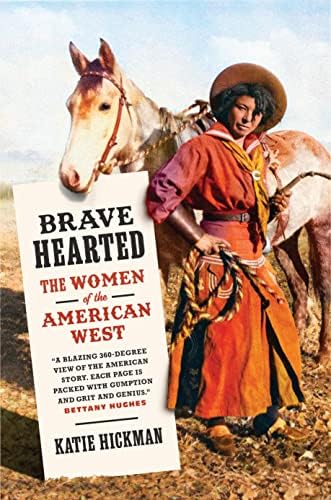
Bravehearted: The Dramatic Story of Women of the American West by Katie Hickman

Bravehearted: The Dramatic Story of Women of the American West
by Katie Hickman

“Gripping,” “Exhilarating!”, “Captivating!” These are descriptors I often flutter my eyes at, chalking these up to marketing histrionics that serve solely to assuage publisher’s fears about book sales and authors’ egos. But in Hickman’s case, I was hard pressed to find more authentic adjectives for Bravehearted: The Dramatic Story of Women of the American West.

I was expecting no less, to be honest. I’ve read Hickman’s work before (Courtesans: Money, Sex and Fame in the Nineteenth Century (2003) and Daughters of Britannia: The Lives and Times of Diplomatic Wives (1999) specifically) and enjoyed her scholarship for many reasons. Bravehearted, however, was the first time I’ve read Hickman’s scholarship since I began and finished graduate school, becoming in my own right, a historian. I can now say I appreciate Hickman even more than I did previously.

Bravehearted (like Hickman’s other works) is, from the perspective of a general reader, incredibly easy and smooth to read. The facts (that is, the history) are woven so artfully into her prose that the reader never feels like there’s a history lesson embedded in it. (There is, of course. More on that below.) Instead, the women, men, and children — indigenous, white settler, and immigrant alike — feel like full-fleshed characters in a story set in an epic, sweeping landscape. I could not help but feel the tragedy and simultaneous hopefulness of their journeys across the United States. At times, the harshness of the wind, the damp of the rain, the aridity of the desert air seemed to tragic, and simultaneously hopeful whip my hair, slick my skin, burn my nose. Hickman achieves what all historians — storytellers that we are — aspire to do: transport the past into the dimension of the present.

Each chapter of the book focused on a different region, a different woman, a different route settlers took toward the Western coast. The Pacific Northwest, the Californian region, and the Southwest were all covered in succession in Bravehearted. Embedded within these pages were not only those perspectives of white settlers, but indigenous voices too; though, the focus of this book was primarily on the European, East Coast, Midwest, and White settlers who encroached, entitled and arrogantly, into Indigenous lands. There are mentions of other people of color, Chinese immigrants and Black women, but again, these feature less prominently than white women and men. It is worth noting that there are few Mexican/indigenous women in Bravehearted; indeed, as I attempt to recall the book from memory, I find myself unable to remember one. Of course, it’s possible I am just forgetting, but that in itself is telling: There weren’t enough of them mentioned to mark a place in my memory. (The index is absent in the ARC so I could not look up where I might have read about them in it.) This is a well-researched, brilliantly written work of historical scholarship for any audience, but, it is not a work of decolonization; its intent is not specifically aimed at disrupting dominant narratives of white settler colonization or to bring to the forefront the voices of women of color.

This is — and this is not a detraction so much as it is a neutral statement — a history for those who are interested in women and the gendered component of history of the American West. The lesson is a simple one, but one which still requires learning: white women were as much part of the making of the West into the White American West as white cowboys, sharp shooting lawmen, and male miners (there were female miners too!) In other words, white women (and women of color in lesser numbers) were there too and they shaped White America in equal measure to their masculine counterparts.

The content of Bravehearted is not entirely divorced from race or ethnicity, but certainly the focus here is gender more so than race or ethnicity. Hickman’s inclusion of men and women of color and the indigenous perspective is not minor or token in any way; it is well done, but academic readers who may be expecting a stronger connection between or a deeper discussion of gender and race might struggle to locate it within this particular work. This is — and again, this is not a detraction — a work for a general audience. What Bravehearted offers the reader is breadth, indeed, a wide lens of the landscape of the American West in terms of the gendered experience of traversing it in the 19th century.

If, by now, my final verdict is unclear, let me end with it: This is a fantastic telling of American history worth any and every reader’s time.

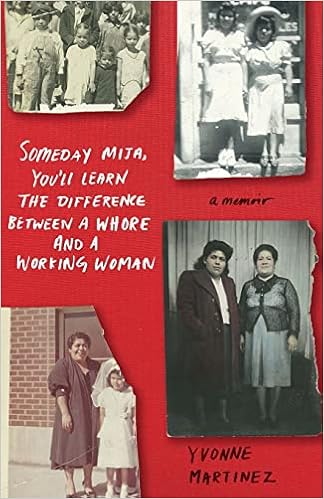
Someday Mija, You’ll Learn the Difference Between a Whore and a Working Woman: A Memoir by Yvonne Martinez

Someday Mija, You’ll Learn the Difference Between a Whore and a Working Woman: A Memoir
by Yvonne Martinez

This is an intensely powerful memoir; Martinez’s life is a scar tissue of intergenerational wounds. Someday Mija, You’ll Learn the Difference Between a Whore and a Working Woman is a serious treatment of what the traumas of racial violence, poverty, and sexual exploitation can do to a child and a family, and how Yvonne was able to weave these histories — her own, her mother’s, her grandmother’s, her family’s and her community’s — into a lifetime of “doing better.” This is not a memoir to be undertaken lightly.

Celebrate Hispanic Heritage, September 15th to October 15th — but also, whenever and always!

Someday Mija, You’ll Learn the Difference Between a Whore and a Working Woman is divided into two halves, the first reads like a novel and documents Martinez’s experiences as a child and growing up in a dysfunctional family. The second half addresses Yvonne’s life afterward, as an adult and specifically as an activist in the service of her community, as an organizer, and educator.

The two halves are intertwined: it is Martinez’s experiences growing up in an abusive and violent home that shapes her ability to understand the traumas that envelop her community. This shared experience is one not easily addressed by public health programs or the simple piling on of more and more education. Oppressive systems stemming from cultures steeped in patriarchy, sexual violence, and colonization cannot be wiped away, even replaced that easily. These cultures exist within even larger systems of oppression.

In Martinez’s case, however, these experiences also spurred them to take on systemic racism, sexism, violence, and poverty as institutions to be dismantled. This is a case of an individual working from within, for one’s own community (and for all communities). Change must be internal as well as external for it to sustain; Martinez’s life is proof of that.

A profound and consuming memoir that is in equal parts disturbing, sad, and inspiring.

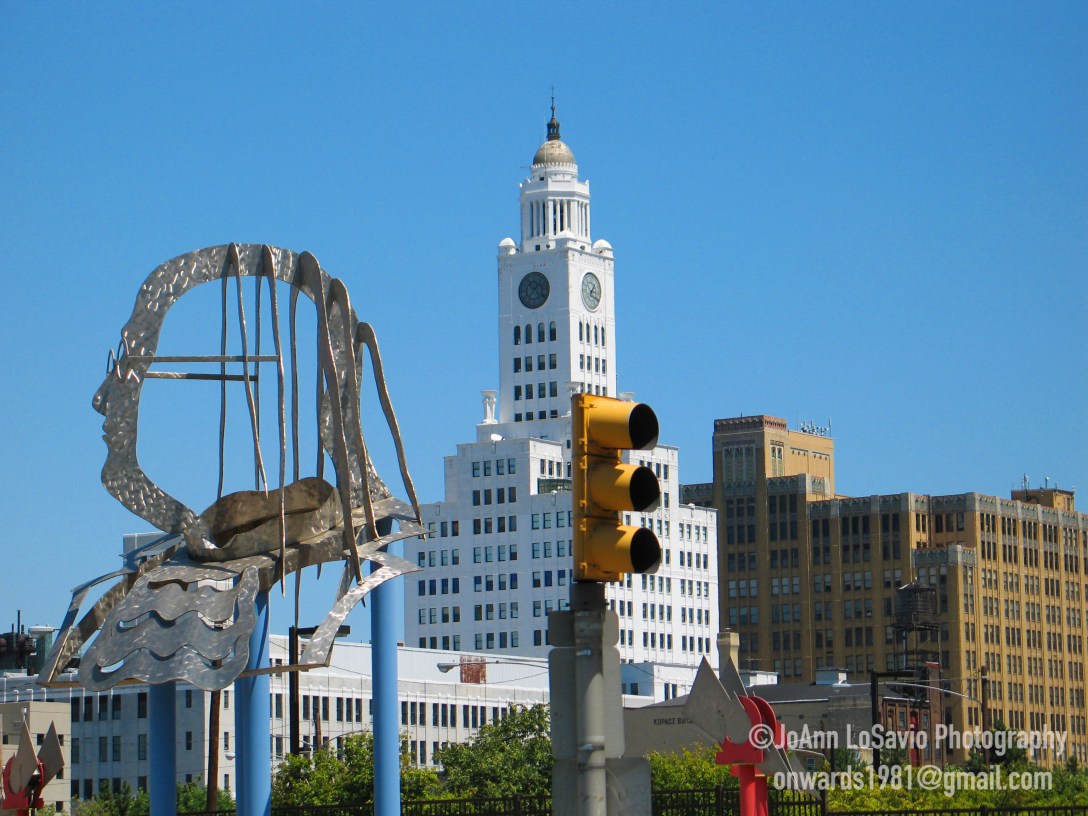
Philadelphia, 2006

My trip to Philly was only a short one, a couple of days over a long summer weekend in 2006, but it was memorable for a variety of reasons: the unique urban cuisine that’s become representative of American culture, the integrated presence of history into the city landscape, and the charm of a modern city that still feels like a neighborhood. I loved how walkable the city was (compared to Chicago where I was living at the time), how easy it was to see all the sites in one day without having to sit through 45 minutes of constant traffic! I didn’t get to visit all the places I wanted to but I was okay with that, because I liked it so much I know I’m going to go back one day.