Almost Brown: A Mixed Race Memoir by Charlotte Gill

Almost Brown: A Mixed Race Memoir by Charlotte Gill

As a historian I deeply appreciate Gill’s memoir, and for multiple reasons. Gill’s childhood experiences and those of her parents, captured from her memories and filtered through an adult lens retrospectively, highlights mid-twentieth century tensions of empire and our global journey towards decolonization. Moreover, Gill does it with a sensitivity to the internal, subjective conflict “colonials” often face as they grapple with their identities. The frustration of Self that Gill reveals to the reader, through her parents and her own struggles, is not an artifact of the past, singular to the decades of peak decolonization in the mid-twentieth century; these are still liminal spaces individuals occupy and traverse today.

In that respect, Gill’s memoir not only captures a particular zeitgeist of the 1950s-1980s — decades which saw a mass migration of colonials across the world, decolonization and independence movements coming to fruition, and a general cultural revolution across the world in terms of race, racism, and anti-paternalism — it also makes the reader aware of the continuity of this historical spirit and its legacy as it is lived today.

The success of this memoir is in large part due to Gill’s self awareness and willingness to see her parents (and herself) for the people they are; Gill examines them with an academic eye, as historical subjects, but also as emotional, affective beings whose desires and needs are universal across time and cultures. The result is a very relatable, human memoir, one which draws the reader into the nucleus of Gill’s family as well as the age in which they lived.

Some of Almost Brown‘s success must also be attributed to the fanciful and (for their time) outrageous characters her parents are, for the daring ways they each challenged the norms of their age in terms of race/racism, gender, and transnationality. This is where Gill’s memoir appeals to more than the smallish subset of readers whose interest is in post-colonial subjectivities; for while the memoir hinges on post-coloniality as its primary locus, it is also about the oppressions we inflict upon each other, the intersectionality of our daily lives, and the myriad of ways in which power flows or not even within a family. Gill’s mixed-race family serves as the perfect case study in which brown people and white people — that is, race — can be upended by gendered expectations, or vice versa. Gill’s white mother was submerged under her brown husband, even while he was marginalized by a society that saw him as inferior by dint of his skin color. She, in turn, was snubbed by both her husband and society for daring to be that which society deemed heroic: an independent-minded mother.

In short, Almost Brown is a memoir well worth the reading.

The Last Colony: A Tale of Race, Exile, and Justice from Chagos to the Hague by Philippe Sands

The Last Colony: A Tale of Race, Exile, and Justice from Chagos to the Hague
by Philippe Sands

A brilliant legal historical monograph. I am tempted to use these in my classroom, except the course it would be relevant for is a lower division course and the depth and nuance of the book is too dense — and therefore unsuitable — for my typical first year cohort. Nonetheless, this is a book I would love to re-read and reconsider for a future course.

The core of this legal history focuses on Chagos, an island formerly French, then sold out from under its inhabitants to serve as a military outpost. These inhabitants, its natives, were forcibly removed and prevented from returning. Sands exposes the reader not only to the specific events of this case, but the larger political context around it: the slow and unwilling demise of European empires and their hold over their colonies, the heat of the Cold War, a long history of legal maneuvers played with cards held only by those with power.

Sands’ monograph is well written; its delivery is succinct, direct, and accessible, though I think it is better suited to an academically inclined reader than the general adult reader. It packs a punch in few pages; a fast-flowing torrent of information that propels and compels the reader to keep apace.

The House of Doors: A Novel by Tan Twan Eng

The House of Doors: A Novel by Tan Twan Eng

I was very excited to read The House of Doors, being Malaysian (though now living the diaspora). Tan did not disappoint in any way. I was profoundly moved; the setting of the novel, in high colonial era Penang, evoked a sense of lost history for me, being so far from Malaysia, and culturally divorced from all that home invokes, but I also suffered for the characters and felt the grief of their romantic losses.

This novel is a romantic anti-romance, the kind of romantic novel that mimics tragic, realistic romance in life, with all the attendant unhappy endings and disappoints, guilt and regret, nostalgia and memory that romance actually delivers.

There are two intertwined stories here, that of Lesley Hamlyn, a middle aged British woman living in Penang with her lawyer husband, and “Willie” Somerset Maugham, the novelist who comes to stay with them for a short holiday (which turns into a research and writing expedition). They are products of their British Colonial culture; this is the 1920s, the peak of British rule in Malaya, and they represent the elite class that enjoys all Asia has to offer.

Lesley and Willie form an unusual friendship, and in doing so, the stories of their respective romances is unveiled and threatens both of them and their place in society. Love brings both of them pain and escape; traps them and offers them a way out.

Tan tackles tough subjects: queerness, interracial romance, sexuality and sex, gendered expectations — all things the British were (are?) notorious for suppressing at home and abroad. Tan does this with great skill; the writing is gorgeous. A particular ocean scene utterly devastated me; I was as submerged as the characters in it.

This is a book I will need for my personal library.

Everything the Light Touches: A Novel by Janice Pariat

Everything the Light Touches: A Novel by Janice Pariat

Lyrical, poetic, and ephemeral as its title suggests, Pariat’s novel Everything the Light Touches is an opus-like work of literary fiction. Readers who enjoy historical fiction that spans generations, speculative fiction like Cloud Atlas where the narrative leaps from one place and time to another, and botanical themes will find Everything appealing.

The novel begins in the present, and is set in India — Shillong — a region tucked between Bangladesh and Myanmar. Readers will find that this novel of India encompasses cultures and communities beyond the typical novel set in India; these are the borderlands, an India not usually seen or heard in literature or popular media. Pariat uses this site of unexplored India to their advantage. The result is a novel and mysterious India which does not resort to orientalism to achieve a sense of exoticism.

Everything straddles multiple sites and periods, setting the reader down in India’s high colonial period, taking a step back into 18th century Europe with Goethe, and bringing the author back to the present. We see Shillong through multiple eyes, filtered through multiple histories, both Indian, indigenous, and European alike.

This wide range of periods and foci make it difficult to pin down what exactly the book is about. As its title suggests, it is about “everything”, but of course, it can’t be literally. The novel is about the metaphorical and physical connection between that which light touches: the soil and earth, plants, leaves, and humans. Across space and time, the characters of Pariat’s novel are connected together, sometimes loosely as though through a vine of time, sometimes tightly as a result of proximity or intimacy. Each of the main characters is searching for something, a connection to someone else — marriage, love, parent, child — and also to the earth and its progeny, plants.

This botanical theme vines through each section of the novel. In the present it is about conservation, resource management, and exploitation. In the past it is about botanical science and the essence of growth and life. It is about humans and humanity finding a place for ourselves in the jungle mess of our lives, and about many of us finding that the jungle mess is more orderly than we thought — if we just pay closer attention, the answers are so simple: love, loyalty, and love again — in its myriad of forms.

The prose of the novel mimics the wilderness it highlights; Pariat’s text is sensuous in parts, alluring and floral and fern-like in its delicacy. Yet, simultaneously, Pariat’s prose is structured as a plant cell, symmetrical as a leaf. Some parts are even wild in being tangential and unexpected. There is a section devoted to poetry, but poetry is written all through it. This is a novel for the literary fan; while it is propelled by a plot and a structured narrative, the novel is also deeply rooted in its characters’ flaws, desires, and personalities.

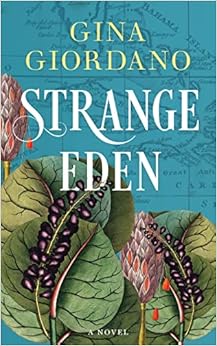
Strange Eden: A Novel by Gina Giordano

Strange Eden: A Novel
by Gina Giordano

Strange Eden is a novel of many things. Foremost, it is a historical fiction set in the Bahamas in 1791, as the British Empire consolidates its colonies in the Caribbean and mourns the loss of its American ones. The story revolves around Eliza Sharpe née Hastings, a young English girl of the gentry class and her life as the bride of Lord Charles Sharpe, the scion of an old Colonial family and a Lieutenant Colonel in the British Army at Nassau. Their union is a relationship rife with hostility and repulsion; it is a core pillar of the novel, as is Eliza’s and Charles’ relationship with one of this old friends, Jean Charles de Longchamp.

Romance aside, the novel also possesses paranormal elements, political intrigue, and feminist assertions. Eliza is a young woman with many gifts, some which are less desirable in the highly hierarchical and patriarchal world of the Colonial 18th century: a fierce independence, a boldness of spirit and tongue, a sharp intelligence in matters spiritual and political, and an ability to see that which is beyond the visible. In her adventures on the island, Eliza encounters those who expand her view of the world and those who would seek to limit it. It is a diverse cast of characters: Lord Dunmore, the governor of the island, Charlotte and a host of aristocratic society women, Cleo, an enslaved obeah woman, pirates and smugglers, and a mysterious shadow man. Each one paints this Strange Eden in garish and sober colors. It is a paradoxical place for those who are free may also live in chains, though made of silk and gold, and only those who are enslaved know the notion of freedom is an illusion. The novel’s title is apt: what is a paradise for some is very often not a paradise for a great of many others.

This dissonance is what makes Strange Eden shine as a work of historical fiction. For this reader, the appeal of the novel is its attention to historical notions of gender, race, and class. Giordano includes a bibliography at the end, and it is clear that she has done a great deal of research. I hesitate to consider the novel appropriate for the classroom; it is not. The research is good, though not at a professional level. But it was not meant to be; Strange Eden is not a textbook. The historical research Giordano has done remains a positive attribute of the novel nonetheless.

Giordano highlights the expectations put upon women of Eliza’s aristocratic class, and the overarching misogyny women experienced in this era. This is a theme which threads throughout the novel. The expectations of white upperclass women are contrasted against those imposed on enslaved women, like her young maids, Celia and Lucy, and contrasted against the rights and privileges of powerful men like Charles, her husband, Jean de Longchamp, and Lord Dunmore.

Giordano also pays close attention to the slave trade in the Atlantic, racial hierarchies risen out of Europe’s Enlightenment, and the paternalistic racism of the so-called “Civilizing Mission” as it was inflicted on the indigenous and persons of color in the colonies. Britain’s slave trade was abolished in 1807 and the practice itself in 1833, several decades after the moment of the novel; the novel is bold in its recognition of the tension between abolitionists and slave-holders at this time.

Strange Eden delivers a powerful lesson about the gendered and racial notions of the British Colonial world.

The mode of its delivery unfolds at a languid pace. The novel’s prose is thick with description, rich like the molasses that were produced in the Caribbean islands the novel is set in. In some parts the prose, to stick with the analogy to molasses, is unrefined for this reader; on occasion its phrasing conveys cliché over clarity or is redundant, perhaps benefiting from further editing. These do not degrade the novel on the whole. Giordano delivers a cohesive narrative, tangible characters and dialogue, and — most importantly for this reader — weaves a textured fabric of the period. Readers will find the prose is performative of the heat, vibrancy, and slow pace of life inherent in the British colonies of the 18th century. The result is an immersive read.

Readers should also know Strange Eden is the first of a series. The novel ends on a cliffhanger, “to be continued“; however this should not dissuade readers for two reasons. First, the novel ends at 517 pages allowing one to meander through it at their leisure until the next in the series is available and second, the novel has the strength and narrative arc to stand alone without its sequel. The ending satisfies.

To purchase a copy of Strange Eden click here. At present, you can purchase it on Amazon for $19.99 (paperback) or $4.99 (Kindle ebook).

Puppet Flower: A Novel of 1867 Formosa by Yao-Chang Chen.

Translated by Pao-fang Hsu, Ian Maxwell, and Tung-jung Chen.

Puppet Flower: A Novel of 1867 Formosa by Yao-Chang Chen.

A historian’s historical novel! Puppet Flower is a narrative novel based on real events, a watershed moment in Taiwanese (Formosan) history when the United States and Western colonizing powers begin to encroach on Taiwan in earnest. The novel begins with an unfortunate event, wherein an American ship encounter one of Formosa’s indigenous tribes after surviving a storm at sea. The surviving crew — including a woman — are murdered by the Formosans, triggering a series of investigations and the arrival of more Western ships and military.

What makes Chen’s novel special in this genre of historical fiction is that Western perspectives are well-balanced with indigenous ones. It is rare to encounter fiction focused on Taiwan’s indigenous community, historical or otherwise; in highlighting their unique experience here Chen offers readers and the world at large a rare and unique literary opportunity. The result is a fantastic novel that — in my opinion — would do well in the classroom for a number of reasons aside from its historical focus:

  • The story arc is peppered with references and information about Formosan culture, providing a context for the historical events themselves. Unlike many historical novels, which rarely explain the cultural references they point to, Chen writes for the non-expert.
  • Puppet Flower offers multiple perspectives rather than focusing on a single protagonist. In this case, the novel allows us to see the event from an indigenous and Western point of view.
  • The prose is straightforward and not superciliously literary, making this an ideal undergraduate book; it does not require a great deal of knowledge about literary tropes, metaphors, and other devices typically used in novels. This is, truly, a history novel.

Overall, a novel of great historical value, not only in terms of its content, but in its production. This is decolonization at work, a piece of scholarship that highlights the indigenous perspective, a view of the imperial encounter from those who were colonized.

The Education of Augie Merasty: A Residential School Memoir by Joseph Auguste Merasty and David Carpenter

The Education of Augie Merasty: A Residential School Memoir
by Joseph Auguste Merasty and David Carpenter

Every memoir is significant, on the basis that it documents a part of the human experience — and in the end, what do have if not an experience of life? In the context of the universe, this is what makes our existence unique — but there are some memoirs, some human experiences that possess a weightiness absent in others. That is, they reveal a humanity that transcends individual experience. The Education of Augie Merasty is one of these memoirs.

The cruel history of colonial settlement isn’t newly discovered — but it was hidden, deliberately and systematically for centuries. In the past fifty years and much more recently, excavations of memories, land, and archives have revealed the depth to which this erasure was taken. Merasty’s memoir is one of these excavations. [My Name is Seepeetza by Shirley Sterling (30th Anniversary Edition) is another memoir of residential schools and colonialism in Canada I’ve read this year, if you’re interested.]

I have an especial interest in these kinds of historical documents, not only as a historian of decolonization, but as an educator; the utility of the historical documents in the classroom are invaluable to convey the real effects of racism, colonialism, the power of the state in shaping our lives. Students often see the government as some kind of abstracted, remote thing, a hovering object over their lives that merely casts a shadow every once in awhile. Memoirs of this nature reveal how wrong that assumption is; the state is neither above nor below, it is embedded in every part of our lives and beings — even our DNA and the genomes that make up ourselves and our ancestry have been shaped by states and power. The Education of Augie Merasty is proof of the depth of the state in shaping human experience.

What makes The Education of Augie Merasty poignant is not only the memories he shares with the reader, but the whole of the story of this memoir’s making. The convoluted path and necessary involvement of the writer, David Carpenter — who serves as historian here — is a testament to the damage and legacy of settler colonialism in North America. The incompleteness of the stories, the silences and gaps in time and memory, as well as Augie’s language, preserved here by Carpenter, are evidence of the zigzag pathway that history is recorded, preserved, interpreted and ultimately used. As a tool to teach historical methodology, The Education of Augie Merasty is a fantastic case study.

The chronology of the memoir too, in the way it links the past to the present, is invaluable. Too often students see history as a static, buried thing of the past. That myth is a hard one to kill. But kill it we must, because history is not only the root of the present, it is also a reflection of our present selves and world. That is a key characteristic of history: Carpenter’s presence in these pages and the unresolved ending (unlike many memoirs, this is not posthumously produced) help to deliver this lesson.

Other aspects of the memoir make it even more perfect for classroom and course use: its length is short, its language is accessible, its story is compelling and shocking. The absence of larger historical events occurring in Canada and the world are also bonuses here too, allowing the instructor to compliment the text as appropriate to the course level.

Merasty’s memoir is one I will be considering for use in my courses.

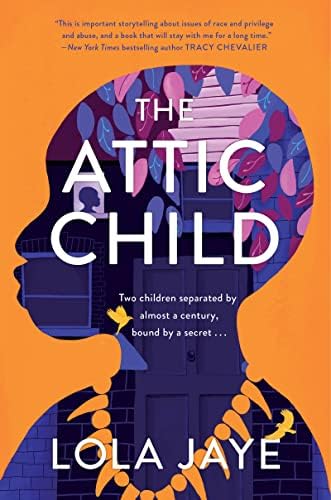
The Attic Child: A Novel by Lola Jaye

The Attic Child: A Novel by Lola Jaye

Something draws me to themes of tragedy and darkness in my choice of reading. The Attic Child might very well be one of the darker — if not darkest — novels I’ve read this year. This is a novel about strength, resilience shaped by necessity of survival and trauma; but it is not only the characters who must cultivate and wield this kind of strength, the novel requires the reader to be brave and hardy too. The reader must be to bear the suffering of reading about the suffering of others.

The pain is intentional. Jaye’s novel addresses, with unflinching realness, the lived trauma of colonialism by highlighting the literal theft of human beings European colonizers forced People of Color and colonial subjects to endure. The novel forces the reader to see how this history is very much present in our contemporary moment, that it is has caused intergenerational harm beyond measure.

As a historian of decolonization I am grateful for a novel like this — and happy to see that it was distributed on a platform as wide and well known as The Book of The Month Club (which is where I obtained it). We — those who come from parts of Europe’s former empires and those whose ancestors benefited from those empires, that is, everyone — need books like this, stories like this, voices like Jaye’s to declare that the grief and loss and wounds of colonialism are still not healed, closed, “over.”

The novel spans many generations and decades, beginning at the start of the twentieth century with a young boy who lives with his family on the African continent. He becomes the Attic Child, the first of many — children shut away, abused, neglected. He is robbed of his identity and his heritage. The story of a young woman who lives in a time closer to our present intertwines with his. The reader is aware there is a connection between the two, something hidden in the attic and the house in which both of these characters grow up, both of them “attic children.” The mystery the reader will find themselves embroiled in is how they are connected and why.

As the mystery unfolds it also deepens, its roots are long and twisted and dangerous. The mystery exposes the characters to pain and the possibility of new emotional wounds. The threat of scarring is real. But they are both hurtling through history and time and must live their lives. If there is a history lesson here, it is that we cannot escape history or making history, as we do so simply by living.

The novel does not pretend to heal the pain of this history. Reader should not expect to be bandaged or coddled in any way. But the novel does end as a historian might expect, with the lesson that history does not end, it goes on and on and therefore, that is itself a kind of closure. Perhaps, the ending is something more of a suture than a healing.

This is a tough and exacting book to read, but one which will not fail to provoke emotion. This is a significant novel.

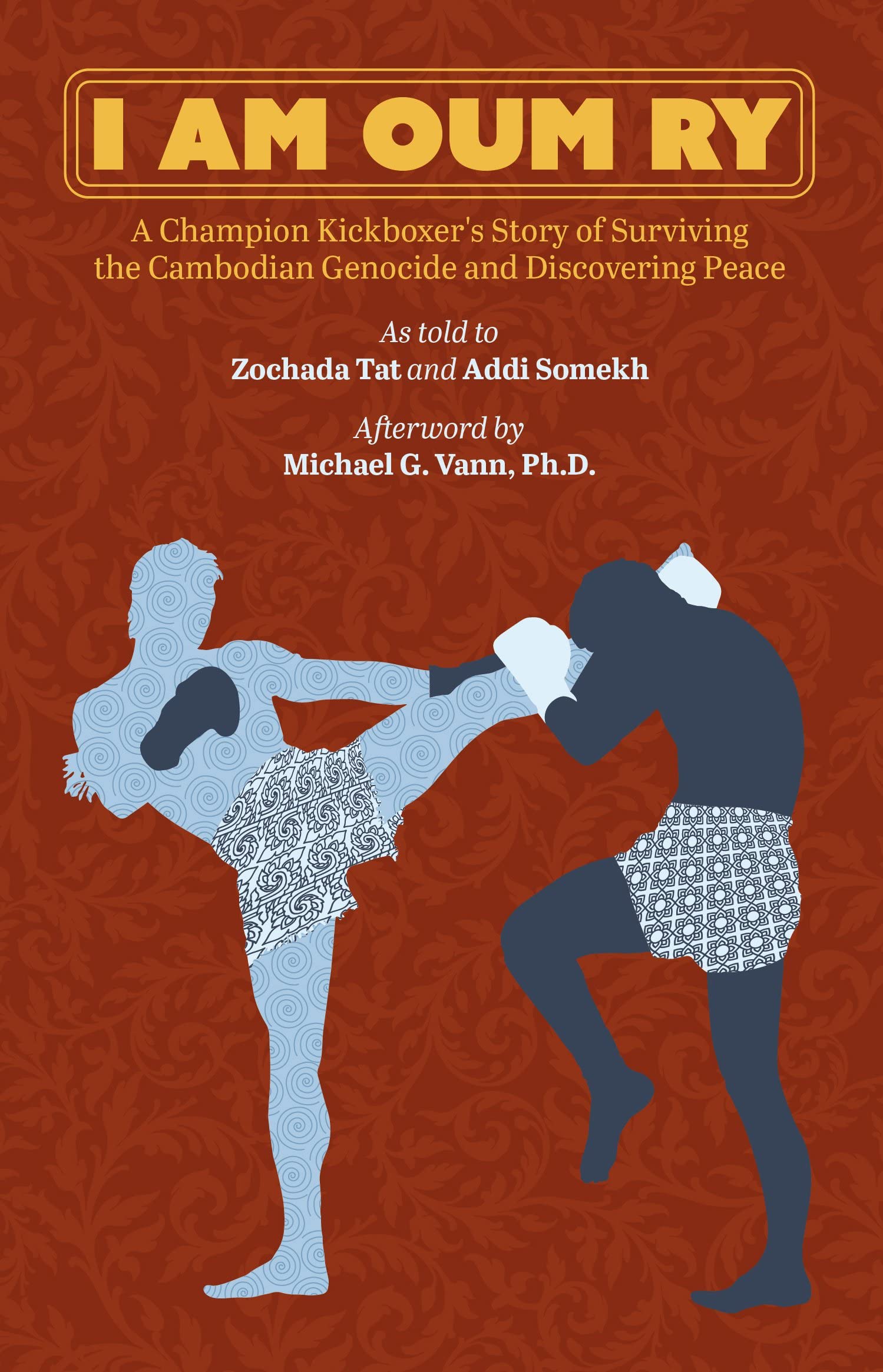
I Am Oum Ry: A Champion Kickboxer’s Story of Surviving the Cambodian Genocide and Discovering Peace by Oum Ry, told to Zochada Tat and Addi Somekh

Afterward by Michael G. Vann, PhD.

I Am Oum Ry: A Champion Kickboxer’s Story of Surviving the Cambodian Genocide and Discovering Peace by Oum Ry

This memoir strikes hard on multiple levels. It is a reflection of contemporary America and the transnational, transcultural, immigrant experience that many Americans live, whether themselves or vicariously (as Zochada Tat did), as the children of immigrants. Migration is a traumatic event, (sometimes positive, sometimes not, but always) one that reaches across several generations. Oum Ry’s memoir toggles forward and back in time, threading a connection in time between father (Oum Ry) and daughter (Zochada Tat). From this perspective, I Am Oum Ry is an emotional read, a subjective vacuum in which the characters are the primary focus, separate from the context of their world in a way. Tat and Somekh portray Oum Ry, his many lovers, his wife, his children, and the myriad of people who came, left, or stayed in his orbit, in all their flawed perfection; the logics behind his and their behavior as consequences of individualized trauma: parental abandonment, grief of loved ones lost or killed, sexual desire and exploitation.

But people do not exist in vacuum. The individuals in these pages are not ahistorical; they are deeply embedded in histories of patriarchy, Colonialism, the Cold War, the Khmer Rouge genocide, the American/Vietnam War, Cambodian traditions, and collective desires for modernity, belonging, and security.

The memoir takes the reader to Cambodia in the mid-twentieth century, beginning just after WWII. The French stubbornly cling to Indochina. Then ahead to the American War in Vietnam a decade later. It lingers on the five golden years of the 20th century when Cambodia perched on the edge of modernity, part of a larger Southeast Asian moment of revivalism and decolonization and prosperity in the early 1970s. After that the reader follows Oum Ry into the dark age of the Khmer Rouge genocide, and the suffering that followed as Oum Ry, like so many thousands of other Cambodians fled to Thailand to seek asylum elsewhere, anywhere. Oum Ry, like many other fortunate refugees makes his way to the United States where he finds both happiness and deep disappointment. The life of a migrant is bittersweet, filled with hope and longing.

The histories I Am Oum Ry excavates are powerful, a fisted punch to the gut. Oum Ry holds nothing back. The currents of forced migration, war, genocide, and racism that underpin Oum Ry’s words and experiences will knock the wind out of readers. This is an important memoir, not because it is unique — it isn’t, there are many Cambodian-American/Cambodian memoirs written by survivors of the Khmer Rouge — but because it neither indicts or glorifies the past or the present. The Khmer Rouge are not the sole villains of the genocide, though they are largely responsible for the horrors Oum Ry and other Cambodians experience; the Vietnamese and ordinary, fellow Cambodians are part of the horrific milieu of that moment too. America is not hailed as the land of milk and honey; it too is a dark land of racism, crime, poverty, and disappointment. But it isn’t all bad either; Oum Ry and his family find a place in California and become new Americans.

It is also significant in that it highlights pradal serey/muay thai, and centers around this sport. It is unique in this aspect. Oum Ry occupies a unique cultural position as a fighter, a sports icon in Cambodian history and 20th century Cambodian culture; his memoir gives us a rare glimpse into a world of sport and celebrity that was exclusive before the war and certainly much more so afterwards as a result of the loss of so many Cambodian stars.

For me, as a Southeast Asian scholar and a historian of Southeast Asian sport, I Am Oum Ry possesses academic significance. Sport is an often overlooked aspect of history and culture, seen as purely recreational. I Am Oum Ry proves how wrong this assumption is; pradal serey deserves attention as a historical artifact of a lost moment and in the present as a vital element of Cambodian-American identity and Cambodian cultural revival.

For almost every reader, I Am Oum Ry will evoke a multitude of emotions ranging from sad to inspired. Oum Ry’s life has been a rollercoaster in and out of the fighter’s ring. It has been dramatic in positive and negative ways. His is a life worth the reading.

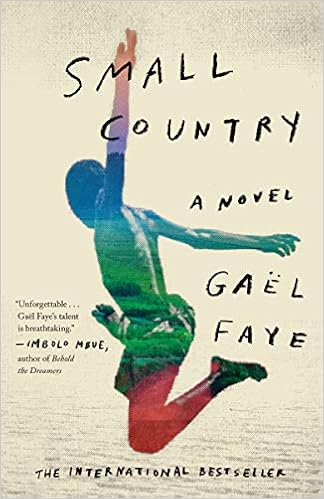
Small Country: A Novel by Gaël Faye

Small Country: A Novel by Gaël Faye

I have been keen to read this book for some time. Small Country was published in 2016 in France and in French, and translated into English by Sarah Ardizzone in 2018. I saw it on the Book of the Month website and it immediately caught my eye. It’s not often that African literature — especially a novel focused on something as horrific as the Rwandan Genocide and the Burundian Civil War, both connected in their origins of ethnic conflict between the Hutu and Tutsi — finds a way into mainstream, popular book culture.

It was worth the wait. Small Country delivers a powerful, immersive, historical experience. I felt as if I were there, transported back to the early 1990s, growing up with Gaby, a silent witness to the terror and happiness of his childhood. We are not so far apart in age that his childhood feels foreign to me, and there is a common experience in living in former colonies, French or British, that pervades the postcolonial world. Faye’s prose helped a lot; I could smell the fruity air of tropical Burundi, sense the light dusting of brownish-red earth on my skin as Gaby and his crew ran down the roads of their neighbourhood, the scorching heat of the sun, a trickle of sweat run down my neck.

But of course, Gaby’s path and my own diverge wildly on the occasion of war. Faye’s portrayal of that period of time and conflict was palpable. By that point in the novel, the characters felt like friends: ordinary and familiar like those who populate our own worlds. They were likeable and hateful, annoying and lovable, flawed and perfectly so — and then they were thrown, involuntarily, into an unimaginable violence. Much like Gaby and his family and friends, the war approached slowly, then arrived suddenly. The effect is jarring — purposefully — on the reader. The events of the novel force the reader to wonder, “What if this were me? What would I do?”

The story follows the chronological path of Gaby’s life, a mixed-race boy of French and Rwandan parentage, growing up in Burundi. It spans his early life from about age four or five to the time of the Genocide, when he is a teenager and evacuated to France. The novel is one that revolves around the nuances of race and interracial relationships, the push and pull that is inherent in transcultural lives, and the desire for a sense of place when one is trapped in a Venn diagram of multiple belongings. Gaby’s mother is one of these out-of-place women, French by marriage and in part by design, but also Rwandan and not-Rwandan, Burundian by default and yet rejected by Burundians on account of her Rwandan origins. Gaby’s father also straddles multiple worlds, first as a colonial settler in a time when such settlements can no longer exist as they were; he is out-of-time, rather than out-of-place. Second, in the matter of class, Gaby’s father possesses status, but only on the African continent, not in France. Gaby, the protagonist of the novel, is also caught between worlds on account of his mixed-race, his socio-economic class as the son of a middle-lower-upper-class businessman, and because of his nationality being a French passport-holding Burundian. The characters exist in a kind of suspension. This uncertainty is, on the one hand, brought on by the war, but it existed before as well, as people in this community reconcile their ethnic history or their settler status with the new postcolonial order of things.

Small Country is about the loss of one place of belonging when another one exists. It is about loss of the things (including people and practices and languages) that bind us to one another and to ourselves. It is about how we individually must grapple with that loss, how we deal with it or how it deals with us. Every character in this novel loses something or someone (a spouse, a child, a family member, or themselves), gains something (freedom, independence, clarity of self, madness, grief), and plods onwards in life because there is no option to do otherwise. The reader cannot help but recognize their suffering and their experience.

Small Country is about refugees, both the kind we see in the news and the kind we do not see, those who occupy our own worlds and are, in a sense, “hidden in plain sight.” Faye presents to the reader a reflection of themselves, turning the refugee of the news into an all-too-familiar face, our own. Perhaps as we encounter refugees in our lives, those of the news-kind as well as others, we might find common ground with them on the basis of this shared humanity.