This novel was so fun to read, and with every one of the detective’s victories I felt like yelling out, “Go get it, girl!”
The novel revolves a young woman who has become India’s first police detective. The case of a lifetime is thrust — seemingly serendipitously — into her lap. But it’s a double-edged sword: she could either emerge from the fight triumphant, the murderer under her arrest, or lop her own head off and prematurely end her career before it even begins. But that isn’t the own tightrope she has to balance.
Malabar House is the name of her station, and its where — as a woman in a male-dominated career –she has to prove to herself, she is a worthy policewoman and Indian citizen and earn the obedience of her colleagues, if not their respect too. Obstacles of all sorts are thrown at her, some from within the ranks and others by those she thought would support her to the most. Betrayal lurks in wait for her everywhere.
It’s a very intriguing story, not only for the mystery at the root of the novel, but because it takes place at a critical moment in Indian history, just as the new nation is emerging from its colonial cage, when change is possible in all sorts of ways (for the better and for the worse), when Britain’s imperial secrets might be exposed under the lights of new India.
I enjoyed both threads of the story immensely. Unlike many postcolonial novels, which are dark and brooding and deeply serious Midnight at Malabar House was joyous and in parts, comedic (perhaps only in comparison). I felt vindicated each time our detective “won one” over her misogynistic colleagues or the corrupt officials who threatened to stand in her way. That said, readers should not expect to be only entertained; the traumatic history of India’s partition, the genocide of Muslims and Hindus, and other dark elements of British imperialism feature here. Post colonial literature is often tinged with some amount of sadness and trauma, justifiably, and this novel has its share of this.
I am not one for book series — I prefer standalone novels and duologies are my usual limit — but I wouldn’t mind reading another one in the Malabar House series at all.
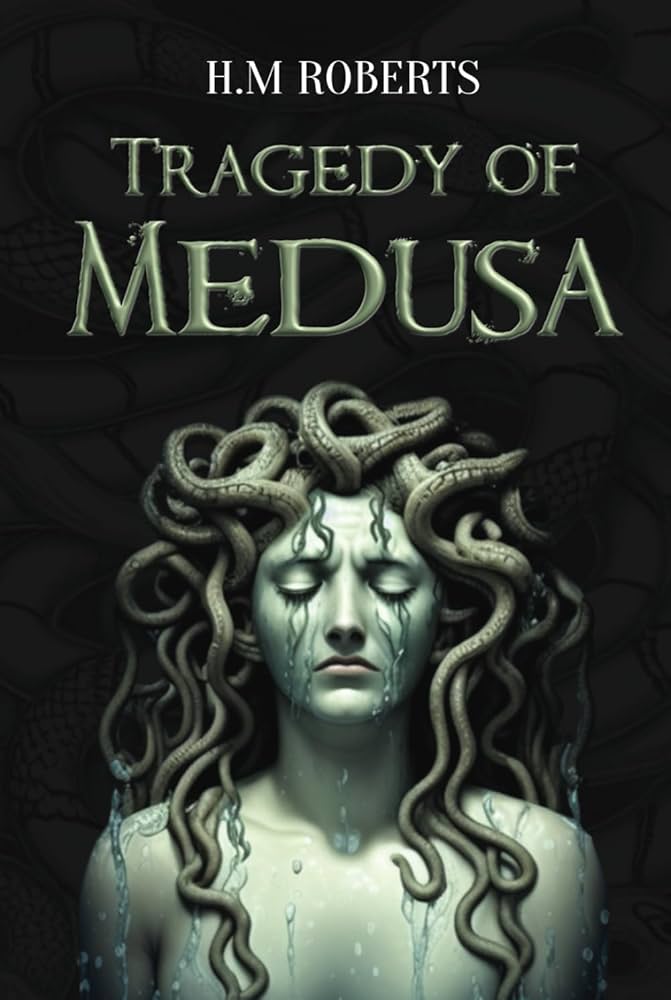
At under 200 pages, The Tragedy of Medusa is deceptively thin. H.M. Roberts delivers a powerful and emotional alternate narrative to the myth of this complicated woman through a swiftly moving story and with a succinct use of words.
Readers should know that the novel spans the length of a lifetime, and will immerse them thoroughly in its magical timeline. I emerged from the novel feeling a kind of grief; as if I had lived alongside the woman, Medusa, herself. Having a familiarity with the original myth of Medusa is not required here; Roberts uses the mythology as a guide, but deviates from its rules to develop a compelling, deeply human tale. Through Roberts’ prose and storytelling I lived the tragedy of Medusa myself.
Readers who enjoy historical fiction, fantasy, and mythology will appreciate Roberts’ equal attention to research and reality on one hand, magic and lore on the other. As a historian and as a pleasure-reader, I appreciated how well-researched it was without being pedantic. Small details about dress and life brought a tangibility to the interactions between characters, put the story in historical context. But the novel remained focused on its story and characters, and this is ultimately what made it so compelling: Medusa, her sisters, and family were nuanced, imperfect and human, for all their divine origin, the mortal characters transcended time, feeling all too familiar despite the historical difference. Fans of literary fiction will find the deep reflection and well-crafted characters of this novel as appealing as story. Roberts’ TheTragedy of Medusa cuts across the boundaries of genre.
I thoroughly enjoyed this indie read, and would not hesitate to recommend this to other readers.
I absolutely loved reading this book. Every twist, every shift of the story was both unpredictable and comfortably familiar. It was gratifying. I won’t give it away, but I found myself saying, “I knew it!” and “Oh, noooooo!” equally as frequently.
The story unfolds in a small rural Indian village (a fact about it I love; too often the novels I’ve read of India focus on the urban experience) and revolves around a woman whose husband has vanished under mysterious circumstances. The villagers suspect nefarious reasons and the woman is ostracized as a witch, though nominally included in a number of village activities, including a micro-financing program run by one of several foreign NGOs.
As the women become empowered through their new wealth and skills, they find themselves unwilling to bow to the patriarchal norms of Indian culture and so they seek out the witch in their midst to help rid themselves of their problems in the way they imagine she did.
Mayhem and hilarity ensue. Vengeance too. And redemption. Really, this novel has it all.
Shroff’s prose is another worthy reason to pick up this novel. Her voice is clear, bell-like and unique; her voice as an author, like the the women she writes is individual. The prose is confident and bold, clear and evocative. In several parts, Shroff touches too close to the reality of being a woman in a patriarchal society. I twinged when I read those words, both out of appreciation at being seen and discomfort, being confronted with the fact that women are universally abused.
I especially appreciated Shroff’s portrayal of rural Indian women. The characters here are fleshy women who disrupt the stereotype of the unworldly, uneducated, unintelligent village woman. This is a work of decolonization, unravelling the orientalist stereotype too many Indian women have — and are — burdened with.
This is a historian’s historical novel, in every sense of the word. Not surprisingly, is is written by a former academic; Kathleen Jones began her writing career as a political scientist and professor, before turning to literary fiction. Cities of Women is a seamless blend of these two domains of their experience, reflecting a deep respect for the scholarly pursuit of history while offering readers a deeply textured and emotional perspective of the past.
The novel toggles between the modern present and the medieval past, beginning with a tenure track historian’s search for her place in the academia. Verity Frazier then encounters, by chance, that rare glimpse of an undiscovered history. This is the sort of thing historians dream of when they enter archives; Jones portrayal Verity’s hope and desire is palpable — or perhaps that is just my historian’s heart set aflutter. Buried, like so many women of his age, is the presence of a female illuminator, Anastasia.
The unfolding of Verity’s archival adventure draws the reader into a world that is both exotic and familiar. Verity and Anastasia (like us all) live in a patriarchal world, one which fails to take women seriously, which gaslights us, and forces us to make undesirable choices. This is a feminist novel, bringing to the fore these age-old prejudices and the battles women must fight to be heard, seen, remembered.
Then novel also contains more than one beautiful and flawed sapphic romance, highlighting the containment and self-sustaining world of womanhood. This is the beauty of Cities of Women; it is an illumination of women, an honest portrait of women’s struggles and successes, a tale of oppression and empowerment as the two sides of our collective experience. Readers should know this realist capturing of the female experience may trigger; who among us cannot point to some evidence of trauma in our lives?
Indeed, Jones’ characters are as made of flesh as ourselves, so well does her characterization reflect the depth of her historical research and her skill as an author. We can feel Verity’s pain, the elasticity of Anastasia’s tenacity, Christine’s boldness and pride. We can also recognize the women around them, the friends who succumbed to the status quo, the colleagues who share in the frustration of being a woman in a man’s world, the lovers who boost us and tear us down.
The novel revolves around these women and their lives, and as such, being character-driven, moves at a languid pace, stretching the length of lives for some characters and capturing mere months of others. Time, in fact, is fluid in this novel, a kind of ephemeral backdrop; the lives Jones tells us about cut across time, flatten it. Women have then, as now, experienced much the same things.
Dialogue between the characters is seamless, perhaps too much so sometimes; I was left wondering if people really talk like this? But then, the world is wide and there are many in it, so perhaps they do. Or perhaps Jones is referencing the physic unity between women, so One-Of-Mind are we that our words may zipper so flawlessly together. Overall, however, Jones’ prose is splendid, mature, and expressive; it is smooth, flowing, and sensuous in many parts. Readers will find themselves cradled in gorgeous text throughout.
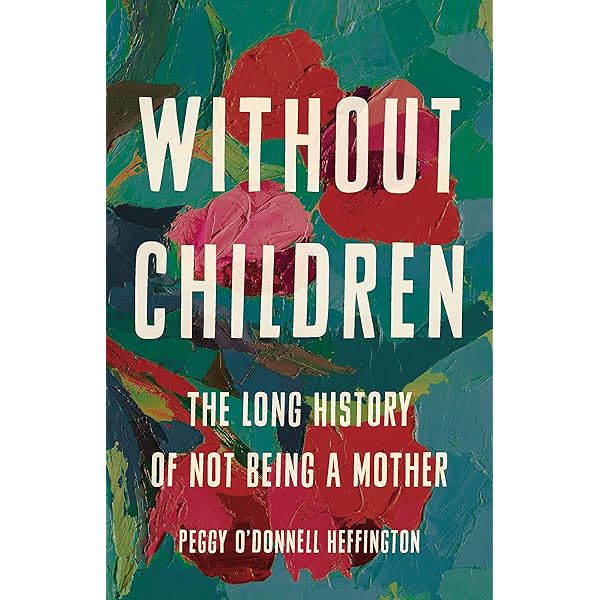
Without Children: The Long History of Not Being a Mother by Peggy O’Donnell Heffington
I read this over Mother’s Day, so it was particularly poignant for me as I reflected on the fluidity of my own womanhood and ideas concerning mothering. It’s a profound read; readers should be prepared to question their notions of womanhood and mothering.
As a mother, I found this history of mothering, motherhood, and childlessness to be an amazing read, and on multiple levels. First, in terms of its content, O’Donnell Heffington lays out a compelling history, arguing for a revision in the way mothering is perceived, valued, and recognized. This is a history for anyone and everyone, regardless of their position on child-bearing, motherhood, or womanhood at large. Each chapter addresses a form of mothering or motherhood, expectations around these roles as they have changed through time, and historical factors which have influenced our collective image of Mother today. Throughout Without Children there are stories of mothers — of diverse kinds — embedded, evidence of O’Donnell Heffington’s arguments and research. The result is an intimate narrative history, one which toggles seamlessly between micro-history, prosopography, and discussions of the larger contexts of religion, politics, and gender.
Second, Without Children impresses in terms of its prose and language; it flows at a comfortable, easy pace, delivering what is a deeply contentious issue in straightforward terms. O’Donnell Heffington clearly has an agenda; what writer and what non-fiction does not? — but the book, to its credit, lacks superciliousness, pedantry, and jargon. Given the controversial topic and the heated debates among many women and mothers regarding having children or not, Without Children performs a miracle of balance.
At the root of the debate and ultimately at the root of this book, is the question and discussion of the constituency of womanhood as it is understood in most Euro-American Western societies. What makes a woman? (Some would have us believe it is motherhood.) What constitutes a mother then? (Some challenge the notion of birth and biology.) In a moment of gender fluidity and revolution of gender identity, Without Children asks us to suspend our ingrained understandings of gender to consider other definitions of motherhood and womanhood.
Bronze Drum: A Novel of Sisters and War by Phong Nguyen
Phong Nguyen beats out a strong, feminist song in Bronze Drum, one that makes my Southeast Asian woman’s heart swell and weep and soar all at the same time. It is a rare moment when a book makes me feel seen. As a historian of Southeast Asian history, I am deeply grateful for this rare and unique novel that so brilliantly and beautifully captures an often overlooked era and people.
Southeast Asia’s ancient history is little known outside of academic circles. Even within that small enclave, many scholars of the region focus on contemporary Southeast Asia or modern Southeast Asia from 1300 onward. Many students, especially American students, see Southeast Asia through the American-centric lens of the Vietnam War (Note that the Vietnamese call it The American War). I, myself, as a scholar focus on the region’s post-colonial period, the peak of the Cold War between 1950 and 1970. Bronze Drum, by highlighting a much earlier colonization of the region by China, both appeals to my decolonizing spirit and makes visible my own historical blindspots.
The world turned its attention to Southeast Asia when its spices and trade with China made it an easy backdoor into that empire’s markets, around the 1300s. But, of course, Southeast Asia existed before then, had a history before then. But excavating that history has always been problematic. For one, in the post colonial world, history has become a contested domain. Its function as a tool of nation building and national identity, coupled with the need to appease various ethnic and national factions for the sake of collective peace has obscured some histories, elevated others. The demonization of the Han Chinese in Bronze Drums would not have gone over well in another time and place, and even today, the influence of China on the region’s economic and political stability cannot be easily dismissed. Southeast Asia has ever been and remains, whether we like it or not, in some condition of thrall to China.
But back to history. Another reason for overlooking ancient history is that nature has not been kind to historians of the region. Much of the region’s ancient histories have been difficult to document. The moist and hot climate of the region does not lend itself to the preservation of wooden or plant-based artifacts, only that which was hewn into stone has survived. Archaeology informs us there were many vibrant ancient civilizations here: the Dong Son, whose drums are those featured in Bronze Drums, the Majapahit in what is now Indonesia, the Sri Vijaya in what is Malaysia, Singapore, and Indonesia. There were Muslim sultanates in the Philippines and the Tai Kings in Thailand, and the ancient origins of the Court of Ava in Burma (today, Myanmar). Stele and monumental building like that at Angkor or Borobodur remind the world of these past eras and peoples.
The sisters in Bronze Drum are the Trung Sisters of Vietnamese mythology and ancient history, Trung Trac and Trung Nhi, who dared to subvert the Chinese Han invaders. Bronze Drum is a real history, though it is also Nguyen’s fictionalized retelling of it in the form and in the style of a mythic epic. The novel unfolds the fabric of the Dong Son/Lạc Việt world as it weaves through the Trung sisters’ fight for their kingdom and culture’s independence. The strength of Bronze Drum is that it reads as an epic should: it begins with the heroines just before they realize their fates, it recounts their moral turnaround, the moment they knew they had to be the leaders they became. The novel then impresses the reader with their triumphs. The novel then turns to their downfall. (I am giving nothing away here, it is well known the Viet fall to the Han and later, the French. History is the spoiler.) There is a sense of Joseph Campbell’s classic hero/epic narrative structure in Nguyen’s retelling, something that is sure to feel familiar to readers of Greek and Norse mythology.
But Nguyen provides the reader with more than just a myth here. Nguyen gives us insight into the interiority of the Lạc Việt actors, including the sisters who become female kings and warriors atop elephant backs, their courtiers and allies. The highlanders, Degars — also known as người Thượng — are featured too in Bronze Drum and the peasant community is not ignored or invisible as they are in so many heroic epics. They are as much the heroines as the Trung sisters in this novel.
If there was one flaw, I wished for more discourse on the larger political context and history of the Lạc Việt. The neighboring princes and chiefs and villages made appearances in the book, but I wanted more of that political intrigue, real politik dialogue, and sparring between characters. (I will not lie, for all their orientalist bungle, I enjoy James Clavell’s Shogun and Taipan and Gai Jin, for that kind of in depth political maneuvering.)
Nonetheless, Bronze Drum is epic. And this is not its only strength.
Its characters were mostly strong women and I deeply, deeply appreciated Nguyen’s feminism, bringing matriarchal lineage and culture to the forefront. The women of Bronze Drum are not frail, delicate flowers. They are not sexualized pussy cats like Richard Mason’s Suzy Wong and the nameless sex worker of Full Metal Jacket fame. The women of Bronze Drum are real Asian women, made of fire and water and air and metal all at once. They are sexy and sexual beings, they have inner strength and outward muscle, they think and speak for themselves. Even as they are mothers, wives, daughters, sisters, and nieces, they are denizens and creators of their own worlds and desires.
Phong Nguyen’s prose brings these heroines, these mythological warrior women to the center of the Lạc Việt world with ease. The novel flows, riverlike towards rapids, smooth and fast. The reader will want to surrender themselves to the story and let it carry them to the end.





 Dr JoAnn LoSavio