This novel took me by surprise — and in that wonderful way that good books often do. Goyhood opened me up to new perspectives, reminded me of the strangeness of life and its myriad twists.
The novel lies beyond my usual fare. I tend toward historical fiction, historical non-fiction, and rarely take on contemporary fiction. But the opportunity came my way, and I found a perfect balance of history, culture, and contemporary life in this novel.
Goyhood calls into question the ways in which we build our narratives, our identities, and how those stories can cheat us of who we really are and who we want or could be. The story revolves a young man on the edge of his life, one which he has cultivated carefully and meticulously, and an event which forces him to abandon it. This is the story of his angst and (re)discovery of self. It is also the story of siblinghood, the tumult that comes from deeply embedded family secrets.
It is also, like most stories, one about love, the depths of it and the lengths we take to protect those we love and the love we desire to maintain.
This is also a book about jewishness, though I am in no position to review on that point. I can only say that I found the book informative and am delighted to know more about what it means to be Jewish in America.
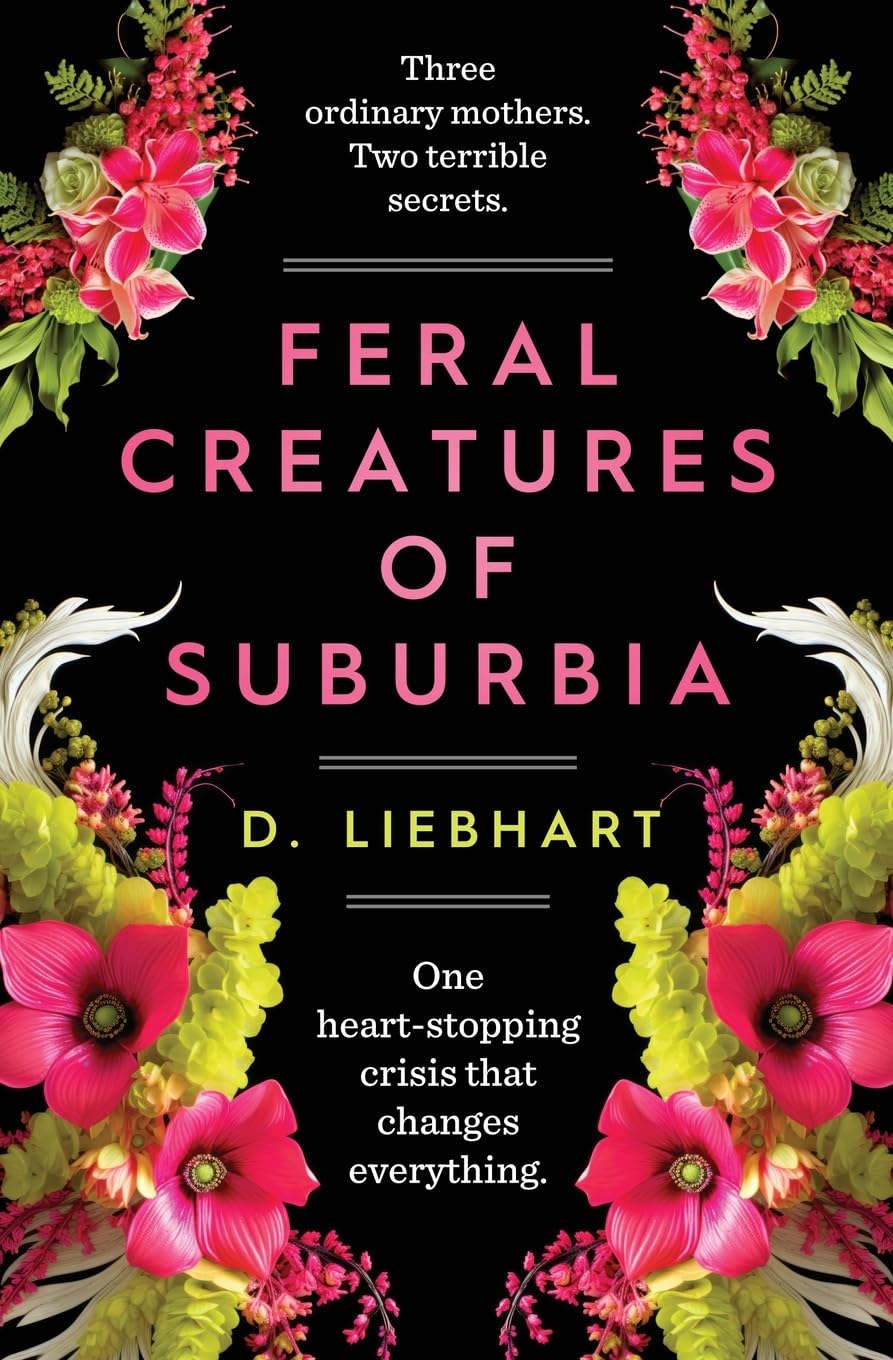
This is the second book of D. Liebhart’s I have read and I can’t wait for the next. Contemporary fiction isn’t my usual genre, but Liebhart’s introspective and acutely insightful style borders on literary fiction. This isn’t a casual novel for the lighthearted; Feral Creatures will rip a hole in your soul and leave a scar. But it will be one you treasure as a reader, one that will change your perspective on life and the world — and perhaps how you read. It did for me.
This is, in large part, due to Liebhart’s skill as a writer. The prose is simultaneously lyrical and straightforward, soothing and incisively sharp. There were several moments I had to pause reading, just to take a breath. But the urge to know what happens, the need for resolution drove me back.
The story moves slowly, but the pace is measured and deliberate — and warranted. The story unfolds in overlapping parts, revolving around three women: Julie, Crystal, and Varvara, and their children: Logan, Mateo, and Myra. Their lives are ordinary — recognizable as our own. It is the tragic intersection of their relationships with one another that the novel builds toward. It is a situation we have all — at one point or another — dreaded to prepare for.
Grief, loss, and the hardship of loving their children are the major themes of these women’s’ lives — indeed, of ALL our lives.
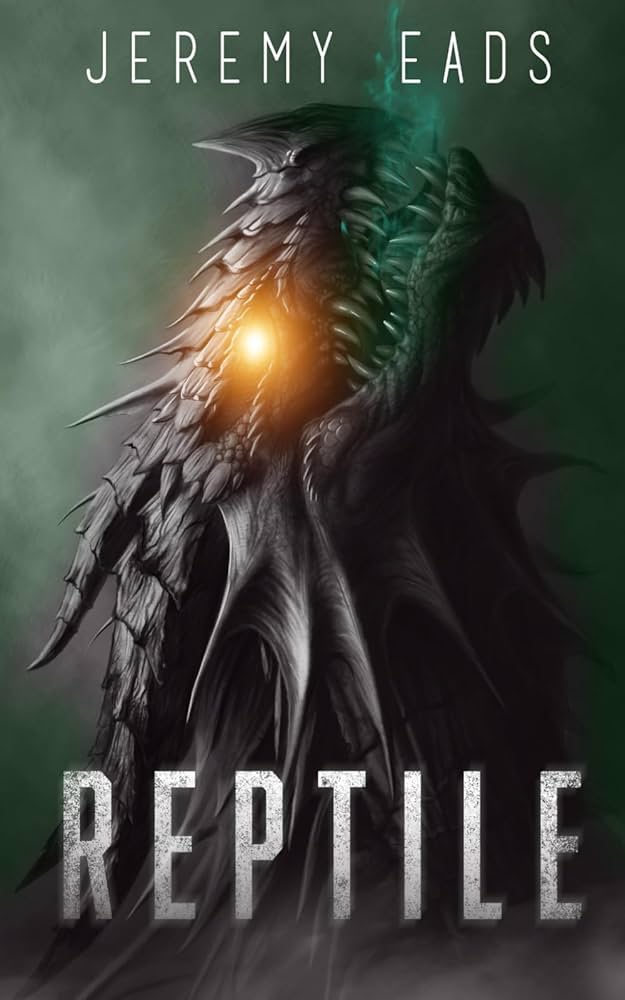
Reptile is a novel in the classic “monster” genre of horror fiction, the kind of novel that appeals to readers and fans of werewolves, vampires — or perhaps, more specifically — characters like Frankenstein. Like the latter, Reptile offers the reader and interior glimpse into the dark side, the monster’s perspective.
I have read Eads before (The Lodge) and he does not disappoint in Reptile. The writing is well and thoughtfully crafted, producing tangible, human, and horribly flawed characters, the sort of people you recognize, for better or worse. There is a perverse kind of thrill in watching these characters succumb to the terror, and watching the terror itself come into being and unravel.
This review is necessarily short; I don’t want to give away what happens to Mark as he transforms into this monstrous predator. That said, the appeal of the novel is less about “what happens” than about becoming invested in the people it happens to. Eads’ characters are sure to elicit various reactions from readers, whether it is nausea at their depravity or cheer at the demise (there were a few characters I enjoyed despising).
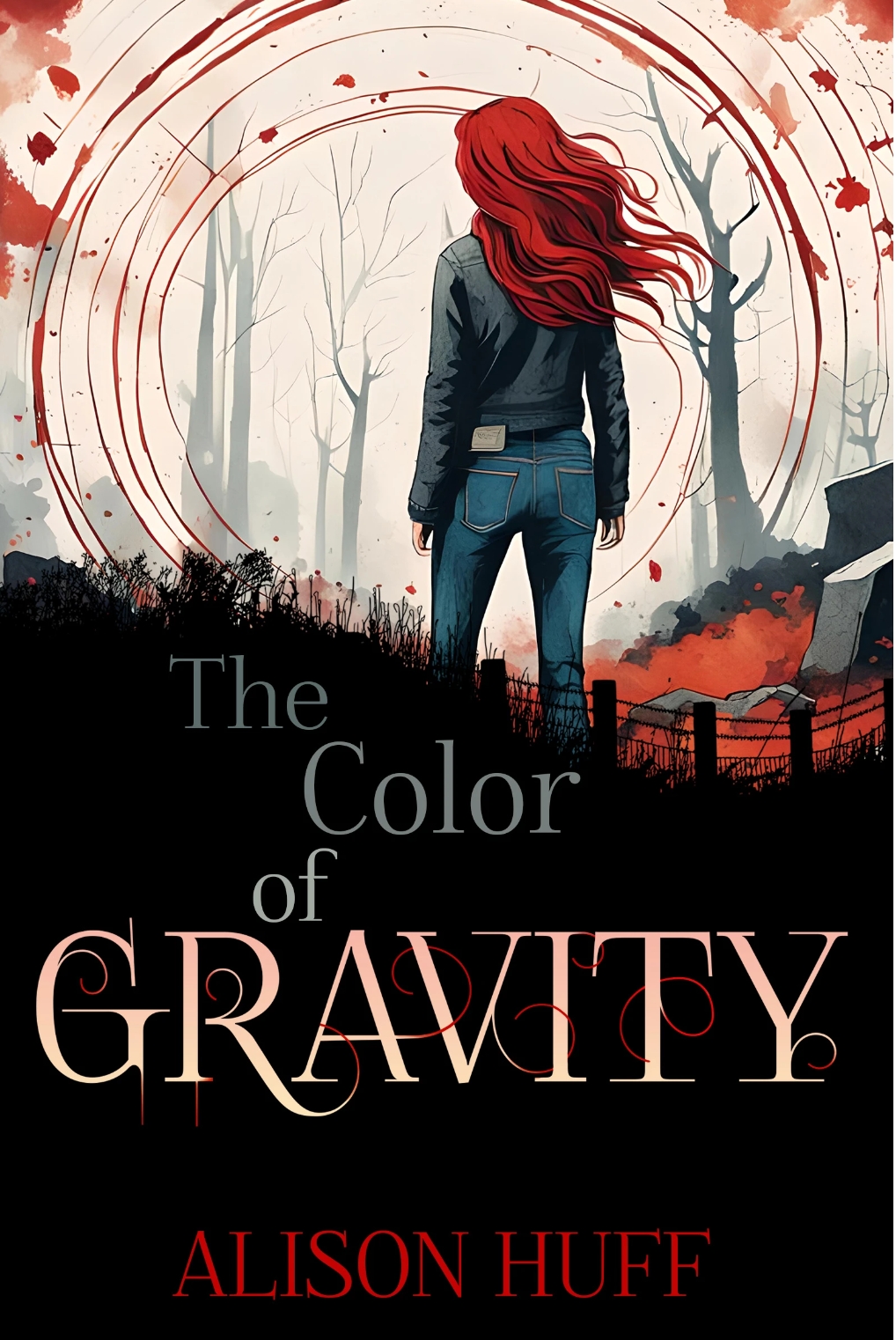
Fans of Young Adult fantasy who love the genre, with its emphasis on the discovery of self and coming-of-age stories, but who prefer a more mature protagonist will find The Color of Gravity a perfect read!
Seralynn and Bellamy are adult sisters, torn apart by the latter’s sudden and mysterious disappearance. Seralynn tries to come to terms with the loss of her sibling and her grief, but is finding it hard to let go. Then she encounters a rift in the world, one which offers her the possibility of finding Bellamy. Though torn between her grief and yearning for her sibling and fear of the unknown, Seralynn finds herself in a strange and magical world, one that is both wondrous and dark.
At the heart of this novel are the two sisters, connected together and yet, at odds, with one another as each woman seeks her own path, sometimes at the other’s expense…
Huff takes the reader into a fantasy realm; there is significant attention to world-building here — and at times the story is buried — but readers are likely to appreciate the depth Huff creates. And ultimately, the story of Seralynn and Bellamy re-emerges. Woven into their story are others Seralynn encounters on her journey: Fadrial, Asmodeus, and Tobian, among others. The novel creates a sense of community among these strange bedfellows: demons, humans, monsters, and magical creatures.
Huff’s novel is the first book in a series. I am not usually a fan of books series, simply because I do not have the attention span for it. That said, the sisters’ adventures — together or apart — will likely yield a fascinating sequel.
This was such a moving story: poignant, profound, thoughtful, soul-wrenching. I can’t help but wonder how many of us live lives like this: short and sad and broken.
The story is an odd one. A ghost thinks back on his life, how the pieces of his life fractured. Decisions were made, as they always are, with the best intentions and the results aren’t always what we hope for.
I don’t want to give it away. You’ll just have to read it. And it’s a short read; there’s so much emotion packed into this small space. There is something performative, a sombre mimicry, about the way this story is condensed — almost truncated — much like the life it is about. The novel feels like a life lived unfinished, in staggered surges.
Like most Japanese novels, Miri’s prose is succinct; the words are few but thoughtfully placed to elicit the most emotional response.
This novel was so fun to read, and with every one of the detective’s victories I felt like yelling out, “Go get it, girl!”
The novel revolves a young woman who has become India’s first police detective. The case of a lifetime is thrust — seemingly serendipitously — into her lap. But it’s a double-edged sword: she could either emerge from the fight triumphant, the murderer under her arrest, or lop her own head off and prematurely end her career before it even begins. But that isn’t the own tightrope she has to balance.
Malabar House is the name of her station, and its where — as a woman in a male-dominated career –she has to prove to herself, she is a worthy policewoman and Indian citizen and earn the obedience of her colleagues, if not their respect too. Obstacles of all sorts are thrown at her, some from within the ranks and others by those she thought would support her to the most. Betrayal lurks in wait for her everywhere.
It’s a very intriguing story, not only for the mystery at the root of the novel, but because it takes place at a critical moment in Indian history, just as the new nation is emerging from its colonial cage, when change is possible in all sorts of ways (for the better and for the worse), when Britain’s imperial secrets might be exposed under the lights of new India.
I enjoyed both threads of the story immensely. Unlike many postcolonial novels, which are dark and brooding and deeply serious Midnight at Malabar House was joyous and in parts, comedic (perhaps only in comparison). I felt vindicated each time our detective “won one” over her misogynistic colleagues or the corrupt officials who threatened to stand in her way. That said, readers should not expect to be only entertained; the traumatic history of India’s partition, the genocide of Muslims and Hindus, and other dark elements of British imperialism feature here. Post colonial literature is often tinged with some amount of sadness and trauma, justifiably, and this novel has its share of this.
I am not one for book series — I prefer standalone novels and duologies are my usual limit — but I wouldn’t mind reading another one in the Malabar House series at all.
So, I’m a little late to the After Lives party. I usually am to these things. But this book merits uninterrupted attention. It is — like so many of Gurnah’s novels — utterly amazing, and so deserving of the accolades it has received. After Lives is one of those novels that gets into your marrow, a book that I think everyone should read once (at least).
For me, the novel also allowed me a glimpse into East African lives: the complexity of religion and gendered ideas of what is right and wrong, the ways in which women and men view themselves and their role in their communities in this moment in time. I love African literature set in this time period. Readers of Chinua Achebe, Ngũgĩ Wa Thiong’O, and Buchi Emecheta are going to love any of Gurnah’s work. It is a continuation of that lineage.
The novel spans a lifetime, marks the transition of one generation to another, a momentous (and dark) epoch in our global history. The novel revolves around German imperialism in East Africa in the late 19th and early 20th century, but it is not about the colonizers: it is about those who were colonized, those who survived it, lived it, lived through it. European colonization is the background noise — noisy as it is — but the lives of those who lived it is what shines through. In this sense, After Lives is the novel that epitomizes Postcolonial literature: it is empowering, even as it acknowledges and confronts the trauma of European imperialism. It relegates imperialism to the sidelines of the story, even as it is clear those events created the stage on which the story plays out in the first place.
Gurnah is brilliant in their delivery of this reversal of focus.
The story revolves around a young woman whose life is torn apart and rebuilt as a result of German and British imperialism in the region; but she — and those whose lives touch hers — are not merely pawns in the Scramble for Africa. Religion, tradition, love, marriage, gendered expectations and desires, and family are stronger factors which shape her experience of this moment under those global geopolitical pressures. The reader is drawn into her life as she — and her family and friends and community — must navigate these intersecting and interlocking influences to find happiness and a path for themselves.
Fire Exit is a punch in the heart, the kind of novel that really does leave you heart-sore for a long time afterward.
The novel revolves around and is narrated through a man who is white and, in adulthood, was removed from his residency on an Indian reservation. His eviction and his whiteness separates him from his daughter, and from the life and culture he grew up with on the reservation. Fire Exit is the story of this man grappling with his identity as an outsider, and a story of those on the inside — Indians — who are themselves still in the process of sorting through the legacy of settler colonialism and the co-called Civilizing Mission against them. Fire Exit highlights the fluidity of identity, but also the rigid barriers which define it within ourselves and by others imposed on us. The novel exposes the messiness of relationships, especially in indigenous communities which have been so ravaged by racism and colonial ideologies.
I am reminded again how singular it is that indigenous people of North America are some of the few peoples on earth who must continually prove who they are. I recently read a piece in the New Yorker on Pretendians (typically white people who claim indigenous heritage or identity) and am struck by both the necessity of proof and how exhausting it must be as a human being. It saddens and inspires simultaneously.
The ever-present trauma of colonialism is a burden we cannot put down, any of us; and the pursuit of decolonization can never end. For that reasonI am loving this wave of indigenous literature; though not “new,” it feels like indigenous writers and stories are getting more mainstream attention, reaching new audiences (like myself) who find solace and inspiration in them.
But, back to Fire Exit.
Though I cannot know what this is for indigenous people, I can say that as this is also a story about family, what it is to be a family, what is it to act out and perform family, I felt connected to a kind of universal understanding of “family” in my reading of it.
Talty is such a fantastic writer. The words just come together, like lyrics that feel familiar and yet woven together, produce a song I haven’t heard before. The mothers and fathers, daughters and sons in this novel are people we can connect with, and yet, as those living in reservations or on the edges of them, they have a unique life experience, one that I do not know (cannot know, really). I feel that Talty has made it possible for me to feel a little bit of their experience.
One Night Two Souls Went Walking: A Novel by Ellen Cooney
This was such a beautiful, poignant story, the kind of novel that makes you wonder how permeable the line between each of us really is — or if there is even a line.
The story revolves around a nurse and her encounters with patients, coworkers — and possibly a few specters who linger in the halls of this hospital. Time and space aren’t boundaries in this story, not in the typical way narratives run. There are moments when this reader wasn’t entirely sure of what or who was real, but the thing was: it didn’t matter — and I think that was the point.
It’s hard to put this novel into a category, perhaps I shouldn’t, but readers who enjoy literary fiction, pondering life experiences, and paranormal encounters are likely to find it enjoyable.
Cooney’s style and prose was, as with her other novels. impeccably paced, succinctly evocative, perfect. There’s nothing else to say on that point, really. I cannot get enough of Cooney and have several other of her novels on my TBR.
I love, love, love stories about ways we decolonize — and Ladies’ Tailor is absolutely a tale of life unravelling and rebuilding in the post-colonial, post-Partition Era. Set in India and Pakistan in the era after Partition (post 1947), the novel follows a cast of characters as they try to find a new place for themselves, heal from the violence of the migration and the ethnic hatred, and build a new purpose and identity. The story begins with one man as he navigates his migration into India as a refugee. He’s not a hero — or even a particularly nice man. He is an ordinary man with dreams and hopes to open a shop for women’s clothes for women.
As he begins to establish himself in India, the novel’s landscape begins to widen and the reader is introduced to the man’s circle of new acquaintances and business contacts — as well as the obstacles and hardships of navigating in a new environment.
A central focus of the novel are the inevitable ties between Pakistan and India, between Muslims, Hindus, and Sikhs, and how unbreakable and crucial those relationships were (and are!) to a successful post-Partition rebuilding. As a cultural and social historian, this thread of the novel was especially profound; the characters in Ladies’ Tailor are not only navigating new spaces, but also trying to rebuild old traditions, re-create parts of their lives and heritages they have lost. The novel focuses intently on those tensions, and the flexibility required of individuals to be successful. And of course, things never quite turn out the way things are planned.
The story is not the sole attraction: Hajeela delivers the story with well-crafted, economical prose. The characters are fleshy and tangible. Sometimes they seem like unpleasant people, sometimes they are oblique to the reader in their motives. Hajeela’s characters are real, and indeed, the story is based on true events and real individuals.
As far as its textual style, readers should know Ladies’ Tailor is not reflective, subjective literary fiction; it is not deeply emotional (it does not dwell on the horrors of the Partition, even while it acknowledges this wrenching event) or focused on internal strife and struggle, but the collective efforts of a community. It is written in a commercial style, what I might categorize as “summer reading” but in the vein of historical fiction. Its subject matter is sombre and serious, but its delivery lightens the load readers might expect to carry.




 Dr JoAnn LoSavio