Midnight at Malabar House: A Novel by Vaseem Khan

The Malabar House Series #1

Midnight at Malabar House: A Novel by Vaseem Khan

This novel was so fun to read, and with every one of the detective’s victories I felt like yelling out, “Go get it, girl!”

The novel revolves a young woman who has become India’s first police detective. The case of a lifetime is thrust — seemingly serendipitously — into her lap. But it’s a double-edged sword: she could either emerge from the fight triumphant, the murderer under her arrest, or lop her own head off and prematurely end her career before it even begins. But that isn’t the own tightrope she has to balance.

Malabar House is the name of her station, and its where — as a woman in a male-dominated career –she has to prove to herself, she is a worthy policewoman and Indian citizen and earn the obedience of her colleagues, if not their respect too. Obstacles of all sorts are thrown at her, some from within the ranks and others by those she thought would support her to the most. Betrayal lurks in wait for her everywhere.

It’s a very intriguing story, not only for the mystery at the root of the novel, but because it takes place at a critical moment in Indian history, just as the new nation is emerging from its colonial cage, when change is possible in all sorts of ways (for the better and for the worse), when Britain’s imperial secrets might be exposed under the lights of new India.

I enjoyed both threads of the story immensely. Unlike many postcolonial novels, which are dark and brooding and deeply serious Midnight at Malabar House was joyous and in parts, comedic (perhaps only in comparison). I felt vindicated each time our detective “won one” over her misogynistic colleagues or the corrupt officials who threatened to stand in her way. That said, readers should not expect to be only entertained; the traumatic history of India’s partition, the genocide of Muslims and Hindus, and other dark elements of British imperialism feature here. Post colonial literature is often tinged with some amount of sadness and trauma, justifiably, and this novel has its share of this.

I am not one for book series — I prefer standalone novels and duologies are my usual limit — but I wouldn’t mind reading another one in the Malabar House series at all.

Fire Exit: A Novel by Morgan Talty

Fire Exit: A Novel by Morgan Talty

Fire Exit is a punch in the heart, the kind of novel that really does leave you heart-sore for a long time afterward.

The novel revolves around and is narrated through a man who is white and, in adulthood, was removed from his residency on an Indian reservation. His eviction and his whiteness separates him from his daughter, and from the life and culture he grew up with on the reservation. Fire Exit is the story of this man grappling with his identity as an outsider, and a story of those on the inside — Indians — who are themselves still in the process of sorting through the legacy of settler colonialism and the co-called Civilizing Mission against them. Fire Exit highlights the fluidity of identity, but also the rigid barriers which define it within ourselves and by others imposed on us. The novel exposes the messiness of relationships, especially in indigenous communities which have been so ravaged by racism and colonial ideologies.

I am reminded again how singular it is that indigenous people of North America are some of the few peoples on earth who must continually prove who they are. I recently read a piece in the New Yorker on Pretendians (typically white people who claim indigenous heritage or identity) and am struck by both the necessity of proof and how exhausting it must be as a human being. It saddens and inspires simultaneously.

The ever-present trauma of colonialism is a burden we cannot put down, any of us; and the pursuit of decolonization can never end. For that reason I am loving this wave of indigenous literature; though not “new,” it feels like indigenous writers and stories are getting more mainstream attention, reaching new audiences (like myself) who find solace and inspiration in them.

But, back to Fire Exit.

Though I cannot know what this is for indigenous people, I can say that as this is also a story about family, what it is to be a family, what is it to act out and perform family, I felt connected to a kind of universal understanding of “family” in my reading of it.

Talty is such a fantastic writer. The words just come together, like lyrics that feel familiar and yet woven together, produce a song I haven’t heard before. The mothers and fathers, daughters and sons in this novel are people we can connect with, and yet, as those living in reservations or on the edges of them, they have a unique life experience, one that I do not know (cannot know, really). I feel that Talty has made it possible for me to feel a little bit of their experience.

It is a sad novel, and a beautiful one.

Ladies’ Tailor: A Novel by Priya Hajela

Ladies’ Tailor: A Novel by Priya Hajela

I love, love, love stories about ways we decolonize — and Ladies’ Tailor is absolutely a tale of life unravelling and rebuilding in the post-colonial, post-Partition Era. Set in India and Pakistan in the era after Partition (post 1947), the novel follows a cast of characters as they try to find a new place for themselves, heal from the violence of the migration and the ethnic hatred, and build a new purpose and identity. The story begins with one man as he navigates his migration into India as a refugee. He’s not a hero — or even a particularly nice man. He is an ordinary man with dreams and hopes to open a shop for women’s clothes for women.

As he begins to establish himself in India, the novel’s landscape begins to widen and the reader is introduced to the man’s circle of new acquaintances and business contacts — as well as the obstacles and hardships of navigating in a new environment.

A central focus of the novel are the inevitable ties between Pakistan and India, between Muslims, Hindus, and Sikhs, and how unbreakable and crucial those relationships were (and are!) to a successful post-Partition rebuilding. As a cultural and social historian, this thread of the novel was especially profound; the characters in Ladies’ Tailor are not only navigating new spaces, but also trying to rebuild old traditions, re-create parts of their lives and heritages they have lost. The novel focuses intently on those tensions, and the flexibility required of individuals to be successful. And of course, things never quite turn out the way things are planned.

The story is not the sole attraction: Hajeela delivers the story with well-crafted, economical prose. The characters are fleshy and tangible. Sometimes they seem like unpleasant people, sometimes they are oblique to the reader in their motives. Hajeela’s characters are real, and indeed, the story is based on true events and real individuals.

As far as its textual style, readers should know Ladies’ Tailor is not reflective, subjective literary fiction; it is not deeply emotional (it does not dwell on the horrors of the Partition, even while it acknowledges this wrenching event) or focused on internal strife and struggle, but the collective efforts of a community. It is written in a commercial style, what I might categorize as “summer reading” but in the vein of historical fiction. Its subject matter is sombre and serious, but its delivery lightens the load readers might expect to carry.

A History of Hangings: A Novel by A. M. Rau

A History of Hangings: A Novel
by A. M. Rau

A History of Hangings is an indigenous horror thriller. It is the kind of novel that hooks you in from the start. It’s creepy and mysterious, but what really delivers the chills is its depth of history, so ever-present in the novel even though it is never fully explained. It is, in a sense, that shrouded, veiled element of indigenous history, emphasized by the erasure of indigenous rights and history that is so compelling, so horrific; I think that underlying premise makes the book palpably terrifying.

Indeed, the novel and its horror can’t be understood without an acknowledgement of what has happened to indigenous communities in North America. As a reader and historian I greatly appreciate Rau’s attention to indigenous experiences, and the way in which Rau weaves in those awful legacies of settler colonialism.

The novel runs on two timelines: Toby, Faye, and Braxton in one thread of time, Edna Bland in the other, bound together by the captives of the Kesseene people of Oklahoma (a fictitious indigenous tribal community and tribe) in a small, rural Oklahoma town that has disintegrated into poverty and isolation. The Kesseene People’s vengeance has become embodied in something — or someone — and this is the terror Toby, Faye, Braxton, and Edna encounter. I’ll leave it at that; the novel is well-worth the read to discover what happens to them and to the Kesseene people. I finished A History of Hangings in less than a day; I had to know what was going on, who was creeping around, why Toby and Faye were so unwelcome — and what would happen to them.

Rau’s story, compelling as it is, is also very well-crafted and this is a major attraction of the book. Rau’s prose is descriptive, and evocative, with a few well-chosen words; Toby, Faye, Edna, Gil, Tim Jim, and the Sheriff — and even the minor characters they encounter — are fully tangible to the reader. The mood is perfectly captured and sustained throughout the book. Rau’s pace is swift too, delivering the reader to the end where all is explained; it is a satisfying and perplexing ending, perfect for a novel of this genre.

South of Sepharad: The 1492 Jewish Expulsion from Spain (A Novel) by Eric Z. Weintraub

South of Sepharad: The 1492 Jewish Expulsion from Spain (A Novel)
by Eric Z. Weintraub

While early modern Europe isn’t my area of expertise, the Spanish Inquisition — as it is for many people — is an event of especial morbid and humanitarian interest. As a scholar of decolonization and the related topic of race and racism, this period in Jewish and Iberian history intrigues me endlessly.

South of Sepharad delivers the history, as well as telling a profoundly moving story, one whose historical subjects are tangible and human and fully recognizable to contemporary readers. Readers who are unfamiliar with this history are likely to find the novel a fantastic introduction to the topic; instructors will find it is perfect for an undergraduate course as it palatably delivers the history and offers multiple points for discussion and debate in the classroom.

The novel revolves around a Jewish family, whose patriarch is one of Granada’s physicians. When the Moorish city falls to the Catholic Kings (though they are not yet called by title), Isabel, Queen of Castille and Ferdinand, King of Aragon, the Jewish community is forced to evacuate, having been given an ultimatum to convert to Christianity or forfeit their right to live within the kingdom. The ha-Rofeh family is torn between the two choices they face, and the novel focuses on the outcomes of their decisions. The family must also face the ways in which this decree destroys their community and their collective sense of Jewish identity. Theirs and their leaders’ ethics are tested, leading to a myriad of personal and collective grief.

Weintraub’s characters, while not as internally reflective as I usually like in my fiction, bring this history to life. Their motivations are much like our own; we can see ourselves reflected in their actions and words. Readers will find themselves understanding the texture of this history, as they experience the expulsion with the ha-Rofehs.

1666: A Novel by Lora Chilton

1666: A Novel by Lora Chilton

I read it all in one night. I couldn’t stop until I learnt what happened to Ah’SaWei. NePa’WeXo, and their children MaNa’AnGwa and O’Sai WaBus. I had to know, I couldn’t sleep without knowing.

Afterwards, I found I could not sleep, now knowing.

1666 was a hard book to read, even for me, a historian of decolonization. I teach students about the Doctrine of Discovery every semester. I highlight resistance to systems of oppression, especially colonization. Still, for all that I know, 1666 eviscerated me. I continued to read it because it is a work of resistance, because the women of the Patawomeck/PaTow’O’Mek tribe deserve to be read and seen and remembered. Awful as it is for me to read it, that in no way compares to the pain they lived and the pain that continues in indigenous communities today.

The story begins and ends with the PaTow’O’Mek women and it is told entirely from their perspective; it is the narrative of the massacre of their people, their enslavement, and their resistance against the British who destroyed them. Readers who were moved by Beast of No Nation by Uzodinma Iweala, Elie Wiesel’s Night, The Bird Tattoo by Dunya Mikhail — or more topically pertinent — Texaco by Patrick Chamoiseau will find 1666 an equally powerful read.

As an educator, I consider 1666 a valuable college level read. It is ideal, lengthwise, for an undergraduate course (at just over 200 pages, and with glossary and explanations of terms). Harrowing as the subject matter is, it is highly relevant and provides a number of points for discussion, historical examination, and resistance in the classroom. Chilton’s writing is also highly accessible, her prose smooth and flowing, her characters full of depth and humanity.

Street Corner Dreams: A Novel by Florence Reiss Kraut

Street Corner Dreams: A Novel by Florence Reiss Kraut

Street Corner Dreams is a heart-aching tale about Jewish immigrants in New York City in the first quarter of the twentieth century. Readers who are looking for a tearful, emotional read will find the novel delivers; by its end, readers will find they have lived lifetimes of suffering and joy alongside the characters.

This is a novel perfect for undergraduates and readers new to this genre of immigration literature as it offers an introduction to the lived experience of this period, as well as highlighting the historical context of the age: WWI and the Interwar Years before WWII, American nativism, anti-semitism, and the Prohibition Era of the 1920s. Edifying as it is, Kraut’s approach is literary, making it an easy, entertaining read at the same time. Sweet Corner Dreams fits into the genre of novels I read during my own undergraduate years: Out of This Furnace by Thomas Bell, The Jungle by Upton Sinclair.

The novel begins with Morty, who is born on the voyage over from Europe to America, and the tribulations his aunt and parents face as they navigate the hardships of building a new life in the United States for him and themselves. Morty represents the clash of generations and cultures; as he matures he finds himself torn between tradition and survival, caught up in the criminal and deadly world of NYC in the days of Prohibition. This is also a world of multiethnic plurality: denizens of differing — sometimes conflicting — religions and worldviews must find a way to coexist, recognize their shared humanity. celebrate their diversity.

The story is immediately captivating, and readers will find their interest sustained by the depth of Kraut’s characters. These are people we would recognize today among our own friends and families.

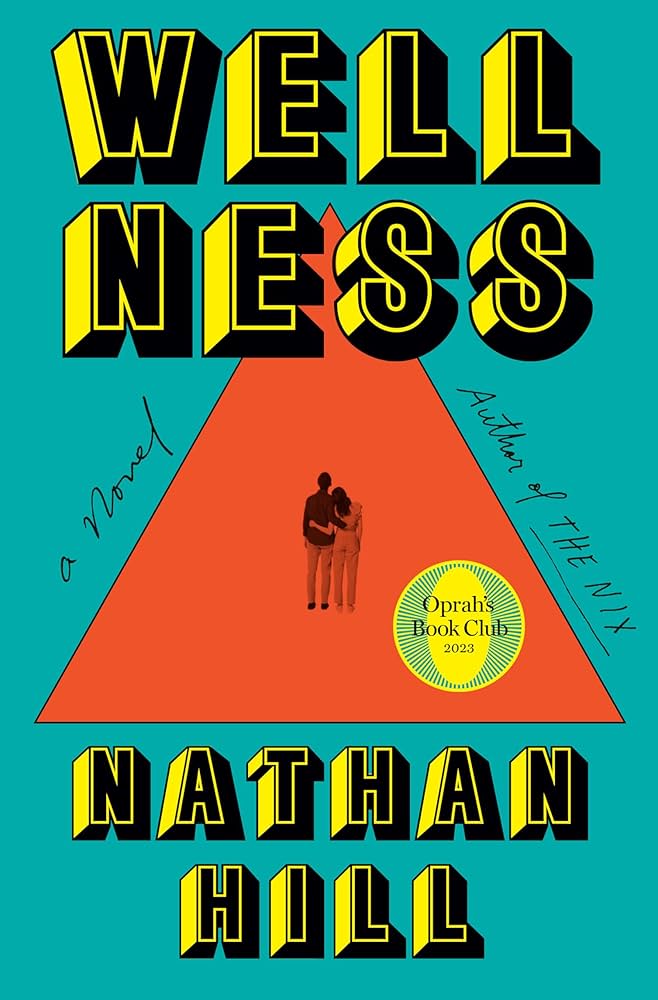
Wellness: A Novel by Nathan Hill

Wellness: A Novel by Nathan Hill

The best – BEST – book I have read in awhile. This novel deserves all the awards, and I’m not only saying that because I lived in Chicago-land, where the novel is set, but because the story and the story-telling is so amazingly delivered. To borrow a phrase from Spinal Tap‘s Nigel Tufnel, “this one goes to 11.”

Wellness revolves around the romance, marriage, demise of said-romance, and self-discovery of a couple, Jack and Elizabeth. Their 9-year old son, neighbors, old friends, and parents also play — as to be expected — significant roles in this account of their mid-life crisis. It’s a mundane and perhaps all-too-familiar tale of life lived and regretted, of the parts of ourselves we lose along the way. This is the draw of the book; it is immensely relatable — at least for those of us of a certain age. There are bits of Jack and Elizabeth in us all, and for those of us who parents, the novel highlights the agony of parenting, especially as mother.

It’s the story of what you do when life doesn’t seem to have delivered what you promised yourself, and — as the novel progresses — it’s the story of why that happened.

At 600+ pages, this is a doorstopper of a novel, but Hill’s prose is so smooth, the story so compelling, the characters so intriguing, that I finished the book in about a week, roughly a hundred a pages a night. A feat given that I read this book during and just after Finals Week of the semester when I had to knuckle down and grade.

And Hill is hilarious. Several parts and dialogue made me laugh out loud; not only could I see myself at the Metro (been there, yes) and some of the other places where Jack and Elizabeth lived out their romance, but Hill allowed me to laugh at myself and my past a little bit. Readers of my generation are likely to find some humor in the pretentiousness of our younger selves in this. I did, and loved the confrontational reflection I had with myself afterwards.

The book will date you and itself, but I think it’s destined to be a classic of our moment.

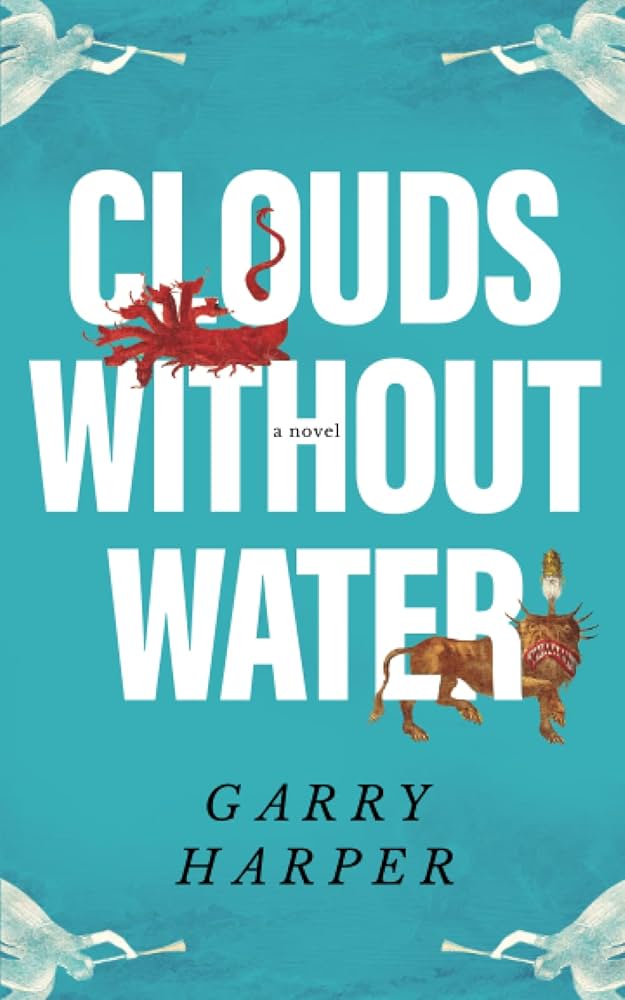
Clouds Without Water: A Novel by Garry Harper

Clouds Without Water: A Novel by Garry Harper

Clouds Without Water was a slow burn for me, but it did burn bright — especially in the second half — compelling me to keep reading to discover what happens to Calvary and its more independent-minded denizens.

The novel is a fiction around true events, The Millerite Movement of 1844, in which the Second Coming of Christ and the end of the world was predicted for October 22nd 1844, and The Great Disappointment, when the predicted end did not materialize. Delivered in two parts, Clouds Without Water delivers a portrayal of the community and town at the epicenter of these events, Calvary, NY, where the Millerite Movement begins under the direction of its eponymous leader, Reverend William Miller. Part One focuses on the rise of Miller’s influence, Part Two on what happens when the Apocalypse fails to occur, the subsequent social fallout.

The story the novel promises is fascinating. But Harper’s prose… Well, this was the novel’s “great disappointment.” Harper is heavy-handed in Part One, and the voice behind the writing feels biblical in a supercilious sort of way. There is a plodding sensation, an awkwardness in Part One. Harper has a penchant for long or obscure words, wordy words: “concatenation”, “incredulity”, “entropy”, which made the prose dense and feel overly structured. The characters, so vibrant in Part Two, are underdeveloped in Part One. Indeed, I DNFed this book three times before reading it a fourth time, and completing it.

Although the novel is, particularly in Part One, pedantic the strength of Harper’s story and his characters do seed a tension which prevailed on this reader to keep reading. Interestingly, the Reverend Miller himself is almost a supporting figure in this novel; though he is the hinge around which the movement develops and Harper deftly crafts his portrayal of Miller’s fervor and charisma, the reader does not witness events through his eyes. Indeed, we are never treated to an internal view of Miller’s mind or heart. The result is a rather one-dimensional Reverend.

That said, while Miller is somewhat flattened, Harper’s other characters shine and are fleshy representations of people most readers would recognize: the Smith family headed by Henry, his children Abigail, Rosemary, and Benji, the town doctor, Dr Clarke, its newspaperman, Josiah Young, Marigold Chandler, descendent of the town’s founders, and Nathaniel Hawthorne, who owns the general store. It is through these characters’ eyes that the reader is treated to a deeply disturbing facet of religious passion. Part Two draws and holds the reader because of them.

Overall, Clouds Without Water delivers.

The Lover: A Novel by Rebecca Sacks

The Lover: A Novel by Rebecca Sacks

I can’t stop thinking about this love affair. It’s been months since I finished reading the book, but Allison and Eyal (and Timor, Aisha, Talia, and so many others) continue to occupy my thoughts, not least because the war in Gaza and the horrors that plague Palestine and Palestinians, Israeli and Israelis, remains on-going.

The Lover is a timely novel, as one which revolves around that very political and cultural conflict. But the novel offers a social perspective on how politics hits the ground, how real lives are shaped by the tragedy. The short of it, as I think most people understand, is that the situation is messy. Israelis and Palestinians, Jewish, Arab, each and every one, is woven into a fabric that cannot be unpicked, their threads too tightly interlaced for any one to be extracted without fraying, snapping, leaving a scar in the cloth. The Lover highlights that messiness, the ethical messiness, the material messiness, the psychological and emotional turmoil of Palestine and Israel.

The Lover is a love story, a romance between Allison, a half-Jewish American graduate student who has come to Israel for a semester abroad, and Eyal, a soldier in the Israeli army. To fulfill his military duty, Eyal must conduct missions in Gaza, while Allison frets and waits for his return. But there is another romance here: Allison’s as she becomes enraptured with Israel and the tensions between Jews and Arabs. This is a novel about the ethics of love, what authentic compatibility means, and the difference between passion and compassion between lovers.

What makes The Lover so compelling is that the intertwined romances here force us to confront our own biases in this or other situations. This is a story we cannot turn away from, because even as outsiders watching the news, looking in on the events in Gaza, its messiness forces us to consider what we each might do, might have to do in a similar situation.

The story, as darkly riveting as it is, is not the novels only attraction. The Lover is superbly written. This is literary fiction at its most devastating. Sacks has also clearly done an incredible amount of research, and what might be understood as ethnographic observation; the novel’s environs are so real as to transport the reader to that place, to Israel, to Gaza. The tension Sacks develops through combining research with literature results in a palpable immersion for the reader.

Moreover, Sacks’ characters are fleshy, flawed, and real. Allison is its main protagonist; it is through her voice, her thoughts, that the story is narrated (though she is not its only narrator). Readers cannot help but feel her anxiety, her excitement; as Allison falls deeper in love with Israel, readers may find they are uncomfortably immersed in Allison’s mind. This is a testament to Sacks skill with words.

The Lover is a novel I will likely return to again, perhaps more than once.