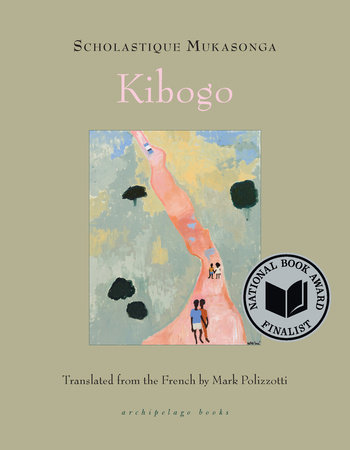
Kibogo by Scholastique Mukasonga

Kibogo by Scholastique Mukasonga

Kibogo reads like a gateway to a historical, colonial/postcolonial dreamscape. It reads like a fantastic reimagining of Chinua Achebe’s Things Fall Apart, but on a mythical, quasi-spiritual platform in Rwanda. It is inspiring as a work of decolonization, heart-wrenching as a historical fiction, a lyrical maze as a work of literature.

Like Things Fall Apart, Mukasonga’s Kibogo hinges on the binary opposition between the colonizer and the colonized, the imposition of Christianity on native peoples, and the annihilation of indigenous beliefs. But while similar to this famous predecessor, it is also unique in its own right. Kibogo is a nuanced novel. The Colonizer is not necessarily European and this point is pronounced. Sometimes — perhaps more than we would have wanted — the colonizer is our native neighbor, one of our own. Fanon was an astute observer of colonial culture; too often the enemy is a more intimate partner, the one who resides within. Mukasonga also draws a perforated line between Christian and Indigenous Belief; the characters and their stories reveal a more accurate historical account of colonization by highlighting how a syncretization of beliefs and practices is likely to have taken place.

This syncretization of cultures, beliefs, practices, and ideas is the heart of Kibogo. The novel is about the gradual development of a colonial culture, not through outright conquest, but through insidious means. Magic is a key component, a driving force that propels the stories to their ends. Ritual is the means by which the magic is released, and this is not only native Rwandan magic, but also European Christian magic, the kind imbued in holy water and Christian prayer. This lends Kibogo a mystical quality. The novel unfolds as would a myth; it is a fable about the meeting of Christian and Animist in Rwandan history. The characters are heroes, heroines, archetypes, and the plot moves forward through human and divine interventions. Each of Kibogo‘s four parts focuses on a particular character, as each of their stories builds upon the last to produce at the end a full view of Rwanda’s religious, spiritual, and colonial landscape.

This is not to say the characters are hollow; no, on the contrary, they are recognizable across colonial histories. For that reason Kibogo is larger than its central focus on colonization in Rwanda. This is a story that is recognizable in other African, Asian, Caribbean, South American, Australian, Pacific Island, and colonial contexts. Kibogo is centered and set in Rwanda, but it is a work of post-colonial literature for the rest of the “formerly” colonized world as well.

In short, a very thought-provoking work wrapped in beautiful, literary prose that unwinds like a yarn told late at night to children gathered around their grandmother’s hearth.

Cocoon: A Novel by Zhang Yueran

Cocoon: A Novel by Zhang Yueran

Yueran’s prose in Cocoon is to die for. I cannot express how effortless it was to read this book; opening it and laying eyes on the page was all I had to do and Yueran did the rest. It was like being carried on a gentle wave down a winding river.

That said, it was a very long, slow-moving river at times and often I found it hard to track with the direction Cocoon was taking me. I grasped that there was a mystery, but the typical sense of urgency a thriller engenders was missing here, lost in the literary focus on the characters and their interior narratives. It was, for me, both a deeply satisfying for that reason and also frustrating in that it wove around the plot circuitously. I still cannot decide how much I enjoyed the novel or the degree to which I was disappointed by it.

The novel spans three generations of two families, their histories twisted together by the events of China’s Cultural Revolution and communist regime. The characters have fallen into the chasms created by the divisive policies of the Cultural Revolution and it is their reconciliation with that fact which the reader witnesses. There are mundane tragedies: a father and son estranged by the shifting values, a marriage begun out of spite, a wife abused, a child abandoned. Then there is the mutual tragedy — a crime — which threatens both families’ futures, an act that arose out of the political climate of the Cultural Revolution. This is the great mystery of the novel. What was that horrific crime? Why and how could it traverse down through generations?

The two narrators are the 3rd, latest generation of these two families, the grandchildren of the Chinese Old Guard and the children of the “sent down” youths of the revolution. They are childhood friends and enemies simultaneously, caught in the mess of their families’ tragedy. The fallout of China’s cultural and political upheaval is told through their eyes. Through their perspective we see the actions and feel the torments of their parents and grandparents and the effect of these massive cultural shifts on familial cohesion.

They are the generation that grew out of and yet distant to China’s traumatic history. Theirs is a moment of a different upheaval: China’s return to a capitalist society, the abandonment of the austerity of the 1960s and 1970s. The novel dwells on their generation’s angst as well: the shifting ideas of sex, love, and success.

This is an epic multigenerational tale, filled with characters that are so perfectly flawed as to be real. The meandering path through their traumas, their lives, and their losses is well worth the long walk.

Lost in the Long March: A Novel by Michael X. Wang

Lost in the Long March: A Novel by Michael X. Wang

If you love multigenerational historical novels, the kind that invoke profound and simultaneous sensations of sadness, regret, and compassion or which bring to light uncomfortable truths about ourselves, our objects of love, our innermost desires, then Lost in the Long March is for you.

At first pass, Lost in the Long March did not grip me; the first few chapters were interesting, but did not give a clue to the deeper nuances that would come later. I am glad I persevered and read on; I was rewarded. By the last page I was very nearly in tears. There is deep heart-wrenching pain in this novel, the kind that is brought on by very common, mundane processes, in this case, the heartbreak of being a parent, the heart ache for the love of one’s child.

Wang’s novel is about the banal horrors of war; not the violence of combat, but the long arm of suffering that extends beyond the battlefield, long after the skirmish is over, when the victor is fooled by the passing of time into believing that they have won. They have not. Lost in the Long March revolves around the conflicts of the Chinese Civil War between the Kuomintang and the Communists (the Long March occurred in 1934-1935) and the Second Sino-Japanese War (1937-1945); but this is really a novel about compassion and humanity and the ways in which wars and political movements can destroy them or create situations for their manifestation. Friendship, love, connection, loyalty — the interconnections between people — this is the core of this novel.

It is Wang’s unwavering focus on this universal core of the human experience which makes the novel so powerful, so moving, so profound. Wang’s prose delivers the message with perfect pacing and with ease; the prose is succinct, but the words and the silences Wang leaves between them could cut open a vein with deadly accuracy. On occasion, it took this reader a moment or two to feel the new wound, so sharply and subtly were the words and their meaning delivered. By the time I reached the end of the novel, as Wang came to the story’s inevitable end, I was unsure if I could survive it. I will not give the ending away, but I will say that it did leave this reader in a state of metaphorical exsanguination.

Lost in the Long March is well-worth the grief. As with many good books, it is the heavy sense of loss they inflict which is the reader’s gain.

The Beckoning World: A Novel by Douglas Bauer

The Beckoning World: A Novel by Douglas Bauer

The Beckoning World is a complex novel: intelligent and sentimental in equal measure, carefully restrained and yet brimming with emotion, grounded in reality but fanciful in its fantasy of baseball celebrity. This is a tale of ordinary desire, ambition, failure, and the sacrifices of love that we can recognize in others and in the society at large, and yet there is enough fiction here to allow us to deny the existence of this tragedy in our own lives.

If you love Stoner by John Williams or Pnin by Vladimir Nabokov, Reader, you’ll appreciate the agony of life Bauer portrays here, the quotidian kind, the slow descent into ordinariness that we all must confront, whether we accept it or not. The Beckoning World is as much a tale of the world beyond our borders as it is the world within our constraints that we cannot escape. The call is not always one to adventure, but a tether.

That is not to say this novel lacks adventure for it does not, it has adventure in buckets. The Beckoning World is also a coming-of-age journey, tracing that phenomenon’s mental and physical challenges and explorations. There is a real adventure here — and the kind of fantasy that some of us only dream of. Reader, you’ll live vicariously through Henry’s eyes, live through the fantasy of childhood — his and perhaps your own.

It is hard to pinpoint what The Beckoning World is about for to outline its plot captures only a small part of its appeal. Its characters are the real attraction here: Earl, Emily, Henry, Babe, Gehrig, Walsh, Lottie, Rooster. They are manifestations of persons in our lives; flawed and perfect. Bauer develops them with succinct, incisive prose that, in silences, invites the reader’s imagination to participate. Bauer captures our investment quickly, and Reader, you’ll be rewarded quickly; the story moves at a steady pace even as it lingers in some moments longer than others. Like Williams and Nabokov, novels of that mid-20th century period, Bauer’s prose is the sort I enjoy: narrative, descriptive (but not overly so), structured.

The novel is set in Midwest America in the early 20th century. There is a pastoral quality to it, one that is generic, recognizable, comforting. This element of the novel is cast in a sepia light, historical and still otherworldly: this is a time and place lost to us and only visible through a veil of nostalgia. It begins with Earl, a young man from the Midwest who — like many of us — is faced with the choices of adulthood and responsibility. Emily, a young woman from the same rural background must make the same decisions, balance desire with practicality. The result is Henry, who becomes the central focus of the novel and who is the focus of the great baseball adventure that ensues.

Through a fantastical encounter with baseball, Babe Ruth, and Lou Gehrig and a journey across the country Earl and Henry come to terms with their loss, life, and future. This is a bildungsroman of the American kind.

A highly enjoyable, thoughtful read. The Beckoning World is a wonderful addition to the genre of the classic American novel.

Valley of Shadows: A Novel by Rudy Ruiz

Valley of Shadows: A Novel by Rudy Ruiz

Valley of Shadows was WOW, a great slow burn paranormal mystery. The ghostly element really kept me on my toes, you never could tell which way something was going to go. I was hooked from the first page!

There are so many reasons I love this novel. First, the historical landscape had nuance and depth; the perspective decolonized the past, highlighted the transnational experience of the American-Mexican borderlands through the eyes of the Mexicans and the indigenous peoples who lived there. Ruiz did not shy away from the racial tensions, the ethnic conflicts, and the histories of colonization that were part of the fabric of life on the borderlands in the 19th century — and I deeply appreciated that. Indeed, much of the plot revolves around those very transcultural tensions. This grounded this paranormal western/mystery/horror in a historical reality that made the events all the more horrific; they were real. The violence of this time was real, not a fiction of Ruiz’s imagination.

Second, Ruiz’s use of linguistic and ethnic markers is significant. Yes, this is a novel, but it is also a work of decolonization. Ruiz disrupts the whiteness of the Western genre with Valley of Shadows. The primary protagonist is Solitario Cisneros, a Mexican man who used to be sheriff — and could still be. Onawa is a young half Mexican, half Apache woman who assists Solitario in his investigation of a series of murders. The living and the dead show up in various parts of the story, some from Solitario’s past which is never far behind him. History in this novel is very much a dynamic, fluid factor in this novel; it is almost as alive as the characters.

There is a mix of white, Mexican, mixed-race, and indigenous characters in this novel, mimicking the historical and contemporary reality of North American borderland communities; nothing is ever cut-and-dry, black or white in such places, then or now. This diversity of identities makes the characters more recognizable; their ethnic and historical diversity mimics our own multiple identities and ways of being. Race, ethnicity, class, and history shaped these characters, making them palpable, their decisions and actions authentic and borne out of subjective needs and ambitions as much as they were shaped by social and historical factors.

Third, Ruiz unfolded the story with skill. Tension and mystery were embedded in the plot, compelling me to read on, but it was the way in which Ruiz slowly unravelled the plot. At the end the reader will see that all the threads of the mystery were there, almost from the very start, waiting for us to weave them into fabric. The story revolves around a series of gruesome, brutal murders. There is very real, physical horror here; the idea that these could be done by a human being on another is scary enough — but there’s the possibility this could be something more supernatural. Which is more sinister?

Valley of Shadows is Solitario and Onawa’s adventures in this realm and the next as they speed against time to save the other potential victims, apprehend the murderer(s), and deliver justice to the victims and their surviving families.

This was a fantastic Halloween Horror read, perfect for any time of year, really. If you’d like to see my others, check out: A Fig For All The Devils: A Novel by C.S. Fritz, The Ghosts That Haunt Me: Memories of a Homicide Detective by Steve Ryan, Gallows Hill: A Novel by Darcy Coates, A Fig For All The Devils: A Novel by C.S. Fritz, Anybody Home? A Novel by Michael J. Seidlinger, and Ghost Eaters: A Novel by Clay Mcleod Chapman

Hester: A Novel by Laurie Lico Albanese

Hester: A Novel by Laurie Lico Albanese

To fans of feminist stories, witchy tales of realistic romance, and Nathaniel Hawthorne’s The Scarlet Letter, this is the novel for you! As the eponymous name implies, Hester is about the woman behind Hawthorne’s famous heroine. Albanese begins with the premise that she was a real woman, that the Hester Prynne of Hawthorne’s fame was based on a person from his own past, fantasized into the character of The Scarlet Letter.

In this backstory, Hester Prynne is a young Scottish woman, Isobel Gamble, who arrives in the New World for the express purpose of leaving behind the old one. It is an adventure tale, interspersed with romance, lust, avarice, and desire for belonging. The novel follows Isobel through her first few years in the northern colony, around a hundred years after the terrible witch trials at Salem, in the early 1800s.

But the magnetic charm of Hester doesn’t hinge on this legendary and vile history, even though the witch trials still bestow both a lurid glamour and an ugly stain on those whose ancestors took part in it. The community as a whole has a long memory and a store of dark secrets: the witch trials and the African slave trade (though illegal, the formerly enslaved and the enslaved still feel the manacles of bondage in all kinds of social, cultural, and institutionalized ways).

Simultaneously, the novel does not stand on the appeal of the fictionalized Hester or the “real” Isobel, though the characters in Hester are well-crafted as complex, nuanced individuals filled with flaws and virtues. No, the real pull of this story is its vivid portrayal of Puritan life as a gendered, stratified, prestige-hungry society. Hester spreads out for the reader a vast and complicated landscape of social politics. The world Albanese crafts is a real one. The reader gets a look into the world of Puritan men and women that lies beyond the stereotypical discussions of marriage and sexlessness and religion; Albanese’s Isobel is a working woman — a seamstress — and we see through the eye of her needle into the labor women do, both socially as the pillars around which society is upheld and economically as employers, employees, merchants, and consumers. We also see the emotional labor women are tasked with, according to society and their men — husbands, brothers, fathers, and so on.

The women of Hester are not powerless as a result of their labor. They do, in fact, wield immense influence and can — in some circumstances — exercise a great deal of agency. They work within the patriarchal framework of Puritan society to defy it, uphold it, mold it to their needs and ambitions. Isobel Gamble is only one of the women in Hester around whom the novel revolves. There is also Isobel Gowdie who is Isobel Gamble’s ancestress; Mercy, a woman of African descent, formerly enslaved; Felicity, a shrewd merchant in Salem; Nell, a fellow immigrant; and the Silas women, members of Salem’s old guard elite. Hester is about all these women and the world they lived in and shaped like clay through their ambitions and circumstances.

The story takes all the way to Pearl, the narrator in Hawthorne’s novel, but it is not the Pearl that he created for us; she is Isobel’s Pearl. Any fan of The Scarlet Letter will find continuity and novelty in Hester.

This is a gorgeous novel; its prose is simple, succinct, and sharp, much like the crisp starkness of Puritan collars and its story is ornate, a twist of knots and tiny stitches like the floral embroidery of Salem’s women.

Berliners: A Novel by Vesper Stamper

Berliners: A Novel by Vesper Stamper

In 2019, before the madness of the Covid-19 pandemic, I got the chance to visit Berlin for a conference. I wasn’t there for long, but it was magical. I got to walk the bridges, stand under the Brandenburg gate, see some castles, and eat currywurst (all kinds of wursts!)

So when I saw this novel, I was immediately intrigued. The contents did not disappoint. But, first, a caveat: This is a Young Adult novel. The primary characters around which the story revolves, the brothers, Rudi and Peter, are in their early-mid teens and the story does not progress far into their adulthood. The prose, language, structure and so on are clearly written for a YA reader, but the historical and emotional content is potent and will suit a more mature reader.

The story is told from the two brothers’ perspectives; it is the tale of their parents and their lives after WWII has ended and German society — Berlin society — has settled into a kind of uncomfortable holding pattern, caught between the two ideologies and cultures of the American West and the Russian-controlled East. Vesper focuses on the interior perplexity in the boys’ minds: in a period of their lives when they are already grappling with puberty and teenage crises of identity, they are forced to also wrangle with the localized manifestations of external pressures of international politics, Cold War propaganda, and collective post-WWII German angst. They struggle with what anti-semitism means in this age, what Nazism had been and is now (Vesper makes this point clear: the end of the Second World War was now the end of Nazism or the hate that that regime promulgated. It lives on and remains as insidious as was), what socialism is and truly is, what the Russian and American regimes represent.

One brother awakens to an understanding that the Russians are selling them a false promise. The other brother believes the Americans are doing the same. One brother seeks the freedom of the West, the other seeks the stability and order of the East.

In the mean time, they are struggling against one another as well; competing as siblings for the attentions of their parents, for a kind of childish glory, for a sense of belonging within their own world.

They wrangle with the more mundane things of teenage life as well: understanding love in all its conflicting forms. Their parents are products of the war as much as they are; their relationship is fraught with tension, not unlike the kind of tension between the East and West: irreconcilable, ideological, built on a history that was not of their own making and borne out of the War. The brothers are also young men, their minds and bodies are tangled in novel feelings of love and sexuality. They are on the edge of adulthood and are testing out how they might victorious in this new domain; they experience losses, betrayals, and grief as the story unfolds — and failure, that first, very painful sting of rejection that is inevitably accompanied by new experience.

The novel follows Rudi and Peter as they navigate their parents’ and the city’s divergence. They eventually find themselves on opposite sides of the Berlin Wall, erected one night in secret.

This is a powerful YA novel that is also fulfilling for an older, more experienced reader. The moral and ethical dilemmas embedded in the politics and social interactions in this novel are ones that might be introduced to us at the YW stage of life, but they remain tangled in later adulthood too, so much of the conflict will be recognizable and moving for a maturer reader.

The White Hare: A Novel by Jane Johnson

The White Hare: A Novel by Jane Johnson

It would be hard not to fall in love with this magic-tinged historical fiction. I loved this book so much I stayed up several nights to read it, refusing to bookmark it until I absolutely could not hold my eyes open any longer. The loss of sleep was worth it!

The White Hare is set in post-WWII England. The narrator, Mila, her daughter Janeska (Janey), and her mother Magdalena have left London and bought a large house in Cornwall, which Magda and Mila hope to refurbish and turn into a hotel. Mila also hopes the change of location will allow her to move on from a toxic relationship. Magda too has lost her husband of many years to the War and is seeking to rebuild a life for herself in a new place. The two women are Polish evacuees/refugees of the war; England is their home now.

As the story unfolds it becomes clear that it will not be so easy to shed the past for the three of them; it comes back to haunt them in real and imagined ways. The house and land too that they see as their revival brings its own hauntings and histories into the present. This magic interacts with Mila, Janey, and Magda in positive and less-pleasant ways; it becomes clear there is something afoot at the house at White Cove.

The White Hare is not only a tale of magic and myth; what drew me back to its pages night after night was the deep, terrible past between Mila and Magda, the angry relationship between Janey and her grandmother, and the wedge and glue that comes into their lives, causing friction and connection all at the same time, in the form of another character, Jack. In many ways, this is a novel of intergenerational histories; the ways in which understandings of the self and our place in the world are inherited. That said, Johnson does not suggest that the past dictates the characters’ present or future; there is hope for change.

And there is plenty of change in this story. (The plot revolves around the revival of a place and its new denizens after all.) The novel is not a vehicle to retell history; it is much more subjective than that. This is a novel about how a group of people who have individually suffered ordinary and terrible events struggle to reconcile their pasts with their futures. Every one of the characters’ actions and choices are imbued with a history, sometimes a good one, often a tragic one. As the novel progresses, the reader witnesses how the characters’ histories and their knowledge of another’s helps them shed those ghostly pasts and create a new future for themselves and each other.

The White Hare immerses the reader in a poignant lesson of how the past and present are ever intertwined. Lingering in the latent, vibrating background is the White Hare herself, a spirit that inhabits the land and the haunted history that comes alive in her presence. The novel suggests that there is a world beyond our own mundane one, in which we are embedded. In The White Hare this is the magical, historical world, a state of being in which the past and present are not constrained by the physics of time.

What was also very satisfying for me was the way in which the novel resolves. Not only do the characters come to their own organic conclusions, but history also is validated and finds a place of belonging in the present in a very real, tangible way. It emphasizes Johnson’s narrative: that the past is never as far away as it might seem, it is really buried — sometimes literally — in our contemporary moment. For readers who love long, nuanced resolutions and endings, The White Hare delivers in abundance; nothing is left hanging.

This is a novel that takes the reader on a rollercoaster of emotions, from sadness to anger to pity to redemptive hope. It is inspiring. It is queasy in some parts. Reader, be warned, there are mentions of abuse, gendered and sexual violence, violence and murder. Ultimately, for me, this was an inspiring tale of vindication and hope.

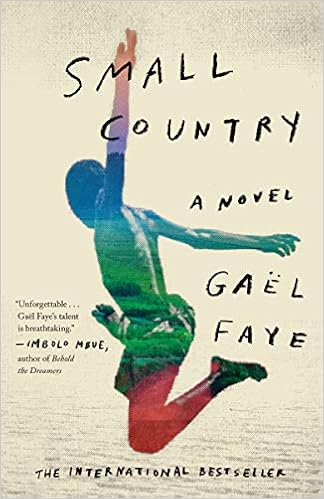
Small Country: A Novel by Gaël Faye

Small Country: A Novel by Gaël Faye

I have been keen to read this book for some time. Small Country was published in 2016 in France and in French, and translated into English by Sarah Ardizzone in 2018. I saw it on the Book of the Month website and it immediately caught my eye. It’s not often that African literature — especially a novel focused on something as horrific as the Rwandan Genocide and the Burundian Civil War, both connected in their origins of ethnic conflict between the Hutu and Tutsi — finds a way into mainstream, popular book culture.

It was worth the wait. Small Country delivers a powerful, immersive, historical experience. I felt as if I were there, transported back to the early 1990s, growing up with Gaby, a silent witness to the terror and happiness of his childhood. We are not so far apart in age that his childhood feels foreign to me, and there is a common experience in living in former colonies, French or British, that pervades the postcolonial world. Faye’s prose helped a lot; I could smell the fruity air of tropical Burundi, sense the light dusting of brownish-red earth on my skin as Gaby and his crew ran down the roads of their neighbourhood, the scorching heat of the sun, a trickle of sweat run down my neck.

But of course, Gaby’s path and my own diverge wildly on the occasion of war. Faye’s portrayal of that period of time and conflict was palpable. By that point in the novel, the characters felt like friends: ordinary and familiar like those who populate our own worlds. They were likeable and hateful, annoying and lovable, flawed and perfectly so — and then they were thrown, involuntarily, into an unimaginable violence. Much like Gaby and his family and friends, the war approached slowly, then arrived suddenly. The effect is jarring — purposefully — on the reader. The events of the novel force the reader to wonder, “What if this were me? What would I do?”

The story follows the chronological path of Gaby’s life, a mixed-race boy of French and Rwandan parentage, growing up in Burundi. It spans his early life from about age four or five to the time of the Genocide, when he is a teenager and evacuated to France. The novel is one that revolves around the nuances of race and interracial relationships, the push and pull that is inherent in transcultural lives, and the desire for a sense of place when one is trapped in a Venn diagram of multiple belongings. Gaby’s mother is one of these out-of-place women, French by marriage and in part by design, but also Rwandan and not-Rwandan, Burundian by default and yet rejected by Burundians on account of her Rwandan origins. Gaby’s father also straddles multiple worlds, first as a colonial settler in a time when such settlements can no longer exist as they were; he is out-of-time, rather than out-of-place. Second, in the matter of class, Gaby’s father possesses status, but only on the African continent, not in France. Gaby, the protagonist of the novel, is also caught between worlds on account of his mixed-race, his socio-economic class as the son of a middle-lower-upper-class businessman, and because of his nationality being a French passport-holding Burundian. The characters exist in a kind of suspension. This uncertainty is, on the one hand, brought on by the war, but it existed before as well, as people in this community reconcile their ethnic history or their settler status with the new postcolonial order of things.

Small Country is about the loss of one place of belonging when another one exists. It is about loss of the things (including people and practices and languages) that bind us to one another and to ourselves. It is about how we individually must grapple with that loss, how we deal with it or how it deals with us. Every character in this novel loses something or someone (a spouse, a child, a family member, or themselves), gains something (freedom, independence, clarity of self, madness, grief), and plods onwards in life because there is no option to do otherwise. The reader cannot help but recognize their suffering and their experience.

Small Country is about refugees, both the kind we see in the news and the kind we do not see, those who occupy our own worlds and are, in a sense, “hidden in plain sight.” Faye presents to the reader a reflection of themselves, turning the refugee of the news into an all-too-familiar face, our own. Perhaps as we encounter refugees in our lives, those of the news-kind as well as others, we might find common ground with them on the basis of this shared humanity.

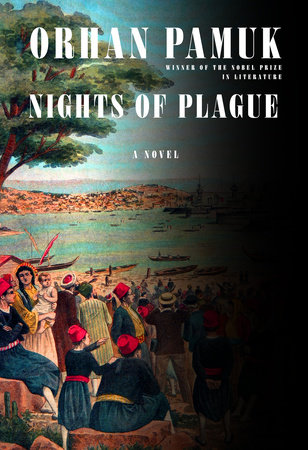
Nights of Plague by Orhan Pamuk

Nights of Plague by Orhan Pamuk

Pamuk’s latest translation from Turkish into English, Nights of Plague (coming out October 4th, 2022) is an epic both historical and contemporary. I need not remind anyone reading this that we are still, as a global community, navigating the Covid-19 pandemic (and monkey pox is making rounds again as well!) The timing must be viewed as deliberate; Pamuk’s commentary embedded within this novel can only be seen as prescient or proof of an uncanny insight into the human psyche as it relates to existential threat.

In short, Nights of Plague is epic.

The stories that unfolds within its pages are reminiscent of epic prose as well. Pamuk’s novel is spun around a royal Ottoman princess, Pakize and her husband, Prince Consort and medical doctor, Nuri; however, the tale is more accurately about the unravelling of a community and its denizens as they face possible annihilation and suffering from a breakout of plague. The locale of this event is a fictitious island, Mingheria, an outpost of the Ottoman empire that reflects the empire as a whole: multicultural in its constitution with ancient and new settlers of Greek, Muslim, Eastern European, African, Christian, and Colonial European descent; in precarious harmony with the multiple discordant voices, needs, and ambitions of politicians, medical professionals, ordinary citizens, foreign heads of state and their ambassadors, Ottoman royals, and immigrants; and gorgeous and complex in its rich history. Mingheria is a plague-beset limb of an empire popularly described as “the sick man.”

Pamuk’s tale of Mingheria does not confine itself to the accounts of elite royals, though it is ostensibly based on recently unearthed archival records and it is told as a historical monograph, through the eyes and pen of one of Princess Pakize’s descendants. Pamuk regales the reader with stories of its other denizens too: its merchants and common folk. There is the security guard of the local prison and the tale of him and his family as they struggle to survive and live their lives in the wake of plague and death. There are the doctors who work to eradicate the plague, demand quarantines. There is the governor too, all too human in his own ambition and fear.

Nights of Plague is about Mingheria and its people, how their present fears and dilemma(s) are shaped by their history of ethnic division and unity, religious and ideological differences, their universal humanity. They react based on their subjective desires, but are also creatures of their communities, their actions are shaped by the expectations of those around them, their enemies, their allies.

Our unknown narrator writes as a historian might do, providing context where necessary, but imbues the academic narrative with a novelist’s attention to texture, aroma, and the sensation of place. Mingheria is as real as the Ottoman Empire can be to a modern reader: the spicy, heady fragrance of a time and place that no longer exists is palpable.

Nights of Plague is a more gorgeous, more exotic — and historical — reflection of our own contemporary experience with Covid-19. The arguments between medical professionals, politicians, and the citizenry in this novel are all too familiar to anyone who has been watching the news for the past three years. The heated debates, the refusals to quarantine, the seeming indifference of the populace to the threat of death and suffering might make a reader feel queasy. The Lacanian recognition is jarring. But perhaps, for all of us, this is a necessary cognitive event in order to reconcile the past with the present and future. Pamuk delivers that lesson with poetic grace in Nights of Plague.