Unquiet Spirits: Essays by Asian Women in Horror Edited by Angela Yuriko Smith & Lee Murray

Unquiet Spirits: Essays by Asian Women in Horror
Edited by Angela Yuriko Smith & Lee Murray

I honestly wasn’t sure what to expect from this collection: Modern horror? Literary criticism? Traditional tales of terror? It intrigued me regardless.

What Unquiet Spirits delivers is a combination of all of the above. It is memoir, criticism, history, and ethnography in balanced fusion. Each chapter is written by an Asian female author and in it she discusses both her own writing, the cultural and historical inspiration for her characters, the origins of some feminine demon, ghost, or creepy — a unquiet spirit — which haunts her and the pages she has produced. In some chapters the author draws on a deeper well of literature of the past and ponders the future of the female spirit archetype that is the focus of their chapter.

The books is divided by and devotes its pages equally to feminine spirits across the Asian continent, from East to Southeast to South Asia. I was pleasantly surprised to see such attention given to Southeast Asian spirits and archetypes (my favorite was always the pontianak, the evil spirit of a woman who lurks in the dark under the protection of a banana tree. In my recollection, she can be “pinned” to the tree with a needle or a pin and made to do the pin-holder’s bidding. But, beware to that horrid individual if the offending metal is ever removed!)

While the collection examines different demons and feminine archetypes from across a swath of very diverse cultures, it ultimately makes a singular, united appeal to the reader. Their call to action is unmistakable: Asian women, as a whole, alive or dead, demonic or angelic, monstrous or victimized, are powerful beings. Asian women have been too long overlooked in the literary world and deserve more than the whispered, submissive voice they have been too long assigned by Orientalists; hear them shout, scream, screech!

For that reason alone, Unquiet Spirits is worth reading. But there is more.

The authors reveal facets of the Asian feminine that have rarely been visible, that is to Western audiences. To Asian women, we have always known they were there, even when our patriarchal societies told us to ignore them, to castigate them, to revile these demonic women as ill-influences on ourselves and our communities, yet still, Unquiet Spirits is sure to deliver novelties and new knowledge to Asian/Asian American readers.

The World’s Greatest Sea Mysteries (Non Fiction) by Mollie and Michael Hardwick

The World’s Greatest Sea Mysteries (Non Fiction) by Mollie and Michael Hardwick

This title lit up the 8-year old in me when I saw it. I remember loving those DK trivia books and collections of mysterious events. I am still a sucker for a book on sasquatches or sea monsters. The Hardwick’s collection did not disappoint. Each chapter recounts the tale and history of a vessel lost at sea, a spate of sea monster attacks, ghostly ships, and the like. The chapters are short, succinct, and leave the reader wanting to know more — and isn’t that the purpose of a mystery?

The prose is a bit dated — the Hardwicks wrote the original back in the 1967 — but there is nothing wrong with this. Indeed, that kind of syntax adds a little historicity to the collection. There is something familiar about it and nostalgic in a way. But maybe that’s just me remembering my childhood and the long, lovely hours I spent reading books like these that let my imagination fly wild.

Home Safe: A Memoir of End-Of-Life Care During Covid-19 by Mitchell Consky

Home Safe: A Memoir of End-Of-Life Care
During Covid-19
by Mitchell Consky

This memoir was a bit out of character for me; but, I’ve been reading quite a few memoirs this year and this one caused me to pause. Is it too soon to read about Covid-19? We’re not quite past it yet, are we? Given that Covid-19 remains looming in so many places and may very well make a comeback, I figured it might help my own healing to read about someone else’s pandemic experience. Admittedly, mine was mild, privileged, and uneventful in comparison to so many millions of others on this planet. What did others feel? How did others live through this? We talked amongst each other, but too often we said a lot of nothing to avoid the anxiety that a deeper, more nuanced conversation could too easily trigger.

From a historian’s perspective, memoirs like this — indeed, the millions of posts, tweets, blog posts, articles, stuff — that we produced in the past few years say something poignant about this strange and traumatic moment in our individual and collective lives. What was this moment in our history? Memoirs give us entrée into others’ internal lives, see how others experienced this.

Consky’s account of the past couple of years, encompassing the dying and death of his father and others, delivered on both points. What was living and dying in the pandemic like?

But readers should not expect a litany of statistics or a step-by-step replay of WHO’s or the American CDC’s decisions and policies. This is a memoir, a deeply personal and individualized account of a global experience. Death is always subjective, always individual, always very personal. Readers should not expect this book to discuss everyone’s experience of Covid-19. The deaths in this book are not coronavirus related deaths necessarily; this book is about the non-pandemic deaths that occurred during the past two years. Ordinary life and ordinary death did not pause for the pandemic. Pandemic deaths eclipsed the distress of other kinds of deaths, but only insofar as their appearance in the news, social media, public forums. The trauma of those passings remained, but was invisible in contrast.

That said, this book is about life too. It is about resilience and the ways in which we communicate those important things in life that need to be said and done before death makes it impossible to do so. This memoir is about memory, not only Consky’s but those of his father’s and the surviving friends and family of those who lost loved ones — during the pandemic and at other times too. Life and death during the pandemic of 2020-2022 was unique in our lifetimes, but also… not. Life and death was also familiar… too familiar? Scarily familiar. Comfortingly familiar. I cannot decide. Neither can Consky, I think.

This book is also about memorializing and the ways in which we do this, for ourselves and for the dead. One act struck me in particular: when a group of friends gathered their memories of another among them who had passed away and gave the resultant artifact to the deceased’s family. This book is about how we can commune over death, that common event, that inevitable process that erases (or should) differences and animosities among us.

The end of life care Consky refers to? I think he means us, the surviving family members and friends of the ones who have passed away. For that reason, the book transcends the pandemic. The pandemic is (was?) a great thing, a momentous thing, but life and death will go on with or without it.

Medieval Royal Mistresses: Mischievous Women who Slept with Kings and Princes by Julia A. Hickey

Medieval Royal Mistresses: Mischievous Women who Slept with Kings and Princes by Julia A. Hickey

This is a compendium of salacious scandals highlighting a handful of women who possessed power and agency in a world where their gender and sex were deemed inferior to men. For readers who enjoy the political maneuverings rife in European medieval history, this is a fantastic work to add to your collection.

Each chapter focuses on a specific woman, her immediate world, and a narrative charting of her political and public life as it was recorded in the historical archive. There are the usual mentions of the usual heavyweights of Medieval women’s history: Elizabeth Woodville (who became Edward IV of England’s queen), Katherine Swynford (who became the Duchess of Lancaster and the wife of John of Gaunt), Rosamund Clifford (the mistress of Henry II and the object of many romantic poems), and Saxon queens, like Emma or Ælfgifu of Northampton. But the book also brings to the forefront other, lesser known women who came to wield sexual and political power: Maud Peverel (the mistress of William the Conqueror), Herleva of Falaise (the mistress of a Duke of Normandy), Edith Forne Sigulfson, and numerous other unnamed women who bore royal children.

Many of the women in these pages were powerful in their own right as heiresses or bearers of royal blood, but invariably most were eventually cast aside or somehow lost their influence over the men who ruled this world and time. For all their power, Medieval Europe was a patriarchal world.

Medieval history is — to me at least — infinitely intriguing, but the archival evidence on women in this age and the internal lives of individuals is so sparse that monographs are often dry and lack the kind of micro- and prosopographical history I personally enjoy. There is a great deal of historical tennis volley of “Duke So-and-So met Earl Such-and-Such in battle” or “Lady Blah Blah was then wed to the second son, Henry (always a Henry somewhere), but died alone the way” and so on and so on, so on, so on, etcetera, etcetera. But to Hickey’s credit, the prose and style of this book make what might be a dry topic of political intrigue interesting.

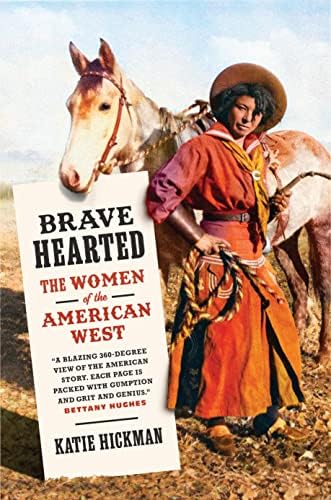
Bravehearted: The Dramatic Story of Women of the American West by Katie Hickman

Bravehearted: The Dramatic Story of Women of the American West
by Katie Hickman

“Gripping,” “Exhilarating!”, “Captivating!” These are descriptors I often flutter my eyes at, chalking these up to marketing histrionics that serve solely to assuage publisher’s fears about book sales and authors’ egos. But in Hickman’s case, I was hard pressed to find more authentic adjectives for Bravehearted: The Dramatic Story of Women of the American West.

I was expecting no less, to be honest. I’ve read Hickman’s work before (Courtesans: Money, Sex and Fame in the Nineteenth Century (2003) and Daughters of Britannia: The Lives and Times of Diplomatic Wives (1999) specifically) and enjoyed her scholarship for many reasons. Bravehearted, however, was the first time I’ve read Hickman’s scholarship since I began and finished graduate school, becoming in my own right, a historian. I can now say I appreciate Hickman even more than I did previously.

Bravehearted (like Hickman’s other works) is, from the perspective of a general reader, incredibly easy and smooth to read. The facts (that is, the history) are woven so artfully into her prose that the reader never feels like there’s a history lesson embedded in it. (There is, of course. More on that below.) Instead, the women, men, and children — indigenous, white settler, and immigrant alike — feel like full-fleshed characters in a story set in an epic, sweeping landscape. I could not help but feel the tragedy and simultaneous hopefulness of their journeys across the United States. At times, the harshness of the wind, the damp of the rain, the aridity of the desert air seemed to tragic, and simultaneously hopeful whip my hair, slick my skin, burn my nose. Hickman achieves what all historians — storytellers that we are — aspire to do: transport the past into the dimension of the present.

Each chapter of the book focused on a different region, a different woman, a different route settlers took toward the Western coast. The Pacific Northwest, the Californian region, and the Southwest were all covered in succession in Bravehearted. Embedded within these pages were not only those perspectives of white settlers, but indigenous voices too; though, the focus of this book was primarily on the European, East Coast, Midwest, and White settlers who encroached, entitled and arrogantly, into Indigenous lands. There are mentions of other people of color, Chinese immigrants and Black women, but again, these feature less prominently than white women and men. It is worth noting that there are few Mexican/indigenous women in Bravehearted; indeed, as I attempt to recall the book from memory, I find myself unable to remember one. Of course, it’s possible I am just forgetting, but that in itself is telling: There weren’t enough of them mentioned to mark a place in my memory. (The index is absent in the ARC so I could not look up where I might have read about them in it.) This is a well-researched, brilliantly written work of historical scholarship for any audience, but, it is not a work of decolonization; its intent is not specifically aimed at disrupting dominant narratives of white settler colonization or to bring to the forefront the voices of women of color.

This is — and this is not a detraction so much as it is a neutral statement — a history for those who are interested in women and the gendered component of history of the American West. The lesson is a simple one, but one which still requires learning: white women were as much part of the making of the West into the White American West as white cowboys, sharp shooting lawmen, and male miners (there were female miners too!) In other words, white women (and women of color in lesser numbers) were there too and they shaped White America in equal measure to their masculine counterparts.

The content of Bravehearted is not entirely divorced from race or ethnicity, but certainly the focus here is gender more so than race or ethnicity. Hickman’s inclusion of men and women of color and the indigenous perspective is not minor or token in any way; it is well done, but academic readers who may be expecting a stronger connection between or a deeper discussion of gender and race might struggle to locate it within this particular work. This is — and again, this is not a detraction — a work for a general audience. What Bravehearted offers the reader is breadth, indeed, a wide lens of the landscape of the American West in terms of the gendered experience of traversing it in the 19th century.

If, by now, my final verdict is unclear, let me end with it: This is a fantastic telling of American history worth any and every reader’s time.

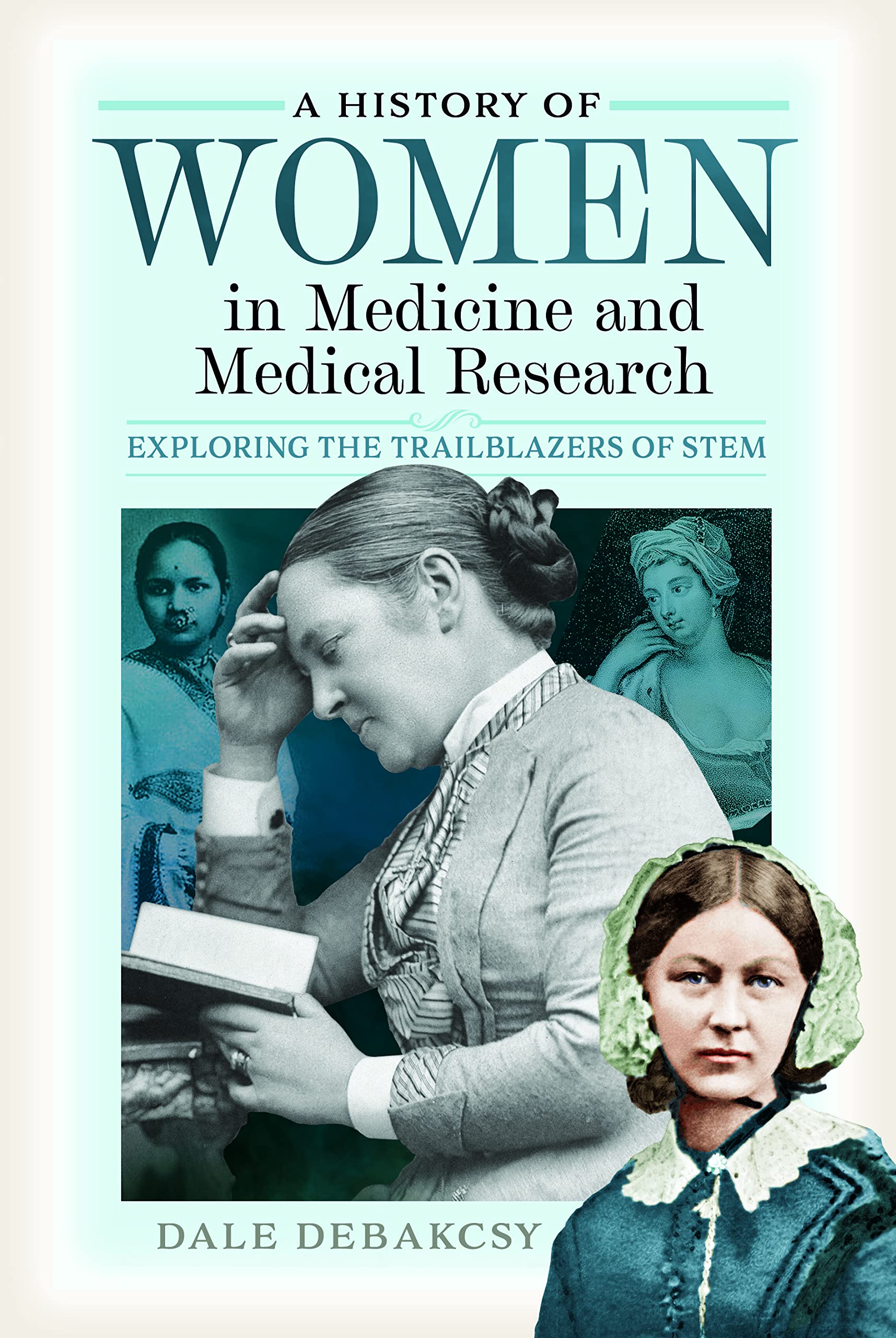
A History of Women in Medicine and Medical Research: Exploring the Trailblazers of Stem by Dale Debakcsy

A History of Women in Medicine and Medical Research: Exploring the Trailblazers of Stem
by Dale Debakcsy

I loved reading this ARC (Advanced Reader’s Copy) so much I pre-ordered it! Eye-opening, superbly written, and well-researched. I cannot think of higher praise for a non-peer-reviewed non-fiction written for a general audience. I can’t wait for my copy to arrive so I can re-read it!

A History of Women in Medicine and Medical Research: Exploring the Trailblazers of Stem is broken down into several chapters, each one focusing on a specific woman, her personal background or life story, and her professional career in the sciences. The book progresses chronologically from the 16th century up to the near present, ending in the 1970s.

Each chapter ends with a section devoted to further reading and sources. While the book lacks citations and formal references, these inclusions are especially valuable. This kind of historiography is difficult to discover without a significant investment of time and effort making Debakcsy’s book all the more useful and appealing. I do not mind admitting this is a key reason why I have chosen to purchase my own copy.

These are not long or exhaustive studies of each individual; these historiographical sections allow the reader to explore further. That said, the brevity of each chapter is not a detraction. These are easily digestible chapters, perfect for classroom use or as readings for an undergraduate course. The chapters capture all they need to, leaving the reader satisfied but curious for more.

The women themselves are fascinating subjects, not only for their contributions to STEM, but also for their perseverance and resilience in the face of class, gender, and racial prejudices. Many of the women derive from the upper classes, but a significant number of them are working- or middle-class. Some were immigrants or enslaved (or lived just outside that category). Many had to break with their families to pursue their dreams. In many cases these women knew or knew of one another, interacted closely or within similar professional circles. A cohort of pioneering women in these fields is visible in the 19th century, particularly in the fields of medicine.

While the majority of women examined and brought to light in DeBakcsy’s book are white, European or American, there are also significant chapters focusing on women of color in the Western world. These are mostly (but not exclusively) black women who broke academic and professional ceilings.

This is a fantastic book for the classroom and any library (academic and home, alike). I cannot wait for my copy to arrive!

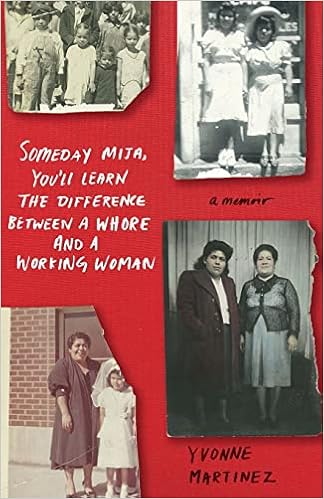
Someday Mija, You’ll Learn the Difference Between a Whore and a Working Woman: A Memoir by Yvonne Martinez

Someday Mija, You’ll Learn the Difference Between a Whore and a Working Woman: A Memoir
by Yvonne Martinez

This is an intensely powerful memoir; Martinez’s life is a scar tissue of intergenerational wounds. Someday Mija, You’ll Learn the Difference Between a Whore and a Working Woman is a serious treatment of what the traumas of racial violence, poverty, and sexual exploitation can do to a child and a family, and how Yvonne was able to weave these histories — her own, her mother’s, her grandmother’s, her family’s and her community’s — into a lifetime of “doing better.” This is not a memoir to be undertaken lightly.

Celebrate Hispanic Heritage, September 15th to October 15th — but also, whenever and always!

Someday Mija, You’ll Learn the Difference Between a Whore and a Working Woman is divided into two halves, the first reads like a novel and documents Martinez’s experiences as a child and growing up in a dysfunctional family. The second half addresses Yvonne’s life afterward, as an adult and specifically as an activist in the service of her community, as an organizer, and educator.

The two halves are intertwined: it is Martinez’s experiences growing up in an abusive and violent home that shapes her ability to understand the traumas that envelop her community. This shared experience is one not easily addressed by public health programs or the simple piling on of more and more education. Oppressive systems stemming from cultures steeped in patriarchy, sexual violence, and colonization cannot be wiped away, even replaced that easily. These cultures exist within even larger systems of oppression.

In Martinez’s case, however, these experiences also spurred them to take on systemic racism, sexism, violence, and poverty as institutions to be dismantled. This is a case of an individual working from within, for one’s own community (and for all communities). Change must be internal as well as external for it to sustain; Martinez’s life is proof of that.

A profound and consuming memoir that is in equal parts disturbing, sad, and inspiring.

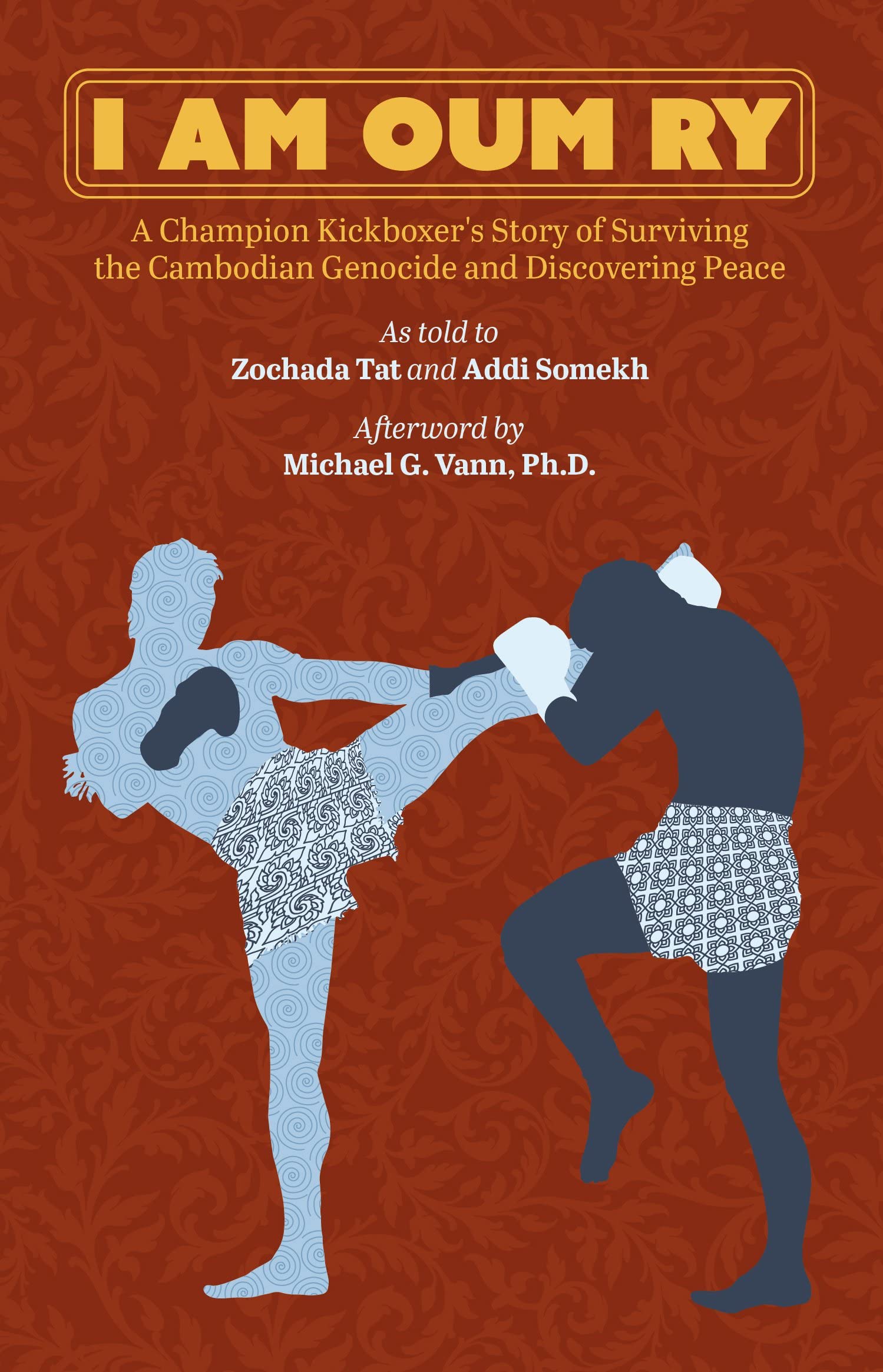
I Am Oum Ry: A Champion Kickboxer’s Story of Surviving the Cambodian Genocide and Discovering Peace by Oum Ry, told to Zochada Tat and Addi Somekh

Afterward by Michael G. Vann, PhD.

I Am Oum Ry: A Champion Kickboxer’s Story of Surviving the Cambodian Genocide and Discovering Peace by Oum Ry

This memoir strikes hard on multiple levels. It is a reflection of contemporary America and the transnational, transcultural, immigrant experience that many Americans live, whether themselves or vicariously (as Zochada Tat did), as the children of immigrants. Migration is a traumatic event, (sometimes positive, sometimes not, but always) one that reaches across several generations. Oum Ry’s memoir toggles forward and back in time, threading a connection in time between father (Oum Ry) and daughter (Zochada Tat). From this perspective, I Am Oum Ry is an emotional read, a subjective vacuum in which the characters are the primary focus, separate from the context of their world in a way. Tat and Somekh portray Oum Ry, his many lovers, his wife, his children, and the myriad of people who came, left, or stayed in his orbit, in all their flawed perfection; the logics behind his and their behavior as consequences of individualized trauma: parental abandonment, grief of loved ones lost or killed, sexual desire and exploitation.

But people do not exist in vacuum. The individuals in these pages are not ahistorical; they are deeply embedded in histories of patriarchy, Colonialism, the Cold War, the Khmer Rouge genocide, the American/Vietnam War, Cambodian traditions, and collective desires for modernity, belonging, and security.

The memoir takes the reader to Cambodia in the mid-twentieth century, beginning just after WWII. The French stubbornly cling to Indochina. Then ahead to the American War in Vietnam a decade later. It lingers on the five golden years of the 20th century when Cambodia perched on the edge of modernity, part of a larger Southeast Asian moment of revivalism and decolonization and prosperity in the early 1970s. After that the reader follows Oum Ry into the dark age of the Khmer Rouge genocide, and the suffering that followed as Oum Ry, like so many thousands of other Cambodians fled to Thailand to seek asylum elsewhere, anywhere. Oum Ry, like many other fortunate refugees makes his way to the United States where he finds both happiness and deep disappointment. The life of a migrant is bittersweet, filled with hope and longing.

The histories I Am Oum Ry excavates are powerful, a fisted punch to the gut. Oum Ry holds nothing back. The currents of forced migration, war, genocide, and racism that underpin Oum Ry’s words and experiences will knock the wind out of readers. This is an important memoir, not because it is unique — it isn’t, there are many Cambodian-American/Cambodian memoirs written by survivors of the Khmer Rouge — but because it neither indicts or glorifies the past or the present. The Khmer Rouge are not the sole villains of the genocide, though they are largely responsible for the horrors Oum Ry and other Cambodians experience; the Vietnamese and ordinary, fellow Cambodians are part of the horrific milieu of that moment too. America is not hailed as the land of milk and honey; it too is a dark land of racism, crime, poverty, and disappointment. But it isn’t all bad either; Oum Ry and his family find a place in California and become new Americans.

It is also significant in that it highlights pradal serey/muay thai, and centers around this sport. It is unique in this aspect. Oum Ry occupies a unique cultural position as a fighter, a sports icon in Cambodian history and 20th century Cambodian culture; his memoir gives us a rare glimpse into a world of sport and celebrity that was exclusive before the war and certainly much more so afterwards as a result of the loss of so many Cambodian stars.

For me, as a Southeast Asian scholar and a historian of Southeast Asian sport, I Am Oum Ry possesses academic significance. Sport is an often overlooked aspect of history and culture, seen as purely recreational. I Am Oum Ry proves how wrong this assumption is; pradal serey deserves attention as a historical artifact of a lost moment and in the present as a vital element of Cambodian-American identity and Cambodian cultural revival.

For almost every reader, I Am Oum Ry will evoke a multitude of emotions ranging from sad to inspired. Oum Ry’s life has been a rollercoaster in and out of the fighter’s ring. It has been dramatic in positive and negative ways. His is a life worth the reading.

Two Houses, Two Kingdoms: A History of France and England, 1100-1300 by Catherine Hanley

Two Houses, Two Kingdoms: A History of France and England, 1100-1300
by Catherine Hanley

Of the books I’ve read lately, this is by the far the most academic and “historical” in subject, language, and depth of detail. Yet, at the same time, this is not strictly for an academic audience. Readers will find that Two Houses, Two Kingdoms is suitable and accessible for all adults interested in the Medieval age, the ins and outs of politicking and the martial exploits of kings, queens, and the nobility in Western Europe. (I say “adult readers” because this is really not accessible for a younger, less mature reader. Its audience is a small sliver of the total general reading population; children, juvenile, and young adult readers will likely find this plodding.)

The structure of the book follows a traditional, chronological form, moving from the 1100s to end at the beginning of the 14th century, allowing readers unfamiliar with the dynasties and generations of these royal houses to follow along with who was whom’s son, daughter, niece, cousin, and so on. It was a tangled mess of consanguineous relationships. This is a historical monograph in the traditional sense of the word.

The prose however, is refreshingly modern, flowing with an ease that many older monographs lack. In many ways, Hanley’s narrow focus on the royal and noble houses attached to them is what keeps the reader’s attention: the chapters read like episodes of a family drama. There is a soap opera like quality to the mechanics of politics in this age; there are kidnappings of maidens and children, sordid adult-minor affairs and marriages, betrayals of the deepest cuts, adulterous liaisons leading, The men and women Hanley depicts in these pages could achieve viral fame on The Jerry Springer Show or feature on a highlight of Judge Judy. No joke.

What the reader should not expect is a cultural or social history of the Medieval period; the ordinary, non-royal, non-noble classes do not make an appearance in this text, nor does it dwell on cultural norms or landscapes of the time. This is a political history focused on the highest classes of society at the time. Hanley is clear from the beginning this is what the book centers on.

As a text for the classroom then, this is potentially useful and not. For a course on Medieval history, say, a graduate level seminar, Hanley’s monograph would be perfect — except that by that stage in students’ careers, they are liable to be already familiar with its content. And Hanley does not delves into the historiographical literature or methodology. This is far less suitable for an undergraduate seminar. It is too long and dives too deeply into the nitty gritty for an introductory course. This is better suited to a general adult non-fiction audience than the classroom.

As a historian reading for pleasure, I found it enjoyable. The prose was smooth, flowing, logical, and concise. Hanley did not waste words; this economy delivered what was necessary to understand the course of events, the personalities involved, their ambitions and motivations. The depth of detail warrants praise; Hanley is an expert in this period and the level of research and analysis they invested in this scholarship is apparent, even if their methodologies were not. An excellent monograph well worth any interested reader’s attention and time.

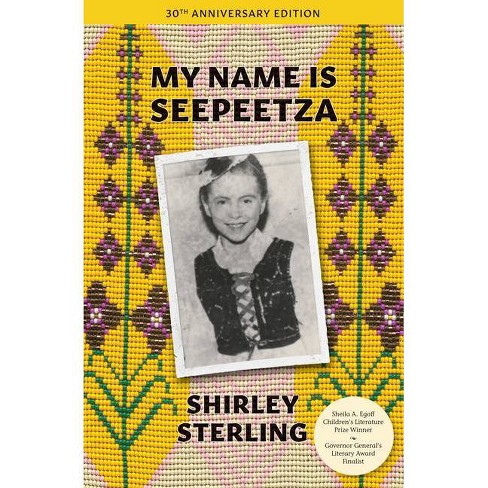
My Name is Seepeetza by Shirley Sterling (30th Anniversary Edition)

A student recently asked me in class, “Why are there reprints of books? Why do they get reprinted?” Among the reasons I gave them was this one: “Sometimes new information emerges and something important needs to be added. Or, sometimes, the content of the book becomes relevant again, given certain events or things that are happening right now.” I added, “Remember, history is less about the past, than it is a reflection of our present moment or our desire for what we want our future to look like.”

Sterling’s My Name is Seepeetza, the 30th anniversary edition epitomizes this reason. The recent discovery of several hundred bodies of indigenous children buried and hidden at several residential schools across Canada — Fort Pelly, St Phillip, St John, just to name three — is a heavy reminder that the state sanctioned annihilation of Canada’s indigenous culture and peoples over the past four centuries is not a remnant of the past, but a living monster that still lives and looms over the lives of the 150,000 children and their countless descendants.

This is a living trauma, its horror and long reach remain unknown.

For this reason alone, I am considering using this book in my next iteration of a 100-level history course I teach to undergraduates for this reason.

Sterling’s accessible, authentic prose in the voice of a young girl only gives me more reason to assign it as a course reading. The length is perfect for a semester and the format in epistolary style as a diary allows me to use this in class, for small group work within the time constraints of a class session or for short individual activities.

The content though is the main appeal here. Sterling’s own experiences makes My Name is Seepeetza all the more powerful, opens an avenue for an educator to discuss this in more depth as a primary source, as a part of historical record, opens the door for historical discussions and framing it within a larger landscape of indigenous history, gendered and racial violence. My Name is Seepeetza hits on the major nerves: language weaponized, education as violence, eugenics, parenting as cultural intervention, skin color and its tormented relationship with race and ethnic autochthony. History.

A reprint is not merely a revival, it is a reflection and delivery of knowledge we need right now.