A History of Fear: A Novel by Luke Dumas

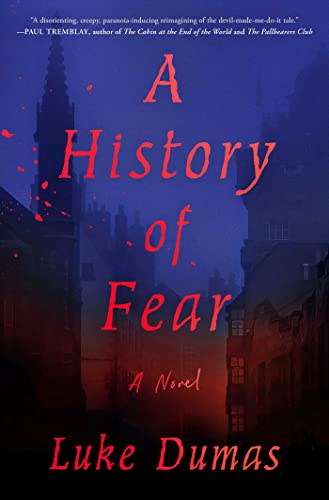
A History of Fear: A Novel
by Luke Dumas

By page three, I was hooked. The ending comes to a perfect, organic conclusion — but I readily admit that if Dumas writes a sequel, I’m all in.

A History of Fear unfolds like Stoker’s Dracula, adopting an epistolary approach, delivering the story via journal entries, letters, official reports from doctors, prison officials, and newspaper articles. The novel dives deep into the most disturbing parts of human psychosis reminiscent of Dostoevsky’s Crime and Punishment. It delivers gothic horror too, in the manner of Shelley’s Frankenstein. In the end, the reader can’t be entirely sure of who is the monster, if demons are real, if evil is more human than we comfortable with. A History of Fear is a horror fan’s feast: gore and psychological terror stride side-by-side, the paranormal and the divine and the mundane intertwine to create a world the reader is never entirely sure is real. Illusion may very well be reality… or worse.

But the story is not fantasy; there is a real history embedded in this novel — and a commentary on a history of monstrous bodies, sexuality, religion, and intergenerational trauma. There is a reality underlying the one Dumas weaves for us. This is what makes the novel so appealing; there is a real horror here, one that we can recognize. This history is one that might be so common as to be truly terrifying because it might actually exist within ourselves. Or someone we know.

A History of Fear follows the main character’s slow descent into madness — or his ascent into clarity, depending on your interpretation. There is a true mystery here and this drives the story forward. The reader needs to discover what the main character also seeks: some sense of closure and parental acceptance. The main character is driven by a need to know themselves and their past. This is a genealogy of a family and the homophobic culture of the West. Dumas focuses on the psychological damage inflicted on those who deviated from the dominant norm and those who dared to question their place in it. The novel travels between the past and the present, each part of the jigsaw puzzle adds to the image of the whole of time, allowing the reader to witness the unraveling of the man’s mind and the suffering caused by intergenerational trauma.

The novel opens with the main character’s eventual, inevitable fate; this is the mystery. We know what happens to him. The mystery is why and how. The horror is the long arm of intergenerational trauma.

A wonderful book to have read in October, the Halloween month, but really, a fantastic gothic horror for any time of the year.

The Wounded Age and Eastern Tales by Ferit Edgü

Translated by Aron Aji

The Wounded Age and Eastern Tales by Ferit Edgü

Sparse writing delivers more feeling sometimes, more than a hill of words. The Wounded Age defends that “less is more” adage more than adequately. Edgü is master of the cut, clipped prose; it is this brevity of language that paints a dark history of Turkish war and tragedy. The sense of nothingness is poignant here, deliberate, necessary to understand the effect of war on its subjects.

This collection of stories is marked by an unusual delivery via poetry. The stories unfold in lyric format; this does not mask the pain of ethnic refugees and the suffering of war that is its subject, but in fact highlights it and makes it more powerful. It is as if the Edgü or the reader would only be able to handle such pain if it were framed in poetry; the reality of war and of those mowed down in its path needs to be formatted in this way in order for the reader to see the war for its intimate effects.

The stories and poems themselves evoke a sense of fracture in Turkish life; there is a disjointedness that is purposeful, performative. These are not historical fictions; these are emotive accounts of the Turkish past.

Overall, a beautiful and dark landscape of Edgü’s world.

1794: The City Between the Bridges (A Novel) by Niklas Natt Och Dag

1794: The City Between the Bridges (A Novel) by Niklas Natt Och Dag

1794 is a deliciously dark journey through the underbelly of 18th century Stockholm. It’s the second novel in Natt och Dag’s Cardell series; but, the novel stands on its own. I didn’t read 1793: The Wolf and the Watchman where the characters, Jean Mickel Cardell and Anna Stina Knapp first appear, but that did not preclude my enjoyment of 1794.

The novel begins with Eric Three Roses, the second and less-loved son of a minor nobleman. Eric’s journey to Sweden’s only tropical colony, Saint Barthélemy and the mysterious, scuzzy individuals he meets there are the mystery that seeds the rest of the novel. What happens to Eric is tragic. Cardell is called upon to discover the crime and the criminal — and bring them to justice. He seeks out Cecil Winge, encounters Anna Knapp again, and slithers through the shadowy and crime-infested underworld of Stockholm, sorting through those who are struggling to survive and those who prey on others to survive.

This is a crime novel, one which reveals a seedy and complex weaving of lives, fortunes, and terrible fates that not only delivers the tension of a mystery but also, and perhaps more appealing to me personally, the texture of 18th century European urban society. Classes collide, fates are intertwined, and motives are never simple. Relationships function on transaction, but the currency people must pay can run the range from gold to love, from silver to power. Murderers murder for the sake of a love of violence. Fathers overlook the transgressions of their daughters for the sake of a peaceful existence. Brothers blind themselves to the follies of their siblings. Sanity and madness are two sides of the same coin.

1794 is not a story with happy endings, neat narratives wrapped up by the end; this is a reflection of life under a harsh light. The mystery lies in how we survive it.

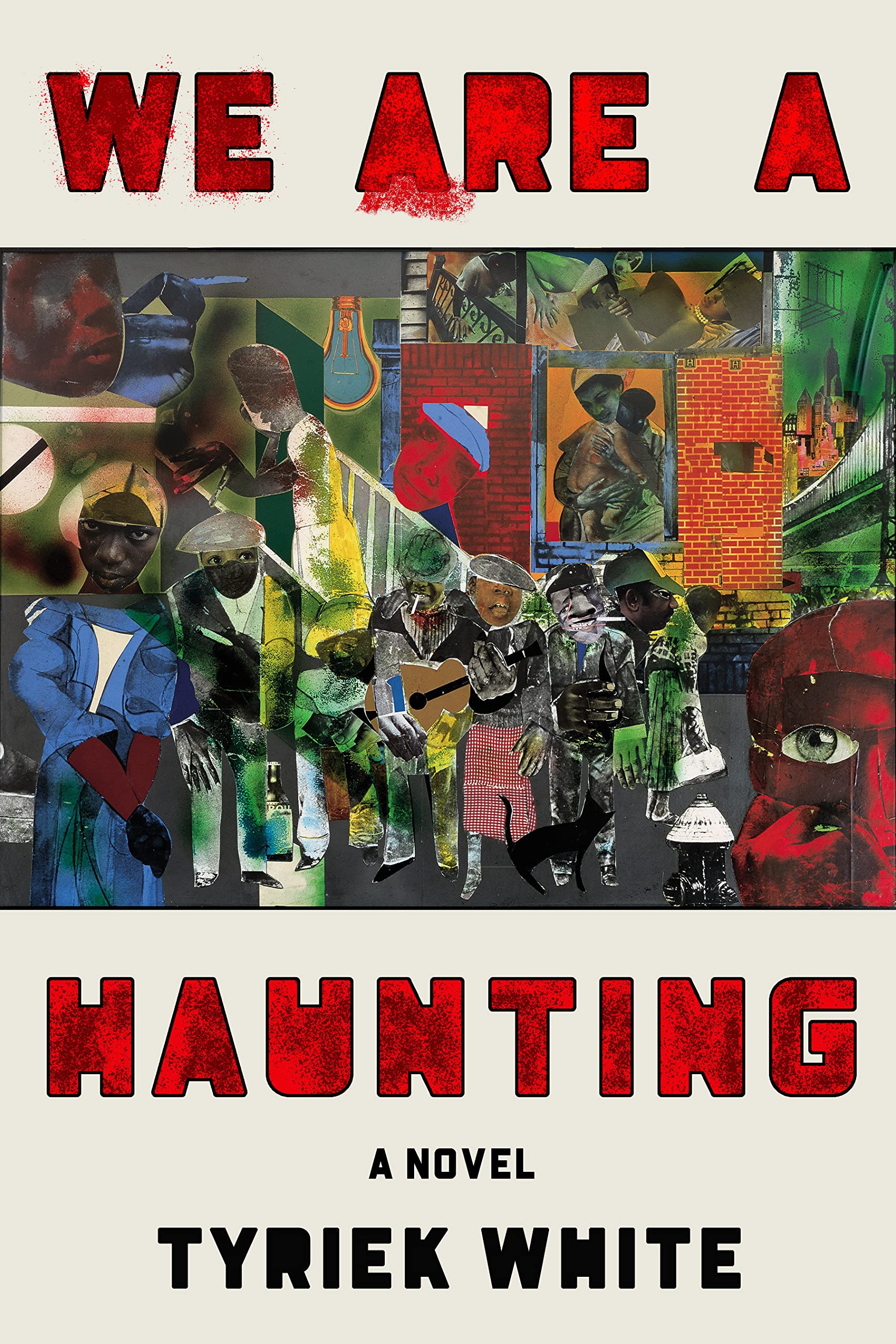
We Are A Haunting: A Novel by Tyriek White

We Are A Haunting: A Novel by Tyriek White

We Are A Haunting is a poetic song, like a siren that lured me into its world. Through the eyes of three generations of a black family living in New York City: Colly, Key, and Audrey, and the unraveling of their lives in a world rife with systemic racism, poverty, violence, grief, loss, readers are treated to a story that flows seamlessly between decades and generations.

White’s novel toggles forward and back in time. Characters float — as ghosts — between the past and the present. As the space between these three generations contracts and expands, the reader’s construction of time and history is reshaped, no longer a linear thing but a fluid matrix in which they live, all together, simultaneously at once. As a historian, We Are A Haunting reminds me that the past is never past, the present is merely a locus in history’s path.

The language which binds all these moments and spirits together is history, emotion, and experience: suffering and longing, obligations and promises kept or broken, strength and compromise, the ability to survive and a sense of defeat under the unwavering boot of poverty and racism. This is a complicated world in which awful events — such as getting fired and losing one’s income — is a nonevent warranting no reaction because of how useless it is to express emotion over it. This is just how life is. But, at the same time, such events are also gateways, paths that lead elsewhere, to better futures.

The interactions of the main characters with others in their lives: friends, fathers, husbands, children, and the dead or dying create the bonds which constitute the community and are the paths along which history travels. Each generation seeks to identify for themselves who they are and what they want, but they are also inevitably bound to the previous generation. Just as the living and the dead move seamlessly between their worlds in this novel, birth and death are a window that lets light in and keeps out the wind. Key, in her community, serves as a kind of gateway for life, possessing the ability to see things others cannot and in the capacity of a doula.

We Are A Haunting is not just about the black community itself, as an insular, discrete object in a vacuum. Then novel situates these black histories and experiences within the context of American material culture and history. Colly, Key, and Audrey and those around them are embedded in a world that has and continues to be assaulted by colonial institutions and racist systems. The deaths — those both metaphorical and physical — in We Are A Haunting are caused by this abuse and indifference. Casual micro-aggressions are tiny cuts and death is caused by a thousand of them.

This is a complex novel. For all its historical meaning, this is not a historical fiction in an informative sense; the time-bending, paranormal elements and the focus on characters’ and their emotional lives make this a more literary work than a historical narrative. This is not a novel that brings all its narrative arcs to happy, organic closures; un-repaired relationships, unfulfilled desires, and falsehoods are part of its characters’ lives. Morose, resentful endings are, after all, part of the colonial experience (at least from the perspective of the colonized.) In no way is this a detraction; this honest harshness is an authentic portrayal of racialized America.

The prose is literary. It is singularly focused on its characters more than its plot, though the unfolding of events lead to the characters’ interactions that shape their experiences. The characters are tangible, flawed, and powerfully written in each their own voices. Readers will have access to their interiority, but this is not an easy read in that the characters are — as real people are — guarded, afraid, unwilling to be vulnerable. Readers should not expect to be told what to think; this reader had to work to understand the motives and meanings of their conversation, their actions. The work, however, is worth it.

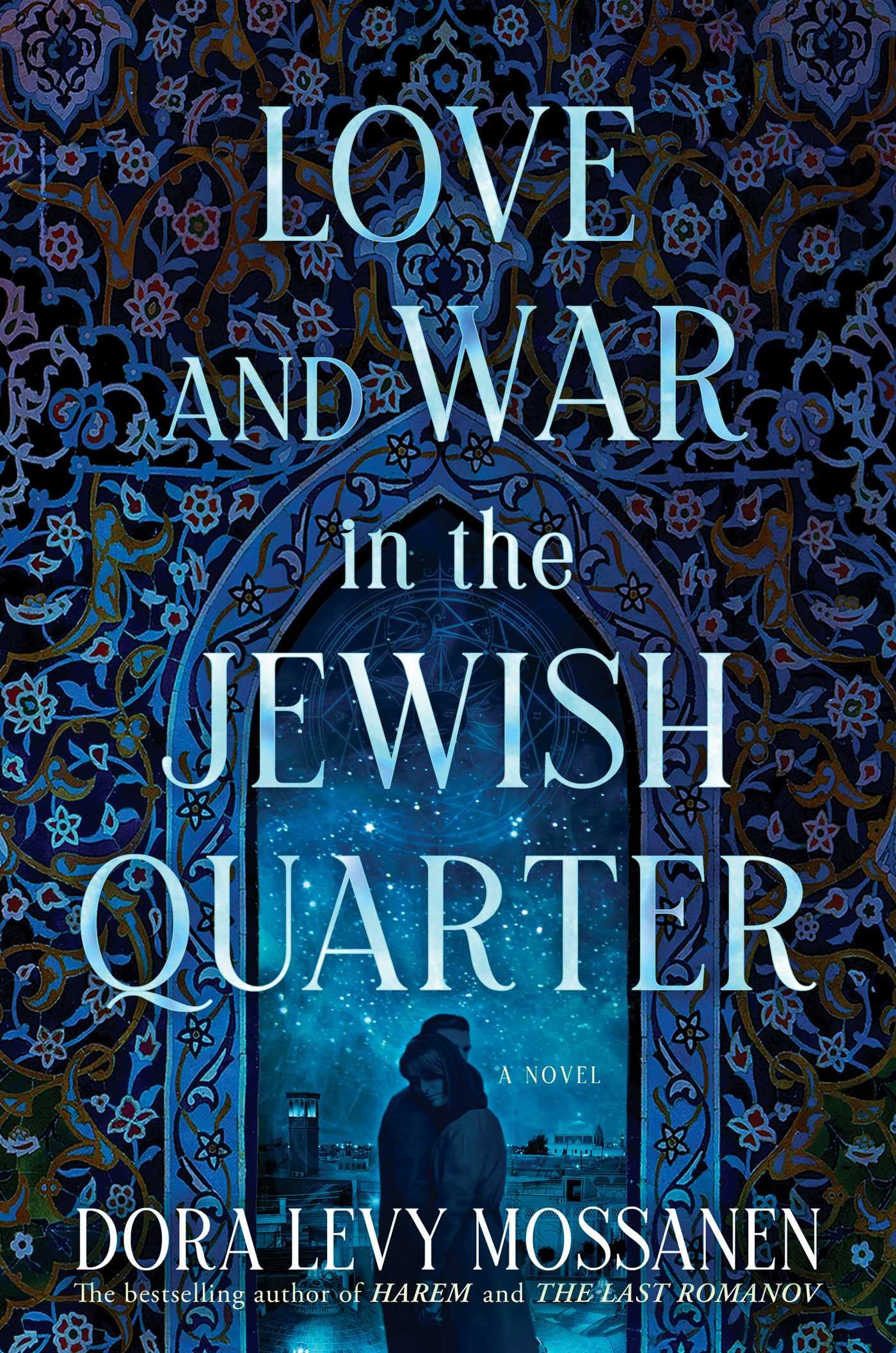
Love and War in the Jewish Quarter: A Novel by Dora Levy Mossanen

Love and War in the Jewish Quarter: A Novel by Dora Levy Mossanen

Set in Iran in the 1940s, Love and War in the Jewish Quarter captures Jewish life and culture as it existed in tense contest and precarious harmony with and within the majority, ruling Islamic community. On the fringes of World War II, but dangerously within the political reach of the Nazi regime and Soviet pressures, Iranian Jews must balance their interactions with Muslims even more carefully than they always had. The Allies are a distant factor; they are not a guarantee of safety as news of Hitler’s internment of Jews creeps ever closer.

[For those interested in the Jewish experience of WWII in this region of the world, One Hundred Saturdays: Stella Levi and a search for a Lost World by Michael Frank is about Rhodes and its Jewish community before and during WWII.]

It is in this tension that Jewish dentist, Dr Soleiman Yaran, finds himself. He is trapped in the conflicting intersection between his Jewish community and roots, the powerful Iranian royal family and governors of the land, his family, and his personal desires. The novel revolves around his attempt to unravel and reconcile his responsibilities and his personal happiness. Embedded in these tensions are deeper, more global undercurrents: as a medical professional schooled in Paris, Yaran also finds himself — as an agent of a Westernized modernity — at odds with ethnic, religious traditions, Jewish and Muslim alike. The war is not the only conflict highlighted in this novel; friction also exists in culture between the traditional past and the modern present. There is a shedding of superstition and tradition in favor of new technologies and practices, beliefs about the roles of men and women in their communities. Gendered expectations, visible through the performances of wife, husband, child, lover, parent, elder, and filial piety, duty to one’s community, and duty to one’s self are strong themes throughout.

Mossanen delivers this internal and historical drama through a romantic storyline, but readers will be disappointed if they expect a historical romance, for a romance it is not. This is a love story about love in the real and brutal world, where individuals are buffeted by cultural and community expectations and traditions. Its realistic setting and story are the novel’s appeal; the unpredictability of life will keep you, Reader, on your toes throughout.

The characters too, are fascinating — multi-faceted and tangible — because they are reflections of real internal conflicts. They are flawed and spurred on to their actions by subjective logics, some which make little sense, except when viewed within the larger landscape of this history and cultural context. The villains in this novel are human in their cruelties. The heroes and heroines are human, unable to manifest impossible archetypes.

A worthy read for all fans of historical fiction of the 20th century.

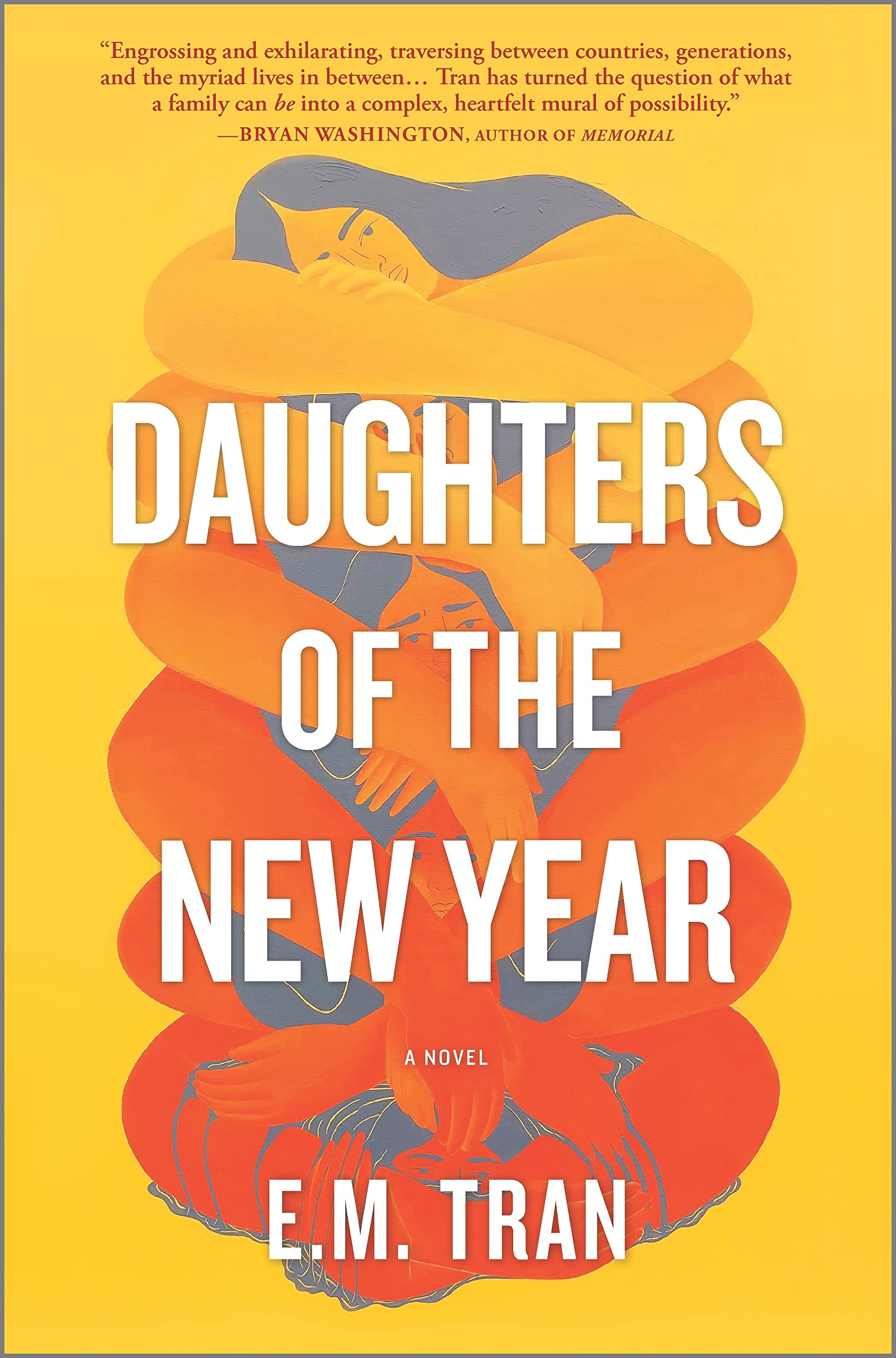
Daughters of the New Year: A Novel by E.M. Tran

Daughters of the New Year: A Novel by E.M. Tran

I am a sucker for a slow, immersive, multi-generational historical fiction. I love the unwinding of family secrets and histories. Families are spaces of ordinary and extraordinary trauma; intense love also breeds intense regret, jealousies, animosities. Tragedy binds and creates familial bonds stronger than blood. And, of course, as a historian I love getting a glimpse into a past where the reasons and logics behind piety, duty, and love are complex, sometimes contradictory, colored with personal suffering, traditions, and the institutions of humanity-at-large — as in this case, French colonialism and Confucian patriarchy.

That is the hinge around which Daughters of the New Year swivels. This novel is an honest portrait of the brutal historical and cultural complexities that shape familial love.

The reader is given a privileged view into the minds, hearts, and philosophies of several generations of Vietnamese women. It is a novel about why and how mothering, motherhood, and filial duty are never straightforward, why these acts of love are volatile constructions of history and culture. Time and place alter the modes by which we care for one another, show each other love. What is an expression of affection for one generation is manipulation to the next. What is piety to one generation is an empty gesture for another. The reasons why mothers do what they do, why sometimes their love crushes their daughters, are molded by forces beyond their control: war, racism, patriarchy. Yet, for all those differences, there is one motivation behind these acts: the desire to provide the next generation with more than what the previous had. This is the love embedded in families.

The reader is given a privileged view of an excavation of familial love through Vietnamese and American history. Through chapters narrated by a daughter of this family, daughters descended through a matriarchal bloodline, the reader gets an interior view of the characters’ minds. Each of them has a different voice in this novel. EM. Tran’s prose is a beautiful thread throughout, binding their stories together, but each of the characters speak with their own, unique voice. Each chapter reveals its narrator’s logic, their historical context; explains why they did the things they did — even perhaps knowing that those acts would somehow traumatize the next generation.

There is Nhi and her sisters, the American generation. There is their mother, Xuan; their aunt, Xuan’s sister; there is their grandmother; a line of women, as if holding hands, unbroken, their spirits resiliently swaying in the winds of change and time going all the way back to the epic and legendary Trung sisters. Daughters of the New Year is about these women.

Fans of Yaa Gyasi’s Homegoing, Amy Tan’s Joy Luck Club, or Min Jin Lee’s Pachinko will enjoy Tran’s Daughters of the New Year.

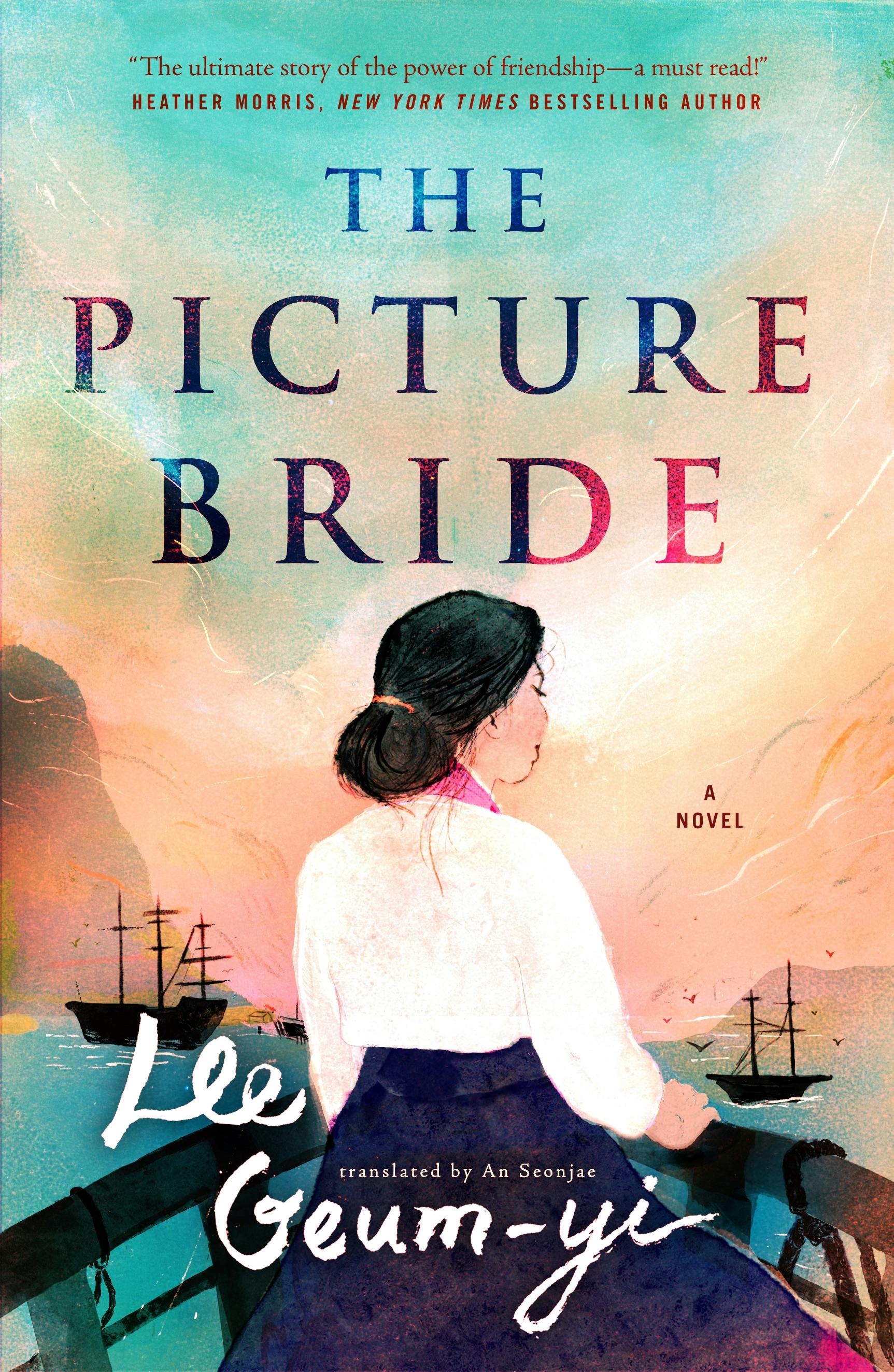
The Picture Bride: A Novel by Lee Geum-Yi

The Picture Bride: A Novel by Lee Geum-Yi

The Picture Bride is a historical novel that transcends its unique historical moment to touch on experiences and themes the reader will find familiar: the significance of family, the trials of marriage and love, loss and grief of loved ones lost to death or distance. The novel revolves around the migration of picture brides from East Asia to Hawai’i and the Western United States, a practice that was rampant in the early few decades of the twentieth century. Japanese and Korean men left their homelands to find work on Hawai’ian plantations, and as they accrued a little bit of wealth they found themselves in a primarily homosocial world, absent of East Asian women. To find love and fulfill their duty to wed, they would engage the services of a matchmaker and seek out a bride from their home country. The technology of the day limited the contact between potential bride and groom to correspondence and a photograph, hence the name given to this marital transaction: both the bride and groom would have nothing to more than a photograph to base their physical attraction on.

Many men who sought wives in this way were long past the typical marriage age of men in their home countries. Aware of their advanced age and how this might deter a young woman from wanting to marry them, they often used a fake photograph of someone else or a photograph from their youth. Picture brides discovered the deception on their arrival, too late to turn back — if they had the money to do so — without suffering humiliation or possible repudiation by their families.

Of course, such arrangements also resulted in personality mismatches and other deceptions of character, on both sides. In the end, all the migrants have no choice but to set those differences and loyalties aside; the people on the plantation and scattered across the islands become the only family they can have.

This is a story of the pain and joy of being an immigrant, of what lengths we have to go through to find our place in the world. The novel focuses on loss of family and the gaining of new ones. How these young women adapted, thrived, or wilted in their new homes so far away from their homelands is what unfolds in the novel. I won’t spoil it for you so I will stop my review here.

The Picture Bride is a novel about what it takes to live one’s life as best they can, with what they have and what they have lost.

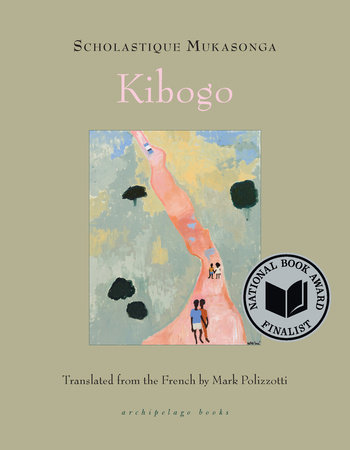
Kibogo by Scholastique Mukasonga

Kibogo by Scholastique Mukasonga

Kibogo reads like a gateway to a historical, colonial/postcolonial dreamscape. It reads like a fantastic reimagining of Chinua Achebe’s Things Fall Apart, but on a mythical, quasi-spiritual platform in Rwanda. It is inspiring as a work of decolonization, heart-wrenching as a historical fiction, a lyrical maze as a work of literature.

Like Things Fall Apart, Mukasonga’s Kibogo hinges on the binary opposition between the colonizer and the colonized, the imposition of Christianity on native peoples, and the annihilation of indigenous beliefs. But while similar to this famous predecessor, it is also unique in its own right. Kibogo is a nuanced novel. The Colonizer is not necessarily European and this point is pronounced. Sometimes — perhaps more than we would have wanted — the colonizer is our native neighbor, one of our own. Fanon was an astute observer of colonial culture; too often the enemy is a more intimate partner, the one who resides within. Mukasonga also draws a perforated line between Christian and Indigenous Belief; the characters and their stories reveal a more accurate historical account of colonization by highlighting how a syncretization of beliefs and practices is likely to have taken place.

This syncretization of cultures, beliefs, practices, and ideas is the heart of Kibogo. The novel is about the gradual development of a colonial culture, not through outright conquest, but through insidious means. Magic is a key component, a driving force that propels the stories to their ends. Ritual is the means by which the magic is released, and this is not only native Rwandan magic, but also European Christian magic, the kind imbued in holy water and Christian prayer. This lends Kibogo a mystical quality. The novel unfolds as would a myth; it is a fable about the meeting of Christian and Animist in Rwandan history. The characters are heroes, heroines, archetypes, and the plot moves forward through human and divine interventions. Each of Kibogo‘s four parts focuses on a particular character, as each of their stories builds upon the last to produce at the end a full view of Rwanda’s religious, spiritual, and colonial landscape.

This is not to say the characters are hollow; no, on the contrary, they are recognizable across colonial histories. For that reason Kibogo is larger than its central focus on colonization in Rwanda. This is a story that is recognizable in other African, Asian, Caribbean, South American, Australian, Pacific Island, and colonial contexts. Kibogo is centered and set in Rwanda, but it is a work of post-colonial literature for the rest of the “formerly” colonized world as well.

In short, a very thought-provoking work wrapped in beautiful, literary prose that unwinds like a yarn told late at night to children gathered around their grandmother’s hearth.

Cocoon: A Novel by Zhang Yueran

Cocoon: A Novel by Zhang Yueran

Yueran’s prose in Cocoon is to die for. I cannot express how effortless it was to read this book; opening it and laying eyes on the page was all I had to do and Yueran did the rest. It was like being carried on a gentle wave down a winding river.

That said, it was a very long, slow-moving river at times and often I found it hard to track with the direction Cocoon was taking me. I grasped that there was a mystery, but the typical sense of urgency a thriller engenders was missing here, lost in the literary focus on the characters and their interior narratives. It was, for me, both a deeply satisfying for that reason and also frustrating in that it wove around the plot circuitously. I still cannot decide how much I enjoyed the novel or the degree to which I was disappointed by it.

The novel spans three generations of two families, their histories twisted together by the events of China’s Cultural Revolution and communist regime. The characters have fallen into the chasms created by the divisive policies of the Cultural Revolution and it is their reconciliation with that fact which the reader witnesses. There are mundane tragedies: a father and son estranged by the shifting values, a marriage begun out of spite, a wife abused, a child abandoned. Then there is the mutual tragedy — a crime — which threatens both families’ futures, an act that arose out of the political climate of the Cultural Revolution. This is the great mystery of the novel. What was that horrific crime? Why and how could it traverse down through generations?

The two narrators are the 3rd, latest generation of these two families, the grandchildren of the Chinese Old Guard and the children of the “sent down” youths of the revolution. They are childhood friends and enemies simultaneously, caught in the mess of their families’ tragedy. The fallout of China’s cultural and political upheaval is told through their eyes. Through their perspective we see the actions and feel the torments of their parents and grandparents and the effect of these massive cultural shifts on familial cohesion.

They are the generation that grew out of and yet distant to China’s traumatic history. Theirs is a moment of a different upheaval: China’s return to a capitalist society, the abandonment of the austerity of the 1960s and 1970s. The novel dwells on their generation’s angst as well: the shifting ideas of sex, love, and success.

This is an epic multigenerational tale, filled with characters that are so perfectly flawed as to be real. The meandering path through their traumas, their lives, and their losses is well worth the long walk.

Lost in the Long March: A Novel by Michael X. Wang

Lost in the Long March: A Novel by Michael X. Wang

If you love multigenerational historical novels, the kind that invoke profound and simultaneous sensations of sadness, regret, and compassion or which bring to light uncomfortable truths about ourselves, our objects of love, our innermost desires, then Lost in the Long March is for you.

At first pass, Lost in the Long March did not grip me; the first few chapters were interesting, but did not give a clue to the deeper nuances that would come later. I am glad I persevered and read on; I was rewarded. By the last page I was very nearly in tears. There is deep heart-wrenching pain in this novel, the kind that is brought on by very common, mundane processes, in this case, the heartbreak of being a parent, the heart ache for the love of one’s child.

Wang’s novel is about the banal horrors of war; not the violence of combat, but the long arm of suffering that extends beyond the battlefield, long after the skirmish is over, when the victor is fooled by the passing of time into believing that they have won. They have not. Lost in the Long March revolves around the conflicts of the Chinese Civil War between the Kuomintang and the Communists (the Long March occurred in 1934-1935) and the Second Sino-Japanese War (1937-1945); but this is really a novel about compassion and humanity and the ways in which wars and political movements can destroy them or create situations for their manifestation. Friendship, love, connection, loyalty — the interconnections between people — this is the core of this novel.

It is Wang’s unwavering focus on this universal core of the human experience which makes the novel so powerful, so moving, so profound. Wang’s prose delivers the message with perfect pacing and with ease; the prose is succinct, but the words and the silences Wang leaves between them could cut open a vein with deadly accuracy. On occasion, it took this reader a moment or two to feel the new wound, so sharply and subtly were the words and their meaning delivered. By the time I reached the end of the novel, as Wang came to the story’s inevitable end, I was unsure if I could survive it. I will not give the ending away, but I will say that it did leave this reader in a state of metaphorical exsanguination.

Lost in the Long March is well-worth the grief. As with many good books, it is the heavy sense of loss they inflict which is the reader’s gain.