
Almost Brown: A Mixed Race Memoir by Charlotte Gill

Almost Brown: A Mixed Race Memoir by Charlotte Gill

As a historian I deeply appreciate Gill’s memoir, and for multiple reasons. Gill’s childhood experiences and those of her parents, captured from her memories and filtered through an adult lens retrospectively, highlights mid-twentieth century tensions of empire and our global journey towards decolonization. Moreover, Gill does it with a sensitivity to the internal, subjective conflict “colonials” often face as they grapple with their identities. The frustration of Self that Gill reveals to the reader, through her parents and her own struggles, is not an artifact of the past, singular to the decades of peak decolonization in the mid-twentieth century; these are still liminal spaces individuals occupy and traverse today.

In that respect, Gill’s memoir not only captures a particular zeitgeist of the 1950s-1980s — decades which saw a mass migration of colonials across the world, decolonization and independence movements coming to fruition, and a general cultural revolution across the world in terms of race, racism, and anti-paternalism — it also makes the reader aware of the continuity of this historical spirit and its legacy as it is lived today.

The success of this memoir is in large part due to Gill’s self awareness and willingness to see her parents (and herself) for the people they are; Gill examines them with an academic eye, as historical subjects, but also as emotional, affective beings whose desires and needs are universal across time and cultures. The result is a very relatable, human memoir, one which draws the reader into the nucleus of Gill’s family as well as the age in which they lived.

Some of Almost Brown‘s success must also be attributed to the fanciful and (for their time) outrageous characters her parents are, for the daring ways they each challenged the norms of their age in terms of race/racism, gender, and transnationality. This is where Gill’s memoir appeals to more than the smallish subset of readers whose interest is in post-colonial subjectivities; for while the memoir hinges on post-coloniality as its primary locus, it is also about the oppressions we inflict upon each other, the intersectionality of our daily lives, and the myriad of ways in which power flows or not even within a family. Gill’s mixed-race family serves as the perfect case study in which brown people and white people — that is, race — can be upended by gendered expectations, or vice versa. Gill’s white mother was submerged under her brown husband, even while he was marginalized by a society that saw him as inferior by dint of his skin color. She, in turn, was snubbed by both her husband and society for daring to be that which society deemed heroic: an independent-minded mother.

In short, Almost Brown is a memoir well worth the reading.
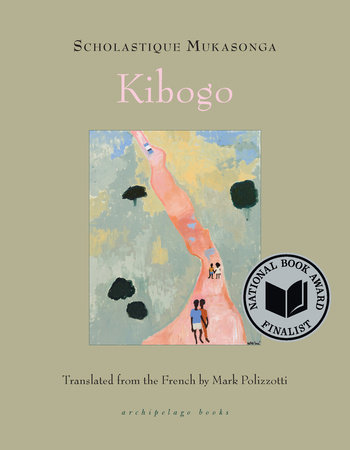
Kibogo by Scholastique Mukasonga

Kibogo by Scholastique Mukasonga

Kibogo reads like a gateway to a historical, colonial/postcolonial dreamscape. It reads like a fantastic reimagining of Chinua Achebe’s Things Fall Apart, but on a mythical, quasi-spiritual platform in Rwanda. It is inspiring as a work of decolonization, heart-wrenching as a historical fiction, a lyrical maze as a work of literature.

Like Things Fall Apart, Mukasonga’s Kibogo hinges on the binary opposition between the colonizer and the colonized, the imposition of Christianity on native peoples, and the annihilation of indigenous beliefs. But while similar to this famous predecessor, it is also unique in its own right. Kibogo is a nuanced novel. The Colonizer is not necessarily European and this point is pronounced. Sometimes — perhaps more than we would have wanted — the colonizer is our native neighbor, one of our own. Fanon was an astute observer of colonial culture; too often the enemy is a more intimate partner, the one who resides within. Mukasonga also draws a perforated line between Christian and Indigenous Belief; the characters and their stories reveal a more accurate historical account of colonization by highlighting how a syncretization of beliefs and practices is likely to have taken place.

This syncretization of cultures, beliefs, practices, and ideas is the heart of Kibogo. The novel is about the gradual development of a colonial culture, not through outright conquest, but through insidious means. Magic is a key component, a driving force that propels the stories to their ends. Ritual is the means by which the magic is released, and this is not only native Rwandan magic, but also European Christian magic, the kind imbued in holy water and Christian prayer. This lends Kibogo a mystical quality. The novel unfolds as would a myth; it is a fable about the meeting of Christian and Animist in Rwandan history. The characters are heroes, heroines, archetypes, and the plot moves forward through human and divine interventions. Each of Kibogo‘s four parts focuses on a particular character, as each of their stories builds upon the last to produce at the end a full view of Rwanda’s religious, spiritual, and colonial landscape.

This is not to say the characters are hollow; no, on the contrary, they are recognizable across colonial histories. For that reason Kibogo is larger than its central focus on colonization in Rwanda. This is a story that is recognizable in other African, Asian, Caribbean, South American, Australian, Pacific Island, and colonial contexts. Kibogo is centered and set in Rwanda, but it is a work of post-colonial literature for the rest of the “formerly” colonized world as well.

In short, a very thought-provoking work wrapped in beautiful, literary prose that unwinds like a yarn told late at night to children gathered around their grandmother’s hearth.