This novel was so fun to read, and with every one of the detective’s victories I felt like yelling out, “Go get it, girl!”
The novel revolves a young woman who has become India’s first police detective. The case of a lifetime is thrust — seemingly serendipitously — into her lap. But it’s a double-edged sword: she could either emerge from the fight triumphant, the murderer under her arrest, or lop her own head off and prematurely end her career before it even begins. But that isn’t the own tightrope she has to balance.
Malabar House is the name of her station, and its where — as a woman in a male-dominated career –she has to prove to herself, she is a worthy policewoman and Indian citizen and earn the obedience of her colleagues, if not their respect too. Obstacles of all sorts are thrown at her, some from within the ranks and others by those she thought would support her to the most. Betrayal lurks in wait for her everywhere.
It’s a very intriguing story, not only for the mystery at the root of the novel, but because it takes place at a critical moment in Indian history, just as the new nation is emerging from its colonial cage, when change is possible in all sorts of ways (for the better and for the worse), when Britain’s imperial secrets might be exposed under the lights of new India.
I enjoyed both threads of the story immensely. Unlike many postcolonial novels, which are dark and brooding and deeply serious Midnight at Malabar House was joyous and in parts, comedic (perhaps only in comparison). I felt vindicated each time our detective “won one” over her misogynistic colleagues or the corrupt officials who threatened to stand in her way. That said, readers should not expect to be only entertained; the traumatic history of India’s partition, the genocide of Muslims and Hindus, and other dark elements of British imperialism feature here. Post colonial literature is often tinged with some amount of sadness and trauma, justifiably, and this novel has its share of this.
I am not one for book series — I prefer standalone novels and duologies are my usual limit — but I wouldn’t mind reading another one in the Malabar House series at all.
I love, love, love stories about ways we decolonize — and Ladies’ Tailor is absolutely a tale of life unravelling and rebuilding in the post-colonial, post-Partition Era. Set in India and Pakistan in the era after Partition (post 1947), the novel follows a cast of characters as they try to find a new place for themselves, heal from the violence of the migration and the ethnic hatred, and build a new purpose and identity. The story begins with one man as he navigates his migration into India as a refugee. He’s not a hero — or even a particularly nice man. He is an ordinary man with dreams and hopes to open a shop for women’s clothes for women.
As he begins to establish himself in India, the novel’s landscape begins to widen and the reader is introduced to the man’s circle of new acquaintances and business contacts — as well as the obstacles and hardships of navigating in a new environment.
A central focus of the novel are the inevitable ties between Pakistan and India, between Muslims, Hindus, and Sikhs, and how unbreakable and crucial those relationships were (and are!) to a successful post-Partition rebuilding. As a cultural and social historian, this thread of the novel was especially profound; the characters in Ladies’ Tailor are not only navigating new spaces, but also trying to rebuild old traditions, re-create parts of their lives and heritages they have lost. The novel focuses intently on those tensions, and the flexibility required of individuals to be successful. And of course, things never quite turn out the way things are planned.
The story is not the sole attraction: Hajeela delivers the story with well-crafted, economical prose. The characters are fleshy and tangible. Sometimes they seem like unpleasant people, sometimes they are oblique to the reader in their motives. Hajeela’s characters are real, and indeed, the story is based on true events and real individuals.
As far as its textual style, readers should know Ladies’ Tailor is not reflective, subjective literary fiction; it is not deeply emotional (it does not dwell on the horrors of the Partition, even while it acknowledges this wrenching event) or focused on internal strife and struggle, but the collective efforts of a community. It is written in a commercial style, what I might categorize as “summer reading” but in the vein of historical fiction. Its subject matter is sombre and serious, but its delivery lightens the load readers might expect to carry.
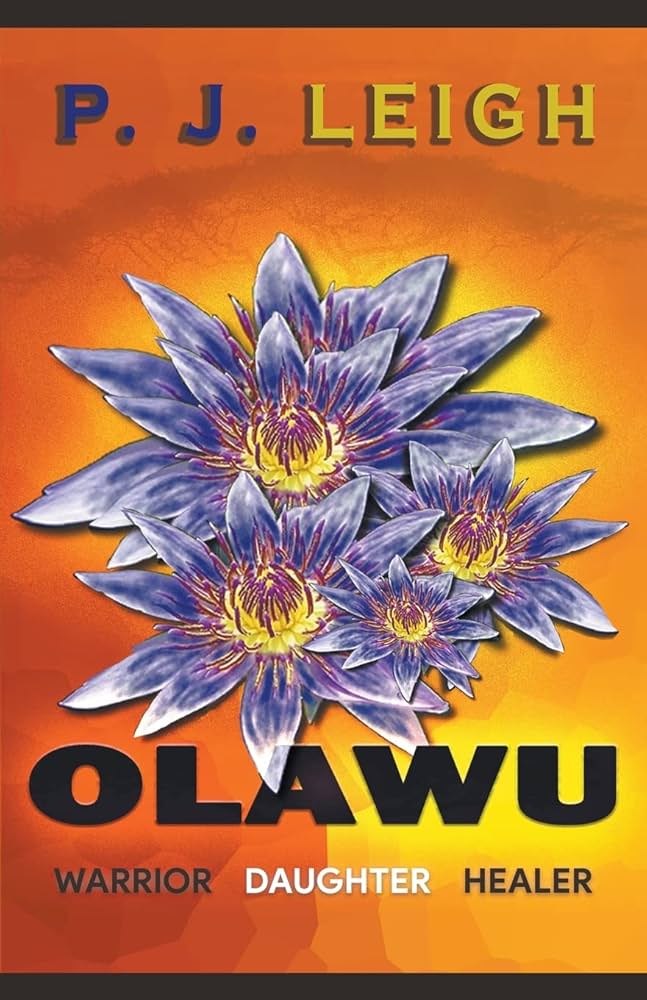
Olawu appealed to my longing for a postcolonial canon. It delivered — and then some. The novel is reminiscent of the work by Yaa Gyasi, Chinua Achebe, and Ngũgĩ wa Thiong’o; the language and the prose — sparse but evocative — is striking, the characters live and breathe, the story is inspiring. A whopping ⭐️⭐️⭐️⭐️⭐️ for this young adult historical romance/fiction.
This novel disrupts modern colonial culture (in which we all live) on multiple levels:
As an independently published novel by an author of color, Olawu is a challenge to the institution of traditional publishing and gatekeeping that that system engenders.
As a novel set in a pre-colonial East African world, Olawu highlights the existence of East Africa, its diverse peoples, kingdoms, and communities as independent from European history. We do not need to mark African time according to European histories and events.
The eponymous protagonist is a strong woman and the novel draws attention to the role of women in pre-colonial East African society. In doing so, Olawu challenges euro-centric notions of gender, especially those imposed on women and womanhood.
The incorporation of Xhosa, KiSwahili, and Zulu words, phrases, and culture into the text is an act of postcolonial defiance. Given the Colonial weaponization of language, this act of text is a rejection of the primacy of English.
The novel is an East African bildungsroman, it follows its eponymous protagonist, Olawu as she comes of age, becomes a young woman, and finds her place in the world as an adult. It unfolds in what might be seen as three parts. The first focuses on her childhood and ambitions — and how the community into which she is born and raised deems her inferior on the basis of her gender. The second exposes Olawu and the reader to other possibilities, how women might be valued and how womanhood might be performed elsewhere. This is also the part of the novel where she struggles to understand herself, her desires, and the inevitable tension between conformity and personal fulfillment, especially when the latter flies in the face of cultural norms. The last part is when Olawu decides who she will be and how she negotiates with that tension to achieve her objectives. Romance (not sex) is woven into this story about a young woman shaping herself and the world around her, serving as the scales which Olawu must balance and ultimately tip one way or another.
A number of themes thread through the novel from start to end: Olawu’s ambitions, the institutions and individuals who stand in her way, and her resilience and resistance against them. A major contributor to Olawu’s success in finding herself and her place in the world is her family, both biological and found. The proverb, “Umntu ngumtu ngabantu” (A person is a person because of other people) is an important element of the novel; Olawu does not accomplish what she does on her own, but through the kindness, love, and sacrifice of others.
Olawu‘s success as a novel is also due to Leigh’s incisive and evocative prose, and well-crafted characters. Leigh’s prose reminds me of Things Fall Apart; the writing is succinct and sharp, absent of flowery and unnecessary description. Leigh focuses on the characters, letting the reader organically create an image. The characters are distinctive and recognizable; their flaws — even Olawu’s — mirror our own, making the reader sympathize with all of them, even when they are at odds with one another.
The result is a highly character-driven, powerful coming of age story.
Leigh’s depth of research must also be commended. While the novel does not draw from specific East African pre-colonial history, it is evident Leigh has researched the region’s precolonial political systems, structures, and gender history. I especially appreciated the inclusion of glossary terms and pronunciations at the beginning of the book.
This is a fantastic read for all young people, but especially young women of color who need to see themselves represented decolonizing/post colonial literature like this.
I encountered Olawu through a Facebook group I’m in, where I serve as a reviewer of (mostly) independently published books. Organized by the admins of this group, the review event takes place bimonthly, and involves reviewers submitting a short biography to the organizer. Authors who are looking for reviews of their work reply to the organizer, selecting the reviewer of their choice. Reviewers then select which authors and books they’d agree to review based on the descriptions of the books.
If you would like to read Olawu yourself, you can find it here on Amazon. It is 318 pages and the paperback is currently priced at $14.99 and the Kindle ebook at $8.99.
Translated by Pao-fang Hsu, Ian Maxwell, and Tung-jung Chen.
Puppet Flower: A Novel of 1867 Formosa by Yao-Chang Chen.
A historian’s historical novel! Puppet Flower is a narrative novel based on real events, a watershed moment in Taiwanese (Formosan) history when the United States and Western colonizing powers begin to encroach on Taiwan in earnest. The novel begins with an unfortunate event, wherein an American ship encounter one of Formosa’s indigenous tribes after surviving a storm at sea. The surviving crew — including a woman — are murdered by the Formosans, triggering a series of investigations and the arrival of more Western ships and military.
What makes Chen’s novel special in this genre of historical fiction is that Western perspectives are well-balanced with indigenous ones. It is rare to encounter fiction focused on Taiwan’s indigenous community, historical or otherwise; in highlighting their unique experience here Chen offers readers and the world at large a rare and unique literary opportunity. The result is a fantastic novel that — in my opinion — would do well in the classroom for a number of reasons aside from its historical focus:
The story arc is peppered with references and information about Formosan culture, providing a context for the historical events themselves. Unlike many historical novels, which rarely explain the cultural references they point to, Chen writes for the non-expert.
Puppet Flower offers multiple perspectives rather than focusing on a single protagonist. In this case, the novel allows us to see the event from an indigenous and Western point of view.
The prose is straightforward and not superciliously literary, making this an ideal undergraduate book; it does not require a great deal of knowledge about literary tropes, metaphors, and other devices typically used in novels. This is, truly, a history novel.
Overall, a novel of great historical value, not only in terms of its content, but in its production. This is decolonization at work, a piece of scholarship that highlights the indigenous perspective, a view of the imperial encounter from those who were colonized.
This novel devastated me. And in the most profound and satisfying way. I could not put this book down; despite being a hefty read at 368 pages I devoured it in a weekend. This novel is a serious contender for my Book of The Year.
Razak’s Moth is set in Partition era India and Pakistan, the former mostly. Its events unfold in the year leading up to India’s independence in 1947 and the year directly after it, a violent and terrible time when Muslim Indians and Hindu Indians violated each other’s homes, families, bodies, and holy places of worship. Moth does not shy away from the terror or the brutality of this history; its story is premised on gendered violence, sexual violence, the kind wrought on women and girls before and since Partition.
This is not a novel for the faint of heart. Readers should prepare to feel chilled to their marrows at the cruelty Razak lays bare.
At the same time, Moth is an empowering read. This is a feminist novel. Not only is it told from the perspective of a young girl desperate to become a woman, Alma, it revolves around the actions of the women in her life and in her community. Alma comes from a high caste Brahmin family, a pair of progressive-minded parents who are highly-educated and who view their India as a place of ethnic, class, and caste equality. But Alma is a victim of her own immaturity and her Brahmin, Hindu grandmother’s ambitions and traditionalism. The history of India at this junction of conflict between colonial rule and independence, Hindu and Muslim segregation or peace, traditionalism or modernity plays out in Alma’s family’s words and deeds. The story opens and hinges upon Alma’s wedding to a Brahmin man, much older than herself.
Here is the first of the gendered debates the reader will encounter in this novel. Marriage, in its traditional and modern forms, the domains of power which men and women occupy — according to their familial rank, their class, their caste, they religion — is one of the fascinating, golden threads of this novel. Alma’s mother is unique in her historical time and place: She is a lecturer at a university, she works. Her marriage to Alma’s father is a foil to to the other marriages in the novel where wives are beaten, raped, abused in other myriad ways.
Moth is also compelling for its frank discussions of caste and class. Ethnicity, religion, race, nativism and xenophobia also serve as the fabric on which the patterns of its stories are told. While Moth is a historical fiction, these threads are visible in India today; this is not merely a fiction of the past, but also a commentary on Indian politics and society right now. Moth is truly an intersectional novel, one which weaves history into the present, one whose characters are shaped by their age, their experiences, religion, gender, ethnicity, and caste.
The characters are complex and developed. Even Razak’s villains are soft and vulnerable. In this novel no one is who they seem, even to themselves. The primary cast consists of Alma’s immediate and servile family: Her father whom we meet mostly as Bappu, simply, “father” and her Ma, named Tanisi; her sister, fondly nicknamed, Roop; her paternal grandmother, a matriarch in their home and her dead husband, the ghost of her Alma’s grandfather, a silent but present and poignant character in the events of the novel; their servants, Dilchain, a Hindu woman and Fatima Begum, a Muslim woman.
Religion and culture shape these characters, give them their reasons for compliance and rebellion, motivate them in their actions. Community expectations and subjective desires come into conflict within these characters, in some cases these poles are reconciled or exist in uneasy harmony. Razak places the reader in the midst of palpable, relatable characters who walk us through their lives as if we were there in the room with them. In Razak’s prose we can taste India, envision the hot sun and the colors of its markets and streets, feel the moisture of sweat and floral fragrance on our skin. Razak brings the reader so close to the characters we might detect their bodily scent or feel their eyes on our skin. In the characters’ actions and thoughts we, the readers, can recognize universal needs and motivations: teenage longing, maternal affection, filial piety, desire for belonging and approval — even while we are treated to a view into a world that is not our own, one that is past and gone, an India of long-ago and far-away.
That said, Moth is brilliant in its nuanced portrayal of India and Indian life and culture. It rejects the exoticism that so often plagues Indian literature, colonial and postcolonial alike. Instead its honest portrayal of Indian people and their experiences connect them to others; we may not know anything of the first hand experience of war, but through Moth we get a real feel for what that might look like, feel like, smell like. Razak’s India is a terrible, beautiful place. Its people are inhuman and yet, all the more human for their cruelty. In these pages the reader will encounter suffering, but, also inspiration. I was awed by the strength of the women and men in Moth. I felt hope, even while I cried as a witness to their pain. They were transformed by their experiences, in good and bad ways.
Moth highlights the catalytic effect of history in the most bitter-sweet way. This is a book you will regret and never regret reading.
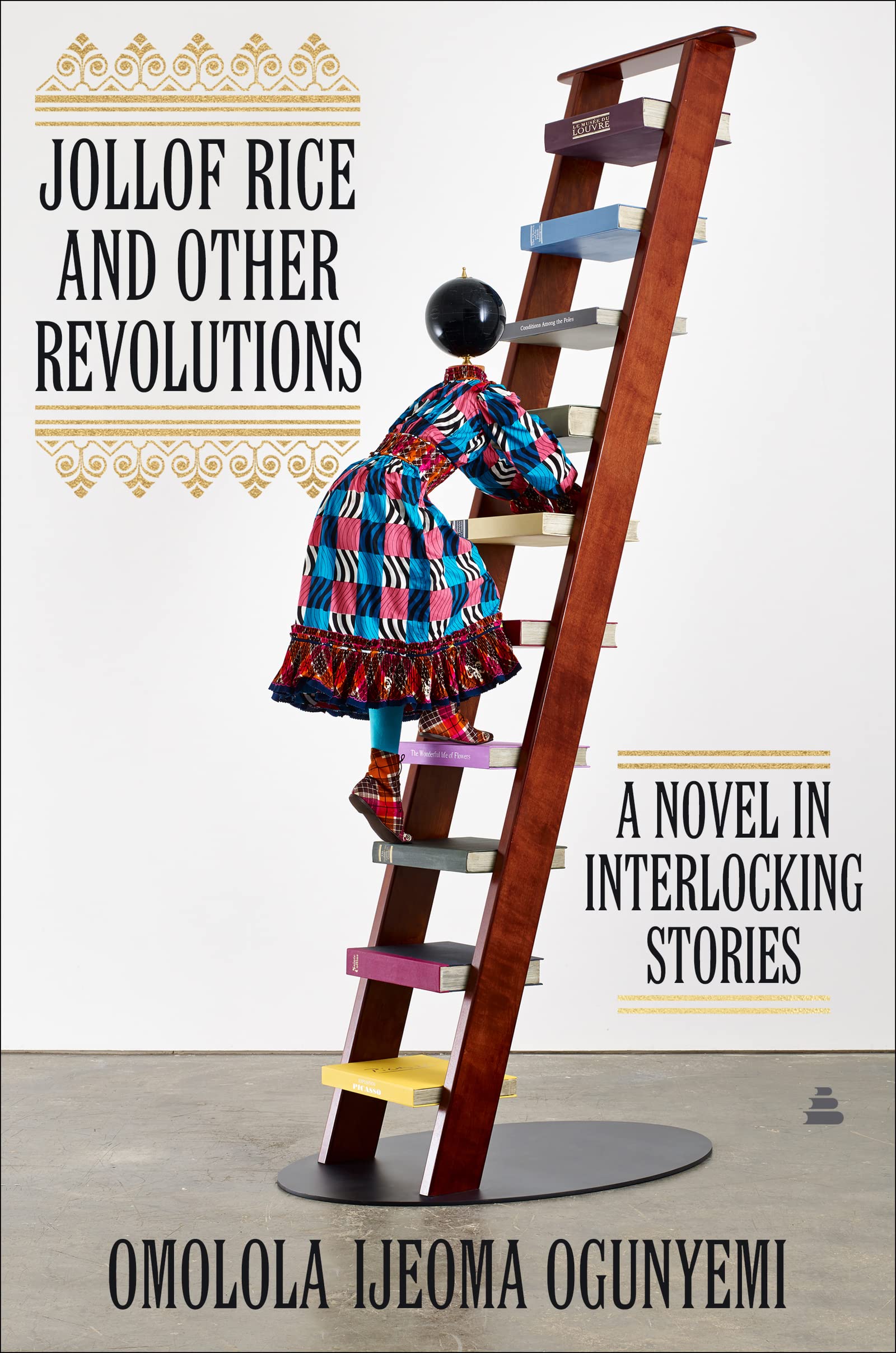
Jollof Rice and Other Revolutions: A Novel in Interlocking Stories by Omolola Ijeoma Ogunyemi
Jollof rice is the stuff my dreams are made of. The whiff of tomato, chili, white-, and black pepper, piquant and nose-tickling, the aroma of ginger and garlic and onion. Jollof is West African, but the recipe and desire for it is universal. In my case my dreaming mind classifies jollof rice as nasigoreng, Malaysian style with Maggi’s cili sos, a sweet and spicy ketchup. Chunks of browned chicken thighs, that crust of flesh and crispy skin, dotted with red grains of rice.
Coming from a rice-eating culture I like to think of myself as a specialist in the business of rice-eating and rice dishes. As a historian and reader of postcolonial literature and archival text, I like to think myself an expert in those domains too. But, I remain amazed by what I do not know; there is always a new rice dish, a new recipe, a new flavor to make my tongue and memories alight. There is always a new perspective, a newly discovered history, another layer of human experience to see, enjoy, and revel in.
Ogunyemi’s Jollof Rice and Other Revolutions is that new rice dish, that new revelation. You see, the stories in Ogunyemi’s novel are like jollof rice, grains tossed together, held together in harmony by a dry sauce. Sweet and salty and spicy, a mouthful of emotions that are sometimes in conflict, sometimes piquant, but always in balance.
The novel is familiar and comforting in its focus on men and women of color, their lives indelibly part of the muss and tumble of Nigerian marketplaces, cities, and villages, so similar to those in Southeast Asia, where chickens are still sold live, butchered and feathered at the time of purchase. A place where fish and seafood lie on slabs of ice that are slowly sweating like the people haggling with each other over their prices. There is the aroma of overly sweet fruit in the air: jack fruit (in Southeast Asia anyway), bananas, some kind of incense. There is smoke and pungent exhaust from a motorbike put-put-putting away. A glot of languages rumbles in the background, ever-present as there is no reprieve for the ears in places like these: dialects, pidgins, mix-n-matches of accents and lilts. On occasion there is a puncture of British English (always British it seems), and a few heads turn to see the foreigner. (It is usually me.) Like a Nigerian market place, Jollof Rice and Other Revolutions is dominated by women and their stories; men are present, they form part of the fabric of the novel, but it is the women and their experiences who thread the pattern and the connections between motifs in its cloth.
Jollof Rice and Other Revolutions is a collection of Nigerian and transnational Nigerian, historical and contemporary experiences, spanning from a time under the British and under British influence (for Britishness and Western-centrism continued even after decolonization) to the present — and here is where it gets really interesting — the future. Ogunyemi’s novel recalls to mind another like it, Yaa Gyasi’s Home Going (2016), but it differs on this particular point: Ogunyemi reaches into the future and lets the reader dwell on our current states through poignant examinations of the present.
Jollof Rice ranges across multiple generations, includes the lives of members of different and intertwined families. The reader is given a glimpse into the past when precolonial gender relations were more fluid. The reader accompanies characters in their education under the British, travels with them as they become transnational cosmopolitans, and will find themselves in the uncomfortably familiar place of racialized, racist America. The reader will find themselves in a near future moment, built on the present and past as we know it.
Sometimes, alongside the odor of modernity and vehicle exhaust, there is a faint scent of history and the supernatural, that which exists beyond the usual plane of our understanding. This is like biting down on a pepper seed in your rice, getting that jolt of zing on the tongue. You can’t be sure if it was a seed or a pepper or a tiny grit of sand. You hope it was the former and not the latter, but then the moment is gone, the thing is swallowed and you continue on with your meal, with your life. The next story is waiting on your spoon. I deeply appreciated how Ogunyemi wove these elements into the novel; what the West deems supernatural is not so in many parts of the “formerly” colonized world. Spirits, ghosts, and memory were part of our cultures before and remain so.
Ogunyemi’s characters and their experiences are what give the novel its unique quality. The characters connect to each other through their shared experiences in schools, in migration, in marriage and love, in childhood and navigating adulthood, in how they reconcile their colonial pasts with their “post”colonial presents and futures. Ogunyemi brings the Nigeria of the past into the present and future through their transnational and transcultural journeys. The characters are related by bonds which are sometimes considered casual; in Jollof Rice unbreakable relationships are broken, death is a cause for life, and disappointment is a gateway to revival. In this way, Ogunyemi delivers to the reader the nuances of human love and its endurance across time and space, makes a case for their eternal universality.
Jollof Rice and Other Revolutions makes me want to grab a friend and say, “You must try this! It’s new!” And how special must it be, that it has taken the old topic of history and identity and made an original spin on it!





 Dr JoAnn LoSavio