
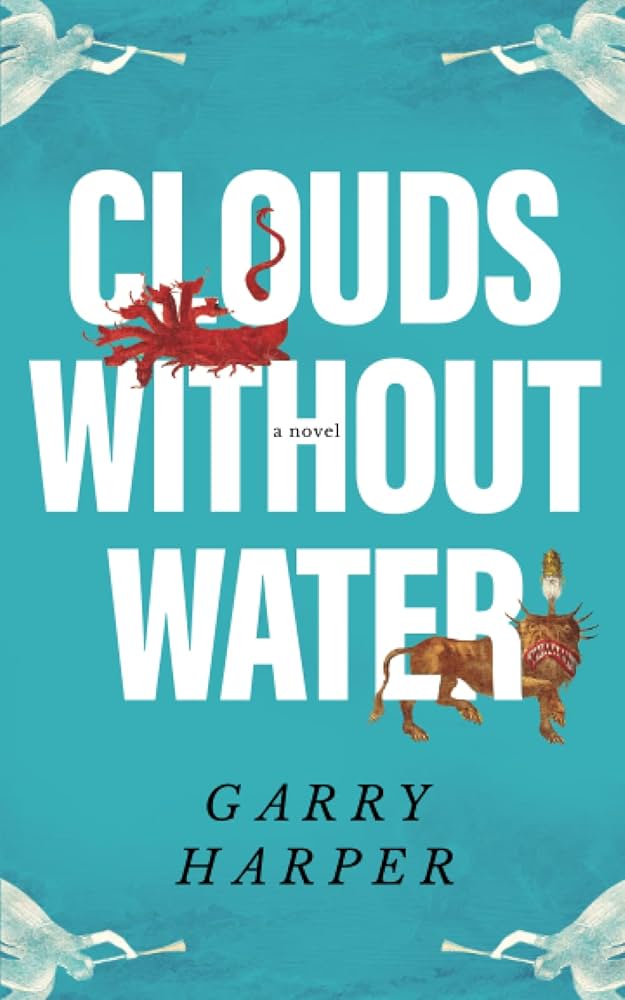
Clouds Without Water was a slow burn for me, but it did burn bright — especially in the second half — compelling me to keep reading to discover what happens to Calvary and its more independent-minded denizens.
The novel is a fiction around true events, The Millerite Movement of 1844, in which the Second Coming of Christ and the end of the world was predicted for October 22nd 1844, and The Great Disappointment, when the predicted end did not materialize. Delivered in two parts, Clouds Without Water delivers a portrayal of the community and town at the epicenter of these events, Calvary, NY, where the Millerite Movement begins under the direction of its eponymous leader, Reverend William Miller. Part One focuses on the rise of Miller’s influence, Part Two on what happens when the Apocalypse fails to occur, the subsequent social fallout.
The story the novel promises is fascinating. But Harper’s prose… Well, this was the novel’s “great disappointment.” Harper is heavy-handed in Part One, and the voice behind the writing feels biblical in a supercilious sort of way. There is a plodding sensation, an awkwardness in Part One. Harper has a penchant for long or obscure words, wordy words: “concatenation”, “incredulity”, “entropy”, which made the prose dense and feel overly structured. The characters, so vibrant in Part Two, are underdeveloped in Part One. Indeed, I DNFed this book three times before reading it a fourth time, and completing it.
Although the novel is, particularly in Part One, pedantic the strength of Harper’s story and his characters do seed a tension which prevailed on this reader to keep reading. Interestingly, the Reverend Miller himself is almost a supporting figure in this novel; though he is the hinge around which the movement develops and Harper deftly crafts his portrayal of Miller’s fervor and charisma, the reader does not witness events through his eyes. Indeed, we are never treated to an internal view of Miller’s mind or heart. The result is a rather one-dimensional Reverend.
That said, while Miller is somewhat flattened, Harper’s other characters shine and are fleshy representations of people most readers would recognize: the Smith family headed by Henry, his children Abigail, Rosemary, and Benji, the town doctor, Dr Clarke, its newspaperman, Josiah Young, Marigold Chandler, descendent of the town’s founders, and Nathaniel Hawthorne, who owns the general store. It is through these characters’ eyes that the reader is treated to a deeply disturbing facet of religious passion. Part Two draws and holds the reader because of them.
Overall, Clouds Without Water delivers.

 Dr JoAnn LoSavio