Clouds Without Water: A Novel by Garry Harper

Clouds Without Water: A Novel by Garry Harper

Clouds Without Water was a slow burn for me, but it did burn bright — especially in the second half — compelling me to keep reading to discover what happens to Calvary and its more independent-minded denizens.

The novel is a fiction around true events, The Millerite Movement of 1844, in which the Second Coming of Christ and the end of the world was predicted for October 22nd 1844, and The Great Disappointment, when the predicted end did not materialize. Delivered in two parts, Clouds Without Water delivers a portrayal of the community and town at the epicenter of these events, Calvary, NY, where the Millerite Movement begins under the direction of its eponymous leader, Reverend William Miller. Part One focuses on the rise of Miller’s influence, Part Two on what happens when the Apocalypse fails to occur, the subsequent social fallout.

The story the novel promises is fascinating. But Harper’s prose… Well, this was the novel’s “great disappointment.” Harper is heavy-handed in Part One, and the voice behind the writing feels biblical in a supercilious sort of way. There is a plodding sensation, an awkwardness in Part One. Harper has a penchant for long or obscure words, wordy words: “concatenation”, “incredulity”, “entropy”, which made the prose dense and feel overly structured. The characters, so vibrant in Part Two, are underdeveloped in Part One. Indeed, I DNFed this book three times before reading it a fourth time, and completing it.

Although the novel is, particularly in Part One, pedantic the strength of Harper’s story and his characters do seed a tension which prevailed on this reader to keep reading. Interestingly, the Reverend Miller himself is almost a supporting figure in this novel; though he is the hinge around which the movement develops and Harper deftly crafts his portrayal of Miller’s fervor and charisma, the reader does not witness events through his eyes. Indeed, we are never treated to an internal view of Miller’s mind or heart. The result is a rather one-dimensional Reverend.

That said, while Miller is somewhat flattened, Harper’s other characters shine and are fleshy representations of people most readers would recognize: the Smith family headed by Henry, his children Abigail, Rosemary, and Benji, the town doctor, Dr Clarke, its newspaperman, Josiah Young, Marigold Chandler, descendent of the town’s founders, and Nathaniel Hawthorne, who owns the general store. It is through these characters’ eyes that the reader is treated to a deeply disturbing facet of religious passion. Part Two draws and holds the reader because of them.

Overall, Clouds Without Water delivers.
Kibogo by Scholastique Mukasonga

Kibogo by Scholastique Mukasonga

Kibogo reads like a gateway to a historical, colonial/postcolonial dreamscape. It reads like a fantastic reimagining of Chinua Achebe’s Things Fall Apart, but on a mythical, quasi-spiritual platform in Rwanda. It is inspiring as a work of decolonization, heart-wrenching as a historical fiction, a lyrical maze as a work of literature.

Like Things Fall Apart, Mukasonga’s Kibogo hinges on the binary opposition between the colonizer and the colonized, the imposition of Christianity on native peoples, and the annihilation of indigenous beliefs. But while similar to this famous predecessor, it is also unique in its own right. Kibogo is a nuanced novel. The Colonizer is not necessarily European and this point is pronounced. Sometimes — perhaps more than we would have wanted — the colonizer is our native neighbor, one of our own. Fanon was an astute observer of colonial culture; too often the enemy is a more intimate partner, the one who resides within. Mukasonga also draws a perforated line between Christian and Indigenous Belief; the characters and their stories reveal a more accurate historical account of colonization by highlighting how a syncretization of beliefs and practices is likely to have taken place.

This syncretization of cultures, beliefs, practices, and ideas is the heart of Kibogo. The novel is about the gradual development of a colonial culture, not through outright conquest, but through insidious means. Magic is a key component, a driving force that propels the stories to their ends. Ritual is the means by which the magic is released, and this is not only native Rwandan magic, but also European Christian magic, the kind imbued in holy water and Christian prayer. This lends Kibogo a mystical quality. The novel unfolds as would a myth; it is a fable about the meeting of Christian and Animist in Rwandan history. The characters are heroes, heroines, archetypes, and the plot moves forward through human and divine interventions. Each of Kibogo‘s four parts focuses on a particular character, as each of their stories builds upon the last to produce at the end a full view of Rwanda’s religious, spiritual, and colonial landscape.

This is not to say the characters are hollow; no, on the contrary, they are recognizable across colonial histories. For that reason Kibogo is larger than its central focus on colonization in Rwanda. This is a story that is recognizable in other African, Asian, Caribbean, South American, Australian, Pacific Island, and colonial contexts. Kibogo is centered and set in Rwanda, but it is a work of post-colonial literature for the rest of the “formerly” colonized world as well.

In short, a very thought-provoking work wrapped in beautiful, literary prose that unwinds like a yarn told late at night to children gathered around their grandmother’s hearth.

The White Mosque: A Memoir by Sofia Samatar

The White Mosque: A Memoir
by Sofia Samatar

Mennonites? In Uzbekistan? The premise of this book caught me instantly, and I was rewarded for my curiosity. Samatar’s white mosque in The White Mosque is a Mennonite church located in the heart of a Muslim community in Central Asia. Perhaps this reveals a biased tendency on my part; the juxtaposition of the Mennonites in Central Asia suggests an irresistible, exotic historical account.

That — in part — is what Samatar delivers, but the memoir is more than that. The White Mosque is also about the embodiment of a Christian/Muslim, Foreign/Autochthon juxtaposition within Samatar via their experience of living as a Somali-German American Mennonite, a second-generation immigrant in a largely White American community. In one sense, Samatar is a “white mosque” in her academic and personal worlds, as unique and unusual as a pilgrimage of German-speaking Mennonites trekking into Uzbekistan.

The White Mosque begins and ends with Samatar’s touristic, scholarly pilgrimage to Uzbekistan in search of these European Mennonites who traversed that path over a century ago. It is a guided tour. Mennonites, non-Mennonites, tourists, and heritage-seekers accompany Samatar; their observations contribute to this memoir and help shape Samatar’s embodied experience of being a Mennonite of color. The White Mosque also treks back in time, not only through this unique tangent of 19th century Mennonite history, but into Samatar’s past as a child of a Somali father and a German-American mother and as a graduate student. The memoir flickers to the present too: Samatar as an accomplished researcher in pursuit of scholarship.

Indeed, what The White Mosque delivers to the reader is less a historical account, and more a commentary on the present moment, a moment in which cultural-ethnic-religious-racial juxtapositions are worth examination because of the violent divisions in our world along those same lines. This memoir suggests that a closer, more nuanced examination of such transcultural connections, persons, histories, and experiences is worthwhile because they are not as anomalous as they might initially seem.

Midway through reading it, The White Mosque forced me to reconsider why I was attracted to the premise of this book: Were the Mennonites so unusual in their pilgrimage? Is the idea of a European Christian sect in Central Asia such an exotic thing? Haven’t such transcultural phenomena occurred all throughout history? …. Mmm. Well-played, well-played. As a historian, a humanist, and an anthropologist, I know that no human phenomenon should be surprising; we have been criss-crossing, mixing, transgressive and transcultured throughout our history. But The White Mosque makes that point poignant, brings it to the forefront cleverly and gently through personal memory, subjective experience, and beautiful prose.

For that reason alone The White Mosque is worth reading.

“Children of God” (25:17)

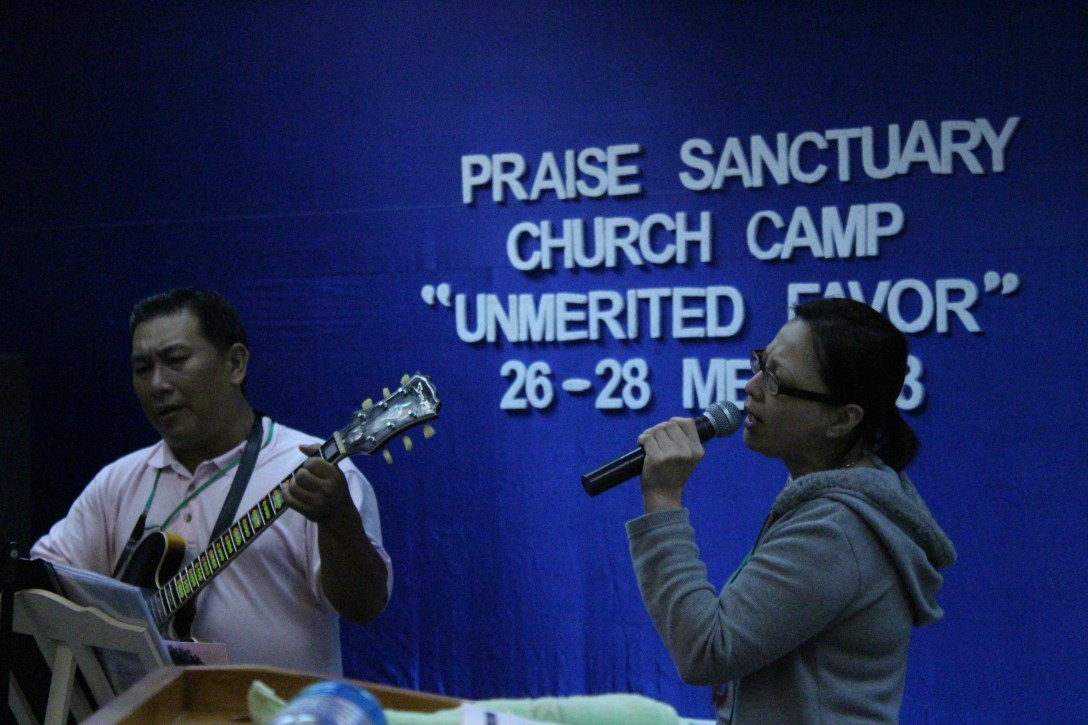
In the Summer of 2013 I did an anthropology pilot study that resulted in the making of “Children of God”, an ethnographic, observational film about a non-denominational Christian church group in Kuala Lumpur, Malaysia. Every year they go on a retreat, as a way to build fellowship and for members of the church to renew their faith.

Here’s my blurb from my Vimeo site: “For a few days every year, the congregation of the Praise Sanctuary Church retreats from the city of Kuala Lumpur (Malaysia) to the nearby seaside resort town of Port Dickson. It is an event; its purposeful itinerary aims to foster fellowship amongst the church members and to allow each to individually convene with God. This short film is about their 2013 annual retreat and the way in which they experience being “God’s children”.”

And here’s the film. Again, comments and feedback are always welcome.