This novel was so fun to read, and with every one of the detective’s victories I felt like yelling out, “Go get it, girl!”
The novel revolves a young woman who has become India’s first police detective. The case of a lifetime is thrust — seemingly serendipitously — into her lap. But it’s a double-edged sword: she could either emerge from the fight triumphant, the murderer under her arrest, or lop her own head off and prematurely end her career before it even begins. But that isn’t the own tightrope she has to balance.
Malabar House is the name of her station, and its where — as a woman in a male-dominated career –she has to prove to herself, she is a worthy policewoman and Indian citizen and earn the obedience of her colleagues, if not their respect too. Obstacles of all sorts are thrown at her, some from within the ranks and others by those she thought would support her to the most. Betrayal lurks in wait for her everywhere.
It’s a very intriguing story, not only for the mystery at the root of the novel, but because it takes place at a critical moment in Indian history, just as the new nation is emerging from its colonial cage, when change is possible in all sorts of ways (for the better and for the worse), when Britain’s imperial secrets might be exposed under the lights of new India.
I enjoyed both threads of the story immensely. Unlike many postcolonial novels, which are dark and brooding and deeply serious Midnight at Malabar House was joyous and in parts, comedic (perhaps only in comparison). I felt vindicated each time our detective “won one” over her misogynistic colleagues or the corrupt officials who threatened to stand in her way. That said, readers should not expect to be only entertained; the traumatic history of India’s partition, the genocide of Muslims and Hindus, and other dark elements of British imperialism feature here. Post colonial literature is often tinged with some amount of sadness and trauma, justifiably, and this novel has its share of this.
I am not one for book series — I prefer standalone novels and duologies are my usual limit — but I wouldn’t mind reading another one in the Malabar House series at all.
Fire Exit is a punch in the heart, the kind of novel that really does leave you heart-sore for a long time afterward.
The novel revolves around and is narrated through a man who is white and, in adulthood, was removed from his residency on an Indian reservation. His eviction and his whiteness separates him from his daughter, and from the life and culture he grew up with on the reservation. Fire Exit is the story of this man grappling with his identity as an outsider, and a story of those on the inside — Indians — who are themselves still in the process of sorting through the legacy of settler colonialism and the co-called Civilizing Mission against them. Fire Exit highlights the fluidity of identity, but also the rigid barriers which define it within ourselves and by others imposed on us. The novel exposes the messiness of relationships, especially in indigenous communities which have been so ravaged by racism and colonial ideologies.
I am reminded again how singular it is that indigenous people of North America are some of the few peoples on earth who must continually prove who they are. I recently read a piece in the New Yorker on Pretendians (typically white people who claim indigenous heritage or identity) and am struck by both the necessity of proof and how exhausting it must be as a human being. It saddens and inspires simultaneously.
The ever-present trauma of colonialism is a burden we cannot put down, any of us; and the pursuit of decolonization can never end. For that reasonI am loving this wave of indigenous literature; though not “new,” it feels like indigenous writers and stories are getting more mainstream attention, reaching new audiences (like myself) who find solace and inspiration in them.
But, back to Fire Exit.
Though I cannot know what this is for indigenous people, I can say that as this is also a story about family, what it is to be a family, what is it to act out and perform family, I felt connected to a kind of universal understanding of “family” in my reading of it.
Talty is such a fantastic writer. The words just come together, like lyrics that feel familiar and yet woven together, produce a song I haven’t heard before. The mothers and fathers, daughters and sons in this novel are people we can connect with, and yet, as those living in reservations or on the edges of them, they have a unique life experience, one that I do not know (cannot know, really). I feel that Talty has made it possible for me to feel a little bit of their experience.
I love, love, love stories about ways we decolonize — and Ladies’ Tailor is absolutely a tale of life unravelling and rebuilding in the post-colonial, post-Partition Era. Set in India and Pakistan in the era after Partition (post 1947), the novel follows a cast of characters as they try to find a new place for themselves, heal from the violence of the migration and the ethnic hatred, and build a new purpose and identity. The story begins with one man as he navigates his migration into India as a refugee. He’s not a hero — or even a particularly nice man. He is an ordinary man with dreams and hopes to open a shop for women’s clothes for women.
As he begins to establish himself in India, the novel’s landscape begins to widen and the reader is introduced to the man’s circle of new acquaintances and business contacts — as well as the obstacles and hardships of navigating in a new environment.
A central focus of the novel are the inevitable ties between Pakistan and India, between Muslims, Hindus, and Sikhs, and how unbreakable and crucial those relationships were (and are!) to a successful post-Partition rebuilding. As a cultural and social historian, this thread of the novel was especially profound; the characters in Ladies’ Tailor are not only navigating new spaces, but also trying to rebuild old traditions, re-create parts of their lives and heritages they have lost. The novel focuses intently on those tensions, and the flexibility required of individuals to be successful. And of course, things never quite turn out the way things are planned.
The story is not the sole attraction: Hajeela delivers the story with well-crafted, economical prose. The characters are fleshy and tangible. Sometimes they seem like unpleasant people, sometimes they are oblique to the reader in their motives. Hajeela’s characters are real, and indeed, the story is based on true events and real individuals.
As far as its textual style, readers should know Ladies’ Tailor is not reflective, subjective literary fiction; it is not deeply emotional (it does not dwell on the horrors of the Partition, even while it acknowledges this wrenching event) or focused on internal strife and struggle, but the collective efforts of a community. It is written in a commercial style, what I might categorize as “summer reading” but in the vein of historical fiction. Its subject matter is sombre and serious, but its delivery lightens the load readers might expect to carry.
Almost Brown: A Mixed Race Memoir by Charlotte Gill
As a historian I deeply appreciate Gill’s memoir, and for multiple reasons. Gill’s childhood experiences and those of her parents, captured from her memories and filtered through an adult lens retrospectively, highlights mid-twentieth century tensions of empire and our global journey towards decolonization. Moreover, Gill does it with a sensitivity to the internal, subjective conflict “colonials” often face as they grapple with their identities. The frustration of Self that Gill reveals to the reader, through her parents and her own struggles, is not an artifact of the past, singular to the decades of peak decolonization in the mid-twentieth century; these are still liminal spaces individuals occupy and traverse today.
In that respect, Gill’s memoir not only captures a particular zeitgeist of the 1950s-1980s — decades which saw a mass migration of colonials across the world, decolonization and independence movements coming to fruition, and a general cultural revolution across the world in terms of race, racism, and anti-paternalism — it also makes the reader aware of the continuity of this historical spirit and its legacy as it is lived today.
The success of this memoir is in large part due to Gill’s self awareness and willingness to see her parents (and herself) for the people they are; Gill examines them with an academic eye, as historical subjects, but also as emotional, affective beings whose desires and needs are universal across time and cultures. The result is a very relatable, human memoir, one which draws the reader into the nucleus of Gill’s family as well as the age in which they lived.
Some of Almost Brown‘s success must also be attributed to the fanciful and (for their time) outrageous characters her parents are, for the daring ways they each challenged the norms of their age in terms of race/racism, gender, and transnationality. This is where Gill’s memoir appeals to more than the smallish subset of readers whose interest is in post-colonial subjectivities; for while the memoir hinges on post-coloniality as its primary locus, it is also about the oppressions we inflict upon each other, the intersectionality of our daily lives, and the myriad of ways in which power flows or not even within a family. Gill’s mixed-race family serves as the perfect case study in which brown people and white people — that is, race — can be upended by gendered expectations, or vice versa. Gill’s white mother was submerged under her brown husband, even while he was marginalized by a society that saw him as inferior by dint of his skin color. She, in turn, was snubbed by both her husband and society for daring to be that which society deemed heroic: an independent-minded mother.
In short, Almost Brown is a memoir well worth the reading.
The Last Colony: A Tale of Race, Exile, and Justice from Chagos to the Hague by Philippe Sands
A brilliant legal historical monograph. I am tempted to use these in my classroom, except the course it would be relevant for is a lower division course and the depth and nuance of the book is too dense — and therefore unsuitable — for my typical first year cohort. Nonetheless, this is a book I would love to re-read and reconsider for a future course.
The core of this legal history focuses on Chagos, an island formerly French, then sold out from under its inhabitants to serve as a military outpost. These inhabitants, its natives, were forcibly removed and prevented from returning. Sands exposes the reader not only to the specific events of this case, but the larger political context around it: the slow and unwilling demise of European empires and their hold over their colonies, the heat of the Cold War, a long history of legal maneuvers played with cards held only by those with power.
Sands’ monograph is well written; its delivery is succinct, direct, and accessible, though I think it is better suited to an academically inclined reader than the general adult reader. It packs a punch in few pages; a fast-flowing torrent of information that propels and compels the reader to keep apace.
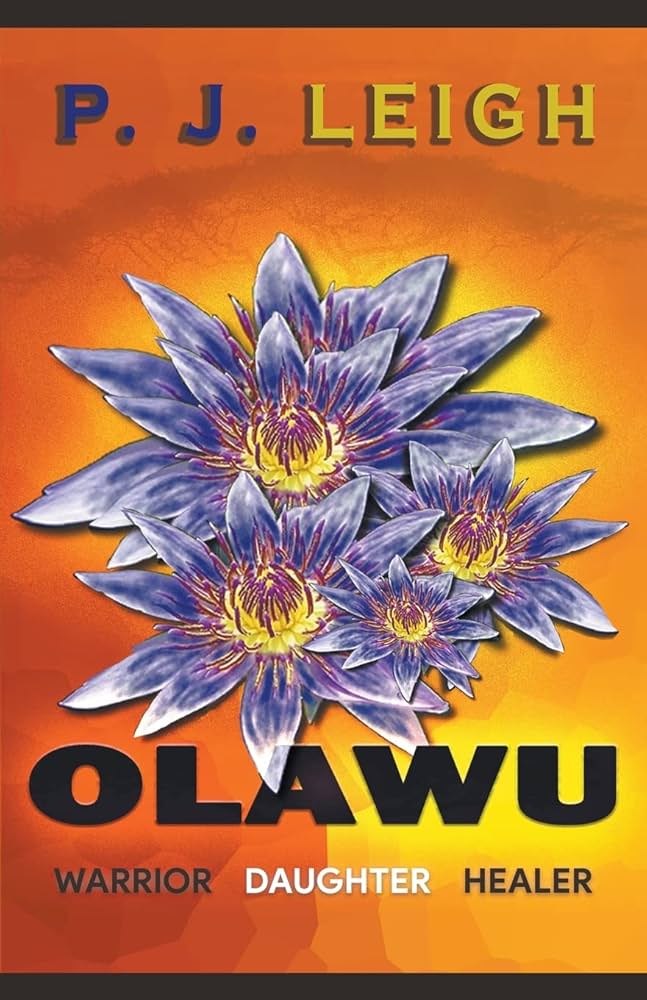
Olawu appealed to my longing for a postcolonial canon. It delivered — and then some. The novel is reminiscent of the work by Yaa Gyasi, Chinua Achebe, and Ngũgĩ wa Thiong’o; the language and the prose — sparse but evocative — is striking, the characters live and breathe, the story is inspiring. A whopping ⭐️⭐️⭐️⭐️⭐️ for this young adult historical romance/fiction.
This novel disrupts modern colonial culture (in which we all live) on multiple levels:
As an independently published novel by an author of color, Olawu is a challenge to the institution of traditional publishing and gatekeeping that that system engenders.
As a novel set in a pre-colonial East African world, Olawu highlights the existence of East Africa, its diverse peoples, kingdoms, and communities as independent from European history. We do not need to mark African time according to European histories and events.
The eponymous protagonist is a strong woman and the novel draws attention to the role of women in pre-colonial East African society. In doing so, Olawu challenges euro-centric notions of gender, especially those imposed on women and womanhood.
The incorporation of Xhosa, KiSwahili, and Zulu words, phrases, and culture into the text is an act of postcolonial defiance. Given the Colonial weaponization of language, this act of text is a rejection of the primacy of English.
The novel is an East African bildungsroman, it follows its eponymous protagonist, Olawu as she comes of age, becomes a young woman, and finds her place in the world as an adult. It unfolds in what might be seen as three parts. The first focuses on her childhood and ambitions — and how the community into which she is born and raised deems her inferior on the basis of her gender. The second exposes Olawu and the reader to other possibilities, how women might be valued and how womanhood might be performed elsewhere. This is also the part of the novel where she struggles to understand herself, her desires, and the inevitable tension between conformity and personal fulfillment, especially when the latter flies in the face of cultural norms. The last part is when Olawu decides who she will be and how she negotiates with that tension to achieve her objectives. Romance (not sex) is woven into this story about a young woman shaping herself and the world around her, serving as the scales which Olawu must balance and ultimately tip one way or another.
A number of themes thread through the novel from start to end: Olawu’s ambitions, the institutions and individuals who stand in her way, and her resilience and resistance against them. A major contributor to Olawu’s success in finding herself and her place in the world is her family, both biological and found. The proverb, “Umntu ngumtu ngabantu” (A person is a person because of other people) is an important element of the novel; Olawu does not accomplish what she does on her own, but through the kindness, love, and sacrifice of others.
Olawu‘s success as a novel is also due to Leigh’s incisive and evocative prose, and well-crafted characters. Leigh’s prose reminds me of Things Fall Apart; the writing is succinct and sharp, absent of flowery and unnecessary description. Leigh focuses on the characters, letting the reader organically create an image. The characters are distinctive and recognizable; their flaws — even Olawu’s — mirror our own, making the reader sympathize with all of them, even when they are at odds with one another.
The result is a highly character-driven, powerful coming of age story.
Leigh’s depth of research must also be commended. While the novel does not draw from specific East African pre-colonial history, it is evident Leigh has researched the region’s precolonial political systems, structures, and gender history. I especially appreciated the inclusion of glossary terms and pronunciations at the beginning of the book.
This is a fantastic read for all young people, but especially young women of color who need to see themselves represented decolonizing/post colonial literature like this.
I encountered Olawu through a Facebook group I’m in, where I serve as a reviewer of (mostly) independently published books. Organized by the admins of this group, the review event takes place bimonthly, and involves reviewers submitting a short biography to the organizer. Authors who are looking for reviews of their work reply to the organizer, selecting the reviewer of their choice. Reviewers then select which authors and books they’d agree to review based on the descriptions of the books.
If you would like to read Olawu yourself, you can find it here on Amazon. It is 318 pages and the paperback is currently priced at $14.99 and the Kindle ebook at $8.99.
Translated by Pao-fang Hsu, Ian Maxwell, and Tung-jung Chen.
Puppet Flower: A Novel of 1867 Formosa by Yao-Chang Chen.
A historian’s historical novel! Puppet Flower is a narrative novel based on real events, a watershed moment in Taiwanese (Formosan) history when the United States and Western colonizing powers begin to encroach on Taiwan in earnest. The novel begins with an unfortunate event, wherein an American ship encounter one of Formosa’s indigenous tribes after surviving a storm at sea. The surviving crew — including a woman — are murdered by the Formosans, triggering a series of investigations and the arrival of more Western ships and military.
What makes Chen’s novel special in this genre of historical fiction is that Western perspectives are well-balanced with indigenous ones. It is rare to encounter fiction focused on Taiwan’s indigenous community, historical or otherwise; in highlighting their unique experience here Chen offers readers and the world at large a rare and unique literary opportunity. The result is a fantastic novel that — in my opinion — would do well in the classroom for a number of reasons aside from its historical focus:
The story arc is peppered with references and information about Formosan culture, providing a context for the historical events themselves. Unlike many historical novels, which rarely explain the cultural references they point to, Chen writes for the non-expert.
Puppet Flower offers multiple perspectives rather than focusing on a single protagonist. In this case, the novel allows us to see the event from an indigenous and Western point of view.
The prose is straightforward and not superciliously literary, making this an ideal undergraduate book; it does not require a great deal of knowledge about literary tropes, metaphors, and other devices typically used in novels. This is, truly, a history novel.
Overall, a novel of great historical value, not only in terms of its content, but in its production. This is decolonization at work, a piece of scholarship that highlights the indigenous perspective, a view of the imperial encounter from those who were colonized.
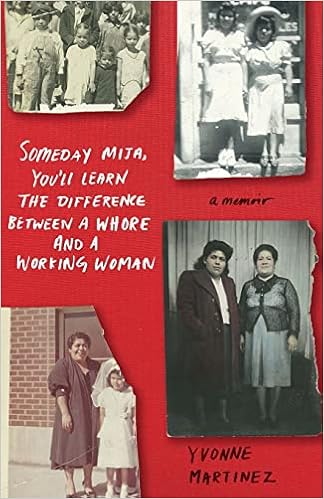
Someday Mija, You’ll Learn the Difference Between a Whore and a Working Woman: A Memoir by Yvonne Martinez
This is an intensely powerful memoir; Martinez’s life is a scar tissue of intergenerational wounds. Someday Mija, You’ll Learn the Difference Between a Whore and a Working Woman is a serious treatment of what the traumas of racial violence, poverty, and sexual exploitation can do to a child and a family, and how Yvonne was able to weave these histories — her own, her mother’s, her grandmother’s, her family’s and her community’s — into a lifetime of “doing better.” This is not a memoir to be undertaken lightly.
Celebrate Hispanic Heritage, September 15th to October 15th — but also, whenever and always!
Someday Mija, You’ll Learn the Difference Between a Whore and a Working Woman is divided into two halves, the first reads like a novel and documents Martinez’s experiences as a child and growing up in a dysfunctional family. The second half addresses Yvonne’s life afterward, as an adult and specifically as an activist in the service of her community, as an organizer, and educator.
The two halves are intertwined: it is Martinez’s experiences growing up in an abusive and violent home that shapes her ability to understand the traumas that envelop her community. This shared experience is one not easily addressed by public health programs or the simple piling on of more and more education. Oppressive systems stemming from cultures steeped in patriarchy, sexual violence, and colonization cannot be wiped away, even replaced that easily. These cultures exist within even larger systems of oppression.
In Martinez’s case, however, these experiences also spurred them to take on systemic racism, sexism, violence, and poverty as institutions to be dismantled. This is a case of an individual working from within, for one’s own community (and for all communities). Change must be internal as well as external for it to sustain; Martinez’s life is proof of that.
A profound and consuming memoir that is in equal parts disturbing, sad, and inspiring.
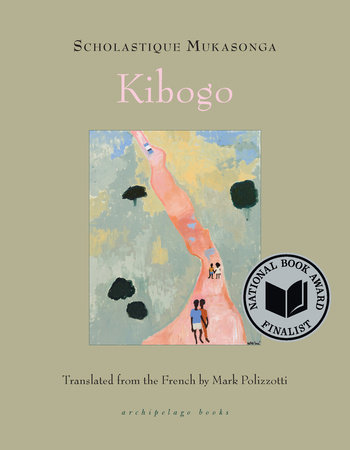
Kibogo reads like a gateway to a historical, colonial/postcolonial dreamscape. It reads like a fantastic reimagining of Chinua Achebe’s Things Fall Apart, but on a mythical, quasi-spiritual platform in Rwanda. It is inspiring as a work of decolonization, heart-wrenching as a historical fiction, a lyrical maze as a work of literature.
Like Things Fall Apart, Mukasonga’s Kibogo hinges on the binary opposition between the colonizer and the colonized, the imposition of Christianity on native peoples, and the annihilation of indigenous beliefs. But while similar to this famous predecessor, it is also unique in its own right. Kibogo is a nuanced novel. The Colonizer is not necessarily European and this point is pronounced. Sometimes — perhaps more than we would have wanted — the colonizer is our native neighbor, one of our own. Fanon was an astute observer of colonial culture; too often the enemy is a more intimate partner, the one who resides within. Mukasonga also draws a perforated line between Christian and Indigenous Belief; the characters and their stories reveal a more accurate historical account of colonization by highlighting how a syncretization of beliefs and practices is likely to have taken place.
This syncretization of cultures, beliefs, practices, and ideas is the heart of Kibogo. The novel is about the gradual development of a colonial culture, not through outright conquest, but through insidious means. Magic is a key component, a driving force that propels the stories to their ends. Ritual is the means by which the magic is released, and this is not only native Rwandan magic, but also European Christian magic, the kind imbued in holy water and Christian prayer. This lends Kibogo a mystical quality. The novel unfolds as would a myth; it is a fable about the meeting of Christian and Animist in Rwandan history. The characters are heroes, heroines, archetypes, and the plot moves forward through human and divine interventions. Each of Kibogo‘s four parts focuses on a particular character, as each of their stories builds upon the last to produce at the end a full view of Rwanda’s religious, spiritual, and colonial landscape.
This is not to say the characters are hollow; no, on the contrary, they are recognizable across colonial histories. For that reason Kibogo is larger than its central focus on colonization in Rwanda. This is a story that is recognizable in other African, Asian, Caribbean, South American, Australian, Pacific Island, and colonial contexts. Kibogo is centered and set in Rwanda, but it is a work of post-colonial literature for the rest of the “formerly” colonized world as well.
In short, a very thought-provoking work wrapped in beautiful, literary prose that unwinds like a yarn told late at night to children gathered around their grandmother’s hearth.
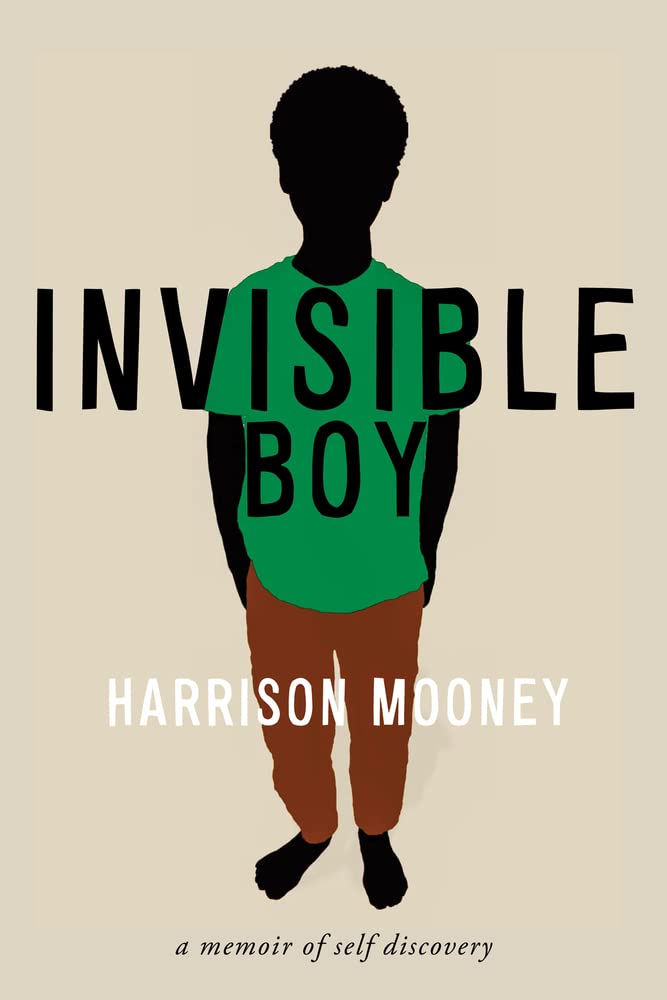
Invisible Boy: A Memoir of Self Discovery by Harrison Mooney
Holy not-so-micro-aggressions. Holy GASLIGHTING. Invisible Boy was incredibly difficult to read without weeping. Every time Harry’s mother or other family members gaslighted him I wanted to scoop him out of the pages of his past and take him far, far away to people who would love him as he is, for who he is, for what he is.
I cry for all the children, teenagers, people who are where he was right now.
For all its pain, I do not regret reading Invisible Boy… because the pain embedded in Harrison Mooney’s past is insidious, latently seething, and all too common still. Decolonization is an eternal task, its end is nowhere in sight. Memoirs and works like Invisible Boy remain relevant and necessary in our collective, societal process towards decolonization. Like Fanon’s Black Skin, White Masks, Mooney’s Invisible Boy is a call to action. It is a reminder that we still need a rebellion of the mind and soul.
Invisible Boy relates the path of Mooney’s awakening to his race and the ways in which racism hides behind a myth of colorlessness. It begins with his childhood and ends in his early adulthood. His memoir exposes to the reader how racism seethes in the most intimate places, in the places it should not exist — in this case, within a family. Families are supposed to be safe. They are supposed to be supportive, loving, nurturing. Invisible Boy tells a sad tale of how racism is the silent reaper within, turning the sanctuary of the family into an emotional, mental prison.
What makes Mooney’s Invisible Boy unique from other works like it (Sam Selvon’s Lonely Londoners, George Lamming’s novels, Franz Fanon’s memoirs and works, James Baldwin’s calls to action, among others) is Mooney’s attention to a community that is little attended to: adoptees of color with white adopted families. As in Mixed-Race Superman, Will Harris’ essay on the transcultural ways of being mixed race, Invisible Boy highlights a different kind of process of decolonization that confronts adoptees of color in white families and white communities that hold onto racist beliefs.
I do not know if I can re-read Invisible Boy for the sake of my own peace as a person of color who has grappled with my own decolonization; but, I am glad I read it at least once and I am privileged to have the ability to choose to only read it once. I am privileged to have been given a rare glimpse into another’s experience of racial awakening. I am privileged that my own decolonization was less traumatic. In truth, Invisible Boy is a book that demands re-reading and reading again. One day I will summon enough courage to read it again.




 Dr JoAnn LoSavio