Eisenhower Babies: Growing Up On Moonshots, Comic Books, and Black-and-White TV by Ronnie Blair

Eisenhower Babies: Growing Up On Moonshots, Comic Books, and Black-and-White TV by Ronnie Blair

This memoir set in the immediate decades after WWII is a portrait of white, working-to-middle-class America from a cultural and social perspective. While Blair touches on some of the political history of this moment, they stop short of delivering an analysis or deep commentary on the upheavals of the 1940s, 50s, and 60s. These decades saw the beginnings and rise of social movements that challenged gender norms, race and racism, notions of equity and so on, but this memoir confines itself to a more modest objective: the texture of growing up and coming of age in rural, white America.

Blair’s memoir begins with himself and his community, a small rural town in Kentucky, but expands to cover the whole of white, working class American life across the upper South and Midwest. Chapters take on the subject of roadtrips and church-going, Halloween, the thrill of television, Little League baseball, high school, and living in a small town, among many other things. Interspersed with larger historical moments are Blair’s singular experiences: having an alligator live next door, or a church named after the family, for example. Each chapter is a capsule of the moment and Blair’s own family history and life; their experience serves as the prosopographical platform on which they comment on the cultural past. This is a so-called “boomer” memoir, highlighting a shiny, seemingly golden moment in American history.

This memoir records one aspect of American Identity with well-crafted prose. The tone is humorous in some chapters, yet possesses gravity in others. Like the ebbs and flows of life, some episodes warrant a light approach, others require seriousness. Blair segues from one to another with ease. The result is a smooth and immersive read.

Blair succeeds in delivering a landscape of their experience of the American Past. Its pop culture references and highlighting of (some) common American experiences in public schooling, Judeo-Christian holidays and celebrations, and working-class struggles offer a fleshy sense of how people experienced life in these decades.

The Half Known Life: In Search of Paradise by Pico Iyer

The Half Known Life: In Search of Paradise
by Pico Iyer

Memoir. History. Travelogue. In this book, Iyer seeks out ways in which paradise exists on earth and in the human imagination. The result is a global journey, one which peels back the multiple images and meanings the word “paradise” evokes.

Divided into three parts, The Half Known Life delves headfirst into the various ways humanity has dreamed of paradise, understood and interpreted it. Part one takes on the Islamic, Iranian version of paradise and its manifestation on earth, the notion of a “promised land” in whatever subjective form that may be. Part two has a spiritual, religious slant; faiths offer the incentive of a paradise, whether earthly or otherworldly. Iyer scatters his ink wide from Damascus to Ethiopia to the Shangri-La of the Himalayas. The Half Known Life explores Judeo-Christian views, Buddhist perspectives, indigenous ideas of what heaven may be or could be or is. Part three takes the conversation to the dark side: the afterlife, the question of time and if paradise is a time or a place.

Musings. Memories. Philosophies. The Half Known Life is a collection of ideas, all aimed toward this notion of paradise, whether geographical or psychological or paranormal. This is a work of philosophical significance and a view into how our world views the places of our desires (a paradise on earth) and our sense of what comes after life ends and where we go (heaven, for lack of a better word).

Rough Sleepers: Dr Jim McConnell’s Urgent Mission to Bring Healing to Homeless People by Tracy Kidder

Rough Sleepers: Dr Jim McConnell’s Urgent Mission to Bring Healing to Homeless People by Tracy Kidder

Living in the urban PNW, homelessness is a very real, very visible flaw in our society, something that shows up in the local news daily. Encampments dot the city I live and work in, transient individuals spend their days roaming the streets I drive. Last semester I encountered students in my own classroom who were in middle of housing crises and were facing housing insecurity. [I helped them get set up with Passport, a housing insecurity program for students my campus offers.] I often wonder about those students who didn’t come forward or reach out to me and I hope they got the help they needed elsewhere.

Rough Sleepers is the book I needed to read. It is the book many of us need to read. I’m glad for the opportunity to have done so; I won this book in a Goodreads Giveaway and I am so pleased to have been selected.

Rough Sleepers revolves around a specific case study of homeless assistance, Dr Jim McConnell and the Street Team, who operate in, for, and with Boston’s homeless population. Kidder spent a number of years observing and interviewing McConnell and the Street Team, as well as other stakeholders — including homeless individuals — before compiling the book. The assistance program that is the focal point of Rough Sleepers has spanned decades and continues to do so, with the help of private donors. As a result of Kidder’s breadth and ethnographic method, Rough Sleepers possesses an intimate grassroots perspective; readers will feel like they’re along for the midnight van rides, sitting in the clinic with individuals like Tony and Rebecca. The voices of those involved is clear, even as they are filtered through Kidder’s lens.

Kidder also provides the reader with historical, social, and political context, allowing the reader to view the issue of homelessness as both a personal lived experience and a larger community concern. Federal and state administrations and policies, along with a capitalist system, have contributed to the problem of housing insecurity; the lives Kidder gives us a glimpse into show how the good intentions and limitations of government have inadvertently exacerbated homelessness in so many ways. In one case, the peripatetic movements that kept a homeless man safe at night made him ineligible to apply for housing as a “chronically homeless” individual.

For this reader, the stories of real people like Tony and Rebecca who lived and slept on the streets, were the most moving of those Kidder collected. These real-life cases strip the abstraction from homelessness as a societal issue. McConnell’s interviews also provide insight, from the perspective of an activist with decades of deep involvement. The Street Team and fund-raising observations give readers a view into the mechanics and politics of activism around this problem.

Readers should expect to feel discomfort, but this is not due to anything Kidder does; indeed, Kidder refrains from inserting supercilious remarks — to their credit! It is my opinion as a reviewer that this dissonance is the objective of Rough Sleepers. We, as readers, can (dare I say, ought to?) use the discomfort this book raises to mobilize our actions or reconsider their philosophies towards homelessness. Certainly, this book has given me cause to pause and think.

A Coastline Is an Immeasurable Thing: A Memoir Across Three Continents by Mary Alice Daniel

A Coastline Is an Immeasurable Thing: A Memoir Across Three Continents
by Mary Alice Daniel

A moving transcultural, transnational memoir in the vein of Enough: A Memoir of Mistakes, Mania, and Motherhood by Amelia Zachry, The White Mosque: A Memoir by Sofia Samatar, or Homebound: An Uprooted Daughter’s Reflections on Belonging by Vanessa A. Bee about a woman of mixed national heritage seeking her place in our increasingly transcultural, transethnic world.

In Daniel’s case, she moves from Nigeria on the coast of West Africa to England, and from there, to the United States. Across the span of three geographic zones, she also crosses into and between multiple cultures: Nigerian, Black-British, Black-American, coming to terms with herself as a bit of everything. Intersected between the racial and ethnic lines are the class lines and linguistic lines Daniel must also negotiate. This is a story of code-switching across multiple planes.

This is also a universal coming-of-age story about how we come to understand perceptions of ourselves from within and beyond ourselves. Who we are is not a singular explanation, but one refracted through a prism, the final view is ultimately dependent on the eye of the beholder and the position where they stand. What Daniel’s highlights in this memoir is both how dependent this view is on historical, cultural, class and geographic context.

For readers who enjoy memoirs and those which trace the processes of identity change, this is a winner.

The Education of Augie Merasty: A Residential School Memoir by Joseph Auguste Merasty and David Carpenter

The Education of Augie Merasty: A Residential School Memoir
by Joseph Auguste Merasty and David Carpenter

Every memoir is significant, on the basis that it documents a part of the human experience — and in the end, what do have if not an experience of life? In the context of the universe, this is what makes our existence unique — but there are some memoirs, some human experiences that possess a weightiness absent in others. That is, they reveal a humanity that transcends individual experience. The Education of Augie Merasty is one of these memoirs.

The cruel history of colonial settlement isn’t newly discovered — but it was hidden, deliberately and systematically for centuries. In the past fifty years and much more recently, excavations of memories, land, and archives have revealed the depth to which this erasure was taken. Merasty’s memoir is one of these excavations. [My Name is Seepeetza by Shirley Sterling (30th Anniversary Edition) is another memoir of residential schools and colonialism in Canada I’ve read this year, if you’re interested.]

I have an especial interest in these kinds of historical documents, not only as a historian of decolonization, but as an educator; the utility of the historical documents in the classroom are invaluable to convey the real effects of racism, colonialism, the power of the state in shaping our lives. Students often see the government as some kind of abstracted, remote thing, a hovering object over their lives that merely casts a shadow every once in awhile. Memoirs of this nature reveal how wrong that assumption is; the state is neither above nor below, it is embedded in every part of our lives and beings — even our DNA and the genomes that make up ourselves and our ancestry have been shaped by states and power. The Education of Augie Merasty is proof of the depth of the state in shaping human experience.

What makes The Education of Augie Merasty poignant is not only the memories he shares with the reader, but the whole of the story of this memoir’s making. The convoluted path and necessary involvement of the writer, David Carpenter — who serves as historian here — is a testament to the damage and legacy of settler colonialism in North America. The incompleteness of the stories, the silences and gaps in time and memory, as well as Augie’s language, preserved here by Carpenter, are evidence of the zigzag pathway that history is recorded, preserved, interpreted and ultimately used. As a tool to teach historical methodology, The Education of Augie Merasty is a fantastic case study.

The chronology of the memoir too, in the way it links the past to the present, is invaluable. Too often students see history as a static, buried thing of the past. That myth is a hard one to kill. But kill it we must, because history is not only the root of the present, it is also a reflection of our present selves and world. That is a key characteristic of history: Carpenter’s presence in these pages and the unresolved ending (unlike many memoirs, this is not posthumously produced) help to deliver this lesson.

Other aspects of the memoir make it even more perfect for classroom and course use: its length is short, its language is accessible, its story is compelling and shocking. The absence of larger historical events occurring in Canada and the world are also bonuses here too, allowing the instructor to compliment the text as appropriate to the course level.

Merasty’s memoir is one I will be considering for use in my courses.

Unquiet Spirits: Essays by Asian Women in Horror Edited by Angela Yuriko Smith & Lee Murray

Unquiet Spirits: Essays by Asian Women in Horror
Edited by Angela Yuriko Smith & Lee Murray

I honestly wasn’t sure what to expect from this collection: Modern horror? Literary criticism? Traditional tales of terror? It intrigued me regardless.

What Unquiet Spirits delivers is a combination of all of the above. It is memoir, criticism, history, and ethnography in balanced fusion. Each chapter is written by an Asian female author and in it she discusses both her own writing, the cultural and historical inspiration for her characters, the origins of some feminine demon, ghost, or creepy — a unquiet spirit — which haunts her and the pages she has produced. In some chapters the author draws on a deeper well of literature of the past and ponders the future of the female spirit archetype that is the focus of their chapter.

The books is divided by and devotes its pages equally to feminine spirits across the Asian continent, from East to Southeast to South Asia. I was pleasantly surprised to see such attention given to Southeast Asian spirits and archetypes (my favorite was always the pontianak, the evil spirit of a woman who lurks in the dark under the protection of a banana tree. In my recollection, she can be “pinned” to the tree with a needle or a pin and made to do the pin-holder’s bidding. But, beware to that horrid individual if the offending metal is ever removed!)

While the collection examines different demons and feminine archetypes from across a swath of very diverse cultures, it ultimately makes a singular, united appeal to the reader. Their call to action is unmistakable: Asian women, as a whole, alive or dead, demonic or angelic, monstrous or victimized, are powerful beings. Asian women have been too long overlooked in the literary world and deserve more than the whispered, submissive voice they have been too long assigned by Orientalists; hear them shout, scream, screech!

For that reason alone, Unquiet Spirits is worth reading. But there is more.

The authors reveal facets of the Asian feminine that have rarely been visible, that is to Western audiences. To Asian women, we have always known they were there, even when our patriarchal societies told us to ignore them, to castigate them, to revile these demonic women as ill-influences on ourselves and our communities, yet still, Unquiet Spirits is sure to deliver novelties and new knowledge to Asian/Asian American readers.

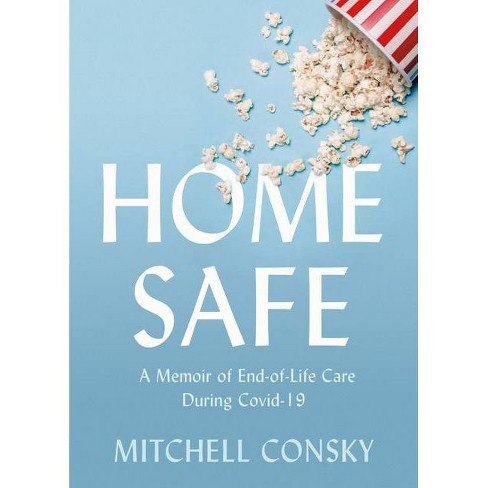
Home Safe: A Memoir of End-Of-Life Care During Covid-19 by Mitchell Consky

Home Safe: A Memoir of End-Of-Life Care
During Covid-19
by Mitchell Consky

This memoir was a bit out of character for me; but, I’ve been reading quite a few memoirs this year and this one caused me to pause. Is it too soon to read about Covid-19? We’re not quite past it yet, are we? Given that Covid-19 remains looming in so many places and may very well make a comeback, I figured it might help my own healing to read about someone else’s pandemic experience. Admittedly, mine was mild, privileged, and uneventful in comparison to so many millions of others on this planet. What did others feel? How did others live through this? We talked amongst each other, but too often we said a lot of nothing to avoid the anxiety that a deeper, more nuanced conversation could too easily trigger.

From a historian’s perspective, memoirs like this — indeed, the millions of posts, tweets, blog posts, articles, stuff — that we produced in the past few years say something poignant about this strange and traumatic moment in our individual and collective lives. What was this moment in our history? Memoirs give us entrée into others’ internal lives, see how others experienced this.

Consky’s account of the past couple of years, encompassing the dying and death of his father and others, delivered on both points. What was living and dying in the pandemic like?

But readers should not expect a litany of statistics or a step-by-step replay of WHO’s or the American CDC’s decisions and policies. This is a memoir, a deeply personal and individualized account of a global experience. Death is always subjective, always individual, always very personal. Readers should not expect this book to discuss everyone’s experience of Covid-19. The deaths in this book are not coronavirus related deaths necessarily; this book is about the non-pandemic deaths that occurred during the past two years. Ordinary life and ordinary death did not pause for the pandemic. Pandemic deaths eclipsed the distress of other kinds of deaths, but only insofar as their appearance in the news, social media, public forums. The trauma of those passings remained, but was invisible in contrast.

That said, this book is about life too. It is about resilience and the ways in which we communicate those important things in life that need to be said and done before death makes it impossible to do so. This memoir is about memory, not only Consky’s but those of his father’s and the surviving friends and family of those who lost loved ones — during the pandemic and at other times too. Life and death during the pandemic of 2020-2022 was unique in our lifetimes, but also… not. Life and death was also familiar… too familiar? Scarily familiar. Comfortingly familiar. I cannot decide. Neither can Consky, I think.

This book is also about memorializing and the ways in which we do this, for ourselves and for the dead. One act struck me in particular: when a group of friends gathered their memories of another among them who had passed away and gave the resultant artifact to the deceased’s family. This book is about how we can commune over death, that common event, that inevitable process that erases (or should) differences and animosities among us.

The end of life care Consky refers to? I think he means us, the surviving family members and friends of the ones who have passed away. For that reason, the book transcends the pandemic. The pandemic is (was?) a great thing, a momentous thing, but life and death will go on with or without it.

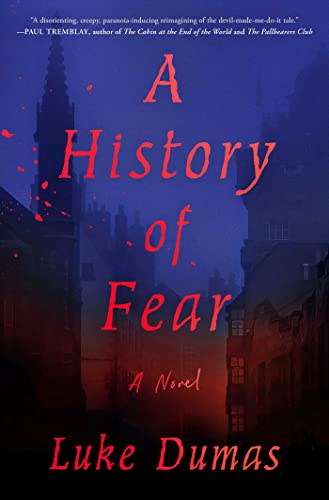
A History of Fear: A Novel by Luke Dumas

A History of Fear: A Novel
by Luke Dumas

By page three, I was hooked. The ending comes to a perfect, organic conclusion — but I readily admit that if Dumas writes a sequel, I’m all in.

A History of Fear unfolds like Stoker’s Dracula, adopting an epistolary approach, delivering the story via journal entries, letters, official reports from doctors, prison officials, and newspaper articles. The novel dives deep into the most disturbing parts of human psychosis reminiscent of Dostoevsky’s Crime and Punishment. It delivers gothic horror too, in the manner of Shelley’s Frankenstein. In the end, the reader can’t be entirely sure of who is the monster, if demons are real, if evil is more human than we comfortable with. A History of Fear is a horror fan’s feast: gore and psychological terror stride side-by-side, the paranormal and the divine and the mundane intertwine to create a world the reader is never entirely sure is real. Illusion may very well be reality… or worse.

But the story is not fantasy; there is a real history embedded in this novel — and a commentary on a history of monstrous bodies, sexuality, religion, and intergenerational trauma. There is a reality underlying the one Dumas weaves for us. This is what makes the novel so appealing; there is a real horror here, one that we can recognize. This history is one that might be so common as to be truly terrifying because it might actually exist within ourselves. Or someone we know.

A History of Fear follows the main character’s slow descent into madness — or his ascent into clarity, depending on your interpretation. There is a true mystery here and this drives the story forward. The reader needs to discover what the main character also seeks: some sense of closure and parental acceptance. The main character is driven by a need to know themselves and their past. This is a genealogy of a family and the homophobic culture of the West. Dumas focuses on the psychological damage inflicted on those who deviated from the dominant norm and those who dared to question their place in it. The novel travels between the past and the present, each part of the jigsaw puzzle adds to the image of the whole of time, allowing the reader to witness the unraveling of the man’s mind and the suffering caused by intergenerational trauma.

The novel opens with the main character’s eventual, inevitable fate; this is the mystery. We know what happens to him. The mystery is why and how. The horror is the long arm of intergenerational trauma.

A wonderful book to have read in October, the Halloween month, but really, a fantastic gothic horror for any time of the year.

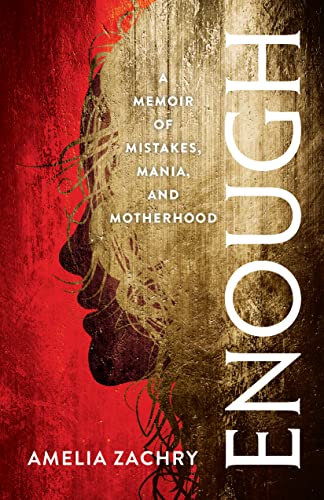
Enough: A Memoir of Mistakes, Mania, and Motherhood by Amelia Zachry

Enough: A Memoir of Mistakes, Mania, and Motherhood
by Amelia Zachry

This was an incredibly difficult memoir to read, but I am grateful that I did. Part of the hand-to-my-throat factor for me was how close Zachry’s experiences were to my own. Like her I am a Malaysian woman, one who entered the slipstream of migration and has become a transcultural, transnational creature with feet and hands in multiple worlds.

I also recognized the gaslighting and the gendered physical and psychological violence embedded in Malaysian culture. I recognized the gaslighting and gendered violence she experienced embedded in human society everywhere.

This was hard, so hard, to read at so many points. I had to put this book down multiple times. But the discomfort it caused was also what forced me to return to it. The kind of emotional disturbance Zachry’s memoir inflicts is that which can only be excised by pushing through all the way to the end.

I am glad I returned to it, acknowledged her pain my own (caused by reading it) and kept going in spite of all that. There is more than suffering in this memoir. Zachry illuminates a healing path too.

Zachry’s memoir is not a Malaysian one, although this is a cultural aspect of her experience that cannot be brushed aside. In this I recognized Zachry’s heritage as akin to my own; women told to swallow their pride, their pain, their voices. It is a world in which women remain — and are expected to remain — invisible. And this is true across Malaysia’s many cultures, ethnicities, and religious communities. For all the lovely tropical lushness of Malaysia, it is not a paradise for everyone; feminism is throttled by legal manipulations, feminists ostracized as social pariahs (even when Western-style feminism is eschewed in favor of local versions of feminism.)

But, I digress; Enough is not a memoir of a culture. Zachry’s experience is one that is all too familiar and common across cultures and in all societies. It is an extraordinary story of a crime that is horrendously ordinary. Hers was a life lived by many people; that’s what makes Enough so memorable, so relatable, so important to read.

Zachry’s memoir begins at her beginning, with childhood, then takes the reader into her teenage and early adult years. It is then that Zachry’s life is altered by an event that haunts her (even now after she has found ways to manage it). The bulk of this memoir is devoted to Zachry’s struggle with the trauma of this event, her path to a recovery, and it ends with a substantial section on her present life which shifts the focus to the traumas of migration and the development of her transcultural identity. Zachry’s journey to a happy place is not one filled with woo-woo cures or unattainable magic pills. Zachry documents how hard work, emotional work punctuated by slips and backslides is the tried and true path; one accessible to all of us, at least in theory.

This is a memoir for all women because this is a story we all know, first-hand, second-hand, or otherwise.

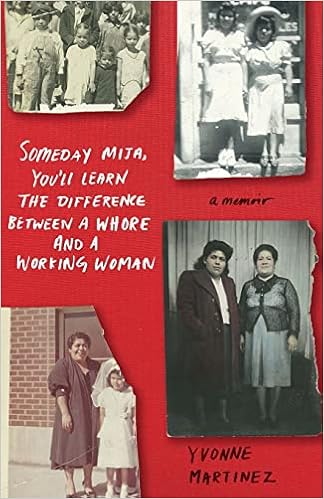
Someday Mija, You’ll Learn the Difference Between a Whore and a Working Woman: A Memoir by Yvonne Martinez

Someday Mija, You’ll Learn the Difference Between a Whore and a Working Woman: A Memoir
by Yvonne Martinez

This is an intensely powerful memoir; Martinez’s life is a scar tissue of intergenerational wounds. Someday Mija, You’ll Learn the Difference Between a Whore and a Working Woman is a serious treatment of what the traumas of racial violence, poverty, and sexual exploitation can do to a child and a family, and how Yvonne was able to weave these histories — her own, her mother’s, her grandmother’s, her family’s and her community’s — into a lifetime of “doing better.” This is not a memoir to be undertaken lightly.

Celebrate Hispanic Heritage, September 15th to October 15th — but also, whenever and always!

Someday Mija, You’ll Learn the Difference Between a Whore and a Working Woman is divided into two halves, the first reads like a novel and documents Martinez’s experiences as a child and growing up in a dysfunctional family. The second half addresses Yvonne’s life afterward, as an adult and specifically as an activist in the service of her community, as an organizer, and educator.

The two halves are intertwined: it is Martinez’s experiences growing up in an abusive and violent home that shapes her ability to understand the traumas that envelop her community. This shared experience is one not easily addressed by public health programs or the simple piling on of more and more education. Oppressive systems stemming from cultures steeped in patriarchy, sexual violence, and colonization cannot be wiped away, even replaced that easily. These cultures exist within even larger systems of oppression.

In Martinez’s case, however, these experiences also spurred them to take on systemic racism, sexism, violence, and poverty as institutions to be dismantled. This is a case of an individual working from within, for one’s own community (and for all communities). Change must be internal as well as external for it to sustain; Martinez’s life is proof of that.

A profound and consuming memoir that is in equal parts disturbing, sad, and inspiring.