Midnight at Malabar House: A Novel by Vaseem Khan

The Malabar House Series #1

Midnight at Malabar House: A Novel by Vaseem Khan

This novel was so fun to read, and with every one of the detective’s victories I felt like yelling out, “Go get it, girl!”

The novel revolves a young woman who has become India’s first police detective. The case of a lifetime is thrust — seemingly serendipitously — into her lap. But it’s a double-edged sword: she could either emerge from the fight triumphant, the murderer under her arrest, or lop her own head off and prematurely end her career before it even begins. But that isn’t the own tightrope she has to balance.

Malabar House is the name of her station, and its where — as a woman in a male-dominated career –she has to prove to herself, she is a worthy policewoman and Indian citizen and earn the obedience of her colleagues, if not their respect too. Obstacles of all sorts are thrown at her, some from within the ranks and others by those she thought would support her to the most. Betrayal lurks in wait for her everywhere.

It’s a very intriguing story, not only for the mystery at the root of the novel, but because it takes place at a critical moment in Indian history, just as the new nation is emerging from its colonial cage, when change is possible in all sorts of ways (for the better and for the worse), when Britain’s imperial secrets might be exposed under the lights of new India.

I enjoyed both threads of the story immensely. Unlike many postcolonial novels, which are dark and brooding and deeply serious Midnight at Malabar House was joyous and in parts, comedic (perhaps only in comparison). I felt vindicated each time our detective “won one” over her misogynistic colleagues or the corrupt officials who threatened to stand in her way. That said, readers should not expect to be only entertained; the traumatic history of India’s partition, the genocide of Muslims and Hindus, and other dark elements of British imperialism feature here. Post colonial literature is often tinged with some amount of sadness and trauma, justifiably, and this novel has its share of this.

I am not one for book series — I prefer standalone novels and duologies are my usual limit — but I wouldn’t mind reading another one in the Malabar House series at all.

The Half Known Life: In Search of Paradise by Pico Iyer

The Half Known Life: In Search of Paradise
by Pico Iyer

Memoir. History. Travelogue. In this book, Iyer seeks out ways in which paradise exists on earth and in the human imagination. The result is a global journey, one which peels back the multiple images and meanings the word “paradise” evokes.

Divided into three parts, The Half Known Life delves headfirst into the various ways humanity has dreamed of paradise, understood and interpreted it. Part one takes on the Islamic, Iranian version of paradise and its manifestation on earth, the notion of a “promised land” in whatever subjective form that may be. Part two has a spiritual, religious slant; faiths offer the incentive of a paradise, whether earthly or otherworldly. Iyer scatters his ink wide from Damascus to Ethiopia to the Shangri-La of the Himalayas. The Half Known Life explores Judeo-Christian views, Buddhist perspectives, indigenous ideas of what heaven may be or could be or is. Part three takes the conversation to the dark side: the afterlife, the question of time and if paradise is a time or a place.

Musings. Memories. Philosophies. The Half Known Life is a collection of ideas, all aimed toward this notion of paradise, whether geographical or psychological or paranormal. This is a work of philosophical significance and a view into how our world views the places of our desires (a paradise on earth) and our sense of what comes after life ends and where we go (heaven, for lack of a better word).

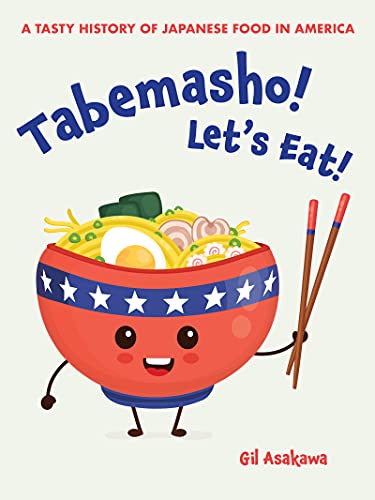
Tabemasho! Let’s Eat! A Tasty History of Japanese Food in America by Gil Asakawa

Tabemasho! Let’s Eat!
A Tasty History of Japanese Food in America by Gil Asakawa

Tabemasho! Let’s Eat! reminds me of one of the very first times I went out to eat in America. I’d been in the country for a few days, maybe a week, and I was taken out to dinner at a local Chinese American restaurant. I was thrilled, having never had Chinese American food before. At the end of the meal my hosts asked me, “What kind of fortune cookies do y’all have over there?” I was stunned. “We don’t have them in Asia.” Then they were shocked, having always assumed that fortune cookies were authentic desserts from the exotic East. The culture shock on both sides of that encounter and the histories behind the assumptions made around food are what Asakawa’s Tabemasho! Let’s Eat! brings to the forefront.

Though there is a serious side to Asakawa’s Tabemasho! Let’s Eat!, the book is a fun, fun read. Asakawa’s prose is super-casczz, chummy, and hilarious. Reading him is like having a beer with a friend who’s found a great place to eat and can’t wait to take you there. Asakawa was quick at the elbow with a witty comment. He was there to give me the low-down tale behind a (his)story.

I appreciated was the book’s serious side too. I enjoyed how unafraid Asakawa was to speak his mind on the tougher topics of cultural appropriation and America’s racist history of Asian exclusion. Indeed, much of Asakawa’s point is that Japanese American cuisine and culture is borne out of that dark period.

The book is split into thematic chapters, each one taking on a different dish like Noodles or Bowls of Rice (don), or Sushi. Asakawa also devotes a chapter to Japanese American history and the ways in which transcultural cuisine develops through migration, separation, and racism. The sushi and noodle chapters are especially extensive, providing the reader with tips on where to go and what to expect, types of dishes, the differences between Japanese and American interpretations of various dishes, as well as histories of these dishes from both sides of the Pacific Ocean.

There are also chapters on lesser known delectables such as Japanese soft drinks. I was so happy to read about Pocari Sweat — one of my childhood favorites, sold in Southeast Asia by the case! — which is (I think), the inspiration for one of my favorite fizzy drinks, 100 Plus. I can’t describe how they taste; they’re a cross of salty and sweetness, their appeal much like chocolate-covered pretzels. I grew up in South Korea for a time as well; it was there I became familiar with Yakult, Calpico and the whole plethora of yogurt-based drinks that are so popular in East Asian culture. Reading these chapters was like sipping at a memory of my childhood.

The chapter on baked desserts and pastries made my mouth water. Stopping at a Chinese, Korean, or Japanese bakery is one my favorite weekend excursions. The soft, sweet, white bread that melts in your mouth is a paradise. The red bean pastes, creams, and the custards are unique interpretations of Chinese, French, and European treats.

Asakawa also provides the reader with an extensive (though non-academic) bibliography and reference list so the reader can let themselves wander further on this culinary path.

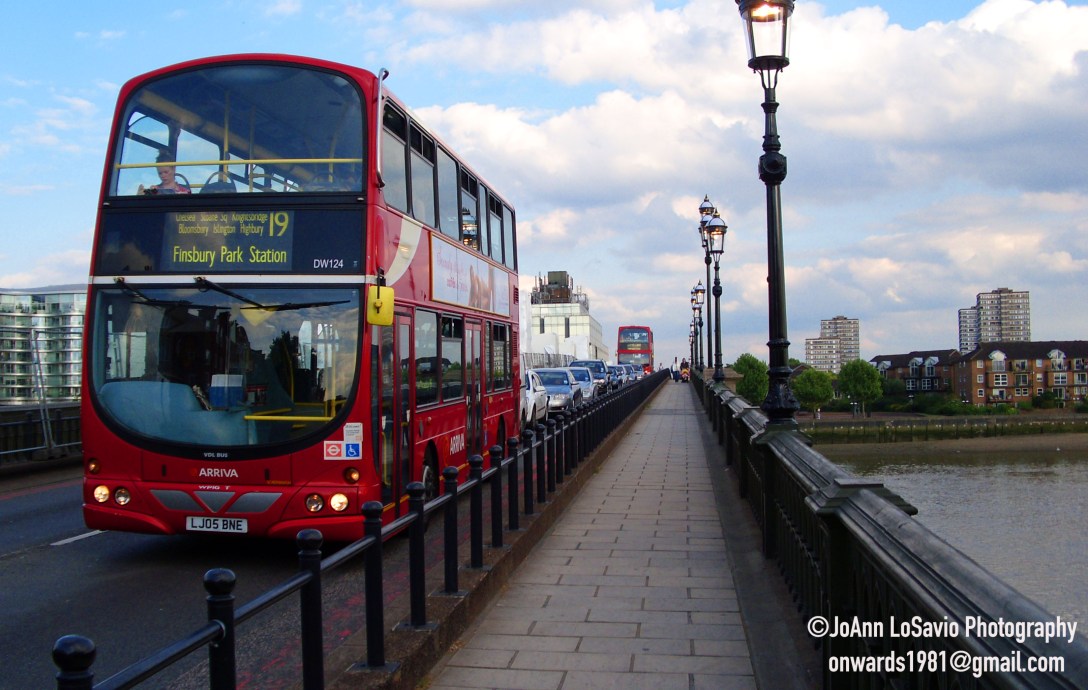
London 2010 – Portobello Street Market &tc.

Traveling solo does something to the eyes. It opens them up to things you never noticed before because you were too busy paying attention to another person. In 2010 I got to visit London on my own, and since I didn’t have a lot of money, I spent a lot of time walking around and just looking at things through my camera. Mind you, it wasn’t a great camera either.

Malaysia 2010, 2011, 2013

I have so many hundreds of photos of Malaysia and all things Malaysian: people, food, places, sites, random pictures of stray cats. Here I’ve picked some of my favorites from the past three trips there. They’re from all over Malaysia, some from Penang, some from Melaka, one from Pahang when I was in Kuantan. And of course, Kuala Lumpur.

I visited these places in multiple capacities, as a tourist, as a local, as an anthropologist, as a student, as a photographer. Most of the photos are “found”, none of them were posed or premeditated.

Most of these photos were taken using a really cheap-O point and shoot, or my iPhone 4.

Cambodia 2013 – Angkor Complex & Phnom Penh

I got the chance last year to visit one of the most amazing places on Earth: Cambodia and specifically, the ruins of Angkor! I took so many photos in Siem Reap and Phnom Penh, my vacation there lasting about 2 weeks, so these photos are only a sampling of the photos I took. I’ve tried to caption them to give some context to the image.